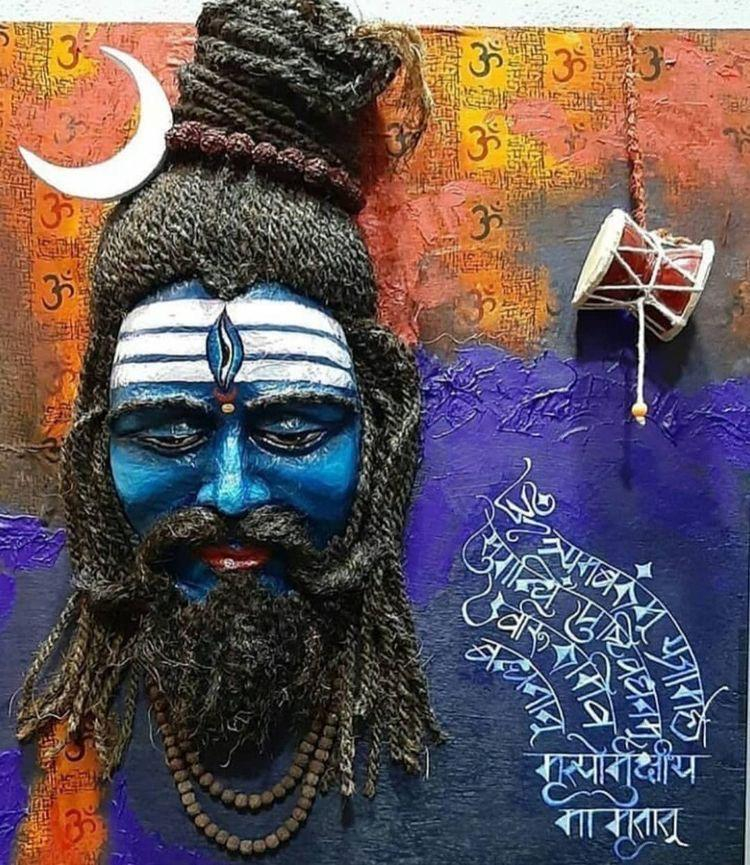
Brahma Gayatri Mantra is a sacred prayer dedicated to Lord Brahma, the divine creator associated with the beginning and manifestation of the universe in Hindu tradition. Lord Brahma is traditionally regarded as the embodiment of creation, knowledge, wisdom, intelligence, and divine order. The Brahma Gayatri Mantra is therefore recited by devotees as a prayer for higher understanding, spiritual wisdom, clarity of thought, creativity, and awareness of the divine principles behind creation. Like other Gayatri mantras, it follows the contemplative pattern of recognizing the Divine, meditating upon its sacred power, and praying for illumination of the intellect.
A commonly recited form of the Brahma Gayatri Mantra is:
ॐ वेदात्मने विद्महे
Om Vedatmane Vidmahe
The English translation can be expressed as: “We contemplate the Divine who is the essence of the Vedas and meditate upon Hiranyagarbha, the cosmic source of creation. May Lord Brahma illuminate and guide our intellect.” The exact wording of Brahma Gayatri can vary among devotional and textual traditions, so devotees following a specific lineage may use the form taught by their guru or tradition.
The opening Om is one of the most sacred sounds in Hindu spiritual traditions. It is associated with the primordial sound and the Supreme Reality. Beginning the mantra with Om places the prayer within a universal spiritual context. The word Vedatmane refers to the one who is the essence or spiritual self of the Vedas. The Vedas are regarded as the foundational sacred scriptures of Hindu tradition and are associated with divine knowledge and spiritual wisdom.
The word Vidmahe means “we know,” “we seek to understand,” or “we contemplate.” In the context of a Gayatri mantra, it expresses the desire to recognize and understand the divine principle being invoked. The devotee is not merely asking for worldly success but is turning the mind toward spiritual understanding.
The word Hiranyagarbha is especially significant. It is often translated as the “Golden Womb” or “Golden Embryo” and represents the cosmic source from which creation emerges. Hiranyagarbha is a profound concept in Vedic and Upanishadic thought, associated with the cosmic principle of creation. By meditating upon Hiranyagarbha, the practitioner reflects on the mysterious origin of the universe and the divine intelligence underlying creation.
The word Dhimahi means “we meditate upon” or “we contemplate.” Meditation is central to the Gayatri form because the mantra is not merely a request. It is a practice of directing consciousness toward a higher reality. When devotees chant this mantra, they can focus their minds on Lord Brahma and contemplate the sacred mystery of creation, knowledge, and existence.
The final portion, “Tanno Brahma Prachodayat,” expresses the prayer, “May Brahma inspire, guide, or illuminate us.” The word Prachodayat carries the sense of inspiring or directing the intellect toward the right path. Thus, the final prayer is especially meaningful for students, teachers, scholars, writers, artists, and anyone seeking greater clarity and understanding.four faces , which are traditionally associated with the four Vedas and the four directions. His four heads represent the all-encompassing nature of divine knowledge. He is also frequently depicted holding a rosary, water pot, and sacred scriptures. These symbols connect him with meditation, creation, knowledge, purity, and the cosmic order.
illumination of the intellect . In Hindu spiritual thought, knowledge is not merely the accumulation of information. True knowledge involves understanding reality, distinguishing between truth and illusion, and using one’s intelligence in accordance with dharma. The mantra encourages the devotee to seek this deeper form of wisdom.
The Brahma Gayatri Mantra can be particularly meaningful when beginning a new educational or creative journey. Since Lord Brahma represents creation and knowledge, devotees may chant the mantra before studying, teaching, writing, designing, or undertaking an important intellectual task. The practice can help establish a devotional mindset in which learning becomes more than a means of personal achievement.
Traditionally, Gayatri mantras are often recited during peaceful periods of the day, particularly early morning, midday, or evening . A devotee may sit in a clean and quiet place, maintain an upright posture, and focus on the meaning of the mantra while chanting. The mantra can be repeated slowly and respectfully rather than mechanically.
Many Hindu devotional practices use 108 repetitions as a traditional cycle of japa. A devotee may use a mala to maintain concentration while chanting. However, the number of repetitions is less important than sincerity, regularity, and attention. Beginners can start with a smaller number of repetitions and gradually develop a consistent practice.
The traditional spiritual benefits associated with the Brahma Gayatri Mantra include greater clarity, wisdom, concentration, creativity, spiritual awareness, and devotion to knowledge . Devotees may chant it when they feel mentally distracted or when they are beginning a new phase of learning. It can serve as a reminder to approach knowledge with patience and humility. These are traditional religious beliefs and should not be understood as scientifically established effects.
One of the deepest teachings of the mantra is the relationship between knowledge and humility . Lord Brahma’s association with the Vedas reminds devotees that knowledge is sacred. The more a person learns, the more they should recognize the vastness of what remains unknown. The mantra therefore encourages an attitude of sincere inquiry rather than intellectual pride.
The mantra is also a reminder that creativity should be guided by dharma . Lord Brahma’s creative power is not represented as random or meaningless. Creation occurs within a cosmic order. Likewise, human beings should use their intelligence and creativity responsibly. Knowledge becomes truly valuable when it contributes to harmony, learning, service, and the well-being of others.
For a simple devotional practice, a devotee can begin by sitting quietly and taking a few peaceful breaths. After remembering Lord Ganesha or one’s chosen deity, one can visualize Lord Brahma seated upon the lotus and surrounded by divine radiance. The Brahma Gayatri Mantra can then be chanted slowly while contemplating its meaning. After the chanting, the devotee can sit silently for a few moments and allow the mind to remain peaceful.
The imagery of Lord Brahma seated on a lotus also has spiritual significance. The lotus grows from muddy water yet rises above it in purity and beauty. This can symbolize the emergence of higher consciousness from the ordinary conditions of worldly life. Brahma’s association with the lotus therefore complements the Gayatri prayer for higher knowledge and spiritual illumination.
VIDEO
Ultimately, the Brahma Gayatri Mantra is a prayer for divine illumination. Its central message is not simply “give me knowledge,” but rather “guide my intellect toward higher understanding.” This distinction is spiritually important. Knowledge without wisdom can lead to pride or misuse, while knowledge guided by dharma can become a force for personal growth and service.
The mantra “ॐ वेदात्मने विद्महे हिरण्यगर्भाय धीमहि। तन्नो ब्रह्मा प्रचोदयात्॥” invites devotees to contemplate the cosmic source of creation and seek the illumination of Lord Brahma. Through sincere chanting and meditation, it can become a meaningful spiritual practice for those who value learning, creativity, wisdom, and inner awareness. Lord Brahma’s divine symbolism reminds us that creation begins with knowledge, knowledge becomes meaningful through wisdom, and wisdom becomes truly valuable when it is used in harmony with dharma.
Got a follow-up question on this article? Go on