











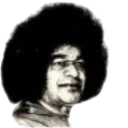





Swami Chidananda Saraswati
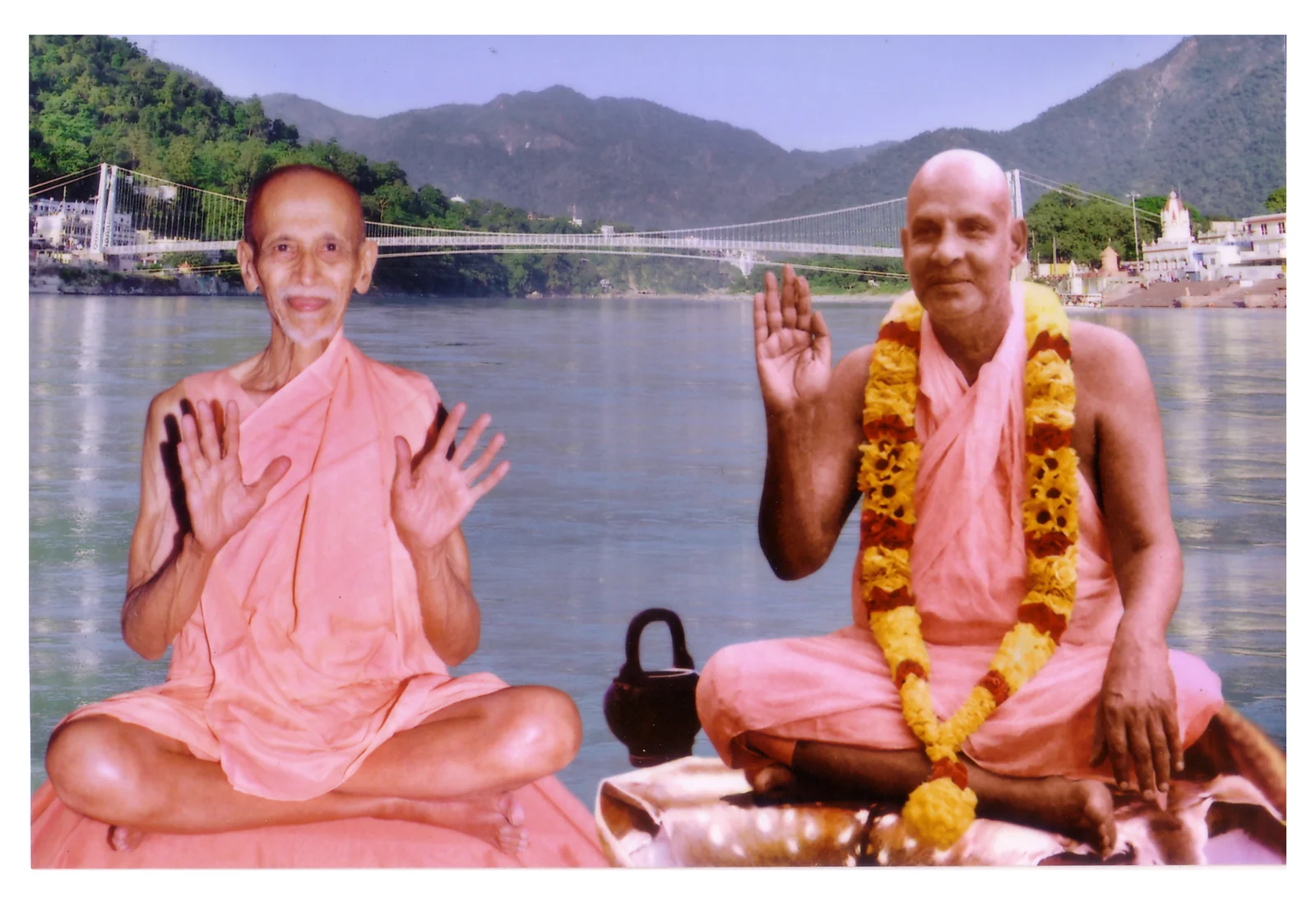
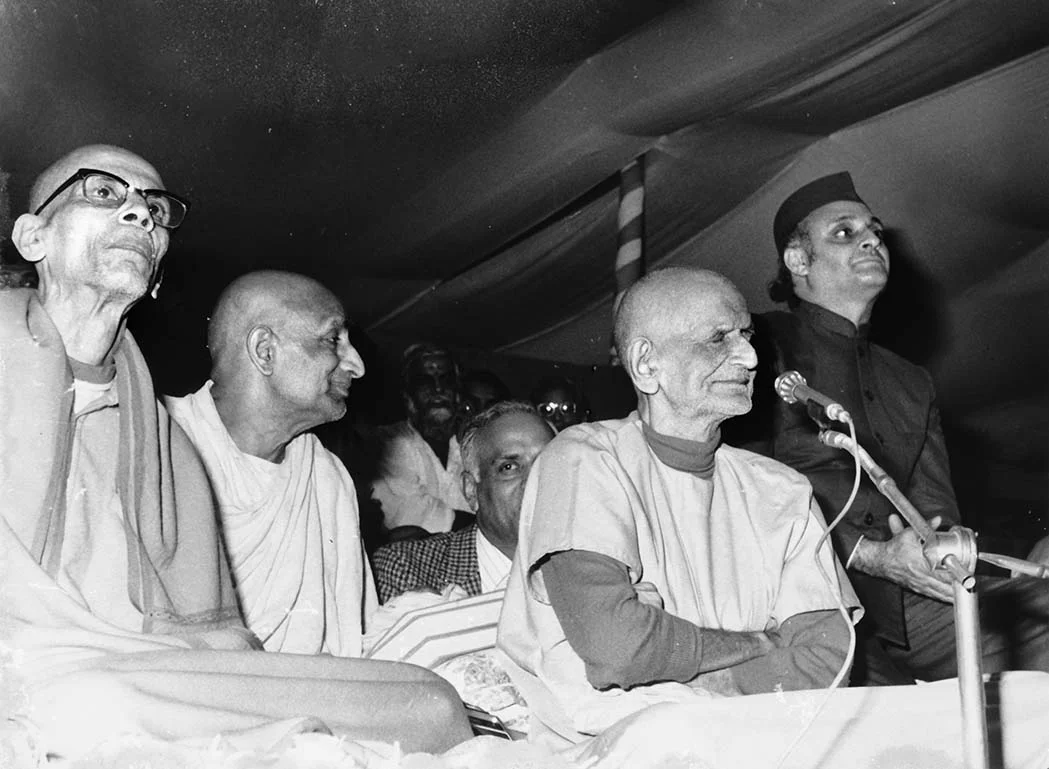

Sridhar Rao, as Swami Chidananda
was known before taking Sannyasa (embracing a life of renunciation), was born to Srinivasa Rao and Sarojini, on the 24th September, 1916, the second of five children and the eldest son. Sri Srinivasa Rao was a prosperous Zamindar (a rich landlord) owning several villages, extensive lands and palatial buildings in South India. Sarojini was an ideal Indian mother, noted for her saintliness. At the age of eight, Sridhar Rao’s life was influenced by one Sri Anantayya, a friend of his grandfather, who used to relate to him stories from the epics, Ramayana and Mahabharata. Doing Tapas (austerities), becoming a Rishi (sage), and having a vision of the Lord became ideals which he cherished.
Swami Chidananda Saraswati was one of the most luminous spiritual masters of modern India and a revered disciple of Swami Sivananda of the Divine Life Society, Rishikesh. Born in 1916, he embodied from a young age a deep inclination toward spirituality, self-discipline, and service to humanity. After meeting Swami Sivananda, his life was completely transformed, and he dedicated himself fully to the path of renunciation, selfless service, and God-realization. Swami Chidananda later became the President of the Divine Life Society and carried forward his Guru’s mission with remarkable humility, wisdom, and inner purity. Known as the “Saint among saints,” his life itself was a silent teaching, radiating peace, compassion, and divine awareness.
Swami Chidananda taught that the purpose of human life is realization of the Self, which is one with the Supreme Reality. He emphasized that true spirituality is not mere philosophy or ritual but a lived experience expressed through character, conduct, and compassion. According to him, purity of heart, control of the mind, and selfless service are essential foundations for spiritual growth. He constantly reminded seekers that God is not distant or separate, but ever-present within one’s own heart.
“You know why you are doing something. And if it is against your life, your principles and ideals it is bothersome. And no one wants to be bothered. So you conveniently try to curtain it off, turn a blind eye, and put it out of sight so that it won’t bother you. This is what the Mind does.”
In 1936, he was admitted to Loyola College, whose portals admit only the most brilliant of students. In 1938, he emerged with the degree of Bachelor of Arts. This period of studentship at a predominantly Christian College was significant. The glorious ideals of Lord Jesus, the Apostles and the other Christian saints had found in his heart a synthesis of all that is best and noble in the Hindu culture. To him, study of the Bible was no mere routine; it was the living word of God, just as living and real as the words of the Vedas, the Upanishads and the Bhagavad-Gita. His innate breadth of vision enabled him to see Jesus in Krishna, not Jesus instead of Krishna. He was as much an adorer of Jesus Christ as he was of Lord Vishnu.
The family was noted for its high code of conduct and this was infused into his life. Charity and service were the glorious ingrained virtues of the members of the family. These virtues found an embodiment in Sridhar Rao. He discovered ways and means of manifesting them. None who sought his help was sent away without it. He gave freely to the needy.

Service to lepers became his ideal. He would build them huts on the vast lawns of his home and look after them as though they were deities. Later, after he joined the Ashram (hermitage), this early trait found in him complete and free expression where even the best among men would seldom venture into this great realm of divine love, based upon the supreme wisdom that all are one in God. Patients from the neighbourhood, suffering from the worst kind of diseases came to him. To Sridhar Rao the patient was none other than Lord Narayana Himself. He served him with tender love and compassion. The very movement of his hands portrayed him as worshipping the living Lord Narayana. Nothing would keep him from bringing comfort to the suffering inmates of the Ashram, no matter what the urgency of other engagements at the time.
Swami Chidananda was also a great exponent of yoga and Vedanta, yet his approach was simple and practical. He taught that regular prayer, meditation, study of sacred texts, and disciplined living gradually purify the mind and lead to inner illumination. His words were gentle, filled with love and clarity, touching the hearts of people from all walks of life. Without seeking recognition or fame, he became a source of inspiration for seekers across the world.
Even after leaving his physical body in 1993, Swami Chidananda’s spiritual presence continues to guide countless aspirants. His writings, recorded talks, and the institutions he nurtured still inspire lives of faith, discipline, and service. Swami Chidananda Saraswati remains a shining example of how a life rooted in humility, devotion, and selfless love can uplift humanity and lead souls toward peace, truth, and liberation.
Service, especially of the sick, often brought out the fact that he had no idea of his own separate existence as an individual. It seemed as if his body clung loosely to his soul.
Swami Chidananda Saraswati was a towering spiritual personality whose life was a perfect expression of purity, self-discipline, and divine awareness. As the beloved disciple of Swami Sivananda, he absorbed his Guru’s teachings not merely through study, but through total surrender and lived experience. From the moment he entered the Divine Life Society at Rishikesh, his life became one of intense sadhana, simplicity, and service. He lived with minimal needs, strict personal discipline, and unwavering devotion, becoming a living embodiment of the yogic ideals taught in the scriptures. His presence itself created an atmosphere of peace and inner stillness for all who came in contact with him.
Nor was all this service confined to human beings. Birds and animals claimed his attention as much as, if not more than, human beings. He understood their language of suffering. His service of a sick dog evoked the admiration of Gurudev. He would raise his finger in grim admonition when he saw anyone practicing cruelty to dumb animals in his presence.
His deep and abiding interest in the welfare of lepers had earned for him the confidence and admiration of the Government authorities when he was elected to the Leper Welfare Association, constituted by the state – at first as Vice-Chairman and later as Chairman of The Muni-ki-reti Notified Area Committee.
Quite early in life, although born in a wealthy family, he shunned the pleasures of the world to devote himself to seclusion and contemplation. In the matter of study it was the spiritual books which had the most appeal to him, more than college books. Even while he was at college, text-books had to take second place to spiritual books. The works of Sri Ramakrishna, Swami Vivekananda and Sri Gurudev took precedence over all others. He shared his knowledge with others, so much so that he virtually became the Guru of the household and the neighbourhood, to whom he would talk of honesty, love, purity, service and devotion to God.
A central aspect of his teachings was seva (selfless service). He believed that serving humanity is the highest form of worship, as all beings are expressions of the same Divine Consciousness. Whether caring for the sick, guiding spiritual aspirants, or managing the vast activities of the Divine Life Society, he performed every task with total dedication and egolessness. His life demonstrated that true renunciation does not mean withdrawal from action, but freedom from selfish desire while remaining fully engaged in the world.

He would exhort them to perform Japa of Rama-Nama. While still in his twenties he began initiating youngsters into this great Rama Taraka Mantra. He was an ardent admirer of Sri Ramakrishna Math at Madras and regularly participated in the Satsangs (association with the wise) there. The call of Swami Vivekananda to renounce resounded within his pure heart. He ever thirsted for the Darshan (vision) of saints and Sadhus (renunciates) visiting the metropolis.
In June 1936, he disappeared from home. After a vigorous search by his parents, he was found in the secluded Ashram of a holy sage some miles from the sacred mountain shrine Tirupati. He returned home after some persuasion. This temporary separation was but a preparation for the final parting from the world of attachments to family and friends. While at home his heart dwelt in the silent forests of spiritual thoughts, beating in tune with eternal Pranava-Nada (mystic sound of the Eternal) of the Jnana Ganga (river of Knowledge) within himself. The seven years at home following his return from Tirupati were marked by seclusion, service, intense study of spiritual literature, self-restraint, control of the senses, simplicity in food and dress, abandonment of all comforts and practice of austerities which augmented his inner spiritual power.
In November 1959 Swami Chidanandaji embarked on an extensive tour of America, being sent by Gurudev as his personal representative to broadcast the message of Divine Life. He returned in March 1962.
In August 1963, after the Mahasamadhi of the Master, he was elected as President of the Divine Life Society. After election, he strove to hold aloft the banner of renunciation, dedicated service, love and spiritual idealism, not only within the set-up of the widespread organization of the Society, but in the hearts of countless seekers throughout the world, who were all too eager to seek his advice, help and guidance.