

















Rama Embodies Dharma
Rama Embodies Dharma
Q: Swami! Is it right on the part of Rama to kill Tataka, a woman?
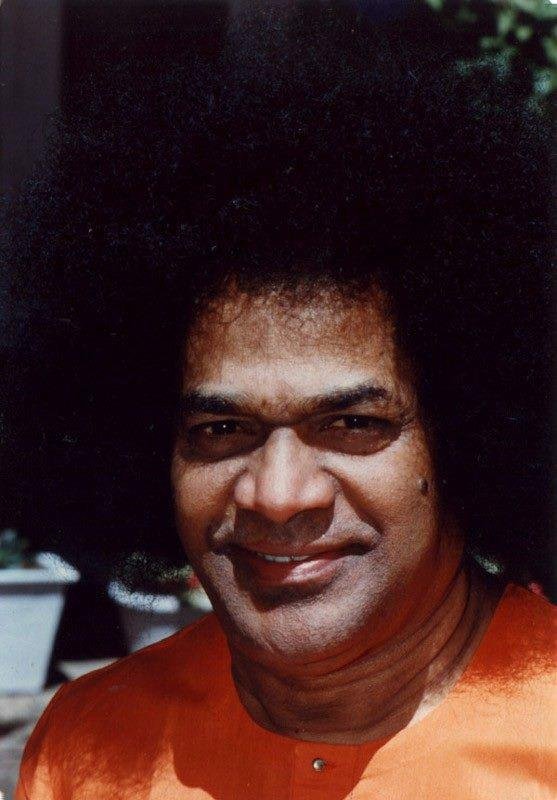
Bhagavan:Rama embodies dharma [righteousness]. Along with Lakshmana, He went to the forest led by Vishvamitra only to destroy the demons. Defiling yajnas and yagas and killing great sages, these demons turned hermitages into cremation grounds. In fact, the very purpose of Vishvamitra’s request to Dasaratha, viz., sending Rama and Lakshmana to the forest, was the destruction of the demons. The sage, if he so desired, could have himself put an end to the demons. But, as he was under the vow of yajna, he was prohibited from resorting to violence. Moreover, the mission of the incarnation of Rama awaited fulfillment. Everything has to proceed according to the Master Plan. The actions of the demons were extremely cruel. In order to wipe out this pitch of cruelty and to protect dharma, the demons had to be destroyed. Tataka may be a woman. But, her actions were demonic, weren’t they? Therefore, killing Tataka was just, and fully in consonance with righteousness.
In this matter, whether the agents of wickedness are men or women is immaterial. What is crucial is the usefulness of their deeds. Because of his unrighteous conduct, Vali the king of the monkeys, though a male, was not spared, was he! Tara did advise Vali, “Lord! Sugriva was only a few days ago mortally wounded and he fled. How come he is now brave enough to challenge you? He has the support of Rama, don’t you know? Rama is, indeed, no ordinary man. Though you are very valiant, Rama is bent on assisting Sugriva and killing you because of your unrighteous deeds. Seek refuge at Rama’s feet!” Vali paid no heed to her words and fell a prey to Rama’s arrow. Thus, the primary criterion is restoration of dharma. Gender is irrelevant.
Q:Swami, Kaikeyi, so it goes, loved Rama more intensely than even Kaushalya, his own mother. How is it then that she could ask such a boon to be granted to her by King Dasaratha that resulted in Rama’s exile for 14 years? Was it not her mistake?
Bhagavan:Pleased with Kaikeyi’s services to him, Dasaratha had already granted two boons to Kaikeyi, of which you are aware. Dasaratha had told her that she could ask for the fulfillment of the boons according to her own wish at any point of time that she would like to choose. He did not himself specify the time. It only meant that she could ask for anything at any time. So, it is the mistake of Dasaratha to have given her a blank check like that, authorizing her to ask for anything at any time. On the other hand, had he asked her to let him know at the time of his conferring the boons what exactly she would do with them, we would have every reason to find fault with Kaikeyi for demanding such a treacherous thing. Now, it must have been very clear to you that you have to blame Dasaratha and not Kaikeyi for sending Rama to the forest.
Rama Embodies Dharma and the Ideal Path of Righteous Living
The life of Lord Rama stands as the highest example of righteousness and moral strength. When we say Rama Embodies Dharma, it means that every action of Rama was guided by truth, duty, and justice. His life teaches that dharma is not merely a set of rules but a way of living that protects harmony and balance in society. Even when faced with difficult situations, Rama never abandoned the path of righteousness. Instead, He accepted challenges with patience, courage, and unwavering commitment to truth.
One of the most striking examples that shows how Rama Embodies Dharma is His obedience to His father’s word. When King Dasaratha ordered Rama to go into exile for fourteen years, Rama did not question the command or express anger. Though He was the rightful heir to the throne of Ayodhya, He willingly accepted the exile to uphold His father’s promise. This act revealed the depth of Rama’s character and demonstrated that honoring one’s duty is greater than personal comfort or power.
During His time in the forest, Rama continued to protect sages, hermits, and innocent people from the cruelty of demons. The destruction of demons such as Tataka and the defeat of many evil forces were not acts of personal revenge but acts meant to restore righteousness. This again proves that Rama Embodies Dharma, as His actions were always aimed at protecting the good and removing injustice from the world.
Another powerful example is seen in Rama’s relationship with Sugriva and Vali. Rama supported Sugriva because Sugriva had been wronged and denied his rightful position. By helping Sugriva regain justice, Rama showed that righteousness sometimes requires firm action against injustice. Even when Rama killed Vali, it was not due to hatred but to correct wrongdoing and establish moral order. This incident further highlights that Rama Embodies Dharma, where justice and righteousness remain the guiding principles.
Rama’s compassion, humility, and respect for others also reflect the true meaning of dharma. Whether interacting with sages, citizens, friends, or even enemies, Rama always maintained dignity and fairness. His life teaches that true strength lies not only in physical power but in moral integrity and self-control. These qualities make Rama an eternal symbol of righteousness and spiritual wisdom.
The teachings of great spiritual masters often explain that Rama Embodies Dharma because He lived every moment of His life according to divine principles. Rama’s example reminds humanity that dharma must guide our decisions, actions, and relationships. By following His example, individuals can cultivate virtues such as truthfulness, compassion, discipline, and devotion.
Ultimately, the story of Rama is not only a historical or mythological narrative but a spiritual lesson for all humanity. The idea that Rama Embodies Dharma reminds us that righteousness must be practiced in every aspect of life. When individuals choose truth over selfishness and justice over personal gain, they follow the path that Rama demonstrated. Through His life and actions, Lord Rama continues to inspire countless seekers to walk the path of dharma and live a life filled with honor, courage, and spiritual purpose.
Source: Satyopnisad, Vol. 2