







































Chapter Three
Chapter 3
Karma Yoga
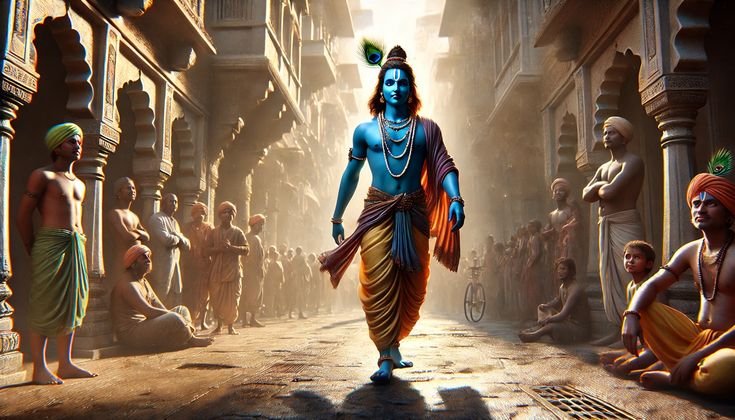
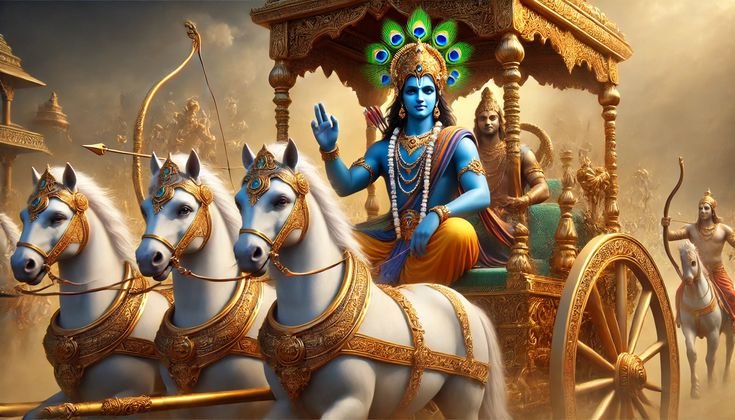
The third chapter of the Bhagavad Gita is “Karma Yoga” or the “Path of Selfless Service”. Here, Lord Krishna emphasises the importance of karma in life. He reveals that it is important for every human being to engage in some sort of activity in this material world. Further, he describes the kinds of actions that lead to bondage and the kinds that lead to liberation. Those persons who continue to perform their respective duties externally for the pleasure of the Supreme, without attachment to its rewards, get liberation at the end.
Bhagavad Gita 3.1
अर्जुन उवाच ज्यायसी चेत्कर्मणस्ते मता बुद्धिर्जनार्दन। तत्किं कर्मणि घोरे मां नियोजयसि केशव।।3.1।।
arjuna uvācha jyāyasī chet karmaṇas te matā buddhir janārdana tat kiṁ karmaṇi ghore māṁ niyojayasi keśhava
Translation
Arjuna said: If Thou thinkest that knowledge is superior to action, O Krishna, why then, O Kesava, doest Thou ask me to engage in this terrible action?
arjunaḥ uvācha—Arjun said; jyāyasī—superior; chet—if; karmaṇaḥ—than fruitive action; te—by you; matā—is considered; buddhiḥ—intellect; janārdana—he who looks after the public, Krishna; tat—then; kim—why; karmaṇi—action; ghore—terrible; mām—me; niyojayasi—do you engage; keśhava—Krishna, the killer of the demon named Keshi;
Commentary
3.1 ज्यायसी superior? चेत् if? कर्मणः than action? ते by Thee? मता thought? बुद्धिः knowledge? जनार्दन O Janardana? तत् then? किम् why? कर्मणि in action? घोरे terrible? माम् me? नियोजयसि Thou engagest? केशव O Kesava.Commentary In verses 49? 50 and 51 of chapter II? Lord Krsihna has spoken very highly about Buddhi Yoga. He again asks Arjuna to fight. That is the reason why Arjuna is perplexed now.
Bhagavad Gita 3.2
व्यामिश्रेणेव वाक्येन बुद्धिं मोहयसीव मे। तदेकं वद निश्िचत्य येन श्रेयोऽहमाप्नुयाम्।।3.2।।
vyāmiśhreṇeva vākyena buddhiṁ mohayasīva me tad ekaṁ vada niśhchitya yena śhreyo ’ham āpnuyām
vyāmiśhreṇa iva—by your apparently ambiguous; vākyena—words; buddhim—intellect; mohayasi—I am getting bewildered; iva—as it were; me—my; tat—therefore; ekam—one; vada—please tell; niśhchitya—decisively; yena—by which; śhreyaḥ—the highest good; aham—I; āpnuyām—may attain
Translation
With this seemingly perplexing speech, you seem to be confusing my understanding; therefore, tell me one certain way by which I may attain bliss.
Commentary
3.2 व्यामिश्रेण perplexing? इव as it were? वाक्येन with speech? बुद्धिम् understanding? मोहयसि (Thou) confusest? इव as it were? मे my? तत् that? एकम् one? वद tell? निश्चित्य for certain? येन by which? श्रेयः bliss (the good or the highest)? अहम् I? आप्नुयाम् may attain.Commentary: Arjuna says to Lord Krishna? Teach me one of the two? knowledge or action? by which I may attain to the highest good or bliss or Moksha. (Cf.V.I).
Bhagavad Gita 3.3
श्री भगवानुवाच लोकेऽस्मिन्द्विविधा निष्ठा पुरा प्रोक्ता मयानघ। ज्ञानयोगेन सांख्यानां कर्मयोगेन योगिनाम्।।3.3।।
śhrī bhagavān uvācha loke’smin dvi-vidhā niṣhṭhā purā proktā mayānagha jñāna-yogena sāṅkhyānāṁ karma-yogena yoginām
śhrī-bhagavān uvācha—the Blessed Lord said; loke—in the world; asmin—this; dvi-vidhā—two kinds of; niṣhṭhā—faith; purā—previously; proktā—explained; mayā—by me (Shree Krishna); anagha—sinless; jñāna-yogena—through the path of knowledge; sānkhyānām—for those inclined toward contemplation; karma-yogena—through the path of action; yoginām—of the yogis
Translation
The Blessed Lord said, “In this world, there is a twofold path, as I said before, O sinless one: the path of knowledge of the Sankhyas and the path of action of the Yogins.”
Commentary
3.3 लोके in world? अस्मिन् in this? द्विविधा twofold? निष्ठा path? पुरा previously? प्रोक्ता said? मया by Me? अनघ O sinless one? ज्ञानयोगेन by the path of knowledge? सांख्यानाम् of the Sankhyas? कर्मयोगेन by the path of action? योगिनाम् of the Yogins.Commentary The path of knowledge of the Sankhyas (Jnana Yoga) was described by Lord Krishna in chapter II? verses 11 to 38 the path of action (Karma Yoga) from 40 to 53. Pura Prokta may also mean In the beginning of creation the twofold path was given by Me to this world. Those who are endowed with the four means and who have sharp? Subtle intellect and bold understanding are fit for Jnana Yoga. Those who have a tendency or inclination for work are fit for Karma Yoga. (The four means are discrimination? dispassion? Sixfold virtues? and longing for liberation. The sixfold virtues are control of the mind? Control of the senses? Fortitude (endurance)? turning away from the objects of the world? faith and tranquillity.)It is not possible for a man to practise the two Yogas simultaneously. Karma Yoga is a means to an end. It purifies the heart and prepares the aspirant for the reception of knowledge. The Karma Yogi should take up Jnana Yoga as soon as his heart is purified. Jnana Yoga takes the aspirant directly to the goal without any extraneous help. (Cf.V.5).
Bhagavad Gita 3.4
न कर्मणामनारम्भान्नैष्कर्म्यं पुरुषोऽश्नुते। न च संन्यसनादेव सिद्धिं समधिगच्छति।।3.4।।
na karmaṇām anārambhān naiṣhkarmyaṁ puruṣho ’śhnute na cha sannyasanād eva siddhiṁ samadhigachchhati
na—not; karmaṇām—of actions; anārambhāt—by abstaining from; naiṣhkarmyam—freedom from karmic reactions; puruṣhaḥ—a person; aśhnute—attains; na—not; cha—and; sannyasanāt—by renunciation; eva—only; siddhim—perfection; samadhigachchhati—attains
Translation
Man does not reach actionlessness by not performing actions; nor does he attain perfection by mere renunciation.
Commentary
3.4 न not? कर्मणाम् of actions? अनारम्भात् from nonperformance? नैष्कर्म्यम् actionlessness? पुरुषः man? अश्नुते reaches? न not? च and? संन्यसनात् from renunciation? एव only? सिद्धिम् perfection? समधिगच्छति attains.Commentary Actionlessness (Naishkarmyam) and perfection (Siddhi) are synonymous. The sage who has attained perfection or reached the state of actionlessness rests in his own essential nature as Existence, KnowledgeBliss Absolute (Satchidananda Svarupa). He has neither necessity nor desire for action as a means to an end. He has perfect satisfaction in the Self. One attains to the state of actionlessness by gaining the knowledge of the Self. If a man simply sits iet by abandoning action, you cannot say that he has attained to the state of actionlessness. His mind will be planning? scheming and speculating. Thought is real action. The sage who is free from affirmative thoughts? wishes? and likes and dislikes? Who has the knowledge of the Self can be said to have attained to the state of actionlessness one can reach perfection or freedom from action or knowledge of the Self by mere renunciation or by simply giving up activities without possessing the knowledge of the Self. (Cf.XVIII.49).
Bhagavad Gita 3.5
न हि कश्िचत्क्षणमपि जातु तिष्ठत्यकर्मकृत्। कार्यते ह्यवशः कर्म सर्वः प्रकृतिजैर्गुणैः।।3.5।।
न हि कश्िचत्क्षणमपि जातु तिष्ठत्यकर्मकृत्। कार्यते ह्यवशः कर्म सर्वः प्रकृतिजैर्गुणैः।।3.5।।
na hi kaśhchit kṣhaṇam api jātu tiṣhṭhatyakarma-kṛit kāryate hyavaśhaḥ karma sarvaḥ prakṛiti-jair guṇaiḥ
na—not; hi—certainly; kaśhchit—anyone; kṣhaṇam—a moment; api—even; jātu—ever; tiṣhṭhati—can remain; akarma-kṛit—without action; kāryate—are performed; hi—certainly; avaśhaḥ—helpless; karma—work; sarvaḥ—all; prakṛiti-jaiḥ—born of material nature; guṇaiḥ—by the qualities
Translation
Verily, no one can remain for even a moment without performing action; for everyone is made to act helplessly, indeed, by the qualities born of Nature.
Commentary
3.5 नहि not? कश्चित् anyone? क्षणम् a moment? अपि even? जातु verily? तिष्ठति remains? अकर्मकृत् without performing action? कार्यते is made to do? हि for? अवशः helpless? कर्म action? सर्वः all? प्रकृतिजैः born of Prakriti? गुणैः by the alities.Commentary The Gunas (alities of Nature) are three? viz.? Sattva? Rajas and Tamas. Sattva is harmony or light or purity Rajas is passion or motion Tamas is inertia or darkness. Sattvic actions help a man to attain to Moksha. Rajasic and Tamasic actions bind a man to Samsara.These alities cannot affect a man who has knowledge of the Self. He has crossed over these alities. He has become a Gunatita (one who has transcended the alities of Nature). The ignorant man who has no knowledge of the Self and who is swayed by Avidya or nescience is driven helplessly to action by the Gunas. (Cf.IV.16?XVIII.11).the Gunas. (Cf.IV.16?XVIII.11).
Bhagavad Gita 3.6
कर्मेन्द्रियाणि संयम्य य आस्ते मनसा स्मरन्। इन्द्रियार्थान्विमूढात्मा मिथ्याचारः स उच्यते।।3.6।।
karmendriyāṇi sanyamya ya āste manasā smaran indriyārthān vimūḍhātmā mithyāchāraḥ sa uchyate
karma-indriyāṇi—the organs of action; sanyamya—restrain; yaḥ—who; āste—remain; manasā—in the mind; smaran—to remember; indriya-arthān—sense objects; vimūḍha-ātmā—the deluded; mithyā-āchāraḥ—hypocrite; saḥ—they; uchyate—are called
Translation
He who, restraining the organs of action, sits thinking of the sense-objects in his mind, he of deluded understanding, is called a hypocrite.
Commentary
3.6 कर्मेन्द्रियाणि organs of action? संयम्य restraining? यः who? आस्ते sits? मनसा by the mind? स्मरन् remembering? इन्द्रियार्थान् senseobjects? विमूढात्मा of deluded understanding? मिथ्याचारः hypocrite? सः he? उच्यते is called.Commentary: The five organs of action? Karma Indriyas? are Vak (organ of speech)? Pani (hands)? Padam (feet)? Upastha (genitals) and Guda (anus). They are born of the Rajasic portion of the five Tanmatras or subtle elements, Vak from the Akasa Tanmatra (ether)? Pani from the Vayu Tanmatra (air)? Padam from the Agni Tanmatra (fire)? Upastha from the Apas Tanmatra (water)? and Guda from the Prithivi Tanmatra (earth). That man who? restraining the organs of action? sits revolving in his mind, thoughts regarding the objects of the senses, is a man of sinful conduct. He is self-deluded. He is a veritable hypocrite. The organs of action must be controlled. The thoughts should also be controlled. The mind should be firmly fixed on the Lord. Only then will you become a true Yogi. Only then will you attain to Self-realisation.
Bhagavad Gita 3.7
यस्त्विन्द्रियाणि मनसा नियम्यारभतेऽर्जुन। कर्मेन्द्रियैः कर्मयोगमसक्तः स विशिष्यते।।3.7।।
yas tvindriyāṇi manasā niyamyārabhate ’rjuna karmendriyaiḥ karma-yogam asaktaḥ sa viśhiṣhyate
yaḥ—who; tu—but; indriyāṇi—the senses; manasā—by the mind; niyamya—control; ārabhate—begins; arjuna—Arjun; karma-indriyaiḥ—by the working senses; karma-yogam—karm yog; asaktaḥ—without attachment; saḥ—they; viśhiṣhyate—are superior
Translation
But whoever, controlling the senses by the mind, O Arjuna, engages himself in Karma Yoga with the organs of action, without attachment, he excels.
Commentary
3.7 यः whose? तु but? इन्द्रियाणि the senses? मनसा by the mind? नियम्य controlling? आरभते commences? अर्जुन O Arjuna? कर्मेन्द्रियैः by the organs of action? कर्मयोगम् Karma Yoga? असक्तः unattached? सः he? विशिष्यते excels.Commentary If anyone performs actions with his organs of action (viz.? hands? feet? organ of speech? etc.) controlling the organs of knowledge by the mind? and without expectation of the fruits of the actions and without egoism? he is certainly more worthy than the other who is a hypocrite or a man of false conduct. (Cf.II.64?68IV.21).The five organs of knowledge are the eyes? the ears? the nose? the skin and the sense of taste (tongue).
Bhagavad Gita 3.8
नियतं कुरु कर्म त्वं कर्म ज्यायो ह्यकर्मणः। शरीरयात्रापि च ते न प्रसिद्ध्येदकर्मणः।।3.8।।
niyataṁ kuru karma tvaṁ karma jyāyo hyakarmaṇaḥ śharīra-yātrāpi cha te na prasiddhyed akarmaṇaḥ
niyatam—constantly; kuru—perform; karma—Vedic duties; tvam—you; karma—action; jyāyaḥ—superior; hi—certainly; akarmaṇaḥ—than inaction; śharīra—bodily; yātrā—maintenance; api—even; cha—and; te—your; na prasiddhyet—would not be possible; akarmaṇaḥ—inaction
Translation
Perform your bounden duty, for action is superior to inaction, and even the maintenance of the body would not be possible for you through inaction.
Commentary
3.8 नियतम् bounden (prescribed or obligatory)? कुरु perform? कर्म action? त्वम् thou? कर्म action? ज्यायः superior? हि for? अकर्मणः than inaction? शरीरयात्रा maintenance of the body? अपि even? च and? ते thy? न not? प्रसिद्ध्येत् would be possible? अकर्मणः by inaction.Commentary Niyatam Karma is an obligatory duty which one is bound to perform. Thenonperformance of the bounden duties causes demerit. The performance of the obligatory duties is not a means for the attainment of a specific result. The performance does not cause any merit.Living itself involves several natural and unavoidable actions which have to be performed by all. It is ignorance to say? I can live doing nothing.
BG 3.9
यज्ञार्थात्कर्मणोऽन्यत्र लोकोऽयं कर्मबन्धनः। तदर्थं कर्म कौन्तेय मुक्तसंगः समाचर।।3.9।।
yajñārthāt karmaṇo ’nyatra loko ’yaṁ karma-bandhanaḥ tad-arthaṁ karma kaunteya mukta-saṅgaḥ samāchara
yajña-arthāt—for the sake of sacrifice; karmaṇaḥ—than action; anyatra—else; lokaḥ—material world; ayam—this; karma-bandhanaḥ—bondage through one’s work; tat—that; artham—for the sake of; karma—action; kaunteya—Arjun, the son of Kunti; mukta-saṅgaḥ—free from attachment; samāchara—perform properly
Translation
The world is bound by actions other than those performed for the sake of sacrifice; do thou, therefore, O son of Kunti (Arjuna), perform actions for that sake alone, free from attachment.
Commentary
3.9 यज्ञार्थात् for the sake of sacrifice? कर्मणः of action? अन्यत्र otherwise? लोकः the world? अयम् this? कर्मबन्धनः bound by action? तदर्थम् for that sake? कर्म action? कौन्तेय O Kaunteya? मुक्तसंगः free from attachment? समाचार perform.Commentary Yajna means sacrifice or religious rite or any unselfish action done with a pure motive. It means also Isvara. The Taittiriya Samhita (of the Veda) says Yajna verily is Vishnu (174). If anyone does actions for the sake of the Lord? he is not bound. His heart is purified by performing actions for the sake of the Lord. Where this spirit of unselfishness does not govern the action? it will bind one to Samsara however good or glorious it may be. (Cf.II.48).
Bhagavad Gita 3.10
सहयज्ञाः प्रजाः सृष्ट्वा पुरोवाच प्रजापतिः। अनेन प्रसविष्यध्वमेष वोऽस्त्विष्टकामधुक्।।3.10।।
saha-yajñāḥ prajāḥ sṛiṣhṭvā purovācha prajāpatiḥ anena prasaviṣhyadhvam eṣha vo ’stviṣhṭa-kāma-dhuk
saha—along with; yajñāḥ—sacrifices; prajāḥ—humankind; sṛiṣhṭvā—created; purā—in beginning; uvācha—said; prajā-patiḥ—Brahma; anena—by this; prasaviṣhyadhvam—increase prosperity; eṣhaḥ—these; vaḥ—your; astu—shall be; iṣhṭa-kāma-dhuk—bestower of all wishes
Translation
The Creator, having in the beginning created mankind together with sacrifice, said, “By this shall you propagate; let this be the milch cow of your desires—the cow that yields all the desired objects.”
Commentary
3.10 सहयज्ञाः together with sacrifice? प्रजाः mankind? सृष्ट्वा having created? पुरा in the beginning? उवाच said? प्रजापतिः Prajapati? अनेन by this? प्रसविष्यध्वम् shall ye propagate? एषः this? वः your? अस्तु let be? इष्टकामधुक् milch cow of desires.Commentary Prajapati is the Creator or Brahma. Kamadhuk is another name for the cow Kamadhenu. Kamadhenu is the cow of Indra from which everyone can milk whatever one desires. (Cf.VIII.4IX.2427X.25).

Bhagavad Gita 3.11
देवान्भावयतानेन ते देवा भावयन्तु वः। परस्परं भावयन्तः श्रेयः परमवाप्स्यथ।।3.11।।
devān bhāvayatānena te devā bhāvayantu vaḥ parasparaṁ bhāvayantaḥ śhreyaḥ param avāpsyatha
devān—celestial gods; bhāvayatā—will be pleased; anena—by these (sacrifices); te—those; devāḥ—celestial gods; bhāvayantu—will be pleased; vaḥ—you; parasparam—one another; bhāvayantaḥ—pleasing one another; śhreyaḥ—prosperity; param—the supreme; avāpsyatha—shall achieve
Translation
With this, nourish the gods, and may the gods nourish you; thus, nourishing each other, you shall attain the highest good.
Commentary
3.11 देवान् the gods? भावयत nourish (ye)? अनेन with this? ते those? देवाः gods? भावयन्तु may nourish? वः you? परस्परम् one another? भावयन्तः nourishing? श्रेयः good? परम् the highest? अवाप्स्यथ shall attain.Commentary Deva literally means the shining one. By this sacrifice you nourish the gods such as Indra. The gods shall nourish you with rain? etc. the highest good is the attainment of the knowledge of the Self which frees one from the round of births and deaths. The highest good may mean the attainment of heaven also. The fruit depends upon the motive of the aspirant.
Bhagavad Gita 3.12
इष्टान्भोगान्हि वो देवा दास्यन्ते यज्ञभाविताः। तैर्दत्तानप्रदायैभ्यो यो भुङ्क्ते स्तेन एव सः।।3.12।।
iṣhṭān bhogān hi vo devā dāsyante yajña-bhāvitāḥ tair dattān apradāyaibhyo yo bhuṅkte stena eva saḥ
iṣhṭān—desired; bhogān—necessities of life; hi—certainly; vaḥ—unto you; devāḥ—the celestial gods; dāsyante—will grant; yajña-bhāvitāḥ—satisfied by sacrifice; taiḥ—by them; dattān—things granted; apradāya—without offering; ebhyaḥ—to them; yaḥ—who; bhuṅkte—enjoys; stenaḥ—thieves; eva—verily; saḥ—they
Translation
The gods, nourished by the sacrifice, will give you the desired objects. So, he who enjoys the objects given by the gods without offering anything in return is indeed a thief.
Commentary
3.12 इष्टान् desired? भोगान् objects? हि so? वः to you? देवाः the gods? दास्यन्ते will give? यज्ञभाविताः nourished by sacrifice? तैः by them? दत्तान् give? अप्रदाय without offering? एभ्यः to them? यः who? भुङ्क्ते enjoys? स्तेनः thief? एव verily? सः he.Commentary When the gods are pleased with you sacrifices? they will bestow on you all the desired objects such as children? cattle? property? etc.
He who enjoys what has been given to him by the gods? i.e.? he who gratifies the cravings of his own body and the senses without offering anything to the gods in return is a veritable thief. He is really a dacoit of the property of the gods.
Bhagavad Gita 3.13
यज्ञशिष्टाशिनः सन्तो मुच्यन्ते सर्वकिल्बिषैः। भुञ्जते ते त्वघं पापा ये पचन्त्यात्मकारणात्।।3.13।।
yajña-śhiṣhṭāśhinaḥ santo muchyante sarva-kilbiṣhaiḥ bhuñjate te tvaghaṁ pāpā ye pachantyātma-kāraṇāt
yajña-śhiṣhṭa—of remnants of food offered in sacrifice; aśhinaḥ—eaters; santaḥ—saintly persons; muchyante—are released; sarva—all kinds of; kilbiṣhaiḥ—from sins; bhuñjate—enjoy; te—they; tu—but; agham—sins; pāpāḥ—sinners; ye—who; pachanti—cook (food); ātma-kāraṇāt—for their own sake
Translation
The righteous who eat the remnants of the sacrifice are freed from all sins; but those sinful ones who cook food solely for their own sake indeed consume sin.
Commentary
3.13 यज्ञशिष्टाशिनः who eat the remnants of the sacrifice? सन्तः the righteous? मुच्यन्ते are freed? सर्वकिल्बिषैः from all sins? भुञ्जते eat? ते those? तु indeed? अघम् sin? पापाः sinful ones? ये who? पचन्ति cook? आत्मकारणात् for their own sake.Commentary Those who? after performing the five great sacrifices? eat the remnants of the food are freed from all the sins committed by these five agents of insect slaughter? viz.? (1) the pestle and mortar? (2) the grinding stone? (3) the fireplace? (4) the place where the waterpot is kept? and (5) the broom. These are the five places where injury to life is daily committed. The sins are washed away by the performance of the five MahaYajnas or great sacrifices which every Dvija(twicorn or the people belonging to the first three castes in Hindu society? especially the Brahmin) ought to perform1. DevaYajna Offering sacrifices to the gods which will satisfy them?2. BrahmaYajna or RishiYajna Teaching and reciting the scriptures which will satisfy Brahman and the Rishis?3. PitriYajna Offering libations of water to ones ancestors which will satisfy the manes?4. NriYajna The feeding of the hungry and the guests? and?5. BhutaYajna The feeding of the subhuman species? such as animals? birds? etc.
Bhagavad Gita 3.14
अन्नाद्भवन्ति भूतानि पर्जन्यादन्नसम्भवः। यज्ञाद्भवति पर्जन्यो यज्ञः कर्मसमुद्भवः।।3.14।।
annād bhavanti bhūtāni parjanyād anna-sambhavaḥ yajñād bhavati parjanyo yajñaḥ karma-samudbhavaḥ
annāt—from food; bhavanti—subsist; bhūtāni—living beings; parjanyāt—from rains; anna—of food grains; sambhavaḥ—production; yajñāt—from the performance of sacrifice; bhavati—becomes possible; parjanyaḥ—rain; yajñaḥ—performance of sacrifice; karma—prescribed duties; samudbhavaḥ—born of
Translation
From food come forth beings; from rain, food is produced; from sacrifice arises rain, and sacrifice is born of action.
Commentary
3.14 अन्नात् from food? भवन्ति come forth? भूतानि beings? पर्जन्यात् from rain? अन्नसम्भवः production of food? यज्ञात् from sacrifice? भवति arises? पर्जन्यः rain? यज्ञः sacrifice? कर्मसमुद्भवः born of action.Commentary Here Yajna means Apurva or the subtle principle or the unseen form which a sacrifice assumes between the time of its performance and the time when its fruits manifest themselves.
Bhagavad Gita 3.15
कर्म ब्रह्मोद्भवं विद्धि ब्रह्माक्षरसमुद्भवम्। तस्मात्सर्वगतं ब्रह्म नित्यं यज्ञे प्रतिष्ठितम्।।3.15।।
karma brahmodbhavaṁ viddhi brahmākṣhara-samudbhavam tasmāt sarva-gataṁ brahma nityaṁ yajñe pratiṣhṭhitam
karma—duties; brahma—in the Vedas; udbhavam—manifested; viddhi—you should know; brahma—The Vedas; akṣhara—from the Imperishable (God); samudbhavam—directly manifested; tasmāt—therefore; sarva-gatam—all-pervading; brahma—The Lord; nityam—eternally; yajñe—in sacrifice; pratiṣhṭhitam—established
Translation
Know that action comes from Brahma, and Brahma comes from the Imperishable. Therefore, the all-pervasive Brahma ever rests in sacrifice.
Commentary
3.15 कर्म action? ब्रह्मोद्भवम् arisen from Brahma? विद्धि know? ब्रह्म Brahma? अक्षरसमुद्भवम् arisen from the Imperishable? तस्मात् therefore? सर्वगतम् allpervading? ब्रह्म Brahma? नित्यम् ever? यज्ञे in sacrifice? प्रतिष्ठितम् (is) established.Commentary Brahma may mean Veda. Just as the breath comes out of a man? so also the Veda is the breath of the Imperishable or the Omniscient. The Veda ever rests in the sacrifice? i.e.? it deals chiefly with sacrifices and the ways of their performance. (Cf.IV.24 to 32).Karma Action? Brahmod bhavam arisen from the injunctions of the Vedas.
Bhagavad Gita 3.16
एवं प्रवर्तितं चक्रं नानुवर्तयतीह यः। अघायुरिन्द्रियारामो मोघं पार्थ स जीवति।।3.16।।
evaṁ pravartitaṁ chakraṁ nānuvartayatīha yaḥ aghāyur indriyārāmo moghaṁ pārtha sa jīvati
evam—thus; pravartitam—set into motion; chakram—cycle; na—not; anuvartayati—follow; iha—in this life; yaḥ—who; agha-āyuḥ—sinful living; indriya-ārāmaḥ—for the delight of their senses; mogham—vainly; pārtha—Arjun, the son of Pritha; saḥ—they; jīvati—live
Translation
He who does not follow the wheel thus set in motion, who is of sinful life, rejoicing in the senses, lives in vain, O Arjuna.
Commentary
3.16 एवम् thus? प्रवर्तितम् set revolving? चक्रम् wheel? न not? अनुवर्तयति follows? इह here? यः who? अघायुः living in sin? इन्द्रियारामः rejoicing in the senses? मोघम् in vain? पार्थ O Partha? सः he? जीवति lives.Commentary This is the wheel of action set in motion by the Creator on the basis of the Veda and sacrifice.He who does not follow the wheel by studying the Vedas and performing the sacrifices prescribed therein but who indulges only in sensual pleasures lives in vain. He is wasting his life. He is leading a worthless life indeed.One who does not live in accordance with this law and who is selfish commits sin. He violates the law of the Creator and that is the worst sin.
Bhagavad Gita 3.17
यस्त्वात्मरतिरेव स्यादात्मतृप्तश्च मानवः। आत्मन्येव च सन्तुष्टस्तस्य कार्यं न विद्यते।।3.17।।
yas tvātma-ratir eva syād ātma-tṛiptaśh cha mānavaḥ ātmanyeva cha santuṣhṭas tasya kāryaṁ na vidyate
yaḥ—who; tu—but; ātma-ratiḥ—rejoice in the self; eva—certainly; syāt—is; ātma-tṛiptaḥ—self-satisfied; cha—and; mānavaḥ—human being; ātmani—in the self; eva—certainly; cha—and; santuṣhṭaḥ—satisfied; tasya—his; kāryam—duty; na—not; vidyate—exist
Translation
But for that man who rejoices only in the Self, who is satisfied with the Self and is content in the Self alone, indeed there is nothing to do.
Commentary
3.17 यः who? तु but? आत्मरतिः who rejoices in the Self? एव only? स्यात् may be? आत्मतृप्तः satisfied in the Self? च and? मानवः the man? आत्मनि in the Self? एव only? च and? सन्तुष्टः contented? तस्य his? कार्यम् work to be done? न not? विद्यते is.Commentary The sage does not depend on external objects for his happiness. He is ite satisfied with the Self. He finds his joy? bliss and contentment within his own Self. For such a sage who has knowledge of the Self? there is nothing to do. He has already done all actions. He has satisfied all his desires. He has complete satisfaction. (Cf.II.55).
Bhagavad Gita 3.18
नैव तस्य कृतेनार्थो नाकृतेनेह कश्चन। न चास्य सर्वभूतेषु कश्िचदर्थव्यपाश्रयः।।3.18।।
naiva tasya kṛitenārtho nākṛiteneha kaśhchana na chāsya sarva-bhūteṣhu kaśhchid artha-vyapāśhrayaḥ
na—not; eva—indeed; tasya—his; kṛitena—by discharge of duty; arthaḥ—gain; na—not; akṛitena—without discharge of duty; iha—here; kaśhchana—whatsoever; na—never; cha—and; asya—of that person; sarva-bhūteṣhu—among all living beings; kaśhchit—any; artha—necessity; vyapāśhrayaḥ—to depend upon
Translation
For him, there is no interest whatsoever in what is done or not done; nor does he depend on any being for any purpose.
Commentary
3.18 न not? एव even? तस्य of hi? कृतेन by action? अर्थः concern? न not? अकृतेन by actions not done? इह here? कश्चन् any? न not? च and? अस्य of this man? सर्वभूतेषु in all beings? कश्चित् any? अर्थव्यपाश्रयः depending for any object.Commentary The sage who is thus rejoicing in the Self does not gain anything by doing any action. For him really no purpose is served by an action. No evil (Pratyavaya Dosha) can touch him from inaction. He does not lose anything from inaction. He need not depend upon anybody to gain a particular object. He need not exert himself to get the favour of anybody.
Bhagavad Gita 3.19
तस्मादसक्तः सततं कार्यं कर्म समाचर। असक्तो ह्याचरन्कर्म परमाप्नोति पूरुषः।।3.19।।
tasmād asaktaḥ satataṁ kāryaṁ karma samāchara asakto hyācharan karma param āpnoti pūruṣhaḥ
tasmāt—therefore; asaktaḥ—without attachment; satatam—constantly; kāryam—duty; karma—action; samāchara—perform; asaktaḥ—unattached; hi—certainly; ācharan—performing; karma—work; param—the Supreme; āpnoti—attains; pūruṣhaḥ—a person
Translation
Therefore, without attachment, always perform the actions that should be done; for by performing actions without attachment, one reaches the Supreme.
Commentary
3.19 तस्मात् therefore? असक्तः without attachment? सततम् always? कार्यम् which should be done? कर्म action? समाचर perform? असक्तः without attachment? हि because? आचरन् performing? कर्म action? परम् the Supreme? आप्नोति attains? पूरुषः man.Commentary If you perform actions without attachment? for the sake of the Lord? you will attain to Selfrealisation through purity of heart. (Cf.II.64IV.19?23XVIII.49).
Bhagavad Gita 3.20
कर्मणैव हि संसिद्धिमास्थिता जनकादयः। लोकसंग्रहमेवापि संपश्यन्कर्तुमर्हसि।।3.20।।
karmaṇaiva hi sansiddhim āsthitā janakādayaḥ loka-saṅgraham evāpi sampaśhyan kartum arhasi
karmaṇā—by the performance of prescribed duties; eva—only; hi—certainly; sansiddhim—perfection; āsthitāḥ—attained; janaka-ādayaḥ—King Janak and other kings; loka-saṅgraham—for the welfare of the masses; eva api—only; sampaśhyan—considering; kartum—to perform; arhasi—you should;
Translation
Janaka and others attained perfection indeed through action alone; even with the intention of protecting the masses, you should perform action.
Commentary
3.20 कर्मणा by action? एव only? हि verily? संसिद्धिम् perfection? आस्थिताः attained? जनकादयः Janaka and others? लोकसंग्रहम् protection of the masses? एवापि only? संपश्यन् having in view? कर्तुम् to perform? अर्हसि thou shouldst.Commentary Samsiddhi is Moksha (perfection or liberation). Janaka? (Asvapati) and others had perfect knowledge of the Self? and yet they performed actions in order to set an example to the masses. They worked for the guidance of men.

Bhagavad Gita 3.21
यद्यदाचरति श्रेष्ठस्तत्तदेवेतरो जनः। स यत्प्रमाणं कुरुते लोकस्तदनुवर्तते।।3.21।।
yad yad ācharati śhreṣhṭhas tat tad evetaro janaḥ sa yat pramāṇaṁ kurute lokas tad anuvartate
yat yat—whatever; ācharati—does; śhreṣhṭhaḥ—the best; tat tat—that (alone); eva—certainly; itaraḥ—common; janaḥ—people; saḥ—they; yat—whichever; pramāṇam—standard; kurute—perform; lokaḥ—world; tat—that; anuvartate—pursues
Translation
Whatever a great man does, others also do; whatever he establishes as the standard, the world follows.
Commentary
3.21 यद्यत् whatsoever? आचरति does? श्रेष्ठः the best? तत्तत् that? एव only? इतरः the other? जनः people? सः he (that great man)? यत् what? प्रमाणम् standard (authority? demonstration)? कुरुते does? लोकः the world (people)? तत् that? अनुवर्तते follows.Commentary Man is a social animal. He is an imitating animal too. He takes his ideas of right and wrong from those whom he regards as his moral superior. Whatever a great man follows? the same is considered as an authority by his followers. They try to follow him. They endeavour to walk in his footsteps.
Bhagavad Gita 3.22
न मे पार्थास्ति कर्तव्यं त्रिषु लोकेषु किञ्चन। नानवाप्तमवाप्तव्यं वर्त एव च कर्मणि।।3.22।।
na me pārthāsti kartavyaṁ triṣhu lokeṣhu kiñchana nānavāptam avāptavyaṁ varta eva cha karmaṇi
na—not; me—mine; pārtha—Arjun; asti—is; kartavyam—duty; triṣhu—in the three; lokeṣhu—worlds; kiñchana—any; na—not; anavāptam—to be attained; avāptavyam—to be gained; varte—I am engaged; eva—yet; cha—also; karmaṇi—in prescribed duties
Translation
There is nothing in the three worlds, O Arjuna, that needs to be done by Me, nor is there anything unattained that needs to be attained; yet I engage Myself in action.
Commentary
3.22 न not? मे my? पार्थ O Partha? अस्ति is? कर्तव्यम् to be done (duty)? त्रिषु in the three? लोकेषु worlds? किञ्चन anything? न not? अनवाप्तम् unattained? अवाप्तव्यम् to be attained? वर्ते am? एव also? च and? कर्मणि in action.Commentary I am the Lord of the universe and therefore I have no personal grounds to engage. Myself in action. I have nothing to achieve as I have all divine wealth? as the wealth of the universe is Mine? and yet I engage Myself in action.Why do you not follow My example Why do you not endeavour to prevent the masses from following the wrong path by setting an example yourself If you set an example? people will follow you as you are a leader with noble alities.
Bhagavad Gita 3.23
यदि ह्यहं न वर्तेयं जातु कर्मण्यतन्द्रितः। मम वर्त्मानुवर्तन्ते मनुष्याः पार्थ सर्वशः।।3.23।।
yadi hyahaṁ na varteyaṁ jātu karmaṇyatandritaḥ mama vartmānuvartante manuṣhyāḥ pārtha sarvaśhaḥ
yadi—if; hi—certainly; aham—I; na—not; varteyam—thus engage; jātu—ever; karmaṇi—in the performance of prescribed duties; atandritaḥ—carefully; mama—my; vartma—path; anuvartante—follow; manuṣhyāḥ—all men; pārtha—Arjun, the son of Pritha; sarvaśhaḥ—in all respects
Translation
For, should I not ever engage myself in action, unwearied, people would in every way follow my path, O Arjuna.
Commentary
3.23 यदि if? हि surely? अहम् I? न not? वर्तेयम् engage Myself in action? जातु ever? कर्मणि in action? अतन्द्रितः unwearied? मम My? वर्त्म path? अनुवर्तन्ते follow? मनुष्याः men? पार्थ O Partha? सर्वशः in every way.Commentary If I remain inactive? people also will imitate Me and keep iet. They will all become Tamasic and pass into a state of inertia.
Bhagavad Gita 3.24
उत्सीदेयुरिमे लोका न कुर्यां कर्म चेदहम्। सङ्करस्य च कर्ता स्यामुपहन्यामिमाः प्रजाः।।3.24।।
utsīdeyur ime lokā na kuryāṁ karma ched aham sankarasya cha kartā syām upahanyām imāḥ prajāḥ
utsīdeyuḥ—would perish; ime—all these; lokāḥ—worlds; na—not; kuryām—I perform; karma—prescribed duties; chet—if; aham—I; sankarasya—of uncultured population; cha—and; kartā—responsible; syām—would be; upahanyām—would destroy; imāḥ—all these; prajāḥ—living entities
Translation
These worlds would perish if I did not perform action; I would be the author of confusion of castes and destruction of these beings.
Commentary
3.24 उत्सीदेयुः would perish? इमे these? लोकाः worlds? न not? कुर्याम् would do? कर्म action? चेत् if? अहम् I? सङ्करस्य of confusion of castes? च and? कर्ता author? स्याम् would be? उपहन्याम् would destroy? इमाःthese? प्रजाः beings.Commentary If I did not engage in action? people would also be inactive. They would not do their duties according to the Varnasrama Dharma (code of morals governing their own order and stage of life). Hence confusion of castes would arise. I would have to destroy these beings.
Bhagavad Gita 3.25
सक्ताः कर्मण्यविद्वांसो यथा कुर्वन्ति भारत। कुर्याद्विद्वांस्तथासक्तश्िचकीर्षुर्लोकसंग्रहम्।।3.25।।
saktāḥ karmaṇyavidvānso yathā kurvanti bhārata kuryād vidvāns tathāsaktaśh chikīrṣhur loka-saṅgraham
saktāḥ—attached; karmaṇi—duties; avidvānsaḥ—the ignorant; yathā—as much as; kurvanti—act; bhārata—scion of Bharat (Arjun); kuryāt—should do; vidvān—the wise; tathā—thus; asaktaḥ—unattached; chikīrṣhuḥ—wishing; loka-saṅgraham—welfare of the world
Translation
As the ignorant act out of attachment to action, O Bharata, so should the wise act without attachment, wishing for the welfare of the world.
Commentary
3.25 सक्ताः attached? कर्मणि to action? अविद्वांसः the ignorant? यथा as? कुर्वन्ति act? भारत O Bharata? कुर्यात् should act? विद्वान् the wise? तथा so? असक्तः unattached? चिकीर्षुः wishing? लोकसंग्रहम् the welfare of the world.Commentary The ignorant man works in expectation of fruits. He says? I will do such and such work and will get such and such fruit. But the wise man who knows the Self? serves not for his own end. He should so act that the world? following his example? would attain peace? harmony? purity of heart? divine light and knowledge. A wise man is one who knows the Self. (Cf.II.64III.19XVIII.49).
Bhagavad Gita 3.26
न बुद्धिभेदं जनयेदज्ञानां कर्मसङ्गिनाम्। जोषयेत्सर्वकर्माणि विद्वान् युक्तः समाचरन्।।3.26।।
na buddhi-bhedaṁ janayed ajñānāṁ karma-saṅginām joṣhayet sarva-karmāṇi vidvān yuktaḥ samācharan
na—not; buddhi-bhedam—discord in the intellects; janayet—should create; ajñānām—of the ignorant; karma-saṅginām—who are attached to fruitive actions; joṣhayet—should inspire (them) to perform; sarva—all; karmāṇi—prescribed; vidvān—the wise; yuktaḥ—enlightened; samācharan—performing properly
Translation
Let no wise man unsettle the minds of ignorant people who are attached to action; he should engage them in all actions, himself fulfilling them with devotion.
Commentary
3.26 न not? बुद्धिभेदम् unsettlement in the mind? जनयेत् should produce? अज्ञानाम् of the ignorant? कर्मसङ्गिनाम् of the persons attached to actions? जोषयेत् should engage? सर्वकर्माणि all actions? विद्वान् the wise? युक्तः balanced? समाचरन् performing.Commentary An ignorant may says to himelf? I shall do this action and thery enjoy its fruit. A wise man should not unsettle his belief. On the contrary he himself should set an example by performing his duties diligently but without attachment. The wise man should also persuade the ignorant never to neglect their duties. If need be? he should place before them in vivid colours the happiness they would enjoy here and hereafter by discharging such duties. When their hearts get purified in course of time? the wise man could sow the seeds of Karma Yoga (selfless service without deire) in them.
Bhagavad Gita 3.27
प्रकृतेः क्रियमाणानि गुणैः कर्माणि सर्वशः। अहङ्कारविमूढात्मा कर्ताऽहमिति मन्यते।।3.27।।
prakṛiteḥ kriyamāṇāni guṇaiḥ karmāṇi sarvaśhaḥ ahankāra-vimūḍhātmā kartāham iti manyate
prakṛiteḥ—of material nature; kriyamāṇāni—carried out; guṇaiḥ—by the three modes; karmāṇi—activities; sarvaśhaḥ—all kinds of; ahankāra-vimūḍha-ātmā—those who are bewildered by the ego and misidentify themselves with the body; kartā—the doer; aham—I; iti—thus; manyate—thinks
Translation
All actions are wrought in all cases by the qualities of Nature alone. He whose mind is deluded by egoism thinks, “I am the doer.”
Commentary
3.27 प्रकृतेः of nature? क्रियमाणानि are performed? गुणैः by the alities? कर्माणि actions? सर्वशः in all cases? अहङ्कारविमूढात्मा one whose mind is deluded by egosim? कर्ता doer? अहम् I? इति thus? मन्यते thinks.Commentary Prakriti or Pradhana or Nature is that state in which the three Gunas? viz.? Sattva? Rajas and Tamas exist in a state of eilibrium. When this eilibrium is disturbed? creation begins body? senses? mind? etc.? are formed. The man who is deluded by egoism identifies the Self with the body? mind? the life force and the senses and ascribes to the Self all the attributes of the body and the senses. He? therefore? thinks through ignorance? I am the doer. In reality the Gunas of Nature perform all actions. (Cf.III.29V.9IX.9?10XIII.21?24?30?32XVIII.13?14).
Bhagavad Gita 3.28
तत्त्ववित्तु महाबाहो गुणकर्मविभागयोः। गुणा गुणेषु वर्तन्त इति मत्वा न सज्जते।।3.28।।
tattva-vit tu mahā-bāho guṇa-karma-vibhāgayoḥ guṇā guṇeṣhu vartanta iti matvā na sajjate
tattva-vit—the knower of the Truth; tu—but; mahā-bāho—mighty-armed one; guṇa-karma—from guṇas and karma; vibhāgayoḥ—distinguish; guṇāḥ—modes of material nature in the shape of the senses, mind, etc; guṇeṣhu—modes of material nature in the shape of objects of perception; vartante—are engaged; iti—thus; matvā—knowing; na—never; sajjate—becomes attached
Translation
But he who knows the Truth, O mighty-armed Arjuna, about the divisions of the qualities and their functions, knowing that the Gunas, as senses, move amidst the Gunas, as the sense-objects, is not attached.
Commentary
3.28 तत्त्ववित् the knower of the Truth? तु but? महाबाहो O mightyarmed? गुणकर्मविभागयोः of the divisions of alities and functions? गुणाः the alities (in the shape of senses)? गुणेषु amidst the alities (in the shape of objects)? वर्तन्ते remain? इति thus? मत्वा knowing? न not? सज्जते is attached.Commentary He who knows the truth that the Self is entirely distinct from the three Gunas and actions does not become attached to the actions. He who knows the truth about the classification of the Gunas and their respective functions understands that the alities as senseorgans move amidst the alities as senseobjects. Therefore he is not attached to the actions. He knows? I am Akarta — I am not the doer. (Cf.XIV.23).
Bhagavad Gita 3.29
प्रकृतेर्गुणसम्मूढाः सज्जन्ते गुणकर्मसु। तानकृत्स्नविदो मन्दान्कृत्स्नविन्न विचालयेत्।।3.29।।
prakṛiter guṇa-sammūḍhāḥ sajjante guṇa-karmasu tān akṛitsna-vido mandān kṛitsna-vin na vichālayet
prakṛiteḥ—of material nature; guṇa—by the modes of material nature; sammūḍhāḥ—deluded; sajjante—become attached; guṇa-karmasu—to results of actions; tān—those; akṛitsna-vidaḥ—persons without knowledge; mandān—the ignorant; kṛitsna-vit—persons with knowledge; na vichālayet—should not unsettle
Translation
Those deluded by the qualities of Nature are attached to the functions of the qualities. The man of perfect knowledge should not unsettle the foolish one who is of imperfect knowledge.
Commentary
3.29 प्रकृतेः of nature? गुणसंमूढाः persons deluded by the Gunas? सज्जन्ते are attached? गुणकर्मसु in the functions of the alities? तान् those? अकृत्स्नविदः of imperfect knowledge? मन्दान् the foolish (thedullwitted)? कृत्स्नवित् man of perfect knowledge? न not? विचालयेत् should unsettle.Commentary The ignorant people do action with the expectation of fruits. The wise people who have the knowledge of the Self should not distract the faith or conviction or belief of such ignorant persons. If they unsettle their minds they will give up actions and become victims of inertia. They will lead an idle life. They should be encouraged by the wise to do actions of the Sakama type (actions for the sake of their fruits) in the beginning. The wise ones should turn the minds of the ignorant by giving them gradual instructions on Karma Yoga (Yoga of selfless? desireless action) and its benefits? viz.? purification of the heart that leads to the attainment of Selfrealisation.
Bhagavad Gita 3.30
मयि सर्वाणि कर्माणि संन्यस्याध्यात्मचेतसा। निराशीर्निर्ममो भूत्वा युध्यस्व विगतज्वरः।।3.30।।
mayi sarvāṇi karmāṇi sannyasyādhyātma-chetasā nirāśhīr nirmamo bhūtvā yudhyasva vigata-jvaraḥ
mayi—unto me; sarvāṇi—all; karmāṇi—works; sannyasya—renouncing completely; adhyātma-chetasā—with the thoughts resting on God; nirāśhīḥ—free from hankering for the results of the actions; nirmamaḥ—without ownership; bhūtvā—so being; yudhyasva—fight; vigata-jvaraḥ—without mental fever
Translation
Renouncing all actions in Me, with the mind centered on the Self, free from hope and egoism, and from mental fever, fight thou.
Commentary
3.30 मयि in Me? सर्वाणि all? कर्माणि actions? संन्यस्य renouncing? अध्यात्मचेतसा with the mind centred in the Self? निराशीः free from hope? निर्ममः free from egoism? भूत्वा having become युध्यस्व fight (thou)? विगतज्वरः free from (mental) fever.Commentary Surrender all the actions to Me with the thought? I perform all actions for the sake of the Lord.Fever means grief? sorrow. (Cf.V.10XVIII.66).
Bhagavad Gita 3.31
ये मे मतमिदं नित्यमनुतिष्ठन्ति मानवाः। श्रद्धावन्तोऽनसूयन्तो मुच्यन्ते तेऽपि कर्मभिः।।3.31।।
ye me matam idaṁ nityam anutiṣhṭhanti mānavāḥ śhraddhāvanto ’nasūyanto muchyante te ’pi karmabhiḥ
ye—who; me—my; matam—teachings; idam—these; nityam—constantly; anutiṣhṭhanti—abide by; mānavāḥ—human beings; śhraddhā-vantaḥ—with profound faith; anasūyantaḥ—free from cavilling; muchyante—become free; te—those; api—also; karmabhiḥ—from the bondage of karma
Translation
Those who constantly practice this teaching of Mine with faith and without caviling, they too are freed from actions.
Commentary
3.31 ये those who? मे My? मतम् teaching? इदम् this? नित्यम् constantly? अनुतिष्ठन्ति practise? मानवाः men? श्रद्धावन्तः full of faith? अनसूयन्तः not cavilling? मुच्यन्ते are freed? ते they? अपि also? कर्मभिः from actions.Commentary Sraddha is a mental attitude. It means faith. It is faith in ones own Self? in the scriptures and in the teachings of the spiritual preceptor. It is compund of the higher emotion of faith? reverence and humility.
Bhagavad Gita 3.32
ये त्वेतदभ्यसूयन्तो नानुतिष्ठन्ति मे मतम्। सर्वज्ञानविमूढांस्तान्विद्धि नष्टानचेतसः।।3.32।।
ye tvetad abhyasūyanto nānutiṣhṭhanti me matam sarva-jñāna-vimūḍhāns tān viddhi naṣhṭān achetasaḥ
ye—those; tu—but; etat—this; abhyasūyantaḥ—cavilling; na—not; anutiṣhṭhanti—follow; me—my; matam—teachings; sarva-jñāna—in all types of knowledge; vimūḍhān—deluded; tān—they are; viddhi—know; naṣhṭān—ruined; achetasaḥ—devoid of discrimination
Translation
But those who criticize My teaching and do not practice it, deprived of all knowledge and lacking discernment, know them to be doomed to destruction.
Commentary
3.32 ये those who? तु but? एतत् this? अभ्यसूयन्तः carping at? न not? अनुतिष्ठन्ति practise? मे My? मतम् teaching? सर्वज्ञानविमूढान् deluded of all knowledge? तान् them? विद्धि know? नष्टान् ruined? अचेतसः devoid of discrimination.Commentary The pigheaded people who are obstinate? who find fault with the teachings of the Lord and who do not practise them are certainly doomed to destruction. They are incorrigible and senseless persons indeed.
Bhagavad Gita 3.33
सदृशं चेष्टते स्वस्याः प्रकृतेर्ज्ञानवानपि। प्रकृतिं यान्ति भूतानि निग्रहः किं करिष्यति।।3.33।।
sadṛiśhaṁ cheṣhṭate svasyāḥ prakṛiter jñānavān api prakṛitiṁ yānti bhūtāni nigrahaḥ kiṁ kariṣhyati
sadṛiśham—accordingly; cheṣhṭate—act; svasyāḥ—by their own; prakṛiteḥ—modes of nature; jñāna-vān—the wise; api—even; prakṛitim—nature; yānti—follow; bhūtāni—all living beings; nigrahaḥ—repression; kim—what; kariṣhyati—will do
Translation
Even a wise man acts in accordance with his own nature; beings will follow their nature; what can restraint do?
Commentary
3.33 सदृशम् in accordance? चेष्टते acts? स्वस्याः of his own? प्रकृतेः of nature? ज्ञानवान् a wise man? अपि even? प्रकृतिम् to nature? यान्ति follow? भूतानि beings? निग्रहः restraint? किम् what? करिष्यति will do.Commentary He who reads this verse will come to the conclusion that there is no scope for mans personal exertion. It is not so. Read the following verse. It clearly indicates that man can coner Nature if he rises above the sway of RagaDvesha (love and hatred).The passionate and ignorant man only comes under the sway of his natural propensities? and his lower nature. He cannot have any restraint over the senses and the two currents of likes and dislikes. The seeker after Truth who is endowed with the four means? and who is constantly practising meditation can easily control Nature. (Cf.II.60V.14XVIII.59).
Bhagavad Gita 3.34
इन्द्रियस्येन्द्रियस्यार्थे रागद्वेषौ व्यवस्थितौ। तयोर्न वशमागच्छेत्तौ ह्यस्य परिपन्थिनौ।।3.34।।
indriyasyendriyasyārthe rāga-dveṣhau vyavasthitau tayor na vaśham āgachchhet tau hyasya paripanthinau
indriyasya—of the senses; indriyasya arthe—in the sense objects; rāga—attachment; dveṣhau—aversion; vyavasthitau—situated; tayoḥ—of them; na—never; vaśham—be controlled; āgachchhet—should become; tau—those; hi—certainly; asya—for him; paripanthinau—foes
Translation
Attachment and aversion for the objects of the senses abide in the senses; let no one come under their sway; for, they are his enemies.
Commentary
3.34 इन्द्रियस्य इन्द्रियस्य of each sense? अर्थे in the object? रागद्वेषौ attachment and aversion? व्यवस्थितौ seated? तयोः of these two? न not? वशम् sway? आगच्छेत् should come under? तौ these two? हि verily? अस्य his? परिपन्थिनौ foes.Commentary Each sense has got attraction for a pleasant object and aversion for a disagreeable object. If one can control these two currents? viz.? attachment and aversion? he will not come under the sway of these two currents. Here lies the scope for personal exertion or Purushartha. Nature which contains the sum total of ones Samskaras or the latent selfproductive impressions of the past actions of merit and demerit draws a man to its course through the two currents? attachment and aversion. If one can control these two currents? if he can rise above the sway of love and hate through discrimination and Vichara or right eniry? he can coner Nature and attain immortality and eternal bliss. He willl no longer be subject to his own nature now. One should always exert to free himself from attachment and aversion to the objects of the senses.
Bhagavad Gita 3.35
श्रेयान्स्वधर्मो विगुणः परधर्मात्स्वनुष्ठितात्। स्वधर्मे निधनं श्रेयः परधर्मो भयावहः।।3.35।।
śhreyān swa-dharmo viguṇaḥ para-dharmāt sv-anuṣhṭhitāt swa-dharme nidhanaṁ śhreyaḥ para-dharmo bhayāvahaḥ
śhreyān—better; swa-dharmaḥ—personal duty; viguṇaḥ—tinged with faults; para-dharmāt—than another’s prescribed duties; su-anuṣhṭhitāt—perfectly done; swa-dharme—in one’s personal duties; nidhanam—death; śhreyaḥ—better; para-dharmaḥ—duties prescribed for others; bhaya-āvahaḥ—fraught with fear
Translation
Better is one’s own duty, though devoid of merit, than the duty of another well discharged. Better is death in one’s own duty; the duty of another is fraught with fear.
Commentary
3.35 श्रेयान् better? स्वधर्मः ones own duty? विगुणः devoid of merit? परधर्मात् than the duty of another? स्वनुष्ठितात् than well discharged? स्वधर्मे in ones own duty? निधनम् death? श्रेयः better? परधर्मः anothers duty? भयावहः fraught with fear.Commentary It is indeed better for man to die discharging his own duty though destitute of merit than for him to live doing the duty of another though performed in a perfect manner. For the duty of another has its pitfalls. The duty of a Kshatriya is to fight in a righteous battle. Arjuna must fight. This is his duty. Even if he dies in the discharge of his own duty? it is better for him. He will go to heaven. He should not do the duty of another man. This will bring him peril. He should not stop from fighting and enter the path of renunciation. (Cf.XVIII.47).
Bhagavad Gita 3.36
अर्जुन उवाच अथ केन प्रयुक्तोऽयं पापं चरति पूरुषः। अनिच्छन्नपि वार्ष्णेय बलादिव नियोजितः।।3.36।।
arjuna uvācha atha kena prayukto ’yaṁ pāpaṁ charati pūruṣhaḥ anichchhann api vārṣhṇeya balād iva niyojitaḥ
arjunaḥ uvācha—Arjun said; atha—then; kena—by what; prayuktaḥ—impelled; ayam—one; pāpam—sins; charati—commit; pūruṣhaḥ—a person; anichchhan—unwillingly; api—even; vārṣhṇeya—he who belongs to the Vrishni clan, Shree Krishna; balāt—by force; iva—as if; niyojitaḥ—engaged
Translation
Arjuna said, “But what compels man to commit sin, even against his wishes, O Varshneya (Krishna), as if constrained by force?”
Commentary
3.36 अथ now? केन by which? प्रयुक्तः impelled? अयम् this? पापम् sin? चरति does? पूरुषः man? अनिच्छन् not wishing? अपि even? वार्ष्णेय O Varshneya? बलात् by force? इव as it were? नियोजितः constrained.Commentary Varshneya is one born in the family of the Vrishnis? a name of Krishna.
Bhagavad Gita 3.37
श्री भगवानुवाच काम एष क्रोध एष रजोगुणसमुद्भवः। महाशनो महापाप्मा विद्ध्येनमिह वैरिणम्।।3.37।।
śhrī bhagavān uvācha kāma eṣha krodha eṣha rajo-guṇa-samudbhavaḥ mahāśhano mahā-pāpmā viddhyenam iha vairiṇam
śhri-bhagavān uvācha—the Supreme Lord said; kāmaḥ—desire; eṣhaḥ—this; krodhaḥ—wrath; eṣhaḥ—this; rajaḥ-guṇa—the mode of passion; samudbhavaḥ—born of; mahā-aśhanaḥ—all-devouring; mahā-pāpmā—greatly sinful; viddhi—know; enam—this; iha—in the material world; vairiṇam—the enemy
Translation
The Blessed Lord said, “It is desire and it is anger, both of the quality of Rajas, all-devouring and all-sinful; know this as the foe here in this world.”
Commentary
3.37 कामः desire? एषः this? क्रोधः anger? एषः this? रजोगुणसमुद्भवः born of the Rajoguna? महाशनः alldevouring? महापाप्मा allsinful? विद्धि know? एनम् this? इह here? वैरिणम् the foe.Commentary Bhagavan Bhaga means the six attributes? viz.? Jnana (knowledge)? Vairagya (dispassion)? Kirti (fame)? Aishvarya (divine manifestations and excellences)? Sri (wealth)? and Bala (might). He who possesses these six attributes and who has a perfect knowledge of the origin and the end of the universe is Bhagavan or the Lord.The cause of all sin and wrong action in this world is desire. Anger is desire itself. When a desire is not gratified? the man becomes angry against those who stand as obstacles on the path of fulfilment.The desire is born of the ality of Rajas. When desire arises? it generates Rajas and urges the man to work in order to possess the object. Therefore? know that this desire is mans foe on this earth. (Cf.XVI.21).
Bhagavad Gita 3.38
धूमेनाव्रियते वह्निर्यथाऽऽदर्शो मलेन च। यथोल्बेनावृतो गर्भस्तथा तेनेदमावृतम्।।3.38।।
dhūmenāvriyate vahnir yathādarśho malena cha yatholbenāvṛito garbhas tathā tenedam āvṛitam
dhūmena—by smoke; āvriyate—is covered; vahniḥ—fire; yathā—just as; ādarśhaḥ—mirror; malena—by dust; cha—also; yathā—just as; ulbena—by the womb; āvṛitaḥ—is covered; garbhaḥ—embryo; tathā—similarly; tena—by that (desire); idam—this; āvṛitam—is covered
Translation
As fire is enveloped by smoke, as a mirror is covered by dust, and as an embryo is surrounded by the amniotic sac, so is this enveloped by that.
Commentary
3.38 धूमेन by smoke? आव्रियते is enveloped? वह्निः fire? यथा as? आदर्शः a mirror? मलेन by dust? च and? यथा as? उल्बेन by the amnion? आवृतः enveloped? गर्भः embryo? तथा so? तेन by it? इदम् this? आवृतम् enveloped.Commentary This means the universe. This also means knowledge. That means desire.
Bhagavad Gita 3.39
आवृतं ज्ञानमेतेन ज्ञानिनो नित्यवैरिणा। कामरूपेण कौन्तेय दुष्पूरेणानलेन च।।3.39।।
āvṛitaṁ jñānam etena jñānino nitya-vairiṇā kāma-rūpeṇa kaunteya duṣhpūreṇānalena cha
āvṛitam—covered; jñānam—knowledge; etena—by this; jñāninaḥ—of the wise; nitya-vairiṇā—by the perpetual enemy; kāma-rūpeṇa—in the form of desires; kaunteya—Arjun the son of Kunti; duṣhpūreṇa—insatiable; analena—like fire; cha—and
Translation
O Arjuna, wisdom is enveloped by this constant enemy of the wise, in the form of desire, which is insatiable like fire.
Commentary
3.39 आवृतम् enveloped? ज्ञानम् wisdom? एतेन by this? ज्ञानिनः of the wise? नित्यवैरिणा by the constant enemy? कामरूपेण whose form is desire? कौन्तेय O Kaunteya? दुष्पूरेण unappeasable? अनलेन by fire? च and.Commentary Manu says? Desire can never be satiated or cooled down by the enjoyment ofobjects. But as fire blazes forth the more when fed with Ghee (melted butter) and wood? so it grows the more it feeds on the objects of enjoyment. If all the foodstuffs of the earth? all the precious metals? all the animals and all the beautiful women were to pass into the possession of one man endowed with desire? they would still fail to give him satisfaction.The ignorant man considers desire as his friend when he craves for objects. He welcomes desire for the gratification of the senses but the wise man knows from experience even before suffering the conseence that desire will bring only troubles and misery for him. So it is a constant enemy of the wise but not of the ignorant.
Bhagavad Gita 3.40
इन्द्रियाणि मनो बुद्धिरस्याधिष्ठानमुच्यते। एतैर्विमोहयत्येष ज्ञानमावृत्य देहिनम्।।3.40।।
indriyāṇi mano buddhir asyādhiṣhṭhānam uchyate etair vimohayatyeṣha jñānam āvṛitya dehinam
indriyāṇi—the senses; manaḥ—the mind; buddhiḥ—the intellect; asya—of this; adhiṣhṭhānam—dwelling place; uchyate—are said to be; etaiḥ—by these; vimohayati—deludes; eṣhaḥ—this; jñānam—knowledge; āvṛitya—clouds; dehinam—the embodied soul
Translation
The senses, the mind, and the intellect are said to be its seat; through these, it deludes the embodied one, veiling their wisdom.
Commentary
3.40 इन्द्रियाणि the senses? मनः the mind? बुद्धिः the intellect? अस्य its? अधिष्ठानम् seat? उच्यते is called? एतैः by these? विमोहयति deludes? एषः this? ज्ञानम् wisdom? आवृत्य having enveloped? देहिनम् the embodied.Commentary If the abode of the enemy is known it is ite easy to kill him. So Lord Krishna like a wise army general points out to Arjuna the abode of desire so that he may be able to attack it and kill it ite readily.

Bhagavad Gita 3.41
तस्मात्त्वमिन्द्रियाण्यादौ नियम्य भरतर्षभ। पाप्मानं प्रजहि ह्येनं ज्ञानविज्ञाननाशनम्।।3.41।।
tasmāt tvam indriyāṇyādau niyamya bharatarṣhabha pāpmānaṁ prajahi hyenaṁ jñāna-vijñāna-nāśhanam
tasmāt—therefore; tvam—you; indriyāṇi—senses; ādau—in the very beginning; niyamya—having controlled; bharata-ṛiṣhabha—Arjun, the best of the Bharatas; pāpmānam—the sinful; prajahi—slay; hi—certainly; enam—this; jñāna—knowledge; vijñāna—realization; nāśhanam—the destroyer
Translation
Therefore, O best of the Bharatas, control your senses first and then kill this sinful thing, which destroys knowledge and realization.
Commentary
3.41 तस्मात् therefore? त्वम् you? इन्द्रियाणि the senses? आदौ in the beginning? नियम्य having controlled? भरतर्षभ O best of the Bharatas? पाप्मानम् the sinful? प्रजहि kill? हि surely? एनम् this? ज्ञानविज्ञाननाशनम् the destroyer of knowledge and realisation (wisdom).Commentary Jnana is knowledge obtained through the study of scriptures. This is indirect knowledge or Paroksha Jnana. Vijnana is direct knowledge or personal experience or Anubhava through Selfrealisation or Aparoksha Jnana. Control the senses first and then kill desire.
Bhagavad Gita 3.42
इन्द्रियाणि पराण्याहुरिन्द्रियेभ्यः परं मनः। मनसस्तु परा बुद्धिर्यो बुद्धेः परतस्तु सः।।3.42।।
indriyāṇi parāṇyāhur indriyebhyaḥ paraṁ manaḥ manasas tu parā buddhir yo buddheḥ paratas tu saḥ
indriyāṇi—senses; parāṇi—superior; āhuḥ—are said; indriyebhyaḥ—than the senses; param—superior; manaḥ—the mind; manasaḥ—than the mind; tu—but; parā—superior; buddhiḥ—intellect; yaḥ—who; buddheḥ—than the intellect; parataḥ—more superior; tu—but; saḥ—that (soul)
Translation
They say that the senses are superior to the body; the mind is superior to the senses; the intellect is superior to the mind; and He (the Self) is superior even to the intellect.
Commentary
3.42 इन्द्रियाणि the senses? पराणि superior? आहुः (they) say? इन्द्रियेभ्यः than the senses? परम् superior? मनः the mind? मनसः than the mind? तु but? परा superior? बुद्धिः intellect? यः who? बुद्धेः than the intellect? परतः greater? तु but? सः He.Commentary When compared with the physical body which is gross? external and limited? the senses are certainly superior as they are more subtle? internal and have a wider range of activity. The mind is superior to the senses? as the senses cannot do anything independently without the help of the mind. The mind can perform the functions of the five senses. The intellect is superior to the mind because it is endowed with the faculty of discrimination. When the mind is in a state of doubt? the intellect comes to its resuce. The Self? the Witness? is superior even to the intellect? as the intellect borrows its light from the Self.
Bhagavad Gita 3.43
एवं बुद्धेः परं बुद्ध्वा संस्तभ्यात्मानमात्मना। जहि शत्रुं महाबाहो कामरूपं दुरासदम्।।3.43।।
evaṁ buddheḥ paraṁ buddhvā sanstabhyātmānam ātmanā jahi śhatruṁ mahā-bāho kāma-rūpaṁ durāsadam
evam—thus; buddheḥ—than the intellect; param—superior; buddhvā—knowing; sanstabhya—subdue; ātmānam—the lower self (senses, mind, and intellect); ātmanā—by higher self (soul); jahi—kill; śhatrum—the enemy; mahā-bāho—mighty-armed one; kāma-rūpam—in the form of desire; durāsadam—formidable
Translation
Thus, knowing Him who is superior to the intellect and restraining the self by the Self, slay thou, O mighty-armed Arjuna, the enemy in the form of desire, hard to conquer.
Commentary
3.43 एवम् thus? बुद्धेः than the intellect? परम् superior? बुद्ध्वा having known? संस्तभ्य restraining? आत्मानम् the self? आत्मना by the Self? जहि slay thou? शत्रुम् the enemy? महाबाहो O mightyarmed? कामरूपम् of the form of desire? दुरासदम् hard to coner.Commentary Restrain the lower self by the higher Self. Subdue the lower mind by the higher mind. It is difficult to coner desire because it is of a highly complex and incomprehensible nature. But a man of discrimination and dispassion who does constant and intense Sadhana can coner it ite easily. Desire is the ality of Rajas. If you increase the Sattvic ality in you? you can coner desire. Rajas cannot stand before Sattva.Even though desire is hard to coner? it is not impossible. The simple and direct method is to appeal to the Indwelling Presence (God) through prayer and Japa.Thus in the Upanishads of the glorious Bhagavad Gita? the science of the Eternal? the scripture of Yoga? the dialogue between Sri Krishna and Arjuna? ends the third discourse entitledThe Yoga of Action.




