











Paramhansa Yogananda
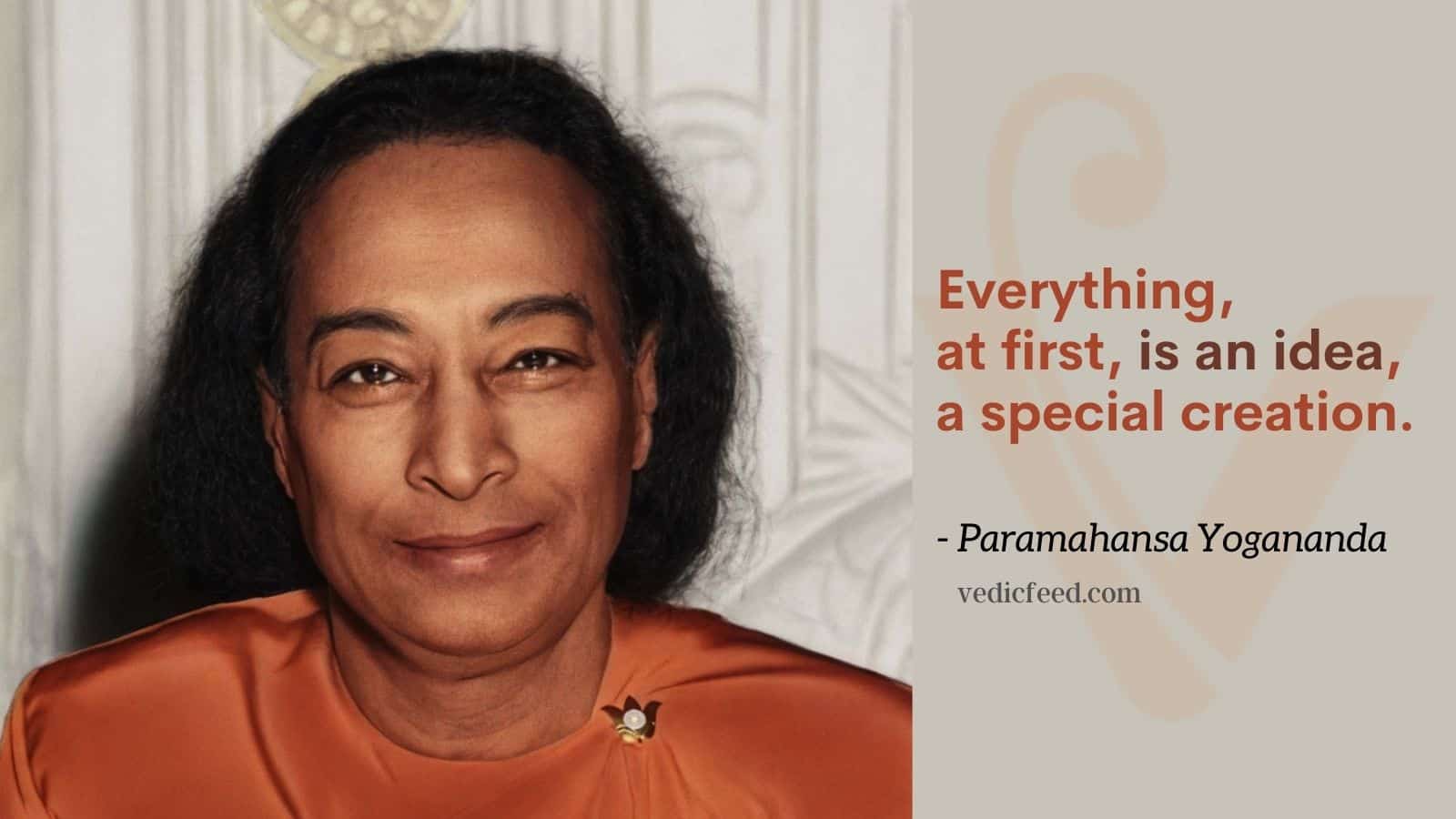
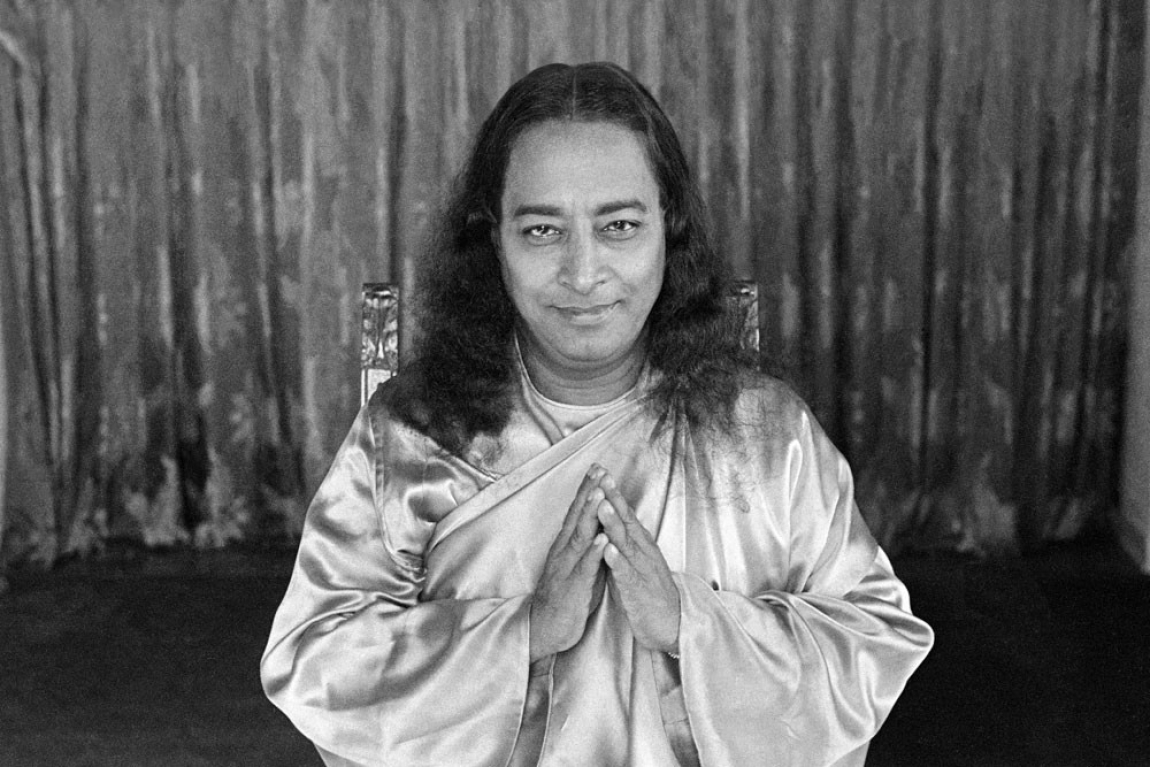
After graduating from Calcutta University in 1915, Mukunda took formal vows as a monk of India’s venerable monastic Swami Order, at which time he received the name Yogananda (signifying bliss, ananda, through divine union, yoga). His ardent desire to consecrate his life to the love and service of God thus found fulfillment.
Beginning of a World Mission
Yogananda began his life’s work with the founding, in 1917, of a “how-to-live” school for boys, where modern educational methods were combined with yoga training and instruction in spiritual ideals. The Maharajah of Kasimbazar made available his summer palace at Ranchi (about 250 miles from Calcutta) as the site for the school. Visiting the school a few years later, Mahatma Gandhi wrote: “This institution has deeply impressed my mind.”
One day in 1920, while meditating at the Ranchi school, Yogananda had a divine vision showing him that now was the time to begin his work in the West. He immediately departed for Calcutta, where the next day he was invited to serve as India’s delegate to an international congress of religious leaders convening later that year in Boston. Sri Yukteswar confirmed that the time was right, saying: “All doors are open for you. It is now or never.”

Shortly before his departure, Yogananda was visited by Mahavatar Babaji,
the deathless master who revived in this age the ancient science of Kriya Yoga. “You are the one I have chosen to spread the message of Kriya Yoga in the West,” Babaji said to Yogananda. “Long ago I met your guru Yukteswar at a Kumbha Mela; I told him then I would send you to him for training. Kriya Yoga, the scientific technique of God-realization, will ultimately spread in all lands, and aid in harmonizing the nations through man’s personal, transcendental perception of the Infinite Father.”
The young swami arrived in Boston in September 1920. His first speech, made to the International Congress of Religious Liberals, was on “The Science of Religion,” and was enthusiastically received. That same year he founded Self-Realization Fellowship to disseminate worldwide his teachings on India’s ancient science and philosophy of Yoga and its time-honored tradition of meditation. The first SRF meditation center was started in Boston with the help of Dr. and Mrs. M. W. Lewis and Mrs. Alice Hasey (Sister Yogmata), who were to become lifelong disciples.
For the next several years, he lectured and taught on the East Coast; and in 1924 embarked on a cross-continental speaking tour. Reaching Los Angeles in early 1925, he established there an international headquarters for Self-Realization Fellowship atop Mt. Washington, which became the spiritual and administrative heart of his growing work.
From 1924 to 1935, Yogananda traveled and lectured widely, speaking to capacity audiences in many of the largest auditoriums in America — from New York’s Carnegie Hall to the Los Angeles Philharmonic Auditorium. The Los Angeles Times reported: “The Philharmonic Auditorium presents the extraordinary spectacle of thousands….being turned away an hour before the advertised opening of a lecture with the 3000-seat hall filled to its utmost capacity.”
Yogananda emphasized the underlying unity of the world’s great religions, and taught universally applicable methods for attaining direct personal experience of God. To serious students of his teachings he taught the soul-awakening techniques of Kriya Yoga, initiating more than 100,000 men and women during his thirty years in the West.
Among those who became his students were many prominent figures in science, business, and the arts, including horticulturist Luther Burbank, operatic soprano Amelita Galli-Curci, George Eastman (inventor of the Kodak camera), poet Edwin Markham, and symphony conductor Leopold Stokowski. In 1927, he was officially received at the White House by President Calvin Coolidge, who had become interested in the newspaper reports of his activities.
In 1929, during a two-month trip to Mexico, he planted the seeds for future growth of his work in Latin America. He was welcomed by the president of Mexico, Dr. Emilio Portes Gil, who became a lifelong admirer of Yogananda’s teachings.

“Be as simple as you can be; you will be astonished to see how uncomplicated and happy your life can become.”
― Sage Ashtavakra
By the mid-1930s, Paramahansaji had also met quite a few of the early disciples who would help him build the Self-Realization Fellowship work and carry the Kriya Yoga mission forward after his own lifetime was over — including two whom he appointed to be his spiritual successors as president of Self-Realization Fellowship: Rajarsi Janakananda (James J. Lynn), who met the Guru in Kansas City in 1932; and Sri Daya Mata, who had attended his classes in Salt Lake City the previous year.
Other disciples who attended his lecture programs during the 1920s and ‘30s and stepped forward to dedicate their lives to the SRF work were Dr. and Mrs. M. W. Lewis, who met him in Boston in 1920; Gyanamata (Seattle, 1924); Tara Mata (San Francisco, 1924); Durga Mata (Detroit, 1929); Ananda Mata (Salt Lake City, 1931); Sraddha Mata (Tacoma, 1933); and Sailasuta Mata (Santa Barbara, 1933).