




























Good Company | Bad Company
Good Company | Bad Company
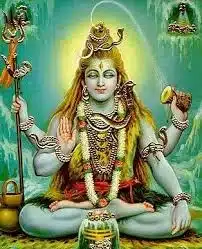
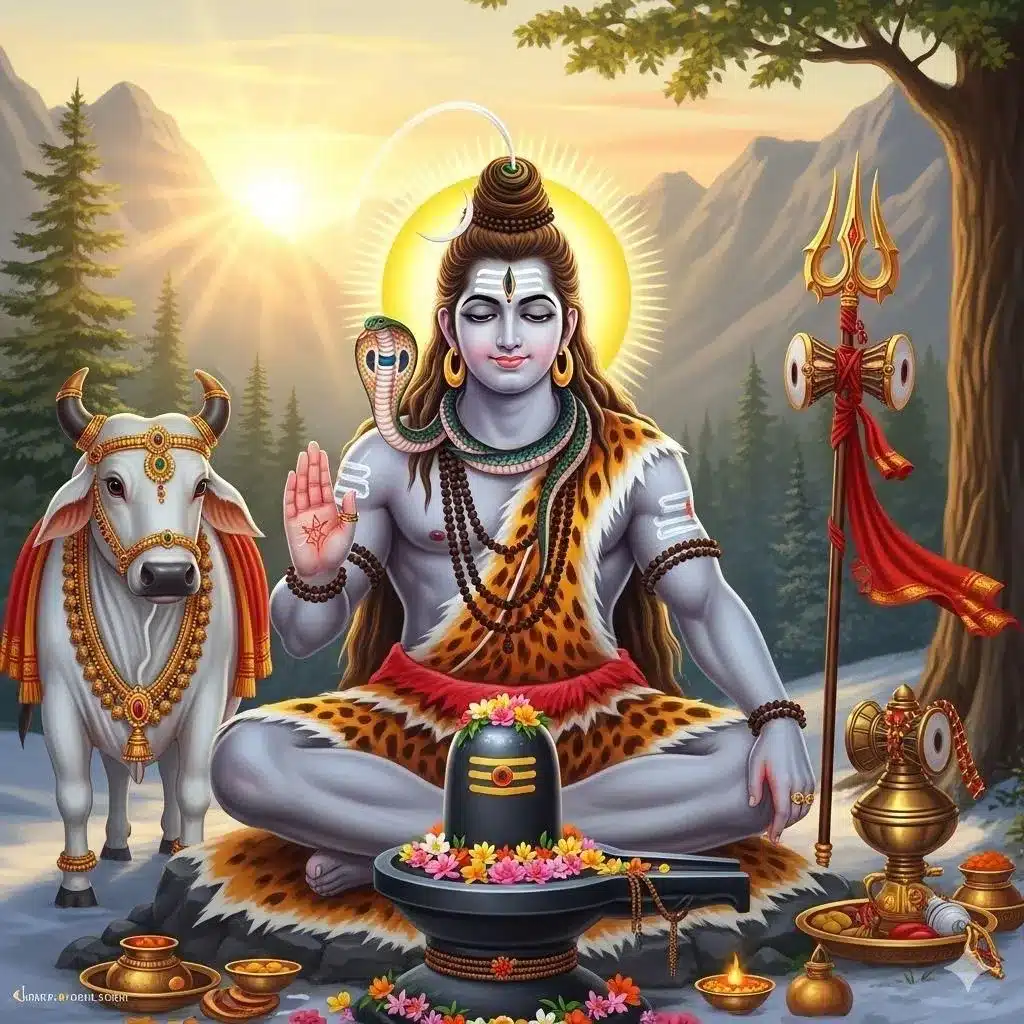
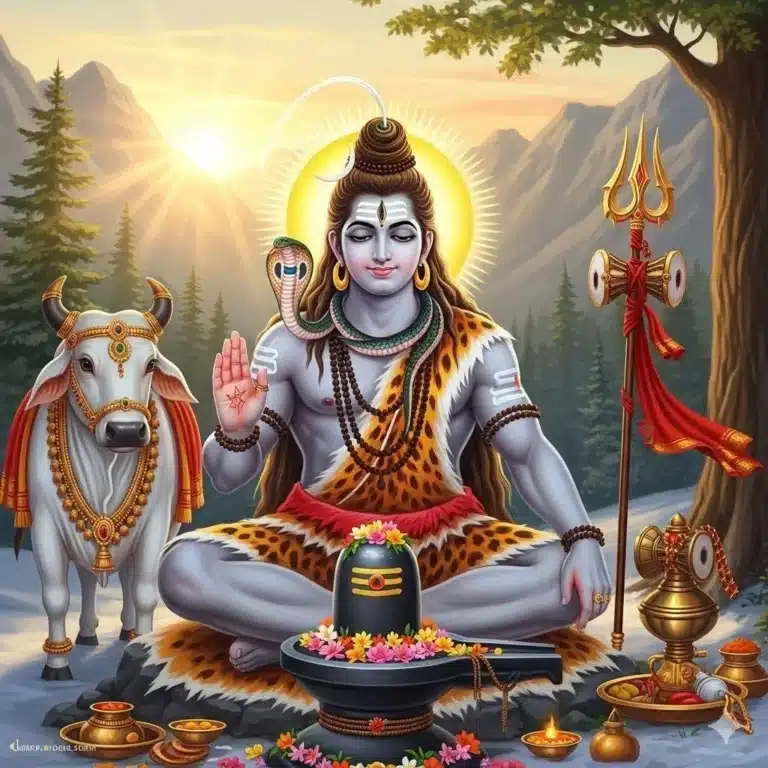
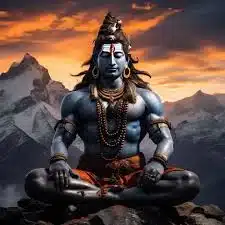
Man always becomes good or bad by the company he keeps. If, therefore, we get into sacred company, we will also acquire sacred qualities. There is a small example for this. If we look at a snake at any place, we regard it as harmful and we try to kill it. But if the same snake is in the company of Easwara, we begin to worship it and respect it because of the company it keeps. The Upanishads have taught us that both good and bad qualities really come out of the company that we keep. If we find a rat in some corner, we immediately try to trap it and kill it. But if the same rat is seen as the Vahana of Vinayaka (Ganesha), we make obeisance to it. We do so because of the company it keeps. Bad qualities are also like this. If we take a big pot full of milk and add even a few drops of liquor to it, the milk itself will become bad. In similar manner, fire, which is regarded as a sacred entity, gets hammered when it is in contact with a lump of iron.
Thus, by bad company we get several troubles and sorrows, and by good company we get good results. If we take a piece of iron and throw it in the dust, it will get rusted and will lose all its value. However, if the same iron is put in fire, it loses its impurities and acquires a bright shining colour. In this way, man changes because of the company that he keeps. If dust comes in contact with wind, it will go high up although it has no wings to fly. The same dust goes down to the lowest depths when it comes into contact with water. It has no legs to go down or wings to go up. Thus the company we keep determines whether we go up or down. As we know, good company results in a calm and peaceful life. That is why elders tell us that we should keep good company. Although Balarama and Krishna have both aspects of divinity in them, one follows the path of Jnana while the other follows the path of Bhakthi or devotion. Between Balarama and Krishna both paths are demonstrated to the world. That is why there is sometimes so much contradiction in their actions. The Jnana Marga relates to one’s wisdom while the Bhakthi Marga is related to one’s heart.
On one occasion, Krishna wanted to give Subhadra in marriage to Arjuna but Balarama did not agree to this. The actions of Krishna are such that he shows the harmony between one’s thought, word and deed. It has been said that the proper study of mankind is man, and Krishna always establishes such a harmony. He has always been addressing Arjuna as his brother-in-law, and he felt that he should not go on calling Arjuna his brother-in-law without actually making him his brother-in-law by a marriage alliance. In that context, if you simply come on a platform and address everyone as brothers and sisters, it will be a very shallow statement and will not reflect the truth.
Only when you really regard one and all as brothers and sisters should you address them as such. The feeling of anxiety that you will have when your own brothers and sisters are in trouble must be reflected when anyone gets into trouble. If an unrelated person looks at your sister with some bad intentions, it will cause you a great deal of pain and unhappiness. You should feel hurt in the same manner, when these other brothers and sisters are humiliated or insulted. Therefore, the words we utter with our mouth must also be put into practice and we should experience the same in our thoughts. The students today should strive to promote such harmony between their thought, word and deed. The leelas of Krishna were such that he was putting his thoughts into practice. Krishna never had any impure ideas in him. He never had any worldly thoughts in him. He had no blemish in him at all. He always had pure thoughts. Krishna is an ideal example and we should end up by becoming one with him.
Buddha observed silence and became quiet. Every sacred act has manifold rewards. By being quiet, Buddha began to experience Soham (“I am That”) within Him. You may chant the names of Rama, Krishna, Govinda, Buddha, and Sai to steady your mind. Once the mind becomes steady, you do not need to chant. Observe total silence. That is why it is said, silence is golden. Once words become less, the activities and vagaries of the mind also become less. As words increase, the vagaries of the mind also increase. Annihilate the mind by quietude. However, it is easier said than done. Man may die, but the mind will not die. The mind vanishes when words vanish from it.
Observing silence is one of the ways of silencing the mind. That is why our ancients practised silence. We should not allow the mind to go wherever it likes and do whatever it likes. We should not allow the mind to ridicule, hurt, and hate others. If you hurt anybody, you will be hurt ten times more. You may be proud that you have abused somebody. But there will be somebody who will abuse you also someday. The sin you commit today will bring retribution to you later amplified manifold.
You are easily led astray by the vagaries of the mind. That is why, I say, WATCH! W is for watch your Words; A is for watch your Actions; T is for watch your Thoughts; C is for watch your Character; H is for watch your Heart. If the watch reminds you every second of the need to watch these five, you can be quite happy. The mind swings like a pendulum between one pleasant object and another. To stop the pendulum, the easiest means is to stop winding. That will put an end to the swing. So too, stop encouraging the mind by following its whims and fancies. When we beat another or cause harm to him, we justify it as only right and proper; when he beats us or harms us, we revolt and call it wrong and punishable.
Everything is judged by us on the touchstone of the ego. The mind is a double-edged sword – it can save, but it can also bind. Yoga is the restraint of the waves natural to the mind. By learning and practising the disciplines of yama, niyama, asana, pranayama, prathyahara, dharana, dhyana, and Samadhi (abstention from evil-doing, various observances, postures, control of breath, restraining the sense organs, concentration, meditation, absorption in the Atma), the seeker can overcome and eliminate the mind.
Keep a Watch on Your Words
Dear students! You are pursuing your education in a sacred atmosphere. You must continue to develop this atmosphere later in your life. Modern science is, of course, great. But, your senses are at a low level. Along with science, the senses must also be raised to a higher level. Today, we are leading a high-level life, keeping our senses at a low level. This should not be what is meant by “educare.” Educare is bringing out the latent Divinity in a human being. Whatever words you speak, you must watch whether they are the result of your education or educare. Today, nobody is keeping this watch. I often refer to the spelling of the word, WATCH. The spelling consists of five letters, namely, W A T C H. These letters stand for:
W – Watch your Words
A – Watch your Actions
T – Watch your Thoughts
C – Watch your Character
H – Watch your Heart
The real watch is when you keep a watch on your words, actions, thoughts, character, and heart, not the one you wear on your wrist. The wristwatch may go for repair, but the word “watch” will never be damaged. It will always bring purity of thought, word, and deed. How great these words are! Education in the olden days contributed to making man a noble and ideal human being.
Watch Your Thoughts and See That They Do Not Go Astray
Do not waste your thoughts, for it makes your mind unsteady and wavering. (Showing His handkerchief ) What is this? This is a cloth. No, this is not a cloth but a bundle of threads. Not even threads, it is just cotton. Without cotton, there can be no threads, and without threads there can be no cloth. Likewise, the mind is nothing but a bundle of thoughts. Therefore put a check on your thoughts. Even the wealth you acquire and the food you eat must be within a certain limit. Food is God; do not waste it.
You should help others, never hurt them. Help ever, hurt never. These are some of the guidelines for purposeful living that you must follow. He is a blessed one who conducts himself in such a way that he does not hurt others nor is he hurt in the process. You have to learn these skills, which are not available in textbooks. Watch your thoughts, and see that they do not go astray. Each time a thought arises in your mind, analyse it. Is it good or bad? If you feel it is bad, do not allow it to persist. Just let it pass. If it is a good thought, put it into practice so that you and others also will be benefited.
Achieve Awareness of the Atmic Reality
Desire breeds wishes. Wishes cause birth and death. When one is devoid of desire, one need not go through birth and death. The next birth is the result of unfulfilled desires in this life and is determined by them. Those who have no trace of desire for material objects can achieve the awareness of the Atmic Reality.
In fact, the desire to know God, to love God, and to be loved by God is not a desire that binds. When awareness of God dawns in all its splendour, every worldly, sensual desire is reduced to ashes in the flames of that awareness. The individual Self will turn toward the Universal Self as soon as desire comes to an end and the Self delights in supreme peace. The Self must break off all contact with non-self, so that it can earn immortality. You are a heap of thoughts. Your thoughts play a vital role in shaping your life. That is why you are advised to watch your thoughts and to welcome only good ones.