



















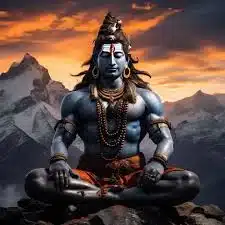











Experience Swami’s Teaching at the Summer lectures on June, 2004
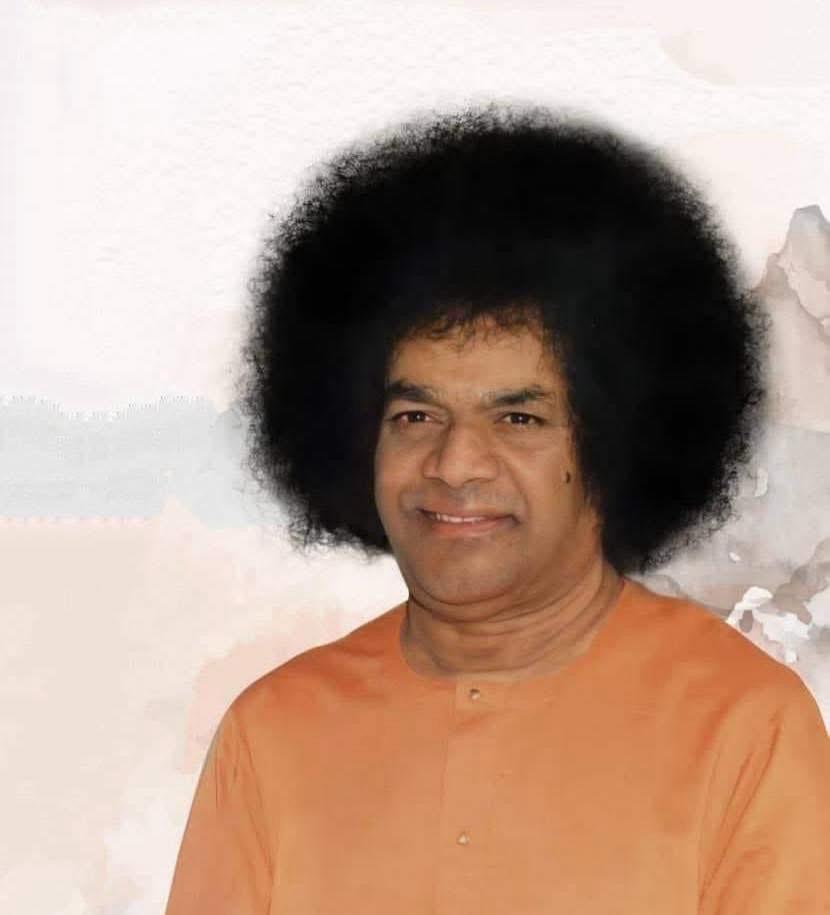
Experience Swami’s Teaching at the Summer lectures on June, 2004
Light and Love
Experiences how better to acknowledge and put into practice Swami’s Teaching carried out with the group of teachers and specialists during their Summer lectures week on a remote area of wild nature in June 2004.
“The world is a great teacher, a constant guide and source of inspiration. That is the reason why man is placed in the world. Every bird, every animal, every tree, mountain and star and each tiny worm has a lesson for man, if he has but the thirst to learn. These make a world a veritable University for man; it is but a Gurukul (a school for spiritual learning) where he is a pupil from birth to death.” (Bhagawan Sathya Sai Baba. Thought for the day. 26 June 2004).
(To carry out teachers and specialists environmental scholarship is my official job during many years. I entwine the scholarship with Swami’s Teaching from His books, discourses).
I like to use Swami’s quotations, like to explain them according to the level of groups through direct examples from nature, from science, from social relations in society. The members of scholarship as a rule are not Sai devotees, but many of them have become Sai followers when they understand how deeply Swami’s Teaching is entwined with modern science and with the all life. Swami’s quotations and books, articles about Him written by His true devotees were the sources of the Divine energy expressed not only by meaning of the texts, but also by an untouchable divine energy, what they are carrying. Swami has stressed many times that all around what a human being percepts has in core expression of unite Oneness, Atma in diverse forms. Thoughts, mental activity carries the same divine spring as the source of everything what exists in the Universe and in the Self of human being.
Why I decided to share this story telling with you?
Swami advices:
“In the Study Circle, whatever we listen and assimilate in the mind should be distributed to others. In that way we show gratitude for what we have receded…. Whatever we hear and practice should also be distributed to society at large.
…You can learn a lot of things, but the most important thing to be learnt is your own Atma-tatwa. Learning all about external things without knowing your real self is like studying the branches of tree, ignoring his roots. There are many fruits on the tree. We can see the fruits. What happens if you water those fruits? They will fall down. But if you water the roots down below, the tree flourishes and will give fruits which can be enjoyed.” (Excerpts from: Bhagawan Sathya Sai Baba. SSS. Vol. 18, Part 5).
This year’s Summer lectures were open with the discussion of article about Swami by Samuel Sandweiss, what inspired all our participants to see the Divine everywhere and to develop the proper spiritual attitude.
Enjoy the this discourse, what was the first topic of disscussion at Summer lectures 2004.
“Individual Transformation.” Sri Samuel Sandweiss. Proceedings of the Sri Sathya Sai International Seva Conference. July 21 – 23, 2002, Prasanthi Nilayam. http://www.sathyasai.ca/Content/Data/Teachings/Seva%20Conference.doc . (I do not reproduce this discourse, as it is available at site noted above in full).
Everyone from us enjoyed this article by its own way, but all teachers pictorially felt the light breeze of Divine energy what analyses of this article has carried.
Swami Himself explains: “There is Divine Love in you which has neither birth nor death. If you cultivate such love, you will always remain as embodiments of love. Have firm faith in this Divine Love. Do not believe the worldly love, lest you should be deceived. The worldly love is like passing clouds. Love the eternal love. That is the Atma Tattwa. Cultivate such type of love that will not cause disappointment. Pursue any type of education; but, understand the inner meaning of education. Then put it into practice, experience and enjoy that essence of that education. Do not be disappointed by directing your love towards all and sundry. Several students are being disappointed in that manner. In the end, they are unable to love anybody. That is not the right way. Love the principle of Love itself, which is Divine and Eternal. The more you love that Divine Love, the more it grows.” (Excerpts from the Divine Discourse Bhagawan Sathya Sai Baba “Love is God – Live in Love.” 28 Oct, 2003 Prasanthi Nilayam).
Below is a tiny the compilation of Swami’s quotations concern to environment, society and education is shared what became a topics of discussion at Summer lectures. Every teacher shared his/her own experiences with students or from personal life inspired by Swami’s quotations.
As not all of the teachers were Swami’s followers I explained that participation from discussions connected with Swami’s Teaching and observation of Sailogram is strongly voluntary. They looked at me with strange eyes and asked Reet to do her duty seriously and not to create meaningless questions, as all is interested in this discussion.
The complex of these Swami’s quotations is represented. Everyone can experience by his/her own way what every quotation teaches, how to put in practice the advice given by Swami.
“Fill your minds and hearts with these sacred spiritual truths and go out into the world to spread the spiritual message in every street and every alley. The world today is in utter confusion. Unrest and fear stalk the world. To eliminate this disorder and fear, you have to instill devotion among the people. “(Excerpts from the Divine Discourse Sathya Sai Baba “Promotion of Unity: Student’s Duty.” 14 January, 1998, Prasanthi Nilayam).
“Worldly education makes man great, whereas the spiritual education makes him good. Spiritual education relates to the heart, the origin of sacred qualities like compassion, truth, forbearance, and love. Today, parents expect their children to go in for higher studies, amass wealth, and become great, but very few want their children to be good. Goodness is long-lasting, whereas greatness is temporary. Goodness forms the basis for spiritual life. There are crores and crores of people who have become great by amassing wealth, but what is their contribution to the welfare of society? Absolutely nil. Therefore, strive to be good, not great.” (Sathya Sai Baba. The Divine Discourse “Human values and Education.” 26 July, 1999, Prasanthi Nilayam).
“The value of an individual depends on their culture…The country is not a mere piece of land; it is an assemblage of citizens. For the country to progress, the citizens have to cultivate the moral, ethical, and spiritual values. It is not possible for citizens and leaders to cultivate these values unless they practice them right from childhood. So, parents and teachers should play an active role in shaping the lives of the students. First and foremost they have to enquire as to how the students can get rid of their evil tendencies. The teachers and parents are responsible for the good and bad in students.” (Excerpts from the Divine Discourse Sathya Sai Baba “Human values and Education.” 26 July, 1999, Prasanthi Nilayam).
“In fact, the task of the teacher is to discharge his duty of instructing and inspiring the students so that they develop their latent talents and advance in the perfection of their skills. The task of the student is to unfold the divine in him and equip himself for serving society with his skill and knowledge.
Man has three instruments gifted to him: The mind which involves him in thought, the power of speech which enables him to communicate his thought and the power of action by which he can execute his thoughts, alone or with others, for himself and for others. The mind designs thoughts, which are either helpful or harmful. The mind can lead man into bondage, deeper involvement in desires and disappointments. It can lead man into freedom, detachment and desirelessness.” (Excerpts from: Bhagawan Sathya Sai Baba. Vidya Vahini. Chapter XVIII).
“Therefore, one should learn Atma Vidya, the process by which one becomes aware of one’s Atmic Reality. By learning it and living it, one can quench his own thirst and help to quench the thirst of all mankind.” (Bhagawan Sathya Sai Baba. Vidya Vahini. Chapter X).
“Happiness is of three kinds. One type is of the nature of poison in the beginning but turns into nectar later. This happiness is secured through the awareness of the Atma; it is Sathwic happiness. That is to say, the preliminary sadhana of sama, dama etc., which has to be gone through, appears hard and unpleasant; it involves struggle and effort. So the reaction may be bitter. In the Yoga Vasishta, Sage Vasishta says, “O! Rama! The boundless ocean can be drunk dry by man with great ease. The enormous Sumeru mountain can be plucked from the face of the earth with great ease. The flames of a huge conflagration can be swallowed with great ease. But controlling the mind is far more difficult than all these.” Therefore, if one succeeds in overwhelming the mind, one achieves the awareness of the Atma. The bliss that one earns afterwards is the highest kind of happiness.





