














Divine Words of wisdom by Sathya Sai Baba – On Thoughts
Divine Words of wisdom by Sathya Sai Baba - On Thoughts
1. Act on the good thought the moment it rises : Ravana's Message to Humanity
Description
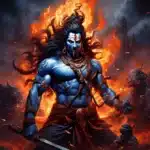
Last words of wisdom from Ravana: Good message Ravana fell down after being hit by the arrows of Rama. Many sages came and surrounded Ravana who was about to die in a few moments. All wanted to know the aim of Ravana who was a great scientist; one of penance, and one who had all the power. The sages said, “Ravana, what did you want to achieve in your life? What did you want to do?” Ravana’s sins had been done away with after being hit by Rama’s arrows. He had noble thoughts now. Raising his hands in prostration above his head with great difficulty he said, “O great and noble sages, what shall I say?! I had many plans but I could not fulfil them. But you must realise one thing from my life. You should never procrastinate implementing a good thought, act on it immediately. Never delay a good act. Never take time to do anything good. A good thought and its action must happen simultaneously. On the other hand, ignore a bad thought. Take long to ponder over it. I had planned to convert the sea water around Lanka into sweet water. But postponed acting on it and could not accomplish it. I had planned to alleviate the suffering of people in hell and bring them to heaven. But I postponed acting on my plan. I postponed acting on the good thoughts and now I am about to die unable to accomplish the good tasks. At least you act on the good thought the moment it rises and do good actions without wasting time.

2. There should be harmony in thoughts, words and deeds: Anecdote of three brothers
Description
There are three brothers in a house. There will be peace at home when the three brothers love each other and live in harmony with each other. But, if for any reason, there is hatred and difference of opinion among the brothers, there will be chaos and restlessness in the house. Unity is the basis for peace and happiness. Disunity is the cause for restlessness and lack of happiness. Who are these three brothers and what is this house? “Deho devalayao procto jeevo devah sanatanah!!”- The body is the temple or the residence. There are three brothers in the house called “body” namely- thoughts, “sankalpa”, words, “vaak” and actions, “kriya Shakti”. When there is happiness, unity and harmony among these three then one can be successful in any task. One cannot accomplish any task when thought, words and actions go in separate directions without unity among them. Hence “Trikarana suddhi” refers to the unity among the thoughts, words and deeds. Therefore one must encourage and foster the unity and harmony among these three.
3. What is Tarakam in Vedanta
Description
What is meant by ‘Tarakam’? It is ‘Khechari’, ‘Vechari’, ‘Madhyama’ and the true essence ‘Bhagawati’. One must try to analyse the essence of these four aspects. What is the meaning of ‘Tarakam’? Many people have described it in many ways. There are five signs in this. One should know clearly the five signs, ‘Pancha Mudras’. One should know these five signs, research and investigate them properly, experience them, then determine the necessary and the unnecessary and brush aside the unnecessary; have a vision of Nadabindu and realise the ‘hamsatwa’, later on experience the state of sath-chit-ananda on earth—this sums up ‘Tarakam’. Immersing and concentrating the human mind in the principle of sath-chit-ananda, the ultimate bliss is called as ‘Tarakam’.
4. As is your feeling so is your vision
Description
God is never selfish. He is selfless. How can selfish people to know the selfless? One’s own thoughts reflect as one’s ideas about others. “Yad bhaavam tadbhavathi” as is the thought so is the manifestation. People imagine according to their own thoughts and feelings. Therefore the Upanishads too reiterated: “Munde munde matir bhinna”, different heads have different thoughts. It is not enough if one punishes the body, one should also punish the mind. ‘Putta paina mardhinchina paamu maranamonduna?’ Will a snake be killed by mere rubbing of its hood?” Tanuvunu taadandinchina vishayabhogammulu anuguna? Will mere punishing the body stop the sensual desires? Aakali dappulu veedinantha aatmagnyani taanaguna? Will giving up hunger and thirst result in knowledge of Atma? Taanevaro teliyakunna tatwa gnyaani yetlaguno? Without self realization can one know the philosophical truth?! First and foremost one must know oneself for that is the very purpose of human life.
5. The words, mind, ego and the spirit belong to the same family
Description
Students!! The culture of Bharath is noblest and second to none. Man is sum total of his mind. Mind is the conglomeration of thoughts. Thoughts result in actions. Actions determine the joy and sorrow. Man’s behaviour is the cause for the joy and sorrow that he experiences. One’s behaviour is based on one’s thoughts. Mind is the collection of thoughts. Hence man is called as “Manishi”, human, as he originates from mind. Without mind man cannot be human. The one with mind is “Manishi”, human. Birds and animals do not have a mind. Therefore “Vaak”, word originates from the mind. The mind originated from ego and ego is a reflection of ‘Atma’, the soul. Hence the word, the mind, ego and the soul belong to the same family. Word, mind and ego together help man to attain Divinity. When there is harmonious relationship amidst all the three, then man attains divinity. When there is disharmony among these three it leads to restlessness.
6. The attributes of wisdom - Sraddha, Rutham, Sathya and Yoga
Description
The first one is “Shraddha”. It has two meanings: ‘interest’ and ‘stability’. Shraddha is comprised of two aspects, namely ‘interest’ and ‘stability’. It is not enough if one has just ‘Shraddha’ or interest; one should have full faith in one’s interest. Therefore intellect has these two, namely the ‘interest’ and ‘stability’. The power of intellect is ‘Rutham’. What is its effect? It is the discrimination of good and bad under at all times that is the past, present and future, the three phases of time. The harmony of the thought, word and deed is called as ‘Rutham’. The word ‘Rutham’ is truly applicable only when there is purity in thought, word and deed. Hence the second aspect after ‘Shraddha’ is ‘Rutham’. Expressing the nature of ‘Rutham’ by way of word is called as ‘Sathyam’. ‘Sathyam’ or truth is that spoken word which comes from deep faith in the purity and unity of thought, word and deed. Merely uttering that, which is seen, heard or done, as it is, does not amount to truth or ‘Sathyam’; it only becomes a fact or ‘nizamu’. There is wide difference between truth and fact. There is a gulf of difference between intelligence and intellect; they are considered as same by people who do not know the difference between the two. Therefore truth is the expression of the nature of Rutham in word. The fourth aspect is ‘yoga’. What is ‘yoga’? There are many kinds of ‘yoga’ in the world today. According to Patanjali Yoga sutras yoga is defined as “yogaha chitta vruttinirodhakaha” meaning yoga is to have total control over one’s senses. Yoga means to have all the powers in a human under his control. Having total control is called as yoga. Exercising control over what one hears is yoga; control over smell is yoga; controlling one’s speech is yoga; control over one’s thoughts is yoga- therefore yoga is having control over the five senses. However one has to talk and cannot give up talking. But how should one talk? One must talk with purity and unity of thought, word and deed. One must not engage in arguments over untruth. Arguing about things unknown to oneself is ignorance. Arguments breeds hatred and disunity. Hence Vedas say, “Vaade vaade varjyathe vairam” meaning continuous argument gives scope to enmity. Therefore students should have full faith on the control over the senses. This age is very sacred, divine and a one that lays a royal path to bright future. It is the age where one builds the royal path to bright future. Today’s youngsters are the emancipators of this country. Sense control is the first and foremost lesson that the students should learn. Therefore, the combination of steadfastness, the Rutham, the truth and the yoga amounts to the mighty power. The divine manifestation is the mighty power. In that divinity, exists the Rutham; Sathyam, the truth, shines on this mighty power. Hence it is said that ‘truth is God’. Steadfastness is also divine for it is only through steadfastness that one can aspire to attain knowledge- “Shraddhavaan labhate gyanam”. Gyanam, wisdom, is God. It is said, “Sathyam gyanam anantham brahma!” meaning God is truth, God is wisdom, and God is without limits. Therefore truth is God; Rutham is God, Shraddha is God, Yoga is divine. God has so many names viz., “Yogeeshwara”, “siddhi sankalpa”, “sankalpa siddha”, and “yoga Yogeeshwara”. Of all the five aspects “buddhi” or intellect is the most important. The vedas reiterate this fact as “buddhi graahyam ateendriyam”. Intellect is transcendental, beyond the senses. Comparing such intellect with intelligence is not proper.