
































Compassion Come in Human Form
Compassion Come in Human Form
I proceeded forth and came from God; neither came I of myself, but he sent me. (Jesus in John 8:42.)
I came down from heaven, not to do mine own will, but the will of him that sent me. (Jesus in John 6:38.)
[It was Christmas eve at Prasanthi when word circulated among Christian devotees that Swami had invited them to the Mandir to talk to Him about the life and significance of Jesus. The devotees rushed to the temple to get as close to Baba as possible. When all was quiet, Swami
Three Stages of Self-Realization
Jesus spent all his life in the service of mankind. … While engaged in service to the diseased and the down-trodden, he announced himself as the ‘Messenger of God’. (9) Like most seekers, he first searched for the Divine in the objective world, but he soon realised that the world is a kaleidoscopic picture created by one’s own imagination, and sought to find God within himself. (10) Jesus wandered purposefully in lonely places for twelve long years, engaging himself in study, spiritual exercises and meditation on God. (11) He asked himself, “Am I just a messenger, or am I more closely related to God, a part of God with the Divine as my essence?” (12)
For eight [of those] years following his 16th birthday, he travelled in India, Tibet, Iran, and Russia. He was variously regarded as a beggar or as a sanyasi. Jesus had no money. His parents were very poor and practically abandoned him at an early age. (13) His stay in the Himalayan monasteries in Kashmir and in other centres of eastern asceticism and philosophical inquiry, gave him greater awareness. From the attitude of being a Messenger of God, he could now call himself the Son of God. The bond of relationship increased: the ‘I’ was no more some distant light or entity; the light became a part of the ‘I’. (14)
With the body-consciousness predominant, he was a messenger. With the heart-consciousness in the ascendant, he felt a greater nearness and dearness, and so the son-father bond seems natural at this stage. (15) At the end of this period, he returned to the society of men and announced “I am the Son of God”. (16) Thus he moved closer to God. (17)
In Kashmir [he] met many exponents and practitioners of the adwaitha system of thought, which declares that there is only One God. (18) He realised the One-ness beneath all diversity. (19) As
the Atman-Consciousness was established, Jesus could declare, “I and My Father are One. (20) [He saw] that he was Christ in his 25th year. (21)
His Mission to Israel
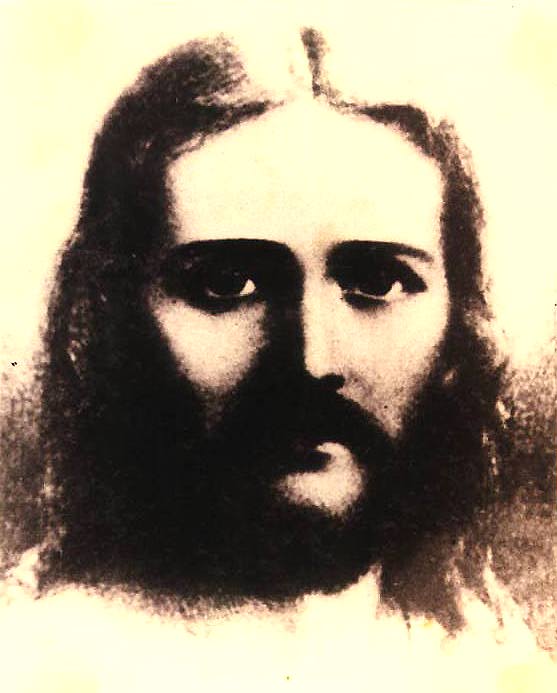
Jesus was compassion (karuna) come in human form. He spread the spirit of compassion and conferred solace on the distressed and the suffering. (22) [He] was honoured by the populace as Christ, for they found in his thoughts, words and deeds, no trace of ego. He had no envy or hatred, and was full of love and charity, humility and sympathy. (23) [He] taught simple practical lessons in spiritual advancement for the good of mankind; He manifested Divine Powers to instil faith in the validity of His teachings; He marked out the path that can confer on men the sweet nectar of Ananda. He exhorted people by precept and example to cultivate the virtues of charity, compassion, forbearance, love and faith. These are not separate and distinct qualities, they are only the many facets of the Divine Man, which he has to recognise and develop. (24)
Jesus found that scholars and ritualists had befogged the true religion. … Jesus found that people were running after glass beads, imagining them to be diamonds and attaching great value to them. (25) When [he] entered the precincts of the Temple of Jerusalem, and found people sacrificing doves and birds and other living beings to God, he released the birds and condemned the acts of blood. The priests and scholars resented his act and argued that the God in whom they had faith accepted the sacrifice and was propitiated thereby. They asked him for evidence of his authority to interfere with the dictates of religion. Christ went on to tell them a parable.
Once there was a farmer who had two sons. He asked his first son to go out to the field so that he may watch the crops ready for harvest. The son refused to obey him. Thereupon he asked the second son, and he readily agreed. But what really happened was, [when] the second son later calculated the bother and the sleeplessness which the watching will bring to him, he did not go. The first son later repented for his refusal to do as bidden, he went and watched the crop. Now, Christ asked, who among these two pleases the father more, the son who declared his assent by word of mouth and disobeyed in action or he who disobeyed by word of mouth but obeyed in action? You obey in words but disobey in action. My action reveals that I do acts which God has commanded. You are your own witness, whether you follow the dictates of the Divine Father, I have greater authority than you, for your action shows that you disobey whereas my action proves that I follow His commands. (26)
The Jews held the rituals and regulations laid down by the prophets in the scriptural texts as valid for all time and so they held the teachings of Jesus wrong. They were not moved by personal hatred towards Jesus. This problem arises in every age – the conflict between the letter and spirit – the doctrines that are held to be holy, the various do’s and don’ts that have to be scrupulously followed and the underlying Truth. In the Vedic Faith also, one can find this conflict between the upholders of ancient tradition and the promoters of deeper understanding. (27)
The priests of the holy temples of Jerusalem had become corrupt and commercialised. They had deteriorated into proud and selfish men. Jesus condemned them and tried to root out the evil practices. For all forms were in the eyes of Jesus, Divine Forms, and he could not tolerate any action which belied this status, So, when asked by people who he was, he could reply, “I and my Father are One”. (28) [These] tradition-minded and egoistic men considered Jesus a false prophet and they tried by every means to thwart his mission. Jesus, however, did not waver. Faced with opposition, he continued to be an example of living Truth, and to purify society. (29)
Jesus had 12 disciples, most of whom had faith in him and lived his teachings. (30) [But] the disciple who was most loved, Judas by name, decided to work against the Master, yielding to the low temptation of a few pieces of silver. (31) He could not find joy in life after this treachery. His mind gave him no peace: He had to seek refuge in suicide. (32) [Meanwhile Jesus] was surrounded and bound, and crowned by the crowd who captured Him, with a crown of thorns. (33) A thorny fence around a tree is clear proof that the tree has edible fruits in plenty. (34)
The Crucifixion
The Roman rulers were told that Jesus was attempting to assert himself as king and so could be punished for treason. Their insistence made the Governor order his crucifixion. (35) [Jesus was] nailed to the cross by His captors. (36) When the nails were being driven into him to fix him on the cross, Jesus heard the voice of the Father saying, “All life is one, my dear son; be alike to every one.” Then Jesus pleaded that those who were crucifying him be pardoned, for they knew not what they did. Jesus sacrificed himself for the sake of mankind.
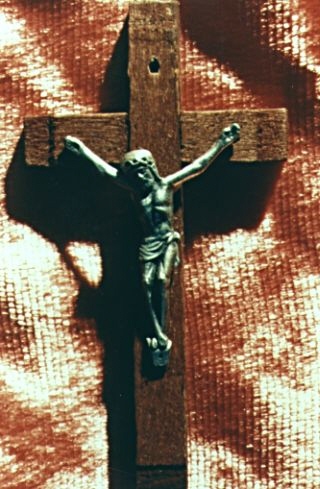
A person bound and beaten by the police cannot say that he has sacrificed anything, for he is not a free man. Let us pay attention to the sacrifice that Jesus made while free, out of His own volition. He sacrificed His happiness, prosperity, comfort, safety and position; He braved the enmity of the powerful. He refused to yield or compromise. He renounced the `ego’, which is the toughest thing to get rid of. Honour him for these. He willingly sacrificed the desires with which the body torments man; this is sacrifice greater than the sacrifice of the body under duress. (38)
Lessons from the Life of Jesus
Derision and denunciation follow the footsteps of the great in all ages. They haunt them like the shadow which cannot be avoided. His own disciples turned against Jesus, even those who adored him and hung on his words. They did evil to him who did them good. But, Jesus wished well for those who insulted and injured him. This is a lesson badly needed today. No one should count the harm inflicted on him and plan revenge. He must on the other hand return love for hatred, fraternity for enmity. To behave otherwise is a sign of weakness, of want of courage, of lack of faith in human goodness. Jesus won in this holy struggle. … We must cultivate in ourselves that conviction and that courage. (39)
Spiritual joy, wonder, appreciation, the Darshan of God must become the life, the natural breath of life, the very raison d’etre of existence in the body. This is what Jesus taught by precept and example to mankind, the Aathmic principle which is the eternal source of Bliss. (40) His heart melted in sympathy when he saw any one suffering. His entire life was dedicated to service. In the interest of Truth, he laid down his own life. Such persons are revered in the world, however much times may change. Jesus was engaged in Satyanarayana worship throughout his life; that is to say, he was adhering to Truth. Among us, people celebrate the Puja once a year, and even on that day they resort to untruth. (41)
“I am the Messenger of God”, he declared….. Yes! Each individual has to accept that role and live as [an example] of Divine Love and Charity. (42) When you are engaged in service, you too must feel as Messengers of God. Invoke His Grace and His Compassion on those whom you serve. (43) Jesus was not the only Son of God; you are all His children. Jesus and His Father are one. You and God are also one and you can be aware of it. (44)
Messenger and master, the two are basically separate, and so this stage is one of dualism or dwaitha.The son and father, though two separate entities, are bound by affection and kindred feelings and attitudes. They are like the whole and the part, the body and the limb. This stage is called visishtadwaitha or qualified non-dualism. (45) When Jesus declares that He is the Son of God, He becomes entitled to the paternal Majesty and Power. These He can claim only when He grows in the qualities that His Father has. As a result he attains mergence, which leads Him to assert, ‘I and my Father are one.’ The scriptures say, Brahmavid Brahmaiva Bhavathi: He who knows Brahman becomes Brahman. (46) When the Son and the Father are One, the stage is … adwaitha, non-dualism.





