








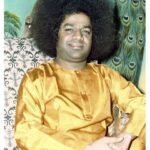













Bhagwan Swaminarayan
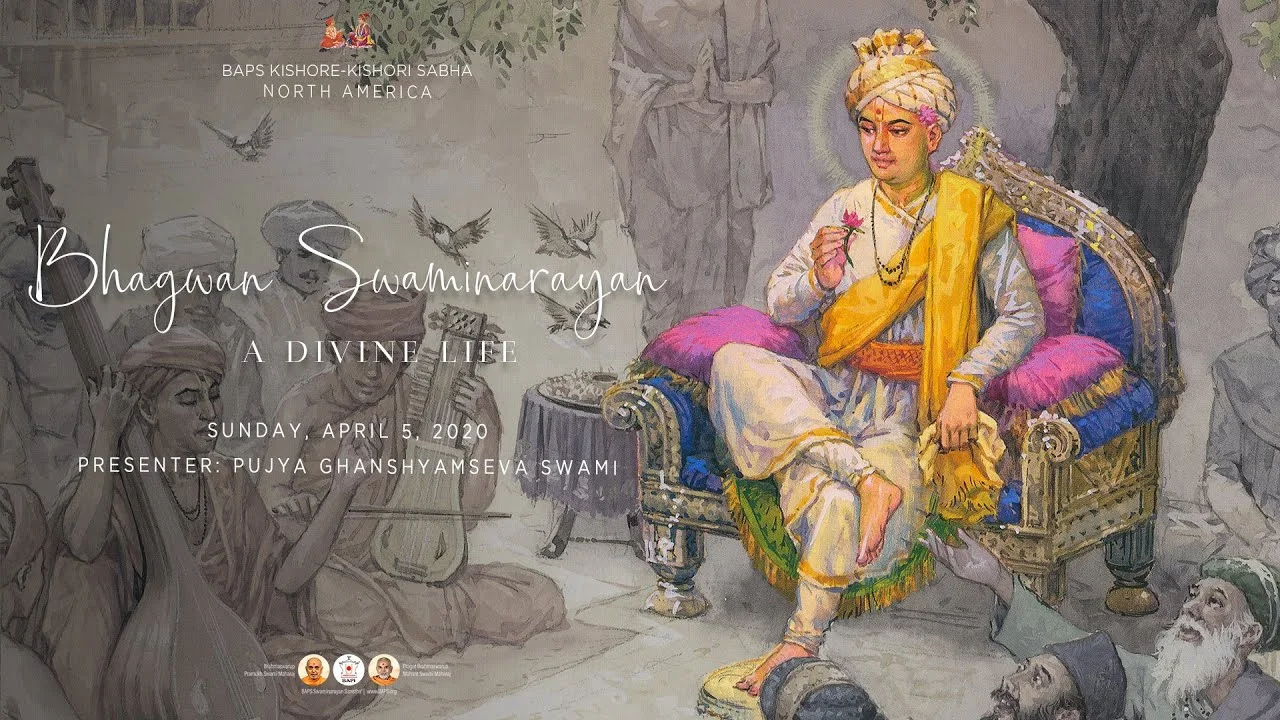
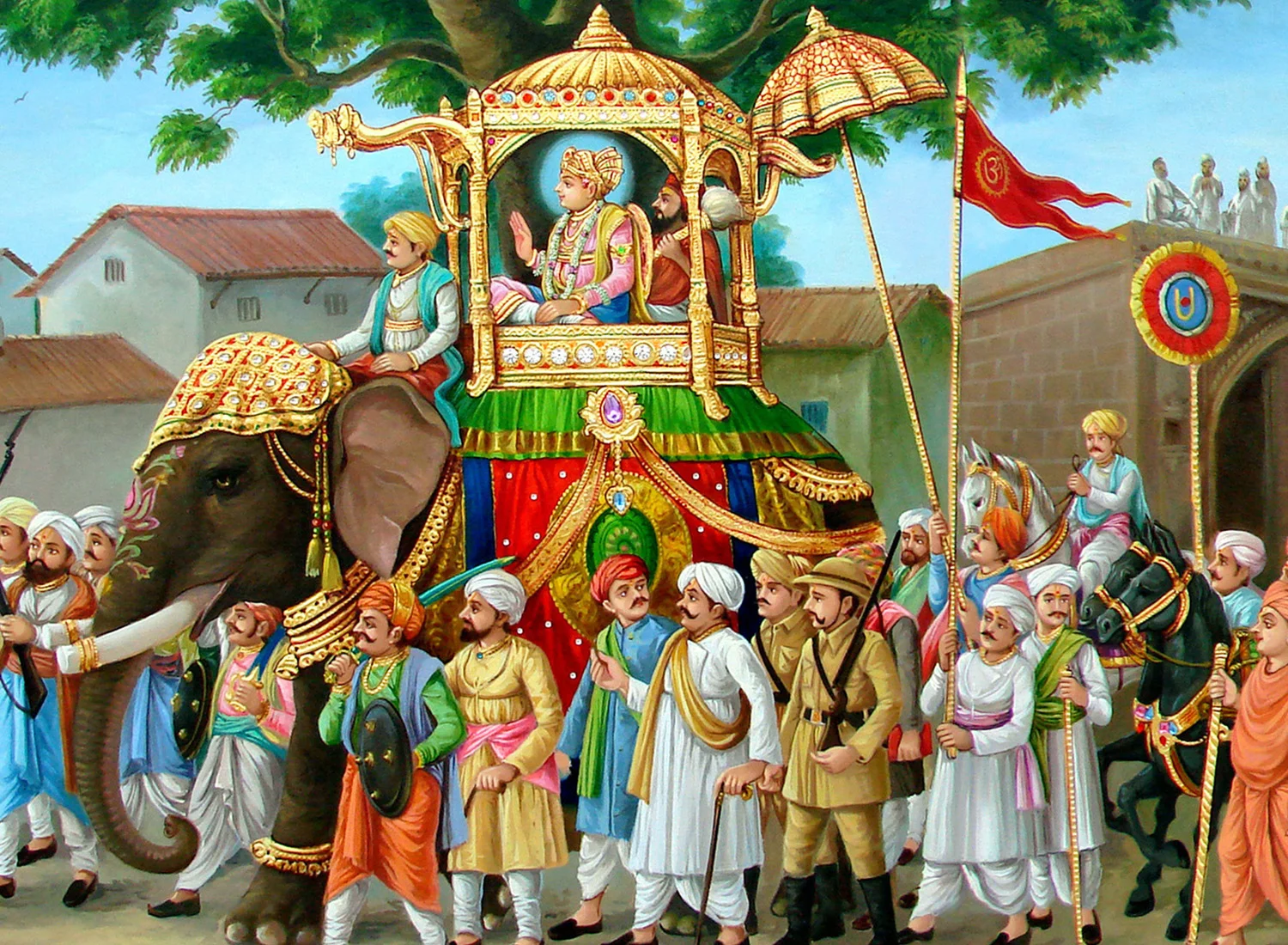
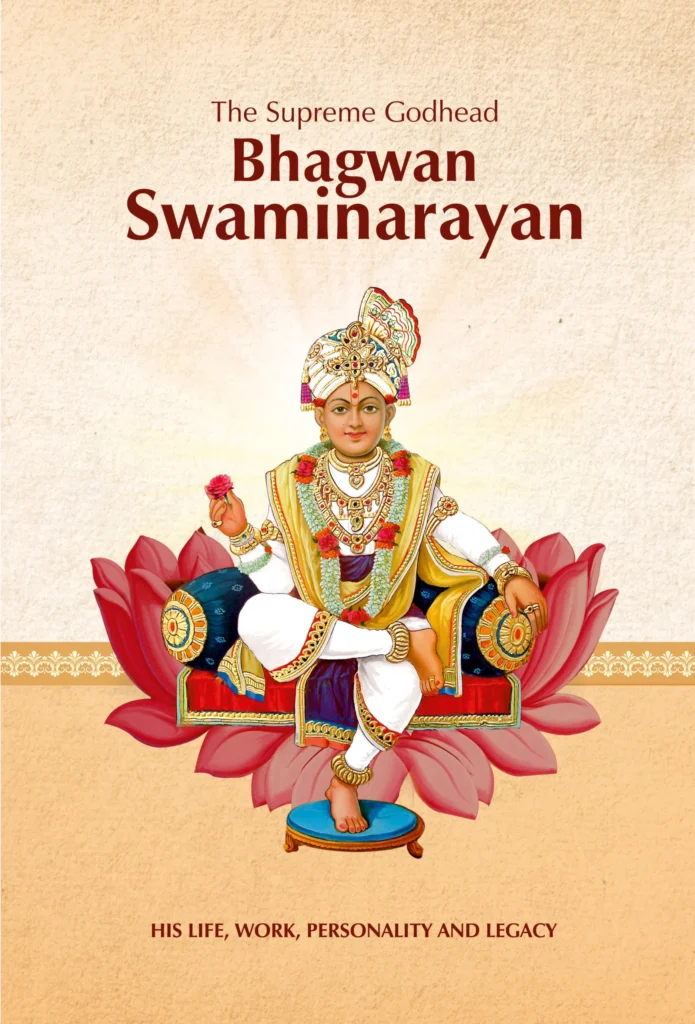
The Swaminarayan Sampraday is a Bhakti Sampraday founded by Bhagwan Swaminarayan on 31 December 1801 CE.
It belongs to the Vaishnav tradition and represents the purest form of the Hindu religion. It focuses its faith on salvation through total devotion – bhakti – to the Supreme God developed through dharma, jnan and vairagya
(righteousness, knowledge and detachment).
At 20, the Lord was in Ramanand Swami’s Ashram serving as a humble servant. He was named Sahajanand when Ramanand Swami initiated Him. The Lord became the sole spiritual master when Ramanand Swami appointed Him as the Guru of his ashram. A month later, Ramanand Swami passed away. On the 14th day of the funeral rites, in the village of Faneni, the Lord introduced the new Swaminarayan Mantra. News of this Mantra spread far and wide. And its spiritual power was felt everywhere. Sahajanand Swami now became known as Bhagwan Swaminarayan. Anyone who chanted the Mantra enjoyed samadhi – the ultimate spiritual experience.
Bhagwan Swaminarayan, also known as Sahajanand Swami, was a great spiritual reformer and divine incarnation who revitalized Sanatana Dharma in the late eighteenth and early nineteenth centuries. Born in 1781 in Chhapaiya, Uttar Pradesh, as Ghanshyam Pande, he displayed extraordinary spiritual qualities from early childhood. At the age of eleven, he renounced home and undertook a long spiritual journey across India as Nilkanth Varni, seeking saints, studying scriptures, and practicing intense austerities. This pilgrimage shaped his divine mission and prepared him to uplift society through spiritual discipline, devotion, and moral reform.
Bhagwan Swaminarayan left his physical body in 1830, but his spiritual legacy continues to flourish worldwide. Through temples, service activities, and spiritual education, his teachings continue to guide millions toward a life of devotion, discipline, and moral excellence. Bhagwan Swaminarayan stands as a timeless symbol of divine love, righteous living, and spiritual transformation.
Bhagwan Swaminarayan, also known as Sahajanand Swami, was a great spiritual reformer and divine incarnation who revitalized Sanatana Dharma in the late eighteenth and early nineteenth centuries. Born in 1781 in Chhapaiya, Uttar Pradesh, as Ghanshyam Pande, he displayed extraordinary spiritual qualities from early childhood. At the age of eleven, he renounced home and undertook a long spiritual journey across India as Nilkanth Varni, seeking saints, studying scriptures, and practicing intense austerities. This pilgrimage shaped his divine mission and prepared him to uplift society through spiritual discipline, devotion, and moral reform.
The teachings of Bhagwan Swaminarayan emphasized pure devotion to God, strict moral conduct, and self-discipline. He taught that liberation is attained through devotion to the Supreme God combined with righteousness and restraint. He strongly advocated values such as non-violence, truthfulness, celibacy, honesty, and abstinence from intoxicants. At a time when social evils and moral decline were widespread, his teachings brought clarity, order, and spiritual strength to thousands of lives. He uplifted people from all sections of society, including women and the marginalized, instilling dignity and spiritual confidence in them.
Bhagwan Swaminarayan established a well-organized spiritual fellowship, later known as the Swaminarayan Sampradaya, grounded in devotion, discipline, and service. He installed deities in several temples and laid down clear guidelines for personal conduct and spiritual practice. His teachings were preserved in sacred texts such as the Shikshapatri and the Vachanamrut, which remain central to the faith and provide practical guidance on spiritual living. Through these teachings, he presented a harmonious balance of bhakti, jnana, and dharma.
A remarkable aspect of Bhagwan Swaminarayan’s life was his emphasis on social and moral reform. He opposed practices such as animal sacrifice, addiction, and exploitation, and promoted compassion, cleanliness, and community harmony. His compassion extended to all beings, and his leadership helped transform entire communities into disciplined, peaceful, and spiritually oriented societies. His personal conduct and divine presence inspired deep devotion and unwavering faith among his followers.
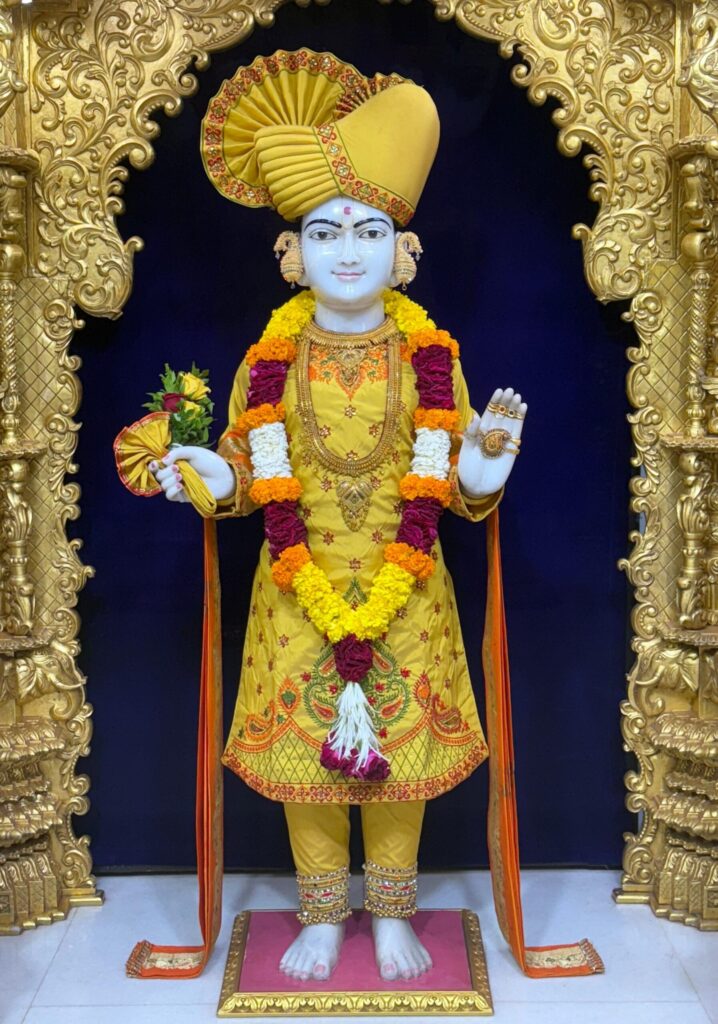
“Always go to temple (Mandir) and sit with saints. By going to Mandir, we get good virtues and morals in our life. The result of sins is very bad,” and “In the joy of others lies our own”
Bhagwan Swaminarayan
On 1 June 1830 CE (Jeth sud 10, 1886 VS), Bhagwan Swaminarayan left His mortal body which was cremated in Gadhada.
But long before that He had begun to reveal that He would continue to be present on this earth through a succession of spiritual Gurus. The Lord’s eternal words spoken on 8 February 1826 CE (Maha sud 2, 1882 VS) are recorded in Vachanamrut Vadtal 19: “When the Jiva gets a birth as a human being, God or God’s enlightened Sadhu are always manifest on this earth. When the Jiva knows and understands them, he becomes a Bhakta – God’s devotee.”
Keeping to this timeless promise, Bhagwan Swaminarayan entrusted Gunatitanand Swami, His Enlightened Sadhu, with the oars of the Sampraday.
“Gunatitanand and I are no different.”
“Just as people follow me, millions shall follow Gunatitanand.” Such revelations and predictions of the Lord, were truly and fully realized as Gunatitanand Swami led the mission. Since then, the spiritual succession has continued in all its divinity through Bhagatji Maharaj, Shastriji Maharaj, Yogiji Maharaj and, at present, Pramukh Swami Maharaj.
On his return to India, Swami Rama continued to lecture in the plains, but his health began to break down. He went back to the Himalayas and settled at Vasishtha Ashram. He gave up his body in the Ganges on 17 October, 1906, when he was only thirty-three.
The Rama Tirtha Publication League has brought out most of the writings of this great saint of India. They are given in several volumes, entitled, In the Woods of God-realisation. His inspiring writings show us that he saw his Beloved Lord in all names and forms. In many of his poems he sings the glory of nature.

Philosophy of Succession:
Philosophically, Bhagwan Swaminarayan is Purushottam – the God Supreme. And Gunatitanand Swami is Aksharbrahman – His divine abode, also called Akshardham. The Lord in His fullest glory, eternally resides in Gunatitanand Swami. They are ever together, inseparable – The Lord as the Master and Gunatitanand Swami as the ideal devotee, the disciple. On earth, every spiritual Guru in Bhagwan Swaminarayan’s succession is the incarnation of Aksharbrahman in whom the Lord resides fully and eternally. As every Guru is the same Aksharbrahman entity, the devotees feel no spiritual change, except the physical change of another successor. It is clear that the Guru is not God, but is God’s ideal devotee in whom God resides eternally.
Gunatitanand Swami – The First Successor:
Bhagwan Swaminarayan’s sole successor was Gunatitanand Swami who was the incarnation of Aksharbrahman, the Lord’s divine abode. Bhagwan Swaminarayan had brought him on earth to establish the worship of Bhakta-Bhagwan and continue the mission He had begun. For administrative purpose, He divided His mandirs into two regions and appointed two Acharyas, Raghuvirji Maharaj and Ayodhyaprasadji Maharaj to guide the progress. However, to the whole of Satsang in general, to all His followers, He revealed,
Bhagwan Swaminarayan left his physical body in 1830, but his spiritual legacy continues to flourish worldwide. Through temples, service activities, and spiritual education, his teachings continue to guide millions toward a life of devotion, discipline, and moral excellence. Bhagwan Swaminarayan stands as a timeless symbol of divine love, righteous living, and spiritual transformation.
Bhagwan Swaminarayan was a luminous spiritual force whose life combined divine wisdom, moral reform, and compassionate leadership. Revered by his followers as the Supreme God manifest on earth, he appeared at a time when society was deeply affected by moral decline, superstition, and social disorder. Through his divine presence and teachings, he restored faith in dharma and demonstrated that spiritual life must be rooted in purity, discipline, and devotion. His life itself became a living scripture, inspiring countless people to transform their conduct and consciousness.
A central pillar of Bhagwan Swaminarayan’s message was complete surrender to God accompanied by strict adherence to moral values. He emphasized that devotion without righteousness is incomplete. Control of the senses, purity of thought, and integrity in action were essential for spiritual progress. He especially stressed the importance of brahmacharya, honesty, and freedom from addictions, guiding devotees to lead clean and disciplined lives. These teachings brought stability and peace to individuals and communities alike.
Bhagwan Swaminarayan also placed great.
“Gunatitanand is Aksharbrahman, My divine abode…. I am the Lord supreme and Gunatitanand is my ideal devotee.”
Bhagwan Swaminarayan was a luminous spiritual force whose life embodied divine purity, discipline, and compassion. From his early years as Ghanshyam, he displayed extraordinary qualities such as deep devotion, wisdom, and detachment. His long pilgrimage as Nilkanth Varni across the length and breadth of India was not merely a journey of physical hardship but a profound spiritual mission. During this period, he practiced intense austerities, engaged with saints of various traditions, and demonstrated unwavering commitment to truth and righteousness. This journey prepared him to guide humanity with clarity and spiritual authority.
He lovingly commanded everyone, “One month, every year come to Junagadh and stay here,” since it was in Junagadh that Gunatitanand Swami resided as the Mahant – Head Sadhu. And only by associating with him, would devotees ultimately realize the true glory of the Lord and attain eternal salvation.
Swaminarayan Bhagwan incarnated on earth, along with His dham and some of His muktas, to establish ekantik dharma, and grant kalyan to those who became His bhaktas. He incarnated at Dharma-Dev’s house in Chhapaiya in Kaushal-Desh, to save Bhakti-Mata and Dharma-Dev from harassment by demons. He also incarnated to take mumukshu bhaktas to Akshardham, by imparting knowledge of His svarup, dharma, vairagya, and bhakti.
While on earth, He established ekantik dharma, which had been destroyed many years ago, and He destroyed adharma. He initiated over 2000 sadhus, of which 500 were initiated as paramhans. Also, He built mandirs, and installed murtis, which will always remain on earth. In this way, Bhagwan forever resides on this earth through His sadhus and His murtis. Swaminarayan Bhagwan also wrote and narrated shastras, authenticated ancient shastras, and instructed His sadhus to write shastras.

Established ekantik dharma, and destroyed adharma Initiated over 2000 sadhus, of which 500 were initiated as paramhans – He remains on earth through these sadhus Built mandirs, and installed murtis for bhaktas to always have the darshan of Bhagvan’s murti Established two seats of leadership (gadi),
and two acharyas to protect and promote the sampraday Revealed the philosophy of the Veds in simple words Wrote shastras, and authenticated ancient shastras, and shastras written by His sadhus Summarised the essence of all the shastras in the Shikshapatri Opened charity-houses for the poor Organised food and water aid for people during times of drought Stopped the practice of sati,
as it was suicide/murder (some were forced) – human life is only given and taken by Bhagvan Stopped female infanticide (killing of baby girls) Encouraged the bhaktas to educate females, which meant they were able to give talks about Bhagvan Stopped the sacrifice of animals in yagnas Allowed members from all varnas (castes) into the Swaminarayan Sampraday;