



























Are you really suffering?
Are you really suffering?
By David Jevons
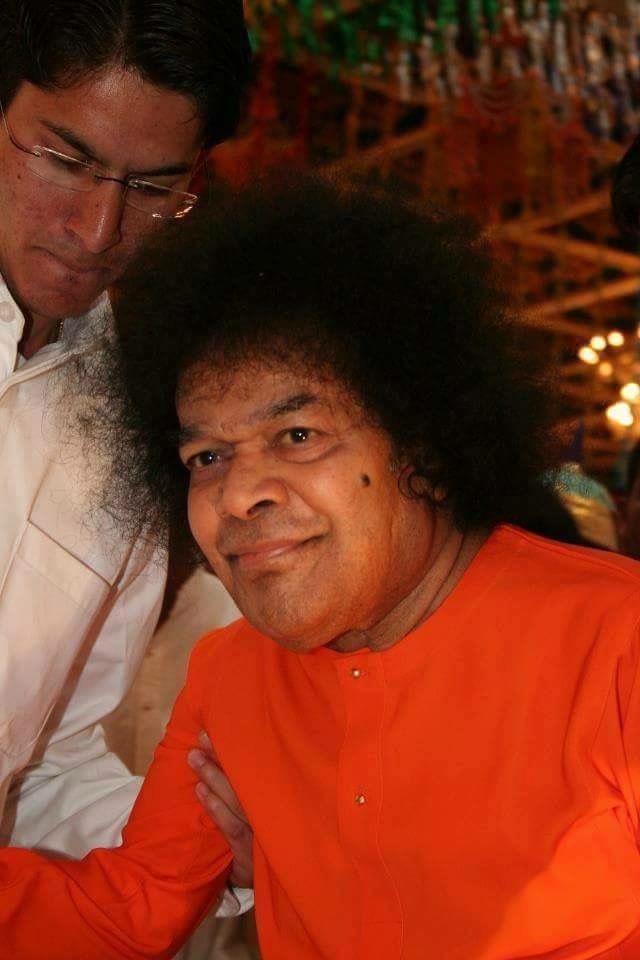
Those of you who are regular readers of the Ramala newsletter will no doubt be aware that in recent months I suffered a heart attack, which necessitated a visit to my local hospital on three occasions and having to undergo two minor heart operations. These visits gave me time for reflection, both on the nature and purpose of suffering and on the way that I viewed other people’s suffering. Many of you will also have heard that Sai Baba fell and fractured his hip a few months ago, and that he had to undergo a painful operation. For me personally it has been a challenging time, because I knew that Sai Baba had willingly taken on the illness of devotees at various times in the past in order to save their lives, and had subsequently healed himself, so why would he not heal himself now? Furthermore, why did such an accident happen to an avatar, a realised being? If even they have to suffer, then, what hope is there for us lesser mortals? I just could not understand why this accident had happened to Sai Baba and all sorts of niggling doubts began to arise in my mind.
We were in an interview with Sai Baba several years ago and some one asked him about how they should handle suffering. Sai Baba replied that all suffering is associated with body consciousness and that the spirit, the divine atma, never suffers. He then took a handkerchief in his hand, held it up and dropped it saying, “This handkerchief represents the suffering, just let it go and it will fall away” and then to illustrate this he let go of the handkerchief and it dropped to the ground.
At the time I remembered thinking that whilst this process might apply to psychological suffering, I was not too sure as to how it would help me to cope with physical body pain. Nevertheless, in succeeding years, whenever I was faced with physical pain, usually in the dentist’s chair, I got myself into the habit of chanting silently “I am not my body, I am not my body” and of saying the Gayatri Mantra. I used to meditate and try to move my consciousness onto another plane of being, to be the observer of my body, to disassociate myself from it, but I only met with limited success. The main problem was that I only practised the technique when I was about to face pain, rather than on a daily basis and, as with meditation, you just can’t sit down and expect to do it. You have to practise. It is rather like practising a fire drill. You practise it even though no fire is present at the time. Nevertheless I know that the principle is correct and my more recent experiences have proved to me that relaxing and focussing on something other than the pain is most beneficial. Sai Baba says, ” To rise above pain one should meditate and chant God’s name. Without meditation it is not possible to control and master the mind. Thus, meditation is essential, to immerse the mind in the Supreme Consciousness.”
Suffering is an integral part of life on the physical plane of Earth. If you come on the Earth, even if you are an avatar, then you must expect to face suffering in one form or another because, as Sai Baba says, “You have to pay your human taxes.” But why would our Creator base the drama of life on such a premise? Why does even a realised being, a Godman, have to suffer? Sai Baba says, ” Various saints had endless troubles in their lives with family, harsh treatment from others, and so on. But their faith in God remained untouched. They themselves did not suffer. Jesus did not suffer. But it was necessary that they go through what is generally regarded as suffering so that the world could have noble examples of worldly detachment and unshakeable faith in God.” This is a lesson that many of us have to learn. When things go wrong we tend to look outwards and to blame others, especially God. Comments such as “How can God allow this to happen?” and “Why is God doing this to me?” abound.
Whilst God does not personally instigate suffering against any individual or group, nevertheless, as the creator of the divine drama of life, God did create suffering. What would be His purpose in doing this? Sai Baba says, “Regarding people suffering; they are being tested, but it should not be called so. It is grace. Those who suffer have my grace. Only through suffering will they be persuaded to turn inward and make inquiry, and without turning inward and making inquiry they can never escape misery.” How many of us regard suffering as God’s grace? Very few us us, I believe, and why should this be so? It is because we approach suffering from the point of view of body consciousness. The body does suffer, but not the spirit. Our bodies are made of physical finite matter, and are inextricably bound to the cycle of birth and death.
Disease and death are an inevitable part of life, especially when Man lives in a world of ever increasing pollution of thought, word and deed. So if we recognise that suffering is an inherent part of physical life, what decides the degree and fruits of our suffering? It is our attitude towards it. Our attitude is the cause of both our suffering and our happiness. With whatever feeling we see an object or person, the same is reflected back to us. If we see the world as God’s creation, empowered by God’s love, existing only to awaken the God in us, then any suffering is seen as God’s grace. But if we see the world as a Godless creation, where events are controlled by random fate, where might is right, where the weak fall pray to the strong, then suffering is seen as something to be avoided or endured, and always, always, to be blamed on external forces.





