







































Vivekachudāmani
Vivekachudāmani
सर्ववेदान्तसिद्धान्तगोचरं तमगोचरम् ।
गोविन्दं परमानन्दं सद्गुरुं प्रणतोऽस्म्यहम् ॥ १ ॥
sarvavedāntasiddhāntagocaraṃ tamagocaram |
govindaṃ paramānandaṃ sadguruṃ praṇato’smyaham || 1 ||
1. I bow to Govinda, whose nature is Bliss Supreme, who is the Satguru, who can be known only from the import of all Vedanta, and who is beyond the reach of speech and mind.
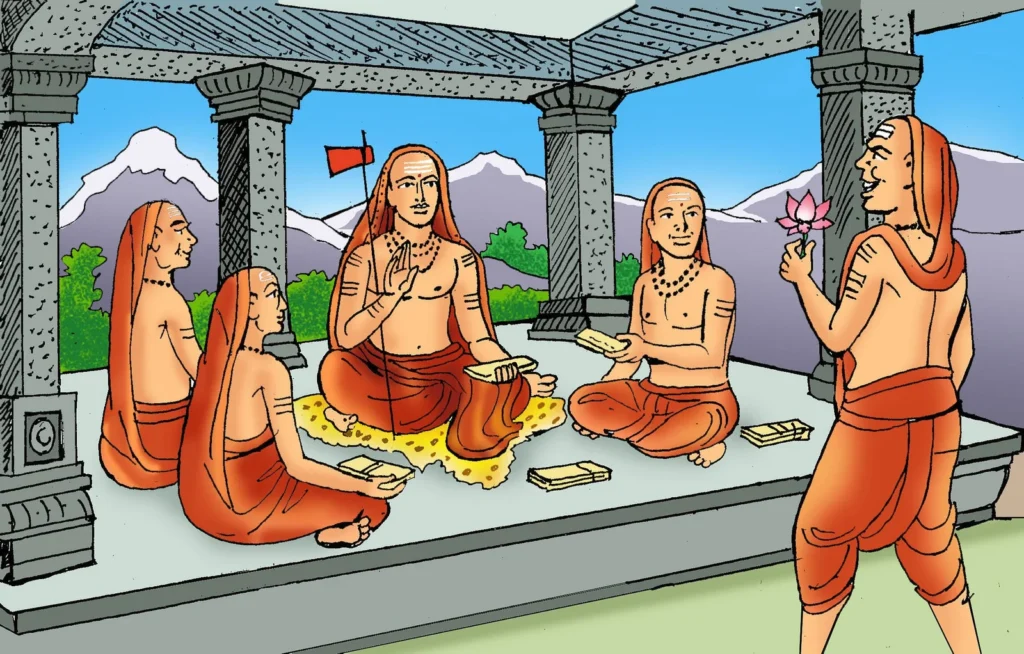
Notes: Viveka means discrimination, cūda is crest, and maņi, jewel. Hence the title means ‘Crest-jewel of discrimination’. Just as the jewel on the crest of a diadem is the most conspicuous ornament on a person’s body, so the present treatise is a masterpiece among works treating of discrimination between the Real and the unreal. In this opening stanza, salutation is made to God (Govinda), or to the Guru, in his absolute aspect. It may be interesting to note that the name of Sankara’s Guru was Govindapāda, and the śloka is ingeniously composed so as to admit of both interpretations.
Sadguru-literally, the highly qualified preceptor (teacher), and may refer either to Sankara’s own guru or to God Himself, who is the Guru of gurus.

जन्तूनां नरजन्म दुर्लभमतः पुंस्त्वं ततो विप्रता
तस्माद्वैदिकधर्ममार्गपरता विद्वत्त्वमस्मात्परम् ।
आत्मानात्मविवेचनं स्वनुभवो ब्रह्मात्मना संस्थितिः
मुक्तिर्नो शतजन्मकोटिसुकृतैः पुण्यैर्विना लभ्यते ॥ २ ॥
jantūnāṃ narajanma durlabhamataḥ puṃstvaṃ tato vipratā
tasmādvaidikadharmamārgaparatā vidvattvamasmātparam |
ātmānātmavivecanaṃ svanubhavo brahmātmanā saṃsthitiḥ
muktirno śatajanmakoṭisukṛtaiḥ puṇyairvinā labhyate || 2 ||
2. For all beings a human birth is difficult to obtain, more so is a male body; rarer than that is Brahmin-hood; rarer still is the attachment to the path of Vedic religion; higher than this is erudition in the scriptures; discrimination between the Self and not-Self, Realisation, and continuing in a state of identity with Brahman – these come next in order. (This kind of) Mukti (Liberation) is not to be attained except through the well-earned merits of a hundred crore of births.
दुर्लभं त्रयमेवैतद्देवानुग्रहहेतुकम् ।
मनुष्यत्वं मुमुक्षुत्वं महापुरुषसंश्रयः ॥ ३ ॥
durlabhaṃ trayamevaitaddevānugrahahetukam |
manuṣyatvaṃ mumukṣutvaṃ mahāpuruṣasaṃśrayaḥ || 3 ||
3. There are three things which are rare indeed and are due to the grace of God –namely, a human birth, the longing for Liberation, and the protecting care of a perfected sage.
लब्ध्वा कथंचिन्नरजन्म दुर्लभं
तत्रापि पुंस्त्वं श्रुतिपारदर्शनम् ।
यस्त्वात्ममुक्तौ न यतेत मूढधीः
स ह्यात्महा स्वं विनिहन्त्यसद्ग्रहात् ॥ ४ ॥
labdhvā kathaṃcinnarajanma durlabhaṃ
tatrāpi puṃstvaṃ śrutipāradarśanam |
yastvātmamuktau na yateta mūḍhadhīḥ
sa hyātmahā svaṃ vinihantyasadgrahāt || 4 ||
4. The man who, having by some means obtained a human birth, with a male body and mastery of the Vedas to boot, is foolish enough not to exert himself for self-liberation, verily commits suicide, for he kills himself by clinging to things unreal.
इतः को न्वस्ति मूढात्मा यस्तु स्वार्थे प्रमाद्यति ।
दुर्लभं मानुषं देहं प्राप्य तत्रापि पौरुषम् ॥ ५ ॥
itaḥ ko nvasti mūḍhātmā yastu svārthe pramādyati |
durlabhaṃ mānuṣaṃ dehaṃ prāpya tatrāpi pauruṣam || 5 ||
5. What greater fool is there than the man who having obtained a rare human body, and a masculine body too, neglects to achieve the real end of this life?
Notes: The real end .—viz. Liberation.
वदन्तु शास्त्राणि यजन्तु देवान्
कुर्वन्तु कर्माणि भजन्तु देवताः ।
आत्मैक्यबोधेन विनापि मुक्तिः
न सिध्यति ब्रह्मशतान्तरेऽपि ॥ ६ ॥
vadantu śāstrāṇi yajantu devān
kurvantu karmāṇi bhajantu devatāḥ |
ātmaikyabodhena vināpi muktiḥ
na sidhyati brahmaśatāntare’pi || 6 ||
6. Let people quote the Scriptures and sacrifice to the gods, let them perform rituals and worship the deities, but there is no Liberation without the realisation of one’s identity with the Ātman, no, not even in the lifetime of a hundred Brahmas put together.
Notes: Lifetime .—i. e., an indefinite length of time. One day of Brahmâ (the Creator) is equivalent to 432 million years of human computation, which is supposed to be the duration of the world.
अमृतत्वस्य नाशास्ति वित्तेनेत्येव हि श्रुतिः ।
ब्रवीति कर्मणो मुक्तेरहेतुत्वं स्फुटं यतः ॥ ७ ॥
amṛtatvasya nāśāsti vittenetyeva hi śrutiḥ |
bravīti karmaṇo mukterahetutvaṃ sphuṭaṃ yataḥ || 7 ||
7. There is no hope of immortality by means of riches – such indeed is the declaration of the Vedas. Hence it is clear that works cannot be the cause of Liberation.
Notes: The reference is to Yâjnavalkya’s words to his wife Maitreyi, Brihadáranyaka II. iv. 2. Cf. the Vedic dictum, “na karmaṇā na prajayā dhanena tyāgenaike amṛtatvamānaśuḥ”:—‘Neither by rituals, nor progeny, nor by riches, but by-renunciation alone some attained immortality.
अतो विमुक्त्यै प्रयतेत्विद्वान्
संन्यस्तबाह्यार्थसुखस्पृहः सन् ।
सन्तं महान्तं समुपेत्य देशिकं
तेनोपदिष्टार्थसमाहितात्मा ॥ ८ ॥
ato vimuktyai prayatetvidvān
saṃnyastabāhyārthasukhaspṛhaḥ san |
santaṃ mahāntaṃ samupetya deśikaṃ
tenopadiṣṭārthasamāhitātmā || 8 ||
8. Therefore the man of learning should strive his best for Liberation, having renounced his desire for pleasures from external objects, duly approaching a good and generous preceptor, and fixing his mind on the truth inculcated by him.
Notes: Duly—i. e. according to the prescribed mode. (Vide Mundaka 1. ii. 12). The characteristics of a qualified Guru are given later on in sloka 33.
उद्धरेदात्मनात्मानं मग्नं संसारवारिधौ ।
योगारूढत्वमासाद्य सम्यग्दर्शननिष्ठया ॥ ९ ॥
uddharedātmanātmānaṃ magnaṃ saṃsāravāridhau |
yogārūḍhatvamāsādya samyagdarśananiṣṭhayā || 9 ||
9. Having attained the Yogārūḍha state, one should recover oneself, immersed in the sea of birth and death by means of devotion to right discrimination.
Notes: Yogárudha state—Described in Gita VI. 4.—“When one is attached neither to sense-objects nor to actions, and has given up all desires, then he is said to be Yogárudha or to have ascended the Yoga-path.”
संन्यस्य सर्वकर्माणि भवबन्धविमुक्तये ।
यत्यतां पण्डितैर्धीरैरात्माभ्यास उपस्थितैः ॥ १0 ॥
saṃnyasya sarvakarmāṇi bhavabandhavimuktaye |
yatyatāṃ paṇḍitairdhīrairātmābhyāsa upasthitaiḥ || 10 ||
10. Let the wise and erudite man, having commenced the practice of the realisation of the Ātman give up all works and try to cut loose the bonds of birth and death.
Notes: All works—only Sakáma-Karma or works performed with a view to gaining more sense-enjoyment are meant, not selfless work.
चित्तस्य शुद्धये कर्म न तु वस्तूपलब्धये ।
वस्तुसिद्धिर्विचारेण न किंचित्कर्मकोटिभिः ॥ ११ ॥
cittasya śuddhaye karma na tu vastūpalabdhaye |
vastusiddhirvicāreṇa na kiṃcitkarmakoṭibhiḥ || 11 ||
11. Work leads to purification of the mind, not to perception of the Reality. The realisation of Truth is brought about by discrimination and not in the least by ten million of acts.
Notes: The idea is, that works properly done cleanse the mind of its impurities, when the Truth flashes of itself.
सम्यग्विचारतः सिद्धा रज्जुतत्त्वावधारणा ।
भ्रान्तोदितमहासर्पभयदुःखविनाशिनी ॥ १२ ॥
samyagvicārataḥ siddhā rajjutattvāvadhāraṇā |
bhrāntoditamahāsarpabhayaduḥkhavināśinī || 12 ||
12. By adequate reasoning the conviction of the reality about the rope is gained, which puts an end to the great fear and misery caused by the snake worked up in the deluded mind.
अर्थस्य निश्चयो दृष्टो विचारेण हितोक्तितः ।
न स्नानेन न दानेन प्राणायमशतेन वा ॥ १३ ॥
arthasya niścayo dṛṣṭo vicāreṇa hitoktitaḥ |
na snānena na dānena prāṇāyamaśatena vā || 13 ||
अधिकारिणमाशास्ते फलसिद्धिर्विशेषतः ।
उपाया देशकालाद्याः सन्त्यस्मिन्सहकारिणः ॥ १४ ॥
adhikāriṇamāśāste phalasiddhirviśeṣataḥ |
upāyā deśakālādyāḥ santyasminsahakāriṇaḥ || 14 ||
14. Success depends essentially on a qualified aspirant; time, place and other such means are but auxiliaries in this regard.
Notes: The qualifications will be enumerated in stanzas 16 and 17.
अतो विचारः कर्तव्यो जिज्ञासोरात्मवस्तुनः ।
समासाद्य दयासिन्धुं गुरुं ब्रह्मविदुत्तमम् ॥ १५ ॥
ato vicāraḥ kartavyo jijñāsorātmavastunaḥ |
samāsādya dayāsindhuṃ guruṃ brahmaviduttamam || 15 ||
15. Hence the seeker after the Reality of the Ātman should take to reasoning, after duly approaching the Guru – who should be the best of the knowers of Brahman, and an ocean of mercy.
मेधावी पुरुषो विद्वानुहापोहविचक्षणः ।
अधिकार्यात्मविद्यायामुक्तलक्षणलक्षितः ॥ १६ ॥
medhāvī puruṣo vidvānuhāpohavicakṣaṇaḥ |
adhikāryātmavidyāyāmuktalakṣaṇalakṣitaḥ || 16 ||
16. An intelligent and learned man skilled in arguing in favour of the Scriptures and in refuting counter-arguments against them – one who has got the above characteristics is the fit recipient of the knowledge of the Ātman.
विवेकिनो विरक्तस्य शमादिगुणशालिनः ।
मुमुक्षोरेव हि ब्रह्मजिज्ञासायोग्यता मता ॥ १७ ॥
vivekino viraktasya śamādiguṇaśālinaḥ |
mumukṣoreva hi brahmajijñāsāyogyatā matā || 17 ||
17. The man who discriminates between the Real and the unreal, whose mind is turned away from the unreal, who possesses calmness and the allied virtues, and who is longing for Liberation, is alone considered qualified to inquire after Brahman.
साधनान्यत्र चत्वारि कथितानि मनीषिभिः ।
येषु सत्स्वेव सन्निष्ठा यदभावे न सिध्यति ॥ १८ ॥
sādhanānyatra catvāri kathitāni manīṣibhiḥ | yeṣu satsveva sanniṣṭhā yadabhāve na sidhyati || 18 ||
Regarding this, sages have spoken of four means of attainment, which alone being present, the devotion to Brahman succeeds, and in the absence of which, it fails.
आदौ नित्यानित्यवस्तुविवेकः परिगम्यते ।
इहामुत्रफलभोगविरागस्तदनन्तरम् ।
शमादिषट्कसम्पत्तिर्मुमुक्षुत्वमिति स्फुटम् ॥ १९ ॥
ādau nityānityavastuvivekaḥ parigamyate | ihāmutraphalabhogavirāgastadanantaram śamādiṣaṭkasampattirmumukṣutvamiti sphuṭam || 19 ||
First is discrimination between the Real and the unreal; next comes dispassion towards the enjoyment of fruits here and hereafter; next is the sixfold discipline beginning with calmness; and lastly the intense desire for Liberation.
ब्रह्म सत्यं जगन्मिथ्येत्येवंरूपो विनिश्चयः ।
सोऽयं नित्यानित्यवस्तुविवेकः समुदाहृतः ॥ २० ॥
brahma satyaṃ jaganmithyetyevaṃrūpo viniścayaḥ | so’yaṃ nityānityavastuvivekaḥ samudāhṛtaḥ || 20 ||
A firm conviction that Brahman alone is real and the universe is unreal is called discrimination between the Real and the unreal.
तद्वैराग्यं जिहासा या दर्शनश्रवणादिभिः ।
देहादिब्रह्मपर्यन्ते ह्यनित्ये भोगवस्तुनि ॥ २१ ॥
tadvairāgyaṃ jihāsā yā darśanaśravaṇādibhiḥ | dehādibrahmaparyante hyanitye bhogavastuni || 21 ||
Vairāgya or renunciation is the desire to give up all transient enjoyments from the body up to the state of Brahmā, having known their defects through observation and instruction.
विरज्य विषयव्राताद्दोषदृष्ट्या मुहुर्मुहुः ।
स्वलक्ष्ये नियतावस्था मनसः शम उच्यते ॥ २२ ॥
virajya viṣayavrātāddoṣadṛṣṭyā muhurmuhuḥ | svalakṣye niyatāvasthā manasaḥ śama ucyate || 22 ||
When the mind withdraws again and again from sense-objects by seeing their defects and rests steadily on its goal, it is called Śama or calmness.
विषयेभ्यः परावर्त्य स्थापनं स्वस्वगोलके ।
उभयेषामिन्द्रियाणां स दमः परिकीर्तितः ।
बाह्यानालम्बनं वृत्तेरेषोपरतिरुत्तमा ॥ २३ ॥
viṣayebhyaḥ parāvartya sthāpanaṃ svasvagolake | ubhayeṣāmindriyāṇāṃ sa damaḥ parikīrtitaḥ | bāhyānālambanaṃ vṛttereṣoparatiruttamā || 23 ||
Turning the organs of knowledge and action away from sense-objects and placing them in their respective spheres is called Dama; the cessation of mental activity dependent on external objects is called Uparati.
सहनं सर्वदुःखानामप्रतीकारपूर्वकम् ।
चिन्ताविलापरहितं सा तितिक्षा निगद्यते ॥ २४ ॥
sahanaṃ sarvaduḥkhānāmapratīkārapūrvakam | cintāvilāparahitaṃ sā titikṣā nigadyate || 24 ||
Enduring all sufferings without seeking redress and without anxiety or lamentation is called Titikṣā or forbearance.
शास्त्रस्य गुरुवाक्यस्य सत्यबुद्ध्यवधारणम् ।
सा श्रद्धा कथिता सद्भिर्यया वस्तूपलभ्यते ॥ २५ ॥
śāstrasya guruvākyasya satyabuddhyavadhāraṇam | sā śraddhā kathitā sadbhiryayā vastūpalabhyate || 25 ||
Firm conviction in the truth of the words of the scriptures and the Guru is called Śraddhā, through which Reality is known.
सर्वदा स्थापनं बुद्धेः शुद्धे ब्रह्मणि सर्वदा ।
तत्समाधानमित्युक्तं न तु चित्तस्य लालनम् ॥ २६ ॥
sarvadā sthāpanaṃ buddheḥ śuddhe brahmaṇi sarvadā | tatsamādhānamityuktaṃ na tu cittasya lālanam || 26 ||
Constantly fixing the intellect on the pure Brahman is called Samādhāna, not the indulgence of the mind in mere thoughts.
अहंकारादिदेहान्तान् बन्धानज्ञानकल्पितान् ।
स्वस्वरूपावबोधेन मोक्तुमिच्छा मुमुक्षुता ॥ २७ ॥
ahaṃkārādidehāntān bandhānajñānakalpitān | svasvarūpāvabodhena moktumicchā mumukṣutā || 27 ||
The desire to free oneself by realizing one’s true nature from all bonds, from ego to body, created by ignorance, is called Mumukṣutā.
मन्दमध्यमरूपापि वैराग्येण शमादिना ।
प्रसादेन गुरोः सेयं प्रवृद्धा सूयते फलम् ॥ २८ ॥
mandamadhyamarūpāpi vairāgyeṇa śamādinā | prasādena guroḥ seyaṃ pravṛddhā sūyate phalam || 28 ||
Even if weak or moderate, this yearning for liberation, strengthened by renunciation, calmness and the grace of the Guru, bears fruit.
वैराग्यं च मुमुक्षुत्वं तीव्रं यस्य तु विद्यते ।
तस्मिन्नेवार्थवन्तः स्युः फलवन्तः शमादयः ॥ २९ ॥
vairāgyaṃ ca mumukṣutvaṃ tīvraṃ yasya tu vidyate | tasminnevārthavantaḥ syuḥ phalavantaḥ śamādayaḥ || 29 ||
For one whose renunciation and desire for liberation are intense, calmness and the other disciplines are truly meaningful and fruitful.
एतयोर्मन्दता यत्र विरक्तत्वमुमुक्षयोः ।
मरौ सलीलवत्तत्र शमादेर्भानमात्रता ॥ ३० ॥
etayormandatā yatra viraktatvamumukṣayoḥ | marau salīlavattatra śamāderbhānamātratā || 30 ||
Where renunciation and yearning for liberation are weak, calmness and the other practices are only appearances, like water in a desert.
मोक्षकारणसामग्र्यां भक्तिरेव गरीयसी ।
स्वस्वरूपानुसन्धानं भक्तिरित्यभिधीयते ॥ ३१ ॥
mokṣakāraṇasāmagryāṃ bhaktireva garīyasī |
svasvarūpānusandhānaṃ bhaktirityabhidhīyate || 31 ||
31. Among things conducive to Liberation, devotion (Bhakti) holds the supreme place. The seeking after one’s real nature is designated as devotion.
Notes: The seeking etc.—This definition is from the Advaita standpoint. Dualists who substitute Isvara, the Supreme Lord, for the Atman or Supreme Self immanent in being, of course define Bhakti otherwise. For example, Narada defines it as “sā kasmaicit paramapremarūpā”—“It is of the nature of extreme love to some Being,” and Sandilya, another authority
on the subject, puts it as “sā parānuraktirīśvare”—“It is extreme attachment to Isvara, the Lord.” On reflection it will appear that there is not much difference between the definitions of the two schools.
स्वात्मतत्त्वानुसन्धानं भक्तिरित्यपरे जगुः ।
उक्तसाधनसंपन्नस्तत्त्वजिज्ञासुरात्मनः
उपसीदेद्गुरुं प्राज्ञ्यं यस्माद्बन्धविमोक्षणम् ॥ ३२ ॥
svātmatattvānusandhānaṃ bhaktirityapare jaguḥ | uktasādhanasaṃpannastattvajijñāsurātmanaḥ upasīdedguruṃ prājñyaṃ yasmādbandhavimokṣaṇam || 32 ||
Others say that devotion is inquiry into the truth of one’s own Self. The seeker of the truth of the Ātman, endowed with the aforesaid means of attainment, should approach a wise Guru, from whom liberation from bondage is obtained.
श्रोत्रियोऽवृजिनोऽकामहतो यो ब्रह्मवित्तमः ।
ब्रह्मण्युपरतः शान्तो निरिन्धन इवानलः ।
अहेतुकदयासिन्धुर्बन्धुरानमतां सताम् ॥ ३३ ॥
śrotriyo’vṛjino’kāmahato yo brahmavittamaḥ | brahmaṇyuparataḥ śānto nirindhana ivānalaḥ ahetukadayāsindhurbandhurānamatāṃ satām || 33 ||
He is one who is well versed in the Vedas, free from sin, untouched by desire, a knower of Brahman in the highest sense, absorbed in Brahman, calm like a fire without fuel, an ocean of causeless compassion, and a friend of all noble souls who bow to him.
तमाराध्य गुरुं भक्त्या प्रह्वप्रश्रयसेवनैः ।
प्रसन्नं तमनुप्राप्य पृच्छेज्ज्ञातव्यमात्मनः ॥ ३४ ॥
tamārādhya guruṃ bhaktyā prahvapraśrayasevanaiḥ | prasannaṃ tamanuprāpya pṛcchejjñātavyamātmanaḥ || 34 ||
Having worshipped that Guru with devotion, humility, reverence and service, and having pleased him, one should inquire of him about the truth of the Self.
स्वामिन्नमस्ते नतलोकबन्धो
कारुण्यसिन्धो पतितं भवाब्धौ ।
मामुद्धरात्मीयकटाक्षदृष्ट्या
ऋज्व्यातिकारुण्यसुधाभिवृष्ट्या ॥ ३५ ॥
svāminnamaste natalokabandho kāruṇyasindho patitaṃ bhavābdhau | māmuddharātmīyakaṭākṣadṛṣṭyā ṛjvyātikāruṇyasudhābhivṛṣṭyā || 35 ||
O Master, O friend of those who bow to thee, O ocean of mercy, I bow to thee. Save me who has fallen into this ocean of worldly existence by thy compassionate glance that showers nectar-like grace.
दुर्वारसंसारदवाग्नितप्तं
दोधूयमानं दुरदृष्टवातैः ।
भीतं प्रपन्नं परिपाहि मृत्योः
शरण्यमन्यद्यदहं न जाने ॥ ३६ ॥
durvārasaṃsāradavāgnitaptaṃ dodhūyamānaṃ duradṛṣṭavātaiḥ | bhītaṃ prapannaṃ paripāhi mṛtyoḥ śaraṇyamanyadyadahaṃ na jāne || 36 ||
Protect me from death, scorched by the unquenchable forest-fire of worldly life, shaken by the winds of adverse destiny, fearful and seeking refuge in thee, for I know no other shelter.
शान्ता महान्तो निवसन्ति सन्तो
वसन्तवल्लोकहितं चरन्तः ।
तीर्णाः स्वयं भीमभवार्णवं जनान्
अहेतुनान् यानपि तारयन्तः ॥ ३७ ॥
śāntā mahānto nivasanti santo vasantavallokahitaṃ carantaḥ | tīrṇāḥ svayaṃ bhīmabhavārṇavaṃ janān ahetunān yānapi tārayantaḥ || 37 ||
There exist noble souls, peaceful and magnanimous, who move about doing good to the world like the spring, and who, having crossed the dreadful ocean of existence themselves, help others to cross it without any motive.
अयं स्वभावः स्वत एव यत्पर
श्रमापनोदप्रवणं महात्मनाम् ।
सुधांशुरेष स्वयमर्ककर्कश
प्रभाभितप्तामवति क्षितिं किल ॥ ३८ ॥
ayaṃ svabhāvaḥ svata eva yatpara śramāpanodapravaṇaṃ mahātmanām | sudhāṃśureṣa svayamarkakarkaśa prabhābhitaptāmavati kṣitiṃ kila || 38 ||
Such is the natural disposition of the great souls, who spontaneously strive to relieve the sufferings of others, just as the moon of its own accord cools the earth scorched by the fierce rays of the sun.
ब्रह्मानन्दरसानुभूतिकलितैः पूर्तैः सुशीतैर्युतैः
युष्मद्वाक्कलशोज्झितैः श्रुतिसुखैर्वाक्यामृतैः सेचय ।
संतप्तं भवतापदावदहनज्वालाभिरेनं प्रभो
धन्यास्ते भवदीक्षणक्षणगतेः पात्रीकृताः स्वीकृताः ॥ ३९ ॥
brahmānandarasānubhūtikalitaiḥ pūrtaiḥ suśītairyutaiḥ yuṣmadvākkalaśojjhitaiḥ śrutisukhairvākyāmṛtaiḥ secaya | saṃtaptaṃ bhavatāpadāvadahanajvālābhirenaṃ prabho dhanyāste bhavadīkṣaṇakṣaṇagateḥ pātrīkṛtāḥ svīkṛtāḥ || 39 ||
O Lord, sprinkle me with thy nectar-like words, filled with the bliss of Brahman, pure and cooling, flowing from thy lips and delightful to the ear, for I am tormented by the flames of worldly suffering. Blessed indeed are those who are accepted by thee through even a momentary glance.
कथं तरेयं भवसिन्धुमेतं
का वा गतिर्मे कतमोऽस्त्युपायः ।
जाने न किञ्ज्चित्कृपयाव मां प्रभो
संसारदुःखक्षतिमातनुष्व ॥ ४० ॥
kathaṃ tareyaṃ bhavasindhumetaṃ kā vā gatirme katamo’styupāyaḥ | jāne na kiñcitkṛpayāva māṃ prabho saṃsāraduḥkhakṣatimātanuṣva || 40 ||
How shall I cross this ocean of worldly existence, what is to be my destiny, and which means should I adopt? I know nothing. Out of compassion, O Lord, save me and completely remove the misery of this worldly life.
इत्थमन्योन्यतादात्म्यप्रतिपत्तिर्यदा भवेत्।
अब्रह्मत्वं त्वमर्थस्य व्यावर्तेत तदैव हि।।40।।
Itthamanyonyatādātmyapratipattiryadā bhavet.
Abrahmatvaṃ tvamarthasya vyāvarteta tadaiva hi..40..
40. “When, as explained above, the mutual identity between the two words ‘thou’ and ‘that’ is comprehended, then the idea ‘I am not Brahman’, entertained by ‘thou’, shall immediately end.”
तदर्थस्य च पारोक्ष्यं यद्येवं किं ततः श्रृणु।
पूर्णानन्दैकरूपेण प्रत्यग्बोधोऽवतिष्ठते।।41।।
Tadarthasya ca pārokṣyaṃ yadyevaṃ kiṃ tataḥ śrṛṇu.
Pūrṇānandaikarūpeṇa pratyagbodho’vatiṣṭhate..41..
41. “If as said, the depth-meaning of the term ‘that’ is ‘Mass-of Bliss, without-second’, and ‘thou’ is the ‘Witnessing-Consciousness’, then what ? Listen: the Inner-self, the Consciousness, that illumines all thoughts, remains as the All-full, One-Mass-of Bliss, without-a-second.”
तत्त्वमस्यादिवाक्यं च तादात्म्यप्रतिपादने।
लक्ष्यौ तत्त्वंपदार्थौ द्वावुपादाय प्रवर्तते।।42।।
Tattvamasyādivākyaṃ ca tādātmyapratipādane.
Lakṣyau tattvaṃpadārthau dvāvupādāya pravartate..42..
42. “The great statements, like ‘That thou art’, established the identity of what is meant by the two terms ‘thou’ and ‘That’ in their deeper indicative-meaning.”
हित्वा द्वौ शबलौ वाच्यौ वाक्यं वाक्यार्थबोधने।
यथा प्रवर्ततेऽस्माभिस्तथा व्याख्यातमादरात्।।43।।
Hitvā dvau śabalau vācyau vākyaṃ vākyārthabodhane.
Yathā pravartate’smābhistathā vyākhyātamādarāt..43..
43. “How great statement discards the two qualified-meanings, and reveals what it really means – this we have carefully commented upon already.”
आलम्बनतया भाति योऽस्मत्प्रत्ययशब्दयोः।
अन्तःकरणसंभिन्नबोधः स त्वंपदाभिधः।।44।।
Ālambanatayā bhāti yo’smatpratyayaśabdayoḥ.
Antaḥkaraṇasaṃbhinnabodhaḥ sa tvaṃpadābhidhaḥ..44..
44. ‘That which shines, as the object of the idea and the word ‘I’, is Consciousness expressing in the inner equipments. This is the direct word-meaning of ‘thou’ (twam).”
मायोपाधिर्जगद्योनिः सर्वज्ञत्वादिलक्षणः।
पारोक्ष्यशबलः सत्याद्यात्मकस्तत्पदाभिधः।।45।।
Māyopādhirjagadyoniḥ sarvajñatvādilakṣaṇaḥ.
Pārokṣyaśabalaḥ satyādyātmakastatpadābhidhaḥ..45..
45. “The Consciousness that is expressed through Maya, which then becomes the ‘cause of the Universe’, which is described as omnipresent, etc.; that which is known only indirectly (meditate); and which is having the nature of existence, etc., — that Eswara is the word-meaning of the term ‘That’.”
प्रत्यक्परोक्षतैकस्य सद्वितीयत्वपूर्णता।
विरुध्यते यतस्तस्माल्लक्षणा संप्रवर्तते।।46।।
Pratyakparokṣataikasya sadvitīyatvapūrṇatā.
Virudhyate yatastasmāllakṣaṇā saṃpravartate..46..
46. “In case we insist upon the identity of ‘that’ and ‘thou’ based upon the word-meaning of these terms, then for one and the same factor we will have to attribute contrary nature; the quality of being mediately and immediately known – and also insist qualities of ‘existence of duality’ and also of ‘absolute oneness’, for one and the same factor. Identity between such contrariness is impossible hence suggestive-meaning, ‘explanation by implication’ has to be accepted.”
मानान्तरविरोधे तु मुख्यार्थस्यापरिग्रहे।
मुख्यार्थेनाविनाभूते प्रतीतिर्लक्षणोच्यते।।47।।
Mānāntaravirodhe tu mukhyārthasyāparigrahe.
Mukhyārthenāvinābhūte pratītirlakṣaṇocyate..47..
47. “If the direct word-meaning throws up an inconsistency with what is pointed out by other proofs and evidences, the sense consistent with its word-meaning that is intelligently suggested by the term, is to be accepted – and this is its suggestive-meaning (lakshana).”
तत्त्वमस्यादिवाक्येषु लक्षणा भागलक्षणा।
सोऽयमित्यादिवाक्यस्थपदयोरिव नापरा।।48।।
Tattvamasyādivākyeṣu lakṣaṇā bhāgalakṣaṇā.
So’yamityādivākyasthapadayoriva nāparā..48..
48. “In the statements like ‘that thou art’ etc., the reject-accept method is to be employed as in the sentence ‘He is this man’. No other method can be applied.”
अहं ब्रह्मेति वाक्यार्थबोधो यावद्दृढीभवेत्।
शमादिसहितस्तावदभ्यस्येच्छ्रवणादिकम्।।49।।
Ahaṃ brahmeti vākyārthabodho yāvaddṛḍhībhavet.
Śamādisahitastāvadabhyasyecchravaṇādikam..49..
49. “Until the direct personal experience of ‘I am Brahman’ is gained, we must live values of self-control, etc., and practice listening to teachers, or reading scriptures, and doing daily reflection and meditation upon those ideas.”
श्रुत्याचार्यप्रसादेन दृढो बोधो यदा भवेत्।
निरस्ताशेषसंसारनिदानः पुरुषस्तदा।।50।।
Śrutyācāryaprasādena dṛḍho bodho yadā bhavet.
Nirastāśeṣasaṃsāranidānaḥ puruṣastadā..50..
50. “Through the grace of a spiritual teacher when a seeker gains a clear and direct experience of the Supreme Self as expounded in the scriptures, he, the realised, becomes free from all ‘ignorance’, which is the foundation for the entire experience of this world of plurality.”
विशीर्णकार्यकरणो भूतसूक्ष्मैरनावृतः।
विमुक्तकर्मनिगलः सद्य एव विमुच्यते।।51।।
Viśīrṇakāryakaraṇo bhūtasūkṣmairanāvṛtaḥ.
Vimuktakarmanigalaḥ sadya eva vimucyate..51..
51. “No more conditioned by his gross and subtle bodies, free from the embrace of the gross and subtle elements, released from the charm of actions, such a man gets immediately liberated.”
प्रारब्धकर्मवेगेण जीवन्मुक्तो यदा भवेत्।
किञ्चित्कालमनारब्धकर्मबन्धस्य संक्षये।।52।।
Prārabdhakarmavegeṇa jīvanmukto yadā bhavet.
Kiñcitkālamanārabdhakarmabandhasya saṃkṣaye..52..
52. “The liberated-in-life, due to the compelling force of those actions that have begun to produce their results (Prarabdha), remains for some time to exhaust them”.
निरस्तातिशयानन्दं वैष्णवं परमं पदम्।
पुनरावृत्तिरहितं कैवल्यं प्रतिपद्यते।।53।।
Nirastātiśayānandaṃ vaiṣṇavaṃ paramaṃ padam.
Punarāvṛttirahitaṃ kaivalyaṃ pratipadyate..53..
53. “The liberated-in-life comes to gain the State of Absolute Oneness, the never-ending immeasurable Bliss, called the Supreme Abode-of-Vishnu, from wherein there is no return.”
निरस्तातिशयानन्दं वैष्णवं परमं पदम्।
पुनरावृत्तिरहितं कैवल्यं प्रतिपद्यते।।53।।
इति श्रीमत्परमहंसपरिव्राजकाचार्यस्य
श्रीगोविन्दभगवत्पूज्यपादशिष्यस्य
श्रीमच्छंकरभगवतः कृतौ
वाक्यवृत्तिः समाप्ता।।
Iti śrīmatparamahaṃsaparivrājakācāryasya
Śrīgovindabhagavatpūjyapādaśiṣyasya
Śrīmacchaṃkarabhagavataḥ kṛtau
Vākyavṛttiḥ samāptā..




