







































Swami Patanjali Rishi
Swami Patanjali Rishi
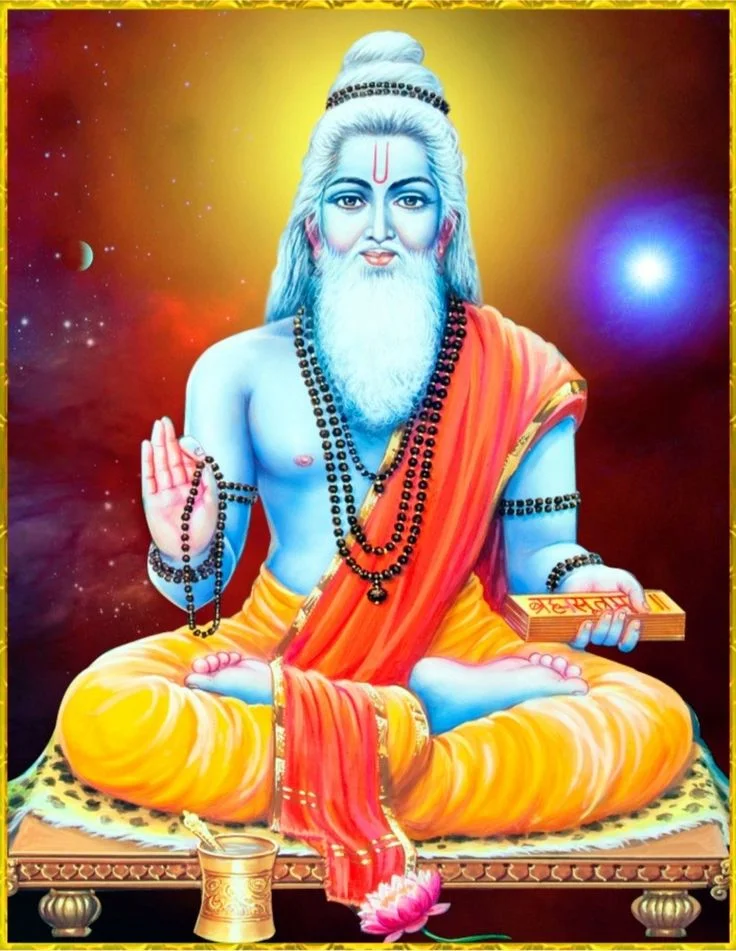
Patanjali became sad that all efforts to impart knowledge were wasted.

The young boy returned and begged for forgiveness.
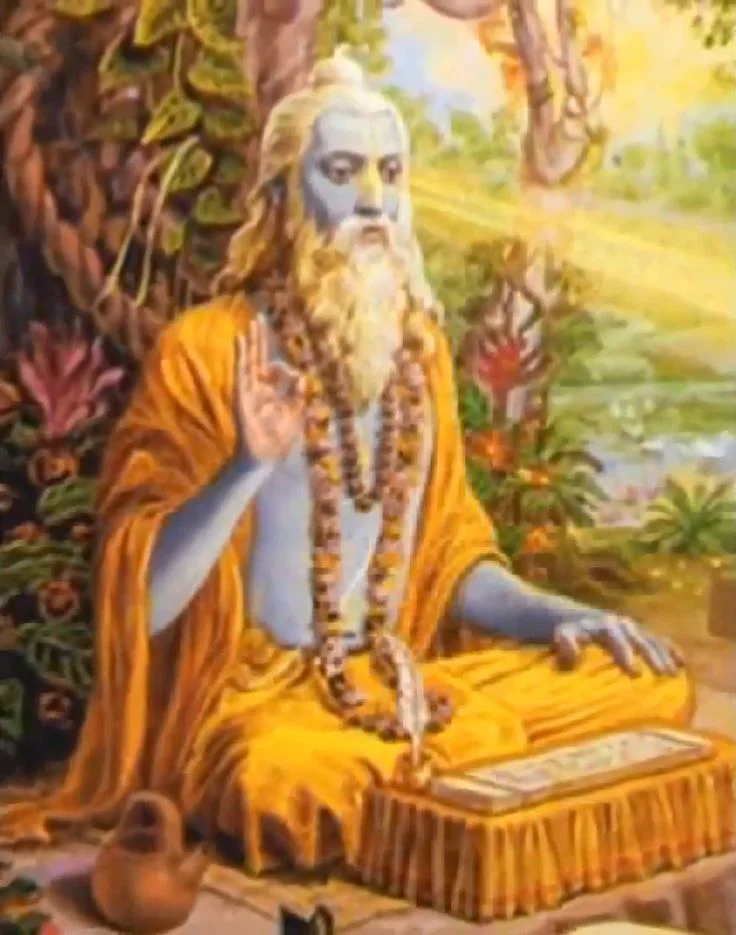
Patanjali felt compassionate and transmitted all knowledge to him. Since he had not abided by the condition of not getting up during the discourse, Patanjali had to turn him into a BrahmaRakshas – a ghost who has accumulated a lot of knowledge! He would be stuck to a tree but if he found a worthy student to whom he could pass on his learnings, the BrahmaRakshas would be released from the curse and liberated.
It is said that Patanjali himself came as his student centuries later, and using his nail as a pen, blood as the ink, and dry leaves as paper, wrote down the teachings to preserve the knowledge.
It is this disciple who later became Sri Govindapada, the Guru of Shri Adi Shankaracharya!
Incredible contribution of Maharishi Patanjali to humanity
Patanjali wrote three powerful scriptures to share an ocean of wisdom with mankind.
- Patanjali Tantra
A primordial source on Ayurveda about wellness, health and medicine for ailments.
2. Maha Bhashyam
An elaborate commentary on ‘Ashtadhyayi” ( 8 chapters) – a treatise on every aspect of Samskritam grammar written in the 6th to 5th century BCE by the greatest grammarian Panini, about which linguists & litterateurs marvel the world over, even till today!
3. Yoga Sutras
Compilation and systematisation of innumerable yoga practices that became the foundational text of Yoga practiced for eons.
Patanjali Yoga Sutras
The Patanjali Yoga Sutra is the oldest known text on the subject of Yoga and is the most renowned among his contributions The text establishes the practice and philosophy of yoga in short pithy and succinct statements known as aphorisms. Sutras are like precise formulae – unambiguous, highly meaningful, applicable, irrefutable and cannot be understood without a commentary . There are 196 aphorisms, divided into 4 chapters.
Yoga has many meanings – relations, means, union, knowledge, matter, logic and so on….the meaning of Yoga is upaya, which means path or way which we follow or by means of which we can attain something.What then is the path we should follow?What or whom should we seek to attain?The mind should seek to attain what is best…mind seeks the Universal Self….Thus, the way of establishing the mind in the Self should be known as Yoga.” – Yoga Mala authored by renowned Astanga Yoga Master Shri.K.Pattabhi Jois
Patanjali gives an 8 step approach called the Ashtanga ( 8 limbs)Yoga as a set of guidelines to reach the highest state of Yoga.
Swami Vivekananda’s famous and highly influential book “ Raja Yoga”, published in 1896 and adapted for the western audience, was based on the principles of Ashtanga Yoga! Raja Yoga was meant to channel one’s will power to raise one self.
Yama, Niyama, Asana, Pranayama and Pratyahara are classified under Bahiranga Yoga – the external aspect.
Dharana, Dhyana and Samadhi are classified under Antaranga Yoga – the internal aspect.

Yoga has been an integral part of Indian Civilization for thousands of years. There are many scriptures on Yoga, each of these texts describe different kinds of Yoga like Bhakti Yoga, Karma Yoga ,
Jnana Yoga, Kundalini Yoga, Ashtanga Yoga as various paths in the journey of the Yogi. In this ocean of wisdom, Asanas ( Yogicpostures) & Pranayama ( breath regulation & control) are more widely known and practiced than others.
The entire process of Yoga is actually a journey of antahkaranasuddhi ( purification of mind-body-sense complex) in order to recognise and understand that the answer to the question “Who am I ‘, lies in the secret knowledge तत् त्वम् असि Tat Tvam Asi (That Thou Art)!
Source – Chintan indian Foundation




