



























Who is a yogi

Who is a yogi
Since ages, this land has seen many Yogīs who have been great spiritual masters and who have lit the light of wisdom in mankind through their extraordinary contributions. This land has always treated those Yogīs as the embodiments of the Supreme and followed their footsteps. But with the passage of time, the inclination towards spirituality has declined in the people due to many reasons. Nowadays the term ‘Yogī’ is as familiar as the term ‘Yoga’, and when heard, it stimulates a kind of mystical perspective in our minds with multiple conclusions.
Who is a Yogī? What are his qualities? What is his lifestyle? And how can one become a Yogi? Our ancient scriptures are the sources where we find the answers to all these queries.
In the Bhagavad Gītā, Lord Kṛṣṇa says:
अनाश्रितः कर्मफलं कार्यं कर्म करोति यः।
स संन्यासी च योगी च न निरग्निर्न चाक्रियः॥
anāśritaḥ karmaphalaṁ kāryṁ karma karate yaḥ।
sa saṁnyāsī ca yogī ca na nirgnirna cākriyaḥ॥
One who performs his prescribed duties by renouncing the fruits of his actions is both a Saṁnyāsī and a Yogī, but not someone who has merely given up performing sacrifices or other prescribed duties.
– [Bhagavad Gītā, 6: 1]
People in general have a misconception about a Yogī or a Saṁnyāsī, that he is someone who does not shoulder any responsibilities and who renounces all activities. But here, Lord Kṛṣṇa upholds the true practice of Dharma. He says that no one should ever discard his prescribed duties. Everyone should execute his duties with utmost devotion. Among the doers of duties, a true Yogī is one who discharges his duties for the duty’s sake and is in no way attached to the fruits of his actions. The Lord further asserts that the practice of Yoga is not different from Saṁnyāsa, as no one becomes a Yogī without renouncing Saṅkalpa (selfish desires). In his Yoga Sūtras, Maharṣi Patañjali describes the means to attain Yoga, which are Abhyāsa (practice) and Vairāgya (renunciation).
Lord Kṛṣṇa describes the Yogī who has attained the peaks of Yoga as:
यदा हि नेन्द्रियार्थेषु न कर्मस्वनुषज्जते।
सर्वसङ्कल्पसंन्यासी योगारूढस्तदोच्यते॥
yadā hi nendriyārtheṣu na karmasvanuṣajjate।
sarvasaṅkalpasaṃnyāsī yogārūḍhastadocyate॥
When one is free from attachments to the sense objects as well as the actions, and has renounced all selfish desires, he is said to have ascended the peaks of Yoga.
– [Bhagavad Gītā, 6: 4]
Who is a Yogi?
1. One who neither is attached to sense objects nor to actions.
When one is neither attached to sense objects nor to actions, that person is said to be elevated in the science of Yog, for having renounced all desires for the fruits of actions. As the mind becomes attached to God in Yog, it naturally becomes detached from the world. A person will be considered detached from the world when one no longer craves for sense objects nor is inclined to perform any actions for attaining them. Such a person ceases to look for opportunities to create circumstances to enjoy sensual pleasures, eventually extinguishes all thoughts of enjoying sense objects, and also dissolves the memories of previous enjoyments.
2. One who is steadfast in the performance of duty but renounces all desires for the fruits of actions.
The equanimity that enables us to accept all circumstances with serenity is so praiseworthy that Shree Krishna calls it Yog, or union with the Supreme. When we understand that the effort is in our hands, not the results, we then concern ourselves only with doing our duty. The results are for the pleasure of God, and so we dedicate them to him. Now, if the results are not to our expectations, we calmly accept them as the will of God. In this way, we are able to accept fame and infamy, success and failure, pleasure and pain, as God’s will, and when we learn to embrace both equally, we develop the equanimity that Shree Krishna talks about.
3. One who have risen above the dualities of cold and heat, joy and sorrow, honor and dishonor.
The yogis who have conquered the mind rise above the dualities of cold and heat, joy and sorrow, honor and dishonor. Such yogis remain peaceful and steadfast in their devotion to God. The contact between the senses and the sense objects gives the mind the experience of heat and cold, joy and sorrow. As long as the mind has not been subdued, a person chases after the sensual perceptions of pleasure and recoils from the perceptions of pain. The yogi who conquers the mind is able to see these fleeting perceptions as the workings of the bodily senses, distinct from the immortal soul, and thus, remain unmoved by them. Such an advanced yogi rises above the dualities of heat and cold, joy and sorrow, etc. There are only two realms in which the mind may dwell—one is the realm of Maya and the other is the realm of God. If the mind rises above the sensual dualities of the world, it can easily get absorbed in God. Thus, Shree Krishna has stated that an advanced yogi’s mind becomes situated in samādhi (deep meditation) upon God.
4. One who sees everything- dirt, stones, and gold-as the same.
Jñāna, or knowledge, is the theoretical understanding obtained by listening to the Guru and from the study of the scriptures. Vijñāna is the realization of that knowledge as an internal awakening and wisdom from within. The intellect of the advanced yogi becomes illumined by both jñāna and vijñāna. Equipped with wisdom, the yogi sees all material objects as modifications of the material energy. Such a yogi does not differentiate between objects based on their attractiveness to the self. The enlightened yogi sees all things in their relationship with God. Since the material energy belongs
to God, all things are meant for his service. Such person begins tasting the divine bliss of God, and hence becomes fully satisfied by virtue of realized knowledge.
5. One who controls body, mind, and speech.
He says in that state of perfection we develop a purified intellect that is established in transcendental knowledge. The mind is controlled due to not indulging in likes and dislikes. The senses are restrained, and the impulses of the body and speech are tenaciously disciplined.
6. One who eats lightly.
The activities for bodily maintenance, such as eating and sleeping, are wisely held in balance.
7. One who is ever engaged in meditation.
Such a yogi is deeply contemplative
8. One who relishes solitude.
And hence prefers solitude.
Today the word Yogi is as misused and misunderstood, as the subject of Yoga.
Anyone with a yoga mat, leggings and yoga clothes , going to a Yoga studio on a daily basis – is today referred to as a “Yogi” in the western world.
All the questions are valid in this subject : Who is Yogi ? What is a Yogi ? Who are Yogis and where do Yogis exist ?
Today due to the marketing of Yoga as a business If nothing else – everyone who is a registered Yoga teacher is considered or believed to be a Yogi.
If we were to consider the classical concept and truly understand what is a Yogi or who is Yogi then we will be exposed to the deep understanding that all the above assumptions in the modern world references are incorrect.
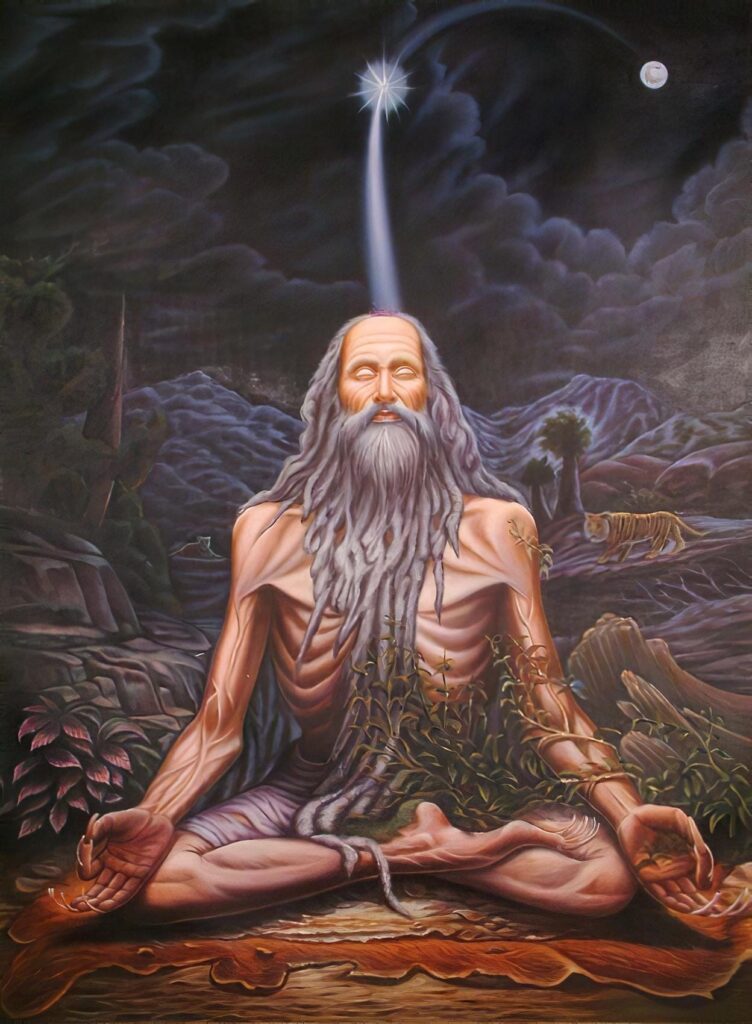
Being a yogi is not a lifestyle that one can lead in just about any condition. Yogis in the Indian culture, are essentially monks/hermits who have given up their usual life, relationships, jobs in order to disconnect from everything outside and every bond to go into the mountains, places of solitude , jungles and places where humans may not exist, in the enquiry of the Self , to meditate in order to connect with the Supreme Consciousness ( also in many yogic texts referred to as God ) . Here without any comforts of regular life, they pray, they chant or meditate for days, weeks, years until at some point in time in their practice, they naturally through the practice of deep meditation end up awakening energies that gives them control over the natural boundaries of environment. Yogis are known to survive the sub zero temperatures meditating in extreme temperatures, with almost nothing on their bodies. They are able to sustain super high temperatures while staying unaffected and in complete health.

In deep practice of yoga , they unlock such energies that they are able to see nature and universe in a totally different light. They find answers to the unanswered questions, from such practices. For Indians, Yogis are almost super human & sacred in their mental powers ( not physical looks ) and if we were to come across a Yogi anywhere while being in such rare spaces, we bow down to them, seeking their blessings, knowing well enough that even without telling they know what we need or what we are seeking.
Now Yogis don’t have these powers from birth, but they develop this para normal powers through austerity and very deep meditations in conditions far away from comfort of home or relationships.
For anyone living in society teaching or practicing Yoga & living a regular life, of desire , need, comfort, expectations, this word Yogi just does not apply .
If such a person claims to be a Yogi, either they have no deep knowledge of the subject of Yoga and think it is all about physical postures, or they know nothing about true Yogis or how to go deeper on path of Yoga.
Enlightenment : what and when ?

Enlightenment is not as simple as saying that anyone who is a Yoga teacher or looks spiritual and nice is enlightened.
Enlightenment in the path of Yoga is the highest stage of Yoga where the yogi becomes one with the Universe. The union of his consciousness with the with the supreme consciousness is complete .
Where ever in whatever form the supreme exists, so does the consciousness of the Yogi. At this point in time, there is very little to differentiate between the Yogi and what in human terminology we term as God. A fully enlightened being will have all paranormal powers mentioned below.
When?
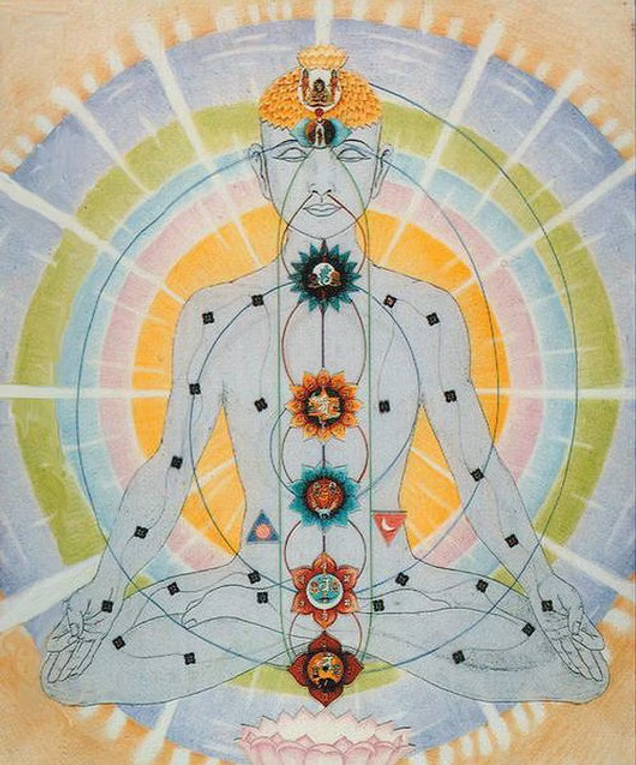
When through path of Yoga ( which could take several decades ) the mind purifies itself completely and totally and through various practices, the Yogi is able to awaken and raise his Kundalini from its resting place ( The Root Chakra ) and make it move all the way up to the Crown Chakra. At this point in time the Yogi becomes the bearer of 8 Super Powers ( asta siddhis ) and several other powers even before full enlightenment is attained. The 8 super powers are
- Aṇimā: Ability to reduce one’s size to as small as one desires
- Mahima: Ability to increase one’s size as big as one desires
- Garima: Ability to increase one’s weight infinitely
- Laghima: Ability to become lighter than the lightest
- Prāpti: Ability to Obtain anything ( from any time and space )
- Prākāmya: Ability to acquire anything desired
- Iṣiṭva: Lordship over creation
- Vaśitva: Having control over things and all beings
The other powers that the Yogi achieves as a part of full enlightenment are
kāma-rūpam: Attaining/ assuming desired form
Tri-kāla-jñatvam: Knowledge of past present and future
Advandvam (non-duality): not being subject to dualities of heat/ cold, pain/ pleasure, sweat/ bitter, good/ bad
Para citta ādi abhijñatā: Knowing of others’ minds
Agni arka ambu viṣa ādīnām pratiṣṭambhaḥ: having fire, sun, water, poison in control and stopping their effect
Aparājayah: becoming unconquerable
Anūrmi-mattvam: Being undisturbed by hunger, thirst, and other body generated cravings
Dūra-śravaṇa: Hearing things/ events happening very far
Dūra-darśanam: Seeing things/ events happening very far
Manaḥ-javah (manojvitva): Moving physical body wherever one wants
- Para-kāya praveśanam (vikranabhav): Entering another persons body (spirits 4are believed to enter a person’s physical body whose astral body is weak, but the power mentioned here is different and superior)
- Sva-chanda mṛtyuh: To die only on one’s wish (like that of Bhishma from Mahabharat, like that of many sages who left their bodies by their own wish)
- Devānām saha krīḍā anudarśanam: Witnessing the pastimes of demi-gods (or Witnessing the events of 3 worlds as pastimes like god does)
- Yathā sańkalpa saḿsiddhiḥ: Achieving as one determines
- ājñā apratihatā gatiḥ: One’s commands unstopped
- Memories of past lives
- Clairvoyance
- Levitation
- Bi-location/ multi-location
- Materialization
- Control over natural phenomenon like raining, sunrise/ sunset
- Prakhya Siddhi: ability to chose the womb to be born in before birth
- Surya Vijnan: Transforming one material into another by the use of sun rays
The Supreme Yogi
By His Divine Grace A. C. Bhaktivedanta Swami Prabhupada
Lecture given in Bombay on November 2, 1974
A yogi may be able to walk on water, but God can float planets in space.
na hy asya varshmanah pumsam
varimnah sarva-yoginam
vishrutau shruta-devasya
bhuri tripyanti me ’savah
Shaunaka continued: There is no one who knows more than the Lord Himself. No one is more worshipable or more mature a yogi than He. He is therefore the master of the Vedas, and to hear about Him always is the actual pleasure of the senses. – Srimad-Bhagavatam 3.25.2
In the previous verse the incarnation of the Supreme Personality of Godhead as Devahuti-putra Kapiladeva has been explained as bhagavan atma-mayaya. The word bhaga means “opulence,” and van means “one who possesses.” All the opulences of the creation are present in Bhagavan. As stated in the Vedas (Katha Upanishad 2.2.13):
nityo nityanam chetanash chetananam
eko bahunam yo vidadhati kaman
“Both the Supreme Lord and the individual living entities are eternal (nitya) and cognizant (cetana), but the Supreme Lord is maintaining all the living entities.” Nitya – Bhagavan – is the singular, and nityanam are the plural jivas, or living beings. Nityo nityanam: we are many, but God is one. There is no limit to the jivas; no one can count them. The word ananta means that they are without limit.
All these jivas, living entities, are being maintained by the Supreme One. We cannot conceive how many living entities are being maintained by the Supreme Lord. All the great elephants, all the small ants, all the 8,400,000 species of life are maintained by Bhagavan. Why do we worry that He will not maintain us?
Those who are devotees of the Lord and have taken shelter at His lotus feet, leaving everything aside simply to render service unto Him, will certainly be cared for. In our Krishna consciousness movement we have over a hundred centers, and Krishna is maintaining them all. None of our devotees are employed for independent incomes, yet they are all being maintained. In the Bhagavad-gita Krishna never says, “Do this or that, and I will then maintain you.”
Rather, He states that not only will He maintain us, but He will also protect us from the results of sin, from sinful karma (Gita 18.66). All of this assurance is there
Within this one universe there are fourteen planetary systems, and the living entities are wandering in different bodily forms on different planets. According to karma, the living entity sometimes goes up and sometimes goes down. He wanders in this way, thinking how he can become materially happy and satisfy his senses. The shastras, or Vedic scriptures, say that we should not do this, that we should endeavor to understand Krishna. We should not worry about eating and sleeping, for the needs of the body are already arranged. We do not have to work independently to maintain the body.
In the Srimad-Bhagavatam (1.5.18) it is said, tasyaiva hetoh prayateta kovidah . . . The word kovidah means “intelligent.” An intelligent person should try to attain shelter at the lotus feet of Krishna. Human life is actually meant for getting in touch with the lotus feet of Krishna. That should be our only business. The word upari, in this same verse, indicates the higher planetary systems. There are seven higher planetary systems, and we are in the middle system, in Bhurloka.
Our actual endeavor should be to attain happiness; that is our real struggle for existence. Tal labhyate duhkhavat. The word duhkhavat indicates that although we do not want misery, misery comes anyway. We don’t have to endeavor separately for misery. No one says, “Let there be a fire in my house” or “Let my child die.” No one aspires after these things, yet they happen. Everyone is thinking, “May my child live happily” or “May I get so much money.” We do not ask or pray for catastrophes, yet they come without invitation. Similarly, whatever happiness is there for our enjoyment will also come without our asking for it. The conclusion is that we should not endeavor for so-called happiness or distress, but should try to attain that position whereby we can understand Krishna and get shelter at His lotus feet. This should be the real human endeavor.
Chaitanya Mahaprabhu said to Rupa Goswami,
brahmanda bhramite kona bhagyavan jiva
guru-krishna-prasade paya bhakti-lata-bija
“The living entity is wandering up and down, from one planet to another, and he is very fortunate if by the mercy of the spiritual master and Krishna Himself he can get the seed of devotional service to Krishna.” (Chaitanya-charitamrita, Madhya 19.151) The Krishna consciousness movement is an attempt to make people fortunate. In this age everyone is unfortunate (manda-bhagyah), but now we are trying to reverse the situation.
Throughout the world there are problems everywhere. One country has one type of problem, and another country has another. There is strife within governments themselves, and even presidents are fraught with problems. Sometimes we may think we are very fortunate, just as President Nixon was thinking, “I am very fortunate. I have become the president of the United States.” Then he soon realized that he was most unfortunate. Actually this is the situation for everyone. We should not think that the only apprehended culprit is President Nixon and that we are safe.
Wet Dung, Dry Dung
There is a Bengali proverb: Dry cow dung is used for fuel, and it is said that when the dry cow dung is being burned, the soft cow dung is laughing, saying, “Oh, you are being burned, but I am safe.” It does not know that when it dries out, it will be thrown into the fire too.
We may laugh because President Nixon is in trouble, and we may think ourselves very safe because we have a big bank balance, but actually no one is safe. Eventually everyone will dry up and be thrown in the fire. That is a fact. We may survive for a few years, but we cannot avoid death. In fact, it is said, “As sure as death.” And what is the result of death? One loses everything – all honor, money, position, and material life itself. Krishna states in the Bhagavad-gita (10.34), mrityuh sarva-harash chaham: “I am all-devouring death.” Krishna comes as death and plunders everything – bank balance, skyscrapers, wife, children, and whatever. One cannot say, “My dear death, please give me some time to adjust.” There is no adjustment; one must immediately get out.
Foolish people are unaware of the miserable conditions of material life. Krishna says in the Bhagavad-gita (13.9), janma-mrityu jara-vyadhi-duhkha-doshanudarshanam. Real knowledge means knowing that however great one may be, the four principles of material life are present: birth, old age, disease, and death. These exist in the highest planetary system (Brahmaloka) and in the lowest (Patalaloka).
tasyaiva hetoh prayateta kovido
na labhyate yad bhramatam upary adhah
tal labhyate duhkhavad anyatah sukham
kalena sarvatra gabhira-ramhasa
“Persons who are actually intelligent and philosophically inclined should endeavor only for that purposeful end which is not obtainable even by wandering from the topmost planet down to the lowest planet. As far as happiness derived from sense enjoyment is concerned, it can be obtained automatically in course of time, just as in course of time we obtain miseries even though we do not desire them.” (Bhagavatam 1.5.18)
When Dharmaraja asked Maharaja Yudhishthira what the most wonderful thing in the world was, Maharaja Yudhishthira replied: ahany ahani bhutani gachchantiha yamalayam. “Every moment people are dying, but those who are living are thinking, ‘My friend has died, but I shall live forever.’” (Mahabharata, Vana-parva 313.116) Soft cow dung thinks the same way. This is typical of conditioned beings.

Bhagavan’s Unique Position
Bhagavan, the Supreme Lord, is not in this position. It is therefore said: bhagavan atma-mayaya. We come onto this planet to enjoy or suffer life for a few days – fifty or a hundred years – but Bhagavan, the Supreme Personality of Godhead, does not come for that purpose (na mam karmani limpanti [Gita 4.14]). It is stated in today’s vese, na hy asya varshmanah: “No one is greater than Him.” No one is greater than Bhagavan or equal to Him. Everyone is inferior. According to the Chaitanya-charitamrita (Adi 5.142), ekale ishvara krishna, ara saba bhritya. There is only one master – Krishna. All others are subservient, beginning with Lord Brahma, Vishnu, Maheshvara, Indra, Chandra, and all the demigods (there are thirty-three million demigods) and the middle and lower species. Everyone is bhritya, or servant. When Krishna orders, “My dear Mr. So-and-So, now please give up your place and leave,” one must go.
Therefore everyone is a servant. This is the position of Lord Brahma and the ant as well. Yas tv indragopam athavendram aho sva-karma (Brahma-samhita 5.54). From Lord Indra to indragopa, an insignificant insect, everyone is reaping the consequences of his karma. We are creating our own karma, our next body, in this life. In this life we enjoy or suffer the results of our past karma, and in the same way we are creating further karma for our next body. Actually we should work in such a way that we will not get another material body, How can this be done? We simply have to try to understand Krishna. As Krishna says in the Bhagavad-gita (4.9):
janma karma cha me divyam
evam yo vetti tattvatah
tyaktva deham punar janma
naiti mam eti so ’rjuna
“One who knows the transcendental nature of My appearance and activities does not, upon leaving the body, take his birth again in this material world, but attains My eternal abode, O Arjuna.”
This sounds very simple, but actually understanding Krishna is very difficult. If we become devotees of Krishna, understanding Krishna is easy. However, if we try to understand Him by jnana, karma, or yoga, we will be frustrated. There are many types of yogis, but he who is devoted to Krishna is the topmost yogi. Sri Krishna is far above all yogic processes. In India there are many yogis who can display some magical feats. They can walk on water, make themselves very light or very heavy, and so forth. But what is this compared to Krishna’s yogic mystic powers? By His potencies great planets are floating in space. Who can manage to float even a small stone in the air? Sometimes a yogi may show a little mystic power by manufacturing some gold, and we are so foolish that we accept him as God. However, we forget that the real yogi, the Supreme Lord Himself, has created millions of gold mines and is floating them in space.
Don’t Be Fooled
Those who are Krishna conscious are not befooled by yogis who claim to be Bhagavan. A Krishna conscious person wants only to serve the foremost yogi, Yogeshvara (varimnah sarva-yoginam). Because we are trying to become His devotees, we accept the Supreme Lord, Yogeshvara, as the Supreme Personality of Godhead. Krishna Himself states in the Bhagavad-gita (18.55):
bhaktya mam abhijanati
yavan yash chasmi tattvatah
tato mam tattvato jnatva
vishate tad-anantaram
“One can understand the Supreme Personality as He is only by devotional service. And when one is in full consciousness of the Supreme Lord by such devotion, he can enter into the kingdom of God.”
This process is actually very simple. One must first of all realize that the first problem is the conquest of death. Presently we consider death compulsory, but actually it is not. One may be put into prison, but actually prison is not compulsory. It is due to one’s work that one becomes a criminal and is therefore put in jail. It is not compulsory for everyone to go to jail. As living entities, we have our proper place in Vaikunthaloka.
paras tasmat tu bhavo ’nyo
vyakto ’vyaktat sanatanah
yah sa sarveshu bhuteshu
nashyatsu na vinashyati
avyakto ’kshara ity uktas
tam ahuh paramam gatim
yam prapya na nivartante
tad dhama paramam mama
“There is another nature, which is eternal and is transcendental to this manifested and unmanifested matter. It is supreme and is never annihilated. When all in this world is annihilated, that part remains as it is. That supreme abode is called unmanifested and infallible, and it is the supreme destination. When one goes there, he never comes back. That is My supreme abode.” (Gita 8.20–21)
Everything is present in Vaikunthaloka. There we can have an eternal, blissful life full of knowledge (sach-chid-ananda). It is not compulsory for us to rot in this material world. The easiest way to go to the Vaikunthalokas is janma karma cha me divyam evam yo vetti tattvatah (Gita 4.9). Simply try to understand Krishna. Why does He come? What are His activities? Where does He come from? Why does He come in the form of a human being? We only have to try to understand this and study Krishna as He explains Himself in the Bhagavad-gita.
What is the difficulty? God personally explains Himself as He is, and if we accept the Bhagavad-gita as it is, we shall no longer have to transmigrate. Tyaktva deham punar janma naiti. We shall no longer have to endure birth and death, for we can attain our spiritual bodies (sac-cid-ananda-vigraha) and live happily in Krishna’s family. Krishna is providing for us here, and He will also provide for us there. So we should know that our happiness is in returning home, back to Godhead, where we can eat, drink, and be merry in Krishna’s company.
Thank you very much.





