













What is Dharma

What is Dharma
What is Svadharma?
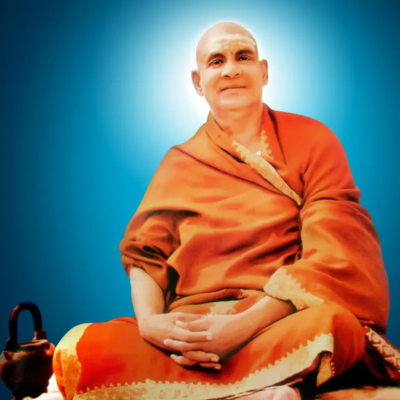
by Swami Sivananda
There is no proper equivalent in English for the Sanskrit term ‘Dharma’. It is generally rendered as ‘duty’, ‘righteousness’. Any action that is best calculated to bring Sreyas (liberation) and Abhyudaya (exaltation) is Dharma. That which brings well-being to human beings is Dharma. The word Dharma comes from the root ‘Dhri’ which means ‘to support’ or ‘to hold on’. That which upholds is Dharma. By Dharma people are upheld. As it supports and holds together it is called Dharma. That which secures preservation of being is Dharma. ‘Svadharma’ means one’s own duty in accordance with the Varnashrama or caste and order of life which are founded according to the Gunas or qualities born of the nature of man.
God, religion and Dharma are inseparable. Man evolves through the practice of Dharma according to his caste and order of life, and eventually attains Self-realisation, the ultimate goal of life, which brings infinite bliss, supreme peace, unbroken joy, highest knowledge, eternal satisfaction and immortality.
The mark of Dharma is Achara (good conduct). Achara is the mark of the good. Higher than all the teachings, is Achara. From Achara, Dharma is born; and Dharma enhances life. By Achara man attains fame, power and strength here and hereafter. Achara is the highest Dharma. Achara is the root of all Tapas.
Dharma tops the list of the four Purusharthas, viz., Dharma, Artha, Kama and Moksha. Dharma gives wealth, satisfaction of desires and liberation in the end.
“The Brahmana was Brahma’s mouth; the Rajanya was made His two arms; His two thighs the Vaishya; the Sudra was born of His two feet.” The four castes are Brahmana, Kshatriya, Vaishya and Sudra. Self-restraint, serenity, patience, austerity, purity, belief in God, forgiveness, self-sacrifice, uprighteousness, truthfulness, wisdom, teaching and studying the Vedas, doing sacrifices, and also guiding others in offering sacrifices and gifts and receiving gifts are the duties of a Brahmana born of his own nature.
Courage, generosity, vigour, prowess, splendour, firmness, dexterity, not fleeing from battle, the nature of a ruler, protection of the people, gifts, doing sacrifices and study of the Vedas are the duties of a Kshatriya born of his own nature.
Ploughing, protection of cattle, trade, charity, doing sacrifice, study of the Vedas, engaging in commerce, finance and agriculture are the duties of a Vaishya born of his own nature.
To serve ungrudgingly all these castes is the duty of a Sudra born of his own nature.
Much of the evil has grown through men of one caste grasping at the work of the other castes, and thinking more of the rights his caste gives him than of the duties it imposes.
The Brahmana and Kshatriya have claimed their privileges ardently and have shrunk from the heavy burden belonging to their castes. Naturally their attitude has provoked opposition, and antagonism has replaced mutual goodwill and service. Consequently caste has become a social bitterness, instead of being a framework maintaining all in happy order. If people of different castes practise their Dharmas, caste confusion will pass away and abundant peace and joy will prevail.
The Ashramas or stages in life are four, viz., Brahmacharya, the stage of studentship, Garhasthya, the stage of householdership, Vanaprastha, the stage of forest-dwelling or seclusion, and Sannyasa, the order of total renunciation. Each order of life has its own duties. In none of these stages must a man grasp at the special duties of the other three. At the present moment it is difficult to maintain or observe the exact details of the ancient rules, as the conditions have changed very much. But, if we can have a clear idea of the fundamental duties of each, we shall still be able to shape the life to a regulated course of development and steady growth.
The life of the student starts with the Upanayana ceremony, his second birth. You will find in the Manu Smriti: “Let the student ever engage in the study of the Vedas and in doing service to his preceptor. Let the student refrain from wine, meat, perfumes, tasty dishes, garlands, company of women, and from injury to sentient creatures. Let him give up lust, anger, greed, dancing, singing and playing on musical instruments, dice play, gossip, slander and untruth.”
“Let the student always sleep alone and let him not waste his seed; he who from lust destroyeth his seed, destroyeth his vow. He should develop the spirit of service, humility and obedience. He should mould his character properly. He should be chaste in thought, word and deed.”

Dharma
From the teachings of Swami Sivananda Saraswati
The Sanskrit term dharma is difficult to define. There is no equivalent word for it in English. Dharma is generally defined as righteousness or duty. It is the principle of holiness and unity. Bhishma says in his instructions to Yudhishthira that whatever creates conflict is adharma, and whatever puts an end to conflict and brings about unity and harmony is dharma. Anything that helps to unite and develop pure divine love and universal brotherhood is dharma. Anything that creates discord, split and disharmony, and foments hatred is adharma.
The rules of dharma have been laid down for regulating the worldly affairs of people. Dharma brings happiness, both in this world and in the next. If you transgress it, it will kill you. If you protect it, it will protect you. It is the sole companion after death and the sole refuge of humanity.
That which elevates is dharma. It leads to the path of perfection and glory. It helps to have direct communion with the Lord. Dharma makes one divine and is the ascending stairway to God. Self-realization is the highest dharma. God is the centre of dharma. Dharma has its root in mortality and the controller of dharma is God himself.
Rishi Kanada, founder of the Vaisheshika system of philosophy, has given the best definition of dharma: “That which leads to the total cessation of pain, and the attainment of prosperity in this world and eternal bliss in the world hereafter is dharma.”
It holds and elevates
The Lord is the embodiment of dharma, the controller and protector of dharma, and the fountainhead of dharma. Dharma alone holds the people and everything. The word ‘dharma’ is derived from the root dhr, ‘to hold’. Its etymological meaning is ‘that which holds’ this world, the people of the world, the whole creation from the microcosm to the macrocosm. The entire creation is held together and sustained by the all-powerful, eternal, and divine law of God. Practice of dharma means recognition of this law and living by it.
That which brings wellbeing is dharma. Dharma supports this world and upholds the people. It secures preservation of beings and leads to eternal happiness and immortality.
Dharma is truth. Whosoever speaks the truth is said to speak dharma, and whosoever speaks dharma is said to speak the truth.
Dharma includes external deeds, as well as thoughts which tend to elevate the character of an individual. Dharma comes from the divine and leads to the divine.
The changing dharma
In the matter of dharma, the Vedas are the ultimate authority. You cannot know the truth about dharma through any source of knowledge other than the Vedas, which are the oldest scriptures of the world. Reason cannot be the authority in the matter of dharma.
Dharma depends upon time, circumstances, age, degree of evolution and the community to which one belongs. The dharma of this century is different from that of the tenth century.
Just as a doctor prescribes different medicines for different people according to their constitution and nature of the disease, different duties are prescribed for different people. Rules for women differ from the rules for men. But non-violence, truth, non-stealing, cleanliness and control of the senses are duties common to all people. There are conditions under which dharma may change its usual course in times of extreme distress and calamity.
What is dharma in one set of circumstances becomes adharma in another set of circumstances. That is the reason why it is said that the secret of dharma is extremely profound and subtle. Lord Krishna says to Arjuna in the Bhagavad Gita (16:24): “Therefore, let the scripture be your authority in determining what ought to be done and what ought not to be done. Having known what is said in the ordinance of the scriptures, you should act here in this world.” The way of dharma is open to all and has been traversed by a great realized soul.
Benefits
Of the four grand objects of human aspiration, the purusharthas: dharma, artha, prosperity, kama, emotional fulfilment, and moksha, liberation, dharma is given the foremost rank in the scriptures. Dharma alone is the gateway to moksha, immortality, infinite bliss, supreme peace and highest knowledge. Only through the practice of dharma can one hope to achieve moksha, the crowning glory of all human endeavours, the best and highest of all desirable goals.
Practice of dharma leads to the perfect realization of essential unity. The practitioner experiences peace, joy, strength and tranquillity within himself. His life becomes thoroughly disciplined. His powers and capabilities are intensified, and he realizes that there is one underlying homogeneous essence, a living truth, behind the many names and forms. He is transmuted into divinity. His whole nature is transformed and he becomes one with the eternal. He beholds Brahman above, Brahman below, Brahman to the right, Brahman to the left, Brahman in front and Brahman at the back, Brahman within, Brahman without and Brahman pervading the whole world.
Sanatana dharma
Sanatana dharma means the system of eternal values, the ancient law based on the Vedas. It is the oldest of living orders. Hinduism is known by the name of Sanatana dharma.
The foundation of Sanatana dharma is shruti, revelations that were heard; smritis, texts transmitted by memory, are the walls; Itihasas, books of legendary heroic history, and the Puranas are the support. In ancient times, the shrutis were learnt by heart. The teacher sang them to the pupils and the pupils repeated them. They were not written in book form. Sects and philosophical systems appeal to the shruti as the final authority. The smritis stand next in authority to the shruti.
Sanatana dharma stands unrivalled in the depth and grandeur of its philosophy. Its ethical teachings are lofty, unique and sublime. It is highly flexible and adapted to every human need. It is a perfect religion by itself and in no need of anything from any other religion. No other religion has produced so many great saints, patriots and warriors. The more one knows of it, the more one will honour and love it. The more one studies it, the more it will enlighten and satisfy one’s heart.
Fundamentals of dharma
The Vishnu Samhita enumerates forgiveness, truthfulness, control of the mind, purity, practice of charity, control of the senses, non-violence, service of the guru, visiting places of pilgrimage, compassion, simplicity, absence of greed, worship of the gods and the brahmanas, and absence of malice as the ingredients of samanya dharma, the general law for all men.
The Mahabharata enumerates the performance of shraaddha or offering oblations to the forefathers, religious austerity, truth, restraint of anger, satisfaction with one’s own wife, purity, learning, absence of envy, knowledge of the Self and forbearance as the fundamentals of dharma.
It is said in the Padma Purana that dharma proceeds from continence, truthfulness, austerity, charity, self-control, forbearance, purity, non-violence, serenity, and non-stealing. One should recognize dharma by these ten factors. According to this Purana, bestowing gifts on deserving persons, fixing one’s thoughts on Lord Krishna, adoration of one’s parents, offering a portion of the daily meal to all creatures and giving a morsel of food to a cow are the characteristics of dharma.
According to the Matsya Purana, freedom from malice, absence of covetousness, control of the senses, austerity, celibacy, compassion, truthfulness, forbearance and fortitude constitute the fundamentals of Sanatana dharma.
The exponent of the raja yoga philosophy, Rishi Patanjali, recommends in the Yoga Sutras that ten virtues should be practised by all people. The first five are: ahimsa, non-violence, satya, truthfulness, brahmacharya, celibacy in thought, word and deed, asteya, non-stealing, and aparigraha, non-covetousness. They constitute the yamas, or rules of conduct, and self-restraint.
The other five virtues are: saucha, internal and external purity, santosha, contentment, tapas, austerity, swadhyaya, self-study and study of scriptures, and ishwara pranidhana consecration of the fruits of one’s work to the Lord. These constitute niyama, rules of personal discipline.
Fearlessness, purity of heart, steadfastness in yoga and knowledge, alms-giving, control of the senses, sacrifice, study of scriptures, austerity and straightforwardness; harmlessness, truth, absence of anger, renunciation, peacefulness, absence of crookedness, compassion towards beings, uncovetousness, gentleness, modesty, absence of fickleness; vigour, forgiveness, fortitude, purity, absence of hatred, absence of pride – these belong to one born in a divine state, O Arjuna!
Universal virtues
All these virtues are manifestations of the four fundamental virtues: (1) non-violence, (2) truth, (3) purity and (4) self-control. These virtues are enumerated in the Noble Eightfold Path of Buddhism, and they are the virtues prescribed by Lord Jesus in the Sermon on the Mount.
The development of divine qualities is indispensable for the attainment of self-realization. The eternal Brahman is purity and truth. He cannot be attained without practising purity and truth. Brahman is fearlessness and cannot be attained unless one becomes absolutely fearless.