


























Tantras and Their Significance

Tantras and Their Significance
Tantra Explained by Sri Swami Sivananda Maharaj
Tantra Yoga had been one of the potent powers for the spiritual regeneration of the Hindus. When practised by the ignorant, unenlightened, and unqualified persons, it has led to certain abuses; and there is no denying that some degraded forms of Saktism have sought nothing but magic, immorality, and occult powers. An example of the perverted expression of the truth, a travesty of the original practices, is the theory of the five Makaras (Pancha Makaras);-Madya or wine, Mamsa or flesh, Matsya or fish, Mudra or symbolical acts, and Maithuna or coition. The esoteric meaning of these five Makaras is: “Kill egoism, control flesh, drink the wine of God-intoxication, and have union with Lord Siva”.
Tantra explains (Tanoti) in great detail the knowledge concerning Tattva (Truth or Brahman) and Mantra (mystic syllables). It saves (Trayate). Hence it is called Tantra.
The Tantras are not books of sorcery, witchcraft, magic spells, and mysterious formulae. They are wonderful scriptures. All persons without the distinctions of caste, creed, or colour may draw inspiration from them and attain spiritual strength, wisdom, and eternal bliss. Mahanirvana and Kularnava Tantras are the important books in Tantra Sastra. Yoga Kundalini Upanishad of Krishna Yajurveda, Jabala Darsana, Trisikha Brahmana, and Varaha Upanishad are useful for getting knowledge of Kundalini Sakti and the methods to awaken it and take it to Sahasrara Chakra at the crown of the head.
The Tantra is, in some of its aspects, a secret doctrine. It is a Gupta Vidya. You cannot learn it from the study of books. You will have to get the knowledge and practice from the practical Tantrikas, the Tantric Acharyas and Gurus who hold the key to it. The Tantric student must be endowed with purity, faith, devotion, dedication to Guru, dispassion, humility, courage, cosmic love, truthfulness, non-covetousness, and contentment. Absence of these qualities in the practitioner means a gross abuse of Saktism.
The Sakti Tantra is Advaita Vada. It proclaims that Paramatman (Supreme Soul) and Jivatman (individual soul) are one. The Saktas accept the Vedas as the basic scriptures. They recognise the Sakta-Tantras as texts expounding the means to attain the goal set forth in the Vedas.
Tantra Yoga lays special emphasis on the development of the powers latent in the six Chakras, from Muladhara to Ajna. Kundalini Yoga actually belongs to Tantric Sadhana which gives a detailed description about this serpent-power and the Chakras (plexus). Entire Tantric Sadhana aims at awakening Kundalini, and making her to unite with Lord Sadasiva, in the Sahasrara Chakra. Methods adopted to achieve this end in Tantric Sadhana are Japa of the Name of the Mother, prayer, and various rituals.
Guru and Diksha (Initiation)
Yoga should be learnt from a Guru (spiritual preceptor). And this is true all the more in the case of Tantra Yoga. It is the Guru who will recognise the class to which the aspirant belongs and prescribe suitable Sadhana.
The Guru is none other than the Supreme Divine Mother Herself, descended into the world in order to elevate the aspirant. As one lamp is lit at the flame of another, so the divine Sakti consisting of Mantra is communicated from Guru to the disciple. The disciple fasts, observes Brahmacharya, and gets the Mantra from the Guru.
Initiation tears the veil of mystery and enables the disciple to grasp the hidden truth behind scriptures’ texts. These are generally veiled in mystic language. You cannot understand them by self-study. Self-study will only lead you to greater ignorance. The Guru only will give you, by Diksha (initiation), the right perspective in which to study the scriptures and practise Yoga.
Qualifications of a Disciple
The qualifications of the disciple are purity, faith, devotion, dispassion, truthfulness, and control of the senses. He should be intelligent and a believer in Vedas. He must abstain from injury to all beings. He must be vigilant, diligent, patient, and persevering. He must be ever doing good to all. All Sadhana should be done under the personal direction of a Guru or spiritual teacher.
Tantra Sadhana
Bhuta Suddhi is an important Tantric rite. It means purification of the five elements of which the body is composed. The Sadhaka (aspirant) dissolves the sinful body and makes a new divine body. He infuses into the body the life of the Devi.
Nyasa is a very important and powerful Tantric rite. It is placing of the tips of the fingers of the right hand on various parts of the body, accompanied by Mantra.
In Kavacha the one Brahman is invoked by different names in order to protect different parts of the body. For example, Parabrahman is thought of as in the Sahasrara Padma in the head. The Supreme Lord is meditated upon in the heart. Protector of the world, Vishnu is invoked to protect the throat, so that the aspirant may utter the Mantras of his Ishta Devata.
Mudra is ritual of manual gestures. Mudra gives pleasure to the Devatas. There are 108 Mudras. In welcoming (Avahana) the Devata an appropriate gesture is made. In making offering (Arghya) Matsya Mudra is made. The right hand is placed on the back of the left and the two thumbs are extended finlike on each side of the hands. Similarly, there are Mudras for the various acts done during the worship.
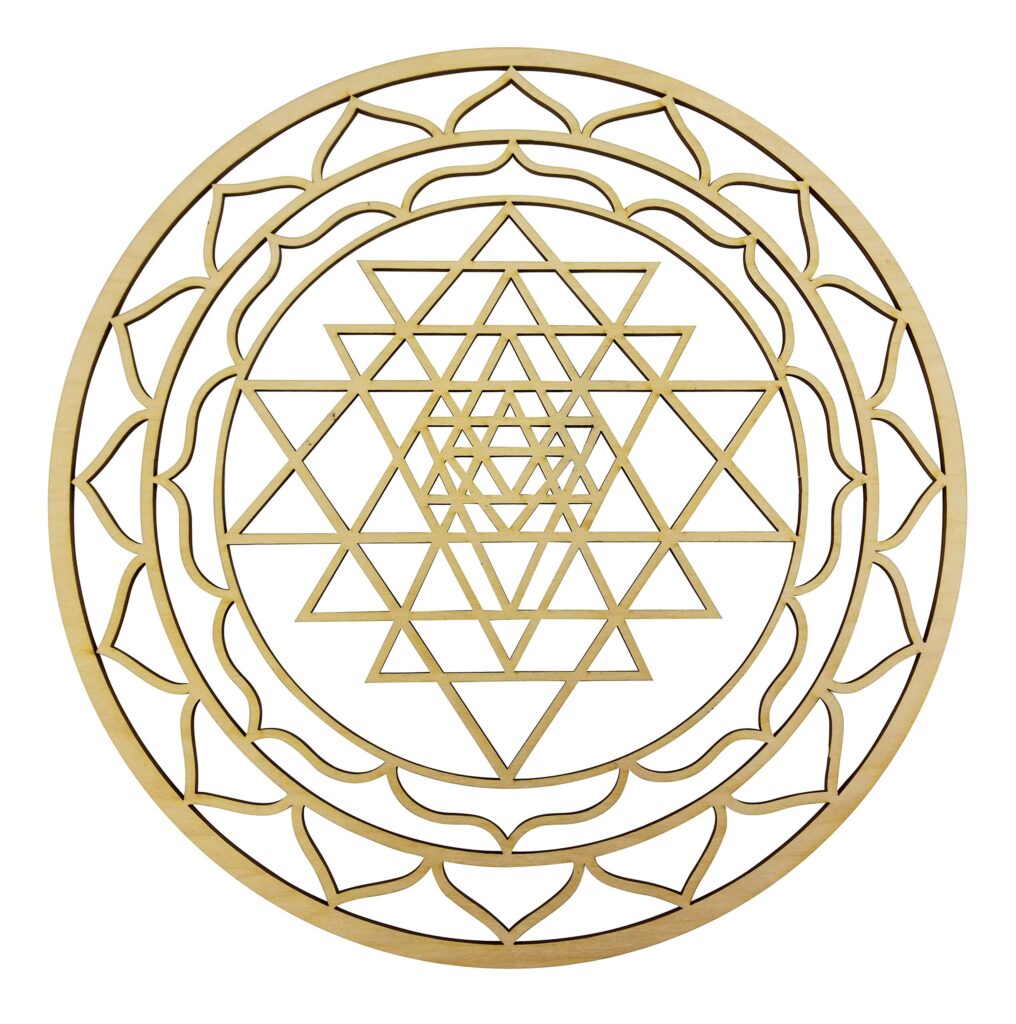
Yantra takes the place of the image. It is an object of worship. Yantra is a diagram, drawn on paper. It is engraved on a metal sheet also. A Yantra is appropriated to a specific Devata only. Various Yantras are peculiar to each Devata. They are various designs according to the object of worship. Yantra is the body of the Devata. All the Yantras have a common edging called Bhupura. They have a quadrangular figure with four doors, which encloses and separates the Yantra from the external world.
The Sadhaka first meditates upon the Devata or Deity and then arouses the Devata in himself. He then communicates the Divine presence thus aroused to the Yantra. When the Devata has been invoked into the Yantra by the appropriate Mantra, the vital airs (Prana) of the Devata are infused therein by the Pranapratishtha ceremony. The Devata is thereby installed in the Yantra. The materials used or acts done in Puja are called Upachara. They are sixteen in number, viz., (1) Asana (seating of the Devata); (2) Svagata (welcoming of the Devata); (3) Padya (water for washing the feet); (4) Arghya (water for ablution); (5) Achamana (water for sipping); (6) Madhuparka (honey, ghee, milk, and curd); (7) Snana (bath); (8) Vastra (cloth); (9) Abharana (jewels); (10) Gandha (perfume); (11) Pashpa (flowers); (12) Dhupa (incense); (13) Dipa (light); (14) Naivedya (food) and Tambulam (betel); (15) Nirajana (Arati); and (16) Vandana (prostration and prayer).
Sadhakas are of three kinds, viz., Pasu (animalistic), Vira (valorous), and Divya (divine).
The Pancha Tattva
The Pancha Tattva is essential for the worship of Sakti. The Pancha Tattvas are wine (Madya), meat (Mamsa), fish (Matsya), parched cereal (Mudra) and sexual union (Maithuna). As they all commence with the letter M, they are vulgarly called Pancha-ma-kara or five M’s. The Pancha Tattvas stand for drinking, eating and propagation. The Pancha Tattvas, the five elements of worship destroy great sins, Maha-pataka-nasanam.
The Pancha Tattvas have not always their literal meaning. The meaning differs according as they refer to the Tamasic (Pasu), Rajasic (Vira) or Sattvic (Divya) Sadhanas respectively.
Wine may be wine; or it may be coconut water or it may mean God-intoxication or the intoxicating knowledge of Brahman or the Absolute. Wine is a symbol to denote the Supreme, eternal Bliss of Yoga knowledge, or knowledge of Atman (Atma-jnana).
The union of Siva and Sakti in the upper brain centre known as Sahasrara or thousand-petalled lotus is Maithuna.
Mamsa (meat) is the act by which the aspirant consecrates all his actions to the Lord.
Matsya (fish) is that Sattvic knowledge by which the Sadhaka sympathises with the pleasure and pain of all beings.
Mudra is the act of abandoning all associations with evil which leads to bondage.
Wine is fire; flesh is air; fish is water; cereal is earth; sexual union is ether.
Milk, ghee, honey are all substitutes for wine. Salt, ginger, sesamum, white beans, garlic are substitutes for meat. White brinjal, red radish, masur (a kind of grain) and red sesamum are substitutes for fish. Paddy, rice, wheat and grain are Mudra. Offering of flowers with the hands formed with a particular Mudra is Maithuna.
The Sadhaka thinks that he has got a Deva body. This is Bhuta- Suddhi. Various Nyasas are performed. Mental worship is performed of the Devi who is thought of as being in red raiment seated on a red lotus. Her dark body is like rain-cloud. Her forehead is shining with the light of the crescent moon. Japa of Mantra is then done. Thereupon there is external worship.
Sexual intercourse by a man with a woman who is not lawful to him is a sin. The Vaidika Dharma is very strict on this point. It forbids not merely actual Maithuna but Ashtanga or eightfold Maithuna namely Smaranam (thinking upon it), Kirtanam (talking of it), Keli (play with women), Prekshanam (making eyes at women), Guhya-bhashanam (talking in private with women), Sankalpa (wish or resolve for sexual union), Adhyavasaya (determination towards it), Kriyanishpatti (actual accomplishment of the sexual act).
A Tantric can have copulation with his wife. He calls his wife his Sakti. Wife is a house-goddess Griha-lakshmi or Griha-devata united to her husband by the sacramental Samskara of marriage. She should not be regarded as an object of enjoyment. She is his partner in life (Ardhangini). The union of a man and his wife is a veritable sacred scriptural rite.
Tantra Explained by Shri Ramakrishna Paramhansa
According to the Tantra, the Ultimate Reality is Chit, or Consciousness, which is identical with Sat, or Being, and with Ananda, or Bliss. This Ultimate Reality, Satchidananda, Existence-Knowledge-Bliss Absolute, is identical with the Reality preached in the Vedas. And man is identical with this Reality; but under the influence of maya, or illusion, he has forgotten his true nature. He takes to be real a merely apparent world of subject and object, and this error is the cause of his bondage and suffering. The goal of spiritual discipline is the rediscovery of his true identity with the divine Reality.
For the achievement of this goal the Vedanta prescribes an austere negative method of discrimination and renunciation, which can be followed by only a few individuals endowed with sharp intelligence and unshakable will-power. But Tantra takes into consideration the natural weakness of human beings, their lower appetites, and their love for the concrete. It combines philosophy with rituals, meditation with ceremonies, renunciation with enjoyment. The underlying purpose is gradually to train the aspirant to meditate on his identity with the Ultimate.
The average man wishes to enjoy the material objects of the world. Tantra bids him enjoy these, but at the same time discover in them the presence of God. Mystical rites are prescribed by which, slowly, the sense-objects become spiritualized and sense attraction is transformed into a love of God. So the very “bonds” of man are turned into “releasers”. The very poison that kills is transmuted into the elixir of life. Outward renunciation is not necessary. Thus the aim of Tantra is to sublimate bhoga, or enjoyment into yoga, or union with Consciousness. For, according to this philosophy, the world with all its manifestations is nothing but the sport of Siva and Sakti, the Absolute and Its inscrutable Power.
The disciplines of Tantra are graded to suit aspirants of all degrees. Exercises are prescribed for people with “animal”, “heroic”, and “divine” outlooks. Certain of the rites require the presence of members of the opposite sex. Here the aspirant learns to look on woman as the embodiment of the Goddess Kali, the Mother of the Universe. The very basis of Tantra is the Motherhood of God and the glorification of woman. Every part of a woman’s body is to be regarded as incarnate Divinity. But the rites are extremely dangerous. The help of a qualified guru is absolutely necessary. An unwary devotee may lose his foothold and fall into a pit of depravity.
According to the Tantra, Sakti is the active creative force in the universe. Siva, the Absolute, is a more or less passive principle. Further, Sakti is as inseparable from Siva as fire’s power to burn is from fire itself. Sakti, the Creative Power, contains in Its womb the universe, and therefore is the Divine Mother. All women are Her symbols. Kali is one of Her several forms. The meditation on Kali, the Creative Power, is the central discipline of the Tantra. While meditating, the aspirant at first regards himself as one with the Absolute and then thinks that out of that Impersonal Consciousness emerge two entities, namely, his own self and the living form of the Goddess. He then projects the Goddess into the tangible image before him and worships it as the Divine Mother.
Sri Ramakrishna set himself to the task of practising the disciplines of Tantra; and at the bidding of the Divine Mother Herself he accepted the Brahmani as his guru. He performed profound and delicate ceremonies in the Panchavati and under the bel-tree at the northern extremity of the temple compound. He practised all the disciplines of the sixty-four principal Tantra books, and it took him never more than three days to achieve the result promised in any one of them. After the observance of a few preliminary rites, he would be overwhelmed with a strange divine fervour and would go into samadhi, where his mind would dwell in exaltation. Evil ceased to exist for him. The word “carnal” lost its meaning. The whole world and everything in it appeared as the lila, the sport, of Siva and Sakti. He beheld held everywhere manifest the power and beauty of the Mother; the whole world, animate and inanimate, appeared to him as pervaded with Chit, Consciousness, and with Ananda, Bliss.
He saw in a vision the Ultimate Cause of the universe as a huge luminous triangle giving birth every moment to an infinite number of worlds. He heard the Anahata Sabda, the great sound Om, of which the innumerable sounds of the universe are only so many echoes. He acquired the eight supernatural powers of yoga, which make a man almost omnipotent, and these he spurned as of no value whatsoever to the Spirit. He had a vision of the divine Maya, the inscrutable Power of God, by which the universe is created and sustained, and into which it is finally absorbed. In this vision he saw a woman of exquisite beauty, about to become a mother, emerging from the Ganges and slowly approaching the Panchavati. Presently she gave birth to a child and began to nurse it tenderly. A moment later she assumed a terrible aspect, seized the child with her grim jaws, and crushed it. Swallowing it, she re-entered the waters of the Ganges.
The Tantric Science and the 64 Yogini Goddessess

“Sixty and four are the instruments of enjoyments that tempt the individual soul (jiva). Sixty and four are the divisions (kalas) within jiva; Sixty and four are the chambers of jiva’s chakras; Sixty and four; where Shiva-Shakti reside.“
The Sacred 64 Yogini Goddesses
An examination of the ancient Tantric tradition reveals a particular sanctity assigned to the number eight. The eight mother faculties (tatvas) of the manifested universe, the eight directions with four cardinal and four intermediate points (digbandahs), the eight miraculous yogic powers (ashta siddhis), eight “limbs” of Yoga (ashtanga), eight forms of the Divine Mother (ashta matrikas) are just a few examples. Following the Aryan migration into the Dravidian Indus region, the number eight, sacred to the Dravidians, was merged with the numbers 100 and 1000, sacred to the Aryans. Thus, they formed the sacred numbers 108 and 1008, which have come down to us from those ancient times.
The square of eight, or sixty-four, occupies an even more profound position in the field of Tantra which, from the point of view of the Kaula Marg practitioner, identifies both the sixty-four Yoginis and the sixty-four tantric kriyas. Although the Yogini tradition of early medieval times also produced temples featuring forty-two and eighty-one Yoginis, the bulk of tantric temples have venerated sixty-four yoginis.
A representation of the sixty-four Yoginis is found on the ancient Khechari Yantra. Each of its sixty-four petals represent one of these ancient feminine deities of Tantra, the Yoginis. Within this yantra is also obscured the sacred geometry of Kriya Babaji, the reviver of Kriya Tantra Yoga for this age.
Babaji’s yantra is a bindu, centered in a triangle, and encompassed by a square, surrounded by a circle. This sacred geometry has often been associated with the root chakra. Within the Khechari Yantra, Babaji’s triangle is shrouded within, and as a portion of, the hexagram star. There can be no doubt that the Khechari Yantra is rich with mystic symbolism. Its very name, transcribed from the mystical mudra of tongues tip, suggests its esoteric importance as unbounded space itself.

The sixty-four practical techniques (kriyas) of trance and transformation correspond with the Yogini energies within nature, all of which interact together to produce spiritual growth when the appropriate catalyst is available. Their purpose is to pull souls out of illusion. This is precisely the significance of both the sixty-four hexagrams seen in the Taoist tradition as well as the sixty-four yoginis of the Shakti Tantric tradition. The Tantric literature itself is said to be composed of sixty-four spiritual books, also referred to as Tantras. In this sense, the word tantra conveys the meaning of “canonical manuscripts”. The sixty-four sacred texts of Kaula Tantra are enumerated in classical texts such as the Vamakeshvara-tantra.
Similar references in classical literature includes the sixty-four yogic induced paranormal powers (siddhis), the sixty-four divisions of the arts (kalas), and, within the ancient Saiva Siddhanta tradition, the sixty-four saints (nayanars). There are also sixty-four forms of Bhairava, sixty-four tantric mudras, as well as sixty-four siddhas, beyond even the 18 Maha Siddhas, which are more commonly celebrated, and so on.
This sacred number is intimately associated with power and life itself. In the Indian classic, Mahabharata, Lord Krishna fired sixty-four arrows and in a separate skirmish, Bhishma’s armor was pierced sixty-four times. The Aitereya Brahmana speaks of the sixty-fourth and final step into the heavenly world.
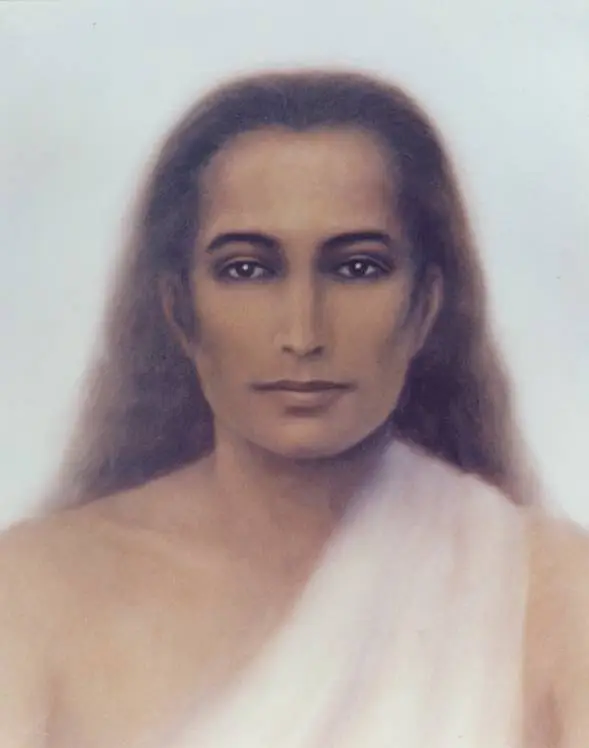
Most importantly, the sixty-four Yoginis are understood within Babaji’s Kaula Marg tradition of Kriya Tantra Yoga as fundamental emanations of Maha Kali. Each of them rules over different aspects of creation, has a very distinct personality, and offers a doorway into undifferentiated awareness. Thus, it is eventually understood that the number sixty-four has a profound association with the classical path of Kriya Tantra Yoga, the tantric literature of India, and the mystical experiences of sunyata and other forms of samadhi.
As seen, there is a strong correlation between the tantric Yoginis and the sixty-four tantric kriyas. The word Kriya often suggests a very specific set of techniques, and the actual practice will vary slightly, according to the lineage. Nonetheless, Babaji stands at the headwaters of all of these sacred paths. In its broadest sense, kriya suggests far more, and includes any practical technique that expands consciousness. Of the thousands of practical techniques (kriyas) used for the purpose of revelation of the inmost Self, sixty-four have been referred to in the classical training as the core or hub of the Kaula Tantra Yoga tradition. Although he taugh 144 Siddha Yoga techniques, close disciples of my diksha guru, Yogi Ramaiah, under whose direct training I spent more than two decades, would recall that he referenced the sixty-four tantric kriyas, but did not teach them, save for one technique, in his advanced training. His intimacy with Kali, the great Goddess of Tantra, however, was profound, evidenced by his massive aura and by the fact that she directed him to construct a Kali Temple in upstate New York. He often referred to her as the favorite diety of the tantrics.
One particular Maha Kali bija mantra, coming directly from Sathguru Babaji, has always been considered the most powerful bija mantra by Yogiar. Close initiates of Yogiar will recall that he expressed that its energy was driving the dharma of the Kriya Yoga teachings. Yogiar had explained the story of this great Kali Chew Mantra both in his lectures, and in an early issue of Kriya magazine. Babaji, in the late 1800’s, had manifested before a Tamil textile trader who was traveling through a Malaysian jungle village. The great Sathguru, emerging magnificently from the forest, dripping wet from a bath and wearing a simple dhoti, asked the trader to stick out his tongue. Babaji then proceeded to write the sacred mantra on the man’s tongue.Through a mystic process, the trader heard the mantra from within. That textile trader was Yogiar’s maternal grandfather. In due course, Yogiar’s grandfather passed it to his daughter (Yogiar’s mother) who, after many years of sadhana, passed it to Yogiar.
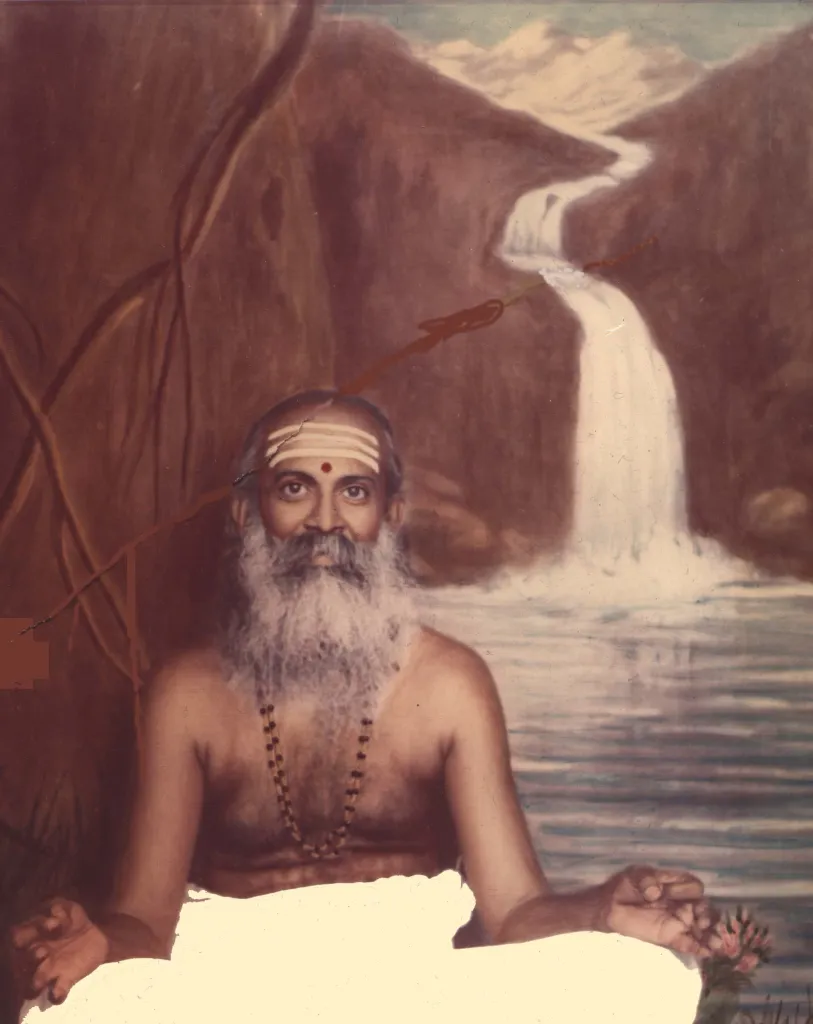
The circle of dormitory Kriya Yoga sadhaks will remember that Yogiar extoled the power of that mantra above all others. It appeared to me that he considered it his connection with Kali. These two great forces of Maha Kali and Babaji served as the energetic driving force of Babaji’s dharma expressed through Yogiar during his incarnation. He had stated on more than one occasion that if the mantra was inappropriately utilized, it would cause damage to the individual or even others, but if chanted silently with a pure heart, great blessings would accrue for all. In that way, he reminded us, many of the siddha techniques are double edged swords. Yogiar used this reference to explain why the Siddhas were so cautions about releasing the most powerful Kriyas.
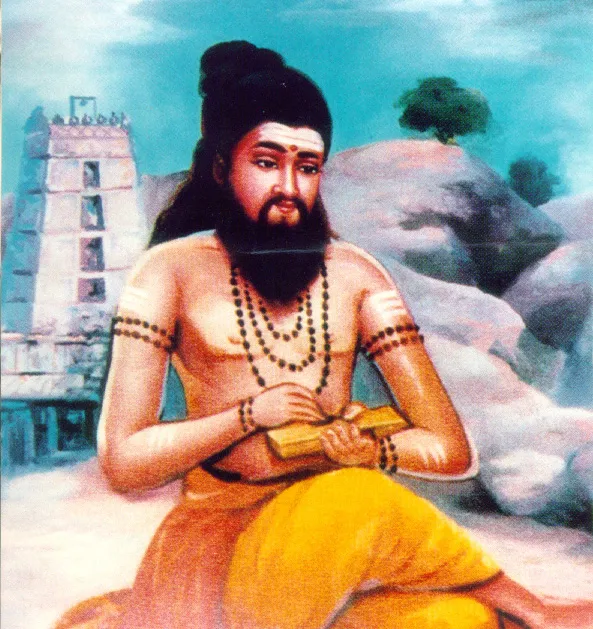
One such Muni is Machendranath, also known as Macchamuni, who codified tantra from disparate sources in the ninth century. He must be identified specifically, as he has been a great source of inspiration for this sacred work. Yogiar placed him as one of the elite siddhas that the earth has spawned and experience has shown me that his grace can propel the sincere soul to great heights in this razor path.
It is with humility and appreciation of the great ones that this unique presentation of Kriya Tantra Yoga and the sixty-four Yoginis is being enumerated, some of it publicly for the first time in modern history. Such is the mystery of the Divine, whose role seems to be to both obscure and reveal eternal truth. The sixty-four Yoginis are powerful assets in providing growth and development of the gross, subtle, and causal planes within each of us. This is the very foundation needed for soul awakening on the highest level. As far as the sixty-four kriyas are concerned, many of these techniques may be practiced by the sincere sadhak, even with limited training. Others require specific instruction and in some cases, a psychic transmission and direct cosmic assistance from the Sathguru. This high esoteric tantra can never be learned from a book and involves an awareness of the divine source behind the transmission. There are things that cannot be stated, things that must be experienced directly. Those who have touched the higher reaches find it difficult to express, as such expression is most often misunderstood or misconstrued by the darkness of human ego. Spiritual initiation (diksa) is understood to the degree with which one has found connection to their own inner power through yogic practice (sadhana) and internal surrender (saranam).
Ramakrishna Paramahamsa, broadly acknowledged as one of India’s foremost holy men, was initiated into Tantra in 1859 and was comprehensively trained in the sixty-four tantric kriyas. Following four years of secret nighttime meetings with his tantric guru under a peepal tree in a secluded area of the temple garden, he mastered the sixty-four sadhana practices. His tantric guru, Bhairavi Brahmani, recognized
Ramakrishna as an Avatar. Progressing through the practices, she introduced Ramakrishna to the sacred panchamakaras, the five forms of worship performed during a chakra puja. The practice culminates in ritual intercourse (maithuna) but according to Ramakrishna’s biographers, the mere suggestion of ritual maithuna was enough to send Ramakrishna into a spiritual ecstasy. Although Ramakrishna steered his young brahmachari students toward celibacy, the great Avatar nonetheless affirmed that Tantra and the sixty-four Tantric Kriyas were a valid path and method which leads to the highest Samadhi.
Any visit to Dakshineshwar Kali temple by Kaula Marg Tantrics should include a meditation under that sacred peepal tree, which was still alive at my last visit in 2009. Few souls know that Brahmani is actually an avatar of Kriya Mataji, who mastered the Sahajiya-Kaula branch of Gaudiya Vaishnava Tantra, and had successfully trained two other disciples prior to meeting the great Ramakrishna.






