




























Prema Vahini
Prema Vahini
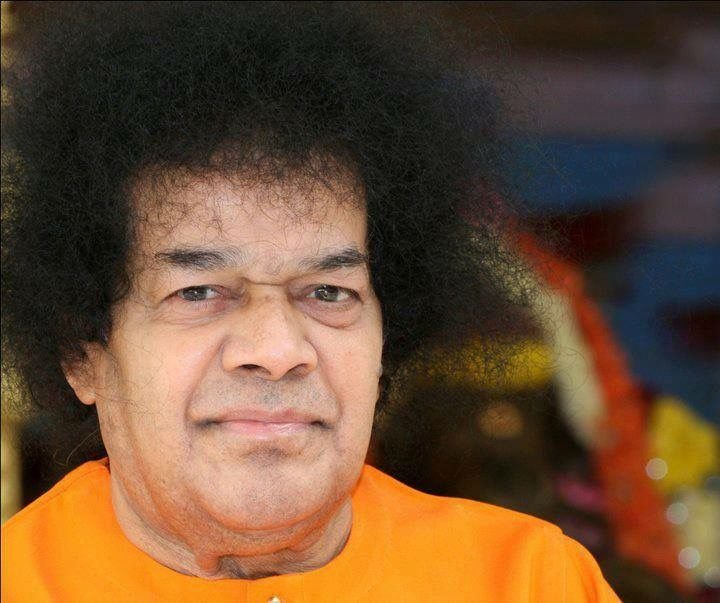
Sri Sathya Sai Baba’s Prema Vahini, meaning “the Stream of Divine Love,” is perhaps the most tender and universal of his spiritual texts. While Jnana Vahini deals with wisdom, Dhyana Vahini with meditation, and Prasanthi Vahini with peace, Prema Vahini flows entirely on the nectar of love. Baba declares that Prema—love—is the source, the path, and the goal of all existence. It is the nature of God, the essence of the Self, and the very breath of life. Without love, human life is dry, mechanical, and meaningless; with love, every thought, word, and deed becomes sacred. Through this Vahini, Baba invites humanity to awaken to its divine heritage, to replace selfishness with selflessness, and to transform the world through love that knows no boundaries.
Baba begins by clarifying what true love (Prema) is. The love that most people experience in daily life is tinged with selfishness, attachment, and expectation. We love others so long as they please us, benefit us, or belong to us. Such love, Baba explains, is not real love but business, a transaction of give and take. True Prema is selfless, unconditional, and unchanging. It does not seek return or reward; it flows because it is the very nature of the heart. Just as the sun shines without asking for thanks and a flower gives fragrance without expecting payment, so too divine love expresses itself naturally, without calculation. This love is fearless, for it is rooted in truth; it is pure, for it is untouched by selfish desire; it is strong, for it endures all trials. Such love is not merely an emotion but a state of being, the fragrance of the soul.
In Prema Vahini, Baba stresses that love is the basis of all spiritual practice. Every path—whether devotion, knowledge, meditation, or service—ultimately depends on love. Without love, rituals become empty, study becomes prideful, and service becomes mechanical. With love, even the simplest act becomes divine. A smile given with love is a prayer, a word spoken with love is truth, and food cooked with love is an offering. Baba reminds seekers that God can be won not by wealth, power, or cleverness, but only by love. He points to the great devotees of history—Radha, Meera, Prahlada, Hanuman—who attained the Lord not through scholarship or austerity but through their overwhelming love. Love, he says, is the royal road to God, the highest yoga, and the surest form of wisdom.
A central teaching in this Vahini is the expansion of love. Human love is often narrow, limited to one’s family, friends, or community. But Baba teaches that the true mark of spiritual growth is the widening of the circle of love until it embraces all beings. Begin by loving your family, he says, then extend that love to neighbors, to society, to the nation, to humanity, to all living creatures, and ultimately to the entire cosmos. This is not idealistic fantasy but the natural unfolding of the heart when selfishness is shed. When love is expanded, distinctions of caste, creed, race, and religion dissolve. The one who sees all as brothers and sisters, who recognizes the divine spark in everyone, is truly human. For Baba, love is not sentimental attachment but universal brotherhood, the recognition that all beings are one in God.
The Vahini also speaks about the practical expression of love through service (seva). Love without action, Baba explains, is like a lamp without oil. Service is the natural outpouring of love, just as a tree naturally gives fruit. To serve the poor, the sick, the distressed, and the needy is not an act of charity but an offering to God, for God lives in every being. Baba often repeated, “Hands that serve are holier than lips that pray.” Yet he clarifies that service must be free from pride and expectation; it must be done with humility, seeing the other as an embodiment of the Divine. Service purifies the heart, removes ego, and allows love to expand. In this way, service and love are inseparable, like two sides of the same coin.
Another important teaching in Prema Vahini is the purification of the heart. Baba explains that the heart is the temple of God, but it has become cluttered with desires, anger, greed, and envy. Just as a mirror covered with dust cannot reflect clearly, the heart covered with impurities cannot radiate love. Through discipline, prayer, and good company, the heart can be cleansed, and its natural love will shine forth. Baba insists that one cannot preach love while harboring hatred, or sing of God’s love while speaking harsh words. True love must be consistent in thought, word, and deed. The hallmark of a loving person is sweetness of speech, kindness in action, and purity of thought.
In Prema Vahini, Baba also reveals the intimate connection between love and truth. Love without truth can become blind attachment; truth without love can become harsh and cold. Together, truth and love form the foundation of righteousness. Baba explains that truth is God, and love is God; to live in truth is to live in love, and to live in love is to live in God. When love fills the heart, peace (shanti) naturally follows; when peace is established, joy (ananda) blossoms; and when joy is steady, liberation (moksha) is near. Thus, all the goals of human life are fulfilled when one practices love.
Baba emphasizes that love is not only the path but also the goal. The soul itself is love, and God is love. To realize the Self is to realize that one is nothing but love. The universe itself is woven of love, for creation is God’s play of love. Every atom vibrates with love, every star shines with love, and every heart longs for love. The tragedy of human life is forgetting this truth and becoming entangled in selfish desires. The purpose of spiritual practice is to rediscover this lost treasure of love, to drink again from the fountain of the heart. When this realization dawns, one sees the whole world as God’s body and all beings as one’s own family. Then life becomes a song of love, and death itself is seen as a return to the ocean of love.
The universality of Prema Vahini is one of its most appealing features. Baba does not limit love to any particular religion, ritual, or belief. He insists that all faiths are valid paths as long as they are rooted in love. Whether one calls God by the name of Rama, Krishna, Allah, Christ, or Buddha, what matters is the depth of love. All scriptures, all prayers, all pilgrimages are meaningful only if they awaken the heart to love. For Baba, religion without love is dry bones, but love itself is the essence of all religion.
In conclusion, Prema Vahini is both an instruction and an inspiration. It teaches that love is not a luxury but the very core of existence; not a weak sentiment but the highest strength; not a passing emotion but the eternal truth. It invites seekers to expand their love from the personal to the universal, to express love through service, to purify the heart through discipline, and to realize that love is God and God is love. In a world torn by division, hatred, and violence, Baba’s message of love is not only timeless but urgently relevant. Prema Vahini is not merely a book but a sacred river of compassion, carrying the soul from selfishness to selflessness, from ignorance to illumination, from separation to unity. To read it is to feel the warmth of divine love; to practice it is to transform life into a celebration of love. Ultimately, Prema Vahini assures us that when love fills the heart, God is already attained, for there is no distance between the lover, the beloved, and love itself.





