
















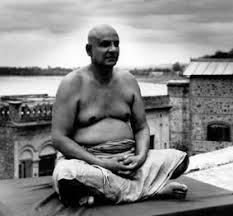









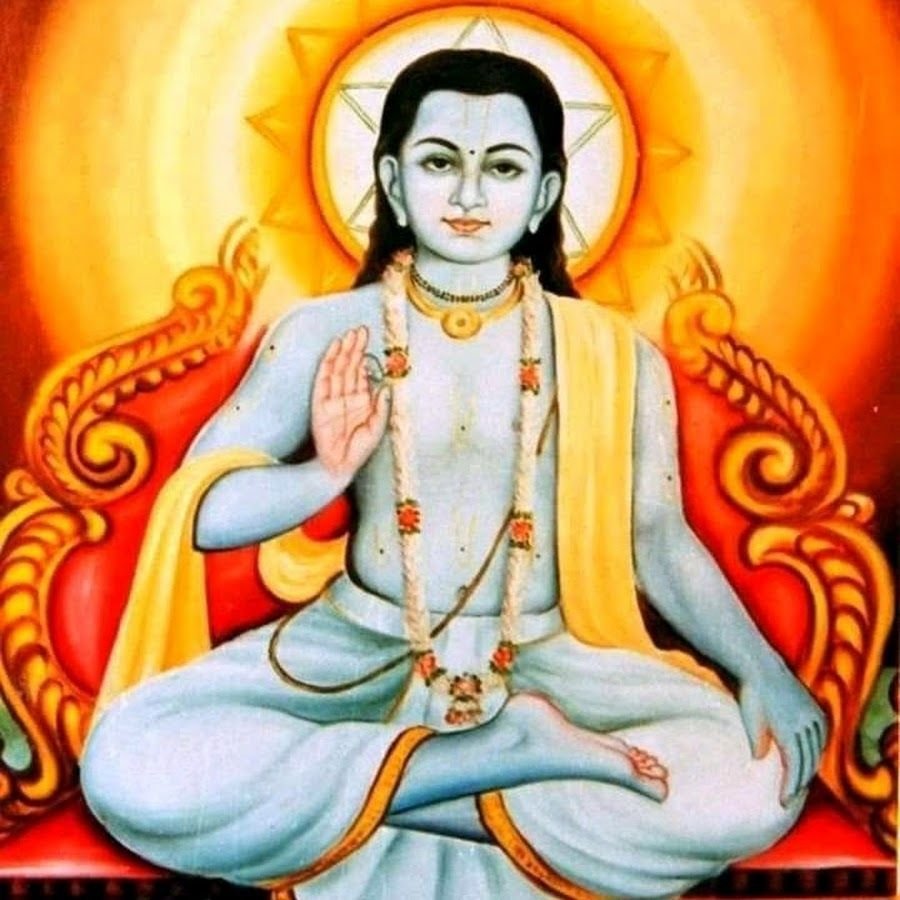
Sant Nimbarka
Sant Nimbarka


What is Markandey Puran & Who is Writer of It?
Niyamanandacharya said to the Sannyasin, “I shall bring quickly roots and fruits from the forest. I guarantee that the sun will not set till you finish your meals”. Niyamanandacharya placed his Sudarshana Chakra on a Nim tree in the Ashram where it shone like the sun. Brahma, who was in the guise of the Sannyasin, was struck with amazement. In a few minutes Nimbarka returned with roots and fruits and gave them to his mother, who served them to the Sannyasin with intense devotion. As soon as the Sannyasin finished his meals, Nimbarka removed the Sudarshana Chakra from the Nim tree. It was at once pitch dark. One quarter of the night had passed. The Sannyasin, who was Brahma, conferred on the boy the name ‘Nimbarka’ (Nim–Neem tree; Arka–Surya or the sun). Since then he has been called Sri Nimbarkacharya.
Sri Nimbarkacharya is considered to be an incarnation of Lord Hari’s weapon Sudarshana Chakra or discus.
There are four kinds of Avataras: (i) Purna (full) e.g., Lord Krishna, Lord Rama. (ii) Kala (not all-full) e.g., Matsya, Varaha, Hamsa, etc. (iii) Amsa (part) e.g., Jada Bharata, Nara Narayana, etc. (iv) Amsamsa (part of the part) e.g., Sri Sankara, Sri Ramanuja, Sri Nimbarka, etc.
In Vishnu Yana, the spiritual lineage of Sri Nimbarkacharya is given as follows: “The sacred Gopala Mantra of eighteen letters sprang from the lotus mouth of Sri Narayana. It was given to Hamsa Bhagavan. Hamsa Bhagavan in turn initiated the Kumaras who revealed this Mantra to Rishi Narada. Narada taught this to his disciple Sri Nimbarka. Nimbarka gave this Mantra to his disciple Srinivasacharya”.
Sri Nimbarkacharya was the embodiment of mercy, piety, love, kindness, liberality and other divine qualities
did rigorous austerities at Neemgram and had Darshan of Lord Krishna in that place. In that village only Nimbarka had exhibited his miracle when Brahma came for Bhiksha as a Sannyasin. Another holy place of the Nimbarka sect is Salembabad in Rajasthan. A big Mahant lives here. There is a temple of Nimbarka here.
The Nimbarka sect is found mostly in Brij Bhumi, viz., Brindavan, Nandigram, Barsana, Govardhan, etc. Jaipur, Jodhpur, Bharatpur, Gwalior, Burdwan and Okara are its centres. The Nimbarka followers are also to be found in Central India, Bihar, Orissa and West Bengal.
ri Nimbarkacharya wrote the following books: Vedanta Parijat Saurabh, a commentary on the Brahma Sutras; a commentary on the Bhagavad Gita; Sadachar Prakash, a treatise on Karma Kanda; Rahasya Shodasi, an explanation of the Sri Gopala Mantra in verses; Prapanna Kalpa Valli, an explanation of the Sri Mukunda Mantra in verses; Prapatti Chintamani, a treatise pertaining to supreme refuge; Prata Smarana Stotram, a devotional hymn; Dasa Sloki or Kama Dhenu, the ten nectarine verses; and Savisesh Nirvisesh Sri Krishna Stavam.
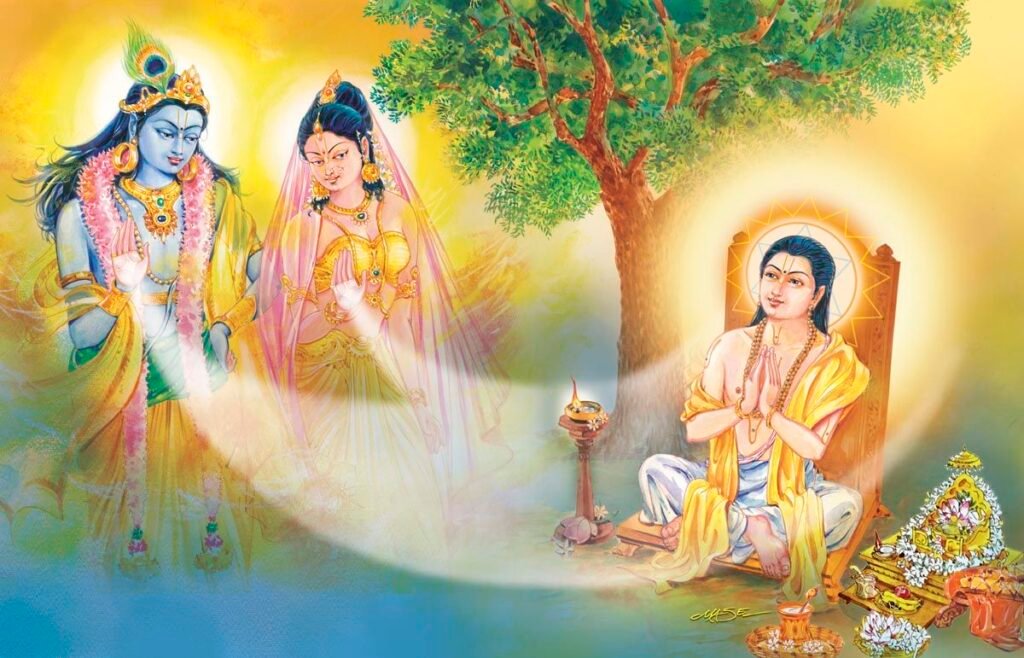
Sankara was the exponent of the Kevala Advaita philosophy, Ramanuja of the Visishtadvaita philosophy,
Madhvacharya of the Dvaita philosophy, Vallabhacharya of the Suddhadvaita philosophy and Nimbarkacharya of the Dvaitadvaita philosophy. All were great souls. We cannot say that Sankara was greater than Ramanuja or Vallabha was greater than Nimbarka. All were Avatara Purushas. Each one incarnated on this earth to complete a definite mission, to preach and propagate a certain doctrine, which was necessary to help the growth of a certain type of people who flourished at a certain period, who were in a certain stage of devotion. All schools of philosophy are necessary. Each philosophy is best suited to a certain type of people.
Sourse- dlshq org




