




























Divine Words of wisdom by Sathya Sai Baba – On Company
Divine Words of wisdom by Sathya Sai Baba - On Company
1. Good qualities depends on the company we keep
Description
“Budhdhihi karmanusaarini!!” One’s intellect develops based on one’s good and bad actions. Bad actions lead to bad mind and good actions lead to good mind. Therefore, one’s actions are solely responsible for one’s state of mind. Hence to indulge in good actions one has to keep good company. As is the company so is the mind. ‘Tell me your company I shall tell you what you are!!’ It can be proved that as is the company so is the person. Therefore, one must develop good qualities by keeping good company.

2. Youth should involve themselves in Satsang
Description
The well being of this world depends on the men and women. Hence, young men and women should have a sacred heart, pure mind and should indulge in selfless service and bring happiness to the country. Youth must join good company. ‘Satsang’, good company, does not mean association with good people. ‘Sat’ means divinity. That is ‘GOD’. That is permanent. With that divinity one should develop association. That will help in getting rid of all the bitterness and in growth of sweetness. It is this divine association that will cleanse the sins and free one from all the curses. The world has lost such sacred divine association today and has totally lost the human quality.
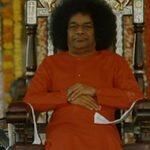
3. What is Satsang and good company according to Adi Shankara and Vemana
Description
Shankara was in the position of a teacher for the entire world and he propagated many ideals amongst the people. Amongst them, the concept of non-dualism or the philosophy of Adwaitha, is an important one. Along with his disciples, he taught these things, travelled all over the country, stressed the importance of the aspect of Atma and explained to people the nature of Paramatma or God. He stressed the importance of having Satsang or spending your time in good company. He taught that for one’s liberation, Satsang or good company is an important step and even the first step. When we make an enquiry as to what the word Satsang means, we will come to interpret it by saying
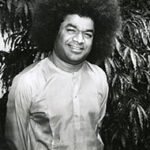
4. Swami on good and bad company
Description
Give up bad company. Run away from bad company. You should never be in bad company. The reason is, you will also become bad. Tell me your company, I shall tell you what you are! Never be in bad company. If possible, try to change the bad to good. Run away from bad company. It is not enough if you do that. Join good company. In ten litres of milk, if you add one litre of water, it also becomes milk. The water that has no value, gets value added to it. In ten litres of water, if you mix one litre of milk, the milk will lose its value. If good people are in bad company, they will lose their value. We should be in good company. Good company is required. We should join in satsang occasionally. Only then would it be possible to have good qualities, good actions, good feelings and good heart. Therefore, you should be in good company. What is the third line (of the stanza)? Do meritorious acts day in and day out. What is this merit? Are they acts of charity? Those are only worldly acts. What is real merit? Body is for the welfare of others, Paropakara. The three syllables “Para” “upa” “kara” make up Paropakara. Para – Atma, Upa – proximity, Kara – go. Go close to the spirit. Be near divinity. That is the real Paropakara. Do meritorious acts. Be with God. Do with God. See with God. Drink with God. Eat with God. Have the divine approach all the time. This is real Paropakara – help. Do meritorious acts continously. Day in and day out, whatever we do, it take it as God’s work. Good work will be transformed into God’s work. We should lead a sacred life with such feelings. Then what is the fourth (line of the stanza)? This has to be done in our daily routine. Today we don’t practice, we don’t do anything that we are supposed to in our daily life.
5. The words, mind, ego and the spirit belong to the same family
Description
Students!! The culture of Bharath is noblest and second to none. Man is sum total of his mind. Mind is the conglomeration of thoughts. Thoughts result in actions. Actions determine the joy and sorrow. Man’s behaviour is the cause for the joy and sorrow that he experiences. One’s behaviour is based on one’s thoughts. Mind is the collection of thoughts. Hence man is called as “Manishi”, human, as he originates from mind. Without mind man cannot be human. The one with mind is “Manishi”, human. Birds and animals do not have a mind. Therefore “Vaak”, word originates from the mind. The mind originated from ego and ego is a reflection of ‘Atma’, the soul. Hence the word, the mind, ego and the soul belong to the same family. Word, mind and ego together help man to attain Divinity. When there is harmonious relationship amidst all the three, then man attains divinity. When there is disharmony among these three it leads to restlessness.
6. The attributes of wisdom - Sraddha, Rutham, Sathya and Yoga
Description
The first one is “Shraddha”. It has two meanings: ‘interest’ and ‘stability’. Shraddha is comprised of two aspects, namely ‘interest’ and ‘stability’. It is not enough if one has just ‘Shraddha’ or interest; one should have full faith in one’s interest. Therefore intellect has these two, namely the ‘interest’ and ‘stability’. The power of intellect is ‘Rutham’. What is its effect? It is the discrimination of good and bad under at all times that is the past, present and future, the three phases of time. The harmony of the thought, word and deed is called as ‘Rutham’. The word ‘Rutham’ is truly applicable only when there is purity in thought, word and deed. Hence the second aspect after ‘Shraddha’ is ‘Rutham’. Expressing the nature of ‘Rutham’ by way of word is called as ‘Sathyam’. ‘Sathyam’ or truth is that spoken word which comes from deep faith in the purity and unity of thought, word and deed. Merely uttering that, which is seen, heard or done, as it is, does not amount to truth or ‘Sathyam’; it only becomes a fact or ‘nizamu’. There is wide difference between truth and fact. There is a gulf of difference between intelligence and intellect; they are considered as same by people who do not know the difference between the two. Therefore truth is the expression of the nature of Rutham in word. The fourth aspect is ‘yoga’. What is ‘yoga’? There are many kinds of ‘yoga’ in the world today. According to Patanjali Yoga sutras yoga is defined as “yogaha chitta vruttinirodhakaha” meaning yoga is to have total control over one’s senses. Yoga means to have all the powers in a human under his control. Having total control is called as yoga. Exercising control over what one hears is yoga; control over smell is yoga; controlling one’s speech is yoga; control over one’s thoughts is yoga- therefore yoga is having control over the five senses. However one has to talk and cannot give up talking. But how should one talk? One must talk with purity and unity of thought, word and deed. One must not engage in arguments over untruth. Arguing about things unknown to oneself is ignorance. Arguments breeds hatred and disunity. Hence Vedas say, “Vaade vaade varjyathe vairam” meaning continuous argument gives scope to enmity. Therefore students should have full faith on the control over the senses. This age is very sacred, divine and a one that lays a royal path to bright future. It is the age where one builds the royal path to bright future. Today’s youngsters are the emancipators of this country. Sense control is the first and foremost lesson that the students should learn. Therefore, the combination of steadfastness, the Rutham, the truth and the yoga amounts to the mighty power. The divine manifestation is the mighty power. In that divinity, exists the Rutham; Sathyam, the truth, shines on this mighty power. Hence it is said that ‘truth is God’. Steadfastness is also divine for it is only through steadfastness that one can aspire to attain knowledge- “Shraddhavaan labhate gyanam”. Gyanam, wisdom, is God. It is said, “Sathyam gyanam anantham brahma!” meaning God is truth, God is wisdom, and God is without limits. Therefore truth is God; Rutham is God, Shraddha is God, Yoga is divine. God has so many names viz., “Yogeeshwara”, “siddhi sankalpa”, “sankalpa siddha”, and “yoga Yogeeshwara”. Of all the five aspects “buddhi” or intellect is the most important. The vedas reiterate this fact as “buddhi graahyam ateendriyam”. Intellect is transcendental, beyond the senses. Comparing such intellect with intelligence is not proper.
7. Three p's important for building good character
Description
Embodiments of Love!! In order to be successful in the field of spirituality, every man must develop the trinity of character. The first one is ‘pavitram’ purity, sanctity. The second one is ‘sahanam’, patience. And the third one is ‘pattudala’, perseverance. These three have been called as ‘pikara trayam’- the three ‘p’s. The first ‘P’ is “purity”. The second ‘P’ is “patience” and the third ‘P’ is “perseverance”. The man, who develops the three aspects of character, sanctifies and redeems his life.




