













Hari Om

Menu

February 14, 2026

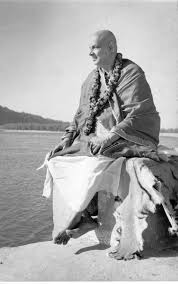
Swami Sivananda portrait with flower garland image
Raja Yoga, Swami Sivananda

Kaivalya

Kaivalya by Swami Sivananda 1. WHAT IS KAIVALYA Kaivalya (perfect independence) comes when the Gunas (qualities), devoid of motive, become latent. Or the power of consciousness gets established in its own nature. NOTES The Gunas act for the enjoyment of the Purusha. As soon as the Purusha realises His own native state of isolation, the Gunas, having fulfilled the object, cease to act. Their effects, the various modifications of Gunas, get Laya or involution. They merge into their causes. Nothing remains for the Purusha to cognise. This does not mean that the universe has come to an end. The world continues to exist as usual for those who have not attained Kaivalya. The Indriyas are drawn into the mind, the mind into the Mahat, and the Mahat into the Purusha. 2. MEANS FOR KAIVALYA On the equality of purity between Purusha and Sattva comes Kaivalya (perfect independence). NOTES Perfection is attained when the intellect becomes as pure as the Atman itself. When the soul realises that it is absolutely independent and it does not depend on anything else in this world, this highest knowledge, Kaivalya, Isolation or perfect independence comes in. The soul feels that it is ever free, unchanging, immortal, beginningless, endless, infinite, beyond time, space and causation, full of bliss, peace and knowledge. When the intellect or Sattva is rendered as pure as the Purusha, when it loses all consciousness of action on its own part, then its purity is said to be equal to that of the Purusha. The intellect or Sattva is annihilated. Purusha only remains free in His native, pristine divine glory. ‘Sattva’ means here intellect. Purusha is reflected in intellect. Sattva is the cause for knowledge and Ahamkara. The intellect attains the same state as that of Purusha when it becomes absolutely pure and when it remains motionless and when all its functions and activities stop completely. In Sutra II-25 another means for Kaivalya is given. 3. PURUSHA COGNISES THROUGH INTELLECT Though the seer is pure intelligence only, he cognises ideas through intellect. NOTES The Purusha is an embodiment of intelligence. He is ever pure and eternally free. He is always the silent witness of the play of Prakriti. Through intellect, the Purusha appears as if seeing, although really he never sees or does anything. The qualities of intellect are superimposed on the Purusha. Just as the real colour of the flower appears on the transparent crystal, so also the qualities of Buddhi appear on the Purusha. Hence, the Purusha appears to be happy or miserable. 4. KNOWABLE IS FOR THE PURUSHA For His (Purusha’s) purpose only is the existence of the knowable (the object of experience). NOTES If the Purusha were not, the being of Prakriti could never have been as stated in Sutra II-18. Just as the cows allow the milk to flow freely to the calf, so also this Prakriti places all her products before the Purusha for his enjoyment, experience and emancipation. 5. PRADHANA IS NOT DESTROYED Even though destroyed to him, whose purpose has been fulfilled, it (Pradhana) is not yet destroyed, because it is common to others. NOTES According to the Sankhya and Raja Yoga philosophy, even if one becomes a Mukta, the Pradhana and its modifications exist for others. 6. SAMYOGA EXPLAINED The junction is the cause for the recognition of the powers of nature and its Lord. NOTES The Purusha unites with the Buddhi and enjoys the different objects. This is the cause for human sufferings. Ignorance is the cause for this conjunction. This Prakriti and Purusha are united from time immemorial. If this union is separated, the Purusha recognises his original, divine glory. The original conjunction is the union of Purusha with the Buddhi. Through Buddhi, he is united with body. He mistakes this perishable body for the real Purusha. Through this body, he gets united with wife, children, relatives and friends. The whole Samsara has started now. Disconnect yourself from the Prakriti and become a Mukta Purusha. This is the essential teaching of Raja Yoga. 7. MIND IS NOT PURUSHA The perception of the mind as Purusha ceases for the man of discrimination. NOTES Just as the existence of seeds is inferred from the blades of grass shooting forth in the rainy season, so also it is rightly inferred that he whose tears flow (Asrupatha) and whose hairs stand on end (Pulaka) when he hears the name of God or Moksha, has surely a store of Karma tending to liberation, as the seed of the recognition of the distinction is already there. The perception of mind ceases to appear as Purusha. 8. DISCRIMINATION IS SEVENFOLD His (the Yogi of unbroken discrimination) discrimination is sevenfold at the final stage. NOTES The Yogi gets the knowledge in seven grades one after another. The seven grades are the seven Jnana Bhumikas. The first four relate to the objective side and the next three to the subjective side. In each Bhumika, he has the followings feelings: 1, I have known all that was to be known and nothing further remains to know. The dissatisfied state of mind has disappeared. All doubts vanish. 2, Nothing can give me any pain. 3, By attaining Kaivalya, I have attained everything and nothing more remains. (Here he is an Aptakama). 4, I have fulfilled all my duties now. (Here he is a Krita-kritya). My mind is at complete rest. All distractions have vanished. (Here the freedom of the mind is threefold). 5, The Gunas have all dropped away, like stones from the mountain-top, never to rise up again. 6, I am what I am, ever free. I am established in my Self. I am all bliss and knowledge. 7, I have no connections. I am Kevala Purusha. These are the seven stages of knowledge or feelings of the Yogi in the seven Jnana Bhumikas.
Kaivalya Read Post »

Swami Sivananda playing sitar outdoors image
Raja Yoga, Swami Sivananda

Samyama In-Depth

Samyama In-Depth by Swami Sivananda 1. SAMYAMA ON VIRTUES By Samyama on friendliness and other virtues comes the power (to transmit same to others.) NOTES By the word ‘Adishu’ (and others), the other virtues Karuna, Mudita, etc., are included. By Samyama on these virtues, the Yogi develops these qualities to a very high degree and gets the power to infuse these qualities in others also. Yogis radiate these qualities on all sides. 2. SAMYAMA ON DISCRIMINATION By Samyama on the distinctive relation between Sattva (purity) and Purusha (the soul), come the powers of omnipotence and omniscience. NOTES The relation between Sattva and Purusha is also taken as the relation between Prakriti and Purusha. This Siddhi is called as Visoka which means ‘without sorrow.’ The Yogi who has these Siddhis will have no sorrow in any condition. 3. SAMYAMA ON SABDA AND ARTHA By Samyama on the distinctions of the word, meaning and knowledge which are confused with one another and appear as one because of similarity, comes the knowledge of the sounds of all living beings. NOTES In ordinary persons word, meaning and knowledge are mixed up together. But, the Yogi can separate them. By making Samyama on any sound he can understand the meaning of any sound. Sphota is something indescribable (state of sound) which eternally exists apart from the letters forming any word, and is yet inseparably connected with it, for it reveals itself on the utterance of that word. It is subtle. ‘Sphota’ means ‘bursting like a bubble’. Sphota is of two kinds, viz., Patha Sphota and Vakhya Sphota. Patha Sphota is that power which brings out the knowledge of a word as soon as it is uttered. Vakhya Sphota is that power which brings knowledge of a sentence as soon as it is uttered. The Udana Vayu connects itself with the chest and other seven places viz., larynx, root of the tongue, teeth, lips, palate, nose and head and cause the arising of all letters. The Yogi can understand the meaning of the sounds uttered by animals, the language of animals and birds, the music of nature and the internal Anahata sounds. 4. SAMYAMA ON KARMA Karmas (works) are of two kinds, viz., those that are to be fructified quickly and those that will bring fruits slowly (at a later date). By Samyama over these or by portents, the Yogi gets the knowledge of (the time of) his death. NOTES A wet cloth, when well squeezed, dries up quickly. Similarly some Karmas bring fruits quickly. A wet cloth full of water dries up slowly. Similarly some Karmas bring fruits slowly. A Yogi by his Yogic power takes several bodies and exhausts all the Karmas that bring fruits slowly. Pattinattu Swami, a well-known Jnani, exhausted the influences of Saturn planet that would last for 7 1/2 years in 7 1/2 Naligas (3 hours). Portents (Arishta) are certain occurrences that cause fear. They are of three kinds, viz., Adhyatmika, Adhibhautika and Adhidaivika. The Yogi will find out the exact date, hour and minute of his death by Samyama over the Karmas. Yoga is an exact science. In fact it is the Science of sciences. By the knowledge of the portents also, the Yogi can find out the date of his death. 5. SAMYAMA ON CHAKRAS AND NADIS (1) On Nabhi Chakra By Samyama on the Chakra (plexus) of navel, comes the knowledge of the body. NOTES Nabhi Chakra is known as Manipura Chakra according to Tantra Sastra. By practising Samyama on this Chakra, the Yogi gets the knowledge of the construction of the body, the seven Dhatus, etc. The description of different Chakras, their presiding deities, the number of petals in each, the functions of each Chakra are all given in my book ‘Kundalini Yoga’. (2) ON THE VISUDDHA CHAKRA By Samyama on (the Chakra at) the pit of the throat, comes the removal of hunger and thirst. NOTES At the pit of the throat, there is Visuddha Chakra. By Samyama on this Chakra, the Yogi becomes free from the afflictions of hunger and thirst. (3) ON SAHASRARA CHAKRA By Samyama on the light of the head, comes the Darshan of Siddhas. NOTES Siddhas are those who move in space between earth and sky. Murdha is the crown of the head. Brahmarandhra or hole of Brahma is here. Coronal artery is connected with the Brahmarandhra. Just as the light leaks out through a hole in the door or window of a house, so also the light of Sattva leaks out through this hole of Brahma. Nirguna Upasakas select this place for their abstract meditation. This centre at the head is Sahasrara Chakra. Samyama at this Chakra will bring divine visions. (4) ON ANAHATA CHAKRA By Samyama on the heart, comes the knowledge of (the contents of) the mind. NOTES At the heart the centre is Anahata Chakra. This is a very important centre for meditation. (5) ON KURMA NADI By Samyama on the Kurma Nadi (the tube within the chest), comes the steadiness of the body. NOTES Kurma is one of the five sub-Pranas. It shuts and opens the eyelids. The astral tube by which this sub-Prana passes is Kurma Nadi. This Nadi is in the chest below the throat. By Samyama on this Nadi, the Yogi gets steadiness of the body. (6) ON THE INNER LIGHT By Samyama on the inner light (of the lotus within the heart), comes the knowledge of the subtle, the obscured and the remote. NOTES The inner light referred to here is already explained in Sutra I-36. The Yogi develops clairvoyance. He can see vividly hidden treasures. A Yogi who lives in a Himalayan cave can clearly see things in the United States of America. He can see the invisible electrons and atoms. He can read what is written in a sealed envelope. (7) ON ONE’S OWN SELF Experience comes from the absence of discrimination between Sattva and Purusha that are absolutely distinct from each other. This (enjoyment) being for another

Samyama In-Depth Read Post »

images 39 1
Bhakti Yoga, Swami Sivananda

A Conversation Between a Theist and an Atheist

A Conversation Between a Theist and an Atheist by Swami Sivananda Golmal (Atheist): O Ram! Please show me your God or Brahman of whom you speak very highly everyday. If God really exists I should see Him with my own eyes now. Ram (Theist): I will beat you now with this stick. Please show me your pain. Golmal: How can I show you my pain Ram? Your question is quite absurd. One will have to feel the pain himself. Ram: Similar is the case with God also, O Golmal. You will have to realise Him through constant and intense meditation. He cannot be seen by these fleshy eyes, as He is beyond the reach of the senses and mind. Golmal: If God is beyond the reach of the senses then He should be a non-entity, a mere void, a negative concept, a metaphysical abstraction. I do not wish to attain such a negative state of nothingness. I will not gain anything by attaining Him. I am very happy here when I enjoy the different kinds of sensual objects. There is nothing beyond these sensual pleasures. Why do you talk some nonsense? Something beyond the senses? How could this be? I think you are dreaming. I think you are in the cloud O Ram! I cannot believe such things. I am a scientist. I want accurate laboratory proofs. Ram: Ha! Ha! Ha! Ha! Well said Golmal. I really pity you. Had you developed two horns on your forehead, I would have rightly called you a cow or a buffalo. You want laboratory proofs? Very fine indeed. You wish to limit the illimitable all-pervading God in your test-tube, blow-pipe and chemicals. God is the source of your chemicals. He is the substratum for your atoms, electrons and molecules. Without Him no atom or electrons will move. He is the inner ruler (Antaryamin). He is Niyanta. Without Him the fire cannot burn, the sun cannot shine, the air cannot move. Without Him you cannot see, cannot talk, cannot hear, cannot think. He is the maker of all scientific laws, the law of gravitation, the law of cohesion, the law of attraction and repulsion, etc. He is the law-giver. Bow to Him with faith and devotion. You will have a thorough knowledge of the Science of sciences, Brahma Vidya, through His grace and attain Moksha. Golmal: Nonsense. Is there anything like Science of sciences? I had my education in Oxford and Harvard Universities. I never heard there of a science like this. You are not only a dreamer but a liar also. Ram: Do not use indecent words, Golmal. Be polite. Be courteous. Behave like a gentleman. Just note the conversation that took place between Saunaka and Angiras. Saunaka, the great Grahastha, questioned Angiras, Kasmin Bhagavo Vijnate Sarvamidam Vijnatam Bhavati, O Bhagavan! What is that which being known all these become known? Angiras replied It is Brahma Vidya, the Science of sciences, by knowing which the Immortal Brahman is realised. By knowledge of Brahma Vidya or the Science of sciences you hear what cannot be heard, you perceive what cannot be perceived, you know what cannot be known, you think what cannot be thought of. Just as by the knowledge of a single nugget of gold all that is made of gold is known, the difference being only a name arising from speech, but the truth being that all is gold; just as by the knowledge of a single pair of nail-scissor all that is made of iron is known, all modifications being only a name based upon words, but the truth being that all is iron, thus, O Golmal, is that Brahma Vidya or the Science of sciences. The basis for all the secular sciences is Brahma Vidya or Adhyatmic Science. If you know this Supreme Science through direct intuition, you will have knowledge of all other worldly sciences, just as you will have knowledge of articles made of clay if you have a knowledge of clay itself. You cannot learn this Science of sciences in any University. You will have to learn this under a Brahma Srotri, Brahma Nishtha Guru after controlling your senses and the mind. This is a Science taught by a Seer or Rishi or a liberated Sage in the forests under a tree (Forest University). You will have to undergo a rare discipline therea discipline which checks the wandering mind and outgoing senses, a discipline which cannot be had in any of the Universities of the world. Golmal: What will the students eat there? Are there hotels and decent rooms? Ram: Some aspirants practise Vayubhakshana. They live on air for some days through this Yogic practice. Some live on Kandamula or roots. Some take Sattu-atta or dried flour. They live in thatched cottages or grass huts, on the banks of the Ganga. Golmal: Is that all? Can you not get a little butter, some sweets or jam and toast occasionally? How can they live without fruits and vitamins? Ram: Jam and butter! Sweets! You cannot dream of such things. These things are not necessary to keep up health. Yogis practise Khechari Mudra, Pranayama, enter into Samadhi, drink the nectar that dribbles from the Sahsrara (Amritasrava) and maintain a high standard of vigour and vitality. They suspend the breath and live for any number of years they like. Sweetmeats, jam, etc., are not suitable for the practice of Yoga. Golmal: How can I believe that God exists when I cannot see Him actually with my eyes? Ram: Though you do not see the stars in the day time, yet they do exist. Though you cannot see the sun on a cloudy day, yet it does exist. Even so though you cannot see God with these physical eyes, Yet He does exist. If you get the divine eye or the eye of intuition (Jnana Chaksus) by the practice of meditation you will behold Him. Golmal: I think, O Ram, that there is no such thing as God or ‘Immortal

A Conversation Between a Theist and an Atheist Read Post »

Swami Sivananda seated outdoors in relaxed pose image
Raja Yoga, Swami Sivananda

Samyama on Internal Centres

Samyama on Internal Centres by Swami Sivananda (1) ON THE MODIFICATIONS OF MIND By Samyama on the three modifications of mind, comes the knowledge of the past and future. NOTES The threefold changes are mentioned in Sutra III-13. When direct knowledge of the threefold changes is obtained by means of Samyama, knowledge of their past and future is obtained. The Yogi plunges deep into the source, i.e., the Samskaras by Samyama, and gets the knowledge of the past and future. He can do it in the twinkling of an eye. When once you know the technique, you can acquire the knowledge through Samyama. This is given in Sutra III-18. (2) VIDEHA CAN PASS OUT OF BODY The great Videha (bodiless) is passing out of the body and functioning there, and by that comes the destruction of the veil of light. NOTES By practising Samyama on the real modifications of the mind when it is separated from the body – the state known as the ‘the great bodiless’ – all coverings can be removed from the light of knowledge. In ordinary persons the mind is confined to this little body only. He identifies himself with this body only. In a Yogi this mind goes outside the body and feels all-pervading nature (omnipresence). The mind feels that it is independent of the physical body. This is called ‘Maha-videha’ or ‘great bodiless’. The Yogi can do Parakaya Pravesa (entering another body) with this mind. The Yogi can enter another body without the Samyama mentioned in Sutra III-39. In this state knowledge of any and every description is within his easy reach. His mind is full of Sattva as the covering of light is destroyed. Rajas and Tamas constitute this covering. This Sutra is the quintessence of the meditational technique described by Patanjali, by which we are introduced to the very heart of the matter so pithily and crisply. This Sutra makes out that there are two ways of the functioning of the mind, one in the form of a thought of an external object and another as a total and comprehensive operation in which the object in meditation becomes inseparable from its thought. Usually such an exercise is not humanly possible. Who can think in such a way that the object enters the mind itself and the object becomes the thought and the thought becomes the object! This is a staggering suggestion given by the Sutra that the entire world can enter into the process of thinking. If the universe enters the mind and the mind enters the universe, this exercise is said to lead to immediate liberation. (3) SAMYAMA ON SAMSKARAS By Samyama and direct perception of the Samskaras (impressions of mind), comes the knowledge of the previous births. NOTES All actions, enjoyments and experiences leave the impressions in the subconscious mind in the form of subtle impressions or residual potencies. The Samskaras are the roots for causing again Jati, life and experiences of pleasure and pain (vide <|Sutra II-13). Revival of Samskaras induce memory. The Yogi dives deep inside and comes in direct contact with these Samskaras. He directly perceives them through his inner Yogic vision. By Samyama on these Samskaras, he acquires knowledge of previous lives. Samskaras are of two kinds, those appearing as habits and causing memories and afflictions; and those appearing as virtue and vice and bringing fruits. The direct knowledge of the Samskaras is not possible without the knowledge of space, time and operative cause. The Yogi gets help from Parinama, Chesta, Nirodha, Sakti, Jivana and Dharma (mind-change, activity, suppression, ideation in action, physical life and characteristics respectively). By doing Samyama on the Samskaras of others he gets the knowledge of their past lives also. (4) SAMYAMA ON INDRIYA By Samyama on the power of cognition, the essential own nature, egoism, qualities and purposefulness or condition of senses, comes the mastery over senses (organs). NOTES Just as there are five conditions for the elements (vide Sutra III-45), so also there are five states or conditions for the organs. The power of cognition is the power which every organ possesses such as seeing, smelling, hearing, tasting and touching; their nature refers to the knowledge which each brings from the object of cognition; egoism refers to the individual consciousness that is present in all the acts; qualities are Sattva, Rajas and Tamas; purposefulness is Bhoga and Apavarga, enjoyment and emancipation. If the Indriyas remain quiet without moving towards objects, and if they are fixed in their respective places, the Yogi enjoys a peculiar, indescribable Ananda. This is Sananda Samadhi. (5) SIDDHIS FOR SAMYAMA ON INDRIYAS Thence comes to the body the power of quick movement like mind and perception without the Indriyas (senses) and mastery over nature. NOTES Madhu-patrika is the name given to the mastery over Bhutas, Indriyas and Pradhana (the combined Bhuta Jaya, Indriya Jaya and Pradhana Jaya). In this state the Yogi attains Ritambara Prajna. ‘Tatah’ means from the mastery of Indriyas. Mastery over the elements brings the eight Siddhis and Kaya Siddhi. Indriya Jaya brings Manojavitam, independent power of the organs and mastery over the first cause i.e., Pradhana Jaya. ‘Madhu-patrika’ means as sweet as honey. The body gets the power of quick movements as the mind and the Indriyas to grasp the movements of the body independently. (6) SAMYAMA ON UDANA VAYU By acquiring mastery over Udana Vayu, the Yogi will not have any contact with water, mud, thorns and others, and can die at will. NOTES It is Udana Vayu that separates the astral body from the physical body at the time of death. By control over this current he becomes very, very light. In conjunction with Prana Vayu, Udana plays an important part in governing the motion of lungs. Udana helps the function of deglutition or swallowing of food stuffs also. Jalasthamba and Vayusthamba are also done by control over Udana. By Samyama on this, the Yogi is not at all affected by water, thorns, etc. (7) SAMYAMA ON SAMANA VAYU

Samyama on Internal Centres Read Post »

Swami Sivananda standing by seashore photo
Raja Yoga, Swami Sivananda

Samyama on External Objects

Samyama on External Objects by Swami Sivananda (1) ON THE SUN By Samyama on the Sun comes the knowledge of the worlds. NOTES Bhuvanas are Lokas or worlds. All Lokas are included in one Brahmanda. There are seven upper worlds and seven lower worlds as given below: HIGHER WORLDS LOWER WORLDS 1. Bhu Loka 1. Sutala Loka2. Bhuvar Loka 2. Vitala Loka3. Swar Loka 3. Talatala Loka4. Mahar Loka 4. Mahatala Loka5. Jana Loka 5. Rasatala Loka6. Tapo Loka 6. Atala Loka7. Satya Loka 7. Patala Loka (2) ON THE MOON By Samyama on the moon, comes the knowledge of the regions of stars. (3) ON THE POLE STAR By Samyama on the Pole Star, comes the knowledge of the movements of the stars. (4) SAMYAMA ON ELEPHANT By Samyama on the strength of elephants and others, comes their strength. NOTES By practising Samyama on Hanuman, the Yogi gets the power of Hanuman. By Samyama on Vayu, he gets the powers of Vayu. In this way by doing Samyama on any object, you will get its power. (5) SAMYAMA ON THE FORM OF BODY By Samyama on the form of the body, the power of comprehension being checked, and the connection between the eye and light being severed, comes the disappearance of the body. NOTES The body is made up of five Tattvas. On account of colour, the body becomes an object of perception. When the Yogi does Samyama with reference to the form of the body, the operation of the perceptibility of colour which is responsible for perception of the body is checked. The Yogi severes the connection between the light of his body and the eye of the perceiver. Hence disappearance of his body follows. The same holds true of the other organs also. He can do Samyama on the sounds, touches, tastes and smells; their perceptibility being checked, there is no contact with the tympanum, skin, tongue, nose. Therefore, these disappear. Yogi has got the power of separating the form from the materials which go to constitute his body. (6) SAMYAMA ON SENSE-ORGANS By this the making of words, etc., disappear is explained. NOTES Refer to the previous Sutra. The Yogi does Samyama and disconnects the contact of the sounds, touches, tastes and smells from the tympanum, skin, tongue and nose respectively. Then disappearance of these take place. (7) SAMYAMA ON THE SIGNS By Samyama on the signs (of others), comes the knowledge of their minds. NOTES When the Yogi does Samyama on certain signs, such as the complexion, voice, or any such sign on the body of others, he understands the state or the nature of the mind of others. Some astrologers give predictions correctly by doing Samyama on the signs of his clients and by studying their minds. (8) SAMYAMA ON MIND (By Samyama on the signs) not the contents of the mind, for the subject is beyond. NOTES In the previous Sutra it is stated that one can have the knowledge of the nature of mind by doing Samyama on the signs. This Sutra states that one can know the nature of the mind by that and not the contents of the mind, i.e., the particular thought of mind. In order to know the contents another man’s mind, the Yogi performs a second Samyama on the heart (III-35). (9) SAMYAMA ON TIME By Samyama on a small point of time comes the discriminative knowledge. NOTES Kshana is the smallest unit of time that cannot be further divided. By doing Samyama on this smallest unit of time and the order in which they follow one another comes discrimination of everything which helps the Yogi to free himself from the tempting invitation of Devas. Years, months and days are made up of Kshana only. Kshana constitutes time. There is slight interval between two Kshanas. There is nothing which is not related to time. Therefore, by Samyama on Kshana, the Yogi surely gets knowledge of everything. Therefore he cannot be allured by the false representation of the Devas. Two moments cannot co-exist. The uninterrupted sequence of the first moment and of the one which follows, is what is called succession or order. (10) EFFECT OF SAMYAMA ON TIME The similar things are thereby (by Samyama) distinguished when not separately differentiated by class, characteristics and position. NOTES Things are generally differentiated by the class or species, peculiar characteristics and place. When all these three fail to differentiate the things, the discrimination that is described in the above Sutra will doubtless help the Yogi. This is a horse. This is brown-coloured horse. This is the differentiation by Lakshana or signs. That camel is in front. This elephant is behind. This is the differentiation by place. All such knowledge can be had by Samyama on time. Discrimination will bring the knowledge of Purusha. The ignorance which is the root cause for human sufferings and tribulations, which makes you identify yourself with the physical body will be destroyed thereby. (11) SAMYAMA ON EAR AND ETHER By Samyama on the relation of the ear and ether, comes the divine hearing. NOTES The Yogi can hear any subtle sound from any distance through this Samyama, by simple willing. He acquires the full power of the organ of hearing. Similarly by connecting with the Adhistana-bhutas (Vayu, Tejas, Apas and Prithvi), he can acquire the full powers of other organs also. (12) SAMYAMA ON ETHER AND BODY By Samyama on the relation between ether and body, to the Yogi, attaining the lightness of cotton, comes the power of passage through ether (air). NOTES The body becomes very light by the practice of Samyama on the relation between ether and body or on the lightness of cotton. Hence the Yogi can move anywhere in the space like a bird. He can walk on the string of a spider’s web. He can move along the rays of the sun. Those who know Sammohana Vidya or Indrajala also can move in the air. But, this is Jala

Samyama on External Objects Read Post »

Swami Sivananda with two disciples by river image
Raja Yoga, Swami Sivananda

Samyama or Mind Control

Samyama or Mind Control by Swami Sivananda 1. WHAT IS SAMYAMA The three (Dharana, Dhyana and Samadhi) together constitute Samyama. NOTES Samyama means perfect control of the mind. Here it is a technical name for three inseparable processes of Dharana, Dhyana and Samadhi taken collectively. By the practice of Samyama, the Yogi gets knowledge and powers. The three processes are practised on any one object successively at the same time. The five Angas of Yoga are intended to purify the body, Prana and the senses. These three practices purify the mind. They constitute the very basis of Yoga. With the help of these three, the Yogi dives deep within and brings out the pearl of knowledge of anything. Samyama is the name given to the combined practice of Dharana, Dhyana and Samadhi at one and the same time. By Samyama on external objects he gets various Siddhis and hidden knowledge of the universe of Tanmatras, etc. By concentration on Indriyas, Ahamkara and mind, etc., he gets various powers and experiences. These things are explained in the subsequent Sutras. 2. SAMYAMA AS ANTARANGA SADHANA The three (Dharana, Dhyana and Samadhi) are more internal than the preceding (Yama, Niyama, Asana, Pranayama and Pratyahara). NOTES These three constitute the Yoga proper. The five accessories are the external means of Yoga. These three directly bring Samadhi. The other five purify the body, Prana and Indriyas. Hence these three are called Antaranga Sadhana. 3. SAMYAMA AS BAHIRANGA SADHANA Even that (Samyama) is external to the seedless Samadhi. NOTES Nirbija Samahi or Asamprajnata Samadhi is the final goal of Raja Yoga. Compared to that, this Samyama (Dharana, Dhyana, Samadhi) also is external or indirect. It is also preparatory. Here there is Alambana or something for the mind to depend upon; whereas in Nirbija Samadhi, there is nothing for the mind to depend upon. It is Niralambana. It is Nirbija (seedless) Samadhi. 4. BENEFITS OF SAMYAMA By the conquest of Samyama, comes the stage of cognition. NOTES As Samyama becomes firmer and firmer, so does the knowledge of Samadhi become more and more lucid. This is the fruit of the practice of Samyama. Samyama should become very natural. Then the knowledge flashes like anything. Samyama is a powerful weapon for the Yogi. Just as the archer aims at the gross objects at first, and then takes to subtle objects, so also the Yogi does Samyama on gross objects and then takes to subtle objects. He does great deal of practice and ascends the Yogic ladder rung by rung.

Samyama or Mind Control Read Post »

Swami Sivananda seated outdoors in peaceful pose image
Raja Yoga, Swami Sivananda

Instructions on Samadhi

Instructions on Samadhi by Swami Sivananda 1. Samadhi is not like a stone-like inert state as many foolish persons imagine. When the self is bound down to its empirical accidents, its activities are not fully exercised, and when the limitations of the empirical existence are transcended the universal life is identified and you have enrichment of the self. You will have a rich inner life. You will have an expanded cosmic life and supra-cosmic life too. 2. Intuition is a spiritual Anubhava. It is direct perception or immediate knowledge through Samadhi. Professor Bergsen of France preaches about intuition to make the people understand that there is another higher source of knowledge than intellect. In intuition there is no reasoning process at all. It is Pratyaksha. Intuition transcends reason but does not contradict it. Intellect takes a man to the door of intuition and returns back. Intuition is Divya Drishti. It is Jnana-Chakshu. Spiritual flashes and glimpses of Truth come through intuition. Inspiration, revelation, spiritual insight come through intuition. 3. A sudden stroke of mystic illumination puts an end to all the empirical existence altogether and the very idea or remembrance of such a thing as this world absolutely leaves the self. 4. Samadhi is of two kinds viz., Jada Samadhi and Chaitanya Samadhi. A Hatha Yogi, through the practice of Khechari Mudra, can shut himself in a box which is buried underneath the ground for months and years. There is no supersensual knowledge in this kind of Samadhi. In Chaitanya Samadhi, there is perfect awareness. The Yogi comes down with new, supersensuous wisdom. 5. A Hatha Yogi draws all his Prana from the different parts of his body and takes it to the Sahasrara Chakra at the top of the head. Then he enters into Samadhi. Therefore it is very difficult to bring him down to objective consciousness by merely shaking his body. Hatha Yogis have remained buried underneath the earth in Samadhi for thousands of years. They plug the posterior nostrils through Khechari Mudra with their tongue. You can bring down to normal objective consciousness a Raja Yogi or a Bhakta or a Jnana Yogi by mere shaking of the body or blowing a conch. Queen Chudalai brought down her husband Sikhidhvaja from Samadhi by shaking his body. Lord Hari brought Prahlada down from his Samadhi by blowing His conch. 6. A Bhakta gets Bhava Samadhi through Prema of the Lord. A Raja Yogi gets Asamprajnata Samadhi through Chitta Vritti Nirodha, by suppressing the mental modifications. A Vedantin gets Samadhi through Mithyatva Buddhi and concentration on the idea of Asti-Bhati-Priya (the Anvaya method). 7. When the Yogi has reached the last perfect stage of meditation and Samadhi, the fire whereof burns all the residue of his actions. He at once gets liberation in this very life (Jivanmukti). 8. During sleep you rest in Sat-chit-ananda Atman or pure consciousness and enjoy the spiritual bliss which is independent of objects. The difference between sleep and Samadhi is that, in sleep there is the veil of ignorance. When you come down from Samadhi you come with new spiritual knowledge. 9. If there is a mind, there is the world also. If you can produce Mano-nasa consciously through Sadhana by getting rid of this little ‘I’ and ‘mineness’, this world will disappear.10. The Yogi ascends the various rungs of the Yogic ladder, stage by stage and acquires different experiences, knowledge and powers. He first gets Savitarka and Nirvitarka Samadhi. He then enters Savichara and Nirvichara Samadhi. Then he experiences Sananda and Sasmita Samadhi.

Instructions on Samadhi Read Post »

Swami Sivananda seated with devotees near river image
Raja Yoga, Swami Sivananda

The Mind Compared

The Mind Compared by Swami Sivananda RESTLESS LIKE A GHOST The mind is like a ghost which is restless. Once, a Brahmin Pundit, through Mantra-Siddhi, had control over a ghost. The ghost said to the Pundit, “I can do any work for you in a minute. You must always be giving me some work. If you leave me even for a second without work, I will at once devour you.” The Brahmin agreed. The ghost dug a tank for the Brahmin, ploughed the fields and did various sorts of work in a short time. He was not able to give the ghost any further work. The ghost threatened the Brahmin, “Now there is no work for me. I will devour you.” The Brahmin was quite puzzled. He did not know what to do. He went to his Guru and explained to him his whole situation. His teacher said, “O Chela, use your common-sense or Yukti (Buddhi). Install a big, stout, soft, wooden post in front of your house. Apply castor oil, wax and other greasy substances to the post. Ask the ghost to get up and get down the whole day and night.” The disciple acted accordingly and controlled the ghost. The ghost became very helpless. Even so, you must give always some kind of work or other to the mind, e.g., Japa, meditation, Svadhyaya, service, Kirtan, prayer, Pranayama. You must keep it fully occupied. Then only the mind can be easily controlled. You can be established in physical and mental Brahmacharya. SCATTERS LIKE MERCURY The activity of the mind is compared to the mobile mercury. If you place a small quantity of mercury on the ground, it will split into several small pieces and run in various directions. You cannot collect them again. Even so, the rays of the mind are scattered in various directions, in sensual objects. It becomes difficult to collect the dissipated mental rays. Vairagya and Abhyasa will help in making the mind one-pointed. SHAMELESS AS A STREET DOG The mind can be compared to the shameless, wandering street-dog with so many wounds on the body. The dog goes to the door of a house. Someone throws a stone at it and it runs away. It goes to another house. There also, it gets a good hitting and thrashing. Then it comes back again to the first house wherefrom it received a pelting of stone. Someone again throws a big stone and it gets another wound. The dog will never leave off its wandering habit in spite of the repeated bad wounds it receives. Even so, this mind always runs towards sensual objects, even though it experiences immense miseries, griefs and sorrows, pains and tribulations. It will never leave off its old habits. You will have to thrash this shameless mind and take it to its source, Brahman, by chanting OM with feeling again and again. Let it taste the Ananda, the Infinite Bliss of Atman. Then alone it will find its rest in OM, its original Abode of Eternal Peace. JUMPS LIKE A TENNIS BALL When you play tennis, the ball goes very high in the sky and the next second, it comes down to the ground. Even so, the mind jumps high to the divine glory, dwells on Sattvic divine virtues for a very short time in the beginning of meditation in neophytes and, at once falls down into its old rotten grooves, nasty ruts, foul avenues, stinking channels and dwells on useless, abominable thoughts. The developing soul, the new flame shudders and quivers at the sight of these shocking thoughts. It does not matter; you need not worry. Just as you raise the ball again to the sky by a good, fresh cut or twist or gentle beating, so also, you will have to raise the mind again with effort to the heights of divine glory and divine consciousness. REFLECTS LIKE A MIRROR The mind of a man is compared to a mirror in which Reality (Brahman) is reflected. The extent you know about Reality depends upon the state of your mind-whether it corresponds to the full wealth of Reality or not. Colours are not revealed to the blind nor music to the deaf nor philosophical truths to the feeble-minded: “Nayam-atma balahinena labhyah.” The revelation will be imperfect or distorted if there is any taint or imperfection. The selfish desires and passions get between the instrument of mind and the Reality to be revealed. Hidden subtle desires (Gupta Vasanas) attack the Sadhakas (aspirants) in a variety of ways. Sadhakas should be ever watching the mind through serious introspection. When the personality of the subject affects the nature of the instrument, the reflection becomes blurred. Again, if you place a big mirror in front of a dog and keep some bread in front, the dog at once barks by looking at its reflection in the mirror. It foolishly imagines that there is another dog. Even so, man sees his own reflection only through his mind-mirror in all persons, but foolishly imagines like the dog that they are all different from him and fights on account of hatred, malice and jealousy. OSCILLATES LIKE A PENDULUM In a clock, the pendulum moves to the right and thence to the left. When the children play on a swing, the swing moves high to one side and at once rises high to the other side. Even so, in the case of aspirants who are not established or well settled in deep meditation, their minds also resemble the pendulum or the swing. They sometimes think of Karma Yoga, enter the world and do actions; while, at other times, they run to the Himalayas for leading a contemplative life. There is struggle inside whether to take up Karma Yoga or Dhyana Yoga. You must decide it once for all and be firm in practising Karma Yoga or in shutting yourself up in a room or cave for some years in the practice of meditation. To run for work into

The Mind Compared Read Post »

Swami Sivananda walking with umbrella and devotees image
Bhakti Yoga, Swami Sivananda

God is Immanent

God is Immanent by Swami Sivananda As I have said already, God is an absentee landlord of this world. He is hiding Himself within these objects. He is remaining within these objects. He is the Indweller and inter-penetrating Presence or Essence or Substance, the intelligent and creative principle of the universe itself. This is a fundamental conception of pantheism. You will find in the Svetasvatara Upanishad: “One shining Being sits hidden in every creature, pervading all, the Inner Self of all beings, the watcher of all acts, abiding in all created things, the witness, the heart, the absolute, free of all attributes. “ Just as oil is hidden in seed, butter in milk, mind in brain, foetus in the womb, sun behind the clouds, fire in wood, sugar or salt in water, scent in buds, sound in the gramophonic records, gold in quarts, microbes in blood, so also God is hidden in all these beings and forms. Just as you see the bacilli of cholera, typhoid fever, consumption or any other disease as for that matter through the powerful lens of microscope, so also you can see God through the eye of intuition (Jnana Chakshus). The first Sloka of the Isavasya Upanishad begins with: “Isa-vasyam-idam sarvam-All these movable and immovable objects are indwelt by the Lord.” In the Katha Upanishad (I-iii-12) you will find: “Esha sarveshu bhuteshu gudho-atma. . . -This Atman is hidden in all beings. ” He who has a sharp, subtle, pure intellect can see Him. God is full of mercy, love and compassion. He has been described as “Ocean of Mercy. ” His mercy flows like the streams of the Ganga and the Yamuna. He is depicted as having sold Himself to His devotees, so to say. He willingly suffers endless pain in the eyes of the world in order to alleviate the sufferings of His devotees. He bears the scar left on His chest by the kick of Bhrigu as an ornament. He wears the skulls of His devotees as a garland round His neck. He ran with lightning speed to save the modesty of Draupadi from being outraged. He apologised and begged pardon of Prahlada in the following words: “O dear, you were too tender of age and too delicate of body to stand the terrible tortures inflicted on your person by your hot-headed father. A parallel of his atrocious deed I have never seen. Pray, therefore excuse me if I was late in coming to your rescue. “ You are all aware of the dying Jatayu in the lap of Sri Rama, who caressed the bird which was mortally wounded in its heroic efforts to rescue Sita from the clutches of the demon king, Ravana. He wiped off the dust on its body with the trusses of His hair. Mark here the unique, tender affection of Sri Rama towards His devotees! God becomes a slave of His devotees. Lord Krishna says: “I am not in My control. I am under the complete control of My Bhaktas. They have taken entire possession of My heart. How can I leave them when they have renounced everything for My sake only?” Lord Rama carried the palanquin of His devotee, Sri Tyagaraja of Tiruvayur, the late reputed songster-Bhakta. He carried water in a vessel for His ablution. He is ever waiting for a chance to serve you in the same way. May His blessings be upon us all!

God is Immanent Read Post »

Swami Sivananda seated by riverside with garland image
Raja Yoga, Swami Sivananda

Anihilation of the Mind (Remembrancer)

Anihilation of the Mind (Remembrancer) by Swami Sivananda Mind is Atma-Sakti. Mind is a bundle of Vasanas (desires) and Sankalpas (thoughts, imaginations). Mind is a bundle of Raga-Dvesha (likes and dislikes). Annihilation of mind is Manonasa. Manolaya is temporary absorption of the mind. This cannot give Moksha. The mind can come back again and wander in sensual objects. Manonasa alone can give release or Moksha. VICHARA How is the mind purified, brought under control and how are its activities stopped and how is it annihilated? Here are some useful and practical points. Mind can be controlled and annihilated by Vichara or enquiry of “Who am I?” This is the best and most effective method. This will annihilate the mind. This is the Vedantic method. Realise the unreality of the mind through philosophical thinking. SLAY THE EGO Eradicate the feeling of egoism. Ego is the seed of the tree of mind. “I” thought is the source of all thoughts. All thoughts are centred on the little “I.” Find out what the little “I” is. This little “I” will dwindle into an airy nothing. It will be absorbed in the infinite “I” or Parabrahman, the source for the little “I” or Ahankara (egoism). The Sun of Self-realisation is fully seen when the cloud of ego disappears. VAIRAGYA Vairagya (dispassion) is another method for annihilating mind. It is distaste for objects of sense-pleasures by finding out the defects in the sensual life. Objects are perishable. Sensual pleasure is momentary and illusory. ABHYASA Abhyasa or practice is another method. Concentrate the mind by fixing it on Brahman. Make it steady. Abhyasa is ceaseless meditation. This leads to Samadhi. NON-ATTACHMENT Asanga or non-attachment is a sword to destroy the mind. Take the mind away from objects. Detach. Attach. Detach it from the objects. And attach it to the Lord. Do this again and again. The essence of the seed of the sprout of world experience, which is desire, can be destroyed by the fire of non-attachment. VASANA-KSHAYA Vasana-Kshaya is another method. Vasana is desire. Renunciation of desires leads to Vasana-Kshaya. This will lead to annihilation of mind (Manonasa). Desire for objects of pleasure is bondage; giving it up is emancipation. Desire is the most essential nature of the mind. Mind and egoism are synonymous. PRANAYAMA Vibration of Prana causes movement of the mind. It gives life to the mind. Pranayama or control of Prana will stop the activities of the mind. But it cannot destroy the mind to its roots like Vichara. CONTROL THE THOUGHTS Control the thoughts or Sankalpas. Avoid imagination or day-dreaming. The mind will be annihilated. Extinction of Sankalpas alone is Moksha or release. The mind is destroyed when there is no imagination. The experience of the world illusion is due to your imagination. It vanishes away when imagination is completely stopped. RENUNCIATION Mental renunciation of possessions is another method. The absolute experience can also be realised if you learn to be in a state of thought-suspending Samadhi. BE BALANCED Attainment of equanimity is another method. Be balanced in pain and pleasure, heat and cold, etc. He alone experiences everlasting peace and eternal bliss who has transcended the mind and rests in his own Satchidananda Atman. DEVOTION AND SERVICE Japa, Kirtan, prayer, devotion, service of Guru and study are also means to annihilate the mind.

Anihilation of the Mind (Remembrancer) Read Post »