













Hari Om

Menu

February 14, 2026

Swami Sivananda seated on rocks by river image
Raja Yoga, Swami Sivananda

Manonasa (Annihilation of the Mind)

Manonasa (Annihilation of the Mind) by Swami Sivananda Mind, through ignorance and indiscrimination, considers its false personality to be true and thinks it is the doer of all Karmas and thus becomes egoistic. It imagines that it is in bondage. It identifies itself with the Jivatman; it becomes Jivatman itself and takes the responsibility upon itself for doing good or bad Karmas and enjoying or suffering from their fruits. Hence is mind the doer of Karmas (actions) and responsibility for the Karmas, therefore, rests with it. Mind is the stealer of Atman. It is a thief. Mind drags the Jivatman into Vishayas (sensual enjoyments). Jivatman is the Abhasa of Chaitanya or reflected intelligence in mind. Mind and Jivatman always live together. They cannot be separated. Slay the mind, the stealer of Atman, through Vichara, Manana and Nididhyasana (constant and profound meditation) on Brahman. Mind has the potency of creating or undoing the whole world in the twinkling of an eye. Therefore, slay this mind, the slayer of Atman, whether through the destruction of Vasanas (latent subtle desires) or the control of Prana or Brahma-Vichara and Mahavakya-Chintana. The best means of disposing of this great danger of Maya involving all in pains is the destruction of mind. With the destruction of the mind, all the three periods of time vanish into nothing. With the destruction of mind, Atman begins to dawn. The extinction of Vasanas (Vasana-Kshaya), Manonasa (annihilation of the mind) and Tattva-Jnana (understanding of the Reality), when practised together for a long time are regarded as fruitful. They should be practised at a time. So long as these three are not equally practised again and again, the Supreme Seat (Parama Pada) cannot be attained even after a lapse of hundreds of years. Through the practice of these three for a long time, the firm knots of the heart are cut without doubt, like the breaking of the threads in a lotus-stalk rent in twain. THE MEANING OF MANONASA Destruction of the mind does not mean annihilation of the Self. The Vedantins divide the mind into the higher and the lower, of which the lower one leading to desires is asked to be destroyed. Destruction of desires, annihilation of Ahankara, destruction of Sankalpa-all mean control of mind or annihilation of mind (Manonasa or Amanaskata). Destruction of egoism, Raga-Dvesha (attraction and repulsion for objects) and all Vasanas alone is Manonasa. Manonasa comes through the destruction of the Vasanas. Manonasa does not mean that you should take a sword and cut the mind to pieces. Manonasa means the death of the present form of the mind (i.e., the instinctive mind of emotions and passions), the form which perceives differences where none exists, which identifies the Self with the body. Its death really means its transformation into and, therefore, the birth of cosmic consciousness. Vast majority of persons live in Annamaya Kosha only. Their thoughts are directed towards eating, cleansing the body and putting on neat dress. That is all. Even the so-called educated persons live in Annamaya Kosha only. Sometimes, they live in Manomaya Kosha (mental sheath). A spiritual aspirant and a Vivekin live in Vijnanamaya Kosha (Buddhi sheath). The Vijnanamaya Kosha is developed by abstract thinking and reasoning, by systematic meditation, Brahma-Chintana, study of the Upanishads, the Yogavasishtha and the Brahma-Sutras. You must all develop the Vijnanamaya Kosha by the study of Vedantic literature and pure thinking. Then you are safe. Mind will stop to deceive and torment you. LAYA-CHINTANA OF ANTAHKARANA Mind is absorbed in Mahat or Buddhi. Individual Buddhi is absorbed in the Cosmic Buddhi; Cosmic Buddhi in Avyakta; Avyakta in Brahman. This is the Laya-Chintana or Antahkarana or Mind. Sambhavi Mudra, Bhrukuti-Drishti (looking at the spot midway between the two eyebrows), Nasikagra-Drishti (looking steadily at the tip of the nose), Nadanusandhana (hearing the sounds of the ear)-all belong to Laya-Yoga. By these practices the mind gets Laya soon. The Unmani state supervenes rapidly. The Unmani Avastha of Laya-Yogis corresponds to the Bhava-Samadhi of Bhaktas. In Sambhavi Mudra, the eyes are open but the mind is fixed on the Lakshya. The eyes do not see the external objects. When the mind and senses are thinned out and eventually controlled, Karanendriya-Vyapara (the various activities of Antahkarana and senses) ceases. Jivatva (personality-notion and sensation) vanishes. Brahmatva (existence) remains. This is Kevala Asti. THE TWO KINDS OF MANONASA Manonasa is of two kinds, viz., (i) Svarupa Manonasa, destruction of the Svarupa of mind, as in the case of the Jivanmukta and (ii) Arupa Manonasa, destruction of the very form of the mind, as in the case of Videhamuktas, when they leave off their physical bodies. The first is termed “destruction of the mind with form.” The second is termed “destruction of the mind without form.” HOW TO BRING ABOUT MANONASA There are five ways of effecting Manahkshaya (destruction of the mind). Two are Yogic methods. Three ways concern Jnana Yoga. (i) When a thought arises, drive it out. Say unto yourself, “Neti, Neti-not this thought, not this thought. I do not want this thought.” (ii) Pratipaksha Bhavana-substitute a counter-idea, love for hatred, courage for fear, etc. (iii) Have Brahma-Bhavana. All Sankalpas will die. (iv) Be a Sakshi of the mind. Be indifferent (Udasina). (v) Make the enquiry, “Who am I?” constantly. All thoughts will die. For a man of Vichara (enquiry), the mind dwindles into an airy nothing. This is easier and more effective than the “Neti, Neti” or “Pratipaksha Bhavana” method. Sankalpa, desire, Raga, Dvesha, Ahankara and mind are the six bricks of the mansion of Jiva. They are the six links of the chain which constitutes the personality-Jiva. Destruction of one brick or one link brings about the destruction of the whole edifice or whole chain. Therefore, cut off daily the branches of Sankalpa from this dire tree of Manas and ultimately destroy the tree of mind at its root completely. The cutting off the branches is only secondary. The eradication of the tree by removal of ‘I’ is the

Manonasa (Annihilation of the Mind) Read Post »
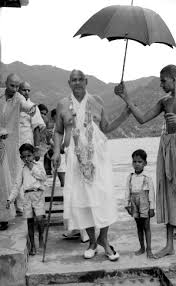
Swami Sivananda walking with umbrella and devotees image
Raja Yoga, Swami Sivananda

Asamprajnata Samadhi

Asamprajnata Samadhi by Swami Sivananda (1) STOPPING MENTAL MODIFICATIONS The other Samadhi is that which consists only of impressions being brought about by the constant practice of the cessation of mental modifications. NOTES This is the highest Asamprajnata Samadhi which brings Kaivalya or Independence. Here there is no Alambana for the mind. It is rendered perfectly steady. All Samskaras are fried up. There is no Triputi here. This is not the Laya state or deep sleep. There is perfect awareness. This is a stage where a Yogi gets the highest knowledge. There is Prajna or pure consciousness. This is the state like ocean without waves. The only Sadhana for attaining this state is Para Vairagya. Rajas and Tamas are completely destroyed. When there is Ekagrata, Samprajnata Samadhi is possible. Asamprajnata Samadhi is possible when there is perfect Nirodha of mind. Para Vairagya brings complete rest to the mind. All Vrittis stop. This is the highest end of Raja Yoga which gives freedom. In Samprajnata Samadhi there is only a partial inhibition of mental functions. Partial inhibition of the mental functions cannot totally uproot the seeds of rebirth. It cannot lead to final liberation wherein the seer rests in his own native, pristine, Divine Glory. Asamprajnata Samadhi destroys the impressions of all antecedent mental functions, and even goes so far as to tide over even Prarabdha. A Yogi has no Prarabdha at all. The mind having no object to grasp, becomes as it were, non-existent. This is Nirbija or Niralambana Samadhi. (2) NIRVICHARA SAMADHI Nirvitarka Samadhi is that in which the mind shines as the object alone on the disappearance of memory and when the mind is, as it were, devoid of its own nature. NOTES You have seen the different kinds of Samprajnata Samadhi. Among those gross forms of meditation, if you meditate by taking the elements out of time and space, and by thinking on them as they are, it will become Nirvitarka Samadhi (without argumentation). This is a higher form of Samadhi than the previous one. Everything besides the complete idea of the object is forgotten in this Samadhi. The mind is not conscious of name, form, meaning or relation of the object. It is absorbed in one idea. The faculty of memory is suppressed here as it brings association of name, form, meaning, relation, etc. In ordinary persons, it is difficult to separate the sound, meaning and the knowledge, as they occur with great rapidity. A Yogi who practises Nirvitarka Samadhi will be able to distinguish clearly one from the other. The state described in this Sutra is perfect Nirvitarka Samadhi. The mind of the Yogi becomes very, very subtle on account of various practices in concentration and the development of qualities like Maitri, Karuna and Mudita. The disturbing Rajas and Tamas have been wiped out. (3) NIRVICHARA AND SUBTLE OBJECTS By this (process) meditation with deliberation and without deliberation with their objects as subtle, are also explained. NOTES Just as the two kinds of argumentative concentration refer to the gross elements, so the two kinds of concentration with deliberation and without deliberation refer to subtle elements. Sananda and Sasmita are also included here. Vichara here means ‘meditative state.’ It is not the Tarka Vichara. (4) THE PROVINCE OF SUBTLE OBJECTS The province of the subtle objects reach upto (or end with) Mula Prakriti. NOTES Behind all subtle objects is Mula Prakriti, the primal cause. Pradhana is a terminology of the Sankhyas for Mula Prakriti. It means the ‘chief’. The other principles, Mahat, Ahamkara, Manas, Tanmatras and the gross elements are derived from this. Hence it has got this significant name. Vedantins call this ‘Avyaktam’ (unmanifested), ‘Avyakritam’ (undifferentiated), because the matter and energy are one here. They are not differentiated. All kinds of sounds also exist here in an undifferentiated state. Hence the significant name ‘undifferentiated.’ All the products or Vikritis are dissolved at the end of Pralaya in the chief Pradhana. When the three Gunas are in a state of equilibrium in Pralaya, the name Prakriti is given. This is the Gunasamya Avastha. When the equilibrium is disturbed during Srishti, the state of Vaishamya Avastha begins. Then this motion of Jivas is set up through the influence of Sattva, Rajas and Tamas. One who has mastered the four stages of concentration described above, gets mastery over Pradhana. Purusha, which is more subtle than Pradhana, is above Pradhana. He is only the instrumental cause for this world (Nimitta Karana). Mula Prakriti is Upadhana Karana or material cause for this world. Pradhana is also known by the name ‘Alinga.’ This means without mark. The Sukshma state of gross elements is Tanmatras. Mahat is more subtle than the Tanmatras. Mahat is individual Buddhi Tattva. It is also known by the name ‘Linga.’ Pradhana is more subtle than the Mahat. 7. BENEFITS OF NIRVICHARA SAMADHI (1) INTERNAL PEACE When the meditation without deliberation is purified, comes the spiritual internal peace of mind. NOTES As there is pure Sattva only in the mind, owing to the eradication of Rajas and Tamas, there is light and purity in the mind. The mind is perfectly steady. So, there is Prasada or contentment and peace of mind or subjective luminosity. The Purusha, who is all-bliss, all-knowledge, all-purity can only be realised when the mind is perfectly steady and is filled with purity. The Yogi gets simultaneous knowledge of everything.If you want to meditate on the subtle Tanmatras by taking them out of time and space by thinking as they are, it will constitute Nirvichara Samadhi (Samadhi without deliberation). (2) RITAMBARA PRAJNA The consciousness therein is full of Truth. NOTES There is the real knowledge free from Samsaya (doubt) and Vipareeta Bhavanas (perverted knowledge). There is knowledge by mere intuition. The real essence is revealed here. There is not even a trace of false knowledge. Worldly knowledge, knowledge from books is only false knowledge. (3) THE RANGE OF INTELLECT The range of intellect is different from those of revelation and inferential cognition. NOTES Its

Asamprajnata Samadhi Read Post »

Swami Sivananda meditating outdoors on mat image
Raja Yoga, Swami Sivananda

Samprajnata Samadhi

Samprajnata Samadhi by Swami Sivananda (1) DEFINITION Samprajnata Samadhi or concrete meditation is that which is accompanied by argumentation, deliberation, happiness, egoism and form. NOTES Samadhi is of two kinds viz., Samprajnata and Asamprajnata. Samprajnata Samadhi is the first step. In this Samadhi, Samskaras are not destroyed. This is also known as Sabija Samadhi, because the seeds or the Samskaras are there. In this there is Alambana or support. In Samprajnata Samadhi there are four varieties viz., Savitarka, Savichara, Sananda and Asmita. All these will be explained in the subsequent Sutras. Samadhi can also be divided into two kinds, Sthula (gross) and Sukshma (subtle) that relates to Tanmatras and Indriyas. Samprajnata and Asamprajnata Samadhis are termed as Savikalpa and Nirvikalpa Samadhi by Vedantins and Bhaktas. This Sutra refers actually to a series of meditations in an ascending order, first on the physical universe, then the subtle universe of potentials called Tanmatras, the cosmic complex known as space and time and cosmic Self sense leading to a bliss born of pure consciousness. Though the Sutra refers only to Vitarka, Vichara, Ananda and Asmita, they are further capable of categorisation as involved in space-time consciousness or not involved in space-time consciousness. These stages are intricate and cannot be understood by merely a study of books. (2) SAVITARKA SAMADHI There the concentration in which the options of word, meaning and understanding are confused is called Savitarka Samadhi or the Samadhi with argumentation. NOTES If you concentrate and meditate on the gross objects, on their nature and in relation to time and space, it is Savitarka Samadhi (Samadhi with argumentation). It is Sthula Dhyana. You will get control over the object. You will acquire full knowledge of the object. You will get psychic powers (Siddhis). The ‘cow ‘ as a word, the ‘cow’ as an object and the ‘cow’ as an idea, though different from one another, are cognised as indistinct. You begin to analyse. The characteristics of the word are different; the characteristics of the idea are different; and the characteristics of the object are also different. Everything has a name which has some meaning. When the mind apprehends a word and meditates on its meaning and form as well as on the understanding of both, and thus lose itself in the thing completely, it is called Savitarka Samadhi. Sound causes vibration in the mind. It is carried through the external auditory meatus (external opening of the ear), through the auditory nerve to the auditory centre of the brain. Now a reaction takes place. The mind reacts. It understands the meaning of the sound. Now knowledge manifests. Now comes perception or cognition of the object. The mixture of these three, sound, meaning and knowledge constitute perception or cognition of an object. It is Savitarka Samadhi. (3) SAVICHARA SAMADHI If you meditate on the subtle Tanmatras, on their nature and in relation to time and space, it is Savichara Samadhi (Samadhi with deliberation). This is Sukshma Dhyana. You will get knowledge of the Tanmatras. You will have great control over Tanmatras. Savitarka, Nirvitarka, Savichara and Nirvichara are called Grahya Samapatti. (4) SANANDA SAMADHI If you give up the gross and the subtle elements, if you fix the Indriyas in their respective places and if you give up the gross and the subtle meditation, and if you meditate on the Sattvic mind itself, it is known as Sananda Samadhi. This is called Grahya Samapatti, cognition of the instrument of cognition. (5) ASMITA SAMADHI When the Sattvic ego only remains during deep meditation, is called Asmita Samadhi. There is only Prajna of ‘Aham-Tvam’ in this Samadhi. The Yogi who has reached this stage is a Videha (without body). Prakriti- layas are those who in this state get themselves merged in nature. You will have to proceed further if you want Kaivalya. This is called as Grahitri Samapatti, cognition of the knower. Savitarka is gross Samadhi. Savichara is subtle Samadhi. Sananda is deep subtle Samadhi. Asmita is still more deep subtle Samadhi. These are all stages like the steps of an ascending stair-case. (6) SABIJA SAMADHI These only, viz., Savitarka, Savichara Sananda and Asmita are Sabija Samadhi or Samadhi with seed (Samskaras). NOTES The seeds are the Samskaras of past actions which give birth and death. These meditations cannot give full security. They cannot ensure final liberation, as the seeds are not fried or destroyed. They have got Alambana (support) on external objects, gross or subtle. Niralambana, Nirbija Samadhi only can give the final salvation.

Samprajnata Samadhi Read Post »

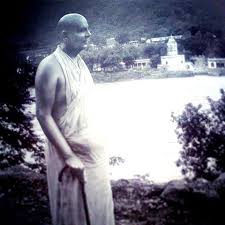
Swami Sivananda standing near riverside image
Raja Yoga, Swami Sivananda

Dharmamegha Samadhi

Dharmamegha Samadhi by Swami Sivananda Dharmamegha Samadhi or the Samadhi called the cloud of virtue, comes from constant discrimination, having no interest left in the highest discrimination. NOTES Even full discrimination is not the desired end. When the Yogi rejects the powers only, he gets the illumination Prasamkhyana or Dharmamegha. That Yogi who has understood the essence of 25 Tattvas and who has the discriminative knowledge between Prakriti and Purusha gets the power of knowing everything. He becomes the Lord of everything. When he has no attachment for this state also, he gets Viveka-khyati or full discrimination in the form of a continuous current at all places and in all conditions. This is ‘cloud of virtue.’ When the Yogi has renounced all powers, he gets the real knowledge, real peace and real strength of Purusha. He is full of bliss, purity and wisdom (Yathartha Jnana). He shines in his own native glory. He becomes ever free and independent. He who runs after Siddhis is still bound. Knowledge of the Truth or Purusha is far from him. Other thoughts which cause obstruction or breaks (vide Sutra IV-26), owing to past impressions, are not born now owing to the destruction of these impressions. BENEFITS OF DHARMAMEGHA SAMADHI (1) REMOVAL OF AFFLICTIONS From the Dharmamegha Samadhi comes the removal of all afflictions and Karmas. NOTES The cause for Samsara is Klesha-karmas that are mixed with Vasanas. When these are destroyed, the Yogi becomes free while living. There is no fear of downfall, as the Klesha-karmas, the seeds for Samsara are totally fried now. As this Samadhi showers always the state of Kaivalya, the fruit of actions that are called Akrishna and Asukla, it is called Dharmamegha. It is quite a significant name indeed. The afflictions and Karmas are already described in Sutras II-3, 15 & 16. (2) INFINITY OF KNOWLEDGE Then comes the removal of all coverings of impurities due to the infinity of knowledge and the knowable becomes very little. NOTES When the Yogi gets this infinite knowledge, the knowledge that ordinary men get from worldly experiences and the knowable becomes very, very insignificant. The knowledge of the Yogi is like a sun. The knowledge of objects is like the light of a glow-worm. The Yogi sees without eyes, tastes without tongue, hears without ears, smells without nose and touches without skin. His Sankalpa can work miracles. He simply wills. Everything comes into being. This is described as follows: The blind man pierced the pearl; the fingerless put a thread into it; the neckless wore it and the tongueless praised it (Taittiriya Aranyaka I-ii-5). The sum total of all knowledge of this world, of all other secular sciences is nothing, nothing, is mere husk when compared with the infinite knowledge of a Yogi who has attained Kaivalya. (3) GUNAS COME TO AN END Then the succession of the modifications of Gunas comes to an end, having fulfilled their part. NOTES When the cloud of virtue dawns, when there is highest knowledge and when Para Vairagya fully manifests, the entire cessation of the effects of the three Gunas comes in. The Gunas operate for the enjoyment, experience and emancipation of the Purusha. The Purusha having realised His native state, the Gunas, of course, cease to act, they having fulfilled their end. Therefore the succession of the modifications of Gunas comes to an end for the Purusha who has attained Kaivalya. (4) SIMULTANEOUS KNOWLEDGE The succession is the uninterrupted sequence of moments distinctly cognised on the cessation of modification. NOTES Succession of moments implies order of time. Its form can only be understood if you have a knowledge of the minute particle of time Kshana. Succession is the uninterrupted flow of moments. It can be known only when a particular modification comes to an end. Succession has reference to order and time. For the Yogi who has attained Asamprajnata Samadhi, there is no succession for him. He has simultaneous knowledge. The past and future are blended in the present for him. Everything is ‘now’. Everything is ‘here’. He has transcended time and space.

Dharmamegha Samadhi Read Post »

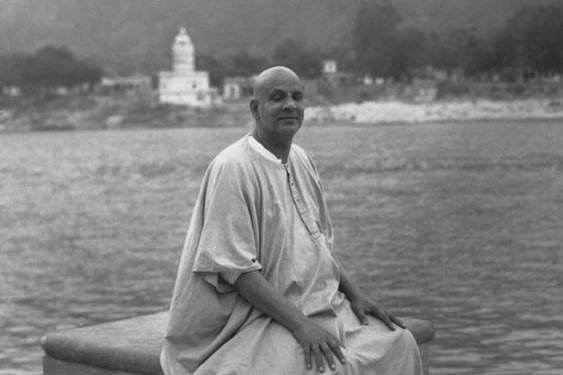
Swami Sivananda seated beside river image
Raja Yoga, Swami Sivananda

Guide to Samadhi

Guide to Samadhi by Swami Sivananda CHARACTERISTICS OF SAMADHI When the mind is completely absorbed in one object of meditation, it is termed Samadhi. The mind identifies itself with the object of meditation. In Samadhi, there is neither Dhyana nor Dhyata (neither meditation nor meditator). The meditator and meditated, the thinker and the thought, the worshipper and the worshipped become one or identical. The Triputi (triad) vanishes. The mind loses its own consciousness and becomes identical with the object of meditation. The meditator has dissolved his personality in the sea of God, drowned and forgotten there till he becomes simply the instrument of God. When his mouth opens, it speaks God’s words without effort or forethought through direct intuition and, when he raises his hand, God flows again through that to work a miracle. In Samadhi, there is neither seeing nor hearing. There is neither physical nor mental consciousness. There is only spiritual consciousness. There is only Existence (Sat). That is your real Svarupa. When the water dries up in a pool, the reflection of the sun in the water also vanishes. When the mind melts in Brahman, when the mind-lake dries up, the reflected Chaitanya (Chidabhasa) also vanishes. The Jivatman (personality) goes away. There remains Existence alone. Turiya is the spiritual condition where there is no play of mind, where the mind is dissolved in Brahman. It is the “fourth dimension,” where there is infinite Brahmic bliss. It is not a condition of inertia, forgetfulness or annihilation. It is a state of absolute consciousness which baffles all attempts at description. It is the final goal of all. It is Mukti. It is Moksha. Generally, when you have what you call dreamless sleep, it is one of two things; either you do not remember what you dreamt of or you fell into absolute unconsciousness which is almost death-a taste of death. But, there is the possibility of a sleep in which you enter into an absolute silence, immortality and peace in all parts of your being and your consciousness merges into Satchidananda. You can hardly call it sleep, for there is perfect “awareness.” In that condition, you can remain for a few minutes or hours or days; but, these few minutes give you more rest and refreshment than hours of ordinary sleep. You cannot have it by chance. It requires a long training. Samadhi is not a stone-like inert state as many people imagine. A life in the spirit (Atman or Divine) is not annihilation. When the self is bound down to its empirical accidents, its activities are not fully exercised and, when the limitations of the empirical existence are transcended, the universal life is intensified and you have enrichment of Self. You will have a rich inner life. You will have an expanded cosmic life and supra-cosmic life, too. THE DIFFERENT KINDS OF SAMADHI A Raja Yogi gets Nirodha-Samadhi through Chitta-Vritti-Nirodha (by restraining the mental modifications). A Bhakta gets Bhava-Samadhi through Prema of the Lord. A Vedanti gets Bheda-Samadhi through Mithyatva-Buddhi and concentration on the idea of the Asti-Bhati-Priya (the Anvaya method). It is only the Raja Yogi who attempts the annihilation of the Vrittis, the Nirodha Samadhi (“Yogaschittavrittinirodhah” -Patanjali Yoga Sutras, I-2). A Vedanti has always Atma-Bhava, Brahma-Bhava whenever he comes across objects. So he does not try to annihilate the Vrittis. There is no Pratyahara for him. There is no Bahirmukha Vritti for him. He rejects Nama-Rupa and takes Asti-Bhati-Priya (Bheda-Samadhi). A Bhakta sees Narayana or Krishna in all objects. He also does not check the Vrittis. He, like the Vedanti, changes his mental attitude. It is the mind that creates all the differences and separateness. The world is all Ananda, only if you change your angle of vision, your mental attitude. You will find heaven on earth. You can bring down to normal objective consciousness a Raja Yogi or Bhakti Yogi or Jnana Yogi by mere shaking of the body or blowing a conch. Chudalai brought down her husband Sikhidhvaja from Samadhi by shaking his body. Lord Hari brought Prahlada down from his Samadhi by blowing His conch. SAMADHI THROUGH HATHA YOGA A Hatha Yogi draws all his Prana from the different parts of his body and takes it to the Sahasrara Chakra (thousand-petalled lotus) at the top of the head. Then he enters into Samadhi (superconscious state). Therefore it is very difficult to bring him down to objective consciousness by merely shaking his body. Hatha Yogis have remained buried underneath the earth in Samadhi for years together. They plug the posterior nostrils through Khechari Mudra (a king of Hatha Yogic Kriya) with their long tongues. Prana and Apana that move in the chest and anus respectively are united by the Yogic processes of Jalandhara, Mula and Uddiyana Bandhas and the united Prana-Apana is driven into the Sushumna Nadi of the spinal canal. The Pranas, when thus driven, draw up the mind also along the Sushumna Nadi which is otherwise known as Brahma Nadi. During the ascent in the Sushumna Nadi, the three Granthis or knots, viz., Brahma-Granthi at Muladhara-Chakra, Vishnu-Granthi at Manipura-Chakra and Rudra-Granthi at Ajna-Chakra should be cut asunder by strenuous efforts. These knots prevent the ascent of Kundalini. Bhastrika Pranayama breaks down these knots. When Kula-Kundalini Sakti that lies dormant in the Muladhara-Chakra in the form of a coiled serpent with 3 curves or turns, with the face downwards is awakened by spiritual Sadhana, it ascends upwards towards Sahasrara Chakra or the thousand-petalled lotus in the crown of the head and takes along with it the mind and Prana also. When the mind is in the Sushumna, the Yogi is shut out from the objective, physical consciousness of the world. He is practically dead to the world, sees various visions and moves in the mental, ethereal space (Chidakasa). Samadhi starts. SAMADHI THROUGH RAJA YOGA Deep meditation leads to Samadhi or oneness with God. If you can fix the mind for ten seconds steadily on a particular object or Murti, it is Dharana

Guide to Samadhi Read Post »

Swami Sivananda portrait with name text image
Raja Yoga, Swami Sivananda

Samadhi

Samadhi by Swami Sivananda 1. WHAT IS SAMADHI The same Dhyana is Samadhi when it shines with the object alone, as it were, devoid of itself. NOTES The thinker and the thought, the meditator and the meditated become one. The mind assumes or becomes the Dhyeya-rupa. The separate notions ‘contemplation’ and ‘contemplated’ and the ‘contemplator’ vanish. In the state of Samadhi the aspirant is not conscious of any external or internal objects. Just as the arrow-maker, having his mind engrossed in the arrow, knew not the king passing by his side, so also, the Yogi knows not anything when he is deep in his meditation. 2. MEANS FOR SAMADHI (A) ONE-POINTED MIND The modification of Samadhi is the destruction of all-pointedness (of mind) and appearance of one-pointedness of mind (concentration of mind). NOTES With the destruction of the nature of the mind to run after all objects and with the increase of the one-pointed nature of the mind, the mind assumes the state of Samadhi. (B) BY FAITH, ENERGY, ETC. For others, it (Samadhi) is preceded by faith, energy, memory and discernment. NOTES In the previous Sutra the Samadhi for Prakriti-layas and Videhas are given. In this Sutra Samadhi is given for other Yogis. Faith is the firm conviction of the mind as regards the efficiency of the Yoga and the goal to be reached. Sincere faith forces a man to do energetic action to realise the fruit. This brings memory of all knowledge of the subject. Then he concentrates and meditates. He then acquires discrimination between the real and the unreal, and the highest knowledge. Those who apply themselves diligently to Yoga with perfect faith get themselves established in the highest Asamprajnata Samadhi through Samprajnata which brings in Para Vairagya. Faith sustains the Yogi like a kind, affectionate mother. (3) BY VAIRAGYA Success (in Samadhi) is quick (for those), whose (Vairagya) is intense. NOTES Those who feel ardently for Self-realisation, who have burning Vairagya, attain at once to the state of Asamprajnata Samadhi. Burning Vairagya and intense Sadhana are needed. Then the fruit is near at hand. According to the degree of Vairagya and degree of Sadhana, there are nine stages or steps wherein Yogis halt. The fruit of Samprajnata Samadhi is Asamprajnata Samadhi, and the fruit of Asamprajnata Samadhi is Kaivalya or absolute independence. (4) THREE KINDS IN EFFORT A further differentiation comes by mild, moderate or excessive (in efforts). NOTES The means are of three kinds, mild, medium and intense. Vairagya also is of three kinds, mild, middling and intense. Hence there are nine classes of Yogis. The fruit, Asamprajnata Samadhi, will directly be proportionate to the degree of means and Vairagya. Yogis are of mild, middling and intense energy and Vairagya by virtue of their habits of previous lives. (5) BY DESTROYAL OF SAMSKARAS AND ISVARA-PRANIDHANA (SUTRAS I-51 AND II-45) It is given in the Sutras I-51 that Samadhi will come by the destroyal of all Samskaras, and in Sutra II-45 by Isvara-pranidhana. The meaning of the Sutras and their notes are already given.

Samadhi Read Post »

Swami Sivananda Guru seated with disciple in outdoor setting image
Raja Yoga, Swami Sivananda

Meditation for Mind Control

Meditation for Mind Control by Swami Sivananda I. HINTS ON MIND-CONTROL There is no other vessel on this earth to wade through the ocean of rebirth than the mastery of this turbulent mind. Tame the mind; collect all your thoughts. Keep the mind serene. Think not of evil. You will enter the realm of deathlessness. He who has controlled the serpent of mind will reach the dominion of Moksha or eternal Bliss. Withdraw the senses from their objects. Collect the rays of the mind. Direct the mind towards the Ajna Chakra, the space between the two eyebrows and fix it there steadily. Understand the mind; study the mind; and know this machinery well, and know also how to manage it. The mind abhors a vacuum. As blinding as desire is aversion, which is of the same root. Desire and aversion resemble two monkeys sitting on the tree of the heart; while they continue to shake and agitate it there can be no peace. Thought is a modification of ignorance or Ajnana. Man falls into the cycle of births and deaths through his own Sankalpas or thoughts. Study my book, Mind, Its Mysteries and Control. It will throw a flood of light upon how to deal with the mind, and control it.The Sattvic mind is your father or a rare and true friend – father on account of its protecting nature, a rare and true friend through the true counsels it imparts in the way of obtaining the higher goal. There are two paths to control the mind, viz., Yoga and Jnana. Yoga is that which makes the actions of the mind turn on one only, or makes the mind to concentrate itself upon one object only. By Jnana is meant the perfect illumination and spiritualisation of consciousness, in which the individual consciousness becomes wholly identical with the absolute consciousness. Raja Yoga is a means to attain the intuition of Brahman. Yoga is an auxiliary path to knowledge or Jnana. Yama and Niyama afford preliminary moral training. They consist in giving up vices and acquiring virtues. The chief aim of Yoga is to control the unruly senses and the wandering mind. When the mind is subdued, when the thought-waves are stilled, the veil is lifted and the Real is attained easily. Asanas, Pranayama and Pratyahara are aids for controlling the mind indirectly through physical discipline, steadiness of body, regulation and stoppage of breath and the withdrawal of the senses from their objects. The mind will become quiescent through the practice of Pranayama. With the quiescence of the mind, the supreme state alone will remain. Mind is nothing but the fluctuations of the speedy Prana; with the arrest of Prana, the mind is also controlled. Dharana, Dhyana and Samadhi are different stages in concentration. They help directly in controlling the mind. Have the company of saints. Destroy desire. Study sacred scriptures. You can easily control the mind. II. MEDITATION – THE DIVINE WAY TO SUBDUE THE MIND Meditation is necessary for spiritual success and illumination. Meditation is the key which will unlock the door of the supreme abode of Immortal Bliss. The natural tendency of the mind is to go forward and outward. In meditation it turns backward and inward. He who practises uninterrupted meditation on God becomes absolutely fearless. The way to unlock the door of intuition is by meditation, purity, and enquiry.Meditation is a way for the great unknown. There can be no greater purpose of the mind than meditation on Atman or the Supreme Being. Meditation brings serenity, insight, illumination and Samadhi (Superconscious state). Meditation is an integral part of education. To meditate is to go within oneself and open the heart in silence to God. Meditation imparts to the face and the whole being a spiritual radiance. You will acquire skill in right living and attain illumination and wisdom of the Self through meditation. Meditation is the sheet-anchor of peace and poise and the enemy of ignorance. Meditation bestows self-confidence and courage, serenity and inner spiritual strength. Meditation stills the mind of its bubbling emotions and thoughts, removes distraction and mental discord and produces composure and tranquillity. When you pray or meditate shut thy doors. It is the door of the senses. During meditation you are never left without an unseen guide and teacher. He will help you. Without meditation, where is peace? Without peace, where is happiness? Meditation is the most essential food for the soul. Meditation is the key to knowledge. III. TRAINING THE MIND TO ITS TASK A lustful mind can never know things of the Spirit or deep things of God. The carnal mind cannot grasp spiritual things, things which are beyond the grasp of the intellect. Saturate your mind with thoughts divine. Check the rising of evil desires and emotions and stimulate good thoughts and feelings. Continuous struggle to keep the modifications or thoughts of the mind perfectly restrained is practice. A mind is the result of the past thinking. It is constantly being modified by present thinking. It is material. It is made up of subtle matter. It borrows light form Atman or Soul. Train your mind. Avoid dissipation of the mental forces in mind – wandering, daydreaming and badly directed and unorganised thinking. Self-discipline must begin with the mind first. The practice of Sama (control of mind) comes first and then comes Dama (control of senses). The subconscious mind is a sort of vast storeroom underneath the conscious mind. The subconscious mind plays an important part in the psychological life of man. Your distractions, pulls and cravings emanate from the subconscious. The conscious mind co-operates with and never condemns the subconscious. This world is full of wonders, but nothing is more wonderful than mind. Have always a background of good divine thoughts. Let not your mind stay idle. Silence of the heart, silence of the mind is better than the silence of the tongue. Man’s mind cannot rest until it finds rest in God. The mind is born of bliss.

Meditation for Mind Control Read Post »

Swami Sivananda Guru seated with disciple in outdoor setting image
Raja Yoga, Swami Sivananda

Guide to Meditation

Guide to Meditation by Swami Sivananda “Achintaiva param dhyanam-To be thoughtless is the highest form of meditation.” (Sri Sankaracharya) “Dhyanam nirvishayam manah-When the mind becomes Nirvishaya (free from thinking of sense-objects and their enjoyments), it is meditation.” (Patanjali Yoga Sutras) WHAT IS MEDITATION? In Vedanta or the path of Jnana, the terms “Manana” (reflection) and “Nididhyasana” are very frequently used. Manana-Vritti-Tiraskara is driving away all the thoughts of worldly objects and Svajatiya-Vritti-Pravaha is increasing the thought-currents of God or Brahman like a steady stream. Nididhyasana is meditation of Atman. It is deep and intense contemplation. It is Anatma-Vritti-Vivadana-Rahita Atmakara-Vritti-Sthiti. The mind is perfectly established in the Absolute. No worldly thoughts will intrude now. The contemplation is like a steady flow of oil (Tailadharavat). INDISPENSABILITY OF MEDITATION FOR GOD-REALISATION Mind feels tired after hard and protracted work. It cannot therefore, be Atman. Atman is the store-house of all powers (Ananta-Sakti). Mind is only an instrument of Atman. It should be properly disciplined. Just as you develop the physical body through gymnastics and various kinds of physical exercises, you will have to train the mind through mental training, mental culture or mental drill. In meditation and concentration, you will have to train the mind in a variety of ways. Then only the gross mind will become subtle (Sukshma). Put a piece of iron rod in the blazing furnace. It becomes red like fire. Remove it. It loses its red colour. If you want to keep it always red, you must always keep it in fire. Even so, if you want to keep the mind charged with the fire of Brahmic wisdom, you must keep it always in contact or touch with the Brahmic fire of knowledge through constant and intense meditation. You must keep up an unceasing flow of the Brahmic consciousness. Then you will have the Sahajavastha (natural state). Leading a virtuous life is not by itself sufficient for God-realisation. Concentration of mind is absolutely necessary. A good, virtuous life only prepares the mind as a fit instrument for concentration and meditation. It is concentration and meditation that eventually lead to Self-realisation. God has hidden Himself in this world (immanent) and is seated in the cavity of the lotus of your heart. He is an absentee landlord. You will have to seek Him through concentration and meditation with a pure mind. This is a real play of hide and seek. All the visible things are Maya. Maya will vanish through Jnana or meditation on Atman. One should exert himself to get rid of Maya. Maya havocs through the mind. Destruction of the mind means the annihilation of Maya. Nididhyasana is the only way for conquering Maya. Lord Buddha, Raja Bhartrihari, Dattatreya, Akhow of Gujarat-all had conquered Maya and mind through deep meditation only. Enter the silence. Meditate. Meditate. Solitude and intense meditation are two important requisites for Self-realisation. Make the mind blank. It is the only medium for these severe strokes of grief. It is difficult to suppress thought and, after it is once suppressed, a new succession of thoughts arises which overpowers the mind. Fix the mind on some tranquil object. You will succeed in checking the mind. Collect your thoughts in the Spirit (Atman), as a person cools himself by going into a pool of water in the hot season. Meditate continually on Hari, who is of an azure hue and who wears an invaluable necklace and is adorned with ornaments on His arms, in His ears and on His head. PREREQUISITES FOR MEDITATION For meditation, you want a properly trained instrument (mind). You must have a calm, clear, pure, subtle, sharp, steady and one-pointed Buddhi to understand the Brahma-Tattva or Brahma-Vastu. Then and then only is realisation possible. Brahman is pure and subtle and you need a pure and subtle mind to approach Brahman. Only a trained mind which utterly controls the body can inquire and meditate endlessly so long as life remains, never for a moment losing sight of the object of its search and contemplation (the Brahman), never for a moment letting it to be obscured by any terrestrial temptation. All physical activities should be completely suspended, all attachments should be ruthlessly cut asunder completely for five or six years, if you want to practise Dhyana Yoga, if you want to realise God through concentration of mind. Newspaper-reading and correspondence with friends and relatives should be completely stopped, as they cause distraction of mind and strengthen the world-idea. Seclusion for a period of five or six years is indispensable. For purposes of meditation, everything must be rendered Sattvic. The place of meditation must be Sattvic. The food must be Sattvic. The wearing apparel must be Sattvic. The company must be Sattvic. Talking must be Sattvic. The sound that you hear must be Sattvic. Thinking must be Sattvic. Study must be Sattvic. Everything must be Sattvic. Then only good progress in Sadhana is possible, particularly with the beginners (neophytes). A solitary place with spiritual vibratory conditions, a cool, Sattvic place with temperate climate as at Uttarkashi, Rishikesh, Lakshmanjhula, Kankhal or Badrinarayan is indispensably requisite for concentration of mind and meditation, because the brain gets hot during meditation. The banks of the Ganga or Narmada, Himalayan scenery, lovely flower-gardens, sacred temples-these are the places which elevate the mind in concentration and mediation. Have recourse to them. Of course, the ideal condition cannot always be obtained as this is a relative plane. All places combine advantages and some disadvantages also side by side. You must select a place which has the maximum of advantages and minimum of disadvantages. You must do the best you can. You must try to put up with some difficulties. You must overcome them. You should be alone with yourself. You should be able to abstract yourself from the distracting causes. There must be good, Sattvic, substantial light, nutritious food. Meditation is possible only when the mind is full of Sattva-Guna. The stomach should not be loaded. There is an intimate connection between the

Guide to Meditation Read Post »

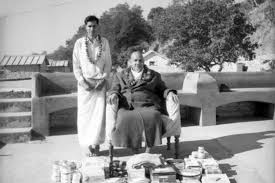
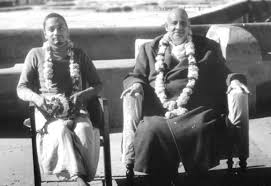
Swami Sivananda Two spiritual leaders seated with garlands image
Raja Yoga, Swami Sivananda

Dhyana or Meditation

Dhyana or Meditation by Swami Sivananda 1. WHAT IS DHYANAA continuous flow of perception (or thought) is Dhyana (meditation). NOTES There is a continuous current in the mind of one object like the flow of water in a river (Pravaha). There is only one Vritti in the mind. It is Ekarupa-Vritti Pravaha. The meditation should be done at the appointed time daily. Then the meditative mood will come by itself without any effort. Sit also in the same place daily for meditation. Meditation on God must become habitual. First meditate on Lord Vishnu with all sorts of ornaments. Then meditate on Him without any ornament. In the Isvara Gita you will find: Concentration lasts as long as 12 Pranayamas; Dhyana lasts as long as 12 concentrations; and Samadhi lasts as long as 12 such Dhyanas. Various objects of contemplation and meditation are given in the Chapters Dharana and Samyama. And so, repetition is avoided here. Major portion of the exercises and definitions given in the Chapters Dharana, Samyama and Samadhi, belong to this Chapter on ‘Dhyana.’ As I expressed previously, these Dharana, Dhyana and Samadhi cannot be separated. They form, as it were, one subject. The beginning portion of Dhyana is Dharana and the advanced portion is Samadhi. Since I have dealt with Dharana, Samyama and Samadhi in detail, now I will close this Chapter with a few more instructions on Dhyana. 2. INSTRUCTIONS ON DHYANA I. Meditation is doubtless difficult. It will be very difficult, nay indeed impossible for a beginner to take to subtle meditation all at once. There must be graduated practices and the mind must be rendered very subtle for higher practices of concentration and meditation. Just as the archer first aims at gross things, target, etc., and then takes to subtle points, so also the student of Yoga should do gross concentration to start with and then take to subtle concentration practices. There must be a gradual ascent in the successive stages of Yoga. But, Yoga Brashtas like Jnana Deva, Sadasiva Brahman, Trailinga Swami and others can at once take to higher stages. Such persons are very, very rare indeed. II. The object of meditation in the beginning must be Personal God, the body of Virat, or the four-armed Maha Vishnu, or the flute-bearer Lord Krishna or Rama or any other object. Later on, meditation can be practised on Impersonal God. In Savitarka meditation you will have a comprehensive understanding and knowledge of the objects, their excellences and defects, all the features, present, past and future, and also those near and remote, even those unheard of or unthought of. The whole knowledge of the objects and elements will be revealed to you. The name Samapatti is given to the four experiences collectively, Savitarka, Savichara, Sananda and Asmita. Sasmita Samadhi culminates in Dharmamegha Samadhi. Then comes absolute dispassion for him. This brings him Asamprajnata Samadhi. III. Why do you read many books? It is of no use. The great book is within your heart. Open the pages of this inexhaustible book, the Source for all knowledge. You will know everything. What is that knowledge of Brahman or the Source or Self? Close your eyes. Withdraw the senses. Merge deep in the Supreme Soul, the Light of lights, the Sun of suns. Complete knowledge will be revealed to you. You will have direct intuitional knowledge and divine wisdom by direct perception. All doubts will vanish now. All mental torments will disappear. All hot discussions, heated debates will terminate now. Peace and Jnana alone will remain. IV. Forget the body. Forget the surroundings. Forget friends and relatives. Forgetting these is the highest Sadhana. It helps meditation a great deal. By remembering God you can forget all these things. Merge within by practising deep, silent meditation. Taste the spiritual consciousness by withdrawing the mind from the sensual objects and fixing it on the object of meditation. This will lead you to Samadhi, the highest goal of Yogis. V. You will have to note carefully whether you remain stationary in the spiritual path even after many years of meditation or whether you are progressing. Sometimes you may even retrograde or fall downwards also if you are not vigilant and careful, if your Vairagya wanes and if you are slack in meditation. Reaction may set in. Some practise meditation for a period of 15 years and yet they have not made any spiritual progress. Why? This is due to the lack of earnestness, Vairagya, keen longing for liberation and intense constant Sadhana. Just as water leaks out into the rat holes in the agricultural fields, so also energy is wasted in wrong channels through Raga and undercurrents, lurking, subtle desires. Suppressed desires also will manifest and harass you. Unconsciously you will become a victim to those desires. VI. When you advance in the spiritual practice, it will be very difficult for you to do both meditation and office work at the same time daily because the mind will undergo a double strain. It works in different grooves and channels with different Samskaras during Dhyana. It finds it difficult to adjust itself to different kinds of uncongenial activity, as soon as it comes down from a higher plane of sublime thinking. The mind has to move in diametrically opposite direction. It gropes in the darkness. It gets bewildered, confused and puzzled. You might have noticed how the mind gets puzzled even in ordinary daily affairs of life when you go to a new place in matters of food, bath, rest and answering the calls of nature. VII. When you again sit for meditation in the evening you will have to struggle hard to wipe out the new worldly Samskaras you have gathered during the course of the day, and to get a calm, one-pointed mind again. This struggle, sometimes, brings on headache. The Prana which moves inwards in different grooves and channels and which is subtle during meditation has to move now in new different channels during worldly activities. It becomes

Dhyana or Meditation Read Post »

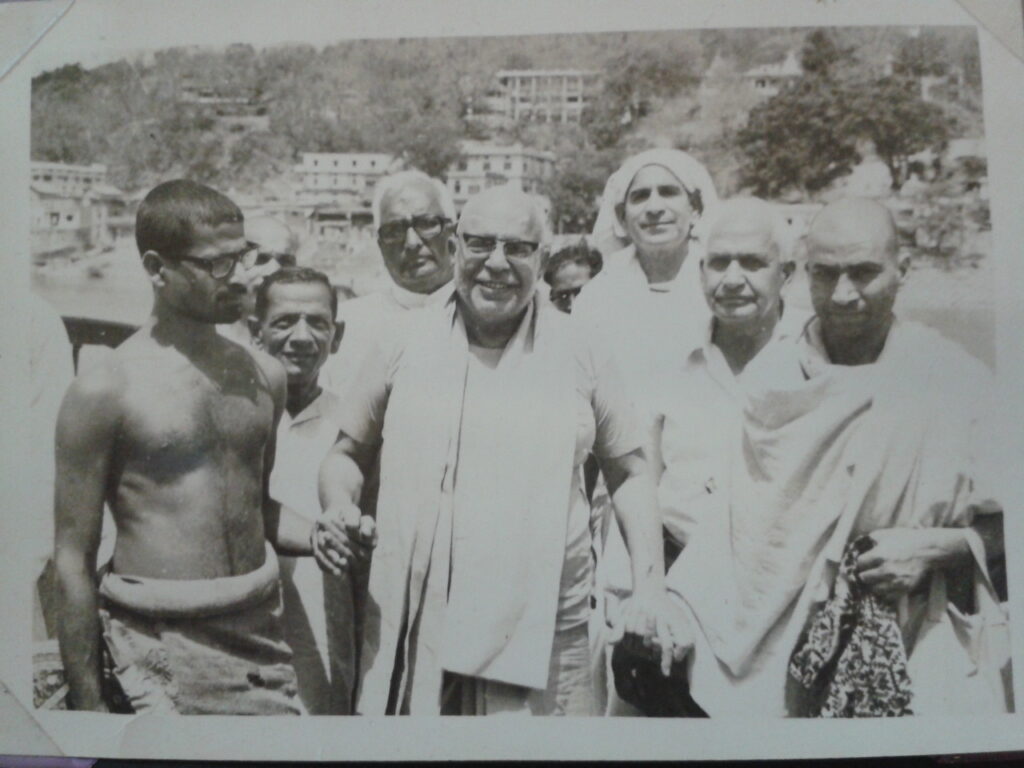
Swami Sivananda Group of monks and devotees posing together image
Raja Yoga, Swami Sivananda

Guide to Concentration

Guide to Concentration by Swami Sivananda Guide to Concentration “Tatpratishedhartham-ekatattvabhyasah – To remove this (tossing and various other obstacles which stand in the way of one-pointedness of mind), the practice of concentration on one thing alone (should be made).” (Patanjali Yoga Sutras, I-32) CONCENTRATION, THE KEY TO PEACE Worldly pleasures intensify the desire for enjoying greater pleasures. Hence, the mind of worldlings is very restless. There is no satisfaction and mental peace. Mind can never be satisfied, whatever amount of pleasure you may store up for it. The more it enjoys the pleasures, the more it wants them. So, people are exceedingly troubled and bothered by their own minds. They are tired of their minds. Hence, in order to remove these botherations and troubles, the Rishis thought it best to deprive the mind of all sensual pleasures. When the mind has been concentrated or made extinct, it cannot pinch one to seek for further pleasure and all botherations and troubles are removed for ever and the person attains real peace. There is an externalising or objectifying power in the mind. This leads to Bahirmukha Vritti. The mind is drawn towards various objects. There is dissipation of mental energy, the powers of the mind, in various directions. The rays of the mind are like the rays of light, scattered in the case of worldly-minded persons. When the rays of the mind are scattered over diverse objects, you get pain. When the rays are gathered and concentrated by practice, the mind becomes concentrated and you get Ananda (happiness) from within. When you see your dear friend after six years, the Ananda that you get is not from the person, but from within yourself. The mind becomes concentrated for the time being and you get happiness from within your own self. When you are in Kashmir, when you are enjoying the picturesque scenery of Muttan, Gulmarg, Sonamarg, Chashmashahi and Anantanag, your mind will be suddenly upset by shock, if you receive a telegram which brings the unhappy tidings of the untimely demise of your only son. The scenery will no longer interest you. They have lost their charm for you. There is ejection of attention. There is depression. It is concentration and attention that gives you pleasure in sightseeing. For purposes of concentration, you will have to gather the scattered rays of the mind patiently through Vairagya and Abhyasa, through Tyaga (renunciation) and Tapas and then march boldly with indefatigable energy towards God or Brahman. Through constant Sadhana (spiritual practice), the mind must be checked from externalising. It must be made to move towards Brahman, its original home. When the mental rays are concentrated, illumination begins. ILLUSTRATIONS OF THE NATURE OF MIND Mind is compared to quicksilver, because its rays are scattered over various objects. It is compared to a monkey, because it jumps from one object to another object. It is compared to moving air, because it is Chanchala. It is compared to a furious, rutting elephant, because of its passionate impetuosity. Mind is known by the name ‘Great Bird,’ because it jumps from one object to another object just as a bird jumps from one twig to another, from one tree to another. Raja Yoga teaches us how to concentrate the mind and then how to ransack the innermost recesses of our own mind. DIFFERENT DEGREES OF CONCENTRATION Kshipta, Mudha, Vikshipta, Ekagra and Niruddha are the five Yogic Bhumikas. The Chitta or mind manifests itself in five different forms. In the Kshipta state, the rays of the mind are scattered on various objects. It is restless and jumps from one object to another. In the Mudha state, the mind is dull and forgetful. Vikshipta is the gathering mind. It is occasionally steady and, at other times, distracted. By practice of concentration, the mind struggles to gather itself. In the Ekagra state, it is one-pointed. There is only one idea present in the mind. The mind is under perfect control in the Niruddha state. Dharana is practised for stopping the modifications of the mind. THE POWER OF CONCENTRATION By manipulating the mind, you will be able to bring it under your control, make it work as you like and compel it to concentrate its powers as you desire. He who has learnt to manipulate the mind will get the whole of Nature under his control. There is no limit to the power of the human mind. The more concentrated it is, the more power is brought to bear on one point. A scientist concentrates his mind and invents many things. Through concentration, he opens the layers of the gross mind and penetrates deeply into higher regions of the mind and gets deeper knowledge. He concentrates all the energies of his mind into one focus and throws them out upon the materials he is analysing and so finds out their secrets. CONCENTRATION, MAN’S FOREMOST DUTY Sri Sankara writes in the commentary on Chhandogya Upanishad (VII-xx-1) that a man’s duty consists in the control of the senses and concentration of mind. So long as the thoughts of one are not thoroughly destroyed through persistent practice, he should ever be concentrating his mind on one truth at a time. Through such unremitting practice, one-pointedness will accrue to the mind and instantly, all the hosts of thoughts will vanish. Concentration is opposed to sensuous desires, bliss to flurry and worry, sustained thinking to perplexity, applied thinking to sloth to torpor, rapture to ill-will. You are born to concentrate the mind on God after collecting the mental rays that are dissipated on various objects. That is your important duty. You forget the duty on account of Moha for family, children, money, power, position, respect, name and fame. Concentration of the mind on God after purification can give you real happiness and knowledge. You are born for this purpose only. You are carried away to external objects through Raga and Moha (attachment and infatuated love). Fix the mind on Atman. Fix the mind on the all-pervading, pure

Guide to Concentration Read Post »