






Hari Om

Menu

February 14, 2026

Swami Sivananda seated with devotees indoors image
Bhakti Yoga, Swami Sivananda

Archana

Archana by Swami Sivananda Archana is worship of the Lord. Those who perform the worship of Vishnu in this world, attain the immortal and blissful state of Moksha, thus says the Vishnu-Rahasya. Worship can be done either through an image or a picture or even a mental form. The image should be one appealing to the mind of the worshipper. Worship can be done either with external materials or merely through an interior Bhava or strong feeling. The latter one is an advanced form of worship which only men of purified intellect can do. Worship should be done according to the rules laid down in the Varnashrama-Dharma or in the case of advanced devotees worship can be done in any manner they like. The purpose of worship is to please the Lord, to purify the heart through surrender of the ego and love of God. Serving the poor people and worshipping saints is also worship of the Virat-Svarupa of the Lord. The Lord appears in all forms. He is everything. The scriptures declare that the Lord alone appears as the sentient and the insentient beings. The devotee should have Narayana-Bhava or Isvara-Bhava in all beings. He should consider all creatures, down even to the worm, as merely God. This is the highest form of worship. Worship is generally done through the Tantrik or the Vaidika method. It can be done either in a temple or in one’s own house, or even at any place outside. The object of worship is sincere devotion and real surrender for the sake of union with the Lord. During worship the mind of the devotee should always be concentrated on the form of the Lord. It should think of His attributes, His Infinite Nature, Bliss, Immortality, etc. It should not think of earthly things. The Bhog offered to the Lord during worship is actually taken away by Him when it is offered with sincere feeling. There are cases where devotees with burning love for God offered food to God and God actually appeared before them in His Supreme form and partook of the food offered to Him. These are rare cases, but it must be known that true devotees are very rare in this world. Devotees like Prithu and Ambarisha practised this kind of Bhakti, i.e., Archana or worship of the Lord. Their stories are found in the Srimad-Bhagavata. The Lord appeared before Prithu, the first king of the world, and gave him His blessings. The Lord protected Ambarisha and gave him Emancipation. They were immersed in the love of God and they wanted nothing but God. They did not crave for worldly things from God but wanted only His grace. They wanted to please God and serve God. Nothing else did they want. Such should be the devotion of all Bhaktas of selfless motive. Offerings to God need not necessarily be rich and costly things. What did the lord of elephants (Gajendra) offer? Only a flower from the tank. Draupadi offered a vegetable leaf and Sabari some wild plums. But the Lord was pleased. It is the feeling of love for God that God takes into account and not the material that is offered. He is pleased even with leaves and mere water.

Archana Read Post »

Swami Sivananda meditating on Pranayama book cover image
Bhakti Yoga, Swami Sivananda

Padasevana

Padasevana by Swami Sivananda Padasevana is serving the Lord’s feet. Actually this can be done only by Lakshmi or Parvati. No mortal being has got the fortune to practise this method of Bhakti for the Lord is not visible to the physical eyes. But it is possible to serve the image of God in idols and better still, taking the whole humanity as God. This is Padasevana. Padasevana is service of the sick. Padasevana is service of the poor. Padasevana is service of the whole humanity at large. The whole universe is only Virat-Svarupa. Service of the world is service of the Lord. Service of the Lord’s feet can be done through formal worship to Murtis or idols in temples or to a mental image of God.- Observing the sacred feet of the Lord again and again with devotional and eager eyes, worshipping them and serving them, sipping the sacred water with which the Lord’s feet have been washed, worshipping the wooden sandals of the Lord, meditating on them and praying to them, taking the dust of the Lord’s feet and applying it to the forehead, washing the heart with the dust of the Lord’s feet, respecting the holy shrines and places of pilgrimage, and places where God incarnated Himself for the good of humanity, regarding the Ganga as directly flowing from the feet of the Lord, worshipping, bathing in and drinking of such divine water of the Ganga all these are different forms of serving the Lord’s feet. This kind of devotion destroys all worldly attachments and allows the mind to exclusively think of God. Bharata served the sandals of the feet of Sri Rama. What a great devotion! He kept them on the throne and worshipped them as representing Sri Rama Himself. He ruled the kingdom in the name of Sri Rama’s sandals, himself acting as only the servant of Rama. This is Padasevana Bhakti. Ahalya felt her life fulfilled, having obtained the dust of Lord’s feet. Srimad-Bhagavata says: He who has taken shelter in the feet of the Lord, which is the refuge of saints and full of blessedness, for him the ocean of worldly existence becomes as shallow as the hoof-mark of a calf. The Supreme State is already attained by him. Worldly miseries and difficulties do not appear before him. Sri Lakshmidevi is enjoying this practice of devotion and she is ever serving the feet of Lord Hari. Lord Vishnu is resting His feet on the lap of Sri Lakshmidevi and she is the example of one engaged in Padasevana-Bhakti.

Padasevana Read Post »

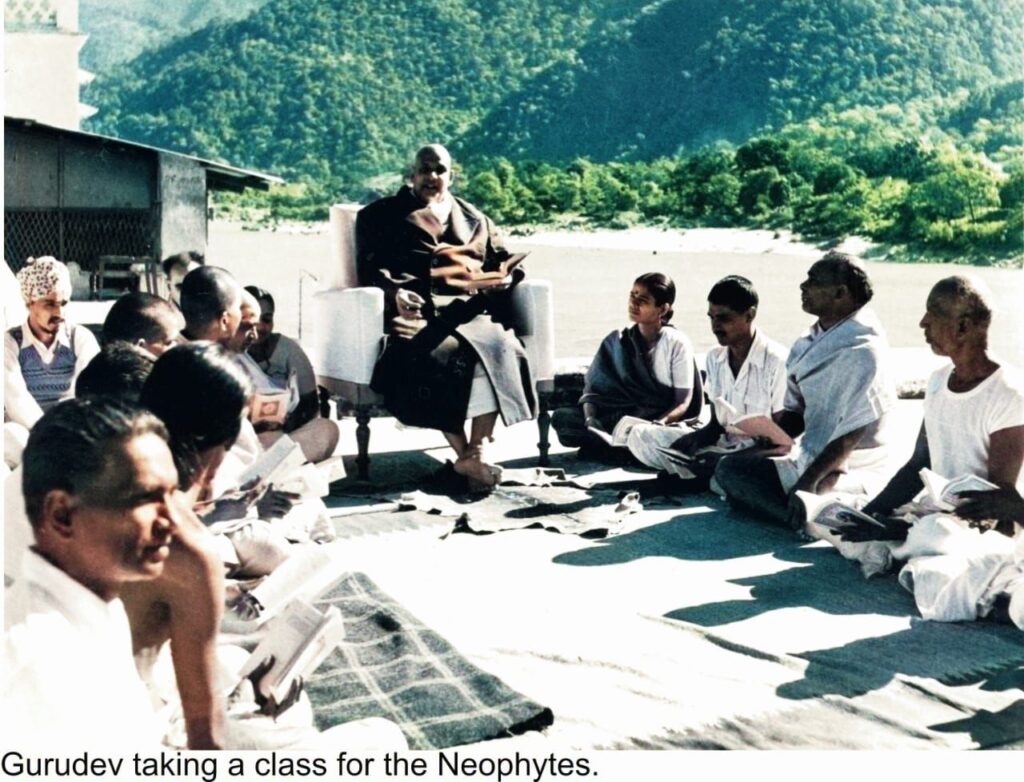
Swami Sivananda Guru teaching students in outdoor riverside setting image
Uncategorized

What Life Has Taught Me

What Life Has Taught Me I hold that real religion is the religion of the heart. The heart must be purified first. Truth, love and purity are the basis of real religion. Control over the baser nature, conquest of mind, cultivation of virtues, service of humanity, goodwill, fellowship and amity constitute the fundamentals of true religion. And I try to teach them mostly by example, which I consider to be weightier, than all precepts. I consider goodness of being and doing constitutes the rock bottom of one’s life. By goodness I mean the capacity to feel with others, and live and feel as others do, and to act so that no one is hurt by the act. Goodness is the face of godliness. I have learnt that it is foremost duty of the man to learn to give – give in charity, give in plenty, give with love, give without any expectation. Charity is incomplete without charity of disposition, charity of feeling, charity of understanding. To behold the Atman in every being or form, to feel Brahman everywhere at all times and all conditions of life… is my creed. To live in Brahman, to melt in Brahman and to dissolve in Brahman is my creed. By dwelling in such union with Brahman, to utilise the hands, mind, senses and the body for the service of humanity, for singing the Names of the Lord, for elevating the devotees, for giving instructions to sincere aspirants and disseminating knowledge throughout the world is my creed, if you call it one. To be cosmic friend and cosmic benefactor, a friend of the poor, the forlorn, the helpless and the fallen is my creed. It is my sacred creed to serve sick persons, to nurse them with care, sympathy and love, to cheer the depressed, to infuse power and joy in all, to feel oneness with each and everyone, and to treat all with equal vision is my highest creed.I take immense delight in service. Service has elevated me. Service has purified me. This body is meant for service. I live to serve everyone and make the whole world happy.

What Life Has Taught Me Read Post »

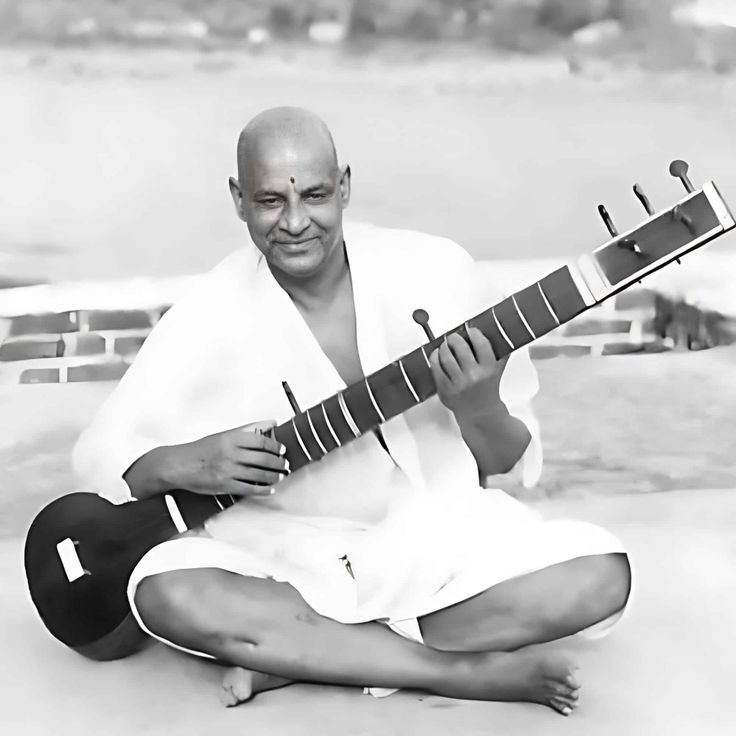
Swami Sivananda sitting with veena musical instrument spiritual portrait photo
Bhakti Yoga, Swami Sivananda

Smarana

Smarana by Swami Sivananda Smarana is remembrance of the Lord at all times. This is unbroken memory of the Name and Form of the Lord. The mind does not think of any object of the world, but is ever engrossed in thinking of the glories of the Lord alone. The mind meditates on what is heard about the glories of God and His virtues, Names etc., and forgets even the body and contents itself in the remembrance of God, just as Dhruva and Prahlada did. Even Japa is only remembrance of God and comes under the category of this Bhakti. Remembrance also includes hearing of stories pertaining to God at all times, talking of God, teaching to others what pertains to God, meditation on the attributes of God, etc. Remembrance has no particular time. God is to be remembered at all times without break, so long as one has got his consciousness intact. Right up from his getting up from sleep in the morning, until he is completely overpowered by sleep in the night, a person is to remember God. He has no other duty in this world except remembrance of God. Remembrance of God alone can destroy all worldly Samskaras. Remembrance of God alone can turn away the mind from sense-objects. Generally the mind runs extrovert. But remembrance of God makes it introvert and does not allow it to run to particular objects of the world. Remembrance of God is a very difficult method of Sadhana. It is not possible to remember God at all times. The mind will cheat the person. He will think that he is meditating on God, but actually he will be dreaming of some object of the world or something connected with the name and fame. Remembrance is equal to concentration or meditation. All the qualities which a Raja-Yogin prescribes for the practice of meditation should be acquired by a Bhakta who wants to practise Smarana-Bhakti. Smarana is swimming against the forceful current of the river of Maya. Smarana leads to exclusive meditation on God, as is done in Raja-Yoga. Company of real devotees is another auxiliary in the remembrance of God. Service of Mahatmas is still another necessity. The mind cannot but remember divine things when it is in the company of divine people. Therefore one should have Satsanga and he should always live with a saint or a great Bhakta. He should not be perturbed by censure or ridicule from the world. He should rely on God and rest assured that God will help him in all troubles and He will give him Final Emancipation. Lord Krishna says in the Gita: O Arjuna! He who fixing his mind on Me, constantly remembers Me, I am easily attained by that Yogi, ever united with Me. The Gita is an authority on the nine modes of Bhakti. Lord Krishna illustrates with authority that the various modes of devotion shall lead one to the Supreme. Remembrance of the Lord has given Liberation even to those who remembered Him through hatred, even as a worm, through meditation on the wasp through hatred and fear, attains the state of the wasp. Haters of the Lord like Kamsa and Sisupala had attained the state of Moksha through Vaira-Bhakti. Constant remembrance is the fruit of almost all other methods of practice in spiritual Sadhana. This is the most potent method and the most difficult also. The miser does not forget his wealth even if he is engaged in other duties. The lustful man does not forget his beloved, and the cow does not forget its calf even while grazing. Even so a worldly man, even though he may be engaged in other duties of life, should practise the remembrance of God. Prahlada practised the remembrance of God. He never forgot God at any time. He was punished by his cruel father in all possible ways. But the devoted Prahlada crossed over all troubles and obtained the Supreme Grace of the Lord. Prahlada was lost in the consciousness of God. Such should be the ardent aspiration of all devotees. The seventh Skandha of the Bhagavata gives a beautiful description of how Prahlada practised Bhakti even amidst trying conditions.

Smarana Read Post »

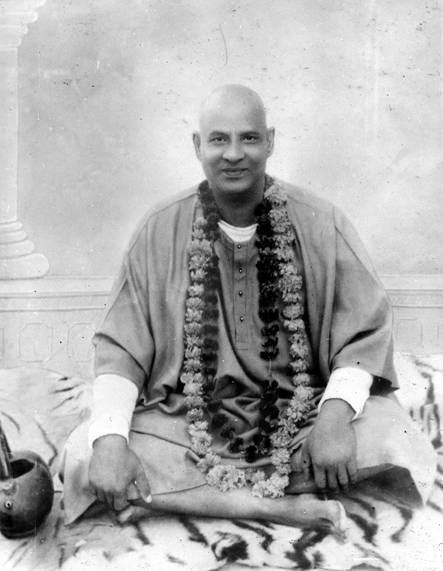
Swami Sivananda seated cross-legged wearing a robe and flower garland. image
Uncategorized

PHILOSOPHY AND TEACHINGS OF SWAMI SIVANANDA

PHILOSOPHY AND TEACHINGS OF SWAMI SIVANANDA PHILOSOPHY Swami Sivananda respected all religions, saints and sages. Every person – irrespective of his religion or country – was received by Swamiji with the same warmth and love. He advocated: “Mankind is one family. All beings are children of the one Divine. He believed that the fundamental principles of all religions are the same, and all saints teach us and lead us to the same Truth”. ‘Adapt, adjust and accommodate’ was the motto which he practised to perfection in his thought, speech and action. He accepted all that was good from all sources and propounded the basic Truth of all religions in his philosophy, but jettisoned the redundant ceremonies and paraphernalia. He gives the quintessence of all religions in a very simple, apt and appealing manner. He says: “There is only one religion – the religion of love, the religion of unity and oneness”. He used to sing: UNIVERSAL RELIGIOUS TEACHINGS The essentials of all religions are the same: Serve, love, give, purify, meditate, realise; Be good, do good, be kind, be compassionate; Enquire ‘who am I’ know the Self and be free. Love all, serve all, serve the Lord in all. Speak the truth, be pure, be humble, Concentrate, meditate, attain Self-realisation. These are the essentials of all religions. Customs, conventions, ceremonies are non-essentials. Do not fight over petty non-essentials. Be tolerant, be catholic, have a broad outlook. Respect all Prophets, all Saints, all Messengers. All Saints speak the same language. Even as Swamiji tried to integrate the basic tenets of all religions, so also he integrated various Paths of Yoga and called this ‘Yoga of Synthesis’. Like Buddha, he chose the path of moderation. His main admonition is: “Serve, Love, Give, Purify, Meditate, Realise; Be good, Do good, Be kind, Be compassionate.” The terms ‘Serve, Love, Meditate, Realise’ denote the four main Paths of Yoga, namely Karma Yoga (Yoga of Action), Bhakti Yoga (Yoga of Devotion), Raja Yoga (Yoga of Meditation) and Jnana Yoga (Yoga of Knowledge). That is, he advocated synthesis of all the Paths of Yoga on the rock-foundation of purity which is to be develop through broad-mindedness and generosity reflected through charity which is symbolised here by the word give. As a practical philosopher, Swamiji instructed everyone – irrespective of his spiritual level – to be good and to do good to others. “Real happiness”, he says, “is in making others happy.” His vision of Jnana Yoga was in seeing the Lord in every being and serving all the living creatures as if it is worship of the Lord. He was open-minded and did not impose on any aspirant a rigid sadhana programme. Swamiji believed that each sadhaka requires a different amalgam of spiritual practices, and that the sadhaka himself should find out a suitable mode by properly blending different Paths of Yoga, in accordance with his aptitude and temperament while keeping one Path as the main Path. Swamiji has given a very significant view of Yoga. He says: “Yoga is not a religion, but an aid to the practice of the basic truths in all religions. God dwells in all. Yoga is union with God, union with all. Yoga is for all and is universal. It is not a sectarian affair but a way to God. To live in God, to commune with God is Yoga. Yoga is life in God, life in perfection, peace, lasting happiness and eternal Bliss. Yoga shows you the way, unites you with God. You can turn out efficient work within a short span of time and have success in every walk of life.” His explanation of the main paths of Yoga is very explicit and apt. He says: “To behold the one Self in all is Jnana Yoga. To love the Self in all is Bhakti Yoga. To serve the Self in all is Karma Yoga. Karma Yoga is suitable for a man of active temperament, Bhakti Yoga for a man of devotional temperament, Raja Yoga for a man of mystical temperament, and Jnana Yoga for a man of rational and philosophical temperament.” He used to suggest Karma Yoga and Bhakti Yoga sadhana to beginners, and only after proper purification, and control of mind and senses, he was initiating the sadhakas into meditation and Jnana Yoga sadhana. We present here an article ‘Serve, Love, Meditate, Realise’ by Swamiji for better understanding of his philosophy. SERVE, LOVE, MEDITATE, REALISE I have only one message and only one common subject: and that is: “Serve, Love, Give, Purify, Meditate and Realise. Be Good Do Good”. Reflect deeply on these wonderful words, which reveal the secret of harmony, peace, joy, success and Bliss. Remember that the salt of life is selfless service, the bread of life is universal love; the water of life is purity. Hence serve, love and be pure. The fragrance of life is generosity; the sweetness of life is devotion; the pivot of life is meditation. The goal of human life is Self-realisation. Therefore be devoted and generous. Meditate and realize the Self. Man is a triune being: Action, emotion and intelligence are the three horses that are linked to this body-chariot. They should work in perfect harmony or unison. Then only the chariot will run smoothly. There must be integral development. You must have the head of Sankara, the heart of Buddha, and the hand of Janaka. The Yoga of Synthesis alone will develop the head, heart and hand, and lead one to perfection. To become harmoniously balanced in all directions is the ideal of religion and of Yoga. This can be achieved by the practice of the Yoga of Synthesis. Man is a strange complex mixture of will, feeling and thought. He is a triune being. He is like a tricycle or a three-wheeled chariot. He wills to possess the objects of his desires. He has emotion and so he feels. He has reason and so he thinks and ratiocinates. In some the emotional element may preponderate, while in

PHILOSOPHY AND TEACHINGS OF SWAMI SIVANANDA Read Post »

sddefault 1
Bhakti Yoga, Swami Sivananda

Kirtana

Kirtana by Swami Sivananda Kirtana is singing of Lord’s glories. The devotee is thrilled with Divine Emotion. He loses himself in the love of God. He gets horripilation in the body due to extreme love for God. He weeps in the middle when thinking of the glory of God. His voice becomes choked and he flies into a state of divine Bhavana. The devotee is ever engaged in Japa of the Lord’s Name and in describing His glories to one and all. Wherever he goes he begins to sing and praise God. He requests all to join his Kirtana. He sings and dances in ecstasy. He makes others also dance. Such practices should be the outcome of a pure heart, and they should not be merely a show. God knows the inner secret of all and none can cheat Him. There should be perfect straightforwardness and all his actions should be the natural outpouring from the heart. This is the easiest of all modes of approach to God. In Kali Yuga, iron age, Kirtana alone is the best Yoga. ‘Kalau Kesava Kirtanam.’ This is the prescribed method of devotion for this age. The mind is ever intent upon singing Lord’s Names and glories and it has no occasion to take interest in things of the world. Day and night the devotee feels the presence of God and thins out his ego. He becomes Sattvic and pure at heart. Great divine persons like Narada, Valmiki, Sukadeva, in ancient times, Gouranga, Nanak, Tulsidas, Surdas, etc., in comparatively recent times, have all attained perfection through Kirtana Bhakti alone. Even the great sinner Ajamila crossed the ocean of Samsara by repetition of Lord’s Name. Japa and Kirtana are the most potent methods of realising God in this Kali Yuga. If even sinners can cross this Maya through devotion to God, what to speak of good persons who have a pure heart, who have served their Guru, and the country, and who are nearer to God than sinners? Kirtana is a very effective method of devotion for another reason. Man is an erotic being. He loves and loves. He cannot but love things of the world. But his love is only passion and is not pure divine love. He wants to hear sweet music, wants to see beautiful objects, and wants to witness a dance. Music melts the heart of even the stone-hearted man. If at all there is anything in this world which can change the heart of a man in a very quick time, that is music and dance. This very method is made use of in Kirtana-Bhakti, but it is directed towards God instead of towards sensual enjoyments. Man’s emotion of erotism is directed towards Divinity and his love for music and singing is not destroyed; because sudden destruction of such a sentiment which he holds as very dear will not prove successful in making him perfect. Kirtana is sweet and pleasant and easily changes the heart. Suka-Maharshi is an example of a Kirtana-Bhakta. He told the Srimad-Bhagavata to Parikshit. He was fully in the state of Bhava-Samadhi at the time of reciting the Bhagavata. It is told in the Bhagavata Mahatmya that, when Sri Suka was singing the glories of the Lord, the Devas themselves came down from heaven and took part in the Kirtana with various musical instruments. Narada played his Vina and Indra played the Mridanga. Prahlada danced with his cymbals and Lord Siva Himself began His Nritya. Lord Vishnu was present. All those assembled there were thrilled by the occasional dance of Sri Suka himself. Kirtana is the most suitable method even for householders. This gives pleasure to the mind and at the same time purifies the heart. This has double effect. Kirtana is, perhaps, the best method suited for all people without distinction.

Kirtana Read Post »

Uncategorized

H. H. SRI SWAMI SIVANANDA SARASWATI

H. H. SRI SWAMI SIVANANDA SARASWATI BIRTH AND BOYHOOD On Thursday, the 8th. of September, 1887, in the early hours of the morning, when the star Bharani was in the ascendant was born a boy-child in the village of Pattamadai on the bank of the river Tamraparani in South India. Sri P.S. Vengu Iyer, a revenue officer and a great Siva Bhakta (devotee of Lord Siva), and Srimati Parvati Ammal, an equally great god-fearing lady, were the fortunate parents of this child. The happy couple christened this last and third son of theirs Kuppuswamy. Boy Kuppuswamy was intelligent and mischievous. In his boyhood itself he showed signs of Tyaga (renunciation) and love for fellow-beings. He used to pity the poor, feed the hungry at the door, and make his father throw a pie into the hands of pauper passing by. He often got cakes and sweetmeats from his mother and distributed them liberally to his younger companions, dogs, cats, crows, and sparrows, himself not eating a bit. He used to bring flowers and bael leaves for his father’s Siva Puja. At the Rajah’s High School, Ettayapuram, where he studied, Kuppuswamy always topped the class and won prizes every year. He had a sweet voice and wonderful memory. When His Excellency Lord Ampthil, the Governor of Madras, visited the Kuru Malai Hills in 1901 for hunting, Kuppuswamy sang a song of welcome on the Kumarapuram railway platform. After the completion of the Matriculation examination, he studied at the S.P.G. College, Tiruchirapalli. In the college he used to take part in debates and dramas. He played the part of Helena beautifully when Shakespeare’s “Midsummer Night’s Dream” was staged in 1905. After the completion of the First Arts Examination, Kuppuswamy went to the Medical School in Tanjore to study medicine. He used to be tremendously industrious and never went home during the holidays. He would spend the entire period in the hospital. He had free admission into the operation theater. Kuppuswamy was first in all subjects. He possessed more knowledge than doctors with covetable degrees, and in the first year itself he could answer the papers which the final year students could not. Kuppuswamy completed the course and earned the title of M.B.,C.M. He practiced at Tiruchi. While practicing, he started a medical journal called “The Ambrosia”. He got one hundred rupees from his mother for the initial expenses of running the journal. Later, when his mother wanted a hundred and fifty rupees for celebrating some festival, Dr. Kuppuswamy had the money ready for her. Even then he used to distribute the journal freely; he was very shy to ask people for contribution. DOCTOR IN MALAYA (MALAYSIA) A call came to Dr. Kuppuswamy from Malaya, soon after the death of his father. He used to have an adventurous spirit in him. In 1913 he left India in the “S.S. Tara”. Kuppuswamy belonged to an orthodox Brahmin family and was afraid to take non-vegetarian food in the ship. So he carried with him a good quantity of sweets which his mother had prepared for him. When he arrived in Singapore, he was almost half dead! Dr. Kuppuswamy describes his experiences in Malaya: “Immediately after disembarking, I went to the residence of Dr. Iyengar. He gave me a letter of introduction to his friend, Dr. Harold Parsons, a medical practitioner in Seremban. When I arrived there, Dr. Parsons introduced me to Mr. A.G. Robins, the manager of a nearby rubber estate which had its own hospital. Fortunately for me, Mr. Robins was just in need of an assistant to work in the Estate Hospital. He was a terrible man with a violent temper, a giant figure, tall and stout. He asked me, ‘Can you manage a hospital all by yourself?’ I replied ‘Yes, I can manage even three hospitals’. I was appointed at once. I had been told by a local Indian resident that I ought not to accept, in accordance with their policy, anything less than a hundred dollars a month. Mr. Robins agreed to give me one hundred and fifty to start with”. The young doctor worked very hard. Unusual handicaps began to tell upon him and he felt like resigning the job after some time, but Mr. Robins would not allow him to go. Dr. Kuppuswamy was very kind, sympathetic, humorous, witty, and sweet-speaking. Hopeless cases came to him, but success was sure. Everywhere people declared that he had a special gift from God for the miraculous cures effected in the patients and acclaimed him as a very kind and sympathetic doctor with a charming and majestic personality. In serious cases, he kept vigil all night. In his private practice, Dr. Kuppuswamy used to attend to the poor and often not charge them even visiting or consulting fees. Instead he would give them money for special diet or to cover their own expenses after discharge from hospital. He gave money like water. Once a poor man, drenched to the skin, came to the doctor at night. His wife was in birth pangs. The doctor went there at once to her aid, and after attending to her, stayed outside the hut in spite of the heavy rain. Only after the save delivery of the child did the doctor return home the next morning. In spite of his busy life, Dr. Kuppuswamy served the Sadhus, Sannyasins, and beggars. He attended marriage functions, parties, and other social gatherings. Once a Sadhu gave him a book “Jiva Brahma Aikyam” by Sri Swami Satchidananda. It ignited the dormant spirituality in him. He began to study the books of Swami Rama Tirtha, Swami Vivekananda, Sankara, Imitation of Christ, the Bible, and literature of the Theosophical Society. He was very regular in his daily worship, prayer and Yoga Asanas. Study of sacred scriptures like the Gita, the Mahabharata, the Bhagavata, and the Ramayana was done with great devotion. Sometimes he conducted Nandan Charitam and sang Bhajans and Kirtans. He practiced Anahat Laya Yoga and Swara Sadhana. High-class dress,

H. H. SRI SWAMI SIVANANDA SARASWATI Read Post »

Swami Sivananda painted portrait image
Bhakti Yoga, Swami Sivananda

Sravana

Sravana by Swami Sivananda Sravana is hearing of Lord’s Lilas. Sravana includes hearing of God’s virtues, glories, sports and stories connected with His divine Name and Form. The devotee gets absorbed in the hearing of Divine stories and his mind merges in the thought of divinity; it cannot think of undivine things, The mind loses, as it were, its charm for the world. The devotee remembers God only even in dream. The devotee should sit before a learned Teacher who is a great saint and hear Divine stories. He should hear them with a sincere heart devoid of the sense of criticism or fault-finding. The devotee should try his best to live in the ideals preached in the scriptures. Lord Krishna says in the Gita: Tadviddhi pranipatena pariprasnena sevaya;Upadekshyanti te jnanam jnaninah-tattvadarsinah. Know That by long prostration, by service and enquiry. The wise who know the Truth shall instruct thee in that wisdom. One cannot attain Sravana-Bhakti without the company of the saints or wise men. Mere reading for oneself is not of much use. Doubts will crop up. They cannot be solved by one’s own self very easily. An experienced man is necessary to instruct the devotee in the right path. Sankaracharya says: Kshanamapi sajjana sangatireka bhavati bhavarnava tarane nauka. The company of the wise, even for a moment, becomes the boat to cross across the ocean of Samsara. Without Satsanga Sadhana does not become perfect and strong. The fort of Sadhana should be built on the foundation of Satsanga. Mere austerities are not the end of Sadhana. Satsanga illumines the devotee and removes his impurities. It is only then that subtle truths are grasped well by the devotee. Lord Krishna says to Uddhava that nothing but Satsanga alone can put an end to all worldly attachments. In the Bhagavata-Mahatmya it is told that the best Dharma in this world is to hear Lord’s glories. For, thereby, one attains to the Divine Abode. King Parikshit attained Liberation through Sravana. He heard the glories of God from Suka-Maharshi. His heart was purified. He attained the abode of Lord Vishnu in Vaikuntha. He became liberated and enjoyed supreme Bliss.

Sravana Read Post »

Swami Sivananda sitting and playing tanpura outdoors. image
Bhakti Yoga, Swami Sivananda

Nine Modes of Bhakti

Nine Modes of Bhakti by Swami Sivananda The nine modes of Bhakti are the ways in which a devotee attains the Supreme Ideal of Life. Any devotee can take up any of these paths and reach the highest state. The path of Bhakti is the easiest of all and is not very much against the nature of the human inclinations. It slowly and gradually takes the individual to the Supreme without frustrating his human instincts. It follows the Arundhatee Nyaya or the Shakhachandra Nyaya of logic instead of the Bhramara-Keetaka Nyaya of the Vedantins. It is not direct assertion of God, but a progressive realisation of Him. 1. Sravana – Hearing the Lord’s virtues, glories and stories2. Kirtana – Singing of the Lord’s Glories3. Smarana – Remembrance of the Lord at all times4. Padasevana – Serving the Lord’s Feet5. Archana – Worship of the Lord6. Vandana – Prayer and prostration unto the Lord7. Dasya Bhakti – Servant sentiment with God8. Sakhya Bhakti – Friendship sentiment with God9. Atma-Nivedana – Self-surrender to God

Nine Modes of Bhakti Read Post »