





Hari Om

Menu

vedas

1027
vedas

Smrities with meaning

Smritiesv The concept of smriti or memory has intrigued humanity since ancient times. Derived from the Sanskrit word “smara,” meaning “to remember,” smriti plays a central role in both Eastern and Western philosophical, cultural, and psychological traditions. The history of smrities is not just a study of how humans remember but also how societies preserve knowledge, emotions, and identity over time. In ancient Indian philosophy, Smriti refers to a class of sacred texts that were “remembered,” as opposed to Shruti, which were “heard” or divinely revealed. While Shruti includes the Vedas, Smriti comprises epics like the Mahabharata, Ramayana, and Dharma Shastras. These texts were not only religious but also historical and ethical guides, showing how memory was used to preserve societal values. The very idea of smriti in Indian thought reflects the reverence for memory as a tool for cultural continuity. Greek philosophers also explored memory deeply. Plato, in his dialogue Theaetetus, compared memory to a wax tablet, where impressions are made and retained. Aristotle advanced this idea by suggesting memory was the ability to retain an image of a past experience. These philosophical interpretations laid the foundation for understanding memory not as a passive record but as an active mental process. During the Middle Ages, memory was considered a vital part of rhetoric and education. The “art of memory” (Ars Memoriae) was developed by scholars to train the mind to recall vast amounts of information. Medieval monks and scholars used visual and spatial memory techniques—often called “memory palaces”—to memorize religious texts, scriptures, and teachings. Memory was thus not only a mental function but a spiritual and intellectual discipline. With the Enlightenment and the rise of empirical science, memory became a subject of scientific inquiry. In the 19th century, German psychologist Hermann Ebbinghaus conducted pioneering experiments on memory, creating the “forgetting curve” and demonstrating that memory could be measured and studied systematically. This was the beginning of cognitive psychology, which today explores how memory works through attention, encoding, storage, and retrieval. In the 20th century, advancements in neuroscience revealed the biological basis of memory. The discovery of the hippocampus’s role in forming long-term memories changed our understanding of brain function. Studies of patients with amnesia, like the famous case of Henry Molaison (H.M.), showed how brain damage could selectively affect memory, proving that memory is not a single function but a complex set of processes. In modern times, memory is also understood in social and cultural contexts. Collective memory, for example, is how groups remember events such as wars, revolutions, or cultural achievements. It plays a role in shaping national identity, history education, and even political narratives. In conclusion, the history of smrities is a journey from sacred texts to brain scans, from spiritual practice to cognitive science. Memory is not just a tool of the mind but a mirror of human civilization—reflecting how we learn, grow, and define ourselves through time.

Smrities with meaning Read Post »
maxresdefault 6
vedas

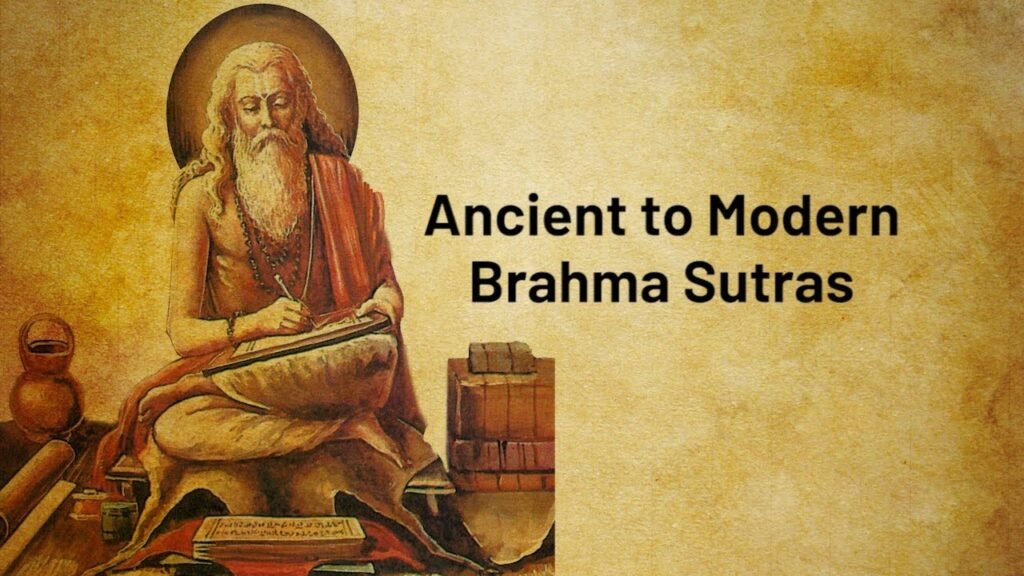
Brahma Sutras with meaning

Brahma Sutras The Brahma Sutras, also known as the Vedanta Sutras, are one of the three foundational texts (Prasthana Traya) of Vedanta philosophy, alongside the Upanishads and the Bhagavad Gita. Composed by Badarayana (Vyasa), these sutras aim to systematize and summarize the teachings of the Upanishads concerning Brahman, the ultimate reality. The Brahma Sutras consist of 555 aphoristic sutras divided into four chapters, each subdivided into four sections (pādas). The total work forms a concise yet profound framework for interpreting Vedantic thought.Through these teachings, the Brahma Sutras explore the relationship between Brahman, Atman (the soul), and the world, guiding spiritual seekers toward the path of self-realization The Brahma Sutras begin with the famous aphorism: “Athāto Brahma Jijñāsā”(Now, therefore, the inquiry into Brahman.)This opening line establishes the purpose of the text – a systematic philosophical investigation into Brahman, the non-dual, infinite, and eternal reality that underlies all existence. The text does not stand alone in conveying its philosophy. It assumes that the reader is already acquainted with the Upanishads, and its cryptic style necessitates interpretation. As a result, the Brahma Sutras have been extensively commented upon by major philosophers like Adi Shankaracharya, Ramanujacharya, Madhvacharya, and others, each giving rise to distinct schools of Vedanta: Advaita, Vishishtadvaita, and Dvaita respectively. The Brahma Sutras are one of the most important philosophical scriptures of Vedanta in Sanatan Dharma. The Brahma Sutras are traditionally attributed to the great sage Vyasa, who compiled these profound teachings to explain the spiritual wisdom found in the Upanishads. The Brahma Sutras consist of around 555 short aphorisms (sutras) that explain the nature of Brahman, the ultimate reality of the universe. Through these teachings, the Brahma Sutras explore the relationship between Brahman, Atman (the soul), and the world, guiding spiritual seekers toward the path of self-realization and moksha (liberation). Because the Brahma Sutras are written in concise statements, many great philosophers wrote detailed commentaries to explain their deeper meaning. One of the most influential interpretations was written by Adi Shankaracharya, who explained the Brahma Sutras through Advaita Vedanta, teaching that Atman and Brahman are ultimately one. Other important commentaries were written by Ramanujacharya and Madhvacharya. Along with the Bhagavad Gita and the Upanishads, the Brahma Sutras form the Prasthanatrayi, the three foundational texts of Vedanta philosophy. The teachings of the Brahma Sutras continue to guide seekers in understanding the ultimate truth and realizing the divine nature of the self. Structure of the Brahma Sutras Philosophical Themes

Brahma Sutras with meaning Read Post »

bb0b1d47b88854762b647be02e90e815
Puran

Brahmanda Purana

Brahmanda Purana The Brahmanda Purana is one of the eighteen Mahapuranas, a major category of ancient Hindu scriptures that blend mythology, cosmology, philosophy, and history. The name Brahmanda means “the Cosmic Egg,” referring to the Hindu concept of the universe’s origin and structure. This Purana is notable for its cosmic scope, philosophical depth, and inclusion of later religious developments, particularly those related to Tantra and devotional traditions. Origins and Composition The origins of the Brahmanda Purana are difficult to pinpoint, as is common with Puranic texts. Scholars estimate that its core text may have been composed between the 4th and 6th centuries CE, though much of it was likely added or revised later. Like many Puranas, it is a composite work, compiled over several centuries by various authors and redactors. The existing version of the Brahmanda Purana was likely finalized after the 10th century, and it shows strong influences from Tantric traditions, particularly Shakta (goddess-centered) theology. The text is written in Sanskrit verse, in the traditional metrical style. Structure and Content The Brahmanda Purana is one of the longer Puranas, with about 12,000 to 14,000 verses, depending on the manuscript. It is traditionally classified under the five pancha-lakshana themes of Puranas: However, the Brahmanda Purana goes beyond these themes and includes content from a wide range of topics such as geography, cosmology, astrology, rituals, philosophy, and devotion. One of its most significant inclusions is the Lalita Sahasranama, a hymn of 1,000 names of Goddess Lalita, a key text in Shakta Tantra. This section is part of the Lalitopakhyana, a later insertion in the Purana that glorifies the goddess Lalita Tripura Sundari, representing the ultimate divine feminine power (Shakti).

Brahmanda Purana Read Post »

agni purana blog banner
Puran

Agni Purana

Agni Purana The Agni Purana is one of the eighteen Mahapuranas, the great Sanskrit texts that form an important part of Hindu religious literature. Unlike many other Puranas that are centered around a specific deity like Vishnu or Shiva, the Agni Purana is encyclopedic in nature, covering a vast range of topics including cosmology, philosophy, law, politics, medicine, warfare, architecture, astrology, and religion. It is named after Agni, the Vedic fire god, who is said to have narrated the Purana to the sage Vasistha. Origins and Composition The exact date of the Agni Purana‘s composition is uncertain. Scholars suggest that its core may have been composed between the 7th and 11th centuries CE, but like many other Puranas, it likely underwent centuries of additions and redactions, making it a composite text compiled over time. The text is written in Sanskrit verse and contains around 15,400 shlokas (verses), although the number varies slightly in different manuscripts. Its evolving nature means that there is no single authoritative version, and some editions may include different chapters or rearranged content. Narration and Structure The Agni Purana is structured as a dialogue between Agni and the sage Vasistha. In this framework, Agni imparts knowledge on a wide variety of subjects. The text does not follow the traditional five characteristics (pancha-lakshana) of the Puranas — creation, secondary creation, genealogies, cosmic ages, and royal histories — as strictly as others do. Instead, it takes a more encyclopedic approach, offering knowledge that extends well beyond mythology and religion. Content and Historical Significance What makes the Agni Purana unique among the Puranas is its broad scope. It deals not only with religious and spiritual topics—such as descriptions of various deities, rituals, pilgrimages, cosmology, and yoga—but also secular disciplines, including:

Agni Purana Read Post »

cf8729cd4dd0e179c7311c0154180492
Puran

Skanda Purana

Skanda Purana The Skanda Purāṇa is the largest of the eighteen Mahāpurāṇas and a central text of Hindu tradition. It takes its name from Skanda (Kārttikeya), the war god and son of Śiva and Pārvatī. Although named after Skanda, the text covers a vast range of topics, from cosmology and mythology to sacred geography and local temple traditions. Its encyclopedic character makes it both a scripture and a cultural archive of medieval Hinduism. Date and Composition The Skanda Purāṇa is a layered text composed and expanded over many centuries. Its core material likely originated between the 6th and 8th centuries CE, but it underwent major growth between the 9th and 12th centuries, with regional recensions continuing into the 14th–15th centuries CE. Unlike many Purāṇas, the Skanda Purāṇa survives in multiple versions, reflecting local adaptations. The critical edition, published in the 20th century, contains about 81,000 verses, making it the longest Purāṇa. Manuscripts, however, differ widely, with regional versions often emphasizing local pilgrimage sites or temple traditions. Structure and Content The text is typically divided into seven khaṇḍas (sections), though this structure varies by recension. Broadly, the contents include: Religious Orientation Although the text bears Skanda’s name, it is primarily Śaiva in orientation. Large portions glorify Śiva, particularly his forms as Bhairava and Mahādeva, and emphasize the liṅga as a focus of worship. At the same time, the text is pluralistic, with devotion to Viṣṇu, Surya, and Devi included. This reflects the inclusive character of Purāṇic religion, where multiple sects coexisted under shared frameworks. Cultural and Historical Significance The tīrtha-māhātmya sections make the Skanda Purāṇa especially valuable to historians. They preserve information on medieval Indian religious geography, temple networks, and the ritual economy of pilgrimage. By praising Kāśī, Prayāga, and other centers, the text helped establish their status as major pilgrimage destinations. The Skanda Purāṇa also reflects the regionalization of Hinduism. Different recensions highlight local deities and shrines, showing how Purāṇas were adapted to legitimize and promote regional traditions. Historical Influence As the largest Purāṇa, the Skanda Purāṇa functioned as a comprehensive religious manual. Its myths reinforced the supremacy of Śiva, its pilgrimage sections sacralized the Indian landscape, and its ritual instructions guided everyday devotion. Even today, its tīrtha-māhātmya passages are recited in pilgrimage towns, and its stories of Skanda remain popular in South India, where Murugan (Skanda) is a major deity. Above all, the Skanda Purāṇa exemplifies the Purāṇic role as both scripture and cultural encyclopedia, preserving not only theology and myth but also the lived religious practices of medieval India.

Skanda Purana Read Post »

392719870 Insights on Shiva Purana 1 1
Puran

Shiva Purana

Shiva Purana The Śiva Purāṇa: History and Context The Śiva Purāṇa is one of the eighteen Mahāpurāṇas and a foundational scripture of the Śaiva tradition. As its name indicates, it is devoted to Śiva, presenting him as the supreme deity, the source and end of all creation. Like other Purāṇas, it combines mythology, theology, ritual, cosmology, and philosophy, but its distinctive feature is its wholehearted focus on glorifying Śiva and promoting devotion (bhakti) to him. Date and Composition The Śiva Purāṇa is a composite text, compiled and expanded over several centuries. Its earliest core may date to around the 4th–6th centuries CE, though most scholars believe the majority of its present form took shape between the 9th and 12th centuries CE. Later redactions likely occurred into the medieval period (14th–15th centuries). Traditionally, the text is said to have contained 100,000 verses in twelve saṃhitās (sections), but the extant Śiva Purāṇa is much shorter, with about 24,000 verses. The surviving version is divided into seven books (saṃhitās): Vidyeśvara, Rudra, Śatarudra, Kotirudra, Uma, Kailāsa, and Vāyavīya, though some manuscripts show variation. Structure and Content The Śiva Purāṇa is presented in the form of dialogues between sages, deities, and sometimes Śiva himself. Its main themes include: Religious Orientation The Śiva Purāṇa is strongly sectarian in favor of Śiva, but like many Purāṇas, it acknowledges the roles of Vishnu, Brahmā, and Devi. Vishnu is often honored but ultimately subordinated to Śiva. This reflects the theological rivalry and reconciliation between Śaiva and Vaiṣṇava traditions in medieval India. Cultural and Historical Significance The Śiva Purāṇa played a major role in shaping Śaiva religious practice. It legitimized and codified the worship of Śiva through the liṅga, temple rituals, and festivals. It also helped spread Śaiva bhakti across India, influencing temple architecture, sculpture, and regional devotional literature. Its narratives inspired poets, saints, and artists. Iconic episodes like the cosmic dance (tāṇḍava), Śiva as Ardhanārīśvara (half-male, half-female), and the destruction of Kāma (the god of love) became central themes in Indian art and literature. Historical Influence Among the Purāṇas, the Śiva Purāṇa is one of the most influential in establishing Śaivism as a major pan-Indian tradition. Its theology, rituals, and myths contributed to the rise of large Śaiva temple complexes and to devotional movements that flourished in medieval South India, Kashmir, and elsewhere. The text demonstrates how Purāṇas served as religious encyclopedias, blending philosophy, ritual, and myth to create a comprehensive guide for worship and spiritual life centered on Śiva.

Shiva Purana Read Post »

1650507806 What is written in the Linga Purana
Puran

Linga Purana

Linga Purana The Liṅga Purāṇa: History and Context The Liṅga Purāṇa is one of the eighteen Mahāpurāṇas of Hindu tradition. As its name suggests, it is devoted primarily to Shiva, with the liṅga (symbolic representation of Shiva) at its theological center. The text combines mythology, theology, ritual instructions, and cosmological speculation, making it an important scripture for the Śaiva tradition. Date and Composition The Liṅga Purāṇa is a layered text composed over several centuries. Its core is usually dated between the 6th and 10th centuries CE, with later additions possibly extending into the medieval period (12th–14th centuries CE). The surviving text contains around 11,000 verses, though references suggest that earlier versions may have been shorter. It is traditionally divided into two parts: the Pūrva-bhāga (First Section) with about 108 chapters, and the Uttara-bhāga (Second Section) with about 55 chapters. Structure and Content The Liṅga Purāṇa is framed as a dialogue, often between sages and Shiva or between sages themselves, expounding on the greatness of the liṅga and the principles of Śaiva devotion. Its main themes include: Religious Orientation The Liṅga Purāṇa is primarily Śaiva, but like many Purāṇas, it is not narrowly sectarian. It acknowledges the roles of Vishnu, Brahmā, and Devi, though always placing Shiva above them. This reflects the inclusive and harmonizing spirit of Purāṇic literature, where multiple traditions were brought under a broader theological umbrella. Cultural and Historical Significance The Liṅga Purāṇa is especially important for codifying the theology of the liṅga as the central symbol of Śaiva worship. It provided scriptural support for the widespread practice of liṅga installation and temple rituals, which became a defining feature of Śaivism across India. Its narratives also influenced temple architecture, iconography, and pilgrimage traditions. By linking cosmology, mythology, and ritual, the text offered both philosophical depth and practical guidance to devotees. Historical Influence Although not as widely celebrated as the Śiva Purāṇa, the Liṅga Purāṇa had lasting influence on Śaiva communities. Its emphasis on the liṅga as both symbol and reality reinforced the centrality of Śiva worship in medieval Hinduism. The text also demonstrates how Purāṇas functioned as encyclopedic religious manuals—integrating myth, ritual, philosophy, and devotion in a way that served both scholarly and popular audiences.

Linga Purana Read Post »

146648640 find what is written in kurma purana 1
Puran

Kurma Purana

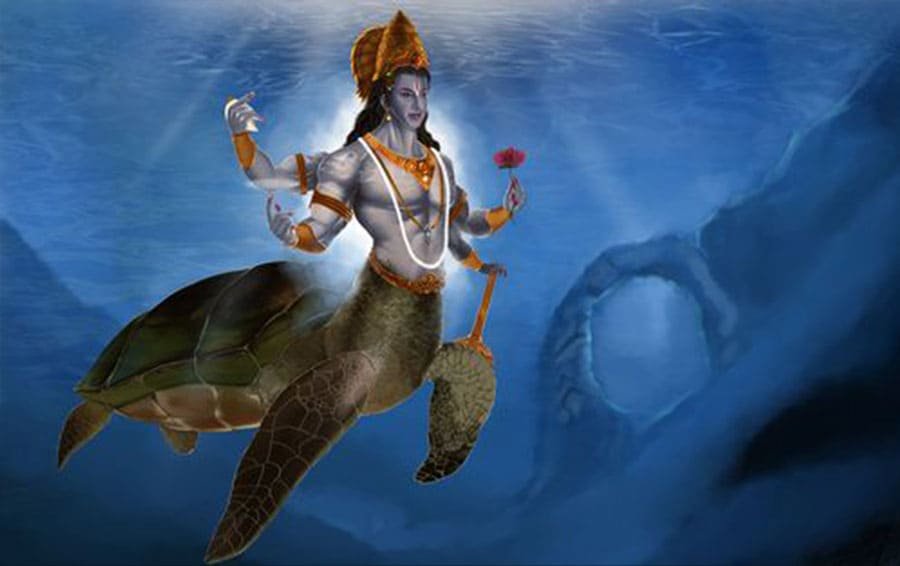
Kurma Purana The Kūrma Purāṇa: History and Context The Kūrma Purāṇa is one of the eighteen Mahāpurāṇas of Hindu tradition. It takes its name from Kūrma, the tortoise incarnation of Vishnu, who supported Mount Mandara during the famous churning of the ocean (samudra manthana). While the avatāra itself is central, the Purāṇa is not limited to that story. Instead, it offers a broad compilation of theology, mythology, sacred geography, and religious practice. Date and Composition The Kūrma Purāṇa, like other Purāṇas, is a layered text compiled over centuries. Scholars generally date its core between the 7th and 9th centuries CE, with later revisions continuing into the medieval period (possibly up to the 13th century CE). The text survives in multiple recensions and is considered relatively short compared to other Mahāpurāṇas. The extant version has about 17,000 verses (in 95 chapters), though some manuscripts suggest a slightly smaller corpus. The style of composition indicates it was used as a religious handbook rather than an exhaustive encyclopedic Purāṇa. Structure and Content The Kūrma Purāṇa is framed as a dialogue between Vishnu in his Kūrma form and various sages. It is usually divided into two parts: Religious Orientation Although named after Vishnu’s Kūrma avatāra, the text is not exclusively Vaishnava. Many sections praise Shiva, Devi, and other deities, showing an inclusive and syncretic character. This reflects the religious pluralism of medieval Hinduism, where texts sought to harmonize competing sectarian traditions. Its emphasis on Vedānta philosophy is noteworthy. Passages in the Uttara-vibhāga align closely with Advaita (non-dualist) ideas, suggesting that it was influenced by or contributed to early Vedāntic currents. This gives the Purāṇa a philosophical depth not always found in other texts. Cultural and Historical Significance The Kūrma Purāṇa is significant for its tīrtha-māhātmya (pilgrimage sections), which describe sacred places and their spiritual benefits. These accounts helped establish religious geographies and encouraged pilgrimage networks. Temples in Tamil Nadu, Andhra Pradesh, and Odisha are praised, making the text an important source for medieval South Indian religious culture. It also provides guidance on ritual observances, temple worship, and yoga, blending practical religion with philosophical insight. The syncretic approach—balancing Vishnu, Shiva, and Devi—made it accessible to multiple communities. Historical Influence While less famous than the Bhāgavata Purāṇa or Viṣṇu Purāṇa, the Kūrma Purāṇa played a role in shaping devotional practices and sacred geography in medieval India. Its theological inclusivity resonated with Advaita Vedānta traditions, and its pilgrimage guides supported temple-based Hinduism. Above all, the Kūrma Purāṇa illustrates the Purāṇic function as a living religious encyclopedia, combining myth, philosophy, and practice into a text that could serve both scholars and devotees.

Kurma Purana Read Post »

330px Bhagavata Purana Ancient Stories of the Lord Manuscript LACMA M.88.134.4 2 of 2
Puran

Bhagavata Purana

Bhagavata Purana The Bhāgavata Purāṇa: History and Context The Bhāgavata Purāṇa (Śrīmad Bhāgavatam) is one of the most revered of the eighteen Mahāpurāṇas. It holds a special place in Hindu tradition as a foundational scripture of bhakti (devotion), especially to Krishna as the supreme God. Its influence on Hindu philosophy, poetry, music, and culture has been profound, making it one of the most widely read and recited Purāṇas. Composition and Dating The Bhāgavata Purāṇa was likely composed between the 9th and 10th centuries CE, although some scholars argue for a slightly earlier or later date. Unlike older Purāṇas, which often emphasize cosmology and genealogies, the Bhāgavata reflects a mature devotional movement centered on Krishna. Traditionally, it is attributed to the sage Vyāsa, with narration by his son Śuka to King Parīkṣit. Historically, however, it was composed in Sanskrit by anonymous authors, likely in South India, and gradually spread across the subcontinent. The text contains about 18,000 verses, divided into twelve skandhas (books) and over 300 chapters. Structure and Content The Bhāgavata Purāṇa covers a vast range of subjects but is unified by its devotional outlook. Religious and Philosophical Significance The Bhāgavata Purāṇa is a cornerstone of Vaishnava theology. It teaches that bhakti (devotion to God) is the highest spiritual path, accessible to all, regardless of caste, gender, or social status. This message inspired later devotional movements across India. Its theology strongly influenced Vedānta philosophy, especially in the works of Rāmānuja, Madhva, Vallabha, and Chaitanya Mahāprabhu. In particular, the Gaudiya Vaishnava tradition of Bengal, founded by Chaitanya in the 15th–16th centuries, elevated the Bhāgavata Purāṇa as its central scripture. Cultural and Historical Influence The Bhāgavata Purāṇa has been one of the most influential Sanskrit texts in Indian cultural history. Its stories of Krishna inspired: Enduring Legacy The Bhāgavata Purāṇa remains central to Hindu devotional life. Recitations (Bhāgavata Saptāha), where the text is read over seven days, are popular across India. Its vision of a personal, loving God accessible through devotion continues to shape the heart of Hindu spirituality.

Bhagavata Purana Read Post »

661f2af4a42b1e952ec56943 Varahapurana
Puran

Varaha Purana

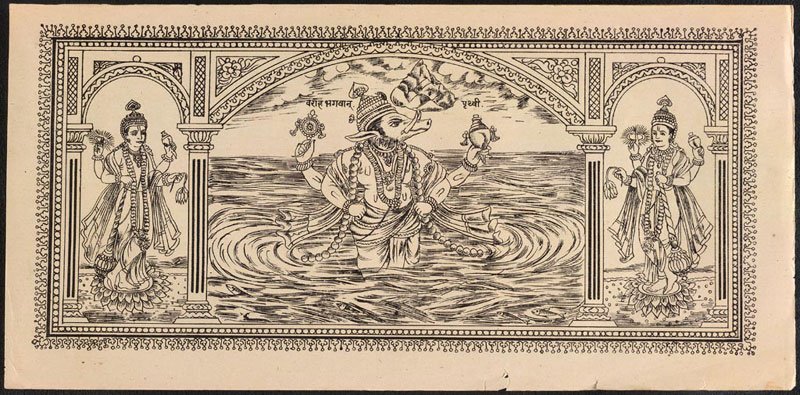
Varaha Puran The Varāha Purāṇa is one of the eighteen Mahāpurāṇas of Hindu tradition. It takes its name from Varāha, the boar incarnation (avatāra) of Vishnu, who rescues the earth goddess (Bhūdevī) from the cosmic waters. Yet, like many Purāṇas, its contents extend far beyond the myth suggested by its title. The extant text is a wide-ranging compilation of mythology, theology, sacred geography, and ritual instructions, reflecting centuries of religious development. Date and Composition The Varāha Purāṇa, like most Purāṇas, is not the work of a single author or time. Scholars generally agree that its core composition dates between the 7th and 10th centuries CE, with additional material inserted during the medieval period up to perhaps the 12th century. Older references suggest the original work may have contained over 24,000 verses, but surviving manuscripts preserve only about 10,000–14,000 verses in roughly 215 chapters. This indicates significant loss or reshaping over time. The text is presented primarily as a dialogue between Vishnu in his Varāha form and Bhūdevī, though other sages and deities contribute to the narrative in different sections. Structure and Themes The Varāha Purāṇa does not always follow the fivefold pañcalakṣaṇa structure (creation, dissolution, genealogies, reigns of Manus, dynastic history) expected of a Purāṇa. Instead, it focuses on: Religious Orientation Although named after a Vishnu avatāra, the Purāṇa is not purely Vaishnava. Large sections glorify Shiva, sacred lingas, and goddess shrines, making the text pluralistic and inclusive. This syncretism reflects the broader role of Purāṇas as shared religious texts rather than strictly sectarian scriptures. Cultural and Historical Significance The Varāha Purāṇa is especially valuable for its detailed tīrtha-māhātmya passages, which illuminate how Hindu sacred geography developed in the medieval period. Pilgrimage guides embedded in the text helped to establish networks of holy sites, sanctify landscapes, and promote temple cultures in various regions. Its integration of cosmological myth, practical ritual, and sacred geography shows how Purāṇas were designed to link cosmic truths with daily religious life. The Varāha myth itself, symbolizing the rescue of the earth, was connected with the idea of Vishnu as protector of cosmic order, reinforcing his centrality in Hindu devotion. Historical Influence While not as famous as the Bhāgavata or Viṣṇu Purāṇa, the Varāha Purāṇa remains important as a regional and devotional text, shaping temple practices and pilgrimage traditions. For historians, it provides a window into the religious pluralism of early medieval India and the ways in which myth, geography, and ritual were interwoven into a single Purāṇic framework.

Varaha Purana Read Post »