













Hari Om

Menu

February 24, 2026

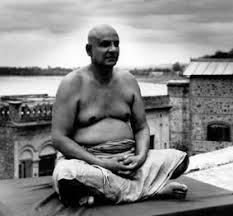
swami sivananda Monk sitting on rooftop in meditation
Celestial Collection of Divine Messages - Awakening the Divinity in Man, Swami Sivananda

Role of Restraint in Sadhana

Role of Restraint in Sadhana Sri Swami Sivananda About one hundred and fifty miles above the Sannyasins’ colony of Rishikesh, in the Himalayan interior there is an outpost, Chamauli by name. Here they have built a sort of dam or barrage across the flow of the mountain Ganga. One fine day something happened there and the water was likely to get out of hand and burst out in an excessive flow. At once wires began to hum. A telegram was given to all the lower regions, warning them of a likely flood in the Ganga and asking them to shift higher up from the Ganga bank. Now Ganga water is the very life and the soul for the people living by the side of the Ganga bank. But what is this strange phenomenon—people are now fleeting away from its life-giving waters. What is the reason for this? So long as its flow was within the limits, so long as its volume was restrained to a safe margin, it was most beneficial and very desirable. When the self-same natural and legitimate function of the dam (of supplying waters) exceeded, these waters became dangerous and terrible. Thus excess rendered a blessing into a menace. Now consider a similar state of things in the life of man. The average man is the slave of his senses. Usually his life is one constant whirl amidst the numerous varieties of Vishayas that hem in upon his day-to-day life. His appetites goad him on to do two things, viz., they go out towards certain external pleasing and attractive things and they also desire to draw in certain things inward themselves. Thus man’s slavery to his senses takes these two forms of going out towards certain things and drawing in certain things. At times in the case of certain types of objects both these processes are present combined together, viz., indulgence and consumption. It will not be wrong to say that both these are but the two aspects of the quality of sensuality. Now sensuality is a broad, general term. It includes all and every variety of indulgence through the avenue of the senses. However it is not all indulgence that is totally unethical, immoral or criminal. Certain forms of indulgence like drunkenness, debauchery, adultery etc., are manifestly immoral and criminal. They are ruthlessly condemned. Some others, though not actually criminal, are yet extremely harmful either physically or mentally or both to the individual and at times to others near him as well. Tobacco chewing, snuffing or smoking, betting, gambling etc., come under this class. Such practices are strictly forbidden and stigmatised in unequivocal terms. Thirdly, there are still others (and it is with this class we are particularly concerned) that are of a natural character and within limits are even tolerated and legalised by convention. Consuming food and drink and indulging in sleep, rest and proper apparel for covering the body—these and the allied routine physical necessities are of this last mentioned category. They are to some extent amoral. There is basically nothing unethical in doing these actions, but when they are overdone they immediately assume the nature of moral issues. They lose their neutral nature and become directly or indirectly (at times directly and indirectly both) immoral. Thus for instance, to sleep is normal to all creatures on earth. Animal and man, sinner and saint alike do it. But then there is a limit within which it is a desirable and beneficial necessity. Too much sleeping makes a man lazy, lethargic, dull and ultimately, useless to both society and himself. To the Sadhaka it is one of the most dangerous habits. To him it is a vice to be eradicated. Habitual oversleep increases Tamas and makes Sadhana nullified and retards his progress. Take another process—eating. Eating is recognised as an indispensable necessity so long as the physical sheath lasts. The lowest vermin to the highest realised saint, all take food. Overdo it, then indirectly as well as directly it becomes wrong, improper, unethical and positively criminal. It is a wrong and harmful practice from the health and medical point of view; improper from the point of social etiquette which regards gluttony with disfavour and disapproval; it is unethical, for by overfeeding man fattens his lustful propensities and becomes gross and sensual; and it is criminal from the economic point of view, for the wanton overfeeding of a section of people transgresses all canons of distribution and deprives the starving masses of their sorely needed food. Now it is precisely here that we perceive the vital role of restraint in giving the proper balance, proportion and direction to such functions of variable moral implications. Inasmuch as their classification as moral or otherwise directly depends upon limit and extent of their indulgence or consumption, it is the equality of restraint and self-control in the individual that acts as the regulator that keeps them within the limits of the good, the proper. Thus it is the presence and absence of this element of self-control and restraint that makes the identical action of eating praiseworthy in one and blameworthy in another. It is laudable in the saintly persons of simple and Spartan habits, and culpable in the shameless voracious gourmand. And this is different in the quality of the self-same action in two persons which is due to the factor of restraint. Why the role of restraint has been dealt with particular reference to this third class of neutral amoral function will be apparent when we consider that the other two categories are matters for eschewment in toto, wherein, strictly speaking, no question of restraint need arise at all. These actions are unnatural, unnecessary and dispensable. They are never to be done. Whereas the third class of inevitable routine items of sensual consumption and indulgence have got to be done, yet not to be overdone. And it is restraint that achieves this. It is restraint that supplies the guarantee and insurance against overindulgence. This function of restraint in guarding against

Role of Restraint in Sadhana Read Post »
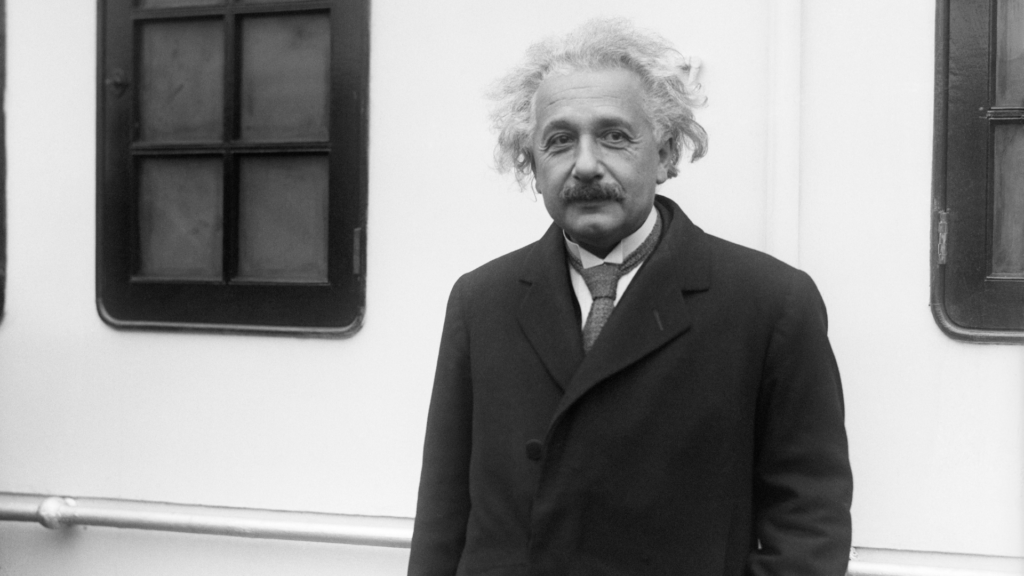
image 48
⁠Rare Gems on Religion & Faith, Swami Sivananda

Quotes of Albert Einstein on Spirituality

Quotes of Albert Einstein on Spirituality I want to know God’s thoughts; the rest are details. Science without religion is lame. Religion without science is blind. My religion consists of a humble admiration of the illimitable superior spirit who reveals himself in the slight details we are able to perceive with our frail and feeble mind. The further the spiritual evolution of mankind advances, the more certain it seems to me that the path to genuine religiosity does not lie through the fear of life, and the fear of death, and blind faith, but through striving after rational knowledge. Every one who is seriously involved in the pursuit of science becomes convinced that a spirit is manifest in the laws of the Universe-a spirit vastly superior to that of man, and one in the face of which we with our modest powers must feel humble. The scientists’ religious feeling takes the form of a rapturous amazement at the harmony of natural law, which reveals an intelligence of such superiority that, compared with it, all the systematic thinking and acting of human beings is an utterly insignificant reflection. There is no logical way to the discovery of elemental laws. There is only the way of intuition, which is helped by a feeling for the order lying behind the appearance. The intuitive mind is a sacred gift and the rational mind is a faithful servant. We have created a society that honors the servant and has forgotten the gift. The most beautiful thing we can experience is the mysterious; It is the source of all true art and science. We should take care not to make the intellect our god; it has, of course, powerful muscles, but no personality. Whoever undertakes to set himself up as a judge of Truth and Knowledge is shipwrecked by the laughter of the Gods. When the solution is simple, God is answering. God does not play dice with the universe. God is subtle but he is not malicious. A human being is a part of the whole, called by us Universe, a part limited in time and space. He experiences himself, his thoughts and feelings as something separated from the rest-a kind of optical delusion of his consciousness. This delusion is a kind of prison, restricting us to our personal desires and to affection for a few persons nearest to us. Our task must be to free from this prison by widening our circle of compassion to embrace all living creatures and the whole nature in its beauty. Nothing will benefit human health and increase the chances for survival of life on Earth as much as the evolution to a vegetarian diet. The man who regards his own life and that of his fellow creatures as meaningless is not merely unfortunate but almost disqualified for life. Peace cannot be kept by force. It can only be achieved by understanding. Only a life lived for others is a life worth while. The human mind is not capable of grasping the Universe. We are like a little child entering a huge library. The walls are covered to the ceilings with books in many different tongues. The child knows that someone must have written these books. It does not know who or how. It does not understand the languages in which they are written. But the child notes a definite plan in the arrangement of the books—a mysterious order which it does not comprehend, but only dimly suspects. The important thing is not to stop questioning. Curiosity has its own reason for existing. One cannot help but be in awe when he contemplates the mysteries of eternity, of life, of the marvelous structure of reality. It is enough if one tries merely to comprehend a little of this mystery every day. Never lose a holy curiosity. What I see in Nature is a magnificent structure that we can comprehend only very imperfectly, and that must fill a thinking person with a feeling of humility. This is a genuinely religious feeling that has nothing to do with mysticism. The finest emotion of which we are capable is the mystic emotion. Herein lies the germ of all art and all true science. Anyone to whom this feeling is alien, who is no longer capable of wonderment and lives in a state of fear is a dead man. To know that what is impenatrable for us really exists and manifests itself as the highest wisdom and the most radiant beauty, whose gross forms alone are intelligible to our poor faculties – this knowledge, this feeling … that is the core of the true religious sentiment. In this sense, and in this sense alone, I rank myself amoung profoundly religious men. The real problem is in the hearts and minds of men. It is easier to denature plutonium than to denature the evil spirit of man. True religion is real living; living with all one’s soul, with all one’s goodness and righteousness. Intelligence makes clear to us the interrelationship of means and ends. But mere thinking cannot give us a sense of the ultimate and fundamental ends. To make clear these fundamental ends and valuations and to set them fast in the emotional life of the individual, seems to me precisely the most important function which religion has to form in the social life of man.

Quotes of Albert Einstein on Spirituality Read Post »

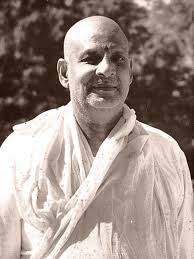
swami sivananda Vintage portrait of monk in white robe outdoors image
Celestial Collection of Divine Messages - Awakening the Divinity in Man, Swami Sivananda

Love And Love Alone Can Transform Evil For Ever

Love And Love Alone Can Transform Evil For Ever In times of yore, a small Ashram consisting of a few huts and a temple, surrounded by a big garden of flowers, herbs and different kinds of plants and trees, was situated, far from towns and cities, on a hill slope by the side of a swift-flowing stream adjoining the Oudh Forest. A saint along with his six disciples used to live there. He was a devotee of Lord Gopala and used to call himself His servant. Hence his name became Gopaldas and the Ashram was called ‘Gopal Ashram’. Gopaldas was a saint and herbalist too, famous for his nobleness, kindness, purity, loving behaviour and successful free-treatment of all sorts of patients without any distinction of caste or creed or colour, rich or poor. He always kept open house, never demanding anything in lieu thereof. If any rich man, on his own accord, ever donated any sum, almost the whole of it, was utilized in preparation of medicines, lodging and feeding of poor patients and other visitors etc. but he and his disciples, mostly used to live on alms which was generally collected by two disciples—turn by turn—from villages, going from door to door. The young Zamindar (landlord), Jagdish Singh, of the Talug was known for his cruelty and loose conduct. He was very much afraid of Gopaldas. He had a honey tongue and a heart of gall. He never liked Gopaldas but always pretended to respect him whenever they met. Many a time, he sent sinful, mischievous and immoral persons to hurt and harm Gopaldas and his Ashram. A few of them returned back. They could not even dare to approach the saint. Some went to the Ashram and as soon as they saw Gopaldas, their minds were changed and they disclosed everything. Gopaldas heard all very calmly and kept quiet, smilingly. The Zamindar, finding that all his efforts failed and his intentions laid bare, made friendship with one Karan Singh, a renowned dacoit and culprit, living in the nearby forest with his gang. Both met, drank and dined together and made plans etc. Gopaldas had a horse, not only very attractive but belonging to a special, famous breed, scarcely available, having all the qualities of a fine horse. The horse was very useful and dear to Gopaldas. One day, while going to see a patient in a certain village, Gopaldas rode through the forest. Karan Singh saw him and decided to attack him, but his courage gave way. However, on his way back, Karan Singh appeared on the road, disguised as a lame beggar and began to sigh. When the saint saw him, he was filled with love and compassion and made him be seated on the horse and he himself, started walking. After covering some distance, the dacoit spurred on the horse and left the saint behind and said in loud voice turning his face backward, “O Foolish Sadhu, I am Karan Singh. I decided to plunder your horse which I have done so tactfully. Now you can’t get it back.” Gopaldas laughed and replied, “The horse is well trained and will come back to me even now on my whistle. But I do not want to do that. I am glad to see that I was able to serve Gopal in thy form.” After a pause he continued, “Kindly do a favour, if possible.” Karan Singh asked in a stern manner, “What favour do you expect from Karan Singh? Do not try to befool me.” Gopaldas, “Don’t think so. You can take the horse but please do not tell to anyone about this event.” Karan Singh, “What harm will come to you in doing so?” Gopaldas, “After hearing this event, people may not trust and help the poor and needy in future.” Saying so, Gopaldas returned back to his Ashram but his last words fascinated Karan Singh, the dacoit, and he was much ashamed of his act and behaviour. Throughout the night, he remained restless and could not have a wink. The next morning, along with the horse, he went to Gopal Ashram, where he was invited like a friend. He fell down at the feet of Gopaldas and said heavy-heartedly and beseechingly, “I have now decided to give up my profession entirely for ever. I request thy forgiveness, shelter and kindness.” Gopaldas took him in his arms with love and replied, “Don’t worry. Be calm. Probably you have not slept for the whole night, therefore go to the Kutir and take rest.” At the same time, he instructed one of his disciples to arrange for his lodging and food. When the Zamindar came to know all about this, he was flushed with anger. Now deciding to put the whole Ashram on fire himself and to end the existence of Gopaldas and Karan Singh, he started with his few trustworthy servants nearly at mid-night. Jagdish Singh, the Zamindar, was on the horse leading the party. As they reached the Ashram-hill, the Zamindar asked his men to put out all the torches (Mashals) except one. The party now began to ascend. When they were just near the Ashram, the horse suddenly slipped and, with a loud neighing, fell down along with his master into the side vale. The dogs of the Ashram started barking. The men of the Zamindar were quite confused and frightened and  were unable to decide what to do. Soon they noticed a few persons coming towards them with burning torches in their hands. Now they were intending to run away when they heard a sympathetic voice, “Please do not be frightened. I am coming to help you.” Gopaldas accompanied with his four disciples and Karan Singh reached there and enquired about the matter. One servant told all the facts frankly. Karan Singh heard and lost his temper but Gopaldas at once went down with a torch in his hand and followed by his disciples and the Zamindar’s servants. Karan Singh remained standing where

Love And Love Alone Can Transform Evil For Ever Read Post »

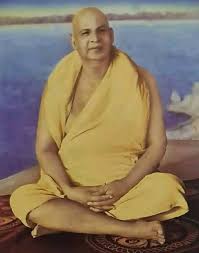
swami sivananda Monk in yellow robes seated cross-legged against painted backdrop image
⁠Rare Gems on Religion & Faith, Swami Sivananda

God Exists

God Exists By SRI SWAMI SIVANANDA The notion of God means an absolutely perfect being. An absolutely perfect being must have all the positive attributes, including the attributes of existence. So God must exist. The existence of God cannot be proved by scientific experimentation. It is purely a question of faith and refers to the intuitive side of man. The deepest craving, the deepest aspiration in man is for eternal happiness, eternal knowledge and eternal Truth. Man should search for some supernatural entity which can satisfy his deepest craving and aspirations. As we explain everything within Nature by the law of cause and effect, so also Nature as a whole must be explained. It must have some cause. This cause must be different from the effect. It must be some supernatural entity, i.e., God. Nature is not a mere jumble of accidents, but an orderly affair. The planets move regularly in their orbits, seeds grow into trees regularly, the seasons succeed each other in order. Now Nature cannot order itself. It requires the existence of an intelligent being, i.e. God, who is responsible for it. Even Einstein, the great scientist, was strongly convinced of the creation of the universe by a Supreme Intelligence (Click Here for some of Einstein’s quotes on spirituality). Everything in Nature has some purpose. It fulfills some function or other. Certainly every object by itself cannot choose a function for itself. Their different functions ought to have been planned or designated by a single intelligent being or God. Albeit everything is transitory in this world, people purchase enormous plots of land, build bungalows in various places and erect five-storeyed houses. They want to establish eternal life in this sense-universe. This shows that man is essentially immortal. In spite of the knowledge that everyone has to die, man thinks that he will live for ever and make very grand arrangements to live here perpetually. Further, nobody wants death. Everybody wants to live, and takes treatment when ill, spending any amount. Hence, the essential nature of man should be eternal existence. Even a fool thinks that he is wise. Everyone wants to show that he knows more than others. Nobody likes to be called a fool. Children tease their parents with various sorts of questions. The desire to know is ingrained in them. These indicate that our essential nature is knowledge. When a man laughs, people seldom ask why he is laughing. On the other hand when a man cries, everybody asks why he is crying. This shows that our essential nature is bliss. No one wants misery, but everyone want happiness, and all one’s activities in life are directed towards the acquisition of happiness. This also proves that our real nature is bliss. In deep sleep when there are no objects, senses or mind, we feel bliss; hence our essential nature should be bliss. That again is the reason why people ailing from painful maladies even desire to give up their bodies and thus get rid of the pain. If everyone then is of the nature of existence-knowledge-bliss, there should be an all-pervading principle having these characteristics and different from the perishable, inert pain-giving physical bodies. Therefore, Brahman or God, whose nature is Existence-Knowledge-Bliss (Sat-Chit-Ananda), should exist. The existence of God or the Self is determined or indicated by the existence of the Upadhis or limiting adjuncts, viz., body, mind, Prana and the senses, because there must be self-consciousness behind their activities. You always feel that, despite your possessions and all sorts of comforts, you are in want of something. There is no sense of fullness. Only if you add to yourself the all-full God, you will have fullness. When you do an evil action, you are afraid. Your conscience pricks you. This also proves that God exists and witnesses all your thoughts and actions. To define Brahman is to deny Brahman. The only adequate description of Brahman is a series of negatives. That is the reason why the sage Yajnavalkya declares in the ‘Brihadaranyaka Upanishad’ about Brahman as neti, neti, or ‘not this’, ‘not this.’ This means that the residue left after sublating the names and forms is Brahman. Brahman or the Self or the Immanent God cannot be demonstrated as He is beyond the reach of the senses and mind but His existence can be inferred by certain empirical facts or common experiences in daily life. Sometimes you are in a peculiar dilemma or pressing pecuniary difficulty. Help comes to you in a mysterious manner. You get the money just in time. Most of you might have experienced this. You exclaim at that moment in joy “God’s ways are mysterious indeed; I have got now full faith in God. Up to this time I had no faith in God.” An advocate had no faith in God. He developed double pneumonia. His breath stopped. His wife, son and relatives began to weep. But he had a mysterious experience. The messengers of Yama caught hold of him and brought him to the court of Lord Yama. Lord Yama said to his messengers: “This is not the man I wanted. You have brought a wrong person. Send him off.” He began to breathe after some time. He actually experienced that he left the body, went to the court of Yama and again re-entered his physical body. This astonishing experience changed his entire nature. He developed an intense faith in God and became a religious man. Another educated person had a similar experience, but there was some change in this case. He was also an atheist. His soul was brought by the messengers of Yama to his court. This person asked Yama: “I have not finished my work in the physical plane. I have to do still more useful work. Kindly spare my life now.” His boon was granted. He was struck with wonder on this strange experience. His nature also was entirely changed. He left his job at once. He devoted the remaining portion of his life in

God Exists Read Post »

image 46
⁠Rare Gems on Religion & Faith, Swami Sivananda

Alice in Wonderland

Alice in Wonderland By SRI SWAMI KRISHNANANDA We have an inveterate obsession in our minds which prevents us almost entirely from conceiving the goal of life as a practical reality. For us, the goal mostly remains as a kind of concept and an idea, an ideal which is not easily reconcilable with the hard realities of the workaday a world. The goal may be God Himself, and nevertheless, He is only an idea an ideal, a concept, an imagination, a possibility, a may-be or may-not-be. This suspicious outlook is not absent even in the most advanced persons due to the strength of the senses, the power of the mind, and the habit of the intellect in understanding things in a given fashion. We are discussing in these lessons a subject called Comparative Philosophy, and in this context, we would be benefited by bestowing a little thought on the conclusions arrived at by certain thinkers also, apart from Vedantic philosophers like Sankara, with whom we have a good acquaintance and about whose thinking we have spoken enough. There was a great man called Plato in Greece. According to Paul Deussen, the whole world has produced only three philosophers-Plato, Kant and Sankara. There is some truth in what he says. There cannot be a greater philosopher than these three persons-Plato, Kant and Sankara-, says Paul Deussen. I was thinking about this statement. Why does he make this statement? Finally I felt that there is some truth in it, whatever it is. The idea of the Ultimate Reality is the principal doctrine of Plato; and I started by saying that we are living in a world of ideas when we live a spiritual life, when we behave religiously, conduct worship and chant Mantras, do prayers, do Japa and even meditation; but there is a very uncomfortable consequence following the idea that, after all, the Reality is an idea. Ideas are abstractions, notions which are supposed to correspond to realities, and as long as ideas correspond to realities, they are valid. I have an idea that there is a building in front of me. This idea is a valid idea, because it corresponds with the real existence of the building outside. So, the validity of my idea depends upon the reality of the object which is in front of it, but my idea itself has no reality. It is borrowed reality. It hangs on the existence of something else outside, in this case, the building. So, if the idea of the Ultimate Reality or God is to hang on the existence of another thing, God is not a real being. This is a very subtle difficulty that may trouble the minds of even sincere seekers. Don’t you think that the world is real? It is not merely real, it is very, very real, hard to the core, flint-like and no one can gainsay that it is. Perhaps that alone is. God is an idea that has been introduced in our minds by our ancestors, by our books, by our scriptures, by our professors and our teachers and parents, and somehow, we have been forced by the logic of this teaching to believe there should be such a thing as an ‘other-worldly existence’ and we have somehow reconciled ourselves to it-God must be there. But we are accepting the existence of God against our own will. We are hungry and thirsty and this hunger and thirst of the body is more real than the idea of God. No one can say that it is not so, whatever be our devotion to God. This is so even in the case of advanced seekers and sincere Sadhaks (aspirants). This subject is the principal theme of Plato’s doctrine. Ideas precede reality: this one sentence is the entire philosophy of Plato. The reality of the objective universe is subsequent to the idea of the universe. Here we have an echo of the great philosophy of Vedanta that the Hiranyagarbha (cosmic intelligence) is prior to the cosmos of physical appearance. The Panchadasi, The Upanishads and the other systems of Vedantic thinking tell us that in Hiranyagarbha the world does not exist in a concrete form as it appears, that is only an idea cosmically manifested by Isvara (God) who is even subtler than the idea. Isvara is only a possibility of the very idea that there should be a thing called the universe. So, Isvara is subtler than the idea which is Hiranyagarbha, and Virat is supposed to be the animating consciousness behind the so-called physicality of creation. So, even in the Vedantic Philosophy, there is the same doctrine of idea preceding concrete existence. But we can never believe this. My idea that there is a desk in front of me cannot be said to be harder in its concreteness than the desk itself. I have an idea that there is a little table in front of me. Is the table more real or the idea that the table is there more real? Any man with common-sense will say that the idea is subsequent to the existence of the object called table and the idea is not preceding the object. Because there is a table, you think there is a table. You have an idea that there is an object. So, the idea that there is an object is the consequence of the existence of the object. So, the idea of God must be subsequent and not precedent. These questions arose before Socrates. How can you say that idea is prior to the universe? How could there be an idea unless the universe exists? How can you have a thought about a thing unless the thing exists? How can you say that things are subsequent and ideas are precedent? If God is supreme consciousness, how could consciousness be prior to existence? Consciousness is always of something. If the something is not there, there cannot be consciousness. What do you mean by merely saying consciousness, awareness, understanding, thinking, feeling? They cannot have any

Alice in Wonderland Read Post »

Swami Sivananda blessing young child during spiritual ceremony photo
Celestial Collection of Divine Messages - Awakening the Divinity in Man, Swami Sivananda

A Tale For A Bala (Child)

A Tale For A Bala (Child) Sri Swami Sivananda Vasishtha said: “O undaunted Rama! the mind of a sage is not any different from Brahman. The mind of the unenlightened one is the cause of his ignorance and error. There are infinite Shaktis in Brahman, namely, Iccha Shakti, Kriya Shakti, Jnana Shakti, Bhuma Shakti, Akarta Shakti, etc. The Supreme Brahman is full, perfect and undecaying. His power of fluctuation is present in the air; His power of hardness is present in the stone; of heat, in fire; of vacuity, in ether; and of fluidity, in water. His bliss is felt in the hearts of the holy; His prowess is seen in Yogis; His creative power in the works of His creation; and His power of destruction in the cosmic Pralaya at the end of a great Kalpa. Just as the tree is contained in the seed, so also everything is contained in Brahman. Brahman is One. He manifests as many through His illusory power. Brahman Himself manifests as Manas or mind through thinking, as the Jivatma or the individual soul through the Upadhi or limiting adjunct of Avidya, as Ishwara through the Upadhi of Maya, and as the universe through Vikshepa Shakti or projecting power. “Bondage and freedom are conceptions of the ignorant. It is wrong to speak of the bondage of the soul, which is ever free. It is futile to seek the emancipation of the soul, which is always emancipated. To the men of this world who are sunk in the mire of ignorance the world is as real as the fabulous old grandmother’s tale narrated by a mother to her little boy.” Rama said: “O venerable Guru! please narrate the story to me. I am eager to hear it.” Thereupon, Vasishtha narrated the story: “A certain boy once asked his mother to narrate to him some pretty story for his amusement. Whereupon the mother related the following mythical story: “ ‘Once upon a time, three princes lived in a city called Void. They were very noble, virtuous and brave. Of these three, two were never born and the third never entered the womb for being conceived. They started on a journey and took rest in the garden of Akasa. They ate various kinds of fruit and continued their journey in the upward direction. Having gone a long way, at midday they came across a confluence of three rivers, running with its rapid currents and swelling waves. Of these three rivers, two had no water in them, while in the third there was nothing but white sand. They all took their bath in the last river and sported for a long time and drank some water which was as sweet as milk, and thus they cheered their spirits. They resumed their journey and reached a town at sunset which was not then in existence and there built three houses. One house had no foundation, the second had no walls and the third had neither walls nor roof. The three princes dwelt very comfortably in these three beautiful houses that were built in an invisible town in the Akasa. They found three pots in their houses. The first two broke into pieces upon being lifted, and the third was reduced to dust on being touched. They placed in these pots eight measures of rice minus twelve measures, and cooked the same in a wonderful manner without water and fire. They distributed the food to countless mouthless, tongueless and toothless Brahmins. The three princes partook of the remaining food with glee. In the evening they went out hunting and spent their time in a pleasant manner:’ “When the mother had finished her story, the boy was very much pleased at what he had heard. He believed that the story was quite a true one. “Similarly, ignorant persons who possess neither discrimination nor Atmic enquiry believe that this world is quite real. This air-built castle of the world, which is taken as a reality, is like the story narrated to the boy, which is only a fabrication of the imagination of the boy’s mother. The mother has given a name and a form to an airy nothing. Even so, the mind has given a name and a form to these illusory objects of this false world. This universe is nothing but of the nature of Sankalpa. The mind generates this world. Nothing is really existent save the creations of your imagination. The imagination fashions all the objects in their peculiar fanciful forms. The heavens, earth, sky, air, rivers, mountains, trees, etc., are all creations of your Sankalpa or imagination, like the visions in your dreams. Imagination gives a shape to an airy nothing. Expansion of this mind alone is Sankalpa and Sankalpa generates this world through its power of differentiation. The whole universe is the network of Sankalpa. Sankalpa is the most active power of the mind. Therefore, O Rama, annihilate all Sankalpas and attain the Nirvikalpa state wherein there are no modifications of the mind or Sankalpas. “O Rama! only ignorant persons are subject to errors caused by their false imagination. They take this illusory world as a reality. They attribute perishable properties to the imperishable Atman or Soul. Their minds ever fluctuate through their Sankalpas or thoughts. They identify themselves with their bodies. But the sages are entirely free from wrong conceptions and errors. This world is like a mirage for them. They always identify themselves with the immortal Atman. “O Rama! abandon your wrong view of the reality of the world. Give up all that is false and untrue. Brahman or the immortal, all-pervading Self, who is the true substratum and support of all, is the only Reality. Enquire into the nature of the Truth. You are never bound. You are ever free. When Brahman alone is the only Reality, where is Jiva? Where is mind? Where is bondage? Where is freedom? Who is bound? Who attains salvation? Bondage and freedom are all false imaginations of the

A Tale For A Bala (Child) Read Post »

images 2026 02 24T122613.133
⁠Rare Gems on Religion & Faith, Swami Sivananda, Uncategorized

Is Modern Science a Challenge to Religion?

Is Modern Science a Challenge to Religion? By SRI SWAMI KRISHNANANDA The subject that has been suggested is somewhat an involved one, and I do not know how far this would be a very appropriate theme to discuss before an audience of this kind who are basically devotees of God and aspirants of the spiritual ideal of life. However, all visions of life can be consolidated into a system of integrated organisation, and nothing conceivable can be regarded as extraneous to the methodology to be adopted in the pursuit of the spiritual ideal. “Is there a conflict between the scientific method and the religious aspiration of the soul?” is a moot question. Generally, when people speak of science, what the common populace understands is the comfort that has been provided by applied science, such as fast travelling, telephone, telegraph, Internet, satellite, and television. These are the things that are in the minds of people when they speak of the technological advance science has made; but science does not mean technology. It is a vision of life itself. What clashes or appears to come in conflict with religion is not the comfort that has been brought to us by these technological inventions of applied science, but the theory of science, which is something very deep, and bordering upon philosophical and metaphysical foundations of life itself. That the world is external to everyone is the basic foundation of all scientific perception. Observation and experiment being the methods of a scientific process, it goes without saying that what is observed and experimented upon has to be outside. The outsideness of the world is a very important aspect to be considered here, but we may put a question to our own selves: “Is the world really outside us, so that what happens in the world does not affect us in any way, and the world does not care for what is happening to us in our own internal operations? Are the individual and the world, the two principles of consideration here, segregated from each other? Has the world nothing to do with the individual, and has the individual nothing to do with the world?” It looks that there is no communication possible between the individual and the world. The world may not know at all that some individual is dead and gone, and the individual is not concerned in any manner if a star in heaven cools down and extinguishes itself. Let anything happen to the heavens; what does it matter to us? But, “Is it so?” is the question. This supposed conflict between physical science and religion may be said to have begun somewhere toward the end of the nineteenth century, when the geocentric interpretation of the heavenly bodies was replaced by the heliocentric concept on the discovery of Copernicus. This discovery clashed with the biblical belief and tradition, which holds that the earth is the foundation, and the sun and the moon and the stars move round this earth. The second thing that opposed religion as it was understood in those days was that the world was created, according to the biblical tradition, some four thousand years ago, but the scientific discovery declares that the beginning of the world must be traced back to aeons and aeons of time process earlier, and the earth is several millions of years old. This again was a challenge to the medieval concept of religion. But the third thing is most important. When Newton discovered the law of gravitation and concluded that everything that is happening in the physical world can be mathematically deduced by the logical process of conclusion drawn from premises, and the world which is physical in its nature is contained within the cup of space and time, and when his successor or follower Laplace wrote the five volumes on ‘Celestial Mechanics,’ the war between science and religion appeared to have commenced. We are told that the writings of Laplace were presented to Napoleon for his consideration. Napoleon seems to have declared, “Monsieur, I do not see God in your scheme”; and the answer of Laplace seems to have been, “Your highness, I have used the best of telescopes, but I have not found God anywhere.” This is classical science: God has to be seen in order to be believed. Does it follow then that whatever we see with our eyes really exists? Can we establish logically or scientifically that the world exists at all? Which scientific procedure can establish the truth of the externality of the world? Science is against any kind of hypothesis and taking for granted anything unproved. But is there any proof to substantiate the belief that the world exists, except the assertion that it is seen? The senses come in contact with what we call the panorama of the external world. That is the proof! Here, science fumbles. It is trying to cut the ground from under its own feet. Taking anything for granted is not the beginning of science. We cannot even take for granted that the world exists unless we prove that it exists. One cannot prove one’s own existence even. How do you know that you are existing? Where is the syllogism by which you have deduced the consequence of your existence from a premise? What is the proof that can establish the truth of your own existence? Bring the argument and let us see what it is that tells you that you really exist. It was the French philosopher Rene Descartes who took up this question of doubting the existence of his own self: “Some devil may be working in my mind. It may be telling me everything in a topsy-turvy way. The world may not be there. I may not be here. Everything is doubtful. There is no certainty of anything. I can doubt the validity of anything and everything.” But he went deeper into this phenomenon of doubt and discovered that doubt is not possible unless there is someone who is

Is Modern Science a Challenge to Religion? Read Post »

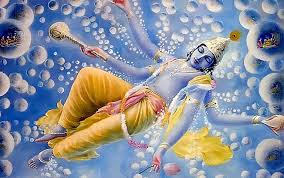
Lord Vishnu floating in cosmic ocean with divine aura image
⁠Rare Gems on Religion & Faith, Swami Sivananda

God

God By SRI SWAMI SIVANANDA Who is God? What is God? Is there a God? Where is God? How to realise God? Man wants an answer to these eternal questions. Certainly there is God. God exists. He is the only reality. God is your creator, saviour, and redeemer. He is all-pervading. He dwells in your heart. He is always near you. He is nearer to you than your jugular vein or nose. He loves you. He can talk to you. You cannot find God by the intellect. But, you can find Him by feeling, meditation, experience, and realisation. WHO IS GOD? The Petromax does not talk, but it shines and sheds light all around. The jessamine does not speak, but it wafts its fragrance everywhere. The lighthouse sounds no drum, but sends its friendly light to the mariner. The Unseen beats no gong, but Its omnipresence is felt by the dispassionate and discriminating sage. Behind all names and forms is the one nameless, formless Essence. Behind all governors is the one Supreme Governor of governors. Behind all lights is the one Light Of lights. Behind all sounds, there is the soundless Supreme Silence. Behind all teachers is the one Supreme Guru of Gurus. Behind all these perishable objects is the one imperishable Absolute. Behind all these motions is the one motionless Infinite. Behind time, minutes, and days is the one timeless Eternity. Behind hatred, riots, and wars is the one hidden Love. God is the totality of all that exists, both animate and inanimate, sentient and insentient. He is free from ills and limitations. He is omnipotent, omniscient, and omnipresent. He has no beginning, middle, or end. He is the indweller in all beings. He controls from within. God is all in all. God is the only reality in this universe. The existence of things is by the light of God. God is ever living. All depend on Him. He is not depending on any. He is the Truth. God is the end or goal of all Yoga Sadhanas. He is the Centre towards which all things strive. He is the highest purpose or highest good of the world. You have the urge of hunger. There is food to appease the hunger. You have the urge of thirst. There is water to quench the thirst. There is the urge to be always happy. There must be something to satisfy this urge. This something is God, an embodiment of happiness. God, Immortality, Freedom, Perfection, Peace, Bliss, Love are synonymous terms. WHAT IS GOD? What is God? It is hard to tell. But, when I look at the Ganga, I know it is God. When I see the jessamine, I know it is God. When I behold the blue sky, I know it is God. When I hear the chirping of birds, I know it is God. When I taste honey, I know it is God. The Supreme is indefinable, though scholars give intellectual accounts of It which are not absolutely true. Every man has his own conception of God. The God of a military man wears a helmet. The God of a China-man has a flat nose and a pipe for smoking opium. The God of a Hindu has marks on his forehead, and wears a rosary and a garland of flowers. The God of a Christian wears a Cross. For some, God has wings. A buffalo will think that God is a very big buffalo. Such an anthropomorphic conception of God is obviously puerile. The greatest and most important thing in all the world is to get a right concept of God, because your belief about God governs your entire life. IS THERE A GOD? God is beyond human imagination, but he is a living reality. Brahman is no metaphysical abstraction. It is the fullest and the most real being. The existence of God cannot be proved by scientific experimentation. The Absolute baffles the mind of even the greatest scholar. It eludes the grasp of even the mightiest intellect. It is experienced as pure consciousness, where intellect dies, scholarship perishes, and the entire being itself is completely lost in It. All is lost, and all is found. You want laboratory proofs? Very fine, indeed! You wish to limit the illimitable, all-pervading God in your test-tube, blow-pipe, and chemicals. God is the source for your chemicals. He is the substratum for your atoms, electrons, and molecules. Without Him, no atom or electron will move, He is the inner ruler. It is God who lends power to our senses, perception to our mind, discernment to our intellect, strength to our limbs. It is through His will that we live and die. But man vainly imagines that he is the actor and the enjoyer. Man is a mere nothing before the almighty, governing Power that directs the movement in the universe. God’s will expresses itself everywhere as law. The law of gravitation, cohesion, relativity, cause and effect, the laws of electricity, chemistry, physics, all the psychic laws, are expressions of God’s will. As we explain everything within nature by the law of cause and effect, so also, nature as a whole must be explained. It must have some cause. This cause must be different from the effect. It must be some supernatural entity, i.e., God. Nature is not a mere chance collection of events, a mere jumble of accidents, but an orderly affair. The planets move regularly in their orbits; seeds grow into trees regularly; the seasons succeed each other in order. Now, nature is Jada, insentient. It cannot order itself. It requires the existence of an intelligent being-God-who is responsible for it. Even Einstein, the scientist, was strongly convinced of the creation of the universe by a Supreme Intelligence. Though you do not see the stars in the daytime, yet they do exist. Though you cannot see the sun during a cloudy day, yet it does exist. Even so, though you cannot see God with these physical eyes, yet He does

God Read Post »

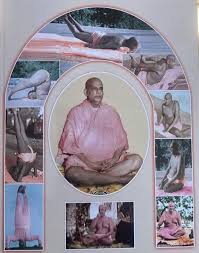
Swami Sivananda yoga master performing asanas and meditation in different scenes
Celestial Collection of Divine Messages - Awakening the Divinity in Man, Swami Sivananda

Conquest of Mind

Conquest of Mind Sri Swami Sivananda THAT form which the Infinite, All-pervading Atman has assumed through its power of imagination is called ‘mind’. Mind creates and destroys. It creates the whole universe by its power of imagination. The chief characteristic of the mind is imagination. Mind is the creator and enjoyer of all happiness and miseries. It is the cause for bondage and liberation. Mind is all in all. It is everything. It is your true friend and bad enemy. The lower mind is your enemy. It causes various sorts of attachment. It is filled with various base desires and appetites. The higher mind is a rare friend and benefactor because it imparts true counsels in the way of obtaining the supreme goal of life. The higher mind becomes your guiding Guru. Hear its sweet, small voice and follow its instructions. The voice of the pure mind is the voice of God. It is an infallible voice. In Gita you will find: “A man should uplift himself by his own self, so let him not weaken the Self. For, this self is the friend of oneself and this self is the enemy of oneself. The self is the friend of the self, for him who has conquered self, the self is inimical (and behaves) like (an external) foe for him who has not conquered the self.” (Chapter VI. 5-6). There is no other vessel on this earth to cross the ocean of Samsara than the mastery of the lower instinctive mind. This world is a very big wheel. It is revolving unceasingly. The mind is the nave of this wheel. Those who are egoistic, proud, passionate and greedy are caught up in this wheel. If you can stop the mind from moving, the world-wheel will come to a standstill and you will be freed from the rounds of  births and deaths. If you wish to stop the mind from moving, you will have to annihilate egoism, pride, desire and greed. It is the mind that is the root of the tree of Samsara with its thousands of shoots, branches, tender leaves and fruits. If you annihilate Sankalpas or thoughts, you can destroy the tree of Samsara at once. Destroy the Sankalpas as soon as they arise. The root will dry up through the annihilation of Sankalpas and the tree of Samsara will wither soon. This demands considerable patience and perseverance. No pains, no gains. You will be bathed in the ocean of bliss when all Sankalpas are extirpated. This state is indescribable. You will have to feel it yourself. Mind and Prana are interdependent. Prana is the overcoat or vehicle of mind. Wherever there is Prana, there is mind and vice versa. If you think deeply on any subject, the breathing becomes slow. When one suffers from asphyxia, the functioning of the mind comes to a standstill. Mind is the rider, Prana is the horse and the body is the chariot. Prana vibrates and mind is set in motion. Mind thinks when Prana moves. If Prana departs from the body, all functions of the body will stop. The body will remain like a log of wood. Separation of Prana from the physical body is called death in common parlance. Control of Prana leads to control of mind and vice versa. You should not try to control the mind through violence. You will not succeed if you do so. You will have to adopt the approved or prescribed means, such as association with the wise, Vichara, renunciation of Vasanas, Pranayama, etc. If you attempt the control of mind through force, it is like trying to bind a furious elephant with a thin twine or a plantain fibre. Just as the goad is the effective instrument to control the furious elephant, so also Vichara is the effective means to control the mind. You should first conquer the mind through Vichara or enquiry of “Who am I?”. As long as the mind is not destroyed, the Vasanas will attack you again and again and you will have no peace of mind. When the mind does not think of any object, when the mind is completely destitute of all Vasanas, you will attain the state of mindlessness and you will enjoy indescribable peace. As long as you do not attain Self-realisation, as long as you have not controlled the mind, so long you should follow implicitly the teachings of your Guru and the scriptures. You will have to coax the mind in the beginning just as you coax the children. Mind is also like an ignorant child. Speak to the mind, “O mind! Why do you run after false, worthless and perishable worldly objects? You will undergo countless sufferings. Look at Lord Krishna, the Beauty of beauties. You will get everlasting happiness. Why do you run to hear worldly love-songs? Hear the Bhajan of the Lord. Hear the soul-stirring Sankirtan. You will be elevated.” The mind will gradually leave off its vicious habits and get itself fixed at the lotus feet of the Lord. When it is freed from Rajas and Tamas it will guide you; it will be your Guru. O restless mind! O truant! O care-worn Chitta! Why do you wander about in vain after sensual objects. Are you not tired of them? Remember, this world, this body and this life are as evanescent and unsteady as a bubble. This world is full of miseries, untruth, deceit, hatred and diseases. You cannot enjoy an iota of happiness here. Be sure of this. Open your eyes now. Take refuge at the lotus feet of Hari and rest in peace. Enjoy the wealth of the three worlds. Drink the nectar of devotion and become immortal. The surface of the lake is compared to the conscious mind. The bottom of the lake is compared to the sub-conscious mind. The objects that come from the bottom of the lake to its surface are compared to the images that come to the surface of the conscious mind from the

Conquest of Mind Read Post »

image 47
Swami Sivananda, The Ultimate Goal of Mankind - Self Realization

Yoga for Health, Happiness and World Peace

Yoga for Health, Happiness and World Peace By Sri Swami Chidananda May all beings in this world attain happiness. May all beings in this world attain peace. May all beings in this world attain plenitude and fullness. May all beings in this world attain all auspiciousness and blessedness. May happiness be unto all. May freedom from disease be unto all. May all behold that which is good and beautiful. May not sorrow fall to the lot of any being. From passing unrealities, lead us into the Supreme Eternal Reality. From the darkness of spiritual ignorance, lead us into the light of Supreme Divine Wisdom. From death and mortality of earth consciousness, lead us into immortality and everlasting Life in the Spirit. Peace. Peace. Peace unto all beings. Homage and worshipful adorations to the supreme transcendental Cosmic Being, the Universal Spirit, the great Eternal Reality that is the source and origin of all existence; that is the unseen invisible support of all that is this universe and countless unseen universes, the unseen support and sustainer. Adorations, to that Being who is ultimately the supreme goal and fulfilment of all existence, all life, the Alpha and Omega of all beings, in whose presence we have gathered together here in this hall of Hyatt Saujana, in whose presence we have been brought together in spiritual fellowship this evening. His unseen Will, His inscrutable Divine Will, alone makes all things possible. He is the one Reality behind and beyond all religions that exist upon this earth, in this human world today–who existed when creation did not exist, when nothing had been manifested–who existed in His primal state of transcendence, unmanifest, absolute, non-dual Being–who was one without a second Ekameva Advitiyam Brahma. To that Being, who is the source of all that exists, source of this and countless other universes, to that Being who existed when no creation was there, no prophet had appeared, when there was no world, no humanity, therefore, neither was there any religion nor was there any scripture nor did there exist at that time either temple or synagogue or church or mosque or fire temple or vihara; that being who, therefore, is the source of all religions, all scriptures, adored alike, in all places of worship, glorified and described and hymned in all scriptures that exist, and whom all people worship and refer to by different names: the Ahura Mazda of the Zoroastrians, the Jehovah or Yahaweh of the followers of Judaism, the Almighty Father in Heaven of the Christians, the Allah of the Muslims of Islamic faith, the Paranirwana of the Buddhist, the supreme state of perfection of the Jains and the supreme Tao of the Chinese Taoist, to that one Being addressed alike by these different terms and infinite other terms, let us pay our worshipful adorations at this moment, in token of our gratitude and thanks for sanctifying our lives by giving us this occasion to dwell upon him in thought and heart, to dwell upon him, to speak about him, to listen about him and to make him the subject of our consideration, our reflections this evening. For this great opportunity, O Supreme Almighty, light of lights beyond all darkness, our hearts’ grateful adorations. May your divine grace shower upon all those who are gathered together here; grant them all the awareness that in You we find our ultimate oneness of spirit. Apparently different by names and forms and external factors of religion, caste, creed, nationality, race, etc., deep within us there abides a part of You, the breath of the Spirit within, the Nur or the light of Allah in Aadmi (man) that of God within us, the Amsa. In that depth of our essential eternal unchanging identity, we all find our absolute union and oneness in You who are our common source and origin, our sustainer and ultimate fulfilment. May we all be given this continuous awareness of this unity in diversity, of this oneness in spite of outer appearance, divergences and differences. Unified thus in the spirit, may we work together for the common welfare of all of us. May we work together in the spirit of harmony and spiritual brotherhood. May we work together in the spirit of mutual love, help and co-operation, so that all clashes, conflict, hatred, violence, war may cease to exist in the light of this harmony, in the light of this inner feeling of oneness, inner feeling of brotherhood, under the one fatherhood of the Supreme Being. Thus may humanity become united, work together in the spirit of mutual goodwill, in the spirit of brotherhood and oneness, and take us towards the twenty-first century that may still see the world of violence, the world of war, the world recognising the need to work dynamically for peace, unity, harmony and universal wealth and welfare. By the grace and by the blessings and benedictions of all the prophets and saints, the great ancient Vedic seers and sages of the Upanishadic era; the great divine manifestations like Rama and Krishna, the world teachers; the great prophets and messengers of God like Muhammad, Moses, Lord Zoroaster, Jesus, Buddha and Mahawira, may their benedictions make this aspiration and eager expectation and our dream come true. Radiant divinities, blessed children of the one Supreme Universal Reality, God of all humanity. I deem it a great spiritual privilege, I deem it a great blessedness to be amidst you at this moment and to have this opportunity of serving you by sharing whatever ideas I have gained, I have received from the Holy Master whom I had the blessedness and privilege and good fortune to serve. And, therefore, it is with a sense of humble gratitude to the Supreme Being who has given to me this wonderful occasion, this chance and opportunity of sharing with you all, I commence to offer to you these ideas regarding the subject of this evening. Already some valuable ideas have been shared with you by Dato’ K. Padmanaban Ji during his brief, but full words, as the Chairman of this

Yoga for Health, Happiness and World Peace Read Post »