








Hari Om

Menu

February 24, 2026

swami sivananda Hindu altar with deities and guru portraits photo
Celestial Collection of Divine Messages - Awakening the Divinity in Man, Swami Sivananda

Nature of Consciousness

Nature of Consciousness Sri Swami Sivananda It is extremely difficult to define what consciousness means. Words and languages are imperfect. They cannot adequately express your thoughts and ideas. There are different kinds of consciousness. There are physical consciousness, astral consciousness, mental consciousness, supra-mental consciousness or lower Prakamya or Prajna consciousness, cosmic consciousness, superconscious-ness, subconsciousness, unconsciousness, dream consciousness, supra-cosmic consciousness, dual or double consciousness, multiple consciousness, higher Prakamya, Virat consciousness, Hiranyagarbha consciousness, Divine consciousness or Purushottama consciousness and lastly the Highest Nirguna Para Brahman consciousness or Absolute consciousness per se. In the waking state (Jagradavastha of Vedantins), you are conscious of this physical plane. You see, you feel, you think, you know, you will, you exert (perception or sensation, cognition, emotion, or affection, or cogitation, volition, conation–Prayatna). This is the physical consciousness. When you transcend the physical body and operate on the astral plane with the astral body, you will have astral consciousness. You will move, and talk with astral entities. When you operate in the mental plane with the mental body, you will have mental consciousness. You will identify yourself now with the mind just as you identify yourself with the physical body. You will have psychic Siddhis as clairvoyance, clairaudience, psychometry, telepathy, thought-reading, etc. You will converse here with the mental entities. Here the language is one. When you transcend the mind you will identify yourself with your individual Karana Sarira or causal body. You will have lower Divya Drishti. Here you will have an expanded consciousness. You will have very subtle Etheric body and operate in an Etheric plane. You will have tremendous powers. You will be in union with the Divine Consciousness. The veil between you and Brahman is very thin now. If you exert you can peep into Brahman and can have glimpses of Brahmic consciousness. This is Prajna consciousness or lower Prakamya. You will be an occupant of Satyaloka or Hiranyagarbhaloka with the individual Karana Sarira. When you universalise now you can become one with Divine consciousness. You will have the whole cosmic consciousness. This is Purushottama consciousness with Adi Sakti or Para Prakriti or Avyaktam. This is Higher Prakamya. When you throw off the veil of Adi Sakti also, you will become one with pure, Nirguna, Para Brahman, Ananta consciousness, the Highest end of human life (Kaivalya). It is very difficult to rest here for a long time. Between Hiranyagarbha and Ishvara there is the veil of Avyaktam. There is one school of thought that says that Ishvara is a reflection in Maya. This is Abhasavada or doctrine of reflection. An objector says: “When there is only one thing, how can there be a reflection? Further if Ishvara is a reflection in Maya, how will He be able to control Maya? This is not right.” Svarupa Lakshana of Brahman is Sat-Chit-Ananda. Tatastha Lakshana of Brahman is Ishvara with powers of omnipotence, omniscience, etc. When we take the Tatastha Lakshana of Brahman, Ishvara has full consciousness of Nirguna Brahman, as well as the whole cosmic consciousness. Here Saguna Brahman is identical with pure Nirguna Brahman. This is Avachheda Vada. This is the doctrine of limitation. There is only Nirguna Brahman. Saguna Brahman is a mere appearance for the sake of pious meditation of Bhaktas.

Nature of Consciousness Read Post »

swami sivananda Hindu altar with deities and guru portraits photo
Celestial Collection of Divine Messages - Awakening the Divinity in Man, Swami Sivananda

Gospel of Holy Aspiration

Gospel of Holy Aspiration The wheel of Time moves on, ideas change, values remodel themselves in the light of circumstances, cultures evolve, decline and are resuscitated again in different forms. The stars of nations and civilizations rise, ascend into their zenith of glory, tumble down in decay, and sink into oblivion. But the individuality of life, the spirit of aspiration, the urge for freedom from all conditions of bondage, the sense of inadequacy and want, continue to persist. They persist under all circumstances, in poverty and prosperity, in suffering and even in momentary spells of happiness, in war and peace, in degeneracy and progress. As long as this sense of inadequacy and aspiration remains, human life will continue to flourish. Aspiration Life is sustained by hope and aspiration, the struggle for betterment, and the zest for fulfilment. The moment these spurring elements of progress are taken away, one begins to vegetate and is miserably lost in the gloom of frustration and despondency, or becomes an ignoramus. The spiritual aspirant, no doubt, endeavours to attain the state of complacency and dissolution of the individual self, but that is a state of fulfilment and not a characteristic of his endeavour which is quite contradictory, the difference between worldly and spiritual aspirations being only in character and objective. Self-Expression Every action of man is a step towards self-expression, conscious or unconscious. Action presupposes an inner urge, besides motive, and this urge is the power behind the expression of the self. The active principle of life is to express and diffuse itself, and so, too, naturally, is the principle of creation. The spirit expresses itself through matter so that it is known, for, otherwise, the spirit by itself cannot be expressed. The spirit of man wants to express itself so that it is known in the objects of its expression. The urge for eminence, for the continuity of life, affection, love, domination, possession, is all dependent on this principle of expansion or diffusion of self. Motive-Power Man desires for eminence because he wants himself to be felt in others. He wants his name and form to be associated with power and authority and be widely known, because he desires that his self is recognized by others. He thirsts to see himself in another form, and is, therefore, driven by the urge for progeny. He longs to be loved and under-stood and appreciated, because he wants to be felt in the pulsation of the hearts of other people. He craves to have material possessions and has a predilection for dominating over others, because of his insatiable urge to spread himself over as wide an area as possible and associate his self with as many material objects as he could muster. This is the principal motive-power behind life, of which no one should be ignorant. Weaker wills affect it in a smaller way and stronger wills in gigantic dimensions. Misdirection When this principal law is misdirected, which is almost universally the case, life becomes a hotbed of conflict, frustration and restlessness. When this urge becomes exclusive and is wrongly channelled without regard to the presence of the same urge in others, when it refuses to recognize the factor of mutuality, then disharmony and hatred rule life. When this urge is associated with the little self and limits itself in the material sphere, when it refuses to recognize the universal principle of the immanence and the oneness of the higher self, forsaking the ideals of common good and undifferentiated righteousness, when it is grooved through selfish motivation and impelled by the dictates of the lower nature, then the soul of man is clouded by the smoke of misery, then poverty and pestilence, greed and animosity, untruth and injustice, stalk the face of the earth. Higher Self Let human aspiration, the longing to spread oneself, not be, therefore, misdirected. If the mind is ruled by the lower nature, it is his little self that man wishes to expand, the self that is associated with his body and mind, personal feelings and ambitions. The nature of the higher self, on the contrary, is characterized by the central, unitary principle which sustains all life and which links itself with others with the bond of fellowship, in a spirit of harmony and mutual help. The characteristic longing of the higher self is to spread itself among others through selfless service and spiritual love, to find its ideals of truth and righteousness fulfilled in the process of its longing. Satchidananda The very concept of Sat-chit-ananda is characteristic of the nature of the higher self, which is dormant in every human being. The concept of truth (Satya) is identical with existence (Sat). Truth is that which eternally exists, and the principle of existence cannot be exclusive but immanent. The spirit is immanent in all, and it is the recognition of this unity of spirit that can foster goodwill, harmony and amity among individuals and nations. Truth is no truth when it is devoid of consciousness (Chit), otherwise called awareness or knowledge. When knowledge is not perverse, it is identical with Ananda or unmixed felicity. Knowledge, in a different aspect is understanding. When there are true understanding, devotion to the path of truth, justice and righteousness, when the dictates of the lower self has been cured by self-discipline, then the resultant condition of life is marked by unselfish love towards all beings, which is also termed Ahimsa or non-injury. Great Fulfilment The primary longing for self-expansion should fill itself through these channels, of truth and righteousness, knowledge and understanding, compassion and love, goodwill and fellowship. The welfare of humanity lies in this great fulfillment, not in the expansion and perpetuation of the lower self. The higher nature can blossom and spread itself among others only when the lower nature has been thoroughly disciplined and sublimated. The process of the flowering of the higher nature, therefore, implies a simultaneous struggle for the eradication of the brambles of negative qualities that choke the garden of

Gospel of Holy Aspiration Read Post »

Swami Sivananda spiritual guru meditating in peaceful yogic lotus posture
Celestial Collection of Divine Messages - Awakening the Divinity in Man, Swami Sivananda

The Movement of Vasanas in Sadhana

The Movement of Vasanas in Sadhana The aspirant is struggling on amidst the rough and tumble of the Vyavaharic world. Troubles and difficulties crop up at every step. Temptations, trials and tests assail him ever and anon. He strives and fights manfully against the heavy odds and at last thinks it high time that he segregated and tried to pursue his Sadhana away from these upsetting factors. He retires from the bustle of worldly Vyavaharic activity and goes into comparative seclusion of some spiritual institution where he spends some time in selfless service and does Sadhana systematically. But he is horrified to find that after a time instead of feeling a gradual and progressive purification, moral, mental and spiritual, he experiences more impurity, evil and undesirable emotions and thoughts. What is this strange phenomenon? Is he slipping backwards? What is this queer stage he is passing through? Is he indeed moving towards Light or getting more and more into darkness? These considerations begin to seriously trouble his mind. His natural anxiety and grave concern over his inexplicable state is quite understandable. If he reflects a little and patiently tries to introspect and analyse his condition and the change that is going on within him, he will soon know the actual truth and will at once be reassured. His mind will be at rest. This is not a degenerating process but actually a purifying process. The course of spiritual development at times appears as the contrary of what it really is. This has a reason for it. Extreme things that are diametrically opposite and contradictory tend to seem identical at times. Very low rates of vibration the ear cannot catch and even so extremely high rates the ear cannot hear. A static object appears motionless. The same object set rotating at a tremendous velocity appears to the eye to be perfectly still. Thus when during a stage in Sadhana the extreme reverse process of purification and the getting rid of ‘Mala’ takes place, it seems alarming akin to that of the obverse positive process of acquiring Asubha-Vasana. It is here that an important note of caution has to be vividly borne in mind. When these inner Vasanas begin to cast out themselves then the Sadhaka should with great alertness and vigilance see that they are not afforded any scope to have active physical manifestation. There must be only an abortive rush and dissolution. Like the excess water in the dam that is released out of the barrage by the periodical opening of a few sluice gates these Vasanas must harmlessly flow out. Then the Sadhaka is all right and he will soon proceed with his Sadhana as before. Else these outflowing Vasanas will get translated into actions and forge further bonds in the Karmic cording that holds the individual in thralldom here. Instead of becoming a release process it will be the reverse of it. There are two processes in this connection that will be of great help and reassurance to the Sadhaka if he remembers and makes proper timely use of them with wise Vichara. Namely, it is not always necessary or even desirable that all such ‘spending-out’ forces should indeed be allowed to flow out abortively or that they should issue forth at all. Where they are, imbedded in the Chitta or the subconscious mind, these can be directly sublimated and nullified. Just as the heat of the sun shining upon the barrage waters reduces them by direct evaporation, thus too regular meditation by the aspirant directly sublimates a portion of the Vasana-store day by day as the Sadhana proceeds. Then with those forces that actually sally out there is a very profitable alternative the Sadhaka can and really should employ, namely sublimating upon the external physical plane and transforming them into some profitable spiritual activity. This latter can be employed either subjectively with beneficial repercussions upon himself or also objectively to the advantage of others. Subjectively for instance should the subtle lust-Vasana endeavour to manifest itself, then the Sadhaka, if he is alert, must transform it at once into a dozen Suryanamaskaras or a vigorous round of his favourite Pranayama, a course of Asanas or a full-throated chant of the sublime Purushasukta, Sahasranama, Siva-mahimna etc. Thus sublimation also gets profitably turned into Sadhana, precious life-transforming Sadhana. Should the Vasana of anger commence this spending-out process then repair to a quiet room and have a good loud hearty laugh and make it effervesce into pure upsurge of good cheer and laughter. Or sit still and send out wave after wave of love, blessing and goodwill to the entire universe from the bottom of your heart. Repeat again and again the sublime verses of Santipatha of the Upanishads. You will simply be filled with overflowing cosmic love. All anger Vasanas will vanish in toto, leaving in their stead a continuous thrill of motiveless love. This feeling is indeed indescribable. This Sadhana will give you a positive asset of Sattva and Prema. You will find yourself a tangibly different being after even a single genuine attempt at this process of deliberate sublimation. This subjective method is preferable and is to be adopted particularly with regard to such Rajoguna and Tamoguna-Vasanas that become activated through external contact and by association, such as for instance, anger, lust etc. Then there are such tendencies as one’s suppressed social nature, Rajasic urge to aimless activity, the erotic sentiment to manifest affection–an effusion that becomes manifest in acute form in very many inebriates as also Sadhakas that have elements of the effeminate in their nature. It will be well if these are sublimated through the objective way. When a fit of social nature assails you, do not allow yourself to be driven out into the bazaar for gossiping or into the nearest reading-room, tea-shop or post-office to dissipate your diligently conserved energy in sundry politics, topical news or table-chat. Go among the poor and the afflicted instead and see if you can serve them in

The Movement of Vasanas in Sadhana Read Post »

image 47
Celestial Collection of Divine Messages - Awakening the Divinity in Man, Swami Sivananda

The Incredible Gift of Our Spiritual Heritage

The Incredible Gift of Our Spiritual Heritage As far as we know about the human race, since ancient times there has been a continuing development in human society. In the beginning man wanted to know where he could find food, water and shelter, but then a period came when, not satisfied with knowing only about his immediate physical environment, the desire arose to ask deeper questions. Past observances had revealed to him that all of life seemed to be an entry and an exit. He began to ponder, “Why am I here? Where did I come from? Where do I go?” These questions were asked, but there were no answers forthcoming. Some adventuresome people with a pioneering spirit desired to pry open the door that held this mystery and see what was behind it. This was a totally new and unexplored dimension. People started out on this intrepid search into the realm of the spirit, and they began investigating not only the outer nature but also the inner field of man’s own being. They must have gained insights into what up until that point had been a hidden unknown. These insights are the content of the metaphysical, philosophical and religious domain of man’s life. We are the richer because these ancient people took up this enquiry as their mission in life. Today, confused and agitated mankind has lost its sense of identity and does not seem to perceive a satisfactory meaning in life. If man could but recognise that the discoveries of these ancient seers are meant for modern man, then he could once again regain his sense of direction in terms of the meaning of life. There would thus be a solution to the problems that cause him to be a stumbling, despairing wanderer. This stumbling would be a needless and avoidable distress if only man could realise that these ancient teachings were meant for this modern age as well. They are for us today, because these insights are the common heritage of the entire human species and are tools that are meant to be used. They are so many lights for us to live by and to guide us purposefully to exalted goals. This rich legacy of the past forms a perennial, precious heritage for mankind in every century. Sadly though, the true place in life of these great teachings has not been recognised, and we are the poorer for it. So much suffering could be avoided if only the proper role these teachings have to play in our lives was acknowledged. They constitute the true wealth of human society. Ultimately, unless the “why and wherefore” of life is properly understood, man’s life is bound to be a confused, futile wandering filled with a great deal of disillusionment, frustration and sorrow. But if we claim this heritage, make it our own, and live in the light of these great revelations that the ancients have left for us, then our way will be clear. If one were to ask a large gathering of people, “What is the way that you deal with your own mind?” one would find that most of them had never before asked themselves this question. They would also likely not even know that there is a need to have some formula for dealing with their inner self. They have no well-defined formula or method of mind management. Most probably the situation is that they are themselves managed by the mind. They just drift and go in whatever direction the mind drags them. This situation prevails in the vast majority of human beings in modern society. It is like being in a vehicle but not being in control of the steering wheel. This would lead to disaster. There should be a purpose behind thought, and this alone can save the human individual from falling prey to miscellaneous and uncontrolled ideas. Aimlessness is a great vice as well as a great danger. It is a vice because it is also a danger–harm can come from aimlessness of mind even as harm can come from a vice. Just as we like to have a very well-ordered room with everything in its place, in a similar way we need to think of making the same arrangements within our own mind. We are very particular about the way in which our exterior looks, but we don’t bestow the same attention on having a well-ordered interior. Every person needs to be shown the necessity of purposeful thinking, and it is best done at an early age. Our Over-expectation You see, it is our “over-expectation” as regards the objects around us that brings about disappointment and frustration. We don’t understand things as they really are, and we mistake them to be something they are not. They let us down, or rather, we get let down by our folly and failure to understand things in their true light. Finite things can only give finite experience, and imperfect things can only give imperfect experience. Things that are meant to fulfil a specific purpose will fill only that purpose. In this way, if we know that things of this outer world have utility–but we do not expect them to be the means of our happiness–then we shall avoid a great deal of disappointment and sorrow. We will then not suffer the grief of disillusionment, because we will not “over-expect” anything from this world of perishable things–other than what they were meant to give us. If on the other hand, we take finite or imperfect things to be the source of our happiness and think that by accumulating and keeping them we will become happy, then we will learn a bitter lesson. A great deal of sorrow could be avoided if only man would not neglect the great bequest of his ancestors. He has skilfully made use of science, trade, commerce and transportation that are necessary for his outer life, but the inner life is thrown away as unnecessary and useless. This present century is

The Incredible Gift of Our Spiritual Heritage Read Post »

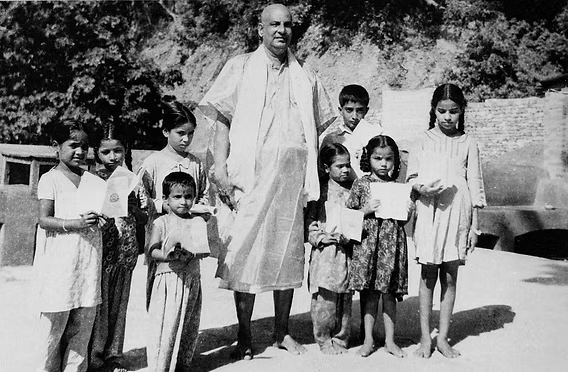
Swami Sivananda standing with children sharing blessings and spiritual guidance
Celestial Collection of Divine Messages - Awakening the Divinity in Man, Swami Sivananda

Vasanas

Vasanas VASANAS—HOW THEY MANIFEST Vasana (desire in subtle form) is a wave in the mind-lake. Its seat is the Karana Sarira. It exists there in the form of a seed and manifests in the mind-lake. Just as flowers are latent in seeds, Vasanas are latent in the Antahkarana and the Karana Sarira (seed-body). Daily new flowers blossom out. They fade out in a day or two. Similarly, Vasanas blossom out like flowers one by one, come out to the surface of the mind, generate Sankalpas in the mind of Jivas and goad them to strive to possess and enjoy the particular objects of enjoyment. Vasanas cause actions, and actions strengthen the Vasanas. This is a Chakra, vicious circle. On the advent of knowledge of Brahman, all Vasanas are fried out. The real enemies are the Vasanas within. Annihilate them. Eradicate them. They are inveterate. The whole mango tree with branches, leaves and fruits is contained in a subtle form in the seed. It takes time for manifestation. Even so, the Vasana of lust lurks in the mind when you are a boy, manifests at 18, fills the whole body at 25, works havoc from 25 to 45 and then it gradually declines. Various forms of wrong-doing and mischief are done by human beings between 25 and 45. This is the most critical period of life. There is no particular difference between a boy and a girl in their characteristics when they are young. After attaining puberty they exhibit their characteristic qualities. CHAPALATA Chapalata is Vasana of a mild type. It lasts for a short time only. There are two kinds of important Chapalatas. There is the Jihva-Chapalata of the tongue where the tongue wants to eat the various things every now and then. It is a form of morbid appetite. Rich people who lead a luxurious life have this form of Chapalata. The other variety is the Upastha-Chapalata wherein the sex Indriyas wants to taste again and again the sexual enjoyment (Sparsa). VASANA CAUSES RESTLESSNESS AND BONDAGE Vasana is the cause of restlessness of mind. As soon as a Vasana manifests, there is an intimate connection between the mind and the object through overflowing Vishaya-Vritti-Pravaha. The mind will not retrace its steps till it gets the object and enjoys it. The restlessness will continue till the object is enjoyed. The Vritti will flow towards the object till it is obtained and enjoyed. The common run of men cannot resist or suppress any Vasana owing to weak will. It is the Vasana in the mind that causes attraction towards objects and brings about bondage; with the disappearance of Vasanas, bondage naturally vanishes. There will not be any attraction, admiration or excitement for any object outside, if there is no Vasana inside your mind. It is the Vasana that is at the bottom of all your miseries and troubles. There is no pain from Isvara-Srishti (objects created by the Lord). Water quenches your thirst. Breeze gives you comfort. Sunshine enlivens you. Fire gives warmth. It is Jiva-Srishti that brings about bondage. Ahankara, anger, Abhimana, attachment are all Jiva-Srishtis. Have Suddha Sankalpa, but no Vasanas. By mere ethical training, jealousy, Raga, Dvesha, Krodha, Kama, etc., can be suppressed though not eradicated completely. These impure, Asubha Vasanas can be considerably attenuated (Tanu-Avastha) by moral culture. They attain a subtle condition. They cannot harm the individual. They remain under perfect control. ERADICATION, NOT SUPPRESSION, THE PROPER REMEDY A Vasana may be suppressed for the time being by an aspirant. But it again manifests with redoubled force when a suitable opportunity arises. Like a minister obeying the king, the five organs of the body act in accordance with the dictates of the mind. Therefore, you should through your own pure mind and proper efforts eradicate the Vasanas for objects. You should rend asunder, the long rope of Vasanas tied to the vessels of man, whirled on the ocean of Samsara, through enormous efforts on your part. Vasanas should be thoroughly eradicated. If these Vasanas are destroyed by Vichara (enquiry of Atman) and discrimination, the mind which is ever restless will get quiescence like a gheeless lamp. HOW TO DESTROY VASANAS Sama Vijnanamaya Kosa serves as a great fortress for the aspirant. From there he can attack the Vasanas when they try to emerge from the seed-body (Karana Sarira) into the mind. Through the practice of Sama, the aspirant should destroy the Vasanas one by one with the help of Vijnanamaya Kosa (Buddhi). He should crush them as soon as they try to raise their heads on the surface of the mind-lake. He must not allow them to sprout forth. This is Vasana-Tyaga. This attack or fight is from inside. When a Vasana or Sankalpa arises in the mind, the mind gives a push to the Antar-Indriya. From the Antar-Indriyas, this push is communicated to the Bahyakaranas (external instruments) such as hands, legs, eyes, ears, etc. The practice of Sama stops this very push which is the root cause of motion of all the Indriyas and Karanas. Sama is peace of mind produced by the eradication of the Vasanas (Vasana-Tyaga). The Antahkarana of a man who possesses this virtue is cooler than ice. Even the coolness of the moon cannot compete with coolness of the Antahkarana of a man of Sama. Generally, the Antahkarana of a worldling is a blazing furnace. A man of Sama is neither exalted when he gets a desired object (Ishta) nor depressed when he gets an undesired thing (Anishta). He keeps a balanced mind always. He has no enemies. The happiness of an emperor is nothing, nothing when compared with the supreme spiritual bliss of a man of Sama. Sama is one of the four sentinels of Moksha. If you have Sama, you will get the company of the other three friends, viz., Santosha (contentment), Vichara (enquiry into Atman) and Satsanga (association with the wise and saintly). Dama The attack should commence from outside also. Bahyavritti-Nigraha should be done through Dama

Vasanas Read Post »

Swami Sivananda spiritual guru portrait with historic photographs
Celestial Collection of Divine Messages - Awakening the Divinity in Man, Swami Sivananda

The Mind of The Aspirant: A Psychological Study

The Mind of The Aspirant: A Psychological Study One who seriously takes to the spiritual path and begins to do systematic Sadhana finds himself face to face with certain peculiar difficulties and disappointing experiences that at first tend to dismay and discourage the beginner. These problems and obstacles are common to the generality of aspirants and therefore it is important to know about them and to have a proper understanding of the methods of overcoming them. The first is this. The Sadhaka or an aspirant starts upon his spiritual life with certain definite self-formed ideas about Sadhana, realisation, Guru, Upadesa and the like. Such cherished conceptions unconsciously get crystallised into firmly rooted bias. But actually true spiritual life is quite different from what individual imagination fondly pictures it to be. Very many things are found to be quite at variance with his mental picture of them. Realities turn out to be not merely contrary but at times absolutely contradictory to his old ideas that he had so fondly hugged to himself. All his preconceived notions receive a rude shock. What happens? More often than not the neophyte is unable to reconcile himself to these unexpected eye-openers and usually retraces his steps to land once again into the former deluded sensual life. This is the greatest blunder he would be committing. A peerless gem is grasped in the hand and then foolishly thrown away. A priceless opportunity is lost. The mind will once again pursue with vigour the same sensual grooves. What takes place is that the aspirant does not wish to let go off the long-cherished conceptions. His ego clings to them. He has for instance a certain idea of what constitutes Sadhana. He imagines that the one whom he accepts as his Guru would prescribe such Sadhana to him as will fit in with his idea. If not dissatisfaction makes its appearance. He thinks that a Guru should behave in such and such a manner. If the latter does not, then his loyalty wanes. To surrender to the feet of the Guru and then begin to doubt or dislike his conduct is the most awful and colossal error that an aspirant can ever commit. By this he lays a knife at the very root of Sadhana and spiritual life. And again the Sadhaka enters the path with a particular estimation of his own spiritual progress and the stage he has reached. But in fact God alone really knows where exactly he stands. Yet he will act according to his previous notion. When later events prove that he is wrong then he becomes disappointed and loses all enthusiasm. All this is totally harmful. To be preyed upon by a series of disillusionments and disappointments at the very start of spiritual life is a terrible handicap. It will cripple your capacity and urge for Sadhana. You will lose heart and be disgusted with spiritual life. Sadhana should be based and backed upon keen enthusiasm and joy. Take up the life of Sadhana with an open mind. Be free of cramping preconceived notions formed out of your own egoism. Approach things spiritual with a sincere receptive attitude, with the idea to learn. Be prepared to sanely adapt yourself to them instead of foolishly wishing them to adjust themselves to suit your own mental pattern. Else disharmony will mark the very beginning of your Sadhana life. You will fall into dejection very hard to come out from. This will colour the entire course of subsequent Sadhana and valuable years will be wasted. This is the experience of countless aspirants of today. Tyaga of pet notions and peculiar ways of thinking is quite necessary if you wish to enter and proceed on the path smoothly. Then as you proceed you yourself will understand things gradually. They will become clear to you one by one. The second thing that invariably vexes the beginner is the miscellaneous thoughts and ideas of duty. Curiously enough it will be found that as long as you are not doing any Sadhana or thinking of pursuing the spiritual path no such ideas of duty, etc., ever bother you. Most likely you will be indifferent and even negligent towards your duties or your kith and kin. Your parents may be daily urging you to find out some job and contribute to the upkeep of the family. You will be turning a deaf ear and enjoying cinemas and restaurants. Perhaps even if you get into a job then you will begin wearing tweed suits and silk neck-ties. But you would not mind your mother and sister washing and wearing the same pair of old sarees on alternate days. For, is not the mother’s maintenance the father’s responsibility? The sister, well she will soon be cared for by her future husband. So you will argue. But when the question of Sadhana and spiritual life comes then the mind will begin to say you have duties towards your family. You will fail in your duty to mother, brother, sister, etc. All these ideas occur only now, when you take to the path of Sadhana. You begin to waver, hesitate and weaken. Added to this there will be the dissuasion of friends and opposition of your own people to all things spiritual. “What is all this Japa, Dhyana and the wearing of Mala etc.? Such things have got their own proper time. You may attend to them when the time comes. Do your immediate duty first.” They will say. This will snuff out the little spiritual aspiration with which you start. This is a typical deception of the mind. Mind is Maya. Its function is to somehow or other prevent man from getting a glimpse of the Reality. It is that which ever seeks to veil up the Truth. You have therefore to be alert and continuously counter its moves at every step. Just when you seek to enter the Path the mind will create all these ideas of duty, responsibility, important undertaking etc.,

The Mind of The Aspirant: A Psychological Study Read Post »

Swami Sivananda writing spiritual teachings surrounded by books
Celestial Collection of Divine Messages - Awakening the Divinity in Man, Swami Sivananda

Prerequisites For Meditation

Prerequisites For Meditation Sri Swami Sivananda For meditation, you want a properly trained instrument. You must have a calm, clear, pure, subtle, sharp, steady and one-pointed Buddhi to understand the Brahma-tattva or Brahma-vastu. Then and then only is realisation possible. Brahman is pure and subtle and you need a pure and subtle mind to approach Brahman. Only a trained mind which utterly controls the body can inquire and meditate endlessly as long as life remains, never for a moment losing sight of the object of its search and contemplation, the Brahman, never for a moment letting it to be obscured by any terrestrial temptation. All physical activities should be completely suspended, all attachments should be ruthlessly cut asunder completely for five or six years, if you want to practise Dhyana Yoga, if you want to realise God through concentration of mind. Newspaper reading and correspondence with friends and relatives should be completely stopped as they cause distraction of mind and strengthen the world-idea. Seclusion for a period of five or six years is indispensable. For purposes of meditation, everything must be rendered Sattvic. The place of meditation must be Sattvic. The food must be Sattvic. The wearing apparel must be Sattvic. The company must be Sattvic. Talking must be Sattvic. The sound that you hear must be Sattvic. Thinking must be Sattvic. Study must be Sattvic. Everything must be Sattvic. Then only good progress in Sadhana is possible, particularly with the beginners. A solitary place with spiritual vibratory conditions, a cool Sattvic place with temperate climate, is indispensably requisite for concentration of mind and meditation, because the brain gets hot during meditation. The banks of sacred rivers, Himalayan scenery, lovely flower gardens, sacred temples–these are the places which elevate the mind in concentration and meditation. Have recourse to them. Of course, the ideal condition cannot always be obtained as this is a relative plane. All places combine advantages and some disadvantages also side by side. You must select a place which has the maximum of advantages and the minimum of disadvantages. You must do the best you can. You must try to put up with some difficulties. You must overcome them. You should be alone with yourself. You should be able to abstract yourself from the distracting causes. There must be good, Sattvic, substantial, light, nutritious food. Meditation is possible only when the mind is full of the Sattva Guna. The stomach should not be loaded. There is an intimate connection between the mind and the food. A heavy meal is harmful. Take a full meal at 11 a.m. and half a litre of milk at night. The night meal should be light for those who meditate. There must be capacity for Sadhana. Asana steadies the body. Bandhas and Mudras make the body firm. Pranayama makes the body light. Nadi-suddhi effects Samayavastha of the mind, produces steadiness of the mind. Having acquired these qualifications, you will have to fix the mind on Brahman. Then only meditation will go on steadily with ease and happiness. You should have perfect control over the body through regular practice of Asanas before you take up serious and constant meditation. You cannot practise meditation without a firm seat. If the body is unsteady, the mind also will become unsteady. There is intimate connection between the body and the mind. You should not shake the body even a bit. You should attain mastery over the Asana–Asana Jaya–by daily practice. You should be as firm as a statue or a rock. If you keep the body, head and neck erect, the spinal cord also will be erect, the Kundalini will rise up steadily through the Sushumna. You will not be overpowered by sleep. Asanas pertain to the physical body. They render the body firm and steady and eradicate physical ailments. Bandhas pertain to the Prana. That which binds is a Bandha. Bandhas do not allow the Prana to move upwards and the Apana to move downwards. They bind or unite the Prana with the Apana and send the united Prana-Apana up through the Sushumna Nadi. Mudras concern the mind. They represent seals. Mudra means a seal. Mudras seal the mind with the Soul or Atman. They do not allow the mind to wander outside towards objects. They direct the externalising mind towards the Atman in the chambers of the heart and fix it there. When the Sushumna Nadi is working, when the breath flows through both the nostrils, meditation goes on with ease and joy. The mind then is calm. There is an increase of Sattva Guna when the Sushumna is operating. Sit for meditation the moment the Sushumna begins to flow. You can meditate only when the mind is beyond all anxieties. Retire to a quiet room or place where you do not fear interruption so that your mind may feel secure and at rest. Sit in a comfortable posture and be, as far as possible, free from external disturbing influences. Drive off negative thoughts. Become positive always. You can do nice meditation when you are positive. Do not cause pain or suffering to any living being from greed, selfishness, irritability or annoyance. Give up anger or ill-will. Give up the spirit of fighting and heated debates. Do not argue. If you quarrel with somebody or if you have a heated debate with anybody, you cannot meditate for 3 or 4 days. Your balance of mind will be upset. Much energy will be wasted in useless channels. The blood will become hot. The nerves will be shattered. You must try your level best to keep a serene mind always. Meditation can proceed from a serene mind only. A serene mind is a valuable spiritual asset for you. The aspirant should possess serenity. The divine light can descend only in a serene mind. Serenity is attained by the eradication of Vasanas or desires and cravings. The aspirant should be fearless also. This is the most important qualification. A timid or cowardly aspirant is very far from

Prerequisites For Meditation Read Post »

Boy praying before Lord Shiva idol in temple image
Swami Sivananda, The Ultimate Goal of Mankind - Self Realization

O YOUTH! O STUDENTS! READ THIS NOW

O YOUTH! O STUDENTS! READ THIS NOW DRUG PREVENTION IS EASIER, CURE IS DIFFICULT. DRUGS & WHAT THEY DO Offered in the service of the students and Youth of India and in the cause of our Nation’s health and for the safety and protection of our country. BELIEVE IT OR NOT Today there are more than 1,00,600 drug addicts in Bombay alone. 5 of them die each day owing to repeated intake of lethal drugs. The parents of nearly all young addicts never imagined that their sons or daughters could fall victims to this dangerous vice. Yes, we all thought that drug addiction was an evil of the West. It is here now-right in our midst. You have a chance to save others and yourself through awareness and knowledge of the hazards of Drug Addiction. WARNING! BEWARE! Types of dangerous Drugs NAME Heroin (also known as Brown Sugar, Thai White, White, Smack, Gard), Hash (also known as Hashish, Charas), Marijuana (also known as Grass Ganja) Bhang, Cocaine (also known as Coke, Snow), Cocaine + Heroin called Speed-bailing, Opium (also known as Ope, Chandu, Medak), LSD/Mescaline (Magic Mushrooms Amphetamines Dexedrin (also known as Speed or Amphetamines). Methaqualone (also known as Mandra or Mandies) 1. Morphine 2. Pethidine 3. Diazepam 4. Fortwin. Above are the gravely dangerous drugs that are degrading young people and destroying their health, welfare and life. NOTE: Tranquilizers and sedatives available as chemicals are also highly addictive in nature and should not be taken without specific & reliable medical advice. WHAT IS BROWN SUGAR? Chemically brown sugar is a semi-synthetic highly adulterated form of heroin. It is one of the most highly addictive, most cheaply available and most lethal of drugs. It is a highly tolerant and easily obtainable substance. The coffee-brown snuff-like powder comes in a small vial or in small wrappings of tissue paper commonly known as “Pudis”. “BROWN SUGAR? NO SORRY” MUST BE THE REPLY OF EVERY CHILD.“BRING AWARENESS” The problem of brown sugar addiction has reached such alarming proportions that there are schools in the city outside which the drug peddlers sell their wares. So it is not just roadside children who are affected. Because brown sugar is so freely available, there is every chance that your child will one day be offered the drug. He or she must be made well aware of the evil effects to be able to refuse it. And it is up to parents and teachers to alert them of the dangers. WHAT LEADS TO DRUG ADDICTION? 1. Emotional. Insecurity, Lack of Love: Nobody takes to drugs in order to become an addict. They are usually taken in order to escape from problems that are either real or imaginary. Lack of parental love at home, impaired and tense relationships between parents and dictatorial handling of children have been traced out as significant root causes. 2. Misuse of Money-Lack of Guidance: Easy availability of and access to money are equally dangerous. They lead to habits such as cigarette-smoking the first step to drug addiction. The next stage, hash-smoking sets in easily. The ‘culture mix’ you belong to, will make you try more and more ‘harmless’ experiments. Proper guidance is required. 3. Curiosity of Experimentation is the most common cause. 4. Peer Pressure. ARE THERE GIRLS WHO ABUSE DRUGS? WHAT IS THE RATIO? Most drug addicts are male, but there are several girls hooked on the drug too. Most girls on the drug are persuaded by their boy friends to try it. Few try it out of frustration. The ratio is 1:25. COMMON SOURCES: Beware of Drug peddlars who usually operate from ‘Joints’ which are mainly in the economically backward area. AVOID COMMON SITUATIONS: In schools and colleges, beware of friends who call you a ‘sissy’ or ‘chicken’ for not indulging in their ‘pastimes’. Never accept cigarettes from them–these may contain drugs. A few strong puffs are enough and you can become a hopeless addict. Be wise and learn to say NO. Always remember your friends are in a trap and they want you trapped too! CAN YOU IDENTIFY A DRUG ADDICT?YES, CERTAINLY. Your child may not easily admit that he or she is taking brown sugar, but you can recognise the evidence in the following early warning signs: THE DANGERS OF BROWN SUGAR         * AIDS and viral hepatitis are spread by drug addicts who inject.         * Brown sugar causes impotence (reversible)         * It can also lead to abscesses, infections of the heart, lungs and brain.     Yes. They display anti-authority behaviour, socially deviant behaviour, suffer from depression, harbour suicidal thoughts which may initially lead to threats and sometimes to action. They also indulge in manipulative behaviour and compulsive lying. IS THERE A CURE? Yes, provided the motivation to give up is strong enough. Giving up the drug is easy but staying away needs tremendous will power. And medication alone is not enough. It must be combined with love, understanding, patience and prayer. Please bear in mind, no addict can be forced (physically or emotionally) to give up his drugs. Force only catalyses disaster. You should consult a psychotherapist/psychiatrist. He would resort to psychotherapy as a follow-up measure extending about 4-6 months. Narcotics anonymous gives good scope for group therapy. Cure is not possible without parental participation and faith in God. Mere hospitalisation is not the answer. Religion therapy and family therapy provide the best results. Please do not force the child into a hospital. It can do more harm than good. TYPES OF MEDICAL TREATMENT The said truth about Drug Addiction:-Every recovered drug addict is just one trip away from his former self. Just one ‘trip’ and he will relapse. DRUG AWARENESS AT COMMUNITY LEVEL INDIA NEEDS STRONG, DRUG FREE YOUTH More than ever before, India’s future depends on the strength and dynamism of its youth. In a fast-changing world accelerated by new advances in electronic technology only a dynamic exuberant generation can put India on a strong footing. Save youth from drugs, save India. HIGH MORALS AND BETTER INDIAN CULTURE CAN

O YOUTH! O STUDENTS! READ THIS NOW Read Post »

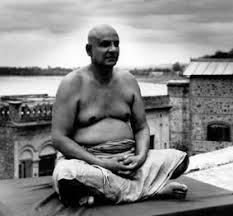
swami sivananda Monk sitting on rooftop in meditation
Celestial Collection of Divine Messages - Awakening the Divinity in Man, Swami Sivananda

Necessity of a Guru

Necessity of a Guru Sri Swami Sivananda Just as you can give an orange to a man, so also spiritual powers can be transmitted by one to another. This method of transmitting spiritual powers is ‘Sakti Sanchar.’ Birds keep their eggs under their wings. Through heat the eggs are hatched. Even so, spiritual power is transmitted by the Guru to the proper disciple, whom he considers fit for Sakti Sanchar, through touch (Sparshanat) like birds, sight like fish, and thinking or willing (Mananat, Sankalpa) like tortoise. The transmitter, the Yogi Guru, sometimes enters the astral body of the selected particular student and elevates his mind through his power. The Yogi makes the subject (Chela) sit in front of him and asks him to close his eyes and then transmits his spiritual power. The subject feels the electric current actually passing from Moola-Chakra higher up to the neck and top of the head. The disciple does various Hatha Yogic Kriyas, Asanas, Pranayamas, Bandhas, Mudras, etc., by himself. The student must not restrain his Ichha Sakti. He must act according to the inner Prerana (inner goading or stirring). The mind is highly elevated. The moment the aspirant closes his eyes, meditation comes by itself. Through Sakti Sanchar Kundalini is awakened by the grace of the Guru in the suitable disciple. Sakti Sanchar comes through Parampara. It is a hidden mystic science. It is handed down from the Guru to the disciple. The disciple should not rest satisfied with the transmission of power from the Guru. He will have to struggle hard in Sadhana for further perfection and attainments. Lord Jesus through touch transmitted his spiritual power to some of his disciples (master’s touch). Samarth Ram Das touched a prostitute. She entered into Samadhi. Sri Ramakrishna Paramahamsa touched Swami Vivekananda. Swami Vivekananda had superconscious experience. He struggled hard for seven years more even after the touch for attaining perfection. Lord Krishna touched the blind eyes of Vilvamangal (Surdas). The inner eye of Surdas was opened. He had Bhava Samadhi. Lord Gauranga through his touch produced divine intoxication in many people and converted them to his side. Atheists even danced in ecstasy in the streets by his touch and sang songs of Hari. Glory, glory to such exalted Yogic Gurus! May their blessings be upon us all!! Sakti Sanchar is of two kinds, viz., lower and higher one. The lower one is a Jada-kriya only, wherein one automatically does Asana, Bandhas and Mudras without any instructions when the Guru imparts the power to the student. The student will have to take up Sravana, Manana, Nididhyasana for perfection. He cannot depend upon the Kriya alone. This Kriya is only an auxiliary. It gives a push to the Sadhaka. A fully developed Yogi only possesses the highest kind of Sakti-Sanchar.

Necessity of a Guru Read Post »

image 56
Bhrama Muhurata Meditative Talks at Swami Sivananda Ashram - Rishikesh, Swami Sivananda

The Razor-Edge

The Razor-Edge By Sri Swami Atmaswarupananda Early Morning Meditation Talk given in the Sacred Samadhi Hall of Gurudev Sri Swami Sivanandaji Maharaj, Sivananda Ashram, Rishikesh The spiritual life has often been compared to walking on a razor-edge, or sometimes a pathless path, or we might say walking a fine line. What are these words trying to indicate to us? The human being likes to be certain. In fact, in many ways, we like to be told what to do and then be able to do it, so that we can then feel comfortable with ourselves. But the spiritual life is not meant to be that secure, that certain. We’re always walking a fine line, for example, between too much and too little. All traditions teach austerity. Gurudev did too, but he wouldn’t allow his disciples to go to the extremes that he himself had. But where is the fine line between too much austerity and too little? We’re not sure. To able to do sadhana, we have to look after our health. But if we worry about every ache and pain, we spend all our time in the doctor’s office, and our mind is constantly involved with the body instead of the Spirit. Where is the fine line between being careless about the body’s health and worrying about it too much? It’s not easy to find. We’re told we have to make great effort in the spiritual life. Without extreme self-effort there will be no realisation. But the scriptures also tell us we are not the doer. God is the doer. So if God is doing everything, should I be trying to take over His job? I should relax and let Him do everything. Pujya Swami Chidanandaji spoke about Gurudev along these lines a year ago. He said, “Gurudev had a secret. He made extreme effort, but at the same time he knew that everything was happening by God’s will.” And then Swamiji added that Gurudev kept this a secret from us half-baked people because if he had told us, we would have thought, “Oh, it is all up to God. I don’t have to do anything.” But how do we walk that razor-edge? How do we balance knowing everything is happening by God’s will and yet put everything we’ve got into our sadhana as if it all depended up us? How do we find that fine line? Perhaps we never find it. Perhaps we never know. Perhaps we simply have to trust God. And perhaps that trusting God is itself the fine line, the razor-edge, the pathless path.

The Razor-Edge Read Post »