Hari Om

Menu

February 20, 2026

swami sivananda Black-and-white group photo of guru with followers outside building image
Practice of Meditation, Swami Sivananda

Visualisation

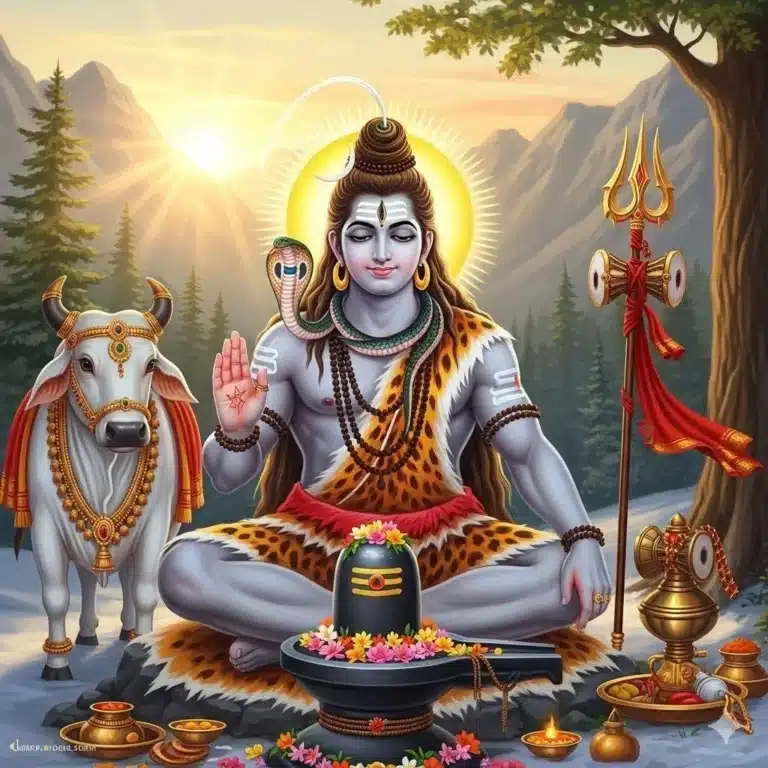
Visualisation Gaze at the picture of the Lord, your Ishta Devata for a few minutes and close your eyes. Then try to visualise the picture mentally. You will have a well-defined or clear-cut picture of the Lord. When it fades, open your eyes and gaze again. Repeat the process five or six times. You will be able to visualise clearly your Ishta Devata or tutelary deity mentally after some months’ practice. If you find it difficult to visualise the whole picture try to visualise any part of the picture. Try to produce even a hazy picture. By repeated practice the hazy picture will assume a well-defined, clear-cut form. If you find this difficult, fix the mind on the effulgent Light in the heart and take this as the form of the Lord or Devi.Do not bother yourself if you are not able to have perfect visualisation of the picture of the Lord with closed eyes. Continue your practice vigorously and regularly. You will succeed. What is wanted is Prema for the Lord. Cultivate this more and more. Let it flow unceasingly and spontaneously. This is more important than visualisation

Visualisation Read Post »

Swami Sivananda Guru teaching disciples in gathering image
Principal Asanas, Swami Sivananda

Paschimottanasana

Paschimottanasana Sit on the ground and stretch the legs stiff like a stick. Catch the toes with the thumb, index and middle fingers. While catching, you will have to bend the trunk forwards. Fatty persons will find it rather difficult to bend. Exhale and slowly bend without jerks till your forehead touches your knees. You can keep the face between the knees also. When you bend down draw the belly back. This facilitates the bending forwards. Bend slowly by gradual degrees. Take your own time. There is no hurry. When you bend down, bend the head between the hands. Retain it on a level with them. Young persons with elastic spine can touch the knees with the forehead even in their very first attempt. In the case of grown-up persons with rigid spinal column, it will take a fortnight or a month for complete success in the posture. Retain the breath till you take the forehead back to its original position, till you sit straight again. Then breathe. Retain the pose for 5 seconds. Then gradually increase the period to 10 minutes. Those who find it difficult to do the full Paschimottanasana, can do half pose with one leg and one hand and then with the other leg and other hand. They will find this more easy. After some days when the spine has become more elastic, they can have recourse to the full pose. You will have to use common sense while practising Asanas. Before you practise this, read the instructions on Janusirshasana. BENEFITS This is an excellent Asana. It makes the breath flow through the Brahma Nadi, Sushumna, and rouses the gastric fire. It reduces fat in the abdomen. This Asana is a specific for corpulence or obesity and for the enlargement of spleen and liver. Books on Hatha Yoga speak highly of this Asana. The Sarvangasana is for the stimulation of endocrine glands and Paschimottanasana for the stimulation of abdominal viscera, such as kidneys, liver, pancreas, etc. It increases the peristalsis of the bowels. Peristalsis is the vermicular movement of the bowels or intestines by which food and faecal matter are pushed from one portion of the bowels to another. This Asana relieves constipation, removes sluggishness of liver, dyspepsia, belching and gastritis. Lumbago or stiff back and all sorts of myalgia and other diseases of the back muscles are cured. This Asana cures piles and diabetes also. The hip muscles of the abdomen, the solar plexus of nerves, the epigastric plexus of nerves, bladder prostrate, lumbar nerves, sympathetic cord, are all toned up and kept in a healthy, sound condition. Thanks to Paschimottanasana, Sirshasana and Sarvangasana and to the Rishis who first introduced these wonderful Asanas to the students of Hatha Yoga.

Paschimottanasana Read Post »

swami sivananda Monk seated in front of snowy mountains wearing shawl and beads image
Practice of Meditation, Swami Sivananda

Real Rest in Meditation

Real Rest in Meditation Fatigue of the Indriyas demands rest. Hence sleep supervenes at night rhythmically. Motion and rest are rhythmical processes in life. The mind moves about in the avenues of the senses through the force of the Vasana. Strictly speaking, Dridha Sushupti is very, very rare. There is subtle working of the mind in dream also. Hence you do not get good rest in sleep. Real rest is secured in meditation and meditation only. It is only Dhyana Yogis who practise meditation that can feel real rest in meditation. The mind is fully concentrated during meditation. It is far away from objects and very near to the Atman. There are no Ragadvesha currents during meditation owing to absence of objects. Consequently, there is manifestation of solid, lasting, real spiritual Ananda with complete, genuine rest. You must feel it yourself. Then, you will agree with me. In Benares, there is a Hatha Yogi who does levitation. He never sleeps at night. He sits in the Asana during the whole night. He gets the real rest from meditation. He has dispensed with sleep. You may not enjoy the rest fully in the beginning of your practice, because at the outset there is a good deal of wrestling between the will and Svabhava, the old Samskaras and the new Samskaras, old habits and new habits, Purushartha and old conduct. The mind revolts. When the mind is thinned out, when you have reached the Tanumanasi state, third Jnana Bhumika, you will enjoy good rest in meditation. You can then cut short your sleep to three or four hours gradually.

Real Rest in Meditation Read Post »

swami sivananda Monk speaking with microphone indoors
Principal Asanas, Swami Sivananda

Mayurasana (Peacock Pose)

Mayurasana (Peacock Pose) Mayur means Peacock in Sanskrit. When this Asana is exhibited, it resembles a peacock which has spread out the bundle of feathers at its back. This is a little more difficult than Sarvangasana and Matsyasana. This demands good physical strength. Gymnasts can do this very easily. This corresponds more or less to plank exercise on the parallel bars. TECHNIQUE Kneel on the ground. Squat on the toes. Raise the heels up. Join the two forearms together. Place the palms of the two hands on the ground. The two little fingers must be in close opposition or juxtaposition. The thumbs should touch the ground. They should project towards the feet. Now you have got steady and firm forearms for supporting the whole body in the ensuing elevation of the trunk and legs. Now bring down the abdomen slowly against the conjoined elbows. Support your body upon your elbows that are pressed now against the navel or umbilicus. This is the first stage. Stretch your legs and raise the feet straight on a level with the head, parallel to the ground. This is the second stage. Neophytes (beginners) find it difficult to keep up the balance as soon as they raise the feet off the ground. Place a cushion in front. Sometimes you will have a fall forwards and you may hurt your nose slightly. Try to slip on the sides when you cannot keep up the balance. If you find it difficult to stretch the two legs backwards at one stroke, slowly stretch one leg first and then the other. If you adopt the device of leaning the body forwards and head downwards, the feet will by themselves leave the ground and you can stretch them quite easily. When the Asana is in full manifestation, the head, trunk, buttocks, thighs, legs and feet will be in one straight line and parallel to the ground. This posture is very beautiful to look at. Beginners can practise this Asana by holding the sides of a cot. They will find it easy to practise in this way. If you use your common-sense, you can easily keep up the balance without much difficulty. Fatty people must be cautious to avoid falls or slips. Do not jerk the feet when you stretch them. Practise this Asana from 5 to 20 seconds. Those who have good physical strength can do for 2 or 3 minutes. Retain the breath when you raise the body. It will give you immense strength. When you finish the Asana, exhale slowly. BENEFITS Mayurasana has got a charm of its own. It braces you up quickly. It gives you full exercise within a few seconds. It serves like a hypodermic injection of Adrenalin or Digitalin. This is a wonderful Asana for improving the digestion. It destroys the effects of unwholesome food. It increases the digestive power. It digests even the terrible Halahala poison and destroys its terrible effects. It cures dyspepsia and diseases of stomach like Gulma (chronic gastritis), and reduces splenic and liver-enlargement by increasing the intra-abdominal pressure. The lungs and whole abdominal Viscera (organs) are properly toned and stimulated by the increase of intra-abdominal pressure. Sluggishness of liver or hepatic torpidity disappears. It tones the bowels, removes constipation (ordinary, chronic and habitual) and awakens Kundalini. It gives wonderful appetite, removes all diseases caused by an excess of wind, bile or phlegm, cures diabetes, hemorrhoids and strengthens the muscles of the arms. This one Asana can give you maximum physical exercise in the minimum time.

Mayurasana (Peacock Pose) Read Post »

swami sivananda Monk in yellow robes seated cross-legged against painted backdrop image
Practice of Meditation, Swami Sivananda

Practice of Meditation

Practice of Meditation This world is full of miseries and sufferings. If you want to get rid of the pains and afflictions of this Samsara, you must practise meditation. Meditation leads to the knowledge of the Self, which brings about Eternal Peace and Supreme Bliss. Meditation prepares you for the integral experience or direct intuitive knowledge. Meditation is the flow of continuous thought of one thing or God or Atman. Meditation is the pathway to divinity. It is the royal road to the kingdom of Brahman. It is a mysterious ladder which reaches from earth to Heaven (Vaikuntha-Kailasa-Brahman), from error to Truth, from darkness to Light, from pain to Bliss, from restlessness to abiding Peace, from ignorance to Knowledge, from mortality to Immortality. Truth is Brahman. Truth is Atman. You cannot realise the Truth without reflection and meditation. The mode of meditation differs according to the path adopted by the aspirant. A Bhakta practises Saguna Dhyana on the form of his Ishta Devata. A Hatha Yogi meditates on the Chakras and the presiding deities. A Jnana Yogi meditates on his own Self. He practises Ahamgraha Upasana. A Raja Yogi meditates on the special Purusha who is not affected by afflictions and desires. The mind assumes the form of the object it cognises. Then only perception is possible. A Bhakta constantly meditates on the form of his tutelary deity or Ishta Devata. The mind always takes the form of the deity. When he is established in his meditation, when he attains the stage of Para Bhakti or supreme devotion, he sees his Ishta Devata only everywhere. The names and forms vanish. A devotee of Lord Krishna sees Lord Krishna only everywhere and experiences the state described in the Gita “Vaasudevah Sarvam iti-Everything is Vaasudeva only.” A Jnani or a Vedanti sees his own Self or Atman everywhere. The world of names and forms vanishes from his view. He experiences the utterances of the seers of the Upanishads: “Sarvam Khalvidam Brahma-All indeed is Brahman.” You must have a pure mind if you want to realise the Self. Unless the mind is set free and casts away all desires, cravings, worries, delusion, pride, lust, attachment, likes and dislikes, it cannot enter into the domain of Supreme Peace and unalloyed felicity-the Immortal Abode. A glutton or a sensualist, a dullard or a lazy man, cannot practise meditation. He who has controlled the tongue and other organs, who has an acute acumen, who eats, drinks and sleeps in moderation, who has destroyed selfishness, lust, greed and anger, can practise meditation and attain success in Samadhi. You cannot enjoy peace of mind and cannot practise meditation if there is Vikshepa in your mind. Vikshepa is tossing of mind. Vikshepa is Rajas. Vikshepa and desires co-exist in the mind. If you really want to destroy Vikshepa, you must destroy all mundane desires and cravings through dispassion and self-surrender to the Lord. If you apply fire to a green wood, it will not burn; if you apply fire to a piece of dried wood, it will at once catch fire and burn. Even so, those who have not purified their minds, will not be able to start the fire of meditation. They will be sleeping or dreaming-building castles in the air-when they sit for meditation. But those who have removed the impurities in their minds by Japa, service, charity, Pranayama, etc., will enter into deep meditation as soon as they sit for meditation. The pure, ripe mind will at once burn with the fire of meditation. Mind is compared to a garden. Just as you can cultivate good flowers and fruits in a garden by ploughing and manuring the land, by removing the weeds and thorns and by watering the plants and trees, so also you can cultivate the flower of devotion in the garden of your mind by removing the impurities of the mind, such as lust, anger, greed, delusion, pride, etc., and watering it with divine thoughts. Weeds and thorns grow in the rainy season, disappear in summer, but their seeds remain underneath the ground. As soon as there is a shower, the seeds again germinate and sprout out. Even so, the Vrittis (modifications of the mind) manifest on the surface of the conscious mind, then disappear and assume a subtle seed-state, the form of Samskaras or impressions. The Samskaras again become Vrittis either through internal or external stimulus. When the garden is clean, when there are no weeds and thorns you can get good fruits. So also, when the mind is pure, when the mind is free from lust, anger, etc., you can have the fruit of good, deep meditation. Therefore cleanse the mind of its impurities first. Then the current of meditation will flow by itself. If you want to keep a garden always clean, you will have to remove not only the weeds and thorns and other small plants but also the seeds that lie underneath the ground which again germinate during rainy season. Even so, you will have to destroy not only the big waves or Vrittis of the mind but also the Samskaras which are the seeds for births and deaths, which generate Vrittis again and again, if you want to enter into Samadhi and attain liberation or perfect freedom.Without the help of meditation, you cannot attain knowledge of the Self. Without its aid, you cannot grow into the divine state. Without it, you cannot liberate yourself from the trammels of the mind and attain Immortality. If you do not practise meditation, the supreme splendour and fadeless glories of Atman will remain hidden from you. Tear the veils that cover the soul by practising regular meditation. Rend asunder the five sheaths that screen the Atman by constant meditation and then attain the final beatitude of life.
Practice of Meditation Read Post »

Swami Sivananda wearing saffron robe spiritual teacher
Adi Shankaracharya, Swami Sivananda

Matsyasana (Fish Pose)

Matsyasana (Fish Pose) As this Asana will help one to float on water easily with Plavini Pranayama, it is called fish pose or Matsyasana. TECHNIQUE Spread a blanket and sit on Padmasana by keeping the right foot over the left thigh and the left foot over the right thigh. Then lie flat on the back. Rest the head on the crossed forearms. This is one variety. Stretch the head back so that the top of your head rests on the ground firmly on one side and the buttocks only on the other, thus making a bridge or an arch of the trunk. Place the hands on the thighs or catch the toes with the hands. You will have to give a good twisting to the neck. This variety is more efficacious than the former one. The benefits that you derive from this variety are a hundred times more than what you get in the previous variety. Fatty persons with thick calves, who find it difficult to have Padmasana (foot-lock) may simply sit in the ordinary way and then practise this Asana. Practise the Padmasana first. Make it firm, easy and steady. Then take to Matsyasana. Do this Asana for 10 seconds to start with and increase it to 10 minutes. When you have finished the Asana, slowly release the head with the help of the hands and get up. Then unlock the foot-lock. You must practise this Asana soon after Sarvangasana. It will relieve stiffness of the neck and any crampy condition of the cervical region caused by long practice of Sarvangasana. This gives natural massage as it were or shampooing to the congested parts of the neck and shoulders. Further, it affords the maximum benefits of Sarvangasana. It supplements Sarvangasana. As the larynx or wind-box and trachea (wind-pipe) are thrown open widely, this Asana helps deep breathing. The apices of the lungs which are located just behind and above the clavicular bone (or collar bone in common parlance), receive proper air and sufficient supply of pure oxygen. The cervical and upper dorsal nerves are nourished with a good quantity of blood and toned properly. The endocrine glands, viz., pituitary and pineal, that are located in the brain are stimulated and toned also. These glands play a vital part in the physiological functioning of the various systems of the body. BENEFITS Matsyasana is the destroyer of many diseases. It removes constipation. It brings down the accumulated faecal matter to the rectum. It is useful in asthma, consumption, chronic bronchitis, etc., on account of the deep breathing.

Matsyasana (Fish Pose) Read Post »

Swami Sivananda Guru seated with disciples indoors image
Preliminaries of Meditation, Swami Sivananda

Regularity in Meditation

Regularity in Meditation Whatever spiritual practice you do, either Japa, practice of Asana, concrete meditation on Saguna-Murti or Pranayama, do it systematically and regularly every day. The reward of this practice is immense. You will get Immortality or Eternal life (Amritatvam). All desires will melt there. You will get Nitya Tripti. Meditate, meditate. Concentrate, concentrate, my dear friends. Never miss even a single day owing to laziness. Laziness is the greatest enemy of a Sadhaka. Life is short, time is fleeting and obstacles are many in the spiritual path. Conquer them one by one by exertion and prayer. If you are sincere you will get various sorts of help from within, from without, from the helpers of the astral plane, from Jivanmuktas who are scattered in all parts of the world and from Amara-Purushas such as Sri Vyasa, Vasishtha, Kapila Muni, Dattatreya of Girnar Hills, Agastya Muni of Podia Hills, Tirunelveli. Just as you take food four times, morning, noon, afternoon and night, so also you will have to meditate four times a day if you want to realise quickly. You must be systematic and regular in your meditation. Just as cannabis indica, opium or alcohol gives you intoxication, even if you take a small quantity, and lasts for some hours, so also the God-intoxication that you get from regular meditation, lasts for some hours if you meditate for half an hour daily. Therefore be regular. When you meditate, when you develop divine or Sattvic virtue, a spiritual road is constructed in the mind. If you are not regular in meditation, if your dispassion wanes, if you become careless and non-vigilant, the spiritual road will be washed away by the flood of impure thoughts and evil Vasanas. Therefore be regular in your meditation. Regularity in meditation is of paramount importance.When you practise meditation, Japa, Kirtan, Pranayama or enquiry, worldly thoughts, cravings and Vasanas are suppressed. If you are irregular in meditation and if your dispassion wanes, they try to manifest again. They persist and resist. Therefore, be regular in your meditation and do more vigorous Sadhana. Cultivate more dispassion. They will be gradually thinned out and eventually destroyed.

Regularity in Meditation Read Post »

Swami Sivananda raising hands in blessing image
Preliminaries of Meditation, Swami Sivananda

Aids to Meditation

Aids to Meditation Mula Bandha in Meditation: When you sit in the Asana for doing Japa, contract the anus. This is termed Mula Bandha in Hatha Yogic practice. This helps concentration. This practice prevents the Apanavayu from moving downwards. Kumbhaka in Meditation: Retain the breath as long as you can comfortably do so. This is Kumbhaka. This will considerably steady the mind and help concentration. You will feel intense spiritual bliss. Yogic Diet: Take Mitahara, Sattvic diet. Overloading the stomach with rice, vegetable, dhal and bread brings sleep and interferes with Sadhana. A glutton or a sensualist, a dullard or a lazy man cannot practise meditation. A diet of milk renders the body very, very light. You can sit in one Asana for hours together with ease and comfort. If you feel weak, you can take for a day or two a little rice and milk or barley and milk or any light diet. Those who are in the field of service and who do platform lectures and other intense spiritual propaganda activities need solid, substantial food. You will find very often these terms in the Gita: Ananya Chetah-no thinking of another; Matchitta, Nitya Yukta, Manmanah; Ekagram Manah and Sarva-Bhava. These terms denote that you will have to give your full mind, entire cent per cent, to God. Then only you will have Self-realisation. Even if one ray of mind runs outside, it is impossible to attain God-consciousness. Be silent. Know thyself. Know That. Melt the mind in That. Truth is quite pure and simple. Asanas for Meditation Sit in Padma, Siddha, Svastika or Sukha Asana for half an hour to start with. Then increase the period to three hours. In one year you can have Asana-Siddhi. Any easy, comfortable posture is Asana. Padmasana This is the lotus-pose. Place the right foot on the left thigh, the left foot on the right thigh. Put the hands on the thighs near the knee-joints. Keep the head, neck and the trunk in one straight line. Close the eyes and concentrate on the Trikuti, the space between the two eyebrows. This is called lotus-pose or Kamalasana. This is very good for meditation. This Asana is beneficial for householders. Siddhasana This is the perfect pose. This is a beautiful Asana for meditation. Place one heel at the anus or Guda, the terminal opening of the alimentary canal or digestive tube through which the excreta or faecal matter is thrown out. Keep the other heel at the foot of the generative organ and the hands on the knees. Close the eyes. Concentrate on the Trikuti or on the tip of the nose. Keep the head, neck and trunk in one straight line. Keep the hands as in Padmasana near the knee joints. This Asana is beneficial for Brahmacharins and Sannyasins. Svastikasana Svastika is sitting at ease with the body erect. Place the right foot near the thigh and bring the left foot and push it between the right thigh and calf muscles. Now you will find the two feet between the thigh and calf muscles. This is Svastikasana. Sukhasana Any easy comfortable posture for Japa and meditation is Sukhasana. The important point is that the head and the trunk should be straight. Here is a special variety of Sukhasana which is very comfortable for old people. Take a cloth 5 cubits long and fold it lengthwise. Raise the knees to the chest level. Keep one end of it near the left knee. Take the other end, going to the back by the left side and right knee come to the left knee and make a knot there. Keep the hands between the knees. As the legs, hands, back-bone are all supported, one can sit in this Asana for a long time. Benefits of Asanas Asana removes many diseases such as piles, dyspepsia, constipation, and checks excessive Rajas. The body gets genuine rest from the posture. If you are established in Asana, if you are firm in your seat, then you can take up easily exercises in Pranayama. This is the third Anga or part of Ashtanga Yoga or Raja Yoga of Patanjali. First, there is self-restraint or practice of Ahimsa, Satyam, Brahmacharya, etc. Second, there are religious canons or observances, such as Saucha, Santosha, Tapas, Svadhyaya, etc. Next comes Asana. When the Asana becomes steady, you will not feel the body. When you have obtained mastery in Asana, qualities of the pairs of opposites such as heat and cold will not trouble you then. You must sit in the Asana on an empty stomach. You can take a small cup of milk, tea or coffee before doing Asana. Asana steadies the body. Bandhas and Mudras make the body firm. Pranayama makes the body light. Nadi Suddhi produces steadiness of the mind. Having acquired these qualifications you will have to fix the mind on Brahman. Then only meditation will go on steadily with ease and happiness. For meditation, concentration and Japa, Padmasana or Siddhasana is prescribed. For general health and keeping up of Brahmacharya, Sirshasana, Sarvangasana, Matsyasana, Pachimottanasana are good.

Aids to Meditation Read Post »

Swami Sivananda portrait with flower garland image
Preliminaries of Meditation, Swami Sivananda

How Many Hours to Meditate

How Many Hours to Meditate To start with, you can meditate for half an hour in the morning from 4 to 4.30 and for half an hour at night from 8 to 8.30. Morning time is best for meditation. The mind is refreshed after sound sleep. Further, Sattva predominates in the system as in the surrounding atmosphere. In the Yoga Vasishtha, Sri Vasishtha says, “O Rama, give mind for meditation in the beginning; mind for recreation; mind for study; mind for service of Guru. Then mind for meditation; mind for recreation; mind for study; mind for service of Guru.” Here recreation means acts like washing, cleaning, etc. It does not mean golf play or rugby. This recreation is meant for relaxation of mind or diversion of mind after concentration and meditation. Otherwise the mind feels tired and refuses to work. Then give mind for meditation; mind for study. Increase the time of meditation gradually. After two months, increase the period to one hour, 4 to 5 a.m. and 8 to 9 p.m. After a year, increase the time to 1 hours in the morning and 1 hours at night. In the third year two hours in the morning and two hours in the evening; in the fourth year three hours in the morning and three hours at night. This is for the vast majority of persons. An earnest Sadhaka with strong vitality and subtle intellect can meditate for six hours in the first year of his Sadhana. You must study congenial books as the Upanishads, the Yoga Vasishtha, the Gita, Viveka Chudamani, Avadhuta Gita along with meditation. Such study is very elevating. Six hours’ study and six hours’ meditation is very beneficial. This will eventually push you on to Nididhyasana for twenty-four hours. Three Sittings for Meditation At the commencement, have two sittings only, one in the morning from 4 to 5 a.m., one at night from 6 to 8 p.m. After six months or one year, according to your mental calibre you can have three sittings, a third in the afternoon from 4 to 5 p.m. You can increase the period of concentration to two hours at each sitting. In summer, it is rather irksome and difficult owing to perspiration. So, have only two sittings during summer. The loss can be made up in winter. Winter is very favourable for meditation. You will find Rishikesh, Muni-ki-reti, admirably suitable for contemplative purposes. Winter and early part of spring are the best seasons for beginners to commence meditation. In winter the mind is not tired at all. You can meditate even for 24 hours without the least exhaustion. That is the reason why Sadhus select Rishikesh for meditation in winter. The period of meditation should be gradually increased with caution. The meditation should not be by fits and starts. It should be well-regulated and steady. You must always use your commonsense and reason throughout the Sadhana period. You should ascend the summit of Yoga gradually, slowly, stage by stage and step by step. You must not give up the practice even for a few days.Meditation for one hour in the morning and for one hour in the evening must be practised by all to start with. The hours of practice must be gradually increased. Another important point is that the Brahmic feeling must be kept up all the twenty four hours. There must be an unceasing continuous flow of consciousness. You must not forget the idea of “Aham Brahma Asmi” or the Divine presence even for a single second. Forgetfulness of God is genuine death. It is real suicide. It is Atmadroha. This is the highest sin.

How Many Hours to Meditate Read Post »

Swami Sivananda Two monks seated together in calm pose
Preliminaries of Meditation, Swami Sivananda

Qualifications for Practising Meditation

Qualifications for Practising Meditation Before saturating the mind with thoughts of Brahman you will have to assimilate the divine ideas first. Assimilation first and then saturation. Then comes realisation at once without a moment’s delay. Remember this triplet always: ASSIMILATION- SATURATION-REALISATION. Your will should be rendered strong, pure and irresistible by more Atma-Chintana, eradication of Vasanas, control of the senses and more inner life. You must utilise every second on Sundays and holidays to your best spiritual advantages. If you have tasted Rasagulla-a Bengal-sweetmeat-for a month, mental adhesion to Rasagulla comes in the mind. If you are in the company of Sannyasins, if you read books on Yoga, Vedanta, etc., a similar mental adhesion takes place in the mind for attaining God-consciousness. Mere mental adhesion will not help you much. Burning Vairagya, burning Mumukshutva, capacity for spiritual Sadhana, intense and constant application and Nididhyasana (meditation) are needed. Then only Self-knowledge is possible. Leading a virtuous life is not by itself sufficient for God-realisation. Constant meditation is absolutely necessary. A good virtuous life only prepares the mind as a fit instrument for concentration and meditation. It is concentration and meditation that eventually lead to Self-realisation. You will find very often these terms in the Gita- “Manmanah, Matparah.” These terms connote that you will have to give your full mind, entire 100% mind, to God. Then only you will have Self-realisation. Even if one ray of mind runs outside, it is impossible to attain God-consciousness. Just as you render the turbid water pure by the addition of clearing nut (strychnos potatorum), so also you will have to make the turbid mind, filled with Vasanas and false Sankalpas, pure by Brahma-Chintana (thinking and reflecting on the Absolute). Then only there will be true illumination. You must not be too hasty in longing for the fruits at once, when you take to meditation. A young lady perambulated the Asvattha tree (Filicus Religiosa) 108 times for getting an offspring and then immediately touched her abdomen to see whether there was a child or not. It is simply foolishness. She will have to wait for some months. Even so, if you will meditate for some time regularly then the mind will be ripened and eventually you will get Atma-Sakshatkara (Self-realisation). Haste makes waste. It behoves well that advanced Grihastha Yogic students (householders) will have to stop all the worldly activities when they advance in meditation, if they are really sincere. Work is a hindrance in meditation for advanced students. That is the reason why Lord Krishna says in the Gita “For a sage who is seeking Yoga, action is called the means; for the same sage who is enthroned in Yoga (state of Yogarudha), serenity (Sama) is called the means.” Then work and meditation become incompatible like acid and alkali or fire and water or light and darkness. You must daily increase your Vairagya, meditation and Sattvic virtues such as patience, perseverance, mercy, love, forgiveness, purity, etc. Vairagya and good qualities help meditation. Meditation increases the Sattvic qualities. Have the one all-pervading Brahma Bhavana (feeling). Deny the finite body as a mere appearance. Try to keep up the feelings always. Why do you close your eyes during meditation? Open your eyes, and meditate. You must keep your balance of mind even when you are in the bustle of a city. Then only you are perfect. In the beginning when you are a neophyte you can close your eyes to remove the distraction of mind, as you are very weak. But later on you must meditate with eyes open even during walking. Think strongly that the world is unreal, that there is no world, that there is Atman only. If you can meditate on Atman even when the eyes are open you will be a strong man. You will not be easily disturbed. You can meditate only when the mind is beyond all anxieties. In meditation and concentration you will have to train the mind in a variety of ways. Then only the gross mind will become subtle (Sukshma). All Vrittis such as anger, jealousy, hatred, etc., assume subtle forms when you practise Japa and meditation. They are thinned out. They should be destroyed in toto through Samadhi. Then only you are safe. Latent Vrittis will be waiting for opportunities to assume a grave and expanded form. You should be ever careful and vigilant. Resist the fatal downward pull by the dark, antagonistic forces through regular meditation. Check the aimless wanderings of the mind through clear and orderly thinking. Hear not the false whispers of the lower mind. Turn your inner gaze to the divine centre. Do not be afraid of the severe setbacks that you will encounter in your journey. Be brave. March on boldly till you finally rest in your centre of eternal bliss. In a big city there is much bustle and sound at 8 p.m. At 9 O’clock there is not so much bustle and sound. At 10 p.m. it is still reduced and at 11 p.m. it is much less. At 1 a.m. There is peace everywhere. Even so in the beginning of Yogic practices there are countless Vrittis in the mind. There is much agitation and tossing in the mind. Gradually the thought-waves subside. In the end all mental modifications are controlled. The Yogi enjoys perfect peace. When you pass through a market in a big city, you will not be able to notice small sounds, but when you sit for common meditation with some of your friends in a quiet room in the morning, you will be able to detect even a little sneezing or coughing. Even so you are not able to find out the evil thoughts when you are engaged in some work or other, but you are able to detect them when you sit for meditation. Do not be afraid when evil thoughts pass through your mind when you sit for meditation. Do vigorous Japa and meditation. They will pass off soon. When you meditate, disregard

Qualifications for Practising Meditation Read Post »