


Hari Om

Menu

February 20, 2026

image 21
Principal Asanas, Swami Sivananda

Sarvangasana (All Member’s Pose)

Sarvangasana (All Member’s Pose) This is a mysterious Asana which gives wonderful benefits. This is termed “all-members’ pose,” because all the parts of the body are engaged when this Asana is performed. TECHNIQUE Spread a thick blanket on the floor and practise this Asana over blanket. Lie on the back quite flat. Slowly raise the legs. Lift the trunk, hips and legs quite vertically. Support the back with two hands, one on each side. Rest the elbows on the ground. Press the chin against the chest and form a chin-lock firmly, Jalandhara Bandha. Allow the back, shoulder portion and neck to touch the ground closely. Do not allow the body to shake or move to and fro. Keep the legs straight. When the Asana is over, bring the legs down very, very slowly with elegance and not with any jerks. Do the Asana very gracefully. In this Asana the whole weight of the body is thrown on the shoulders. You really stand on the shoulders with the help and support of the elbows. Concentrate on the thyroid gland which lies on the front lower part of the neck. Retain the breath as long as you can do with comfort and slowly exhale through the nose. You can do this Asana daily twice, morning and evening. This should immediately be followed by Matsyasana (fish posture). This will relieve pains in the back part of the neck and intensify the usefulness of Sarvangasana. Practise this Asana for two minutes in the beginning and gradually increase it to half an hour. BENEFITS In this Asana, the thyroid gland is nourished properly which plays a prominent part in the metabolism, growth, nutrition and structure. Healthy thyroid means healthy function of the circulatory, respiratory, alimentary, genito-urinary and nervous systems of the body. This thyroid operates in conjunction with other ductless glands, pituitary, pineal in the brain, suprarenal above the kidneys, liver, spleen, testes. If this thyroid is diseased all the other glands suffer. A vicious circle is formed. Sarvangasana keeps a healthy thyroid. Healthy thyroid means healthy functioning of all the organs of the body. I have taught this Asana to hundreds of persons. I have started a Sirsha-Sarvanga Propaganda. I generally recommend these two Asanas, combined with Paschimottanasana invariably to those who approach me. These three Asanas alone can keep you in perfect health. You need not take any long walk or physical exercise. All have unanimously reported to me of the wonderful, mysterious, beneficial results of this Asana. As soon as you come down from the Asana, it braces you up and gives a new vigorous, healthy tone. It is an ideal “pick-me-up”. It supplies a large quantity of blood to the spinal roots of nerves. It is this Asana which centralises the blood in the spinal column and nourishes beautifully. But for this Asana there is no scope for these nerve-roots to draw sufficient blood-supply. It keeps the spine quite elastic. Elasticity of the spine means everlasting youth. It prevents the bone from early ossification (hardening). So you will preserve and retain your youth for a long time. This Asana destroys the ravages of old age. It helps a lot in maintaining Brahmacharya. Like Sirshasana, it makes you an Urdhvareto-Yogi. It checks wet-dreams effectively. It acts as a powerful blood tonic and purifier. It tones the nerves. It is a cheap, readily available blood, nervine and digestive tonic. It is at your disposal at all times. It will save your doctor’s bills. When you have not much time to practise a course of Asanas, do this without fail daily along with Sirshasana and Paschimottanasana. It is useful in gonorrhoea and other diseases of bladder and ovaries. It removes sterility and diseases of womb. Ladies also can practise this Asana with safety. Sarvangasana awakens Kundalini and augments the Jatharagni (digestive fire). It removes dyspepsia, constipation and other gastro-intestinal disorders of a chronic nature. It energises, invigorates and vivifies. A course of Sirsha-Sarvangasana powerfully rejuvenates.

Sarvangasana (All Member’s Pose) Read Post »

Swami Sivananda Guru meditating with faded background portraits image
Preliminaries of Meditation, Swami Sivananda

What Is Meditation?

What Is Meditation? “Dhyanam nirvishayam manah”:-That state of the mind wherein there are no Vishayas or sensual thoughts is meditation. “Tatra pratyayaikatanata dhyanam”:-A continuous flow of perception or thought is Dhyana (meditation). There is continuous current in the mind of one object like the flow of water in a river (Pravaha). There is only one Vritti in the mind. It is Ekarupa-Vritti-Pravaha. Meditation is the keeping up of an unceasing flow of God-consciousness. It is the flow of continuous thought of one thing or God or Atman, like the continuous flow of oil (Tailadharavat). All worldly thoughts are shut out from the mind. The mind is filled or saturated with Divine thoughts, Divine glory and Divine presence. Meditation is regular flow of thought with regard to the object of concentration. Meditation follows concentration. Meditation is the seventh rung or step in the ladder of Yoga. Yogis call this ‘Dhyana.’ Jnanis term this ‘Nididhyasana.’ Bhaktas style this ‘Bhajana.’ Yama (self-restraint), Niyama (religious observance), Asana (posture), Pranayama (restraint of breath), Pratyahara (abstraction or withdrawal of the senses), Dharana (concentration), Dhyana (meditation), Samadhi (superconscious state or blissful union with the Supreme Self) are the eight steps of Yoga.Lord Jesus says, “Empty thyself and I shall fill thee.” This corresponds to the teaching of Patanjali Maharshi: “Yogas-chitta-vritti-nirodhah”-“Yoga is restraint (annihilation) of all mental modifications (functions).” This emptying process or making the mind blank is no doubt a trying discipline. But continued practice of an intense type will bring success. There is no doubt of this.

What Is Meditation? Read Post »

Swami Sivananda close-up portrait image
Principal Asanas, Swami Sivananda

Sirshasana

Sirshasana TECHNIQUE Spread a fourfold blanket. Sit on the two knees. Make a finger-lock by interweaving the fingers. Place it on the ground up to the elbow. Now, keep the top of your head on this finger-lock or between the two hands. Slowly raise the legs till they become vertical. Stand for five seconds in the beginning and gradually increase the period by 15 seconds each week to 20 minutes or half an hour. Then slowly bring the legs down. Strong people can remain in this Asana for half an hour within a period of 2 or 3 months’ practice. Do it slowly. Do not be anxious. Be calm. Be cool. There is eternity before you. On this score do not be sluggish in your practice. Do this Asana on an empty stomach. If you have time, do twice daily both morning and evening. Perform this Asana very, very slowly and avoid jerks. While standing on the head, breathe slowly through the nose and never through the mouth. You can place the hands on the ground one on each side of the head. You will find this easy to practise if you are fat. When you learn balancing, then you can take to finger-lock method. This Asana is nothing for those who can do balance in parallel bars or on the ground. Ask your friend to assist you to keep the legs steady while practising or get the help of a wall when you begin to learn this. In the beginning, some may have some sensation during practice but soon this vanishes. It brings joy and glee. After the exercise is over take a little rest for five minutes and then take a cup of milk. Those who do this Asana for a long time, say, 20 minutes or half an hour, should take some kind of light refreshment, milk or anything, when this Asana is over. This is very important. This is sine qua non. In summer do not practise this Asana for a long time. In winter you can practise as long as you desire. There are people who are doing this Asana for two or three hours at one stretch. Pandit Raghunath Sastri of Badrinarayan was very fond of this Asana and used to practise it for 2 or 3 hours. There was a Yogi at Varanasi who entered into Samadhi in this Asana. Sri Jaspat Rai, P.V. Acharyaji Maharaj, and others, were doing this Asana regularly for more than one hour daily at one stretch. BENEFITS This is very useful in keeping up Brahmacharya. It makes you an Urdhvaretas. The seminal energy is transmuted into spiritual Ojas-Sakti. This is also called sex-sublimation. You will not have wet dreams, spermatorrhoea. In an Urdhvareto-Yogi the seminal energy flows upwards into the brain for being stored up as spiritual force which is used for contemplative purposes (Dhyana). When you do this Asana, imagine that the seminal energy is being converted into Ojas and is passing along the spinal column into the brain for storage. Sirshasana invigorates, energises and vivifies. Sirshasana is really a blessing and a nectar. Words will fail to adequately describe its beneficial results and effects. In this Asana alone, the brain can draw plenty of Prana and blood. This acts against the force of gravity and draws an abundance of blood from the heart. Memory increases admirably. Lawyers, occultists and thinkers will highly appreciate this Asana. This leads to natural Pranayama and Samadhi by itself. No other effort is necessary. If you watch the breath, you will notice that it becomes finer and finer. In the beginning of practice, there will be slight difficulty in breathing. As you advance in practice, this vanishes entirely. You will find real pleasure, exhilaration of spirit, in this Asana. Great benefit is derived by sitting for meditation after Sirshasana. You can hear Anahata sounds quite distinctly. Young, robust persons should perform this Asana. The advantages that are derived from this Asana are incalculable. Those who practise this should not have frequent copulation. This is a panacea, a cure-all, a sovereign specific for all diseases. It brightens the psychic faculties and awakens Kundalini Sakti, removes all sorts of diseases of the intestines and stomach and augments mental power. This is a powerful blood-purifier and nervine tonic. All diseases of the eye, nose, head, throat, stomach, genito-urinary system, liver, spleen, lungs, renal colic, deafness, gonorrhoea, diabetes, piles, asthma consumption, syphilis, etc., are cured. It augments the digestive fire, Jatharagni. Wrinkles and grayness will disappear. “He who practises this for three hours daily conquers time”-Yoga Tattva Upanishad. Even ladies can practise this Asana. Many uterine and ovarine diseases are cured. Sterility disappears. Asana, Pranayama and Japa should go hand in hand. Repeat the Mantra of your Ishta Devata or the Mantras given by your Guru during the practice of this Asana. Remember always the precious words of Lord Krishna: “Tasmat Yogi Bhava”-“Therefore become thou a Yogi” (Gita, Chapter VI-46). Sri Prakash Jung, Private Secretary to the late Maharaja of Tehri State, Himalayas, had swelling of feet and disease of heart. The muscles of the heart were not able to contract and dilate properly in its function of pumping. That was the diagnosis of the doctors. He practised Sirshasana regularly for a few days. All swelling disappeared. The heart functioned properly. There was no pain at all. He used to do this Asana for half an hour daily. Pandit Surya Narayan, Advocate, Lakhimpure Kheri, was doing this Asana. His memory has been considerably improved. The pain in the back and shoulders (chronic rheumatism) vanished completely.

Sirshasana Read Post »

Bhagwan Shri Sathya Sai Baba Throne Darshan Blessing Image
Practice of Concentration, Swami Sivananda

Trataka or Gazing

Trataka or Gazing Trataka is steady gazing. Write the word OM in black on the wall. Sit in front of the drawing. Concentrate on it with open eyes till tears come in the eyes. Then close the eyes. Visualise the picture of OM. Then open the eyes and again gaze till lachrymation manifests. Gradually increase the period. There are students who can gaze for one hour. Trataka is one of the Shat-Kriyas (six exercises) in Hatha Yoga. Get an OM picture, fix it on the wall and concentrate on this. Pictures are sold in the bazaar. Trataka steadies the wandering mind and removes Vikshepa (tossing of mind). Instead of gazing on OM you may gaze at a big black dot on the wall. The walls will present a golden colour during Trataka. Or draw a big black dot on a white paper and fix it on the wall. This will be a target for the Yogic student to concentrate his mind upon. Gaze at this black dot on the paper. You can do Trataka on any picture of the Lord either of Krishna, Rama or Siva or on Saligram. You can sit in the chair and gaze at the picture on the wall in front of your eyes. Trataka is the alphabet of concentration. It is the first exercise for Yogic students in concentration. Trataka with open eyes is followed by visualisation. Visualisation is calling up of a clear mental image of anything. Trataka and visualisation do help a lot in concentration. The mind can also be rendered steady by doing Manasic Puja, by thinking the attributes of the Lord and by remembering His Lilas.Practise Trataka for one minute on the first day. Then gradually increase the period every week. Do not strain the eyes. Do it gently with ease and comfort, as long as you can conveniently do. Repeat your Ishta Mantra, Hari Om, Sri Rama or Gayatri during Trataka. In some people who have weak capillaries, the eyes may become red. They need not be alarmed unnecessarily. The redness of the eyes will pass off quickly. Practise Trataka for six months. Then you can take up advanced lessons in concentration and meditation. Be regular and systematic in your Sadhana. If there is a break, take up the deficiency or loss on the next day. Trataka removes many eye-diseases and ultimately brings in Siddhis.

Trataka or Gazing Read Post »

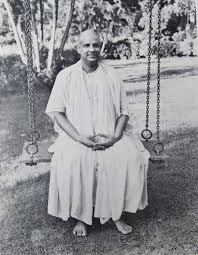
Swami Sivananda seated on garden swing image
Practice of Concentration, Swami Sivananda

Concentration on Anahata Sounds

Concentration on Anahata Sounds Dharana is the intense and perfect concentration of the mind upon some interior or exterior object or sound like Anahata sounds, or any abstract idea, accompanied by complete abstraction (Pratyahara) from everything pertaining to the external universe or the world of senses. Practise Sadhana Sit in Padma or Siddha Asana. Practise Yoni Mudra by closing the ears with the thumbs. Hear the internal sound through the right ear. The sound which you hear will make you deaf to all external sounds. Having overcome all obstacles, you will enter the Turiya State within 15 days. In the beginning of your practice, you will hear many loud sounds. They gradually increase in pitch and are heard more and more subtly. You should try to distinguish sounds more and more subtle. You may change your concentration from the subtle to the gross, but you should not allow your mind to be diverted from them towards other objects. The mind having at first concentrated itself on any one sound fixes firmly to that and is absorbed in it. The mind becoming insensible to the external impressions, becomes one with the sound as milk with water and then becomes rapidly absorbed in Chidakasa (the Akasa where Chit prevails). Being indifferent towards all objects, and having controlled the passions, you should, by continual practice, concentrate your attention upon the sound which destroys the mind. Having abandoned all thoughts and being freed from all actions, you should always concentrate your attention on the sound, and then your Chitta becomes absorbed in it. Just as the bee drinking the honey alone does not care for the odour, so the Chitta which is always absorbed in sound, does not long for sensual objects, as it is bound by the sweet smell of Nada and has abandoned its fitting nature. The serpent-Chitta through listening to the Nada is entirely absorbed in it, and becoming unconscious of everything, concentrates itself on the sound. The sound serves the purpose of a sharp goad to control the maddened elephant-Chitta-which roves in the pleasure-garden of the sensual objects. It serves the purpose of a snare for binding the deer-Chitta. It also serves the purpose of a shore to the ocean-waves of Chitta. The sound proceeding from Pranava, which is Brahman, is of the nature of effulgence; the mind becomes absorbed in it; that is the Supreme Seat of Vishnu. The mind exists so long as there is sound, but with its cessation, there is that state termed Turiya. This sound is absorbed in Brahman and the soundless state is the Supreme Seat. The mind which along with Prana has its Karmic affinities destroyed by the constant concentration upon Nada is absorbed in the unstained One. There is no doubt of it. Being freed from all states and all thoughts whatsoever, you will remain like one dead. You will become a Mukta. There is no doubt about this. The body is certainly like a log and does not feel heat or cold, joy or sorrow. When the spiritual sight becomes fixed without any object to be seen, when the Prana becomes still without any effort, and when the Chitta becomes firm without any support, you become a Brahman (Brahmavid-Brahmaiva Bhavati).You may experience the tenth sound without the first nine sounds through the initiation of a Guru. In the first stage, the body becomes Chin-chini; in the second, there is the (Bhanjana) breaking or affecting in the body; in the third, there is the (Bhedana) piercing; in the fourth, the head shakes; in the fifth, the palate produces saliva; in the sixth, nectar is attained; in the seventh, the knowledge of the hidden things in the world arises; in the eighth, Paravak is heard; in the ninth, the body becomes invisible and the pure divine eye is developed; in the tenth, you attain the state of Para Brahman. When the Manas is destroyed, when virtues and sins are burnt away, you shine as the Effulgent, Immaculate, Eternal, Stainless, Suddha Brahman.

Concentration on Anahata Sounds Read Post »

swami sivananda with mantra text image
Asanas for Dhyana, Swami Sivananda

Sukhasana

Sukhasana Sukhasana is sitting at ease with the body erect. Spread the legs forward. Fold the left leg and place the feet near the right thigh muscles. Similarly, bend the right leg and push it in the space between the left thigh and calf muscles. Now you will find the two feet between the thighs and calves of the legs. This is very comfortable for meditation. Keep the hands as instructed in Padmasana.Variation Any easy comfortable posture for Japa and meditation is Sukhasana, the important point being the head, neck and trunk should be in a line without curve. People who begin Japa and meditation after 30 or 40 years of age, generally are not able to sit in Padma, Siddha, or Svastikasana for a long time. I will describe now a nice form of Sukhasana in which old persons can sit and meditate for a long time. This specially suits old people who are unable to sit in Padma or Siddhasana in spite of repeated attempts. Young people also can practise this. TECHNIQUETake a cloth 5 cubits long. Fold it nicely lengthwise till the width becomes half a cubit. Sit in your usual way keeping the feet below your thighs. Raise the two knees above to the level of your chest till you get a space of 8 or 10 inches between the two knees. Now take the folded cloth. Keep one end near the left knee; going to the back by the left side, touching the right knee, come to the starting point and make a knot of the two ends. Keep your palms face to face and place them between the knees. In this Asana the hands, legs and backbone are supported. Hence you will never feel tired. If you cannot do any other Asanas, sit at least in this Asana and do Japa and meditation for a long time.

Sukhasana Read Post »

Swami Sivananda reading book by riverside mountains image
Practice of Concentration, Swami Sivananda

Concentration on a Chair

Concentration on a Chair The subject of concentration is disgusting and tiring for the neophyte. But it is the most interesting and beneficial science in the world. When one advances in concentration, when one takes real interest, when one has realised some benefits, he cannot leave the practice. He cannot remain even for a day without concentration. He becomes restless when he fails to have the practice. Concentration brings supreme joy, inner spiritual strength, unalloyed felicity and infinite eternal peace. Concentration brings profound knowledge and deep inner sight, intuition and communion with God. It is a wonderful science in the three worlds. I cannot adequately describe its benefits. Concentration on a chair really means getting full, detailed knowledge of the chair, its different parts, the particular wood out of which it is manufactured such as Devadaru, rose wood, etc., its workmanship, its durability, its cost price, the degree of comfort it gives for the back, arms, etc., whether the parts can be detached and fixed again, whether it is manufactured on modern lines and made bugproof, what sort of polish or varnish is used to make it durable, etc. When you concentrate on the chair, this sort of idea occupies your mind. Mind generally wanders wildly at random. When it thinks of one object, in a second it leaves that object and runs to another object like a monkey, then to a third object and so on. It cannot stick to one point. When the thought runs in one definite groove continuously on one subject alone like the flow of oil from one vessel to another, then it is concentration. The aspirant should withdraw his mind whenever it runs outside and put it in the same groove in the same line of thought on one subject and on one idea. This is spiritual Sadhana. This is Dharana and Dhyana. This will result in Samadhi or the superconscious state, the fourth dimension or Turiya. The vital point in concentration is to bring the mind to the same point of object again by limiting its movements in a small circle in the beginning. That is the main aim. A time will come when the mind will stick to one point alone. This is the fruit of your constant and protracted Sadhana. The joy is indescribable now. When you meditate on a chair, bring all thoughts connected with the chair and dwell on these ideas. Do not allow any other thought connected with another object to enter the mind. There should be one line of thought. There should be one continuity of thought like the steady flow of oil from one vessel to another vessel, like the continuous sound of a church-bell. There may be several ideas connected with one subject. This does not matter. You can reduce the number of ideas and come to one idea of one subject. When this one idea also dies you get the superconscious state or Samadhi. When there is one idea it is called Savikalpa Samadhi which is a lower stage. When this one idea also dies out and when there is not even a single idea, the mind becomes blank or void. There is mental vacuity. This is the stage of thoughtlessness of Patanjali Maharshi in his Raja Yoga philosophy. You will have to rise above this blank Vritti and identify yourself with the Supreme Purusha or Brahman, the silent witness of the mind, who gives power and light to this mind. Then and then alone you can reach the highest goal of life.When you concentrate on a chair, do not allow any other thought of different objects. Again and again bring the mind that wanders to the object which is chair. When you meditate on a rose, think of rose and rose alone. When you think of a book, think all that is connected with the book and nothing outside it. When you think of a radio or talkie, think of the radio or talkie alone. Exhaust all matters connected with the subject on hand. You can take any subject that is pleasing to the mind. Slowly you can take up any subject that is displeasing to the mind by creating interest in it again and again. You should always remember the maxim: “One thing at a time and that done well is a very good rule as many can tell.” When you take up any work, apply your whole heart, full mind and sound to the work. Do it with perfect concentration. What another can do in six hours you can turn out within half an hour, smoothly and in a methodical and orderly manner. This is Yogic activity. You will be taken for an accomplished Yogi. Even when you study, study the subject with perfect concentration. Do not allow the mind to wander. You must shut out all external sounds. Fix the gaze at one point. Do not allow the eyes to wander. When you study one subject, do not think of a talkie or sweetmeats or a friend. The whole world must be dead to you for the time being. Such must be the nature of concentration. It will come to you after some steady and constant endeavours. Be not troubled. Be not discouraged. There will be some delay. Wait coolly and patiently. Rome was not built in a day. It is all a question of time. Do not leave the practice even for a day, even when you are sick. In your failure lies the secret of your success and in your weakness the secret of your strength. Plod on. Push on. Gird up your loins. Nil desperandum. Be bold. March on courageously. Be cheerful. A brilliant future is awaiting thee. Practise. Feel. Rejoice. Become a Yogi or a world-figure. I can make you one. Follow me. Be sincere and earnest. Rise up. Awake. Thy Light has come. O my dear children of Light and Immortality, Brahmamuhurta is dawning now. It is 3.30 a.m. This is the best time

Concentration on a Chair Read Post »

swami sivananda Black-and-white group photo of guru with followers outside building image
Asanas for Dhyana, Swami Sivananda

Svastikasana

Svastikasana Svastikasana is sitting at ease with the body erect. Spread the legs forward. Fold the left leg and place the feet near the right thigh muscles. Similarly, bend the right leg and push it in the space between the left thigh and calf muscles. Now you will find the two feet between the thighs and calves of the legs. This is very comfortable for meditation. Keep the hands as instructed in Padmasana.

Svastikasana Read Post »

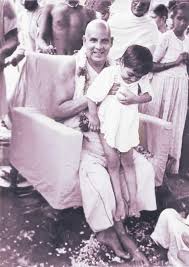
swami sivananda Monk holding child with affection
Practice of Concentration, Swami Sivananda

Exercises in Concentration

Exercises in Concentration I. Ask your friend to show you some playing cards. Immediately after the exposure, describe the forms you have seen. Give the number, name, etc., such as king of clubs, ten of spades, queen of diamonds, jack of hearts, etc. II. Read two or three pages of a book. Then close the book. Now attend to what you have read. Abandon all distracting thoughts. Focus your attention carefully. Allow the mind to associate, classify, group, combine and compare. You will get now a fund of knowledge and information on the subject. Mere skipping over the pages inadvertently is of no use. There are students who read a book within a few hours. If you ask them to reproduce some important points of the book, they will blink. If you attend to the subject on hand very carefully, you will receive clear, strong impression. If the impressions are strong, you will have very good memory. III. Sit in your favourite meditative pose about one foot from a watch. Concentrate on the ‘tik-tik’ sound slowly. Whenever the mind runs, again and again try to hear the sound. Just see how long the mind can be fixed continuously on the sound. IV. Sit again in your favourite Asana. Close your eyes. Close the ears with your thumbs or plug the ears with wax or cotton. Try to hear the Anahata sounds (mystic sounds). You will hear various kinds of sounds such as flute, violin, kettledrum, thunder-storm, conch, bells, the humming of a bee, etc. Try to hear the gross sounds first. Hear only one kind of sound. If the mind runs, you can shift it from gross to subtle, or from subtle to gross. Generally you will hear sounds in your right ears. Occasionally you may hear in your left ear also. But try to stick to the sound of one ear. You will get one-pointedness of mind. This is an easy way to capture the mind, because it is enchanted by the sweet sound, just as a snake is hypnotised by the notes of the snake-charmer. V. Keep a candle-flame in front of you and try to concentrate on the flame. When you are tired of doing this, close your eyes and try to visualise the flame. Do it for half a minute and increase the time to five or ten minutes according to your taste, temperament and capacity. You will see Rishis and Devatas, when you enter into deep concentration. VI. In a lying posture, concentrate on the moon. Whenever the mind runs, again and again bring it back to the image of the moon. This exercise is very beneficial in the case of some persons having an emotional temperament. VII. In the above manner, you can concentrate on any star you may single out from the millions of stars shining above your head. VIII. Sit by the side of a river where you can hear a roaring sound like “OM.” Concentrate on that sound as long as you like. This is very thrilling and inspiring. IX. Lie on your bed in the open air and concentrate on the blue expansive sky above. Your mind will expand immediately. You will be elevated. The blue sky will remind you of the infinite nature of the Self.X. Sit in a comfortable posture and concentrate on any one of the numerous abstract virtues such as mercy, compassion, etc. Dwell upon this virtue as long as you can.

Exercises in Concentration Read Post »

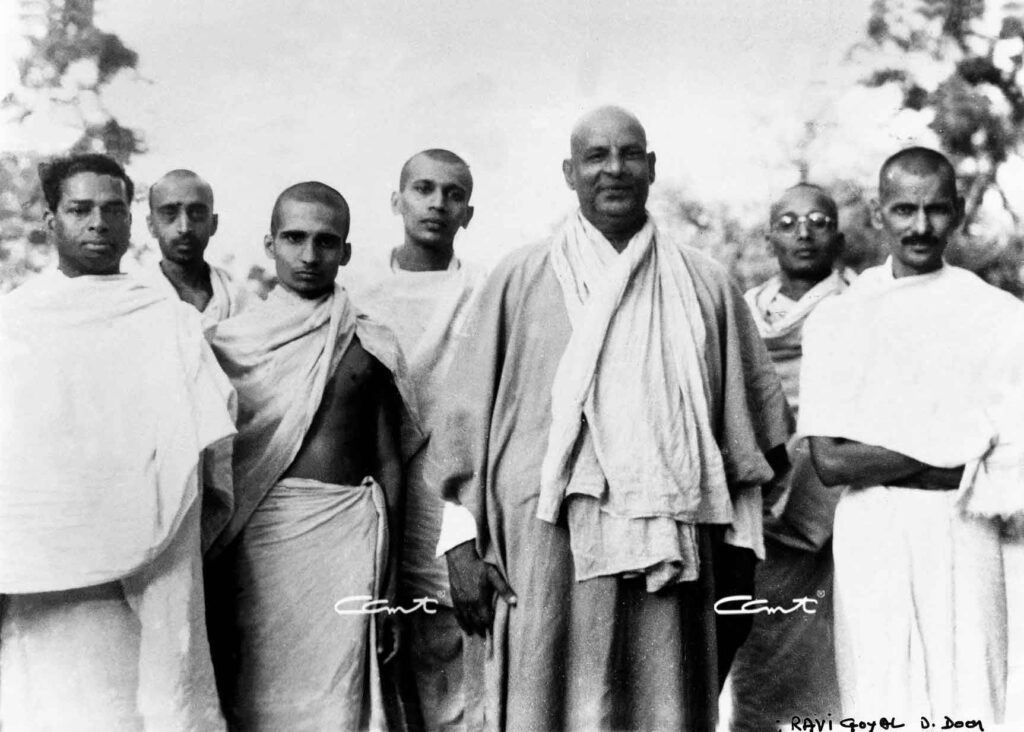
Swami Sivananda Group of monks standing with spiritual teacher photo
Asanas for Dhyana, Swami Sivananda

Siddhasana

Siddhasana Next to Padmasana comes Siddhasana in importance. Some eulogise this Asana as even superior to Padmasana for the purpose of Dhyana (contemplation). If you get mastery over this Asana, you will acquire many Siddhis (powers). Further it was practised by many Siddhas (perfect Yogins) of yore. Hence the name Siddhasana. Even fat persons with big thighs can practise this Asana easily. In fact, this is better to some persons than Padmasana. Young Brahmacharins who attempt to get established in celibacy should practise this Asana. This is not suitable for ladies. TECHNIQUE Place one heel at the anus (Guda), the terminal opening of the alimentary canal or digestive tube. Keep the other heel at the root of the generative organ. The feet or legs should be so nicely arranged that the ankle-joints should touch each other. Hands can be placed as shown in Padmasana. VARIATIONS I. Guptasana (Hidden Pose): The left heel is placed over the organ of generation. The right heel is also over the externel organ of generation. The two ankles are in close apposition or contact. The right toes are thrust inside the hollow between the left thigh and left calf muscles. The left toes are covered by the right leg. Gupta means hidden. As this Asana hides well the organ of generation it is called Guptasana. II. Vajrasana (Adamantine Pose): The left heel is placed below the organ of generation. The right heel is placed over the organ. Vajra means adamantine. There is also another variety of Vajrasana. Instructions are given elsewhere. III. Baddhayonyasana: Sit on ordinary Siddhasana and do Yoni Mudra. It is called Baddhayonyasana. The description of Yoni Mudra is given along with other Mudras. IV. Kshemasana: By sitting on Siddhasana if you raise your hands together up to your chest level, it is called Kshemasana. It is meant that you are praying for the Kshema (welfare) of the public. The palms must be facing each other.

Siddhasana Read Post »