













Hari Om

Menu

February 19, 2026

swami sivananda Vintage photo of monk raising hand in blessing holding ritual fan image
Sadhana, Swami Sivananda

Sadhana for Mastering the Mind

Sadhana for Mastering the Mind by Swami Sivananda You take great care of the body. You desire that it should be clean, healthy, beautiful and strong. You take bath with sweet soaps and hot water. You regularly feed it with nourishing food. If there is the least pain or disease medicine is given. Doctor is consulted. But you never give a thought to the much more important thing-MIND. Body is only the outward appearance, a projection of the mind. Mind operates through the senses and the sense-organs. If the mind is well then the body is well. If the mind is sick the body becomes ill. Mind is everything. It controls your whole life. Upon it depends your happiness or misery, success or failure. “Mana eva Manushyanam Karanam Bandhamokshayoh” thus say the Upanishads. Again, ‘Yena Manojitam Jagat Jitam Tena’ is the great truth. As you think, so you become. Do you fully realise now the great importance of controlling, training and overcoming the mind? So long you have neglected the care of the mind. Attend to this vital subject from now. Mastery of mind means success in all fields of life. To achieve this mastery you must study the mind. You must understand its nature, habits, tricks and the effective methods of bringing it under restraint. Mind is a bundle of desires, thoughts, feelings and emotions. It is nothing but a collection of Samskaras, desires arising from contact of the sense-organs with different objects, feeling aroused by worldly botherations, ideas gathered together from various different objects. These desires, feelings and ideas are not steady-they will be constantly changing. Suddenly some will subside and some others will occupy their places like the waves in the seas. Some old ones will depart from the storehouse, the mind and some new ones will replace them at once. It is also a bundle of habits. The bad habits and prejudices, although hidden by one’s own nature will come up and occupy the surface of the mind as and when opportunity occurs. According to the Vedantic school of philosophy mind is of middling size (same size as that of the body), it is atomic (Anu) as per Nyaya school and Patanjali Maharshi says in Raja Yoga that it is Vibhu (all-pervading). Most of the western doctors, who are still groping in utter darkness, say that it is an excretion of the brain, like bile from liver. Lord Krishna says, “The senses of which the mind is the sixth (Manah-shashtanindriyani)”-Gita, Chap. XV-7. Here the five senses are the five Jnana Indriyas, viz., the ear, the skin, the tongue, the nose, the eye; and the mind is termed as the sixth. Mind is the common sensory and an aggregate of the five senses. As all the five senses are mingled with it, the mind is able to see, hear, smell, taste and feel independently of the senses. Mind assumes the shape of any object instantly it thinks upon it. If it thinks of a mango, it assumes the form of a mango. Then it gets an attachment with the mango. Now a desire arises in the mind to taste it. Then the mind makes a firm determination to eat that mango and satisfy itself. One thought follows another. The thought of the mango invites instantaneously the thought of the mango-fruit seller, the tree, the garden where the tree is and so on and so forth. This is the expansion of thoughts or Sankalpas. The whole world is nothing but the expansion of Sankalpas. This expansion of Sankalpas of mind towards the various objects is called Bondage. The present-day people have no right understanding, discriminative power between unreal and real. They are completely deluded by Maya. They are under the firm grip or crocodile catch of Maya. They have fallen prey to worldly desires and enjoyments. Therefore they are victims to this bondage, forgetting totally their divine birthright-liberation from the dire disease of births and deaths and attainment of Immortality, the Life Eternal and final Beatitude! Mind is a monkey which jumps from one place to another. It is like the air, which is always moving (Chanchala). Just as the quick-silver it scatters its rays over various objects. It can also be compared to a furious elephant, because of its passionate impetuosity. Like the fish out of the water, it will always be thirsting to run after evil habits and entertain bad and vicious thoughts. It is also known as a “Great Bird” because it skips from one object to another just as the bird wanders from one tree to another tree, one twig to another, and one place to another. The last thought determines the next birth. “Whosoever at the end leaves the body, thinking upon any being, to that being only he goes, O Kaunteya! because of the constant thought of that being”-Gita, Chap. VIII-6. Whatever thought you entertain at the last breath, accordingly you take your next birth. This thought entirely depends upon the constant desires and ideas you entertained throughout your whole life. Every man has a definite outlook of life; due to the power of the mind he has got a definite thinking, definite craving, desire and hope and definite character, temperament, taste and attitude. For the gratification of the mind these desires, cravings etc., are constantly repeated again and again, and these acts leave definite impressions upon the subconscious mind. The impressions take indelible forms in the subconscious mind. At the time of death the whole storehouse, the subconscious mind which is full of various thoughts, feelings, ideas etc., is churned out and the strongest and most cherished desire comes to the surface of the subconscious mind or the field of mental consciousness. This churned up butter or cream (cherished desire) arrests his attention for immediate gratification. You will think of this desire only at the time of death. If you are much attached to your pet dog, the thought of the dog will come at the time of death and

Sadhana for Mastering the Mind Read Post »

swami sivananda Book cover of concentration and meditation
Pranayama, Swami Sivananda

Kundalini Pranayama

Kundalini Pranayama In this Pranayama, the Bhavana is more important than the ratio between Puraka, Kumbhaka and Rechaka. Sit in Padma or Siddha Asana, facing the East or the North. After mentally prostrating to the lotus-feet of the Satguru and reciting Stotras in praise of God and Guru, commence doing this Pranayama which will easily lead to the awakening of the Kundalini. Inhale deeply, without making any sound. As you inhale, feel that the Kundalini lying dormant in the Muladhara Chakra is awakened and is going up from Chakra to Chakra. At the conclusion of the Puraka, have the Bhavana that the Kundalini has reached the Sahasrara. The more vivid the visualisation of Chakra after Chakra, the more rapid will be your progress in this Sadhana. Retain the breath for a short while. Repeat the Pranava or your Ishta Mantra. Concentrate on the Sahasrara Chakra. Feel that by the Grace of Mother Kundalini, the darkness of ignorance enveloping your soul has been dispelled. Feel that your whole being is pervaded by light, power and wisdom. Slowly exhale now. And, as you exhale feel that the Kundalini Sakti is gradually descending from the Sahasrara, and from Chakra to Chakra, to the Muladhara Chakra. Now begin the process again. It is impossible to extol this wonderful Pranayama adequately. It is the magic wand for attaining perfection very quickly. Even a few days’ practice will convince you of its remarkable glory. Start from today, this very moment.May God bless you with joy, bliss and immortality. PRANAYAMA FOR AWAKENING KUNDALINI When you practise the following, concentrate on the Muladhara Chakra at the base of the spinal column, which is triangular in form and which is the seat of the Kundalini Sakti. Close the right nostril with your right thumb. Inhale through the left nostril till you count 3 OMs slowly. Imagine that you are drawing the Prana with the atmospheric air. Then close the left nostril with your little and ring fingers of the right hand. Then retain the breath for 12 OMs. Send the current down the spinal column straight into the triangular lotus, the Muladhara Chakra. Imagine that the nerve-current is striking against the lotus and awakening the Kundalini. Then slowly exhale through the right nostril counting 6 OMs. Repeat the process from the right nostril as stated above, using the same units, and having the same imagination and feeling. This Pranayama will awaken the Kundalini quickly. Do it 3 times in the morning and 3 times in the evening. Increase the number and time gradually and cautiously according to your strength and capacity. In this Pranayama, concentration on the Muladhara Chakra is the important thing. Kundalini will be awakened quickly if the degree of concentration is intense and if the Pranayama is practised regularly.

Kundalini Pranayama Read Post »

swami sivananda Black-and-white group photo of guru with followers outside building image
Sadhana, Swami Sivananda

The Essence of Sadhana

The Essence of Sadhana by Swami Sivananda A Raja Yogi slowly ascends the Yogic ladder along the eight steps, viz., Yama, Niyama, Asana, Pranayama, Pratyahara, Dharana, Dhyana and Samadhi. He gets ethical training in the beginning to purify himself by the practice of Yama and Niyama. Then he steadies his posture, Asana. Then he practises Pranayama to steady his mind and purify the Nadis. Then by the practice of Pratyahara, Dharana and Dhyana he gets Samadhi. Through Samyama he gets different Siddhis. He restrains all the mental modifications that arise from the mind. Hatha Yoga concerns with the physical body and control of breath. Raja Yoga deals with the mind. Raja Yoga and Hatha Yoga are interdependent. Raja Yoga and Hatha Yoga are necessary counterparts of each other. No one can become a perfect Yogi without a knowledge of and the practice of both. Proper Raja Yoga begins where properly practised Hatha Yoga ends. A Hatha Yogi starts his Sadhana with his body and Prana, while a Raja Yogi with his mind; a Jnana Yogi with his Buddhi and will. This is the chief difference. To get success in Raja Yoga, one should have a thorough knowledge of the mysteries of the mind and the way by which it is controlled. The student of Hatha Yoga should try to awaken the Kundalini Sakti that lies dormant in the Muladhara Chakra by Asana, Pranayama, Mudra and Bandha. He should try to unite the Prana-Apana and send the united Prana-Apana through the Sushumna Nadi. Heat is increased by retention of breath and Vayu ascends up along with Kundalini to the Sahasrara Chakra through the different Chakras. When Kundalini is united with Lord Siva at the Sahasrara Chakra, the Yogi attains Samadhi and enjoys supreme peace, bliss and immortality.

The Essence of Sadhana Read Post »

swami sivananda Collage of Swami Sivananda portrait and serving a child with medical care picture
Pranayama, Swami Sivananda

Easy Comfortable Pranayama

Easy Comfortable Pranayama (Sukha Purvaka) Sit on Padmasana or Siddhasana in your meditation room, before the picture of your Ishta Devata (guiding deity). Close the right nostril with the right thumb. Draw in the air very, very slowly through the left nostril. Then close the left nostril also with little and ring fingers of the right hand. Retain the air as long as you can comfortably do. Then exhale very, very slowly through the right nostril after removing the thumb. Now half the process is over. Then draw air through the right nostril. Retain the air as before and exhale it very, very slowly through the left nostril. All these six processes constitute one Pranayama. Do 20 in the morning and 20 in the evening. Gradually increase the number. Have a Bhava (mental attitude) that all the Daivi Sampat (divine qualities), e.g., mercy, love, forgiveness, Santi, joy, etc., are entering into your system along with the inspired air and all Asuri Sampat (devilish qualities) such as lust, anger, greed, etc., are being thrown out along with the expired air. Repeat Om or Gayatri mentally during Puraka, Kumbhaka and Rechaka. Hard-working Sadhakas can do 320 Kumbhakas daily in four sittings at the rate of 80 in each sitting.This Pranayama removes all diseases, purifies the Nadis, steadies the mind in concentration, improves digestion, increases the digestive fire and appetite, helps to maintain Brahmacharya and awakens the Kundalini that is sleeping at the Muladhara Chakra. Purification of Nadis will set in rapidly. You will have levitation (rising above the ground) also.

Easy Comfortable Pranayama Read Post »

Swami Sivananda Guru raising hand in greeting gesture image
Pranayama, Swami Sivananda

The external Kumbhaka (Bahya)

The external Kumbhaka (Bahya) Draw the air through the left nostril till you count 3 OMs; throw it out through the right nostril immediately without retaining it counting 6 OMs. Stop it outside till you count 12 OMs. Then draw the breath through the right; exhale it through the left and stop it outside as before, using the same units of Om for inhalation, exhalation and retention. Do six times in the morning and six times in the evening. Gradually increase the number of rounds and the time of Kumbhaka. Do not strain or fatigue yourself.

The external Kumbhaka (Bahya) Read Post »

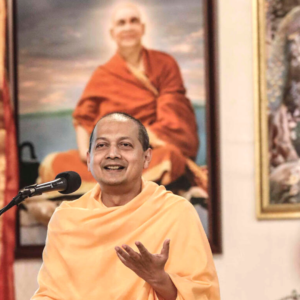
swami sivananda Monk speaking with microphone indoors
Pranayama, Swami Sivananda

Kapalabhati

Kapalabhati ‘Kapala’ is a Sanskrit word; it means skull. ‘Bhati’ means to shine. The term ‘Kapalabhati’ means an exercise that makes the skull shine. This Kriya cleanses the skull. So this is taken as one of the Shat-Karmas (six cleansing processes in Hatha Yoga). Sit on Padmasana. Keep the hands on knees. Close the eyes. Perform Puraka and Rechaka rapidly. This should be practised vigorously. One will get perspiration profusely. This is a good form of exercise. Those who are well-versed in Kapalabhati can do Bhastrika very easily. There is no Kumbhaka in this Pranayama. Rechaka plays a prominent part. Puraka should be done quickly and forcibly by contracting the abdominal muscles with a backward push. When you do Puraka, release the abdominal muscles. Some people naturally make a curve of the spine and bend their heads also. This is not desirable. The head and the trunk should be erect. Sudden expulsions of breath follow one another as in Bhastrika. To start with, you can have one expulsion per second. Gradually you can have two expulsions per second. To begin with do one round in the morning consisting of 10 expulsions only. In the second week, do one round in the evening. In the third week, do two rounds in the morning and two rounds in the evening. Thus every week, gradually and cautiously increase 10 expulsions to each round till you get 120 expulsions for each round.It cleanses the respiratory system and the nasal passages. It removes the spasm in bronchial tubes. Consequently, Asthma is relieved and also cured in course of time. The apices of the lungs get proper oxygenation. Thereby they cannot afford favourable nidus (breeding grounds) for tubercle bacilli. Consumption is cured by this practice. Lungs are considerably developed. Carbon dioxide is eliminated in a large scale. Impurities of the blood are thrown out. Tissues and cells absorb a large quantity of oxygen. The practitioner keeps up good health. Heart functions properly. The circulatory and respiratory systems are toned to a considerable degree.

Kapalabhati Read Post »

sddefault
Pranayama, Swami Sivananda

Pranayama Exercises

Pranayama Exercises EXERCISE NO. 1 Sit on Padmasana. Close your eyes. Concentrate on Trikuti (the space between the two eyebrows). Close the right nostril with your right thumb. Inhale slowly through the left nostril as long as you can do it with comfort. Then exhale very slowly through the same nostril. Do twelve times. This is one round. Then inhale through the right nostril by closing the left nostril with your right ring and little fingers and exhale very slowly through the same nostril. Do twelve times. This one round. Do not make any sound during inhalation and exhalation. Repeat your Ishta Mantra during the practice. In the second week of practice, do two rounds, in the third week, three rounds. Take rest for two minutes when one round is over. If you take a few normal breaths, when one round is over, that will give you sufficient rest and you will be fresh for the next round. There is no Kumbhaka in this exercise. You can increase the number of rounds according to your strength and capacity. EXERCISE NO. 2 Inhale through both the nostrils slowly and gently. Do not retain the breath. Then exhale slowly. Do 12 times. This will constitute one round. You can do 2 or 3 rounds according to your capacity and strength and time at your disposal. EXERCISE NO. 3 Sit on your Asana. Close the right nostril with your right thumb. Then inhale slowly through your left nostril. Close the left nostril with your right ring and little fingers and open the right nostril by removing the right thumb. Exhale very slowly through the right nostril. Then draw the air through the right nostril as long as you can do it with comfort and exhale through the left nostril by removing the right ring and little fingers. There is no Kumbhaka in this Pranayama. Repeat the process 12 times. This will constitute one round. EXERCISE NO. 4 Meditate that the single letter, the Supreme light-Pranava or Om-is the origin or source of the three letters A, U and M. Inhale the air through Ida or left nostril for the space of 16 Matras (seconds), meditate on the letter ‘A’ during that time; retain the air for the space of 64 Matras, meditate on the letter ‘U’ during the time; exhale through the right nostril for the space of 32 Matras and meditate on the letter ‘M’ during that time. Practise this again and again in the above order. Begin with 2 or 3 times and gradually increase the number to 20 or 30 times according to your capacity and strength. To begin with, keep the ratio 1:4:2. Gradually increase the ratio to 16:64:32. DEEP BREATHING EXERCISE Each deep breathing consists of a very full inhalation, through the nose and a deep, steady exhalation also, through the nose. Inhale slowly as much as you can do. Exhale slowly as much as you can do. During inhalation, observe the following rules: 1. Stand up. Place the hands on the hips; the elbows will be out and not forced backward. Stand at ease. 2. Lengthen the chest straight upwards. Press the hip bones with the hands in downward direction. A vacuum will be formed by this act and the air will rush in of its own accord. 3. Keep the nostrils wide open. Do not use the nose as a suction pump. It should serve as a passive passage for both the inhaled and the exhaled air. Do not make any sound when you inhale and exhale. Remember that correct breathing is noiseless. 4. Stretch the whole upper part of the trunk. 5. Do not arch the upper chest into a cramped position. Keep the abdomen naturally relaxed. 6. Do not bend the head far backwards. Do not draw the abdomen inwards. Do not force the shoulders back. Lift the shoulders up. During the exhalation observe the following rules carefully: 1. Allow the ribs and the whole upper part of the trunk to sink down gradually. 2. Draw the lower ribs and abdomen upwards-slowly. 3. Do not bend the body too much forward. Arching of the chest should be avoided. Keep the head, neck and trunk in a straight line. Contract the chest. Do not breathe the air out through the mouth. Exhale very, very slowly without producing any noise. 4. Expiration simply takes place by relaxing the inspiratory muscles. The chest falls down by its own weight and expels the air out through the nose. 5. In the beginning, do not retain the breath after inhalation. When the process of inhalation is over begin exhalation at once. When you have sufficiently advanced in your practice, you can slowly retain the breath from five seconds to one minute according to your capacity.6. When one round of three deep breathings is over, you can take a little rest, ‘Respiratory pause’-by taking a few normal breaths. Then start the second round. During the pause, stand still in a comfortable position with hands on hips. The number of rounds can be fixed according to the capacity of the practitioner. Do 3 or 4 rounds and increase one round every week. Deep breathing is only a variety of Pranayama.

Pranayama Exercises Read Post »

swami sivananda Sepia portrait of monk seated cross-legged with calm expression image
Sadhana, Swami Sivananda

Some Secerets of Sadhana

Some Secerets of Sadhana by Swami Sivananda Through the practice of Pranayama, the Sadhaka can attain long life. A healthy man takes 14 or 16 breaths in a minute. The number of breaths increases during sleep, exercise, running etc. Retention of breath through the practice of Kumbhaka bestows longevity to the Yogic student. The lesser the number of breaths, the more is the duration of life. The number of breaths is more in a dog and a horse. It is nearly fifty in a dog and so its duration of life is about 14 years. It is thirtyfive in a horse. So its duration of life is 29 to 30 years. An elephant breathes about 20 times in a minute and so it lives about a hundred years. A tortoise breathes five times in a minute and therefore it lives about four hundred years. A snake breathes twice or thrice in a minute. It lives for 500 to 1000 years. The fewer the desires and wants, the lesser the number of breaths and vice versa. He who practises Japa, meditation, Brahmacharya and studies religious books or holy scriptures will have lesser number of breaths and more concentration. Lesser number of breaths means increase in concentration, rich inner spiritual life in Atman and more peace. The Surya Mandal or the fire is in the Nabhi or the navel. The Chandra Mandal or the sphere of Amrita is a little below Ajna Chakra. Amrita or nectar dribbles and the Agni devours it, consumes it. So you have a short duration of life. If you practise Vipareetakarani Mudra or Sarvanga Asana you can conquer death, you can attain long life. In this posture the fire Mandal comes above. The nectar that dribbles from the Chandra Mandal cannot be swallowed by the Agni. Hence the nectar nourishes the Nadis and the body, and life is prolonged. Therefore it is essential that everybody should practise this vital Asana for keeping up good health and attaining longevity. This is physical Vipareetakarani Mudra. Through the practice of Jnana Vipareetakarani Mudra you can attain immortality and eternal bliss. You can have Brahma Jnana. What is the Jnana Vipareetakarani Mudra? Have a changed angle of vision. Have a changed outlook. Behold Brahman or the one Self everywhere by negating the names and forms. Practise this again and again. Man cannot have a strong mind unless the rays of the mind which go in diverse ways are stopped and made to converge to a point, as in the case of the rays of the sun through a magnifying glass. You can burn many things by centralising the rays of the sun through the magnifying glass. In the same way by centralising the scattered or dissipated rays of the mind and converging them on one point, through dispassion, discrimination and concentration, you can work wonders. You can perceive the marvels of the hidden innermost Self or the Supreme Atman. Decrease in urine, faeces and phlegm, Tejas or brilliance in the eyes and face, beautiful complexion, lightness of body, sweet voice, abundance of vigour, visions of lights, freedom from disease and sloth are the fist signs of progress in Yoga (Prathama Lakshana). Clairvoyance, clairaudience are the signs that indicate the second stage in the onward march in the path of Yoga (Dviteeya Lakshana). The Yogi can walk over the fire, water and a sharp sword. He can move in the skies. He has knowledge of the three periods of time (Trikala Jnana). These indicate that he is in the third, fourth and fifth stage of Yoga. Eventually he frees himself from Prakriti and the three Gunas and attains Kaivalya or Absolute Independence through Nirvikalpa or Nirbhaya Samadhi.

Some Secerets of Sadhana Read Post »

Swami Sivananda seated with musical instrument image
Sadhana, Swami Sivananda

Easy Method of Sadhana in Worldly Environment

Easy Method of Sadhana in Worldly Environment by Swami Sivananda It is due to the veil of ignorance that man has forgotten his essential Divine Nature-Sat-Chit-Ananda State. It is not necessary for him to renounce the world and hide himself in the Himalayan caves to regain his lost Divinity. Here I present a very easy method of Sadhana by which, he can attain God-consciousness even while he is living in the world amidst multifarious activities. You need not have a separate place or room and time for meditation. Close your eyes for a minute or two once in every two or three hours and think of God and His Divine Qualities such as Mercy, Love, Peace, Joy, Knowledge, Purity, Perfection and so forth during work and repeat mentally Hari Om or Sri Ram, or Rama Rama or Krishna Krishna or any Mantra according to your taste. You should do this even during night time, whenever you happen to get up from bed to pass urine or on any other account. Though you are unable to get up during sleep specially for this purpose, you should do this practice at least occasionally when you slightly change your posture of sleep. This sort of habit will come only by practice. Feel that the body is a moving temple of God, your office or business house is a big temple or Brindavan, and every activity, walking, talking, writing, eating, breathing, seeing, hearing etc., are offerings unto the Lord. Work is worship. Work is meditation. Give up expectation of fruits and idea of agency, the feeling of “I am the doer,” “I am the enjoyer.” Feel that you are an instrument in the hands of God. He works through your organs. Feel also that this world is a manifestation of the Lord or Visva Brindavan and your children, wife, father, mother are the images or children of the Lord. See God in every face and in every object. Have a cool, balanced mind always. If you develop this changed angle of vision and Divine Bhava in daily life by protracted and constant practice all actions will become Yogic activities. All actions will become worship of the Lord. This is quite sufficient. You will get God-realisation quickly. This is dynamic Yoga. This is very a powerful Sadhana. I have given you a very easy Sadhana. Hereafter you should not bring your lame excuse and say, “Swamiji, I have no time to do spiritual practices.” Even if you have a little practice of the above Sadhana for three months you will notice that you are a changed being altogether. Write daily for half an hour in a notebook your Ishta Mantra observing Mouna and without turning to the other sides. Write down in bold types in slips of paper “Speak Truth,” “OM Courage,” “OM Purity,” “I must realise God now,” “Time is most precious,” “I will be a true Brahmachari,” “Brahmacharya is Divine Life,” “I am an embodiment of Courage, Purity, Mercy, Love and Patience” and fix them in the bedroom, dining hall, front-rooms and verandahs. Keep some slips in your pocket and diary also. This is an easy way for developing virtuous Divine Qualities.

Easy Method of Sadhana in Worldly Environment Read Post »

Swami Sivananda Indian yoga guru and saint picture
Pranayama, Swami Sivananda

Three Types of Pranayama

Three Types of Pranayama There are three types of Pranayama, viz., Adhama, Madhyama and Uttama (inferior, middle and superior). The Adhama Pranayama consists of 12 Matras, Madhyama consists of 24 Matras and the Uttama occupies a time of 32 Matras. This is for Puraka. The ratio between Puraka, Kumbhaka and Rechaka is 1:4:2. Puraka is inhalation. Kumbhaka is retention. Rechaka is exhalation. If you inhale for a period of 12 Matras you will have to make Kumbhaka for a period of 48 Matras. Then the time for Rechaka will be 24 Matras. This is for Adhama Pranayama. The same rule will apply to the other two varieties. First, practise for a month Adhama Pranayama. Then practise Madhyama for three months. Then take up the Uttama variety. Salute your Guru and Sri Ganesa as soon as you sit in the Asana. The time for Abhyasa is early morning 4 a.m., evening 4 p.m. and night 10 p.m. or 12 p.m. As you advance in practice you will have to do 320 Pranayamas daily. Sagarbha Pranayama is that Pranayama, which is attended with mental Japa of any Mantra, either Gayatri or Om. It is one hundred times more powerful than the Agarbha Pranayama, which is plain and unattended with any Japa. Pranayama Siddhi depends upon the intensity of the efforts of the practitioner. An ardent enthusiastic student, with Parama Utsaha, Sahasa and Dridhata (zeal, cheerfulness and tenacity), can effect Siddhi (perfection) within six months; while a happy-go-lucky practitioner with Tandri and Alasya (drowsiness and laziness) will find no improvement even after eight or ten years. Plod on. Persevere with patience, faith, confidence, expectation, interest and attention. You are bound to succeed. Nil desperandum-Never despair. THE VEDANTIC KUMBHAKA Being without any distraction and with a calm mind, one should practise Pranayama. Both expiration and inspiration should be stopped. The practitioner should depend solely on Brahman; that is the highest aim of life. The giving out of all external objects is said to be Rechaka. The taking in of the spiritual knowledge of Sastras is said to be Puraka, and the keeping to oneself of such knowledge is said to be Kumbhaka. He is an emancipated person who practises his Chitta thus. There is no doubt about it. Through Kumbhaka the mind should always be taken up and through Kumbhaka alone it should be filled up within. It is only through Kumbhaka that Kumbhaka should be firmly mastered. Within it, is ‘Parama Siva’. At first in his Brahmagranthi there is produced soon a hole or passage. Then having pierced Brahmagranthi, he pierces Vishnugranthi, then he pierces Rudragranthi, then the Yogin attains his liberation through the religious ceremonies, performed in various births, through the grace of Gurus and Devatas and through the practice of Yoga. PRANAYAMA FOR NADI-SUDDHI The Vayu cannot enter the Nadis if they are full of impurities. Therefore, first of all, they should be purified and then Pranayama should be practised. The Nadis are purified by two processes, viz., Samanu and Nirmanu. The Samanu is done by a mental process with Bija Mantra. The Nirmanu is done by physical cleansing or the Shatkarmas. 1. Sit on Padmasana. Meditate on the Bijakshara of Vayu (Yam) which is of smoke colour. Inhale through the left nostril. Repeat the Bijakshara 16 times. This is Puraka. Retain the breath till you repeat the Bija 64 times. This is Kumbhaka. Then exhale through the right nostril very, very slowly till you repeat the Bijakshara 32 times. 2. The navel is the seat of Agnitattva. Meditate on this Agnitattva. Then draw the breath through the right nostril repeating 16 times the Agni Bija jb (Ram). Retain the breath till you count the Bija 64 times. Then exhale slowly through the left nostril till you repeat mentally the Bija letter 32 times. 3. Fix the gaze at the tip of the nose. Inhale through the left nostril repeating the Bija “b (Tham) 16 times. Retain the breath till you repeat the Bija Jeb (Vam) 64 times. Now imagine that the nectar that flows from the moon runs through all the vessels of the body and purifies them. Then exhale slowly through the right nostril till you repeat the Prithvi Bija ueb (Lam) 32 times. The Nadis are purified nicely by the practice of the above three kinds of Pranayama by sitting firmly in your usual posture. MANTRA DURING PRANAYAMA The Mantra for repetition during the practice of Pranayama is laid down in the Isvara Gita: “When the aspirant holding his breath repeats the Gayatri thrice, together with the seven Vyahritis in the beginning, the Siras at the end and the Pranava, one at both ends of it, this is, what is called the regulation of breath.” Yogi Yajnavalkya, on the other hand, declares thus; “The upward breath and the downward breath, having been restrained, regulation of breath is to be practised by means of the Pranava (OM) with due regard to the unit of measure of the Mantra.This repetition of the Pranava alone is meant for the Paramahamsa Sannyasins. It has been declared in the Smritis, that ordinary contemplation is to be practised, through the inhalation and other stages of breath-regulation at one’s navel, heart and forehead, with reference to the forms of Brahma, Vishnu and Siva respectively. For the Paramahamsa however, the only object of contemplation has been declared to be Brahman. “The self-controlled ascetic is to contemplate upon the supreme Brahman, by means of the Pranava,” declares the Sruti.

Three Types of Pranayama Read Post »