




Hari Om

Menu

February 19, 2026

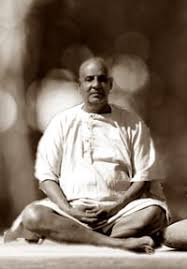
Swami Sivananda sitting with veena musical instrument spiritual portrait photo
Swami Sivananda, Yoga

Develop Cosmic Love

Develop Cosmic Love by Swami Sivananda O man, where do you search for God? All these forms are manifestations of the Lord. See the Lord in these forms. If you serve all beings with Narayana Bhava, you really serve the Lord. Service of humanity is service of the Lord. Service of humanity is really worship of your tutelary Deity (Ishta Devata). If you cannot love and serve these manifestations of the Lord or visible gods, how will you be able to serve and love the unseen? If you want to enjoy really the supreme bliss of the non-dual Self, if you want to become a real, practical Advaita Vedantin or a sage, try to comfort the sorrowful, help the poor, heal or nurse the sick. Can any one who attempts to behold or realise the one Self hidden in all beings keep quiet without serving the humanity? All forms are the manifestations of the one Supreme Lord. All bodies belong to Him. When you shampoo the legs of a sick person, remember that you are shampooing the legs of the Lord, the legs of Virat or Saguna Brahman. Serve the animals also. Develop compassion and love for all creatures. How can you worship God who is in all creatures unless you honour and respect everybody? Treat everybody with respect. View all with an equal eye. Do virtuous actions. Behold the Lord in all beings. Bow to all beings. Have intense and exclusive devotion for the Lord. Centre your thoughts exclusively on Him. Desire nothing, not even Moksha. You will soon overcome death and reach the fearless Abode of Eternal Bliss and Supreme Peace. Brahman is like the sun, Ganga and the mango tree. Sun sheds its light on the wicked and the virtuous. A rogue and a saint can drink the water of the Ganga. The mango tree gives its fruits both for the care-taker and the man who cuts its branches. Develop equal-vision (Samadrishti) like the sun, the Ganga and the mango tree. Though names and forms are different, the underlying substance or essence is one and the same. All these names and forms are hanging or floating in this essence. Hence we are all united at the common base. Universal brotherhood aims at the establishment of this unity only. It lifts the individual to a non-dual state and brings Advaitic feelings (Brahmic consciousness). Love and serve thy neighbour. Gladly and willingly give to others of what you most desire for yourself. This will develop cosmic love, unity, and equal-vision in you. You will soon attain Brahma Jnana (wisdom of the Self). You will soon see the Self in all beings, and all beings in the Self (Samyag Drishti). Just as a mother who has lost her nine sons loves her only son immensely, so also you will have to develop boundless love for all beings. This is the highest qualification for an aspirant. The astral body of one who has this boundless love will shine with fine brilliant lustrous colour. There will be a glow of ineffable splendour. Be kind to all. Love all. Never hurt the feelings of others. Be one with all. Destroy clannishness. Serve all. Respect all. Share with others whatever you possess (physical, mental and spiritual). Take the whole world as the form of Narayana (anekarupa-rupaya vishnave prabha-vishnave). Bow before the world and everybody with folded hands. Give up the ideas of barber, washerman, cobbler, etc. Barber is Narayana. Cobbler is Narayana. Bow with folded hands before a scavenger and feel that you are actually bowing to Lord Narayana. Those who are shy can bow mentally. The former one is the best practice to develop equal-vision. By the former practice, you can experience the essence of Vedanta Jnana Samadarshitva, the spirit of equality. You may be prepared to give up your life for a good cause. You should be prepared to give up your life for the sake of your enemy even. Then only you can realise unity. Even if a man hates you, you must love him. You must love all. You must love a thief, a drunkard, a rogue and a vagabond. Just as perfume emanates from jasmine, the sweet perfume of love should emanate from you and flow towards all in all directions. Then only is it termed universal love or cosmic love (Visva Prema). Then only you have an expanded heart. The Ganga gives you always cool, pure water. It does not expect anything from you in return. The sun sheds its light to all without anticipating any reward. Derive lessons from them. Always give, give. Ask nothing in return. Expect nothing in return. Do not expect even appreciation, approbation or recognition. Vibrate joy all around. Radiate cheerfulness on all sides. Feel the unity or oneness with all. Love all. Give. Sing with the birds. Laugh with the Sun. Smile with the blue expansive sky, the visible representative of Akanda Brahman. Chant OM with murmuring Ganga and the blowing breeze. Roar with the thunder. Dance with the trees. Breathe with the trees and flowers. Enjoy the Upanishadic beauty and feeling in the utterance “sarvam khalvidam brahma�all indeed is brahman.” expand. grow. grow. You cannot remove ignorance through Karma, because Karma is not the opposite of ignorance or its enemy or antidote. It is knowledge alone that can dispel ignorance. Just as heat removes shivering from cold, so also the fire of knowledge destroys Ajnana. Therefore, exert to get knowledge of unity. Brotherhood Bhava leads to the attainment of Vedantic Unity or oneness in the long run. Every act of purification in any sect or community promotes the well-being of the whole, of which they form a part and therefore desire encouragement. A Jnani is only an ideal Karma Yogi. A Jnani only can perform actions with perfect Nishkamya spirit. See how Raja Janaka lived. He lived the life of a practical Vedantin while ruling the kingdom. You cannot conceive of any man busier than Raja Janaka. He was ruling

Develop Cosmic Love Read Post »

Swami Sivananda blessing young child during spiritual ceremony photo
Swami Sivananda, Yoga

Para Bhakti

Para Bhakti by Swami Sivananda You can have Darshan of Lord Siva in this very life. Many have realised. You can also realise. What another has achieved can be achieved by you also. There is no doubt of this. Ask not for any boon from Him. Whenever there is asking for boon there is no real devotion. It becomes mercenary. It becomes shop-keeping or business. You should not trade with God. Love Him for love’s sake. Have absolute Nishkamya, Ananya Bhakti. Do not ask for Mukti even. Mukti is maid-servant of Queen-devotion. It comes by itself. Mere Darshan alone of the tutelary deity will not suffice. Knowledge of the Self is also necessary. Nam Dev had Darshan of Lord Krishna several times and yet he was not a fully developed sage. Once Gora, a saintly potter tapped the head of Nam Dev in a gathering of devotees and pronounced that he was Kaccha or half-baked. Then Nam Dev approached a Vedantin, Vishoba Khesar in the temple of Mallikarjun for initiation into the mysteries of Kaivalya. Nam Dev found Vishoba Khesar in the temple in a strange posture. Khesar was in a meditative mood. He was lying down and stretching his feet on the Siva Lingam. Nam Dev said: “O venerable Swamiji, why dost thou lie with thy feet on the Siva Lingam?” Khesar replied: “Please place my feet on that place where there is no Siva Lingam.” Nam Dev tried to keep the feet in several places but he found a Siva Lingam wherever he took the feet. Nam Dev was struck with wonder. He prostrated at the feet of Khesar and beseeched him to initiate him into the mysteries of Atman. Nam Dev returned to Pandharpur with the knowledge of the Self. Now only he became Pukka or fully-baked, i.e., attained perfection or highest knowledge. God, the individual soul, and world are really a unity. Their seeming separateness is but an illusion. Melt all illusory differences. Remove all barriers that separate man from man. Realise the underlying unity and be free. Prahlada prays to Lord Hari from the bottom of his heart: “O Lord, in whatever birth I may pass, let me have unswerving devotion to Thy lotus-feet.” The world needs today such devotees to disseminate Bhakti throughout the length and breadth of the land. When the heart is purified, the mind is naturally turned towards God. The aspirant is attracted towards God. Eventually he is absorbed in the Lord, through pure love, self-surrender and worship. The Bhakta now becomes a cosmic entity. He has cosmic life. He has one continuous life. The individuality becomes a cosmic entity. What is Jnana? To see threads in cloth, clay in pots and jars, gold in ornaments, iron in various kinds of implements, wood in chairs, benches and doors is Jnana. To see God or Atman in every living being and to feel that God is seated in your heart and in the hearts of all is Jnana (vasudevah sarvam iti). Bhakti, when it gets ripe, brings Jnana. When Bhakti gets matured, Jnana dawns by itself. The fruit of Ananya Bhakti is Jnana. Upasana is of two kinds viz., Prateekopasana and Ahamgrahopasana. In the first kind, Prateeka or symbol is used for meditation. In the second kind, Prateeka or symbol is used for his very self as the object of meditation. The previous one is the Bhakta�s method. The latter one belongs to the non-dual Vedantins. One who has outgrown the first kind of Upasana is recommended to take up the higher Ahamgrahopasana wherein he meditates on his own Atman as his own pure Self. Jnana is the fruit of Bhakti. Bhakti destroys hatred, jealousy, lust, anger and greed, fills the heart with divine love and removes all barriers that separate man from man. When this is done the aspirant beholds oneness everywhere, realises unity of the Self, and experiences the cosmic vision which is beyond description. Devotion to Atman is Bhakti, according to Advaita Vedanta. This is the highest Bhakti. This includes Prema Bhakti, Para Bhakti, Apara Bhakti. An Advaita Vedantin is a worshipper of Lord Siva, Hari, Rama, Krishna, Durga, Gayatri, Allah, Jehovah, etc. He is not a sectarian Bhakta. His heart is expanded ad infinitum. Devotion to Atman is the highest form of Bhakti. This is known as “Paramarthika Bhakti”. The Jnana Yogic student worships his own Self as Atman: “I am Sat-chit-ananda Akhanda Paripoorna Brahman”. Is there any devotion greater than this? Prahlada, the noble son of Hiranyakasipu meditated through his pure mind and enjoyed bliss in the supreme differenceless Nirvikalpa Samadhi. He seated himself statue-like in Nirvikalpa Samadhi for 5000 years. Feel His Presence everywhere. Strive ceaselessly to fix your mind in the Lord. Try constantly to behold your Beloved in all these forms. Silently repeat His Names. Sometimes sing His Names. Silently do Kirtan. Melt the mind in Him. Rejoice in silence in Him. Feel all along that the body is a moving temple of God, your office or business house a big temple or Brindavan, and every activity such as walking, eating, breathing, seeing, hearing, reading, etc., are offerings unto the Lord. Work is worship. Work is meditation, when done in the right spirit. Work for work�s sake, without any motive, without the idea of agency (I am the doer, I am the enjoyer), and without expectation of fruits. Feel that you are an instrument in the hands of God and that He works through your organs. Feel also that this world is a manifestation of the Lord or Visva Brindavan and your children, wife, father, mother and other relations are the images or children of the Lord. See God in every face and in every object. If you develop this changed angle of vision and divine Bhava by protracted and constant practice, all actions will become Puja or worship of the Lord. This is quite sufficient. You will have God-realisation soon. This is dynamic Yoga. This is an easy Sadhana. Hereafter do not

Para Bhakti Read Post »

Swami Sivananda sitting in meditation with calm spiritual expression
Raja Yoga, Swami Sivananda

Bhava in Bhakti

Bhava in Bhakti By Swami Sivananda In Bhakti Yoga, there are five kinds of Bhava (mental attitudes) viz., Santa Bhava, Madhurya Bhava, Vatsalya Bhava, Dasya Bhava and Sakhya Bhava. Madhurya Bhava is also known as Kanta Bhava, Sakhya Bhava comes under the category of Madhurya Bhava. Select any Bhava that suits your temperament and develop Bhakti to a maximum degree. Sannyasi Bhaktas have Santa Bhava. A Bhakta of Santa Bhava type is not emotional. He does not exhibit much emotions. He cannot dance and weep and yet his heart is full of intense devotion. Sri Aurobindo Maharaj prefers this type and considers dancing and weeping as a kind of weakness. In Madhurya Bhava, the Bhaktas entertain the idea of the lover and the beloved. He regards himself as the wife of Rama or Krishna. The Mohammedan sufis also entertain this kind of mental attitude. In Brindavan, Mathura and Nadiad, you will find a large number of Bhaktas with Madhurya Bhava. They dress themselves like ladies and behave and speak exactly like ladies also. They dance a lot till they get Murchha Avastha (swoon) and fall down in great exhaustion. In Sakhi Bhava, the devotee thinks that he is the Sakhi (fellowmate) of Sita or Radha. In Vatsalya Bhava, the devotee takes Lord Krishna as his son, a boy of ten years. The attractive features of this Bhava is that the devotee gets rid of all fears as he is the father of Krishna and destroys all kinds of selfish motives as he cannot expect anything from his small son. The followers of Vallabhacharya entertain Vatsalya Bhava. In Dasya Bhava, the devotee thinks that he is the servant and Lord Krishna or Rama is his master. Sri Hanuman had this Bhava. In Ayodhya the vast majority of persons have this Bhava. They have their names as Ram Das, Sitaram Das, etc. In Sakhya Bhava, the devotee takes Lord Krishna as his friend. This Bhava demands purity, boldness, understanding and courage. Ordinary people will find it difficult to have this Bhava. But when Bhakti develops and matures, the Bhava comes by itself. Arjuna had this Bhava. There is equality in this Bhava between the worshipper and the worshipped. Sakhya Bhava is a mild type of Vedantic meditation. It will culminate in identity. Then the devotee says: “Gopaloham-I am Gopala.”

Bhava in Bhakti Read Post »

swami sivananda Guru seated with two women devotees image
Swami Sivananda, Yoga

Different Kinds of Bhakti

Different Kinds of Bhakti by Swami Sivananda If the devotee loves God for some time and loves his wife, son, money, house, cattle and property also, it is Vyabhicharini Bhakti. The love is divided. A portion of the mind is given to God. The remaining portion is given to family and possessions. What is Avyabhicharini Bhakti? It is undivided love. The devotee loves God and God alone. His mind is ever fixed at the lotus-feet of the Lord alone. The whole mind, heart and soul are given to God. This is Avyabhicharini Bhakti. If you entertain devotion for getting wealth, son or removal of disease, it is Sakamya Bhakti or Hetuka Bhakti or Gauna Bhakti (secondary devotion). If you do not want anything from God save his devotion or Prema, it is Nishkamya Bhakti or Ahetuka Bhakti or Ragatmika Bhakti or Mukhya Bhakti (primary devotion). When a devotee has devotion for Lord Hari, Lord Siva, Devi, Rama, Krishna and thinks that Lord Hari is Siva, Rama, Devi or Krishna, this is Samarasa Bhakti. He has equal vision. This is also the advanced stage of devotion. He makes no difference between Rama and Krishna, between Siva and Hari, between Krishna and Devi. He knows and feels that Radha, Sita and Durga are inseparable Saktis of Lord Krishna, Rama and Siva. When your wife is young and beautiful, you admire her curly hair, rosy cheeks, fine nose, shining skin and silvery teeth. When she loses her beauty on account of some chronic incurable malady, you are not attracted towards her. You marry a second wife. If you had loved your wife with Atma Bhava, if you had a comprehensive understanding that the Self in you and your wife is the same, your love for her would have been pure, unselfish, lasting, undecaying and unchanging. Just as you love old sugar-candy more and more, so also you would love your wife more and more even when she becomes old, as you have Atma Bhava through Jnana. Jnana will only intensify Prema and make it pure. The aspirant who worships the idol in the beginning beholds the Lord everywhere and develops Para Bhakti. From Vidhi Bhakti, he passess on the Ragatmika Bhakti or Prema Bhakti. He beholds the whole world as the Lord. The ideas of good and bad, right and wrong, rogue, etc., vanish. He sees the Lord in a rogue, ant, dog, tree, dacoit, cobra, scorpion, log of wood, block of stone, sun, moon, stars, fire, water, earth, etc. His vision or experience baffles description. Glory to such exalted Bhaktas who are veritable Gods on this earth, who live to lift others from the quagmire of Samsara and save them from the clutches of death! What is Bhagavata Dharma? That which takes you to the Lord, that which enables you to kill your Vasanas, egoism, likes and dislikes is Bhagavata Dharma. That which frees you from the round of births and deaths, that which makes you fearless, desireless and �I�-less, is Bhagavata Dharma. That which fills your heart with devotion to Lord Krishna that which enables you to behold the one supreme Tattva, Lord Krishna everywhere is Bhagavata Dharma. He who sees Narayana only everywhere, who has reduced all things to one, who sees all things in Narayana, who feels His presence everywhere, who has the feeling of oneness, who has melted all differences by looking into the unity at the back of all differences has surely attained perfection. He enjoys perfect peace and bliss. He is a perfect Siddha. He is a perfect Jivanmukta. The trees, flowers, fire, earth, water, sky, sun, moon, stars, animals, birds, mountains, rivers, oceans, human beings constitute the body of the Lord. You should bow to them all without distinction. You should regard them as God Himself. Then only you will have equal vision and cosmic love. Then only you can find peace. Then only you will find heaven on earth. Sri Tulasidas says: “Sri Sitaram is everywhere. The world is full of Sitaram. Therefore bow with folded hands to each and every object.” This is worship of Virat. Prahlada meditated on his own Self as Lord Hari. This is Abheda Bhakti. This is the advanced stage of devotion.

Different Kinds of Bhakti Read Post »