






Hari Om

Menu

February 18, 2026

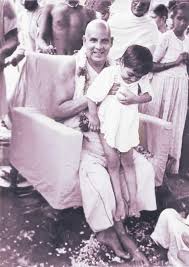
swami sivananda Monk holding child with affection
God, Swami Sivananda

Discovering the Ego

Discovering the Ego by Swami Venkatesananda Anything that is done in accordance with the dictates of the mind is a trap. So even the so-called Yogic or spiritual practices undertaken through the incentive of the mind can at best be a golden trap, a prison. The intelligence within has to realise this. It is capable of this, though it cannot get out of it. ‘I’ cannot liberate itself, but it can see the defect in all these practices, the danger in this trap. If you are doing Karma-yoga it is glorified social service-which is very good as far as it goes because it is of tremendous use to others. If you choose to practice Bhakti-yoga-Japa for three hours, Puja for two and Kirtan for two-that’s also very good because during those seven hours you didn’t do any mischief. If you do Yoga-asanas, Pranayama and some sort of meditation you enjoy good health and therefore are less of a burden upon others, which is a tremendous contribution. It is a sin to be sick-you are a nuisance unto yourself and an unbearable burden on others. To be healthy is one of the greatest services you can render humanity. If you are thoroughly forgotten by others, you are the greatest servant of humanity. If others are constantly worrying about you, you are a nuisance. But, as a Sadhana for self-realisation or Moksha that is not of great value, unless you are doing it because the Guru says so and not because the mind likes it. Through none of these is Moksha or liberation possible. All are traps, whatever be one’s attitude towards them. Self-realisation is independent of all these. Gurudev has crystallised the essence of his teachings in a little song; the first line of which is “Serve, love, give, purify, meditate, realise.” Please, do Karma-yoga to the best of your ability. Above all, love God, do charity, purify yourself through all sorts of Yoga practices-Japa, meditation, and all that. Meditate and realise the Upanishadic truths. The next line is: “Be good, do good, be compassionate.” The third: “Enquire who am I, know the self and be free.” Combine all these in your daily Sadhana. Now comes the tricky part of it. The next line of the song is: “Adapt, adjust, accommodate, bear insult, bear injury, highest Sadhana”. Is that possible in your life? One would expect the ethics to come first and the self-realisation to come last. In the first part-serve, love, meditate, realise-it is possible to indulge in what is commonly called self-deception, thinking that you are doing Karma-yoga, thinking that you are doing Bhakti-yoga, thinking that you are doing Hatha-yoga just because you can do a few Yoga postures nicely-and if you are able to sit on one posture for a considerable time you can tell yourself and others that you are in deep Samadhi. All this is possible. But adaptability is not so easy because it hits at and destroys the ego directly-whereas all the rest beat about the bush. It is easy to give up what you think you possess a shirt, a book, a little money, fruit-because the mind or the ego says, “Oh, I’ll get some more”, but to abandon one’s opinion and ideologies is more difficult, and to abandon one’s opinion of oneself, one’s self-esteem, is extremely difficult. Of all the images in the world, self-image is the hardest to crack, leave alone break. Is it possible for you to look at someone with whom you totally disagree and say, without hypocrisy, “Sir, you may be right”? During those few moments watch what goes on within you. There is a combination of an earthquake, volcano, tornado and a tidal wave, all together. That is the ego. You’ve got it! Don’t try to fix it. It hurts, it hurts. Good grief, it hurts. Watch what is happening inside you. That is the ego. The external situation takes care of itself. Someone argues with you, you say, “You may be right” and then he’s satisfied and he goes away-or he’s dissatisfied and he goes away. That’s not of very great importance. You are not doing this in order to please somebody-that is another trap. Nor are you doing this in order to displease yourself-that is masochism, equally useless, and that feeds the ego-“I’m a man of tremendous adaptability (or humility).” Nobody is interested in it. Absolutely nobody in this world is interested either in your happiness or in your salvation, so there is no sense in doing all this to please others or in striving to convince others that you are a great Yogi, Sadhu or holy man. All this is a total waste of time. Instead, try to adapt yourself to others, to the man who vehemently opposes you. Say to him, “Yes sir, you may be right”, or “You are right,” and at the same time watch what goes on within you. When Gurudev Swami Sivananda emphasised the spirit of service he exalted adaptability above all. He emphasised: “The aggressive, self-assertive, Rajasic ego is your enemy.” This has to go. Karma-yoga will help you-or, this Karma-yoga may become possible only after you have destroyed the self-assertive ego. Even the little bit of service that you render to others may help you, because in the course of that you will be forced to adapt yourself. There will be opportunities galore of adapting yourself. Bhakti, Raja and Hatha-yoga may help you, but they are only aids, not the master-key. The master-key is “Adapt, adjust, accommodate.” I have never seen a great saint with such a supple non-ego as Swamiji had. The whole Ashram owes its existence to him and every brick has been laid by him. It used to first intrigue some of us youngsters in the 1940’s to see him stand in front of one of his own disciples and ask for his opinion in a tone that would suggest that the master was a subordinate. There was a Swami here known as Swami

Discovering the Ego Read Post »
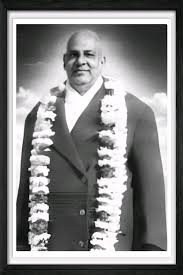
swami sivananda Framed portrait of monk with garland image
God, Swami Sivananda

The Divine Life

The Divine Life by Swami Krishnananda The moral or the ethical principle may be said to consist in the method or the art of determining the lower in terms of the higher. When one is totally exhausted in what is visible, this visible thing which is the object of our judgment, interpretation and encounter, cannot be evaluated in terms of that which reigns above the visible level. As a matter of fact, there cannot be such a thing as virtue unless there is a standard of virtue. What you do, what you think, what you speak, becomes either permissible or not permissible in comparison with a standard that has been set, and this standard, whatever it be, may be considered to be the determining principle of human conduct. And divine life, at least in the sense in which perhaps Sri Gurudev Sri Swami Sivananda Maharaj envisaged it for the purpose of the welfare of mankind, should be regarded as the regulative principle of human life. Though the word ‘divine’ has a very deep connotation which may take us far above the ken of human understanding and perception, the term ‘divine’ here, in the words ‘divine life’ are to be understood by us from a down to earth practical point of view, because divine life, which is the gospel and the message and the teaching and the precept of Sri Gurudev, is an art of practical living in this world. It may have some connection with larger, wider, higher realities, and it may even touch upon such transcendent mysteries as God and His creation, the relationship between the jiva and God, and such other deeply philosophical or metaphysical issues. But for our purposes, which is perhaps the real purpose on hand, divine life is the technique of so conducting ourselves in life, inwardly as well as outwardly, as not to be disharmonious with the principles that govern the world. Swami Sadhanandaji Maharaj who was speaking, spoke one-half verse from the Mahabharata. Do not do unto others that which you would not wish to be done to you. Do unto others as you would be done by. Here is the crux and the essence and the quintessence of Dharma, which is the way of divine living. From another point of view I may say what are called the yamas in the system of yoga of Patanjali constitute the very rock foundation of divine living. Ahimsa, satya, asteya, brahmacharya, aparigraha yamaha; these sum up the whole ethical system. This is all morality, all goodness, and the system of perfect living. From this angle of vision, in the light of this understanding, it may appear that self-control is indispensable in divine life, because to be a good person one has to be a self controlled person. A person who gives the longest possible rope to the operation or the activity of his senses and the mind is not a self-controlled person, and he cannot be regarded as a good person. You know very well the word hammered into your ears again and again as the great teaching of the Master, “Be good and do good”. You cannot know how it is possible for you to do good unless you know how it is possible for you to be good, because the doing of good is only and emanation of what you are made of. The whole personality of yours moves outwardly in human society when you do a good deed or perform what is righteous or virtuous. There is a great dictum of ethics that the finality of good conduct consists in the acceptance of everybody else also in the world as an end in itself and not as a means to one’s own end. This is perhaps the last word in ethical science and the moral principle. This is not an easy thing to understand though the grammatical meaning of this sentence perhaps is clear to every one of you. You cannot treat anyone and anything in this world as a means to an end, everyone is an end in itself, everything is an end from its own point of view. This is the basis of a good living, a harmonious living, a happy living, a divine living. The art of not injuring anybody else, the technique of not exploiting any other person or thing for one’s own selfish purpose is a necessary ingredient of living a divine life. Many of us, let every one of us consider for a moment the extent to which we are likely to exploit the conditions and circumstances of other people. We cannot enjoy a flower unless we pluck it from the garden. We cannot have any relation to a person unless he is a liked one or a disliked one. We cannot independently assume an attitude of ends rather than as a means. A person is related to you in an extraneous manner, and the art of considering things or persons as ends in themselves rules out the question of relationship. Here we are entering into a concept of what they call the kingdom of heaven. The kingdom of heaven, in our own language it is Brahma Loka, is a system of living where one does not hang on another. One is not subservient to another. Each is what one is. And each is what one is that is complete existence. There is a self-sufficiency and self-completeness and self-perfection in each individual, in the Ram Rajya that people speak of, or in the golden age of Kritya Yuga, when we have been told that social compulsions in the form of social rules and political ordinances were not necessary. This is the final ideal of a divine living. But we have to work towards this end. Every step in yoga is also yoga. Though yoga means union with the ultimate reality, it also means every step that you take in the direction of this union with reality, because, as I had occasion to mention earlier, reality manifests itself, perhaps at least

The Divine Life Read Post »

swami sivananda Black-and-white portrait of monk seated with flower garlands image
Uncategorized

God Exists

God Exists by Swami Sivananda The notion of God means an absolutely perfect being. An absolutely perfect being must have all the positive attributes, including the attributes of existence. So God must exist. The existence of God cannot be proved by scientific experimentation. It is purely a question of faith and refers to the intuitive side of man. The deepest craving, the deepest aspiration in man is for eternal happiness, eternal knowledge and eternal Truth. Man should search for some supernatural entity which can satisfy his deepest craving and aspirations. As we explain everything within Nature by the law of cause and effect, so also Nature as a whole must be explained. It must have some cause. This cause must be different from the effect. It must be some supernatural entity, i.e., God. Nature is not a mere jumble of accidents, but an orderly affair. The planets move regularly in their orbits, seeds grow into trees regularly, the seasons succeed each other in order. Now Nature cannot order itself. It requires the existence of an intelligent being, i.e. God, who is responsible for it. Even Einstein, the great scientist, was strongly convinced of the creation of the universe by a Supreme Intelligence (Click Here for some of Einstein’s quotes on spirituality). Everything in Nature has some purpose. It fulfills some function or other. Certainly every object by itself cannot choose a function for itself. Their different functions ought to have been planned or designated by a single intelligent being or God. Albeit everything is transitory in this world, people purchase enormous plots of land, build bungalows in various places and erect five-storeyed houses. They want to establish eternal life in this sense-universe. This shows that man is essentially immortal. In spite of the knowledge that everyone has to die, man thinks that he will live for ever and make very grand arrangements to live here perpetually. Further, nobody wants death. Everybody wants to live, and takes treatment when ill, spending any amount. Hence, the essential nature of man should be eternal existence. Even a fool thinks that he is wise. Everyone wants to show that he knows more than others. Nobody likes to be called a fool. Children tease their parents with various sorts of questions. The desire to know is ingrained in them. These indicate that our essential nature is knowledge. When a man laughs, people seldom ask why he is laughing. On the other hand when a man cries, everybody asks why he is crying. This shows that our essential nature is bliss. No one wants misery, but everyone want happiness, and all one’s activities in life are directed towards the acquisition of happiness. This also proves that our real nature is bliss. In deep sleep when there are no objects, senses or mind, we feel bliss; hence our essential nature should be bliss. That again is the reason why people ailing from painful maladies even desire to give up their bodies and thus get rid of the pain. If everyone then is of the nature of existence-knowledge-bliss, there should be an all-pervading principle having these characteristics and different from the perishable, inert pain-giving physical bodies. Therefore, Brahman or God, whose nature is Existence-Knowledge-Bliss (Sat-Chit-Ananda), should exist. The existence of God or the Self is determined or indicated by the existence of the Upadhis or limiting adjuncts, viz., body, mind, Prana and the senses, because there must be self-consciousness behind their activities. You always feel that, despite your possessions and all sorts of comforts, you are in want of something. There is no sense of fullness. Only if you add to yourself the all-full God, you will have fullness. When you do an evil action, you are afraid. Your conscience pricks you. This also proves that God exists and witnesses all your thoughts and actions. To define Brahman is to deny Brahman. The only adequate description of Brahman is a series of negatives. That is the reason why the sage Yajnavalkya declares in the ‘Brihadaranyaka Upanishad’ about Brahman as neti, neti, or ‘not this’, ‘not this.’ This means that the residue left after sublating the names and forms is Brahman. Brahman or the Self or the Immanent God cannot be demonstrated as He is beyond the reach of the senses and mind but His existence can be inferred by certain empirical facts or common experiences in daily life. Sometimes you are in a peculiar dilemma or pressing pecuniary difficulty. Help comes to you in a mysterious manner. You get the money just in time. Most of you might have experienced this. You exclaim at that moment in joy “God’s ways are mysterious indeed; I have got now full faith in God. Up to this time I had no faith in God.” An advocate had no faith in God. He developed double pneumonia. His breath stopped. His wife, son and relatives began to weep. But he had a mysterious experience. The messengers of Yama caught hold of him and brought him to the court of Lord Yama. Lord Yama said to his messengers: “This is not the man I wanted. You have brought a wrong person. Send him off.” He began to breathe after some time. He actually experienced that he left the body, went to the court of Yama and again re-entered his physical body. This astonishing experience changed his entire nature. He developed an intense faith in God and became a religious man. Another educated person had a similar experience, but there was some change in this case. He was also an atheist. His soul was brought by the messengers of Yama to his court. This person asked Yama: “I have not finished my work in the physical plane. I have to do still more useful work. Kindly spare my life now.” His boon was granted. He was struck with wonder on this strange experience. His nature also was entirely changed. He left his job at once. He devoted the remaining portion of his life in

God Exists Read Post »

Swami Sivananda sitting with veena musical instrument spiritual portrait photo
God, Swami Sivananda

God

God Introduction Who is God? What is God? Is there a God? Where is God? How to realise God? Man wants an answer to these eternal questions. Certainly there is God. God exists. He is the only reality. God is your creator, saviour, and redeemer. He is all-pervading. He dwells in your heart. He is always near you. He is nearer to you than your jugular vein or nose. He loves you. He can talk to you. You cannot find God by the intellect. But, you can find Him by feeling, meditation, experience, and realisation. Who is God? The Petromax does not talk, but it shines and sheds light all around. The jessamine does not speak, but it wafts its fragrance everywhere. The lighthouse sounds no drum, but sends its friendly light to the mariner. The Unseen beats no gong, but Its omnipresence is felt by the dispassionate and discriminating sage. Behind all names and forms is the one nameless, formless Essence. Behind all governors is the one Supreme Governor of governors. Behind all lights is the one Light Of lights. Behind all sounds, there is the soundless Supreme Silence. Behind all teachers is the one Supreme Guru of Gurus. Behind all these perishable objects is the one imperishable Absolute. Behind all these motions is the one motionless Infinite. Behind time, minutes, and days is the one timeless Eternity. Behind hatred, riots, and wars is the one hidden Love. God is the totality of all that exists, both animate and inanimate, sentient and insentient. He is free from ills and limitations. He is omnipotent, omniscient, and omnipresent. He has no beginning, middle, or end. He is the indweller in all beings. He controls from within. God is all in all. God is the only reality in this universe. The existence of things is by the light of God. God is ever living. All depend on Him. He is not depending on any. He is the Truth. God is the end or goal of all Yoga Sadhanas. He is the Centre towards which all things strive. He is the highest purpose or highest good of the world. You have the urge of hunger. There is food to appease the hunger. You have the urge of thirst. There is water to quench the thirst. There is the urge to be always happy. There must be something to satisfy this urge. This something is God, an embodiment of happiness. God, Immortality, Freedom, Perfection, Peace, Bliss, Love are synonymous terms. What is God? What is God? It is hard to tell. But, when I look at the Ganga, I know it is God. When I see the jessamine, I know it is God. When I behold the blue sky, I know it is God. When I hear the chirping of birds, I know it is God. When I taste honey, I know it is God. The Supreme is indefinable, though scholars give intellectual accounts of It which are not absolutely true. Every man has his own conception of God. The God of a military man wears a helmet. The God of a China-man has a flat nose and a pipe for smoking opium. The God of a Hindu has marks on his forehead, and wears a rosary and a garland of flowers. The God of a Christian wears a Cross. For some, God has wings. A buffalo will think that God is a very big buffalo. Such an anthropomorphic conception of God is obviously puerile. The greatest and most important thing in all the world is to get a right concept of God, because your belief about God governs your entire life. Is There a God? God is beyond human imagination, but he is a living reality. Brahman is no metaphysical abstraction. It is the fullest and the most real being. The existence of God cannot be proved by scientific experimentation. The Absolute baffles the mind of even the greatest scholar. It eludes the grasp of even the mightiest intellect. It is experienced as pure consciousness, where intellect dies, scholarship perishes, and the entire being itself is completely lost in It. All is lost, and all is found. You want laboratory proofs? Very fine, indeed! You wish to limit the illimitable, all-pervading God in your test-tube, blow-pipe, and chemicals. God is the source for your chemicals. He is the substratum for your atoms, electrons, and molecules. Without Him, no atom or electron will move, He is the inner ruler. It is God who lends power to our senses, perception to our mind, discernment to our intellect, strength to our limbs. It is through His will that we live and die. But man vainly imagines that he is the actor and the enjoyer. Man is a mere nothing before the almighty, governing Power that directs the movement in the universe. God’s will expresses itself everywhere as law. The law of gravitation, cohesion, relativity, cause and effect, the laws of electricity, chemistry, physics, all the psychic laws, are expressions of God’s will. As we explain everything within nature by the law of cause and effect, so also, nature as a whole must be explained. It must have some cause. This cause must be different from the effect. It must be some supernatural entity, i.e., God. Nature is not a mere chance collection of events, a mere jumble of accidents, but an orderly affair. The planets move regularly in their orbits; seeds grow into trees regularly; the seasons succeed each other in order. Now, nature is Jada, insentient. It cannot order itself. It requires the existence of an intelligent being-God-who is responsible for it. Even Einstein, the scientist, was strongly convinced of the creation of the universe by a Supreme Intelligence. Though you do not see the stars in the daytime, yet they do exist. Though you cannot see the sun during a cloudy day, yet it does exist. Even so, though you cannot see God with these physical eyes, yet He does exist. If you

God Read Post »