













Hari Om

Menu

February 18, 2026

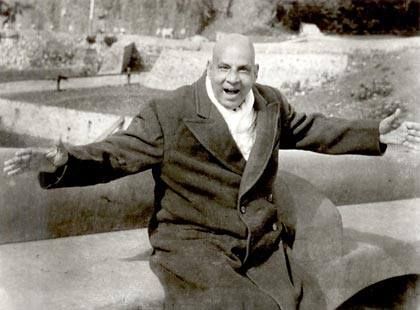
Swami Sivananda smiling with open arms image
Saints and Masters, Swami Sivananda

Lord Gauranga

Lord Gauranga (Sri Krishna Chaitanya Mahaprabhu) Hare Krishna Hare Krishna Krishna Krishna Hare Hare Hare Rama Hare Rama Rama Rama Hare Hare Birth and Parentage Pundit Jagannath Misra, alias Purandar Misra, a pious Brahmin of the Vaidik sub-caste, had migrated from Sylhet and settled at Nadia or Nabadwip, a city of learned men in the Nabadwip district of West Bengal, situated on the river Ganges, seventy-five miles north of Calcutta. Jagannath Misra’s wife was Sachi Devi, daughter of the scholar Nilamber Chakravarti. She also was a pious lady. A son was born to Jagannath Misra and Sachi on the night of the full moon, on 4th February, 1486 A.D., at Nabadwip. The newborn child was named Viswambar. He was the tenth child of Jagannath Misra and Sachi Devi. The first eight–all daughters–died soon after their birth. The ninth was Viswarup, a son. He abandoned the world at sixteen when he was being forced to marry and entered a monastery in South India. The women, thinking that Sachi had lost many children, gave the tenth child, Viswambar, the bitter name of Nimai (derived from the name of the Neem tree) as a protection against all evil influences. The neighbours called him Gaur or Gaur-Hari or Gauranga (fair-complexioned) on account of his marvellous beauty. Gaur means fair and Anga means body; and they called him Gaur-Hari, because he was so fond of the name ‘Hari’ that nothing could soothe him, when he cried during childhood, save Hari’s name. Boyhood and Studies Gauranga studied logic at the school of Vasudev Sarvabhauma, a reputed professor of Nyaya. The extraordinary intellect of Gauranga attracted the attention of Raghunath, author of the famous book on logic called Didheeti. Raghunath thought within himself that he was the most intelligent youth in the world. He thought that he was more intelligent than his teacher Sarvabhauma. Raghunath’s one great ambition was that he should be the foremost man of learning in the whole world. But, when he found that Gauranga, though much younger than himself, was more intelligent and learned, he began to lose hope. His heart was filled with fear. Gauranga was at that time writing a commentary on Nyaya. This made Raghunath more nervous. Raghunath wanted to see the commentary of Gauranga. But he doubted whether Gauranga would consent to show it to him. Anyhow Raghunath requested Gauranga to show him his commentary on Nyaya. Gauranga readily consented to read it to Raghunath. When they were crossing the river by boat, Gauranga read out his commentary to Raghunath. Raghunath found that Gauranga’s commentary was a masterly original exposition. Raghunath’s hopes of occupying the first place in the world as professor of Nyaya were blasted. He wept bitterly. Gauranga asked, “Brother Raghunath, what is the matter with you? Why do you weep? I shall console you”. Raghunath spoke out the truth: “Brother Gauranga, I have a strong ambition that I should attain the first place in the whole world as a professor of Nyaya. With this hope I have written a book on Nyaya thinking that it will beat out all the existing books. But my hope is entirely gone now, because your book really excels my book. It is concise, clear and original. It is indeed a scholarly production. This is the reason why I wept”. Gauranga also burst into tears. He said to Raghunath: “Is that all? Then do not weep, my dear brother. Nyaya is after all a dry philosophy. I will not be benefited much”. He threw the manuscript into the river. From that moment he gave up the study of Nyaya. Look at the magnanimous heart of Gauranga! Gauranga’s Nyaya was lost to the world. Didheeti of Raghunath became the first authority on Nyaya. Gauranga mastered all branches of Sanskrit learning such as grammar, logic, literature, rhetoric, philosophy and theology. He developed marvellous talents. He was a genius. He himself started a Tol or place of learning. He was then sixteen years old and he was the youngest professor to be in charge of a Tol. Gauranga was kind and compassionate. He was pure and gentle. He was sweet and loving. He was humane and sympathetic. He was a friend of the poor. He lived with them, served them and cheered them. He was very simple in his life. Death of Gauranga’s Father While Gauranga was still a student, his father died. Gauranga then married Lakshmi, the daughter of Vallabhacharya. He excelled all the Pundits and defeated even a reputed scholar of another province. He made a tour of the eastern region of Bengal and received many valuable gifts from pious and generous-hearted householders. On his return he heard that his wife had died of snake-bite during his absence. He then married Vishnupriya. He entertained pupils and taught them. He became proud of his vast erudition. A Turning Point in Gauranga’s Life In 1509, Gauranga went on a pilgrimage to Gaya with his companions. Here he met Isvar Puri, a Sannyasin of the order of Madhvacharya, and took him as his Guru. A marvellous change of life now came over Gauranga. He became a devotee of Lord Krishna. His pride of learning entirely vanished. He shouted, “Krishna, Krishna! Hari Bol, Hari Bol!”. He laughed, wept, jumped, danced in ecstasy, fell on the ground and rolled in the dust. When he was in an ecstatic mood, he never ate or drank. Gauranga proceeded to witness the footprints of Lord Krishna in the Gadadhar temple. He stood before the footprints motionless as a statue. He became absorbed in meditation. Tears gushed out of his eyes in continuous stream. His cloth was drenched with tears. He was about to fall down. Isvar Puri rushed forward and supported him. Gradually Gauranga came back to consciousness. He spoke to Isvar Puri: “Oh venerable Guru, have mercy on me. Extricate me from the quagmire of Samsara. Initiate me into the mysteries of Radha’s love for Krishna. Let me develop pure Prem for Lord Krishna. Let me drink the
Lord Gauranga Read Post »

Swami Sivananda yoga master performing asanas and meditation in different scenes
Saints and Masters, Swami Sivananda

Nimbarkacharya

Nimbarkacharya There lived a great ascetic named Aruna Muni in Vaiduryapattnam, on the banks of the Godavari, in Andhra Pradesh in Southern India. He had a pious wife by name Jayanti Devi. Sri Nimbarka was born of Aruna Muni and Jayanti Devi. He flourished in the eleventh century A.D. At the time of the Namakarana Samskara, the learned Brahmins gave the boy the name Niyamanandacharya. Nimbarka was also known by the names Aruna Rishi and Haripriyacharya. Aruna Muni and Jayanti Devi performed their sons sacred thread ceremony and sent him to Rishikul for learning the Vedas, Vedangas, Darshanas, etc. Niyamanandacharya mastered the scriptures in a short time. He was a mighty genius. People from all parts of India came to see this wonderful boy. When Niyamanandacharya was in his teens, Brahma, the Creator, came to the Ashram of Aruna Muni in the disguise of a Sannyasin. The sun was about to set. The Muni had been out. The Sannyasin asked the wife of the Muni for something to eat. The food had been exhausted. The Munis wife remained silent. The Sannyasin was about to leave the Ashram. Niyamanandacharya said to his mother, “Dear mother! A Sannyasin should not be sent away without food. We will have to suffer for violating Atithi Dharma”. The mother said, “Dear son! Your father has gone out. I have neither fruits nor roots. Moreover, there is no time for me to prepare any food. It is sunset. Sannyasins do not take their meals after sunset”. Niyamanandacharya said to the Sannyasin, “I shall bring quickly roots and fruits from the forest. I guarantee that the sun will not set till you finish your meals”. Niyamanandacharya placed his Sudarshana Chakra on a Nim tree in the Ashram where it shone like the sun. Brahma, who was in the guise of the Sannyasin, was struck with amazement. In a few minutes Nimbarka returned with roots and fruits and gave them to his mother, who served them to the Sannyasin with intense devotion. As soon as the Sannyasin finished his meals, Nimbarka removed the Sudarshana Chakra from the Nim tree. It was at once pitch dark. One quarter of the night had passed. The Sannyasin, who was Brahma, conferred on the boy the name Nimbarka(NimNeem tree; ArkaSurya or the sun). Since then he has been called Sri Nimbarkacharya. Sri Nimbarkacharya is considered to be an incarnation of Lord Haris weapon Sudarshana Chakra or discus. There are four kinds of Avataras: (i) Purna (full) e.g., Lord Krishna, Lord Rama. (ii) Kala (not all-full) e.g., Matsya, Varaha, Hamsa, etc. (iii) Amsa (part) e.g., Jada Bharata, Nara Narayana, etc. (iv) Amsamsa (part of the part) e.g., Sri Sankara, Sri Ramanuja, Sri Nimbarka, etc. In Vishnu Yana, the spiritual lineage of Sri Nimbarkacharya is given as follows: “The sacred Gopala Mantra of eighteen letters sprang from the lotus mouth of Sri Narayana. It was given to Hamsa Bhagavan. Hamsa Bhagavan in turn initiated the Kumaras who revealed this Mantra to Rishi Narada. Narada taught this to his disciple Sri Nimbarka. Nimbarka gave this Mantra to his disciple Srinivasacharya”. Sri Nimbarkacharya was the embodiment of mercy, piety, love, kindness, liberality and other divine qualities. He did rigorous austerities at Neemgram and had Darshan of Lord Krishna in that place. In that village only Nimbarka had exhibited his miracle when Brahma came for Bhiksha as a Sannyasin. Another holy place of the Nimbarka sect is Salembabad in Rajasthan. A big Mahant lives here. There is a temple of Nimbarka here. Brindavan, Nandgram, Barsana, Govardhan and Neemgram are the chief Kshetras or holy lands of the followers of Nimbarkacharya. Parikrama of the 168 miles of Brij Bhumi is their foremost duty. To pay visits on different occasions to Sri Nimbarkas temple in Neemgram, two miles from Govardhan, is their Sampradayik duty. The Nimbarka sect is found mostly in Brij Bhumi, viz., Brindavan, Nandigram, Barsana, Govardhan, etc. Jaipur, Jodhpur, Bharatpur, Gwalior, Burdwan and Okara are its centres. The Nimbarka followers are also to be found in Central India, Bihar, Orissa and West Bengal. The Dvaitadvaita Philosophy Sri Nimbarkacharya wrote the following books: Vedanta Parijat Saurabh, a commentary on the Brahma Sutras; a commentary on the Bhagavad Gita; Sadachar Prakash, a treatise on Karma Kanda; Rahasya Shodasi, an explanation of the Sri Gopala Mantra in verses; Prapanna Kalpa Valli, an explanation of the Sri Mukunda Mantra in verses; Prapatti Chintamani, a treatise pertaining to supreme refuge; Prata Smarana Stotram, a devotional hymn; Dasa Sloki or Kama Dhenu, the ten nectarine verses; and Savisesh Nirvisesh Sri Krishna Stavam. Sri Nimbarkacharya was the exponent of the Dvaitadvaita school of philosophy. Followers of this cult worship Sri Radha and Krishna. Bhagavata is the most important scripture for them. Jiva and the world are both separate from, and identical with, Brahman. The followers of this school are even now found in Mathura and Brindavan. Sankara was the exponent of the Kevala Advaita philosophy, Ramanuja of the Visishtadvaita philosophy, Madhvacharya of the Dvaita philosophy, Vallabhacharya of the Suddhadvaita philosophy and Nimbarkacharya of the Dvaitadvaita philosophy. All were great souls. We cannot say that Sankara was greater than Ramanuja or Vallabha was greater than Nimbarka. All were Avatara Purushas. Each one incarnated on this earth to complete a definite mission, to preach and propagate a certain doctrine, which was necessary to help the growth of a certain type of people who flourished at a certain period, who were in a certain stage of devotion. All schools of philosophy are necessary. Each philosophy is best suited to a certain type of people. All cannot grasp the highest Kevala Advaita philosophy of Sankara all at once. The mind has to be disciplined properly before it is rendered a fit instrument to grasp the tenets of Sankaras Advaita Vedanta. Salutations and adorations to all Acharyas! Glory to the Acharyas! May their blessings be upon us all!

Nimbarkacharya Read Post »

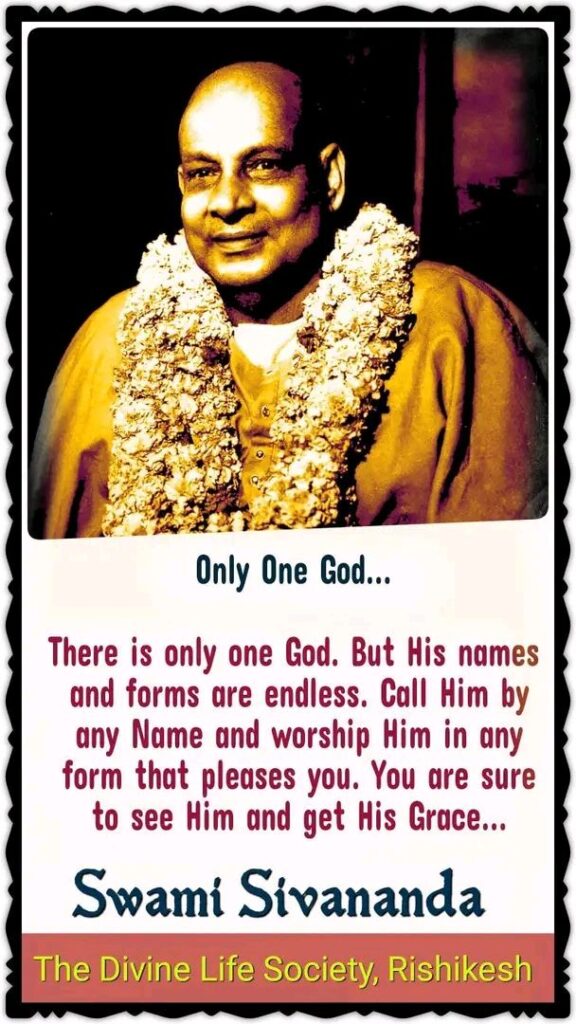
Swami Sivananda garlanded portrait with message image
Saints and Masters, Swami Sivananda

Vallabhacharya

Vallabhacharya Vallabhacharya, the founder of the Vaishnavite cult of Rajasthan and Gujarat, was born of Lakshmana Bhatta and Illamma in 1479 A.D. at Champaranya, Raipur, in Madhya Pradesh. He was a Telugu Brahmin and a contemporary of Sri Chaitanya Mahaprabhu. He is regarded as an Avatara of Agni. Vallabha lost his father when he was eleven years of age. He completed, in his twelfth year, his study of the Vedas, the six Darshanas and the eighteen Puranas at Varanasi. From Varanasi he went to Brindavan. Then he visited all the sacred places in India. Vallabha attended the court of Raja Krishna Deva at Vijayanagar and defeated all the famous Pundits of the court. The Raja was very much pleased with Vallabha for his genius and learning, showered on him gifts of gold and other wealth, and invested him with the title of Vaishnavacharya Vallabhas fame and influence quickly increased. From Vijayanagar Vallabha went to Ujjain and other places. Vallabha was married at Varanasi and his wifes name was Mahalakshmi. He had two sons. The important works of Vallabha are Vyasa Sutra Bhashya, Jaimini Sutra Bhasya, Bhagavata Tika Subodhini, Pushti Pravala Maryada and Siddhanta Rahasya. All these books are in Sanskrit. Vallabha has written many books in Brij Bhasha also. Vallabhas followers have built a temple on the spot of his birth at Champaranya. This temple is very popular and is much visited by them as a place of pilgrimage. Vallabha spent his last days at Varanasi. He thought that his lifes mission had been accomplished. He went one day to bathe in the Ganges at Hanuman Ghat. There the people saw a brilliant light ascending the sky from the earth. In the presence of a host of spectators he ascended the sky and disappeared. This took place in 1531 A.D. in Vallabhas fifty-second year. Vallabhacharya was the exponent of pure Monism or the Shuddhadvaita school of philosophy. Sri Krishna is the highest Brahman. His body consists of Satchidananda. He is called Purushottama. Vallabha�s followers worship Bala Krishna (Vatsalya Bhava). Vallabha laid great stress on Pushti (grace) and Bhakti (devotion). Maha Pushti is the highest grace or Anugraha which helps the aspirant to attain Godhead. Things come out of the Akshara (Satchidananda) like sparks from fire. These are his salient teachings.

Vallabhacharya Read Post »

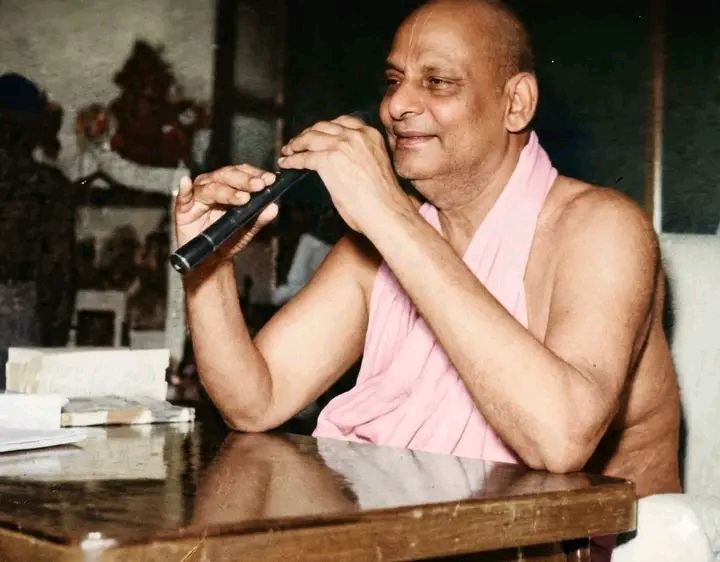
Swami Sivananda speaking into microphone seated at table. image
Saints and Masters, Swami Sivananda

Madhvacharya

Madhvacharya Madhvacharya was a great religious reformer and an orthodox commentator on the Brahma Sutras and the ten Upanishads. He was born in 1199 A.D. at Velali, a few miles from Udipi in the district of South Kanara in South India. He was a Tulu Brahmin by birth. He was born of Madhya Geha and Vedavati. Vedavati was a virtuous woman. Madhva is regarded as an incarnation of Vayu, the Wind-God. The father gave him the name Vasudeva. Madhva distinguished himself in physical exercises and field games. He had a wonderful physique. He could wrestle, run, jump and swim. So people gave him the nickname Bhima. Madhva took to the study of the Vedas and the Vedangas and became well-versed in them. He took Sannyasa in his twenty-fifth year. Achyutaprakashacharya initiated him. Madhva was now known by the name Purna Prajna. Achyutaprakashacharya found that Madhva was a brilliant Sannyasin with efficient knowledge in Vedanta and other scriptures. He put Madhva as head of the Mutt in his place. Madhva received the name of Ananda Tirtha now. He went on an extensive tour in Southern and Northern India to preach his gospel of Bhakti. He made several converts. He went to Badrinarayan, and soon after his return, he wrote his commentary on the Bhagavad Gita and the Vedanta Sutras. He built several temples at Udipi, the principal centre of the Madhva sect. Most of the orthodox Madhvas try to go to Udipi at least once in their life. Madhva had superhuman powers. He performed many miracles. He saved a boat which was caught in a storm. A boat which contained an image of Lord Krishna capsized. Madhva brought back the image from the ocean. During his tour, king Ishvara Deva in Maharashtra asked Madhva to work in building a dam. Madhva noticed that he had been unconsciously working for the king the whole day. Once he stilled the waves of the ocean when he went to take bath. Madhvacharya is the great exponent of the Dvaita school of philosophy. His Vaishnavism is called Sad-Vaishnavism in order to distinguish it from the Sri-Vaishnavism of Ramanujacharya. According to his philosophy, the Supreme Being is Vishnu or Narayana. Every follower of the Madhva school should have a firm belief in the Pancha-bheda�five real and eternal distinctions�viz., the distinction between the Supreme Being and the individual soul, between spirit and matter, between one Jiva and another Jiva, between the Jiva and matter, between one piece of matter and another. The phenomenal world is real and eternal. The worship of Vishnu consists in (i) Ankana, marking the body with His symbols, (ii) Namakarana, giving the names of the Lord to children and (iii) Bhajana, singing His glories. Madhva laid much stress on constant practice of the remembrance of God (Smarana). He says, “Form a strong habit of remembering God. Then only it will be easy for you to remember Him at the moment of death”. Madhva pointed out that when the Lord incarnated, no Prakrita Deha or material body was put on by Him. He prescribed a rigorous kind of fasting to his followers. Renunciation, devotion and direct cognition of the Lord through meditation lead to the attainment of salvation. The aspirant should equip himself with the study of the Vedas, control of the senses, dispassion and perfect self-surrender, if he wants to have the vision of the Lord. These are some of the important teachings of Madhvacharya, the renowned exponent of the dualistic school of philosophy.

Madhvacharya Read Post »

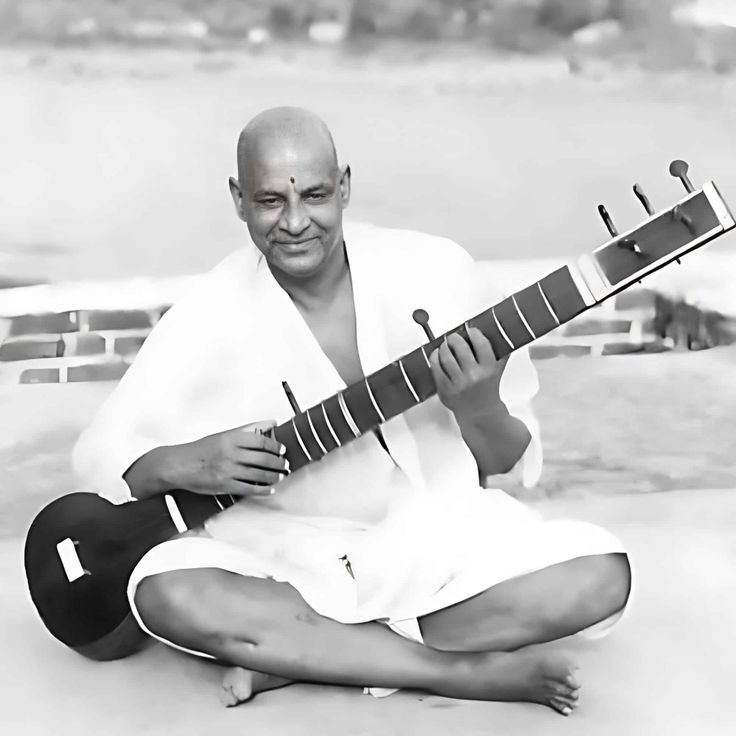
Swami Sivananda sitting and playing tanpura outdoors. image
Saints and Masters, Swami Sivananda

Ramanujacharya

Ramanujacharya In the year 1017 A.D., Ramanuja was born in the village of Perumbudur, about twenty-five miles west of Madras. His father was Kesava Somayaji and his mother was Kantimathi, a very pious and virtuous lady. Ramanuja’s Tamil name was Ilaya Perumal. Quite early in life, Ramanuja lost his father. Then he came to Kancheepuram to prosecute his study of the Vedas under one Yadavaprakasha, a teacher of Advaita philosophy. Ramanuja was a very brilliant student. Yadavaprakasha’s interpretations of Vedic texts were not quite up to his satisfaction. Ramanuja pointed out many mistakes in the exposition of his master. Sometimes he gave his own interpretations which were much liked by all the co-students. This made Yadavaprakasha very jealous of Ramanuja. Yadavaprakasha made a plan to take away the life of Ramanuja. He arranged for Ramanuja and his cousin Govinda Bhatta–a fellow student–a pilgrimage to Varanasi. Govinda Bhatta, being a favourite student of Yadavaprakasha, came to know of the latter’s plan while they were travelling. He at once apprised Ramanuja of the danger and helped him to escape. By the grace of God, Ramanuja escaped with the help of a hunter and his wife whom he accidentally met on the way. About the end of the tenth century, the Visishtadvaita system of philosophy was well established in Southern India and the followers of this creed were in charge of important Vaishnavite temples at Kancheepuram, Srirangam, Tirupathi and other important places. The head of the important Vaishnavite institution was Yamunacharya, a great sage and profound scholar; and he was also the head of the Mutt at Srirangam. One of his disciples, by name Kanchipurna, was serving in the temple at Kancheepuram. Although a Sudra, Kanchipurna was so very pious and good that the people of the place had great respect and reverence for him. At present, there is a temple at Kancheepuram where Kanchipurna’s image has been installed and where he is worshipped as a saint. Young Ramanuja came under Kanchipurna’s influence and had such reverence for him that he invited him to dinner in his house. Ramanuja’s intention was to attend on Kanchipurna and personally serve him at dinner and himself take meals afterwards. Unfortunately, Kanchipurna came to dinner when Ramanuja was not at home, and took his meals being served by Ramanuja’s wife. When Ramanuja returned home, he found the house washed and his wife bathing for having served meals to a Sudra. This irritated Ramanuja very much and turned him against his wife who was an orthodox lady of a different social ideal. After a few incidents of this nature, Ramanuja abandoned the life of a householder and became a Sannyasin. About this time, Yamunacharya being very old was on the look-out for a young person of good ability and character to take his place as head of the Mutt at Srirangam. He had already heard of Ramanuja through his disciples and made up his mind to instal Ramanuja in his place. He now sent for Ramanuja. By the time Ramanuja reached Srirangam, Yamunacharya was dead; and Ramanuja saw his body being taken by his followers to the cremation ground outside the village. Ramanuja followed them to the cremation ground. There he was informed that Yamunacharya, before his death, had left instructions that he had three wishes which Ramanuja was to be requested to fulfil, viz., that a Visishtadvaita Bhashya should be written for the Brahma Sutras of Vyasa which hitherto had been taught orally to the disciples of the Visishtadvaita philosophy and that the names of Parasara, the author of Vishnu Purana, and saint Sadagopa should be perpetuated. Ramanuja was deeply touched, and in the cremation ground itself, before the dead body of Yamunacharya, he made a solemn promise that, God willing, he would fulfil all the three wishes of Yamunacharya. Ramanuja lived for 120 years, and in the course of his long life, fully redeemed his promise by fulfilling all the three wishes of Yamunacharya. After the death of Yamuna, his disciples at Srirangam and other places wanted Ramanuja to take Yamuna’s place as the head of the Mutt at Srirangam. This was also the expressed wish of Yamuna. Accordingly, Ramanuja took his place and was duly installed with all the attendant ceremonies and celebrations as the head of the Visishtadvaita Mutt at Srirangam. Ramanuja then proceeded to Thirukottiyur to take initiation from Nambi for Japa of the sacred Mantra of eight letters Om Namo Narayanaya. Somehow, Nambi was not willing to initiate Ramanuja easily. He made Ramanuja travel all the way from Srirangam to Madurai nearly eighteen times before he made up his mind to initiate him, and that too, only after exacting solemn promises of secrecy. Then Nambi duly initiated Ramanuja and said: Ramanuja! Keep this Mantra a secret. This Mantra is a powerful one. Those who repeat this Mantra will attain salvation. Give it only to a worthy disciple previously tried. But Ramanuja had a very large heart. He was extremely compassionate and his love for humanity was unbounded. He wanted that every man should enjoy the eternal bliss of Lord Narayana. He realised that the Mantra was very powerful. He immediately called all people, irrespective of caste and creed, to assemble before the temple. He stood on top of the tower above the front gate of the temple, and shouted out the sacred Mantra to all of them at the top of his voice. Nambi, his Guru, came to know of this. He became furious. Ramanuja said: O my beloved Guru! Please prescribe a suitable punishment for my wrong action. Ramanuja said: I will gladly suffer the tortures of hell myself if millions of people could get salvation by hearing the Mantra through me. Nambi was very much pleased with Ramanuja and found out that he had a very large heart full of compassion. He embraced Ramanuja and blessed him. Having thus equipped himself with the necessary qualifications, Ramanuja succeeded Yamuna. By this time, Ramanuja’s fame had spread far and wide. He

Ramanujacharya Read Post »

Swami Sivananda garland portrait image
Saints and Masters, Swami Sivananda

Adi Sankaracharya

Adi Sankaracharya Introduction Chaos pervaded all through India in the matter of religion and philosophy. Sect after sect, such as Charvakas, Lokayathikas, Kapalikas, Shaktas, Sankhyas, Buddhas and Madhyamikas sprang up. The number of religions rose as high as seventy-two. There was fight amongst sects. There was no peace anywhere. Chaos and confusion reigned supreme. There was superstition and bigotry. Darkness prevailed over the once happy land of Rishis, sages and Yogins. The once glorious land of the Aryans was in a miserable state. Such was the state of the country at the time which just preceded the Avatara (incarnation) of Sankaracharya. The existence of Vedic Dharma in India today is due to Sankara. The forces opposed to Vedic religion were more numerous and powerful at the time of Sankara than they are today. Still, single-handed, within a very short time, Sankara overpowered them all and restored the Vedic Dharrna and Advaita Vedanta to its pristine purity in the land. The weapon he used was pure knowledge and spirituality. The previous Avataras, like Rama and Krishna, used physical forces because the obstacles to Dharma in those days arose from the physical obstructions and molestations of the Asuras (demons). The menace to Dharma in the Kali age (age of destruction) arose from obstacles that were more internal than external, more mental than physical. The seeds of Adharma (unrighteousness) were then working in the minds of almost everyone. Hence the evil had to be combated purely by the weapon of knowledge and self-purification. It was in order to forge this weapon and wield it with efficacy that Sankara took birth in the Brahmin Varna (caste) and entered the Sannyasa (renunciate) order early in life. The previous Avataras like Rama and Krishna took birth in the Kshatriya Varna (warrior caste), because in their days they had to wield military weapons in the restoration of Dharma. All are no doubt aware of the very important position assigned to Sankaracharya in the history of Indian philosophy. It can be affirmed, without any fear of contradiction, that Bharata Varsha would have ceased to be Bharata Varsha several centuries ago and would never have survived the murderous sword, the devastating fire and the religious intolerance of the successive invaders, if Sankara had not lived the life he lived and taught the lessons he taught. And those lessons are still pulsating in every cell and in every protoplasm of the true aspirant and the true Hindu. Birth Sankara was born in a very poor family in the year 788 A.D. in a village named Kaladi, six miles to the east of Alwaye, Kerala. Kaladi is a railway station, on the Kochi-Shoranur rail link. Sankara was a Nambudiri Brahmin. Rajasekhara, a Zamindar (a rich landlord), built a Siva temple in Kaladi and formed an Agrahara for Brahmins who were in the service of the temple. Vidyadhiraja was doing Puja (worship) in the temple. He had only a son named Sivaguru. Sivaguru studied the Shastras and married at the proper age. He had no child. He and his wife Aryamba prayed to Lord Siva to bless them with a son. A son was born to them in the Vasanta Ritu or the spring season at noon, in the auspicious Abhijit Muhurta and under the constellation Ardhra. This son was Sankara. Sivaguru died when Sankara was seven years old. Sankara had none to look after his education. His mother was an extraordinary woman. She took special care to educate her son in all the Shastras. Sankara’s Upanayana or thread ceremony was performed in his seventh year, after the death of his father. Sankara exhibited extraordinary intelligence in his boyhood. When he was only sixteen, he became a master of all the philosophies and theologies. He began to write commentaries on the Gita, the Upanishads and the Brahma Sutras when he was only sixteen years old. What a great marvel! Sankara’s mother was consulting astrologers about horoscopes of suitable girls for her son’s marriage. But Sankara had a firm resolve to renounce the world and become a Sannyasin. Sankara’s mother was very much grieved that there would be no one to perform her funeral rites after her death. Sankara gave full assurance to his mother that he would always be ready to serve her at the death-bed and perform the usual funeral rites. Even then his mother was not satisfied. One day, Sankara and his mother went to take bath in the river. Sankara plunged into the water and felt that a crocodile was dragging him by the foot. He shouted out to his mother at the top of his voice: “O dear mother! A crocodile is dragging me down. I am lost. Let me die peacefully as a Sannyasin. Let me have the satisfaction of dying as a Sannyasin. Give me your permission now. Let me take Apath-sannyasa�. The mother immediately allowed him to take Sannyasa. Sankara took Apath-sannyasa (the adoption of Sannyasa when death is near) at once. The crocodile let him go unharmed. Sankara came out of the water as a nominal Sannyasin. He again repeated his promise to his mother. He left her under the care of his relatives and gave away his little property to them. He then proceeded to find out a Guru with a view to get himself formally initiated into the sacred order of Sannyasa. In Search of a Guru Sankara met Swami Govindapada Acharya in a hermitage in Badrikashram (Badrinath) in the Himalayas and he prostrated at the teacher’s feet. Govinda asked Sankara who he was. Sankara replied: “O revered Guru! I am neither fire nor air nor earth nor water-none of these, but the Immortal Atma (Self) that is hidden in all names and forms”. He also said in the end: “I am the son of Sivaguru, a Brahmin of Kerala. My father died in my childhood. I was brought up by my mother. I have studied the Vedas and the Shastras under a teacher. I took Apath-sannyasa when a crocodile caught

Adi Sankaracharya Read Post »

swami sivananda Guru seated with two women devotees image
Saints and Masters, Swami Sivananda

Acharyas

Acharyas When Hinduism degenerated on account of creeping in of superstitious beliefs and false worship, various reformers appeared to purge Hinduism of its superstitions and wrong beliefs and observances. Sri Sankara appeared to remove wrong beliefs and abuses in Buddhism and Jainism and established Kevala Advaita or absolute monism. Sri Ramanuja appeared to teach Bhakti and make people practice devotion and realize God while remaining in the world.Similarly many Acharyas appeared in this great land of ours. If the people became cruel, they appeared to preachAhimsaor non-injury. If they become timid, another comes to infuse courage in them. If they become inclined towards rigorousTapas(austerities), another comes and preaches “Realize while enjoying in the world”. Here is a compilation of what Gurudev Swami Sivanandaji Maharaj wrote about the great Acharyas who were born in Bharatavarsha (India).

Acharyas Read Post »

swami sivananda Illustration of spiritual saint seated with Om symbol
Saints and Masters, Swami Sivananda

Guru Nanak

Guru Nanak by Swami Sivananda Birth Whenever there is a big catastrophe in the land, whenever there is decline of righteousness, whenever there are oppression and chaos in the land, whenever the faith of the people in God wanes, great men or saints appear, from time to time, to enrich sacred literature, to protect Dharma, to destroy unrighteousness and reawaken the love of God in the minds of the people. India was in a bad plight. Babar invaded India. His armies assaulted and sacked several cities. The ascetic captives were forced to do rigorous work. There was wholesale massacre everywhere. The kings were bloodthirsty, cruel and tyrannical. There was no real religion. There was religious persecution. The real spirit of religion was crushed by ritualism. The hearts of the people were filled with falsehood, cunningness, selfishness and greed. At such a time Guru Nanak came to the world with a message of peace, unity, love and devotion to God. He came at a time when there was fight between the Hindus and the Mohammedanswhen real religion was replaced by mere rituals and forms. He came to preach the gospel of peace, brotherhood or the unity of humanity, love and sacrifice. Nanak, the Khatri mystic and poet and founder of the Sikh religion, was born in 1469 A.D. in the village of Talwandi on the Ravi, in the Lahore district of Punjab. On one side of the house in which Guru Nanak was born, there stands now the famous shrine called ‘Nankana Sahib’. Nanak has been called the ‘Prophet of the Punjab and Sind’. Nanak’s father was Mehta Kalu Chand, known popularly as Kalu. He was the accountant of the village. He was an agriculturist also. Nanak’s mother was Tripta. Even in his childhood, Nanak had a mystic disposition and he used to talk about God with Sadhus. He had a contemplative mind and a pious nature. He began to spend his time in meditation and spiritual practices. He was, by habit, reserved in nature. He would eat but little. Nanak’s education When Nanak was a boy of seven, he was sent to Gopal Pandha to learn Hindi. The teacher told Nanak to read a book. Nanak replied, “What will it avail to know all and not have a knowledge of God?” Then the teacher wrote the Hindi alphabets for him on a wooden slate. Nanak said to the teacher, “Please tell me, sir, what books have you studied? What is the extent of your knowledge?” Gopal Pandha replied, “I know mathematics and the accounts necessary for shopkeeping”. Nanak replied, “This knowledge will not in any way help you in obtaining freedom”. The teacher was very much astonished at the words of the boy. He told him, “Nanak, tell me something which could help me in the attainment of salvation”. Nanak said, “O teacher! Burn worldly love, make its ashes into ink and make the intellect into a fine paper. Now make the love of God your pen, and your heart the writer, and under the instructions of your Guru, write and meditate. Write the Name of the Lord and His praises and write, ‘He has no limit this side or the other’. O teacher! Learn to write this account”. The teacher was struck with wonder. Then Kalu sent his son to Pundit Brij Nath to learn Sanskrit. The Pundit wrote for him ‘Om’. Nanak asked the teacher the meaning of ‘Om’. The teacher replied, “You have no business to know the meaning of ‘Om’ now. I cannot explain to you the meaning”. Nanak said, “O teacher! What is the use of reading without knowing the meaning? I shall explain to you the meaning of ‘Om’”. Then Nanak gave an elaborate explanation of the significance of ‘Om’. The Sanskrit Pundit was struck with amazement. Nanak’s occupation Then Kalu tried his level best to turn Nanak’s mind towards worldly matters. He put Nanak in the work of looking after the cultivation of the land. Nanak did not pay any attention to his work. He meditated even in the fields. He went out to tend the cattle, but centred his mind on the worship of God. The cattle trespassed into a neighbour’s field. Kalu rebuked Nanak for his idleness. Nanak replied, “I am not idle, but am busy in guarding my own fields”. Kalu asked him, “Where are your fields?” Nanak replied, “My body is a field. The mind is the ploughman. Righteousness is the cultivation. Modesty is water for irrigation. I have sown the field with the seed of the sacred Name of the Lord. Contentment is my field’s harrow. Humility is its hedge. The seeds will germinate into a good crop with love and devotion. Fortunate is the house in which such a crop is brought! O sir, mammon will not accompany us to the next world. It has infatuated the whole world, but there are few who understand its delusive nature”. Then Kalu put him in charge of a small shop. Nanak distributed the things to Sadhus and poor people. He would give away in charity whatever he could lay hands on in his father’s house and in the shop. Nanak said, “My shop is made of time and space. Its store consists of the commodities of truth and self-control. I am always dealing with my customers, the Sadhus and Mahatmas, contact with whom is very profitable indeed”. When Nanak was fifteen years of age, his father gave him twenty rupees and said, “Nanak, go to the market and purchase some profitable commodity”. Kalu sent his servant Bala also to accompany Nanak. Nanak and Bala reached Chuhar Kana, a village about twenty miles from Talwandi. Nanak met a party of Fakirs. He thought within himself: “Let me feed these Fakirs now. This is the most profitable bargain I can make”. He purchased provisions immediately and fed them sumptuously. Then he came back to his house. The servant informed his master of his son’s bargain. Kalu was very much annoyed.

Guru Nanak Read Post »

Bhagwan Shri Sathya Sai Baba Throne Darshan Blessing Image
Saints and Masters, Swami Sivananda

Prophet Mohammed

Prophet Mohammed by Swami Sivananda MOHAMMED, known as the Prophet of Islam, was born of the esteemed Qoreish tribes in Mecca on the 20th of April. The chief occupation of his tribe was trade. The Islamic Prophet led a life of simplicity and poverty. His house, built of mud walls and thatched with date-palm leaves, often remained dark for want of oil for the lamp. At times he did not even have the flour with which to prepare bread. Mohammed’s father was Abdullah. He died while returning from a journey to Medina. His mother died six years later, leaving Mohammed in the care of his uncle, Abu Talib. His mother’s name was Amna. Mohammed was illiterate but from an early age he showed a remarkable aptitude for concentration. He was a serious child and never took part in pranks or frolic. When he grew up he earned a great reputation for his honesty and integrity. He always fulfilled his promises. Because he was extremely trustworthy, he became known as Al-Amin. One day, Mohammed accompanied his uncle to Syria on business. On the journey he met Bahera, a Christian monk, who immediately recognized in the young boy a future prophet. When Mohammed was twenty-five years old he married Khadija, a rich widow of Mecca, then forty years of age. She was a gentle woman of spotless character. THE BIRTH OF ISLAM Mohammed frequently went to a cave in the desert three miles from Mecca, where he would spend months in prayer and meditation. One morning, the angel Gabriel appeared to him and said: “Rise, for thou art the Prophet of God. Go forth and preach in the name of thy Lord. Your God is merciful.” A voice was heard – the voice of the Lord – addressed to the Prophet. It was recorded and became the text of the holy Koran. The Koran is not a literary work of Mohammed; it is a direct revelation of the Lord. When he returned from the cave, Mohammed was filled with divine majesty. On informing his wife of the vision he had, she said, “You are faithful and never utter an untruth. Therefore, you may obey the call and follow the voice.” Khadija was the first disciple to profess faith in the Prophet. She became his disciple and the first follower of Islam. Mohammed delivered public sermons on his faith to a large number of people, proclaiming the unity of God and denouncing the evil of drunkenness and impurity. Though some ridiculed and turned away, others were converted by the power of his words. Once, he went to the Kaaba and proclaimed that there was no God but Allah. The worshippers of idols looked upon this as a great insult and attacked him, but he was rescued by his disciples. He was abused and insulted frequently in public. The Prophet of Islam did not hold any debates nor did he challenge anyone to controversies and discussions. He silently converted people to his faith through his strong personality, charming demeanor and force of divine virtues. He bore with patience the persecution of his tormentors. His characteristics as well as the power of the verses of the Koran captivated the hearts of people. THE SPREAD OF ISLAM Mohammed fled from Mecca to Medina in 622 A.D. when he learned that the Qoreish tribe planned to take his life. The Muslim calendar begins on the day of this flight, known as the Hijra. The people of Medina accepted Mohammed’s faith readily because it was plain, simple and direct. With their help and with an army of men the Prophet later returned to Mecca, where he succeeded in converting his relatives and fellowmen. He then sent missionaries to other parts of Arabia in order to convert the entire peninsula to the new faith. The teaching of Mohammed attracted numerous followers because they came from a simple and honest man who never posed as a world teacher. He often told his disciples that he was an ordinary man as they were, teaching them to believe in Allah and His revelations. COMPASSION IN ACTION Mohammed had great compassion and love. He served the widows and orphans, the poor, sick, aged and homeless. Once, he met an old, impoverished widow. Mohammed said to his wife, “My beloved, give food to this old woman first and then you may eat.” When the Prophet saw a blind woman stumbling in the street in Mecca, he led her gently home and thereafter took meals to her daily. One day, he saw a woman with a heavy load on her head. At once he relieved her of her burden and carried it on his own head to her house. Mohammed was humble and simple. Although he was a Prophet with a large following he worked along with others like an ordinary labourer during the construction of the first mosque at Medina. He mended his own shoes, milked the cows, swept the house, purchased provisions, tethered and fed the camels. He never laughed loudly but simply smiled. He had an attractive face and a charming smile. He respected the poor and restored freedom to many slaves. TENETS OF ISLAM Islam, meaning “resignation to the Will of God”, bears marked similarity to the Semitic religion of Judaism. It emphasizes the principle of brotherhood and equality of man, and is based on austere, simple living. The main injunctions of Islam are fasting, prayer, pilgrimage, charity and firm belief in the oneness of God and His prophets, particularly Mohammed. The holy Koran, divided into more than one hundred chapters, opens and ends with the subject of the unity of God. The religion of Islam is essentially a religion of peace, for Mohammed was a lover of peace and non-violence. Selflessness and service to suffering humanity are the watchwords of Islam. ANECDOTES While Mohammed was serving a sick slave, the latter asked, “Has my master sent you to look after me?” “Yes,” said Mohammed, “the master of masters has

Prophet Mohammed Read Post »

Swami Sivananda writing spiritual teachings surrounded by books
Swami Sivananda, Uncategorized, Yoga

What Is Bhakti?

What Is Bhakti? by Swami Sivananda Bhakti comes from the word “Bhaj” which means ‘to be attached or devoted to’. It is pure unselfish love mixed with reverence. Bhakti is the basis of all religious life. Bhakti destroys Vasanas and egoism. Bhakti elevates the mind to magnanimous heights. Bhakti is the master-key to open the chambers of wisdom. Bhakti culminates in Jnana. Bhakti begins in two and ends in one. Those who fight on the point: “Which is superior Bhakti or Jnana?” are groping in darkness. They have not understood the real Tattva. Para Bhakti and Jnana are one. Bhakti or devotion in the form of Anuraga or attachment to the Lord leads to the highest good or the attainment of God-realisation. The stronger the attachment, the quicker the realisation. Prahlada says: “O Lord Hari, may I have the same sort of profound abiding love for Thee, which the worldly people cherish for the fleeting sensual objects of this universe. May not that Bliss disappear from my heart, when I think of Thee.” What a beautiful definition of Bhakti. These thoughts have emanated from the core of Prahlada’s heart. They are charged with intense feeling and devotion. It is easy to have a thing that is beautiful. God is Beauty of beauties. God is the source for all beauties. God is an embodiment of undecaying beauty. So it is very easy to love God. If you are attached to a finite, perishable object as wife or son, you become miserable when your wife or son dies. But if you are attached to God you get eternal, infinite Bliss and peace. A Bhakta aspires, therefore, to something imperishable and infinite. Without love man’s life is empty. Without love man lives in vain. Love is vital. It is all-pervading. Love is a great power. Love is the sap of life. Give love. It shall be given unto you. Cultivate this love through service, Japa, Satsanga and meditation. Human love is all hollow. It is mere animal attraction. It is passion. It is carnal love. It is selfish love. It is ever changing. It is all hypocrisy and mere show. The wife does not care for her husband when he is in the role of unemployment. She frowns at him. The husband dislikes his wife when she loses her beauty on account of some chronic disease. You can find real, lasting love in God alone. His love knows no change. A selfish man loves his body only. Then he extends his love to his wife, children and friends. When he evolves a bit, he begins to love his own caste people and those who belong to his own district. Afterwards he loves people of his own province. His heart further expands. Then he loves the people of his own country. In the long run, he develops the feeling of universal brotherhood. He begins to love any man in any part of the world. Devotion is the seed. Faith is the root. Service of Bhagavatas is the shower. Self-surrender is the flower. Communion with the Lord is the fruit. This is the path of Bhakti Yoga. In Bhakti Yoga, no learning, no deep erudition of Vedas is needed. What is wanted is a devotional, sincere heart. Anyone can sing or repeat His Name. Tukaram was an illiterate peasant. He could not even sign his name. Through devotion and grace of Lord Krishna he had super-intuitional knowledge. His famous Abhangas or songs are texts for M.A. students in Bombay University. Sri Ramakrishna Paramahamsa also was an illiterate. When he lived in Dakshineshwar temple, he got divine knowledge through the Grace of Mother Kaali and Advaita Guru Sri Swami Totapuri. From a careful study of the lives of these two saints, it is quite clear that there is the fountain of knowledge within the heart and that any one can tap this source through sincere devotion. “I bow to Lord Narayana or Lord Siva or Lord Krishna.” This is Bhakti Yoga. “I am the Self in all.” This is Jnana Yoga. Men in their social and domestic relation develop love, affection, Prema, Preeti, admiration, reverence, awe and other sentiments. This cannot serve the purpose of life. It is only when one develops devotion or Bhakti for God that ones real purpose of life is gained. Devotion is the consummation of the above emotions. He does not practise Pratyahara. He tries to get himself drowned in the Prema of the Lord. He attempts to fix his mind either at His lotus-feet or charming face. Consequently Pratyahara follows unconsciously. A Raja Yogi practises Pratyahara deliberately. A Jnana Yogi does not practise Pratyahara, but tries to identify himself with the hidden self in all objects. He tries to remove the veil that covers the Atman within the objects by the force of Vedantic Nididhyasana. He negates the names and forms and identifies himself with the all-pervading hidden consciousness. A sage says: “This world has come out of Ananda (bliss); it subsists in Ananda and it dissolves in Ananda.” A devotee says: “This world has come out of love; it subsists in love and it dissolves in love.” In Ananda love is hidden. The sage loves his own Atman. He is devoted to his Atman. In love, Ananda is hidden. The devotee loves his Beloved and dances in joy. Dvaita (dualism), Vishishtadvaita (qualified monism) are different stages or different rungs in the philosophical ladder. The highest summit is Advaita. The realisation of Dvaitins and Vishishtadvaitins is also quite true and correct from their standpoints. A little more Sadhana and understanding will make them land in pure Advaitic realisation. In Bhakti Yoga, there are three things, viz., Lover, Beloved and Love. As soon as the Lover knows that he is identical with the Beloved, there is an end for Bhakti. Jnana dawns. Duality vanishes. Who is to love whom now? According to Advaita Vedanti, devotion is constant thinking on the formula, “I am he” or “I am Brahman.” A Bhakta

What Is Bhakti? Read Post »