Hari Om

Menu

February 16, 2026

Swami Sivananda meditating by river vintage photo
Bhakti Yoga, Swami Sivananda

Bhakti Sutras of Narada

Bhakti Sutras of Narada by Swami Sivananda 1. The Nature of Divine Love Salutation to Para Brahman and Rishi Narada! Now, we will explain Bhakti. Notes and Commentary Atha means now. It is something used in the sense of sequence. It is a word that is used when a subject is begun, to invoke the Divine blessing. Sutra means an aphorism or terse saying impregnated with deep significance. Just as flowers and pearls are arranged or studded on a thread, so also philosophical ideas are studded or spread or arranged in the aphorism. Rishis always have expressed their ideas in the form of laconic Sutras. That is the beauty in the writings of Rishis or seers. That is the sign of God-realisation. The six Darsanas or schools of philosophy are embodied in the form of Sutras only. Without a commentary it is difficult for laymen to understand these Sutras. Bhakti is defined in the following Sutra. Those who have understood the magnitude of human sufferings in this sense-universe and those who have realised that this world is unreal, impermanent, illusory, perishable, full of troubles, difficulties, miseries, pain, sorrow and tribulation and those who desire to free themselves from the round of births and deaths with its concomitant evils of old age, diseases, etc. , should know what Bhakti is, how to develop Bhakti, who is God or Lord or Isvara, the relationship between God and man and the methods to realise God, or to approach Him or to attain God-Consciousness. 2. Definition of BhaktiIt is of the form of Supreme Love towards God. Notes and Commentary The term Bhakti comes from the root “Bhaj”, which means “to be attached to God. ” Bhajan, worship, Bhakti, Anurag, Prem, Priti are synonymous terms. Bhakti is love for love’s sake. The devotee wants God and God alone. There is no selfish expectation here. There is no fear also. Therefore it is called “Parama-prema-rupaa. “ Is the son afraid of his father, who is a Sessions Judge? Is the wife afraid of her husband? So also a devotee entertains not the least fear of God. The fear of retribution vanishes in him. He feels, believes, conceives and imagines that his Ishtam is an Ocean of Love or Prem. And it is of the nature of Nectar. Notes and Commentary God, Immortality (Amritam), peace (Santi), Absolute, Infinite (Ananta), Intelligence, Consciousness (Chit), Eternity, Bliss (Ananda), Nirvana, Freedom (Mukti), Perfection (Siddhi), are synonymous terms. Devotion gives Immortality. Bhakti is an embodiment of Amritam or nectar. Nitya Sukha (eternal bliss), Immortality, Parama Santi (supreme peace), Nitya Tripti (eternal satisfaction), Akhanda Sukha (unbroken joy) can be had only in God. That is the reason why aspirants attempt for God-realisation. Worldly pleasure is not constant. He who smiles and laughs for five minutes weeps bitterly for hours together. No man in this world is perfectly happy. A multimillionaire is full of cares, worries, anxieties and fear. He is afraid of enemies. He is guarded by sepoys. He has to take injections for getting sleep, as he is always worried. He is worse than a prisoner. Rockefeller, the richest man in the world, who could pave a road of several miles with golden sheets expressed to a priest who went to behold his glory and opulence: “O reverend priest! I am the most miserable man in the world. I can’t eat anything; my stomach, kidneys and liver are filled with germs and diseases. I am always restless”. Maitreyi puts a question to her husband: “O my Lord! Can the wealth of the three worlds give me immortality?” Yajnavalkya replied: “Certainly not, my beloved. ” Yama also says to Nachiketas: “Wealthy people, on account of delusion and pride, lose their memory, intellect and understanding, and go round and round in this impermanent and unhappy world and come again and again in my clutches. Wealth and woman are my two snares to entrap the worldly-minded persons whose minds are filled with lust and greed. You are above these things. You have shunned all my temptations. You have selected the Sreyo-Marga“. This is a world of diversity. Intellects are different. Faces are different. Religions are different. Sounds are different. Faiths are different. Colours are different. Faculties are different. Tastes and temperaments are different. But one thing is common in all. Every one of us wants Nitya Sukha (eternal happiness), infinite Knowledge, Immortality, freedom and independence. These things can be obtained by God-realisation alone. 3. Fruits of BhaktiBy attaining which man becomes perfect, immortal and fully contented. Notes and Commentary These are the fruits of Bhakti. Sutras 4, 5 and 6 describe the fruits of Bhakti. All weaknesses and Doshas (faults) vanish. People put a question: “How can we love God whom we have not seen?” Remain in the company of Bhaktas; hear the Lilas of Bhagavan, His Aisvaryas (Divine powers) or Vibhutis, His Madhurya (grace and beauty); serve Bhaktas; sing His Name daily and do Japa of His Mantra; stay for one year in Ayodhya, Vrindavana, Chitrakuta, Rishikesh or Pandharpur. You will develop love for God. Yat prapya na kinchid vanchati, na sochati, na dveshti, na ramate, notsaahee bhavati. (5) By obtaining which he does not desire anything, neither grieves nor hates anything, does not indulge in sensual pleasures, nor becomes zealous (in endeavours for self-advancement or self-aggrandisement). Notes and Commentary Why does desire manifest? On account of Avidya or ignorance or imperfection or lack of bliss. When one gets Darshan of God, all desires are burnt up. When the boy Dhruva had Darshan of Lord Hari, the desire to obtain kingdom that prompted him to worship, disappeared. Devotion is a fire like Jnanagni (fire of wisdom) that burns up all mundane desires. How can a trace of earthly desire remain when the devotee attains God, the embodiment of bliss? Darshan of God comes in various ways viz. , in dreams, in physical form with four hands, with conch, mace, discus and lotus-flower in the hands, in the form of cosmic consciousness (Visvarupa Darshan) which Arjuna had, in the form of Hiranyagarbha consciousness or full knowledge of Brahma- loka, etc. Note how

Bhakti Sutras of Narada Read Post »

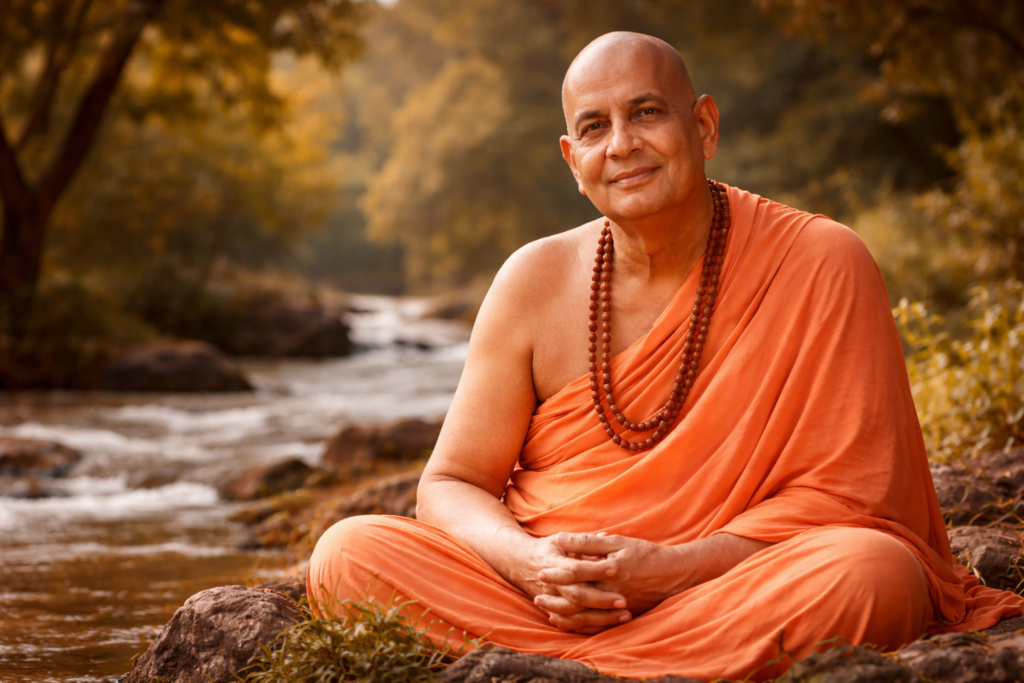
Swami Sivananda meditating by river image
Swami Sivananda, The divine life society

Aims and Objectives of The Divine Life Society

Aims and Objectives of The Divine Life Society The fundamental aims and objects of the Divine Life Society, as a whole, are purely spiritual, entirely non-sectarian, universally applicable and perfectly tolerant. The Society offers a peaceful haven wherein is provided ample opportunity and actual help for the restoration of peace to the troubled, conflict-ridden and psychologically traumatised personality of the modern man. Swami Sivananda, a great, kind-hearted saint with a passion to help all beings established The Divine Life Society in 1936 with its headquarters at the Sivananda Ashram in Rishikesh, India. He declared that the goal of life is Self-realisation. Man is a part of the supreme spirit and has a spark of that divinity in himself. It is the birthright of every human being to attain the supreme divinity that is intrinsic in the human condition. The basic ideal of the Divine Life Society is to make known the inherent divinity in all human beings. The ethical foundations of the Society are purity, integrity, nobility and magnanimity. It is the endeavour of the Society to bring the lofty ideals of the great seers and sages of the past and the ancient scriptures within the reach of the common man. He summed up his teachings in few words: Serve, Love, Give, Purify, Meditate, Realise, Be Good, Do Good, Be Kind, Be Compassionate, indicating the four main yogic paths of attaining supreme divinity. He called this approach ‘Synthesis of Yoga’ or ‘Integral Yoga.’ Thus The Divine Life Society aspires for the spiritual awakening of individuals, but leaves the choice of the path of yoga to each person. Everyone should find the combination that suits him for the onward march to the state of perfection and bliss. Swami Sivanandaji Maharaj affirms that the fundamental principles of all the religions are the same. All the religions and all the sages are trying to explain the same Truth. Swami Sivananda’s life and teachings are based on this universal Truth and are equally useful to people of all religions, faiths and countries. The Divine Life Society is based on this broad vision and the lofty universal values common to all religions. So, the membership of The Divine Life Society is open to all spiritual aspirants, irrespective of their faith and nationality. The goal is to make a man a true human being – a Hindu a true Hindu, a Christian a true Christian, a Muslim a true Muslim. Membership of the Society is open to any person whose endeavour it is to develop in himself the divine qualities of universal love, selflessness, purity, integrity, nobility, etc. through the practice of truth, purity, non-violence and universal love. The Society has about 400 branches and many sub-branches and centres spread all over the world. Swami Sivananda was known as a practical vedantin. Though the Divine Life Society is founded on the loftiest ideals, it has a practical approach: It is catering to the spiritual thirst of aspirants through publication of spiritual books and audio and video contents. It is providing an ideal atmosphere for spiritual practice and guidance at the Ashrams run by the Society. It is undertaking community welfare activities to alleviate the misery and suffering of sick, poor and destitute people. The Society runs charitable hospitals and dispensaries providing free modern medical care to the poor. It extends aid to underprivileged students for education and undertakes many community welfare programmes and philanthropic activities. Swamiji assures that spiritual practice and the attainment of the supreme state of bliss, peace and happiness are possible even for the householder, while living in the world and carrying out his duties and obligations. The true field of activity of the Divine Life Society is not restricted to its headquarters and branches but is also extended to the home of each spiritual seeker. The real success and grandeur of this Institution is in inspiring millions of people all around the world on the upward path, kindling within them divinity and transforming their personality and approach to life. The basic tenets of the Divine Life Society: Understanding that life is divine in its origin, content and meaning. Striving to attain perfection by unfolding the divinity hidden within. External conduct should be noble. Not only thoughts should be sublime, but also speech and actions should be selfless. Social well-being is not opposed to individual salvation. Even after attaining perfection, selfless service should be continued. The Divine Life Society has been established I. To Disseminate Spiritual Knowledge (a) By publication of books, pamphlets and magazines dealing with ancient, oriental and occidental philosophy, religion and medicine in the modern scientific manner, and their distribution on such terms as may appear expedient to the Board of Trustees; (b) By propagating the Name of the Lord, and by holding and arranging spiritual discourses and conferences and frequent Sankirtans (singing the Lords name) or spiritual gathering for singing and glorifying the Name of the Lord; (c) By establishing training centres or societies for the practice of Yoga, for moral and spiritual Sadhanas (spiritual practices) and the revival of true culture, to enable aspirants to achieve regeneration through worship, devotion, wisdom, right action and higher meditation with systematic training in asanas (postures), pranayama (breathing exercise), dharana (concentration), dhyana (meditation) and samadhi (superconscious state); and (d) By doing all such acts and things as may be necessary and conducive to the moral, spiritual and cultural uplift of mankind in general and to the attainment of the above-mentioned objects in Bharatavarsha (India) in particular; II. To Establish and Run Educational Institutions On modern lines and on right basic principles and to help deserving students by granting them refundable and non-refundable scholarships for doing research work in the various branches of existing scriptures and comparative religion, as also to train them to disseminate spiritual knowledge in the most effective manner; III. To Help Deserving Orphans and Destitutes By rendering them such assistance as the Society may deem proper, whether in any individual case or in any particular class of cases;

Aims and Objectives of The Divine Life Society Read Post »

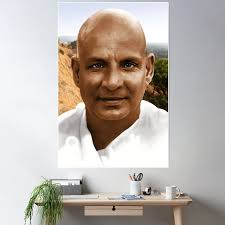
Swami Sivananda displayed as wall art above desk image
Bhakti Yoga, Swami Sivananda

Bhakti Yoga Resources

Bhakti Yoga Resources In this section Bhakti Yoga Resources, there will be various reference materials collected on the vast subject of Bhakti Yoga would be provided for a study. We would be continuously adding materials to the section as and when we come across relevant study materials from the vast archive of Such Material of ours. Please explore the various sub-sections.

Bhakti Yoga Resources Read Post »

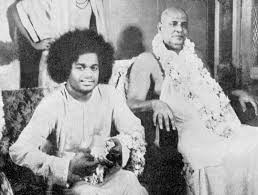
Swami Sivananda Spiritual leader sitting with disciple image
Swami Sivananda, The divine life society

Crest of the Divine Life Society

Crest of the Divine Life Society The Crest of the Divine Life Society symbolizes the synthesis of the four great paths to God-realization, viz., karma yoga, bhakti yoga, raja yoga and jnana yoga. As the Society stands primarily for the propounding of the great system of yoga in all its methods, it has adopted an insignia which is indicative of practical spiritual life. The four mottoes in the Crest, viz., SERVE, LOVE, MEDITATE, REALIZE, represent these four yogas, respectively. In the Crest, the two hands that offer a lotus symbolize the dedication of all action as an humble offering to God, which is the way of karma yoga, by which attachment to work is severed and duty is performed with devotion. Also, the firm grip of the hand over the lotus symbolizes that one who is established in karma yoga, in its real sense, has within his grip the yoga of synthesis, the practice of which is called ‘Divine Life’. The waves of the ocean shown in the Crest represent the sublimated emotions of the devotee on the path of bhakti yoga whose affections are transfigured in love of God. The waves of bhakti surge from the ocean of the devotees’ God-loving heart. The petals of the lotus forming in periphery of the Crest represent the path of raja yoga by which one gradually transcends all the psychic levels or centres, whose form is akin to that of a lotus. The chakra or the energy-centre in the middle of the eyebrows is the main operational centre for meditation in raja yoga. The rising Sun, with ‘OM’ in its Centre, represents the dawn of spiritual Wisdom and Realization of the Atman through the practice of jnana yoga. As the system of raja yoga combines some aspects of bhakti and jnana, the ocean and the rising Sun are shown as enclosed within the lotus. This is the Integral Symbol of The Divine Life Society.

Crest of the Divine Life Society Read Post »

Swami Sivananda with message about devotion and teaching image
Bhakti Yoga, Swami Sivananda

Hari Kirtan

Hari Kirtan Jaya Narayana, Jaya Narayana,Jaya Narayana, Jaya Jaya Jaya. Jaya Narayana, Jaya Narayana,Jaya Narayana, Jaya Jaya Jaya. Jaya Siyaram Jaya, Jaya Siyaram Jaya,Jaya Siyaram Jaya, Jaya Jaya Jaya. Jaya Siyaram Jaya, Jaya Siyaram Jaya,Jaya Siyaram Jaya, Jaya Jaya Jaya. Jaya Radheshyam Jaya, Jaya Radheshyam Jaya,Jaya Radheshyam Jaya, Jaya Jaya Jaya. Jaya Radheshyam Jaya, Jaya Radheshyam Jaya,Jaya Radheshyam Jaya, Jaya Jaya Jaya. (Jaya Narayana….) NARAYANA-SADASIVA KIRTAN Apat Bandhava NarayanaAnatha Rakshaka SadasivaDeenabandho NarayanaDeenanatha SadasivaKarunasagara NarayanaKripa Sindho SadasivaBhakta Vatsala NarayanaSaranagatavatsala SadasivaAdhamoddharana NarayanaPatita Pavana SadasivaBhakta Poshaka NarayanaMukti Dayaka SadasivaVibhu Viswanatha NarayanaPrabhu Prananatha SadasivaAdideva NarayanaDeva Deva SadasivaAdiguru NarayanaJagad Guru SadasivaVaikunthapathy NarayanaKailasapathy SadasivaHari Om Hari Om NarayanaHara Om Hara Om SadasivaOm Om Om Om NarayanaBum Bum Bum Bum SadasivaRam Ram Ram Ram NarayanaBum Bum Bum Bum SadasivaHari Hari Hari Hari NarayanaHara Hara Hara Hara SadasivaAchyuta Kesava NarayanaSambho Sankara SadasivaSatchidananda NarayanaAkhanda Paripoorna SadasivaPahimam Trahimam NarayanaPahimam Rakshamam SadasivaPraseeda Praseeda NarayanaPrachodayat Prachodayat SadasivaCome Come O Lord NarayanaGive me Darshan SadasivaGive me light NarayanaImpart wisdom SadasivaSave me protect me NarayanaGuide me liberate me Sadasiva

Hari Kirtan Read Post »

Swami Sivananda standing by riverside in coat image
Swami Sivananda, The divine life society

How the Divine Life Society was Born

How the Divine Life Society was Born By Swami Paramananda Many are curious to know when Sri Swamiji wrote his first book, how he was able to establish his second-to-none Divine Life Society within a few years of his coming to Rishikesh. The first book that was written and published by Swami Sivananda is his master-piece Practice of Yoga. The year was 1929. That, as all of you know, is an excellent book. I had the opportunity to see a ‘deluxe’ edition copy of the book at the Connemera Library in Madras. The book was priced as low as rupees two only. Even in those early days of Sannyasa life, when it was very difficult for him to procure money, Sri Swamiji brought out costly editions of books for supplying free of charge to all public libraries and poor aspirants who would treasure them. For those of ordinary means there were cheap editions priced very low. Incidentally, it also happens to be the book that brought me so close to him. That much regarding his first book. The Divine Life Society, if I can say, was virtually born the very moment Sri Swamiji stepped into Rishikesh, i.e., in 1923. What he started that day, he is still continuing now. He would go to every Mahatma living around him, fetch them water from the Ganges, attend to their needs and serve them to their satisfaction without their asking. I have seen Sri Swamiji doing the very same thing even while at Swargashram (i.e., from 1930 onwards when I first met him). On one occasion when I stepped into his Kutia (hermitage) to attend to his need, I remember Sri Swamiji asking me to serve all other Mahatmas living, washing their clothes, sweeping their kutias and so on. On another occasion, he told me that I should always look out for opportunities to serve others in any capacity. He would insist on keeping a small handkerchief in our pockets so that we might clean the shoes of the Mahatmas and Yatris while they were at Satsang, without their knowledge. Such is his zeal and enthusiasm for serving the Virat Swaroopa (cosmic manifestation) of the Lord. As he put into action his love for service in the year 1923 in Rishikesh, the seed for the Divine Life Society was sown. He watered it with the nectarine stream of cosmic love and selfless service and in the next year a tender plant sprouted forth and was christened ‘Satya Sevashram’; it was a charitable medical dispensary to cater to the needs of the ailing Mahatmas and pilgrims. It functioned as a mobile clinic also. This happened (in 1926) after Sri Swamiji moved from Rishikesh to Lakshmanjhula. Indeed the seed should have been a divine one; for, now the tender plant grew into a nice little tree when Sri Swamiji shifted his Kutia from Lakshmanjhula to Swargashram. That was somewhere in 1929. ‘Satya Sevashram’ paved the way for ‘Swargashram Sadhu Sangh’ but the former’s motto remained the same, that is, practising cosmic love and selfless service. All the time, even though Sri Swamiji was busying himself with writing books, he was touring many places holding Satsang and Sankirtan. All this formed part of the Society’s work. The work was continued with renewed vigour and enthusiasm at every step. Swamiji travelled from Mount Kailas in Tibet, to Rameswaram in the southern tip of Deccan, and from Srinagar in Kashmir, to Gangasagar in the Bay of Bengal. In the mean time, he had settled at the present site of Ananda Kutir (in 1934). After a while, in the year 1936, when the little tree of ‘Swargashram Sadhu Sangh’ had firmly rooted itself and grown into a full-size tree, it brought into existence the Divine Life Society. As you know it better now, this divine tree is every day shooting forth a new branch bringing into existence new centres of Divine Life, far and near. Every day, it brings forth immortal, unfading, pleasant smelling flowers in the form of ideal selfless workers. And the fruits of this divine tree are but the immortal happiness. And so, as you have seen, the Divine Life Society really came into existence in the year 1923, even though it assumed its present name in 1936.

How the Divine Life Society was Born Read Post »

Swami Sivananda standing outdoors with text “Guru is God” image
Bhakti Yoga, Swami Sivananda

Devi Kirtan

Devi Kirtan 1.Durgati nasini Durge Jaya Jaya,Kala vinasini Kali Jaya Jaya,Uma Rama Brahmani Jaya Jaya,Radha Sita Rukmini Jaya Jaya,Lakshmi Saraswati Amba Jaya Jaya,Parvati Ganga Devi Jaya Jaya. 2. Tune: Narayana Achyuta Govinda Madhava Kesava Rajeswari Bhuvaneswari, Durgati nasini Kripamurti.Mahalakshmi Parvati Kala vinasini Kali Devi 3. Tune: Radhe Krishna Shyama Murari Govinda Gopala Hare…. Gouri Durga Parvati GangeTripura Sundari Daya KaroTripura Sundari Daya Karo. 4. Tune: Gopala Gopala Muraliwala Jaya Gouri Jaya Gouri Sri Durga MataMahamaye Para Sakti Premasvarupi.Jaya Vani Jaya Vani Sri MahalakshmiParvati Jagadamba Jaya Maha Kali.Gayatri Savitri Meenakshi DeviTripura Sundari Jaya Mahadevi. 5. Tune: Achyutam Kesavam…. Chandike Kalike Hey JaganmatrikeBharati Bhamini Bhakta JanapriyeSarada Sri Durge Sarva SatyatmikeYoginam Manase Sarvada Pujite. Jaya Gouri Jaya Gouri Jaya Gouri Sri DurgeJaya Kali Jaya Mata Mahamaye MahasaktiJaya Vani Jaya Vani Jaya Vani SaraswatiJaya Devi Jaya Devi Jaya Devi Sri Devi.(Akhilandanayike) Sarva Yantratmike Sarva TantratmikeSarva Mantratmike Sarva MudratmikeSarva Satyatmike Sarva ChakratmikeSarva Varnatmike Srikare Syamike. Gayatri Savitri Raja RajeswariBhagavati Bhairavi Tripura SundariSri Vani Vangmayi Vijnana DayiniChidrupi Chinmayi Advaye Pahi mam. 6. Tune: Hara Hara Siva Siva Sambho Jaya Gouri Jaya Durga Mata,Jaya Gouri Jaya Durge Jaya Kalimata.Jaya Gouri Mata Jaya Kalimata,Jaya Gouri Jaya Durga Mata. 7. Tune: Jaya Rama Sri Radhe Krishna Bhajale Sita Ram Jaya Sita Sri Radhe Rukmini, Bhajale ParvatiBhajale Parvati Pyare Bhajale Mahalakshmi.Jaya Vani Sri Mahalakshmi Bhajale Sri DurgaBhajale Sri Durga Pyare Bhajale Sri Sarada.Bhajale Chandi Sri Chamundesvari Bhajale JagadambaBhajale Jagadamba Pyare Bhajale Jaganmata.Jaya Kali Sri Katyayani Bhajale KamakshiBhajale Kamakshi Pyare Bhajale Gomati.Jaya Durga Sri Tripurasundari Bhajale BhairaviBhajale Bhairavi Pyare Bhajale Bhamini.Jaya Sakti Sri Adi Sakti Bhajale Para SaktiBhajale Parasakti Pyare Bhajale Mahasakti. 8. Devika Premi Durga BoloSakti Sakti Bolo Adisakti BoloLakshmi Lakshmi Bolo Mahalakshmi BoloKali Kali Bolo Mahakali Bolo.Mahakali Bolna Mahalakshmi BolnaAdisakti Bolna Parasakti BolnaMoola Prakriti Bolna Prakriti Vikriti BolnaDurga Durga Bolna Hrim Kali BolnaRajeswari Bolna Maheswari BolnaGanga Ganga Bolna Bhagirathi BolnaTripura Sundari Bolna Vak Devi BolnaVani Devi Bolna Vak Devi Bolna. 9. Tune: Bhajo Radhe Krishna Bhajo Radhe Shyama…. Bhajo Tripurasundari Bhajo Chandi KalikeBhajo Jaganmata Bhajo Jagat Janani.Bhajo Jagadambika Bhajo TrigunatmikeBhajo Mahakanya Bhajo Saraswati.Bhajo Mahadevi Bhajo MahasaktiBhajo Vageeswari Bhajo Vagdevi.Bhajo Bhadrakali Bhajo BhavanasiniBhajo Janamodini Bhajo Nandini. 10. Tune: Hare Krishna Hare Rama Radhe Govinda Mahalakshmi Mahakali DurgamataAdisakti Mahasakti ParasaktiBhajo Durga Mata Bhajo ParasaktiDurga Bolo Bolo Tumko Lakhon Pranam. 11. Jaya Jaya Durga LakshmiJaya Bolo Maha SaraswatiJaya Jaya Durga SaraswatiJaya Bolo Maha SaraswatiJaya Jaya UmasankariJaya Jaya Uma ParvatiJaya Jaya Sita JanakiJaya Jaya Radha RukminiJaya Jaya Raja RajeswariJaya Jaya TripurasundariJaya Jaya MahalakshmiJaya Jaya Mahakali 12. Tune: Narayana Achyuta Govinda Madhava Keshava Rajeswari Maheswari Tripurasundari MateswariMahalakshmi Saraswati Varaprasadini Vageeswari 13. Lakshmi Saraswati Janaki BoloUmasakti Kali BhajoUmasakti Kali Bhajo 14. Gouri Gouri Gange Mahakali Rajeswari.Gouri Gouri Gange Mahalakshmi Bhuvaneswari.Gouri Gouri Gange Parvati Maheswari. 15. Vani Saraswati Vak DeviBhagavati Bharati Mam Pahi. 16. Ganga Gita Gayatri OmGoura Govinda Gurudeva OmGanga Gita Gomata OmGoura Govinda Gurudeva Om 17. Vidya Lakshmi Vijaya Lakshmi Veerya Lakshmi OmVara Lakshmi Vinaya Lakshmi Vijnana Lakshmi OmDhana Lakshmi Dhanya Lakshmi Dhairya Lakshmi OmMaha Lakshmi Moksha Lakshmi Nitya Lakshmi OmSiddha Lakshmi Sarva Lakshmi Soumya Lakshmi OmSri Lakshmi Suddha Lakshmi Soubhagya Lakshmi OmKanaka Lakshmi Karunya Lakshmi Kripa Lakshmi OmGaja Lakshmi Raja Lakshmi Pankaja Lakshmi OmAdi Lakshmi Ananda Lakshmi Aiswarya Lakshmi OmJaya Lakshmi Jagad Lakshmi Jnana Lakshmi Om 18. Tune: Rama Rama Namostute Jaya…. Durga Durga Namostute Jaya Duritaharini NamostuteChandi Chandi Namostute Jaya Chamundeswari NamostuteDeenoddharini Namostute Jaya Daya Pareswari NamostuteVeena Pani Namostute Jaya Vidya Devi NamostuteJaganmate Namostute Jaya Jagadambike NamostuteViswa Vimohini Namostute Jaya Viswa Visalakshi NamostuteVishnu Patni Namostute Jaya Viswa Vidhayini NamostuteVarapradayini Namostute Jaya Vishnu Maye NamostuteRadha Rukmini Namostute Jaya Sita Janaki NamostuteParvati Gouri Namostute Jaya Umamaheswari NamostuteMahalakshmi Namostute Jaya Mahakali NamostuteMahasakti Namostute Jaya Maha Maye NamostutePrakriti Vikriti Namostute Jaya Patita Pavani NamostutePayodhikanye Namostute Jaya Parameswari NamostuteGanga Rani Namostute Jaya Bhagirathi NamostuteJahnukanye Namostute Jaya Papaharini Namostute 19. Tune: Govinda Jaya Jaya Gopala Jaya Jaya…. Lakshmiki Jaya Jaya Deviki Jaya JayaAiswarya Dayini Ambaki Jaya JayaVaniki Jaya Jaya Lakshmiki Jaya JayaVidya Pradayini Brahmani Jaya JayaSarada Jaya Jaya Sri Durga Jaya JayaTripurasundari Sankari Jaya JayaKaliki Jaya Jaya Chandiki Jaya JayaDurgati Nasini Durgaki Jaya JayaBharati Jaya Jaya Bhamini Jaya JayaBhaktajanapriya Bhairavi Jaya JayaGayatri Jaya Jaya Savitri Jaya JayaRaja Rajeswari Sundari Jaya JayaSitaki Jaya Jaya Radhaki Jaya JayaAbhaya Pradayini Ambaki Jaya JayaGouriki Jaya Jaya Gangeki Jaya JayaPapavinasini Parvati Jaya JayaKamakshi Jaya Jaya Meenakshi Jaya JayaKasi Visalakshi Gomati Jaya JayaSaktiki Jaya Jaya Mataki Jaya JayaMokshapradayini Deviki Jaya Jaya 20. Tune: Jaya Govindam Jaya Gopala Kesava Madhava DeenadayalJaya Vageeswari Jaya VaniVijnanadayini Sri VaniJaya Jnaneswari Jaya DeviViswavimohini Sri DeviJaya Rajeswari Jaya LaliteJayamanamohini Sri LaliteJaya Visweswari Jaya MataTripurasundari Sri MataJaya Durgamata Jaya KaliVarapradayini VaralakshmiJaya Mateswari Jaya SaktiJaya Katyayani Jaya LakshmiJaya Chamundeswari Jaya UmaBhairavi Bhamini Jaya GouriJaya Nidheeswari Maha LakshmiJaya Karunanidhi Jaya Kalyani

Devi Kirtan Read Post »

Swami Sivananda Spiritual guru with divine cosmic background picture
Bhakti Yoga, Swami Sivananda

Vedantic Song

Vedantic Song Chidananda Chidananda Chidananda HumHar Halme Almast Satchidananda HumNijananda Nijananda Nijananda HumHar Halme Almast Satchidananda HumSivananda Sivananda Sivananda HumAgadabhumwala Agadabhumwala Akhilananda HumAjarananda Amarananda Achalananda HumHar Halme Almast Satchidananda HumNirbhaya aur Nischinta Chidghanananda HumKaivalya Kevala Kutastha Ananda HumNitya Siddha Suddha Satchidananda Hum(Chidananda) Knowledge Bliss, Knowledge Bliss, Bliss AbsoluteIn all conditions I am Knowledge, Bliss AbsoluteI am without old age, without death, without motion,In all conditions I am Knowledge, Bliss AbsoluteI am without fear, without worry, Bliss AbsoluteKnowledge Absolute Existence Absolute Independent, unchanging, non-dual AtmaAdvaita Atma Immortal Atma Eternal pure, perfect Knowledge, Bliss AbsoluteKnowledge Absolute Existence Absolute(Chidananda)

Vedantic Song Read Post »

ChatGPT Image Feb 13 2026 05 10 27 PM
Swami Sivananda, The divine life society

Introduction

Introduction The best way to understand the purpose and objectives of the Divine Life Society is to study the life and teachings of its founder, Swami Sivananda. Once one can clearly see the nature of his divinely inspired personality-the generosity, service, and loving-kindness – one can more easily understand the heart and soul of the organisation that would grow up around him – the Divine Life Society. Dr. Kuppuswami, the young seeker who would in due course come to be known throughout the world as Swami Sivananda, left his medical work in Malaya in a burst of spiritual renunciation and came as a humble seeker to India. He would eventually find his way to Rishikesh, India in 1924, and there he encountered a wondering monk by the name of Swami Viswananda. They stayed together only a short while, but this swami could recognise the potential in the young doctor. Swami Viswananda offered to initiate Dr. Kuppuswami into the holy order of sannyasa, thereby beginning the life of renunciation and service of the one whose name would henceforth be “Swami Sivananda.” Thus begin a period of some years of extreme austerities, meditation and service to others that would culminate in a spiritual awakening which transformed the already dynamic personality of Swami Sivananda into the a yet higher realm of enlightenment. After finding simple quarters in Kolghat, and then Brahmananda Ashram near Rishikesh, Swami Sivananda shifted over to the eastern side of the Ganges River to a small place in Laxman Jhula. Swami Sivananda desire to continue his medical service led him to open a small clinic, which came to be known as the Satya Seva Ashram Dispensary. Swamiji performed this service two hours each morning and afternoon, and would continue that work for some years. In the same year of 1924 another small kutir (cottage) became available in Swarg Ashram, (across the Ganges from the present Sivananda Ashram site), and there Swami Sivananda would eventually come to reside for the next ten years. In this period he engaged in extensive meditation, spiritual practices and service to others that set him apart from even the most adept and dedicated monks in the area. Swami Sivananda never spoke directly to his enlightenment experience, but one would assume that at some time during this period spent in Swarg Ashram (1924-1934) he had a direct experience of the divine which transformed the ardent seeker into the spiritual giant he would become. Word of his spiritual attainments spread, and devotees started coming to him, seeking his teachings and blessings. It became difficult for all the visitors to be accommodated in the limited space provided by Swarg Ashram authorities, and it became clear that some sort of change would be necessary. The decision was made to shift across the Ganges to the western side, and in January 1934 the decisive move was made. Given the fact that there was no suitable place to stay and no available resources, Swami Sivananda and the people who followed him took up temporary residence in an abandoned cow shed. Later on, the Maharaja of Tehri would become aware of the struggling group of swamis, and he generously gave a parcel of land on which the Ashram would came to be located. Life was obviously very hard and conditions challenging, but surely the joy of being in the presence of a great master was reason enough for the disciples to stay on. In those very early days the early disciples included Swami Swarupananda, Swami Atmananda, and the man who would be one of the pillars of the Ashram in the early days, Swami Paramananda. This core group became the basis out of which grew a circle of devoted followers who would allow the Divine Life Society to develop and flourish. Gurudev (as Swami Sivananda came to be known by his disciples) was occasionally being invited to come to Punjab and parts of Uttar Pradesh frequently to lead sankirtan (devotional singing) conferences. While returning from one of those conferences with some devotees, Gurudev received the advice that he should register his newly developing ashram in some official capacity. In the grand spirit of “do it now,” Gurudev got off the train at the next station (which happened to be Ambala), and on January 13, 1936 The Divine Life Society Trust was established. The Sivananda Ashram in Rishikesh became the headquarters of the Divine Life Society.Spiritual Outreach through Books The very first point in the Aims and Objects of the Divine Life Society is: “To Disseminate Spiritual Knowledge,” and it indeed was the top priority of Gurudev, as he always wanted to share all that he had. After he attained the Supreme, his zeal to share this experience had no bounds; he was committed to the spiritual awakening of all of mankind. He wrote more than 300 books in a very simple and easy-to-understand style, addressing the reader directly as if he were giving personal guidance. He had the knack of bringing the highest knowledge within easy reach of the common man. He never tried to exhibit his scholarship or to impress anyone, but he came easily to the level of the reader. As a result, his inimitable spiritual writings could kindle spiritual awakening in millions of readers all over the world, and inspired them to tread the path of spirituality. In the early days, he had no money to buy a lantern. An empty inkbottle with a wick and kerosene served as a lamp. He had no money to buy paper. He used to collect used envelopes, and cut them on three sides and use the inner side for writing. No handicap was too big for him to overcome. His zeal to spread the spiritual knowledge was simply unstoppable. Swami Sivananda published his first book in 1929, The Practice of Yoga, Part One, and many others would follow in due time. In order to better support the dissemination of knowledge, the decision was made in 1939 that a Sivananda Publication League be

Introduction Read Post »

Tarak Maharaj
Bhakti Yoga, Swami Sivananda

Song of Immanence of Ram

Song of Immanence of Ram (Thars: Sunaja) Om Sri Ram, Jaya Ram, Jaya Jaya RamSri Ram, Jaya Ram, Jaya Jaya RamIn earth, water, fire, air and ether is Ram,In the heart, mind, Prana and senses is Ram,In the breath blood, nerves and brain is Ram,In sentiment, thought, word and action is Ram,Within is Ram, without is Ram, in front is Ram,Above is Ram, below is Ram, behind is Ram,To the right is Ram, to the left is Ram, everywhere is Ram,Vyapak is Ram, Vibhu is Ram, Poornam is Ram (Sri Ram, Jaya Ram) Sat is Ram, Chit is Ram, Anand is Ram,Santi is Ram, Sakti is Ram, Jyoti is Ram,Prema is Ram, mercy is Ram, beauty is Ram,Bliss is Ram, joy is Ram, purity is Ram,Refuge, solace, path, Lord, witness is Ram,Father, mother, friend, relative, Guru is Ram,Support, source, centre, ideal, goal is Ram,Creator, preserver, destroyer, redeemer is Ram (Sri Ram, Jaya Ram) The goal ultimate of one and all is Ram,Attainable through Sraddha, Prema, worship is Ram,Accessible to devotion and surrender is Ram.Approachable by prayer, Japa and Kirtan is Ram,Hosanna to Ram, glory to Ram, victory to Ram,Adorations to Ram, salutations to Ram,prostrations to Ram (Sri Ram, Jaya Ram)

Song of Immanence of Ram Read Post »