Hari Om

Menu

February 15, 2026

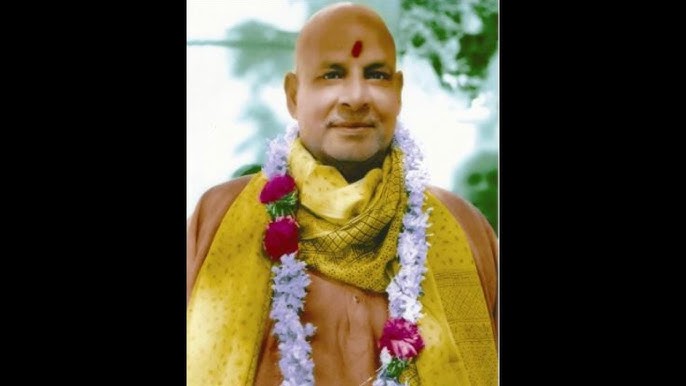
Swami Sivananda portrait with garland and tilak image
Bhakti Yoga, Swami Sivananda

Manasic Puja

Manasic Puja by Swami Sivananda Manasic Pooja is preferable to actual Pooja of the Murthy with flowers, sandal‑paste etc. But beginners should start with physical Pooja. When they advance in devotion they can take recourse to mental worship. Sri Sankara’s mental Pooja in the form “Atma Tvam, Girija Matih etc. , ” is a beautiful way of worshipping God mentally. Get this Sloka by heart and before starting worship repeat this Sloka with Bhava. Mental Pooja consists in offering mentally flowers, Arghya, Achamaneeya, sandal‑paste, cloth, ornament, Naivedya, etc. , to God. Lord Siva was more pleased with the mental worship of Bhima than the actual offering of Bael leaves by Arjuna.

Manasic Puja Read Post »

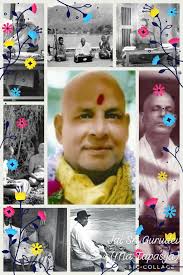
Swami Sivananda spiritual guru portrait with historic photographs
Bhakti Yoga, Swami Sivananda

How to do Dhyana?

How to do Dhyana? by Swami Sivananda Fix your mind at the Lotus Feet of Lord Hari. Then rotate the mind on His silk-cloth (Pitambara), Srivatsa, Kaustubha gem on His chest, bracelets on His arm, ear-rings, crown on the head; then conch, disc, mace and lotus, on His hands and then come to His feet. Repeat the process again and again. Think of His attributes also. In this way you can do Dhyana on Krishna, Rama or Siva. Uddhava asked: “In what form and with what rites should the devotee think of You? Please inform me of the same fully. ” Sri Krishna said: “Seated comfortably in a seat neither high nor low, keeping the hands near the body unmoved, control the eye from wandering outwards. (Fix it on the tip of the nose to prevent distraction). Control the breath by taking it through one nostril and letting it out through the other and vice versa. Control the senses. Pronounce the letter OM continuously and with deep devotion both while inhaling and exhaling. “The above practice daily at the three periods (morning, noon and dusk) will enable the Jiva to get perfect control of breath within a month. Imagine in the heart the lotus flower with its petals as seat, and fancy the sun, moon and fire to be the three lights, at their proper places. Concentrate your mind and imagine My present form as seated in the flower, with calm, dignified, smiling face, the cheeks resplendent with the lustre of the gold ear-rings; of beautiful neck, of sky colour, wearing a white cloth of spotless purity, with the ornament Srivatsa and the Goddess Lakshmi on the chest. With the weapons and other usual appendages, Chakra, mace, conch and lotus flower in My four hands, My feet shining with diamonds; with the splendour of the various ornaments on My body, crown, Kaustubha (diamond) on the chest, waist-ring, and the amulet at the shoulder, overflowing with grace towards My devotees. “Run your fancy over the whole form till you complete all the details and then fix your mind on the same without thinking of anything else. By thus looking at the form and fixing the mind from wandering elsewhere, the face will gradually wear an ecstatic look. When thus the mind oblivious of everything else (forgetting even the triple differences, conscious at the starting point viz. , the person concentrating the mind, the form on which the mind is concentrated and the act of concentration) gets fixed in concentration of My form (Dhyeyam), the Jiva becomes completely merged in Me (in the Turiya or conscious Anandic ecstatic state), just as a ball of fire gets merged in a big bonfire. By constant practice of this Samadhi or ecstasy the Jiva very soon gets rid of all delusion caused by diversity and attains bliss. “

How to do Dhyana? Read Post »

Swami Sivananda framed portrait with floral design image
Bhakti Yoga, Swami Sivananda

Philosophy of Pratima

Philosophy of Pratima by Swami Sivananda Pratima is a substitute or symbol. For a beginner Pratima is an absolute necessity. By worshipping an idol Isvara is pleased. The Pratima is made up of five elements. Five elements constitute the body of the Lord. The idol remains an idol; but the worship goes to the Lord. Just as a man is pleased by shaking hands with his friends by touching a small portion of his body, so also God is pleased when a small portion of His Virat (cosmic) body is worshipped. Just as the child develops the maternal Bhava (mother-feeling) by playing with its imaginary toy-child made up of rags, and suckling it in an imaginary manner, so also the devotee develops the feeling of devotion by worshipping the Pratima and by concentrating upon it. Pictures, drawing, etc. , are only a form of Pratima. A reputed baron of New York came to me one evening for an interview. During the course of conversation the baron said: “Swamiji, I have no faith in image-worship. It is all foolishness. ” The private secretary of the baron who was also with him had a photo of the baron in his pocket-diary. I took the photo and asked the private secretary to spit on it. The secretary was struck aghast. He hesitated and looked at the baron. I again commanded him: “Go on, spit at the picture. Quick. ” The secretary said: “Swamiji, the baron is my master. I serve him. How can I spit at the picture? This is his image. I cannot do this ignoble act. I respect him in this picture. ” I said to him: “This is only a paper. This is not the real baron. It cannot talk, move or eat. ” Then the secretary said: “Anyhow, I see my baron in this picture. This mean act would affect my feelings as well as wound the feelings of my master. I cannot spit. ” I said to the baron: “Look here, my friend! Your secretary loves and respects your photo. He associates your presence with the picture although it is just a bit of paper. Is this not image-worship? Even so, the devotee associates the attributes of God with the image and feels His presence or immanence there. He finds it easy to concentrate his mind on the image. The mind wants a concrete prop to lean upon in the beginning stage of practice. Do you see the point now, my dear baron?” The baron replied: “Revered Swamiji! You are quite right. My eyes are opened now. I am quite convinced. Pray, pardon me. “

Philosophy of Pratima Read Post »

images 51 1
Bhakti Yoga, Swami Sivananda

Bhakti Yoga Alphabets

Bhakti Yoga Alphabets by Swami Sivananda ANANYA Prema is single-minded devotion to the Lord exclusive of everything else. BHAKTI Yoga is the easiest path for God-realisation in this Iron Age. CHANDRAYANA Vrata is observed by the devotees to destroy and propitiate the Lord. DASYA Bhava is the servant Bhava entertained by the devotee towards the Lord. ESHANATRAYAM (the three desires wealth, children and heaven) stand as hindrance to the development of true devotion. FAITH in the existence of God is the foundation of Bhakti. GURU is the visible God on earth for the devotee. HORRIPILATION (Pulaka) is the standing up of the hairs of the body experienced by the devotee as he advances in devotion. ISHTA DEVATA is the deity of one’s liking or choice by the worship of whom the Bhakta attains God-consciousness. JAPA of the names of the Lord brings purity of mind and increases concentration to a great degree. KRISHNA is the Supreme Deity, the destroyer of the stains of Kali. LAJJA for the utterance of the Names of the Lord is a great obstacle for beginners in the path of devotion. MADHURYA Bhava is the highest form of Bhakti. NAVA-VIDHA Bhakti should be practised by all aspirants in the path of Bhakti Yoga. OFFERING the body, mind and soul exclusively to the service of God is Saranagati (self-surrender). PADASEVANA is service of the Lotus Feet of the Lord or service of humanity with Narayana Bhava. QUIESCENCE of the mind is a qualification common to both the Vedantin and the Bhakta. RUCHI (Nama) is the taste for the repetition of the Names of the Lord. SAKSHATKARA is attainment of God-consciousness. TRISHNA (internal craving for sensual objects) is detrimental to the growth of Bhakti. UPASANA is worship of the Lord. VIRAHA is intense pain caused by the separation from the Lord that is felt by a sincere devotee. WEEP for the separation of the Lord but not for the death of relatives or loss of wealth. X’MAS holidays should be availed of for the completion of at least one Purascharana of your Ishta-Mantra. YOGAKSHEMA of the devotee is vouchsafed by the Lord. ZEAL and sincerity of purpose pave a long way in God-realisation.

Bhakti Yoga Alphabets Read Post »

images 50 1
Bhakti Yoga, Swami Sivananda

Eleven Points for Development of Bhakti

Eleven Points for Development of Bhakti by Swami Sivananda It would be a gross mistake if you consider Bhakti as merely a state of emotionalism, while it is actually a thorough discipline and training of one’s will and the mind, a sure means to intuitive realisation of God Almighty through intense love and affection for Him. It is a means to thorough apprehension of the true knowledge of the Reality, beginning from the ordinary form of idol-worship right upto the highest form of cosmic realisation of your oneness with Him. You can achieve this by following the eleven fundamental factors which Sri Ramanuja had prescribed. They areAbhyasa or practice of continuous thinking of God, Viveka or discrimination, Vimoka or freedom from everything else and longing for God, Satyam or truthfulness, Arjavam or straightforwardness, Kriya or doing good to others, Kalyana or wishing well-being to all, Daya or compassion, Ahimsa or non-injury, Dana or charity and Anavasada or cheerfulness and optimism. Abhyasa or practice is a sustained and persistent effort to achieve mastery over a certain thing. Through continued practice the Sadhaka tries to secure the steadiness of his mind, to restrain all its external Vrittis, thereby convulging them upon his one objectthe Lord. Through persistent Abhyasa he checks the outgoing tendencies of his mind and directing them inward he constantly dwells and meditates upon the Lord. Viveka or discrimination enables him to choose between the right and the wrong: to follow and to adhere to what is right i.e., what should be done, and to abstain from what is wrong i.e., what should not be done. How does he discriminate between the right and the wrong? That which elevates and takes him nearer to Godhis Idealthat which brings him good, joy and peace, he considers as right and adheres to and acts in accordance with it. That which brings him depression, pain and restlessness, that which pricks his true conscience, that which drags him down from goodness and takes him away from God he considers as wrong and abstains from it in toto and guards himself against its influence. As regards his diet, he discriminates between Sattvic food, i.e., what should be taken, and Rajasic or Tamasic food, i.e., what should not be taken. Thus he discriminates between the right and the wrong, follows the directions of the wise, respects their warnings and obeys their admonitions and commandments. Thus he perseveres and strives to reach his goal, following the path of righteousness. Vimoka is longing for God alone, renouncing everything else that does not accelerate his progress. Obviously one has to renounce what is earthly if he wishes to attain what is eternal, permanent and infinite. The Sadhaka has to renounce all his desires and cravings for the material objects: he has to renounce the evil Vrittis of the mind through introspection and right exertion. Only then can he develop true longing for God, only then can he proceed Godwards. You cannot drink two things at a time in the same cup. If you wish to progress Godwards, then, necessarily, you have to renounce all else that are not conducive to your progress. This is the secret. To want nothing is the greatest and most efficacious way to attain the keenest longing for God. Satyam or truthfulness is surely the prime postulate in Sadhana. God is Truth: to realise Him, therefore, you must need become the very embodiment of Truth. You have to live the Truth: you should have to think of truth alone, speak the truth alone and do what is right and true to your conscience. Arjavam is straightforwardness or honesty. There is no place for deceit, crookedness or falsehood in the quest for God. God neither wants your riches nor your intellect, but he wants only a pure truthful heart altogether shorn of deceit, shallowness and hypocrisy. There is nothing to hide from Him, for He is the all-knowing, all-pervading Spirit. Your heart must be as pure as the white snow and as clear as crystal. Just as you cannot see a clear and correct reflection in a corrugated, dust-coated mirror, even so, if your heart is cobwebbed by selfish desires and dishonesty, and corrugated by hypocrisy and crookedness, you can hardly know the real nature of God. The Sadhaka must cultivate a heart like that of a child. Kriya or doing good to others comes next. As a true devotee, you should behold Him in all for He is the manifest form in whatever you perceive. The Sadhaka’s foremost duty is to do good and serve others, irrespective of any distinction or personal consideration. Serving and helping those in distress open your eyes to the sorrows of human life. You begin to understand the painful nature of the worldly existence. The stony selfish heart learns to feel for others. Then compassion, mercy and love nurture in your heart. Your heart becomes purified and Vairagya dawns in you. Kalyana or wishing well to others is another necessary qualification for devotee. With a pure loving heart, you should pray to the Lord for the good and well-being of others. First pray for others, for the peace and welfare of the world, and then for your evolution. You should not entertain any grudge or ill-feeling towards your opponents but you should wish for all that is good and auspicious. This is the true spirit of a devotee. Daya or compassion comes next. God is Love. He is all-merciful and compassion personified; and as you seek to realise Him, you must need become a veritable ocean of mercy and love. You must cultivate a heart as broad as the infinite sky. All the divine virtues that are necessary for one’s evolution have their origin in Ahimsa or non-violence. Ahimsa is a life-giving force. Ill-will, hatred, anger and malice cannot stand before its mighty potency. It is a special attribute of the soul. Practice of Ahimsa culminates eventually in the realisation of unity and oneness of life. It generates the
Eleven Points for Development of Bhakti Read Post »

Swami Sivananda seated calmly outdoors photo
Bhakti Yoga, Swami Sivananda

Background of Thought

Background of Thought by Swami Sivananda The background of thought of a Marwadi is about his money. His mind is always on the safe. He plans, speculates and schemes as how to increase his money in the bank from one lakh to two lakhs. The background of thought of a young man is about his wife. The background of thought of a doctor is about his patients, dispensary and drugs. The background of thought of a lawyer is about his clients, courts and rulings of the High court. The background of thought of an old grand-mother is about her grand-children. The vast majority of people indulge in thoughts of jealousy and hatred and these thoughts form their background. But the background of thought of a Bhakta is about his Ishta-Devata. A devotee of Lord Krishna always thinks of Krishna with flute in hand. He has a concrete background. A Vedantin or a student of Jnana Yoga has an abstract background. He meditates on abstract ideas. A Sattvic background keeps the mind always pure and takes the devotee to the goal. The mental image of Lord Krishna destroys all other worldly thoughts. A sacred background of thought either concrete or abstract is a valuable spiritual asset for a man. A habit to think of the image is formed by constant thinking of one’s Ishta Devata. Even in the office when you leave the pen on the table, the mind through the force of habit will at once move to the background of thought and think of the picture of Lord Krishna. Even in dream you will have vision of Lord Krishna only. The greater the Sadhana, the stronger the background of thought of the mental image. Even when you work in the office, just close your eyes for a couple of minutes every hour and think of the picture of Lord Krishna and repeat His Mantra: Om Namo Bhagavate Vasudevaya. This is an excellent practice. This is solid Sadhana. You will have an unruffled state of mind always. You can turn out more work with great concentration. In the beginning you may not be able to bring the full image before the mind’s eye. When you think of the face of Lord Krishna, the feet and hands will disappear. When you think of His feet, His face will slip away. Through constant Sadhana, you can visualise a well-defined, clear-cut, full image. A ray of the mind goes forth to the object, which in turn shapes and moulds the mental substance into the form of the object. When a man thinks of an image of Lord Krishna or Lord Rama constantly with a single-minded or one-pointed concentration like unbroken flow of oil (Avicchinna Tailadharavat), his mental substance takes the form of the image. The image leaves a definite impression on the mind. This is called Samskara. If this impression is repeated very often, a tendency or habit is formed in the mind. That is the reason why the aspirant is asked to repeat the Mantra several lakhs of times. A man can shape his mind for good or bad. It depends upon the nature of food he gives to the mind. Every thought produces a definite change in the substance of the brain also. One has to create a Sattvic background of thought through continued struggle. The mind will run back to its old ruts and manufacture images of worldly objects. The Sadhaka will have to bring back again and again the mind to the Sattvic background of thought that he has developed. The struggle will be keen in the beginning. Later on the mind will quietly rest in the spiritual background of thought



Background of Thought Read Post »

Swami Sivananda Two images of monk meditating and praying picture
Bhakti Yoga, Swami Sivananda

Secret of Surrender

Secret of Surrender by Swami Sivananda Sakrudeva prapannaya tavasmeeti cha yachate;Abhayam sarvabhutebhyo dadamyetad vratam mama. “I remove all fears of all beings even if they come to Me only once and seek My refuge; calling themselves as Mine-This is My vow. ” -Sri Ramachandra’s vow. Throughout the Gita there is a ringing note that surrender and devotion are absolutely necessary for the attainment of God-consciousness. In reality, the nine modes of devotion (Navavidha Bhakti) are reducible to one, viz. , Atmanivedan. The following Gita Slokas will impress on your mind the importance of devotion and self-surrender: Tameva saranam gachha sarvabhavena bharata;Tatprasadat param santim sthanam prapsyasi sasvatam. “Flee unto Him for shelter with all thy being, O Bharata; by His Grace thou shalt obtain supreme peace, the everlasting dwelling-place. ” (XVIII-62. ) Manmana bhava madbhakto madyajee mam namaskuru;Mamevaisyasi satyam te pratijane priyosi me. “Merge thy mind in Me, be My devotee, sacrifice to Me, prostrate thyself before Me, thou shalt come even to Me. ” (XVIII-65. ) Sarvadharman parityajya mamekam saranam vraja;Aham tva sarvapapebhyo mokshayishyami ma suchah. “Abandoning all duties come unto Me alone for shelter; sorrow not, I liberate thee from all sins. ” (XVIII-66. ) Slokas 65 and 66 of Chapter XVIII are the most important Slokas of the Gita. The gist of the teaching of Lord Krishna is here. If anyone can live in the true spirit of these Slokas, he will realise the goal of life soon. There is no doubt of this. The self-surrender must be total, ungrudging and unreserved. You must not keep certain desires for gratification. Mira says: “I have given my whole heart, mind, intellect, soul, my all to my Griridhar Gopal. ” This is perfect self-surrender. A real devotee will not ask the Lord even for Mukti. So long as the subtle desire for liberation lingers in one’s heart he cannot claim himself to be a true devotee of the Lord. Though the desire for emancipation is of Sattvic nature, yet the devotee has become a slave of Mukti. He is still selfish and so is unfit to call himself a sincere lover of God. He has not yet made total, unreserved self-surrender. To ask for Mukti is a variety of hypocrisy. Can a true devotee dare ask anything from God, when he fully knows that He is an ocean of love and compassion? A real devotee never complains anything against God. A raw Bhakta speaks ill of God when he is in distress. He says, “I have done 25 lakhs of Japa. I am studying Bhagavata daily. Yet God is not pleased with me. He has not removed my sufferings. God is blind. He has not heard my prayers. What sort of God is Lord Krishna? I have no faith in Him.” A real Bhakta rejoices in suffering, pain and destitution. He welcomes grief and sorrow always, so that he may not forget God even for a second. He has the firm belief that God does everything for his good only. Kunti Devi prayed to Krishna: “O Lord! Give me pain always. Then only I will remember Thee always. “ In Puri a saint who completely dedicated himself to Lord Hari was seriously ailing from chronic dysentery. He became quite helpless. Lord Jagannath was serving him for months in the form of a servant. The law of Prarabdha is inexorable. Nobody can escape from the operation of this infallible law. The Lord did not want the Bhakta to take another birth for the exhaustion of his Prarabdha. So His devotee had to suffer from protracted ailment. This was his Karmic purgation. But He Himself served him, as the devotee surrendered himself completely. Look at the unbounded mercy of the Lord! He becomes a slave of His devotees when they entirely depend upon Him. Self-surrender does not mean retirement into the forests. It does not mean giving up of all activities. Tamas or inertia is mistaken for self-surrender. This is a sad mistake. What is wanted is internal surrender. The ego and desire must be annihilated. This will constitute real surrender. The Rajasic mind stands obstinate to effect complete self-surrender. Obstinacy is a great obstacle in surrender. The lower nature again and again raises up to assert itself. There is resurrection of desires. Desires get suppressed for some time. Again they manifest with redoubled force. Man is dragged hither and thither by these desires. Believe in the divine possibilities. Completely dedicate yourself to the Lord. Have full trust in Him. Rest in peace. All cares, worries, anxieties, tribulations and egoistic efforts will terminate now. Look at Prahlada’s surrender and faith in God! He completely resigned himself to Lord Hari. No other thought save thoughts of God occupied his mind. He had His full Grace and benediction even though he was ill-treated by his father in a variety of ways. He was hurled down from the top of a cliff. He was trampled by the elephant. He was poisoned. He was thrown into the sea with the legs tied by iron chains. Cobras were thrown over him. His nose was filled with poisonous gases. He was thrown over fire. Boiled oil was poured over his head. Yet his faith in Narayana was not shaken a bit. The Name of Narayana was always on his lips. Such must be the faith of every devotee. The lower nature must be thoroughly overhauled. All old, wrong habits must be completely destroyed. Then the surrender becomes complete. Do not make plans and speculations. “Sufficient for the day is the evil thereof. ” Keep the mind and the intellect passive. Allow the Divine Will and Grace to work through your mind and Indriyas. Become silent. Feel His Grace and Love and enjoy the Divine Ecstasy. Be at ease. Pray to God fervently, “O Lord! Make my will strong to resist all temptations, to control my Indriyas and lower nature, to change my old evil habits and to make my surrender complete and real. Enthrone Thyself in my

Secret of Surrender Read Post »

paduka gitamandir2
Bhakti Yoga, Swami Sivananda

Importance of Bhakti Yoga

Importance of Bhakti Yoga by Swami Sivananda Purushah sa parah Partha bhaktyaa labhyastvananyayaa;Yasyantahsthani bhutani yena sarvamidam tatam. “He, the Highest Spirit, O Partha, may be reached by unswerving devotion to Him alone, in Whom all beings abide, by Whom all this is pervaded. ” (Gita: VIII-22. ) Bhaktya tvananyaya sakya ahamevamvidhorjuna;Jnatum drashtum cha tattvena praveshtum cha Parantapa. “But by devotion to Me alone I may thus be perceived, Arjuna, and known and seen in essence, and entered, O Parantapa. ” (Gita: XI-54. ) Mayyavesya mano ye mam nityayukta upasate;Sraddhaya parayopetaste me yuktatama matah. “Those who, fixing their mind on Me, worship Me, ever steadfast and endowed with supreme faith, are the best in Yoga in My opinion. ” (Gita: XII-2. ) Yoginamapi sarvesham madgatenantaratmana;Sraddhavan bhajate yo mam sa me yuktatamo matah. “And among all the Yogins, he who, full of faith, with the inner self abiding in Me, worships Me, he is considered by Me to be the most completely harmonised. ” (Gita: VI-47. ) Let me say a word on practical Sadhana. The Sastras are endless; there is much to be known; time is short, obstacles are many; That which is the Essence should be grasped, just as the swan does in the case of milk mixed with water. O Nectar’s sons! Wake up. Open your eyes. Grasp the Essence (God). Remember the pains of Samsara. Remember death. Remember the saints. Remember God. Sing His names: “Hare Rama Hare Rama, Rama Rama Hare Hare; Hare Krishna Hare Krishna, Krishna Krishna Hare Hare. ” Cultivate Bhakti. Develop the nine modes of devotion (Nava Vidha Bhakti). Serve Bhagavatas. Feel His Indwelling Presence everywhere. Have Darshan of Sri Krishna in this very birth, nay this very second. Become a glorious Bhagavata, a Jivanmukta and radiate joy, bliss and peace all around and everywhere. Friends! Let me remind you once more. Forget not even for a second that Flute-Player of Vrindavana, thy Immortal Friend, thy joy, thy solace in life. Repeat always His Mantra ‘Om Namo Bhagavate Vasudevaya. ‘ May the blessings of Sri Krishna be upon us all!

Importance of Bhakti Yoga Read Post »

silver jubilee4
Bhakti Yoga, Swami Sivananda

How to Develop Bhakti?

How to Develop Bhakti? by Swami Sivananda Service of Bhagavatas, Sadhus and Sannyasins; repetition of God’s Name; Satsanga; Hari Kirtan; study of Ramayana or Gita; stay in Vrindavana, Pandharpur, Chitrakuta, Ayodhya, or any other place of pilgrimage-these are the six means of cultivating Bhakti. The following nine modes of worship (Navavidha Bhakti) also will develop Bhakti: Sravana (hearing the Lilas of God); Kirtana (singing His praise); Smarana (remembering His Name); Padasevana (worshipping His Lotus Feet); Archana (offerings); Vandana (prostration); Dasya (service); Sakhya (friendship); and Atma-nivedana (complete self-surrender).

How to Develop Bhakti? Read Post »

Swami Sivananda seated wearing garland candid photo
Bhakti Yoga, Swami Sivananda

Bhakti Yoga Sadhana

Bhakti Yoga Sadhana by Swami Sivananda God is the Inner Ruler of your heart and mind. He is the silent witness of your thoughts. You cannot hide anything from Him. Become guileless and straightforward. A devotee of Hari is always meek and humble. Name of God “Hari” is always on his lips. He sheds profuse tears when he is alone. He is very pious. He is friendly towards all. He has equal vision. He does good always. He never hurts the feelings of others. He has a spotless character. He never covets the property of others. He sees Hari in all beings. Bhakti can move mountains. Nothing is impossible for it. It was the devotion of Mira that converted a snake into a flower‑garland, poison into nectar and an iron bed of needles into a bed of roses. It was the devotion of Prahlada that turned fire into ice. A devotee should become an embodiment of goodness. He must be ever ready to do good to living beings. That devotee who is intent upon the welfare of all beings obtains the peace of the Eternal. He who rejoices in the welfare of all, gets the Darshan of the Lord. He develops Advaitic consciousness eventually. Service of Bhagavatas, repetition of God’s Name, Satsanga, singing His Name, study of Bhagavata or Ramayana, stay in Vrindavan, Pandharpur, Chitrakuta or Ayodhya-these are the six means of developing Bhakti. Anger and lust are the two inner enemies that stand in the way of developing Bhakti. From lust follow ten vices that are mentioned in Manusamhita: “Love of hunting, gambling, sleeping by day, slandering, company with bad women, drinking, singing love‑songs, dancing, vulgar music, aimlessly wandering about. “ Anger begets eight kinds of vices. All evil qualities proceed from anger. If you can eradicate anger all bad qualities will die of themselves. The eight vices are: “Injustice, rashness, persecution, jealousy, taking possession of others’ property, killing, harsh words and cruelty. “ How are Bhaktas to be known? Lord Krishna has given a description of them. You will find it in Bhagavata. “They do not care for anything. Their hearts are fixed on Me. They are very humble. They have equal vision. They have no attachment towards anybody or anything. They are without ‘mine‑ness. ‘ They have no egoism. They make no distinction between sorrow and happiness. They do not take anything from others. They can bear heat, cold and pain. They have love for all living beings. They have no enemy. They are serene. They possess exemplary character. Here is Sadhana for advanced students. This is highly useful for getting quick, solid progress in the spiritual path. Get up at 4 a. m. Start your Japa on any Asana you have mastered. Do not take any food or drink for 14 hours. Do not get up from the Asana. Control passing urine till sunset if you can. Do not change the Asana if you can manage. Finish the Japa at sunset. Take milk and fruits after sunset. Householders can practise this during holidays. Practise this once in a fortnight or once in a month or once weekly. Here is another Sadhana for ten days. You can do this during Christmas holidays or Pooja holidays or summer vacation. Shut yourself up in an airy room. Do not talk to anybody. Do not see anybody. Do not hear anything. Get up at 4 a. m. Start Japa of the Mantra of your Ishta Devata or your Guru Mantra and finish it at sunset. Then take some milk and fruits or Kheer (milk and rice boiled with sugar). Take rest for one or two hours; but continue the Japa. Then again start Japa seriously. Retire to bed at 11 in the night. You can combine meditation along with Japa. Make all arrangements for bath, food etc. , inside the room. Have two rooms if you can manage, one for bath and one for meditation. Repeat this four times in a year. This practice can be kept up even for 40 days. You will have wonderful results and various experiences. You will enter into Samadhi. You will have Darshan of your Ishtam. I assure you. Here is the Anushthana for 40 days. You will have to do Japa of Rama Mantra one lakh and twenty‑five thousand times for 40 days in the following manner. Do Japa at the rate of 3000 daily for 35 days and 4000 daily during the last five days. Get up at 4 a. m. Write down in a thin paper Rama, Rama 3000 times. Then cut it into small pieces. Each piece will contain one Rama Nama. Then roll it with a small ball of Atta (wheat flour paste). Writing will take two or three hours according to your strength and capacity. Then you will have to cut it one by one. You will have to do the whole process by sitting on one Asana. If you will find it difficult to sit on one Asana you can have change of Asana. But you should not leave your seat. Some use a special ink made up of saffron, mush‑kapoor etc. , and a special writing pen made up of sharp pointed thin Tulasi stick. You can use ordinary ink and pen if you cannot get the above special ink and special pen. You will have to do Anushthana on the bank of the Ganga, Yamuna, Godavari, Kaveri or Narmada, at Rishikesh, Benares, Haridwar or Prayag. You can do it at home, if you find it difficult to move to these places. Take milk and fruits or Phalahar during these days. Throw the balls in the Ganga or any river for fishes. You will develop wonderful patience. You will get divine grace. Study the whole Ramayana 108 times with purity and concentration. This can be done in three years if you can devote three hours daily. You can go through the book three times in a month. You will acquire Siddhis. You will have Darshan

Bhakti Yoga Sadhana Read Post »