Hari Om

Menu

February 15, 2026

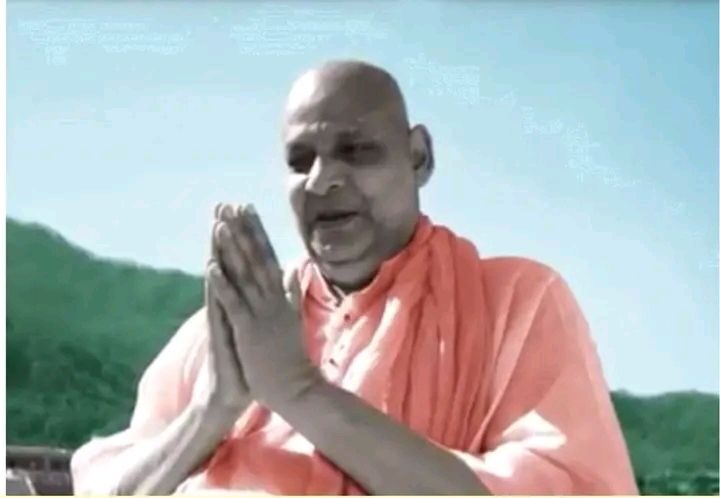
Swami Sivananda blessing gesture portrait
Bhakti Yoga, Swami Sivananda

Time Limit for Anushthana

Time Limit for Anushthana by Swami Sivananda There is no time-limit for Anushthana. It all depends upon the liking of the individual. It can be done even for a single day. It has its own effect. But better it is to practise for long periods, since the mind is well disciplined in such practices. The longer the Anushthana, the greater the power the Sadhaka gets. He becomes like a Yogi, possessed of health, wealth, prosperity, knowledge and power. Whatever he wishes he gets. Anushthana can be performed even in night time. On the other hand, the practice at night is more powerful and brings quicker results than the Anushthana done during day time. The mind is calm and is free from the world at night. So it is that all practices at night have got a greater force or Samskara. CONCLUSION Anushthana is a precursor to the practice of Yoga. It disciplines the mind and prepares the mind for Yogic meditation. It is a severe Tapasya which, if not performed with any worldly desire, will lead the Sadhaka to the height of spiritual illumination.

Time Limit for Anushthana Read Post »

images 57
Bhakti Yoga, Swami Sivananda

Advice on Anushthana

Advice on Anushthana by Swami Sivananda When you get holidays, plunge yourself in doing Anushthana either at home or some holy place preferably at Rishikesh or Prayag on the banks of the Ganga or the Yamuna. Do some lakhs or crores of Japa vigorously living on milk and fruits and observing Mauna. You will realise wonderful results, tremendous purity of heart and actual Darshan of God. If you can do it for six months, it is all the better. Intense Sadhana in solitude is very, very necessary if you want to reap a good spiritual harvest.

Advice on Anushthana Read Post »

Swami Sivananda folded hands greeting outdoors image
Bhakti Yoga, Swami Sivananda

Anushthana

Anushthana by Swami Sivananda INTRODUCTORY Anushthana is practice of religious austerity. It is observance of certain disciplines for the sake of obtaining some object of desire. The desire or the object may even be the final emancipation. Even that is a desire though it is generally not included as such. One who performs Anushthana has to be free from worldly engagements until the end of Anushthana. He should be completely engrossed in one thought and that is the thought concerned with the austere performance of the observances prescribed by the Sastras or scriptures. Such disciplines mould the man and make him fit to realise higher objects of his desires and ambitions. Generally the highest form of Anushthana is unselfish worship of God for the sake of self-purification and final emancipation. There is no Anushthana better than this. Other Anushthanas done for the sake of petty material ends are the outcome of ignorance and are not spiritual. Spiritual Anushthana is based on discrimination and has for its ideal the liberation of the soul from the round of birth and death. Anushthanas can be practised for a day, a week, a fortnight, a month, fortyeight days, ninety-six days, three months, six months or one year. The duration of time depends upon the ability and the liking of the performer. He can choose any kind of Anushthana according to his circumstances. Even the rigour of the Sadhana is dependent on the constitution and health of the individual. A sick man is not required to take cold bath thrice daily. An unhealthy man with very weak body is not required to observe absolute fast. A person suffering from an acute disease is not required to forego taking medicine. Commonsense is the fundamental factor in all Sadhana. No rule is an eternal rule. Rules change from place to place, time to time and from one condition to another condition. A Sadhaka of Madras may live only with a Langotee even in the dead winter. But a Sadhaka living in the icy Gangotri cannot be expected to practise the same method even in summer. The Himalayan climate is not like that of Trivandrum or Madras. To hold an umbrella when it is heavily raining is not against the practice of Anushthana. Anushthana is rigorous mental discipline and not mere physical mortification. A pair of shoes used when walking over the glaciers of Kailasa or Manasarovar will not prove detrimental to Anushthana. Absolute necessities of the body are not hindrances. Abnormal cravings are against Anushthana, not the normal requirements. Strict Brahmacharya is an absolute necessity for all Anushthanas. Truth speaking and non-injury are absolute necessities, for these are mental disciplines. Any action done against the feeling of the mind is not conducive to the rigour of the Anushthana. The actions of the mind alone are actions, not of the body. One who feels one thing and does another thing is a Mithyachari. To him the fruit of Sadhana will not accrue. The mind is the author of all actions. The body is only an instrument. Suppressing the effect when the cause is vigorously working will not add to the annihilation of the cause. The mind has to be calmed, and for that all Sadhanas are done in one way or other.

Anushthana Read Post »

hqdefault 1
Bhakti Yoga, Swami Sivananda

Gayatri Japa

Gayatri Japa by Swami Sivananda MEDITATION ON GAYATRI “Om bhur bhuvah svah tat savitur varenyam;Bhargo devasya dheemahi dhiyo yo nah prachodayat. “ SHABDA-ARTHA Om – Para Brahman; Bhur – Bhuloka (Physical Plane); Bhuvah – Antariksha Svah; Svarga Loka Tat – Paramatma Savitur; Isvara (Surya); Varenyam; Fit to be worshipped; Bhargo – Remover of sins and ignorance; Devasya – Glory (Jnana Svaroopa); Dheemahi – We meditate; Dhiyo – Buddhi (Intellect); Yo – Which; Nah – Our; Prachodayat – Enlighten. BHAVA-ARTHA “Let us meditate on Isvara and His Glory who has created the Universe, who is fit to be worshipped, who is the remover of all sins and ignorance. May he enlighten our intellect. “ The aspirant prays to Mother Gayatri, “O Beloved Mother! At the present moment I have taken my body as the self owing to Avidya or ignorance, through my impure intellect. Give me a pure intellect which will enable me to know my real nature. Give me light and knowledge. “ This is the Brahma-Gayatri Mantra. Gayatri is the ‘Blessed Mother’ of Vedas. There is no milk superior to cow’s milk. Even so there is no Mantra superior to Gayatri. As Omkara or Pranava is for Sannyasins, so is Gayatri for Brahmacharis and householders. The fruits that are attained by meditation on Omkara can be attained by meditation on Gayatri. The same goal that is reached by a Paramahamsa Sannyasin can be reached by a Brahmachari or a householder by meditating on Gayatri. Get up at 4 a. m. in Brahmamuhurta and start Japa and meditation on Gayatri (Panchmukhi or five-faced Devi seated in lotus flower), sitting on Padmasana, Siddhasana or Virasana, facing North or East. Burn incense in the room. In summer you can take a bath. In winter you can simply wash your face, hands and feet and do achamana only. Continue the Japa for two hours or more. Have another sitting at night between 7 and 8 p. m. Constantly feel that you are receiving light, purity and wisdom from Gayatri. This is important. Keep the image of the Gayatri at the Trikuti, the space between the eye-brows by closing the eyes and concentrate there, or keep the image in the lotus of the heart and concentrate there. You will have Darshan of Gayatri. It is better if you do Japa of Gayatri 3000 to 4000 times daily. Your heart will be purified rapidly. If you are not able to do this number, you can do 1008 times daily. If you find it difficult to do this number also, do at least 108 times daily, 36 times at sunrise, 36 times at noon, 36 times at sunset. There is special, mysterious spiritual force or wonderful magnetic power at Sandhi or junction of the time, sunrise and sunset. The mind will be elevated quickly. It will be filled with Sattva. Concentration will come by itself without any effort at this time. If you find it difficult to get up at Brahmamuhurta, get up before sunrise. That man who fails to do Gayatri at the Sandhis fails in the discharge of his daily duties. He becomes a Bhrashta or fallen man. He loses vigour, vitality and Brahma-tejas. In the Gayatri Mantra there are 9 names, viz. , 1. Om, 2. Bhur, 3. Bhuvah, 4. Svah, 5. Tat, 6. Savitur, 7. Varenyam, 8. Bhargo and 9. Devasya. Through these nine names the Lord is praised. Dheemahi is worship of the Lord. Dhiyo Yo Nah Prachodayat is prayer. Herein there are five halts or stops viz. , ‘Om’ is the first stop; ‘Bhur Bhuvah Svah’ the second; ‘Tat Savitur Varenyam’ the third; ‘Bhargo Devasya Dheemahi’ the fourth; and ‘Dhiyo Yo Nah Prachodayat’ the fifth. While chanting or doing Japa of the Mantra, we should stop a little at every stop or halt. Savita is the presiding deity of the Gayatri Mantra, Fire (Agni) is the mouth, Vishwamitra is the Rishi and Gayatri is the metre. It is recited in the investiture of sacred thread, practice of Pranayama and Japa. What Gayatri is, the same is Sandhya, and what Sandhya is, the same is Gayatri. Sandhya and Gayatri are identical. He who meditates on Gayatri, meditates on Lord Vishnu. A man can repeat Gayatri mentally in all states while lying, sitting, walking etc. There is no sin of commission and omission of any sort in its repetition. One should thus perform Sandhya three times with this Gayatri Mantra every day, in the morning, noon and evening. It is the Gayatri Mantra alone that can be commonly prescribed for all the Hindus. The Lord commands in the Vedas “Let one Mantra be common to all” “Samano Mantrah. ” Hence the Gayatri should be the one Mantra for all the Hindus. “The secret lore of the Upanishads is the essence of four Vedas, while Gayatri with the three Vyahritis is the essence of the Upanishads. ” He is the real Brahmin who knows and understands thus, the Gayatri. Without its knowledge he is a Sudra, though well versed in the four Vedas. GLORY OF GAYATRI (MANU SMRITI, CHAPTER II) 76. Brahma milked out, as it were, from the three Vedas, the letter A, the letter U, and the letter M; these form by their coalition the three trilateral monosyllable, together with three mysterious words, Bhur, Bhuvah, Svah, or earth, sky, heaven. 77. From the three Vedas also, the Lord of creatures incomprehensibly exalted, successfully milked out the three measures of that ineffable text, beginning with the word Tat, and entitled Savitri or Gayatri. 79. And a twice-born man, who shall 1000 times repeat those three (Om, the Vyahritis and the Gayatri) apart from the multitude (EKANTA) shall be released in a month even from a great offence, as a snake from his slough. 81. The three great immutable words, preceded by the triliteral syllable and followed by the Gayatri which consists of three measures, must be considered as the mouth or principal part of the Veda. 82. Whoever shall repeat day


Gayatri Japa Read Post »

swami sivananda Black-and-white photo of monk holding two young children image
Bhakti Yoga, Swami Sivananda

Japa of Mahamantra

Japa of Mahamantra by Swami Sivananda Hare Rama Hare Rama, Rama Rama Hare Hare;Hare Krishna Hare Krishna, Krishna Krishna Hare Hare. At the end of Dvapara-Yuga, Narada went to Brahma and addressed him thus: “O Lord, how shall I, roaming over the earth, be able to cross Kali?” To which Brahma thus replied: “Well asked. Hearken to that which all Srutis (the Vedas) keep secret and hidden, through which one may cross the Samsara (mundane existence) of Kali. He shakes off (the evil effects of) Kali through the mere uttering of the Name of the Lord Narayana, who is the Primeval Purusha. ” Again Narada asked Brahma: “What is the Name?” To which Hiranyagarbha (Brahma) replied thus: (the words are) “1. Hare, 2. Rama, 3. Hare, 4. Rama, 5. Rama, 6. Rama, 7. Hare, 8. Hare, 9. Hare, 10. Krishna, 11. Hare, 12. Krishna, 13. Krishna, 14. Krishna, 15. Hare, 16. Hare. These sixteen Names (words) are destructive of the evil effects of Kali. No better means than this is to be seen in all the Vedas. These (sixteen Names) destroy the Avarana (or the veil which produces the sense of individuality) of Jiva surrounded by the sixteen Kalas (rays). Then like the sphere of the sun which shines fully after the clouds (screening it) disperse, Parabrahman alone shines. “ Narada asked: “O Lord! what are the rules to be observed with reference to it?” To which Brahma replied that there are no rules for it. Whosoever in a pure or an impure state, utters these always, attains the same world of, or proximity with, or the same form of, or absorption into Brahman. Whosoever utters three and a half crores – This number can be reached by uttering the Mantra completely within one year if uttered at the rate of a lakh per day; and within ten years if uttered at the rate of 10, 000 per day. -Kalisantarana Upanishad (or thirty-five million) times this Mantra composed of sixteen Names (of words) crosses the sin of the murder of a Brahmin. He becomes purified from the sin of the theft of gold. He becomes purified from the sin of cohabitation with women of low caste. He is purified from the sins of wrong done to Pitris, Devas and men. Having given up all Dharmas, he becomes freed at once from all sins. He is at once released from all bondage. That he is at once released from all bondage is the Upanishad.

Japa of Mahamantra Read Post »

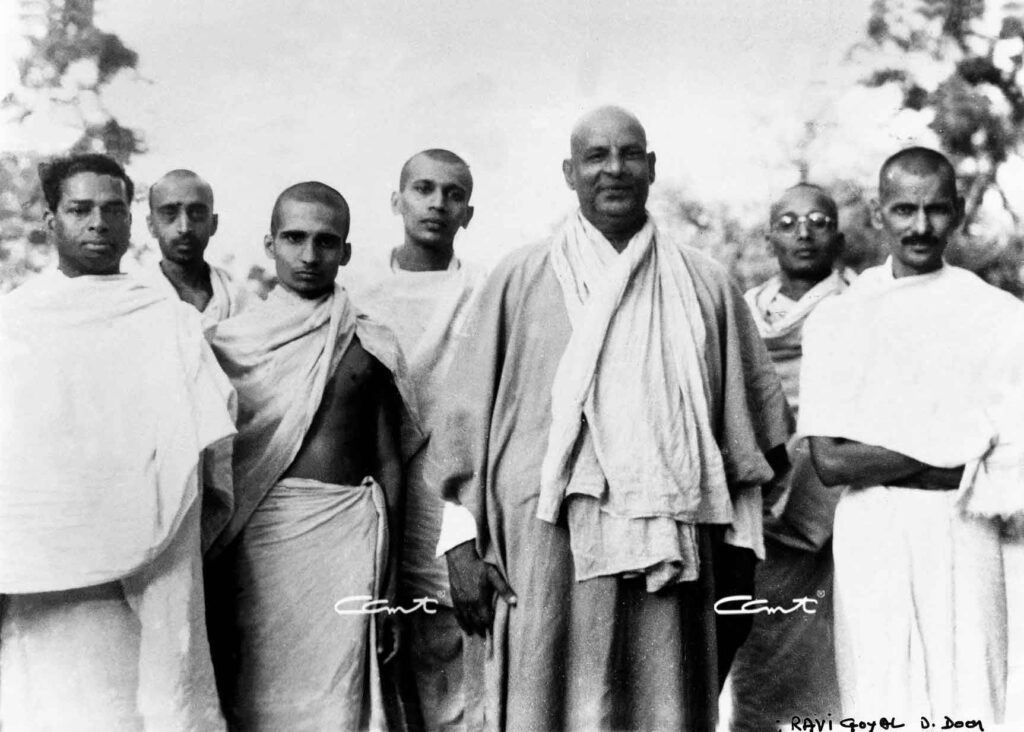
Swami Sivananda Group of monks standing with spiritual teacher photo
Bhakti Yoga, Swami Sivananda

Rules for Japa

Rules for Japa by Swami Sivanadna While doing Japa the following rules should be observed. Take a bath, or wash your hands, feet, face and mouth before sitting for Japa in the morning. At other times this is not absolutely necessary. Do Japa whenever you have leisure, specially during the Sandhyas or the junctions of the day (morning, noon and evening) and before going to bed. A comfortable Asana (Padmasana, Siddhasana, etc.) helps to make the mind also steady, controls Rajas and aids concentration. Face the North or East. This exercises a subtle influence and enhances the efficacy of Japa. Before commencing the Japa repeat elevating prayers invoking the aid of your Ishta-Devata. This induces proper Sattvic Bhava. Repeat your Ishta Mantra 108 or 1080 times daily (one to 10 Malas). Gradually increase this. Think of the meaning of the Mantra while repeating it. Pronounce each letter of the Mantra correctly and distinctly. Do not repeat it too fast or too slow. Increase the speed only when the mind wanders. Variety in Japa is necessary to sustain interest, avoid fatigue, and counteract monotony. Repeat aloud for a time, then hum the Mantra and repeat mentally sometimes. During Japa you should be alert and vigilant. This is important. Otherwise after a time the mind will begin to wander and drowsiness will overcome you. Keep a picture of your Ishtha-Devata in front. Side by side with Japa think of the Lord as present before you and picture His entrancing, beautiful form. This practice aids tremendously to the efficacy or power of your Sadhana. Feel that your heart is being purified and the mind is becoming steady by the power of the Mantra with the grace of God. God and His Name are identical. After Japa is over do not immediately leave the place and do not mix with everyone nor plunge into worldly activity. Sit very quietly for about 10 minutes at least, humming some prayer, remembering the Lord or reflecting upon His infinite love. Then after devout prostrations, leave the place and commence your routine duties. Spiritual vibrations will be intact. Keep your Mantra a secret. Never disclose it to anyone. Carry on the current of Japa mentally even at other times, in whatever works you may be engaged.

Rules for Japa Read Post »

saa
Bhakti Yoga, Swami Sivananda

The Secret of Ramayana

The Secret of Ramayana by Swami Sivananda The secret of Ramayana is the attainment of Jivanmukti through control of mind. Killing the ten-headed monster, Ravana of Lanka, is the annihilation of the ten evil Vrittis of mind, viz. , Raga (love), Dvesha (hatred), Kama (lust), Krodha (anger), Lobha (miserliness), Moha (infatuation, delusion), Mada (pride), Ahamkara (egoism), Matsarya (Jealousy) and Dambha (ostentation or vanity). Sita represents mind. Rama represents Brahman. Sita unites with her husband Rama. Mind merges in Brahman by concentration and incessant meditation on Rama. This is the esoteric teaching of the Ramayana. Constant repetition of the two-lettered Mantra RAMA (RA+MA) with Suddha Bhavana and perfect concentration leads to the control of mind and Samadhi. The thinker and the thought, the meditator and the meditated, the worshiper and the worshipped, the Upasaka and the Upasya become blended into one. Mind is filled with Rama. It becomes tadakara, tadrupa, tanmaya (oneness, sameness) and talleenata (as a man thinketh). As you think, so you become. The mind becomes identical with Rama. Jiva’s will will become merged with the Cosmic Will or the Will of Rama. Jivatma now vanishes. The two-lettered Rama Mantra is the best of all the Mantras. Why? Because it is a combination of Panchakshara and Ashtakshara. RA is taken from OM NAMO NARAYANAYA and MA from OM NAMAH SIVAYA. It is therefore very powerful. The shorter the Mantra, the greater the concentration. So repetition of Rama Mantra brings about greater amount of concentration. By worship and meditation or Japa of Rama Mantra, the mind is actually shaped into the form Rama. The object of worship is made pure through the purity of the object viz. , Ishtadevata, Rama. By continual practice (Abhyasa) the mind becomes full of the object (Rama) to the exclusion of everything else, steady in purity and does not stray into impurity. So long as mind exists it must have an object to lean upon and the object of Sadhana is to present to the mind with a pure object. The sound repeatedly and harmoniously uttered in Japa of a Mantra must create or project into perception the corresponding thing (Devata). The Mantra gathers creative momentum by repetition through the force of Samskaras. A Mantra is a mass of radiant Tejas or energy. It transforms the mental substance by producing a particular thought-movement. The rhythmical vibrations produced by its utterance regulate the unsteady vibrations of the five sheaths (Pancha Kosas). It checks the natural tendencies of the mind to run after objects. It helps the Sadhana-Sakti and reinforces it when it becomes imperfect and meets with obstacles. Sadhana-Sakti is strengthened by Mantra-Sakti. Mantra awakens super-human powers (Siddhis) when the sleeping consciousness in a Mantra (the Mantra Chaitanya) is awakened. The famous Tulasi Das had Darshan of Rama by repeating this Rama Mantra. Samartha Rama Das performed his Tapas in Takli village on the banks of the Godavari and chanted Rama Mantra thirteen crores of times and eventually had Darshan of Rama. Ramadas of Bhadrachalam had Darshan of Rama by constantly repeating this Rama Taraka Mantra on the holy banks of the Godavari. Such is the power of Rama Mantra. It purifies the Chitta, gives Ashta Siddhis and eventually leads to Mukti. Have intense faith and Ananya, Avyabhicharini Bhakti towards Sri Rama. Do Antarika (from the bottom of the heart) prayer. Chant this Name constantly with Suddha Bhava. Sing Rama Nam daily for a couple of hours with closed eyes in a solitary room. Serve Bhaktas. You will doubtless be freed from this wheel of births and deaths. You will certainly have Darshan of Rama and through Para Bhakti or Abheda Bhakti will merge yourself in Rama. You will attain the Satchidananda state. There is no doubt of this.

The Secret of Ramayana Read Post »

swami sivananda Spiritual collage with monk seated between Hindu deities and floral border image
Bhakti Yoga, Swami Sivananda

God Gives Darshan

God Gives Darshan by Swami Sivananda There is a village known as Dagheta near Mathura. One Swami Krishnananda was doing Kirtan one night with his party. It was the 10th October, 1934. A certain Bhakta who was much interested in Kirtan locked her little girl in the house and attended the Kirtan. There was none else in the house save the child. When the mother returned, she saw her child playing and laughing. She asked the child: “With whom are you playing, my child?” The child replied: “I am playing with this old man. Do you not see him?” The child repeated these words thrice. The mother was not able to see the old man. The old man was none else but Lord Krishna. He disappeared. Where there is Bhakti and faith, the Lord is always there. Where there is Kama (passion) there is no Rama. In front of Sankar Kutir, Meerut, where Sannyasins stay, there is a bungalow belonging to Sri Sankar Dayal, an advocate. He has a daughter. She is very devout. She worships Lord Krishna daily. This is all due to her previous virtuous Samskaras. She used to cull flowers in the garden daily. One day when she was doing this work early in the morning, a boy came to her with peacock feathers on the head and said: “Child, repeat this Mantra. ” He gave a certain Mantra for Japa and disappeared. Who else the boy can be but Lord Krishna? This incident took place on 5th October, 1934. Even in this Kali‑Yuga, if you have even a minute trace of faith and devotion, the Lord is ever ready to give His Darshan. In Farukkabad I met a boy aged about 19 on 14th November, 1934. He was a Bhakta of Lord Siva. He was repeating Om Namah Shivaya for some months past. But he did not have Darshan of the Lord. He felt aggrieved on account of this and one day he wanted to give up his life by some means or other. Finally when he set about to do a most violent act which it is not necessary for our purpose to mention here, the Lord of Mount Kailas appeared in the midst of a blazing blue light before the boy. The boy heard a voice: “Child what boon do you want?” The boy answered: “I want Your Darshan again for a second time. ” But Lord Siva did not again appear before him for the second time. Sri Bhagawant Prasad, the Deputy Collector, brought the boy to me to at Sarasvati Bhavan.


God Gives Darshan Read Post »

swami5
Bhakti Yoga, Swami Sivananda

Japa Yoga

Japa Yoga by Swami Sivananda Japa is an important limb of Yoga. In the Gita you will find: “Yajnanam Japa-Yajnosmi-Among Yajnas I am Japa Yajna. ” In this Kali Yuga practice of Japa alone can give eternal Peace, Bliss and Immortality. Japa ultimately results in Samadhi or communion with God. Japa must become habitual and must be attended with Sattvic Bhava, Purity, Prem and Sraddha. There is no Yoga greater than Japa-Yoga. It can bestow upon you all Ishta-Siddhis (whatever you want), Bhakti and Mukti. A Mantra is Divinity. It is Divine Power or Daivi-Sakti manifesting in a sound body. The Sastra says that those who think that an image is a mere stone, that Mantras are merely letters, and that a Guru is a mere man and not a manifestation and representative of the Lord or Supreme Teacher, Illustrator and Director, go to hell. The aspirant should endeavour to realise his unity with the Mantra or the Divinity and to the extent he does so, the Mantra-Sakti supplements his worship-power (Sadhana-Sakti). Japa is the repetition or recital of a Mantra or the Name of the Lord. Dhyana is the meditation on the form of the Lord with His attributes. This is the difference between Japa and Dhyana. There is Japa with meditation (Japa-Sahita) and without meditation (Japa-Rahita). As you advance, the Japa will drop by itself and meditation alone will remain. It is no doubt an advanced stage. You can practise concentration separately. You can do whatever you like best. Om is both Saguna and Nirguna Brahman. You can repeat ‘Om Ram’ for worship of the Saguna Brahman. Om is everything. Om is the name or symbol of God, Isvara or Brahman. Om is your real name. Om covers all the three-fold experiences of man. Om stands for all the phenomenal worlds. From Om this sense-universe has been projected. The world exists in Om and dissolves in Om. Om is derived by adding the letters A+U+M. ‘A’ represents the physical plane, ‘U’ represents the mental and the astral plane, the world of spirits, all heavens, and ‘M’ represents all the deep sleep state as well as in your wakeful state all that is unknown and beyond the reach of the intellect. Om therefore represents all. Om is the basis of your life, thought and intelligence. Om is the centre of all worlds that denote objects. Hence the whole world has come out from Om, rests in Om, and dissolves in Om. As soon as you sit for meditation, chant Om loudly 3 or 6 or 12 times. This will drive away all worldly thoughts from the mind and remove tossing of mind (Vikshepa). Then take to mental repetition of Om. In the act of breathing, the greatest Mantra SOHAM is repeated automatically by the Jiva 21, 600 times within 24 hours. This is called Ajapa Mantra. That is to say, it is a Mantra that is repeated without Japa or willed effort of the Jiva. Breath goes out with HAM and comes in with SO. Soham is Om only. Delete S and H, the consonants. The balance is OM. Soham is the Mantra of a Vedantic student. It means: “I am He” or “He am I. ” This signifies the identity of Jiva and Brahman. Repetition of this Mantra “HAMSAH SOHAM-SOHAM HAMSAH adds force to the Japa as is the case in “GOD IS LOVE-LOVE IS GOD. ” In the same way the Mahavakya is repeated “Aham Brahma Asmi- Brahmaivaham Asmi. “ A Mantra in the Hindu religion has a Rishi who gave it; a metre which governs the inflection of the voice; and a Devata as its informing power. The Beeja (seed) is a significant word or series of words which give it a special power. Sometimes this word is a sound which harmonises with the key-note of the individual using it and varies with the individual. Sometimes this word expresses the essence of the flower springing from this seed. This essence of the Gita is in the words quoted. The Sakti is the energy of the form of the Mantra i. e. , the vibration-forms set up by its sounds. These in the Gita carry the man to the Lord. The pillar (Kilakam) is that which supports and makes the Mantra strong. This is the ceasing from sorrow by the freeing from imperfections. Then follow certain special directions intended to set up relations between the centres in the man’s body and the corresponding centres in the body of the Lord (the universe). The thumbs, the earth-symbol, are connected with the physical plane and are utilised in control of its subtle forces. The index fingers, the water-symbol, are connected with the astral plain and are similarly used with astral forces. The middle fingers, the fire-symbol, the apex of the pyramid of the hand, are also similarly used with mental forces. The ring fingers, the air-symbol, are used with Buddhic forces. The little fingers, the most powerful in the subtle worlds, are the Akasa-symbol and are similarly used with Atmic-forces. The other organs of the body are the other poles of the magnet of the body: thumbs and heart; index fingers and head; middle fingers and the point of juncture of the occipital and parietal sutures; the ring fingers and the Sukshma Sarira; the little fingers and the creative organ. These are the positive and negative poles of the magnet we call the body; either may be positive, either negative according to the object aimed at, but they work together. There is a special, mysterious force or wonderful magnetic power at Sandhi or junction time (sunrise and sunset). The mind will be elevated quickly. It will be filled with Sattva. Concentration will come by itself without any effort at this time. Japa should be done at Sandhis. It is always better to start Japa and meditation at 4 in the morning as soon as you get up from the bed. At this time the mind is quite calm

Japa Yoga Read Post »

final logo
Bhakti Yoga, Swami Sivananda

How to See God?

How to See God? by Swami Sivananda The personal aspect of that Being is termed ‘Isvara’, ‘Allah’, ‘Hari’, ‘Jehovah’, ‘Father in Heaven’, ‘Buddha’, ‘Siva’, etc. The impersonal aspect is called “Brahman” by Vedantins, “Unknowable” by Herbert Spencer, “Will” by Schopenhauer, “Absolute”, “Noumenon” by some, and “Substance” by Spinoza. Religion is faith for knowing God and worshipping Him. It is not a matter for discussion at a club‑table. It is the realisation of the true Self. It is the fulfilment of the deepest craving in mind. Therefore hold religion as the highest prize of your life. Live every moment of your life for its realisation. Life without religion is real death. “Remove selfishness. Calm the passions. Remove egoism. Purify the heart. Analyse your thoughts. Scrutinise your motives. Cleanse the dross or impurity. Realise God. ” This has been the essence of the preachings of all prophets, seers and sages of all times. Read the teachings of Buddha, Jesus, Mohammed, Confucius, Shinto, Chaitanya, Sankara or any other prophet. This is the essence of Sadhana. This is the way to God. God‑realisation is your chief duty. Just as a charioteer restrains the restive horses through the reins, so also you will have to curb the restless “Indriyas” (the horses) through the reins of Viveka and Vairagya (discrimination and dispassion). Then alone you will have a safe journey to Atman or God, the sweet, eternal abode of peace and bliss. Be righteous always; never deviate from the path of righteousness. You are born to practise righteousness and lead a virtuous life. Truth is established in righteousness. Stand upright. Be bold. Be fearless. Practise Truth. Proclaim it everywhere. A man who speaks truth, who is merciful and liberal, who has Kshama and Santi, who is free from fear, wrath and greed, who is innocent and loving is really God or Brahman. He is the real Brahmin. Those who are destitute of the above virtues are Sudras only. How can you obtain His Grace, if you have no humility and if you do not make ungrudging, unreserved, unconditioned self‑surrender to the Lord? The Lord knows what is good for you better than you do. To resign yourself absolutely to His Will is even higher form of worship than visiting temples and shaking the bell, and doing all sorts of ritualistic ceremonies. The Lord does not want your external show. He wants your heart. Say once more: “Thy Will be done. I am Thine. All is Thine” from the bottom of your heart, Antarika. Be sincere. Weep for Him out of Prem (pure love). Cry in solitude out of devotion. Let the cloth be drenched in profuse tears. Close your eyes. Destroy the Vasana (of body, world and book‑lore). Withdraw the mind. Merge in Him. Drink the nectar of immortality now. A real devotee of Lord Krishna sees Krishna and Krishna alone in the whole world. He has a new Yogic eye, a new spiritual vision. It is simple foolishness to think that you are separate from the rest of the world. You are one with all. In injuring Visvaranjan you injure yourself. In loving Chandrasekhar you love yourself. Separation is death. Unity is eternal life. O friends! It is not very difficult to have Darshan of God. It is not very difficult also to please Him. He is everywhere, within all. He is seated in your hearts. Think of Him always (Sakara, Saguna). Pray fervently: “O Lord! Have mercy upon me. Open my inner eye-the Divyachakshus. Let me have Thy Grand vision-Visvaroopadarshan. Bhaktas sing about Thee as “Patitapavana” (purifier of the fallen ones), “Bhaktavatsala” (lover of the devotees), “Deenadayalu” (merciful towards the helpless). Just as the bird protects the young ones under its wings so also protect me under Thy wings, O Ocean of Mercy! “

How to See God? Read Post »