







Hari Om

Menu

February 14, 2026

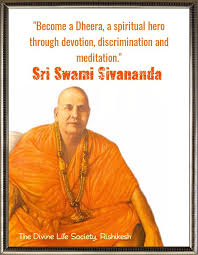
swami sivananda portrait with quote about devotion and meditation image
Bhakti Yoga, Swami Sivananda

Six Classifications of Bhakti

Six Classifications of Bhakti by Swami sivanandaThere are the following six classifications in Bhakti: Apara (lower) and Para (higher) Bhakti. Ragatmika and Vidhi Bhakti. Sakamya and Nishkamya Bhakti. Vyabhicharini and Avyabhicharini Bhakti. Mukhya (primary) and Gauna (secondary) Bhakti. Sattvic, Rajasic and Tamasic Bhakti. Ragatmika Bhakti is otherwise known as Mukhya or primary Bhakti. Para Bhakti is also primary devotion. Sakamya Bhakti is Gauna or secondary devotion. Nishkamya Bhakti, Avyabhicharini Bhakti or Para Bhakti is otherwise known as Ananya Bhakti. In Apara Bhakti the devotee is a neophyte. He observes rituals and ceremonies. He rings bells, applies sandal-paste to the Murti and offers flowers, Arghya, Naivedya, etc. He has no expanded heart. He is sectarian. He dislikes other kinds of Bhaktas who worship other Devatas. Para Bhakti is Nirguna Bhakti which is free from the three Gunas. It is the spontaneous, unbroken flow of pure love towards God. It is Ahaituki (free from any sort of motive) altogether. It is Avyavahita or unmeditated devotion towards God. This type of devotee does not care for divine Vibhutis even if they are offered. He wants the lotus feet of the Lord. He does not want even Kaivalya Mukti or absolute independence. He wants to serve God. He wants to see His face always. He wants pure divine love. God is the be-all and end-all of the devotee of Para Bhakti. A devotee of Para Bhakti type is all-embracing and all-inclusive. He has cosmic love or Visva Prem. The whole world is Vrindavana for him. He does not visit temples for worship. He sees his Ishtam everywhere. He has equal vision. He has no hatred for any object. He welcomes snakes, pain, disease and suffering as messengers of God. His mind is ever fixed at the lotus feet of the Lord. His Prem flows like oil in one continuous current. Para Bhakti is Jnana only. This is the highest culminating point in devotion. Nama Dev, Tukaram, Rama Das, Tulsidas and Hafiz had Para Bhakti. In Ragatmika Bhakti there are no fetters, shackles or barriers of customs or rules of society. There is no binding of any sort. There is an absolutely free flow of divine Prem. The devotee cares not a jot for public opinion. He is above public criticisms. He is as simple as a child. He pours forth exuberantly his love towards his Beloved. The devotee is intoxicated with divine Prem. Whereas in Vaidhi Bhakti the devotee observes rules and ceremonies and has certain restrictions. The simple-hearted cow-maids of Vrindavana and Mira had Ragatmika Bhakti. Though Mira was a Rani, she never cared for the opinion of the public and her relations and husband. When she was under intoxication of Krishna Prem she danced in the streets and open places amidst men and ordinary people. Ordinary people were not able to gauge the depths of her heart. Even Bhaktas were not able to fathom out the recesses of her innermost chambers of heart, the depth of her unbounded love for Lord Krishna. Her thrilling devotional songs which bring tears from the eyes of the hearers bespeak clearly the exalted state of her heart that was deeply saturated with the nectar of devotion towards Lord Krishna. She says: “I have none else for me besides my Giridhar Gopal. ” Can anyone fully understand the God-intoxicated Mira? Showing devotion to God for getting riches or son or removal of sufferings from diseases is Sakamya Bhakti. Sakamya Bhakti will eventually terminate in Nishkamya Bhakti. Prahlada only had Nishkamya Bhakti from the very beginning. Even the boy Dhruva had only Sakamya Bhakti. It was for getting dominion that he retired into the forest on the advice of his mother in the beginning. It was only later on that he developed Nishkamya Bhakti after he had Darshan of Hari. All his desires melted away. To love God for sometime and then wife, children and property for sometime is Vyabhicharini Bhakti. To love God and God alone for ever and ever is Avyabhicharini Bhakti. Mark this carefully! In Sattvic Bhakti the quality of Sattva predominates in the Bhakta. He worships God to please Him, to destroy Vasanas etc. All these three types of Bhakti are secondary devotion only. In Rajasic Bhakti the quality of Rajas predominates in the devotee. He worships God to get estates, wealth, name and fame. In Tamasic Bhakti the quality of Tamas predominates in the devotee. He is actuated by wrath, arrogance, jealousy and malice in showing devotion to God. To worship God for destroying one’s enemy and for getting success in an enterprise through unlawful means is Tamasic Bhakti. The thief prays to God: “O God Ganesha! Let me get something tonight. I will offer Thee 100 cocoanuts. ” This is Tamasic Bhakti. Sandilya also mentions of primary Bhakti and secondary Bhakti. The primary devotion is the attachment to the Lord. It is single-minded devotion. It is one-pointed, whole- hearted devotion to God (Ekanta Bhava). Primary devotion is the principal, because others are subservient to it. According to the Gita (VII-16), there are four kinds of Bhaktas. “Fourfold in division are the righteous ones who worship Me, O Arjuna! The distressed, the seeker for knowledge, the selfish and the wise. ” The devotion of the distressed, the seeker for knowledge and the selfish man is after all secondary as they have ulterior, selfish motives in view. But the devotion of the wise is pure and absolutely unselfish. It is Para Bhakti or primary devotion. He has undivided love and whole-hearted devotion to the Lord. He is eternally united with Him. God is the dearest to him and he is the dearest to God. Lord Krishna says: “Noble are all these but I hold the wise as verily Myself; he self-united is fixed on Me, the highest path” (Gita: VII-18). Prahlada later on meditated on his own Self as Lord Hari. This is Abheda Bhakti. This is the advanced stage of devotion. When a devotee has devotion for Lord Hari, Lord Siva, Devi,

Six Classifications of Bhakti Read Post »
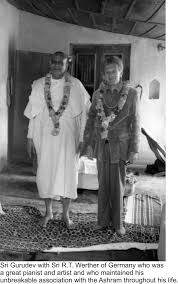
Swami Sivananda with Western devotee indoors image
Raja Yoga, Swami Sivananda

Guiding Lights for Self-Conquest

Guiding Lights for Self-Conquest by Swami Sivananda GUIDING LIGHTS FOR SELF-CONQUEST by Swami Sivananda Mind cannot by itself illumine the objects. Without the Atman, which is of the nature of intelligence, no cognition is possible. The function of the mind is to go out to the object through the senses and manifest it. Just as the water flowing from the tank to the fields through channels assumes the forms of the respective fields, so also the mind which pervades an object assumes the form of that object. Every object is an idea. It proceeds from the mind, exists in the mind and merges in the mind. Just as the light of the sun takes the shape of the object it illumines, the mind which enlightens everything assumes the form of the object it reveals. When the eye sees in orange, the mind projects itself through the eye and takes the form of an orange. When the mind, conceives of an orange, perceives an object, it transforms itself into the object. The perceiver in spite of the presence of the sense-organs and the objects, can perceive the object only when the mind is attached to it. Therefore, the mind is the instrument. Just as a lion that is shut up in a cage is restless, so also, the mind-bird that is shut up in the cage of our brain is restless. The mind runs after objects passionately. Fix it on the all-peaceful Atman. It will attain Supreme Peace. If the mind is pure, even enemies become friends. Tigers and serpents cannot harm you. Poison will become nectar. The flames of fire become cool. All these things will happen, when you know that there is the same Immanent Being in the hearts of all. The lives of Mira and Prahlada confirm this. Knowledge dawns only in a man who is endowed with a contented mind. A contented mind is ever calm and serene. He who does not wish for things which he has not got, who is not affected by what he possesses, and who is never elated or dejected, is a contented man. The heart of a man of contentment is ever full. He is ever happy. A disciplined and one-pointed mind is the essential requisite to God-realisation. Conquest of the mind is possible only by lessening the desires. Therefore, abandon all desires through dispassion, discrimination and meditation on Brahman. The mind of the cat is ever on the milkpot. The mind of the snake is ever on the frog. Even so, the mind of a passionate man is ever on the small, vulgar, sensual pleasures. O ignorant man! aspire for the big eternal bliss. The methods, the weapons, used to combat the enemy mind and watchwords of those who have attained Self-realisation are different in each case. A potter moulds the clay; goldsmith moulds the gold; and a blacksmith moulds the iron; but an aspirant moulds his mind. Detect the dodgings of the mind and overcome them. The mind will cheat you in a variety of ways when you want to sit for meditation. Prepare the ground first. Purify the mind first. Only then the Governor of the mind will enthrone Himself in your heart. Tune the instrument first. Keep everything in order before the Master of music arrives to play on the instrument, viz., mind. Spiritual experience does not remain constant when the mind is not perfectly purified. The Jiva descends again into the egoistic life. The higher consciousness is withdrawn from him. The more the mind is withdrawn from the outer world, the more it is making headway in the realm of spirit or Atman. A pure well-directed mind will do you tremendous service. It will become your obedient servant, true guide or Guru and an affectionate mother. To have control over the mind and the senses is real heroism. To refrain from harming other creatures is the highest charity. To abandon desires is the true Tapas. Whatever brings about unity and harmony is Dharma. Only when you have purified the vehicles of Adhara, only when the mind is serene, you can behold the majesty and glory of the Self. Lead a well-regulated, disciplined life. Control the senses first. Subject them absolutely to the mastery of the mind. Then bring the lower mind under the control of the higher mind. Balance of mind or mental equipoise is an indispensable element in spiritual life. Develop this again and again. A very big needle is of no use in stitching a fine cloth. Even so, a gross mind is of no use in realising the Supreme Self. A vacant mind cannot be called a serene mind. There is no thinking, no conception, no mental action, in a vacant mind. The most essential prerequisite in the spiritual path is an undivided, one-pointed mind. When the mind is longing for a particular food or drink, when the thing is right in front of you when you are just putting out your hand to grasp it, do not touch it. Stop and say, – I am not a slave of any particular food or drink or any object. I can leave it any moment. My will is powerful now. As a diamond can be cut only by a diamond, so also, the mind can be conquered only by the mind. The lower instinctive mind should be conquered by the higher, pure, Sattvic mind. When the mind is rendered pure and one-pointed, it gets established in the one Supreme Self which is of the nature of pure-consciousness, that is all-pervading like the ether, homogeneous like a lump of salt. Adversities become sweet when your mind is turned towards God. Mind is like a monkey. It is never satisfied with the objects which are already under its possession. It jumps to other unattained ones. It always wants variety and gets disgusted with monotony. Tame this mind by making it taste the nectar of the Atman within, by regular meditation. Your mind swings like a

Guiding Lights for Self-Conquest Read Post »

Swami Sivananda with Western devotee indoors image
Raja Yoga, Swami Sivananda

Absoloute Subdual of the Mind

Absoloute Subdual of the Mind By Swami Sivananda Mind, through ignorance and indiscrimination, considers its false personality to be true and thinks it is the doer of all Karmas and thus becomes egoistic. It imagines that it is in bondage. It identifies itself with the Jivatma; it becomes Jivatma itself and takes the responsibility upon itself for doing good or bad Karmas and enjoying or suffering from their fruits. Hence is mind the doer of Karmas (action), and responsibility for the Karmas, therefore, rests with it. Mind is the stealer of Atman. It is a thief. Mind drags the Jivatma into Vishaya (sensual enjoyments). Jivatma is the Abhasa of Chaitanya or reflected intelligence in mind. Mind and Jivatma always live together. They cannot be separated. Slay the mind, the stealer of Atman, through Vichara, Manana and Nididhyasana (constant and profound meditation) on Brahman. Mind has the potency of creating or undoing the whole world in the twinkling of an eye. Therefore, slay this mind the slayer of Atman, whether through the destruction of Vasana (latent, subtle desires) or Vakya Chintana. The best means of disposing of the great danger of Maya, involving all in pains, is the destruction of mind. With the destruction of the mind, all the three periods of time vanish into nothingness. With the destruction of mind, Atmajnana begins to dawn. The extinction of Vasanas (Vasana-kshaya), Manonasa (annihilation of the mind), and Tattva-Jnana (understanding of the Reality), when practised together for a long time, are regarded as fruitful. They should be practised at a time. So long as these three are not equally practised, again and again, the Supreme Seat (Parama Pada) cannot be attained even after a lapse of hundreds of years. Through the practice of these three for a long time, the firm knots of the heart are cut without doubt, like the breaking of the threads in a lotus-stalk rent in two. Destruction of the mind does not mean annihilation of the self. The Vedantin divides the mind into the higher and the lower, of which the lower one leading to desires is asked to be destroyed. Destruction of desires, annihilation of Ahankara, destruction of Sankalpa – all mean control of mind or annihilation of mind (Manonasa or Amanaskata). Destruction of egoism, raga-Dvesha (attraction and repulsion for objects) and all Vasanas along is Manonasa. Manonasa comes through the destruction of the Vasanas. Manonasa does not mean that you should take a sword and cut the mind to pieces. Manonasa means the death of the present form of the mind (i.e., the instinctive mind of emotions and passions), the form which perceives differences where none exists, which identifies the Self with the body. Its death really means its transformation into and, therefore, the birth of cosmic consciousness. Vast majority of persons live in Annamaya Kosa only. Their thoughts are directed towards eating, cleansing the body and putting on neat dress. That is all. Even the so-called educated persons live in Annamaya Kosa only. Sometimes, they live in Manomaya Kosa (mental sheath). A spiritual aspirant and Viveki live in Vijnanamaya Kosa (Buddhi Sheath). The Vijnanamaya Kosa is developed by abstract thinking and reasoning by systematic meditation, Brahma- chintana, study of the Upanishads, Yoga-Vasishtha and Brahma Sutras. You must all develop the Vijnanamaya Kosa by the study of Vedantic literature and pure thinking. Then you are safe. Mind will stop to deceive and torment you. Mind is absorbed in Mahat or Buddhi. Individual Buddhi is absorbed in the Cosmic Buddhi; Cosmic Buddhi in Avyakta; Avyakta in Brahman. This is the Laya-Chintana of Antahkarana or Mind. Sambhavi Mudra, Bhrukuti-Drishti (looking at the spot midway between the two eyebrows) Nasikagra-Drishti (looking steadily at the tip of the nose), Nadanusandhana (hearing the sounds of the ear) – all belong to Laya Yoga. By these practices the mind gets Laya soon. The Unmani state supervenes rapidly. The Unmani Avastha of Laya-Yogis corresponds to the Bhava-Samadhi of Bhaktas. In Sambhavi Mudra, the eyes are open but the mind is fixed on the Lakshya. The eyes do not see the external objects. When the mind and senses are thinned out and eventually controlled, Smaranendriya-vyapara (the various activities of Antahkarana and senses) ceases. Jivatva (personality-nation and sensation) vanishes. Brahmatva (existence) remains. That is Kevala Asti. Manonasa is of two kinds, viz., (1) Svarupa Manonasa, destruction of the Svarupa of mind, as in the case of the Jivanmuktas and (2) Arupa Manonasa, destruction of the very form of the mind, as in the case of Videhamuktas, when they leave off their physical bodies. The first is termed – destruction of the mind with form. The second is termed – destruction of the mind without form.

Absoloute Subdual of the Mind Read Post »

Swami Sivananda with devotees and children image
Raja Yoga, Swami Sivananda

Conquest of the Mind’s Strongholds

Conquest of the Mind’s Strongholds By Swami Sivananda You have the whole menagerie within you – the lion, the tiger, the serpent, the elephant, the ape and the peacock. Bring them under your control. The beauty of the flesh is really due to the life-giving principle, Prana. The beauty is attributable to the light that emanates from Atman. The nasty body with oozing discharges from nine gutters composed of the five elements is a Jada Vastu and Apavitra. Always entertain this idea. Have a clear-cut, well-defined, image or picture like this. You will conquer lust by such a mental drill. If you understand the doctrine of unity in diversity, if you know there is only one matter, one energy, one mind-substance, one life, one existence, one Sat, one Reality, and if you entertain always such a thought, you can control Krodha. If you remember that you are only an instrument in the hands of God, that God is everything, that God does everything, that God is just, then you can get rid of Ahamkara. You can annihilate Dvesha by Pratipaksha Bhavana. Look to the brighter side of persons. Ignore the dark aspect. Emotion is a motive power like the steam of an engine. It helps you in your evolution. Had it not been for the presence of emotion, you would have passed into a state of passivity or inertia. It gives a push for action or motion. It is a blessing. But you must not become a prey to emotions. You must not allow them to bubble out. You must purify and calm the surging emotions. You must allow it to rise slowly and subside quietly from the mind-ocean. You must keep the emotion under perfect control. Do not mistake physical sensations for higher sublime emotions. Do not be carried away by emotions. There are certain people who like to hear of new sensational events just to arouse their emotions. They live on emotions; otherwise they feel quite dull. This is a great weakness. This must be eradicated if they like to lead a calm and quiet life. All evil qualities proceed from anger. If you control anger, all evil qualities will vanish by themselves. Ahamkara, Samkalpa, Vasana, Prana have intimate connection with the mind. There cannot be any mind without these four. Prana is the life of the mind. Ahamkara is the root of the mind. Sankalpas are the branches of the mind-tree. Vasana is the seed of the mind. This deep-rooted tree of Samsara which ramifies in various directions with branches full of flowers, tendrils, fruits, etc., has the mind as its root. If this root-mind is destroyed, the tree of Samsara – this tree of birth and death – will also be destroyed. Cut this root – mind – with the axe of Brahma Jnana. Chop off the branches (Sankalpas) with the knife of Viveka-Vichara.

Conquest of the Mind’s Strongholds Read Post »

Swami Sivananda Swami Sivananda with group near riverside image
Raja Yoga, Swami Sivananda

Higher Methods for Mind Conquest

Higher Methods for Mind Conquest by Swami Sivananda I. ACHIEVEMENT OF MANOJAYA To the wheel of Moha (delusion, infatuation) mind is the axle. If by dint of discrimination your mind is destroyed, then Maya will not affect you. Mind is the container of matter and form, time and space. Mastery over the mind and impulses is life victorious. Disciplined thinking and feeling will give you strength and peace and help you in the attainment of God-realisation. Control of the emotions is of paramount importance if you wish to commune with God. When a Vritti arises, do not think about it, divert your attention, let it sink back. Do not spin your imagination. It is imagination that strengthens the Vritti. From the experience you get Samskaras (impressions), from Samskaras you get Vasanas, from Vasanas you get Vrittis or thought-waves. The imagination makes the Vrittis into a desire. Then ego attaches itself to the desire and it becomes then an urge, a Trishna. Then you are forced to do Cheshta to fulfil the desire. The process of the mind is going on. You can prevent the formation of new Samskaras, and stop past Samskaras to get further strengthened by fresh ones. The Vasanas are the woven nets to bind man. If the Vasanas are mastered, then you have scored a tremendous victory. The Vrittis and Samskaras are countless and deep-rooted, but they have an end through Vichara, Viveka, Japa, Satsanga, Svadhyaya, meditation and prayer. The mind associated with objects leads to bondage, and dissociated from objects to emancipation. The secret of strength lies in the calm and serene mind. When the mind remains without any attraction or repulsion towards objects, it will cease to exist. When the mind is dull, rouse it by Kirtan; when it is distracted, bring it back to calmness through Pranayama, worship and meditation, when it becomes attached get it detached through dispassion and discrimination. Thought is motivated by desire. Desire is the motive-force that makes the mind move. Desire and thought are closely connected. Every thought is prompted by the desire that stands behind it. Desire is the fuel. Thought is the fire that is kept up by the fuel of desire. Desire is another name for mind. Desire is constantly feeling the ego. So desire is at the root of our fears. Give up the load of excessive desires. If desires are allowed to grow, then they become the fuel for the fire of thought. With the passing away of the fuel of desires, the Sankalpas or thoughts also perish. Annihilate your Sankalpas or thoughts. You will not be subject to the trammels of birth; and, the mind is extinguished like a lamp without Ghee or oil. The mind is a blessing of God. Because without mind you cannot think of God. Without it you cannot concentrate and meditate. Without mind and emotions, thoughts and feelings, you cannot have Bhava and Bhakti. II. INNER YOGIC SADHANA So long as the mind is not destroyed, the Vasanas are not destroyed; vice-versa, so long as the Vasanas are not destroyed, the mind is not destroyed. Vasana is the ignorance which enslaves us in sensual objects after giving up true discrimination. Form exists in the mind, so long as the Vasanas are coupled with it. The conception of the heterogeneous objects in the mind, through a conception of their reality and the enjoyment of the pleasures therein, can be said to be of the form of the mind. So long as the knowledge of Brahman is not attained, so long will the mind be not destroyed; conversely, so long as the mind is not destroyed, so long will knowledge of Brahman remain unattained. If thoughts are destroyed through the extinction of Vasanas, the quiescence of the mind will result and the mind’s destruction will ensue. It is only to control this heterogeneous mind, that the intelligent Yogins perform Pranayama through the control of Prana. The fluctuation of Pranas and Vasanas are the two seeds of mind. Of these, if either of them dies both perish. Through Vasanas Prana’s motion is caused; through Prana’s motion Vasanas are caused. These two are the seeds and the sprouts to the ripe dried fruit of the mind. These two have their root in the visibles of the universe. If the visibles are destroyed, then Prana’s fluctuation and Vasanas will be eradicated to their root like a tree. It is the mental actions that are the seeds of the visibles. If the intelligence does not play its part in the visibles, then the visibles cease to exist. The beneficent control of Prana leads to that of the mind and causes in one equality of vision over all. Through aspiration, Pratyahara and indifference, you can effectively burn away the impressions of the objects at their initial stage. Repetition of God’s name and deep meditation enable the mind not to retain in itself the remembrance of anything other than God. Just as the bee which drinks the honey, does not desire the scent, the mind which is ever absorbed in the Nada (sound Om) does not desire the objects. To transcend time and space is to control the mind. Have unshakable faith in the Lord. Cling to His Divine Name. Surrender unto Him. Pray to Him sincerely. The mind will be powerless to do anything to you. III. SECRET OF YOGA SADHANA I solemnly affirm that the fell disease of birth and death can be removed only through the divine panacea of the mind-mastery and not through any other means. The path of annihilation of your mind will be most beneficial to you and will never generate the least of pains. If the mind is destroyed by dint of discrimination, then Maya will not affect you. Moksha means nothing but the destruction of the impurities of the mind. If your mind is free and pure, you will not again enter into birth. Control of mind is not done in a day. But by constant practice

Higher Methods for Mind Conquest Read Post »

Swami Sivananda seated with two disciples image
Raja Yoga, Swami Sivananda

Guide to Mind Control

Guide to Mind Control By Swami Sivananda “Manojaya eva mahajayah-Conquest of mind is the greatest victory.” “Man jita, jag jita–If you conquer mind, you have conquered the world.” (Hindi Proverb) In Hindu philosophy, you will always find an esoteric and an exoteric meaning. This is the reason why you need the help of a teacher. It is extremely difficult to comprehend the esoteric, inner meaning. You will find in Hatha Yogic books: “There is a young, virgin widow seated at the junction of the Ganga and the Yamuna.” What will you make out of this? It is difficult to understand. The young widow is the Sushumna Nadi. The Ganga is Pingala Nadi. The Yamuna is Ida Nadi. In Katha Upanishad, you will find a word whose meaning is brick. ‘Brick’ means here ‘Devata’ or deity. The Secret Of Ramayana There is also a Rahasya (secret) of Ramayana. The secret of Ramayana is control of mind. Killing the ten-headed monster Ravana of Lanka means the annihilation of the ten evil Vrittis of the mind such as Kama, Krodha, etc. Sita is mind. Rama is Suddha-Brahman. Bringing Sita back from Lanka is concentrating the mind on Rama (Brahman) by withdrawing it from Vishaya (objects) and uniting it with Rama. Sita (mind) unites with Rama (Brahman), her husband in Ayodhya (Sahasrara Chakra). Mind merges in Brahman. This is, briefly, the esoteric meaning of Ramayana. This is the Adhyatmic exposition of Ramayana. Mastery Of Mind, The Only Gateway To Moksha On this side is matter; on the other side is pure Spirit (Atman or Brahman). Mind forms a bridge between the two. Cross the bridge (control the mind). You will attain Brahman. He is a real potentate and a Maharaja who has conquered the mind. He is the richest man who has conquered desires, passions and the mind. If the mind is under control, it matters little whether you stay in a palace or a cave in the Himalayas like Vasishtha-Guha, fourteen miles from Rishikesh, where Swami Ramatirtha lived, whether you do active Vyavahara or sit in silence. It is, indeed, a rare thing to find a mind that is not affected by its contact with fluctuation. Like heat which is inseparable from fire, fluctuation which debases the mind, is inseparable from it. Devoid of this fluctuation, the mind ceases to exist. It is this fluctuation-potency of the mind that you should destroy through ceaseless Atma-Jnana enquiry. Mind is the cause of Sankalpa-Vikalpa. Therefore, you must control the mind. You must bind it. True freedom results from the disenthralment of the mind. Reflection of the Self made upon the mind cannot be perceptible when the mind is not free from its fluctuations, as the reflection of the moon made upon the surface of a turbulent ocean cannot be visible or perceptible. To attain Self-realisation, one must constantly struggle with the mind for its purification and steadiness. It is only the power of the will which can control it and stop its fluctuations. With the triple weapon of strong desire, Sraddha (faith) and strong will-power, you can have sanguine success in any attempt you undertake. If the mind is purged of all its impurities and worldly taints, it will become exceedingly calm. All fluctuations of the mind will cease. Then the supreme Nishtha (meditation) will supervene. Then all Samsaric delusion, attendant with its births and deaths, will come to an end. Then you will get Parama Dhama (supreme abode of peace). There is no other vessel on this earth on which one can cross the ocean of metempsychosis than the mastery of the antagonistic mind. They alone will reach the world of Moksha who have controlled the serpent of mind replete with desires and impure Vasanas. To lovers of Moksha, in whom the invincible desires have been destroyed and who try to win their way up to Salvation through their own efforts, the easy abandonment of their dire mind is itself their transcendental path and they then feel as if a great load were off their heads. No other path is truly beneficial. If you get the mastery over the mind and get true Jnana or illumination after destroying Ahankara and subjugating the Indriyas (organs), you will be doubtless free from the trammels of births and deaths. The differentiations such as ‘I,’ ‘you,’ ‘he’ will vanish. All tribulations, annoyances, miseries, grief will cease with the destruction of the mind. Who Can Control The Mind ? The mind can be controlled by untiring perseverance and patience equal to that of one engaged in emptying the ocean, drop by drop, with the tip of a blade of grass. A bird laid its eggs on the seashore. The waves came in and washed away the eggs. The bird became very angry. It wanted to empty the ocean with its beak. It applied all its energy in emptying the ocean. The king of the birds pitied its condition and came to its help. Narada, the peace-making Rishi, also came and gave some advice to the bird. When the king of the ocean saw all these, he was very much terrified. He brought back all the eggs of the bird and handed them over to the bird with apology and prostrations. Sadhakas (aspirants), who are attempting to control the mind, should have the same asinine patience and untiring perseverance as that of the bird which attempted to empty the ocean with its small beak. You must have the knack or the pluck or the aptitude to tame the mind. To tame a lion or a tiger is far more easy than taming one’s own mind. Tame your own mind first. Then you can take the minds of others quite easily. Mind Is The Cause Of Bondage And Liberation Mind is the cause of bondage and salvation of man. “Mana eva manushyanam karanam bandhamokshayoh”-The mind has two aspects-one is discriminative and the other is imaginative. Mind, in its aspect of discrimination, releases itself from the bondage and attains Moksha. In

Guide to Mind Control Read Post »

Swami Sivananda walking with followers under umbrella image
Raja Yoga, Swami Sivananda

Comprehensive Knowledge and Techniques for Mind Conquest

Comprehensive Knowledge and Techniques for Mind Conquest By Swami Sivananda I. ALL ABOUT MIND Mind creates this universe. Subjectively it is the universe. Slay the mind through destruction of Vasanas, Pranayama and Brahma Vichara. You will attain Self-realisation. Mokshapriya said: Gurudev! May I know all about mind in a nutshell? Swami Sivananda answered: Mind is Atma-Sakti. It is born of Prakriti. It is the Principle of thinking and sensation. Mind connects itself with the five senses of perception and enjoys all sensual objects. Mind is the dividing wall between the individual soul and the Supreme Soul. If the mind is destroyed the individual soul becomes identical with the Supreme Soul. If the modifications of the mind which lean towards sensual pleasures are destroyed, then the individual soul attains Supreme Peace. Mind is a bundle of Vasanas, Sankalpas and likes and dislikes. If you free yourself from these, the mind dwindles. It is the mind that creates this universe. Manomatram Jagat; Manah Kalpitam Jagat. In deep sleep there is no mind. Therefore there is no world also in deep sleep. Dispassion, discrimination, renunciation, meditation are all enemies of the mind. You can destroy the mind easily, if you possess these virtues. The mind manifests itself as the external world in the shape of pains and pleasures. The mind subjectively is consciousness, while objectively it is this universe. The mind has the potency of creating or undoing the world in the twinkling of an eye. Slay this mind. O Mokshapriya, through the destruction of the Vasanas (desires) or the control of the Prana and Brahma Vichara (enquiry into the nature of Brahman). Meditate on the innermost Self ceaselessly. The mind will be absorbed in Brahman. You will attain Self-realisation. II. HOW TO CONTROL THE MIND? How to control the mind? Eradicate all desires and thoughts. Control the mind through Yoga, Jnana, Bhakti and Nishkamya Karma. Mokshapriya said: O Lord! Please tell me the methods to control the mind. The mind is very turbulent. It is very mischievous. It is ever jumping like a monkey, which has drunk wine and which is bitten by a scorpion. Swami Sivananda replied: O Mokshapriya, I shall give you suitable methods to control this mind. Mind is a bundle of Vasanas and thoughts. It has attraction and repulsion, likes and dislikes. It is filled with egoism and cravings. It is born of ignorance. If you eradicate all desires and thoughts, it will die by itself. Vairagya (dispassion) and Abhyasa (concentration and meditation) are the weapons to annihilate this turbulent mind. Do not use any violent method to control the mind. You will lose your energy and weaken the will. Use intelligent methods to curb the mind. Mind cannot be controlled by mere human efforts. The grace of the Lord and the Guru is necessary. Pray fervently. Surrender completely to the Lord. You will surely obtain His grace. You can control the mind through Yoga and Jnana. For some it is easy to control the mind through Yoga and Jnana. For some it is easy to control the mind through Yoga; for some through Jnana or wisdom. Enquire – Who am I? Do Brahma Vichara. Enquire into the nature of the Absolute. Meditate ceaselessly on the all-pervading immortal, innermost Atman or the Self. The mind will be absorbed into its Source. O Mokshapriya, you can control the mind through the practice of Bhakti Yoga. This is more easy than the practice of Raja Yoga or Jnana Yoga. Do Japa. Sing the Lord’s glory. Cultivate the nine modes of devotion. Nishkama Karma Yoga is another method. It will purify the mind and lead to the descent of divine grace and divine light. Temperaments, tastes, and proclivities differ. Hence various Yogas are necessary to control the mind and to attain Immortality and Eternal Bliss. O Mokshapriya, you are fit for the practice of Bhakti Yoga. You have a good heart and you are emotional, too. III. SANKALPA AND ITS DESTRUCTION Mokshapriya said: O Swamin! Please throw some light on Sankalpa and its destruction. Swami Sivananda answered: O Mokshapriya! Sankalpa is thought. This is the function of the mind. The life of the mind is Sankalpa. The Svabhava of the mind is Sankalpa. Tamasic Sankalpa generates pain. It is base. Rajasic Sankalpa leads persons naturally into the mundane existence. The pure Sattvic Sankalpa leads to good or virtuous actions, Jnana or wisdom and salvation. It is only Sankalpa destroyed beyond resurrection that constitutes the immaculate Brahmic Seat of ineffable effulgence and splendour. Sankalpa only is Samsara. Its destruction is Moksha or the final emancipation. If you are Sankalpa-less, you will attain Self-realisation very easily. Free yourself from all desires. Steady your impure mind through your pure mind. Then eradicate all Sankalpas. You will be able to attain Moksha or the final beatitude only through the annihilation of Sankalpa. Therefore. O Mokshapriya, endeavour to destroy this Sankalpa and attain the immortal Bliss of Brahman or the Absolute, devoid of pains and heterogeneity. Sankalpa is destroyed with the control of thoughts. The highest goal can be attained through the extinction of Sankalpa. Sankalpa arose through Ajnana or nescience. Do not contemplate upon the objects of the world. Observe silence towards material pleasures. The seed of ignorance or Ajnana is the sprout of Sankalpa alone. One Sankalpa multiplies and increases prodigiously. The Sankalpa of tea multiplies in a minute. There comes the Sankalpa of tea, sugar, milk, tea-cups, tables, table-cloth, biscuits, fruits, etc. Think of objects; entertain sensual desires, then Sankalpa reigns supreme. Rising from a small beginning, the Sankalpa gradually increases and clouds the one, clear, self-luminous Atman. Man forgets all about his divine nature. He identifies himself with the body and external objects. You will be able to attain the stainless Moksha only through the firm path of the annihilation of Sankalpa. In the string of Sankalpa, countless thoughts are strung like so many beads. If the string is cut to pieces, the illusory thoughts. which are strung on it, will

Comprehensive Knowledge and Techniques for Mind Conquest Read Post »

Swami Sivananda seated cross-legged wearing a robe and flower garland. image
Bhakti Yoga, Swami Sivananda

Where is the Harm in Not Believing in God’s Existence?

Where is the Harm in Not Believing in God’s Existence? by Swami Sivananda Belief in God is an indispensable requisite for every human being. It is a sine qua non. Owing to force of Avidya or ignorance pain appears as pleasure. The world is full of miseries, troubles, difficulties and tribulations. The world is a ball of fire. The Antahkarana charged with Raga, Dvesha, anger and jealousy is a blazing furnace. We have to free ourselves from birth, death, old age, disease and grief. This can only be done by faith in God. There is no other way. Money and power cannot give us real happiness. Even if we exercise suzerainty over the whole world, we cannot be free from care, worry, anxiety, fear, disappointment etc. It is only the faith in God and the consequent Godrealisation through meditation that can give us real, eternal happiness and free us from all kinds of fear and worries which torment us at every moment. Faith in God will force us to think of Him constantly and to meditate on Him and will eventually lead us on to Godrealisation. Belief in God and Godrealisation will give us Parama Santi (supreme peace). In that peace comes the extinction of all pains. We will be no longer bewildered. We will be released from the bondage of actions. We will become immortal. We will obtain eternal Divine Wisdom. We will reach a place whence there is no return to this world of miseries, our sins being dispelled by Divine Wisdom. Our minds will ever remain balanced. We will never rejoice on obtaining what is pleasant nor feel sorry on obtaining what is unpleasant. We will have an icy cool Antahkarana. We will be ever established in the Divine Consciousness. We will get “Akshaya Sukha, ” happiness exempt from decay. We will become one with God (Samadhi) and get eternal (Nitya), infinite (Ananta), unbroken (Akhanda) Bliss. When we are established in the Divine Consciousness we will not be shaken even by heavy sorrow. We will get “Ateendriya Sukha”, happiness beyond the reach of senses (Supreme Bliss). God will give us full security if we worship Him with unswerving devotion and undivided attention. He gives us the Yoga of discrimination to enable us to reach Him easily. Out of pure compassion for us He destroys the ignoranceborn darkness by the shining lamp of wisdom. He speedily lifts us from the ocean of Samsara if we fix our minds on Him steadily with devotion and faith. We will cross over the three qualities and, liberated from birth, death, old age, and sorrow, drink the nectar of immortality. By devotion and faith we will know Him in essence and will enter into His very Being. Through His Grace we will overcome all obstacles (Parama Pada-Parama Dhama).

Where is the Harm in Not Believing in God’s Existence? Read Post »

Swami Sivananda seated with devotees around image
Raja Yoga, Swami Sivananda

Mind Conquest by the Conquest of Mental Habits

Mind Conquest by the Conquest of Mental Habits By Swami Sivananda The mind in the vast majority of persons has been allowed to run wild and follow its sweet will and desire. It is ever changing and wandering. It jumps from one object to another. It is fickle. It wants variety. Monotony brings disgust. It is like a spoiled child who is given too much indulgence by his parents or badly trained animal. The minds of many of us are like menageries of wild animals, each pursuing the bent of its own nature and going its own way. Restraint of the mind is a thing unknown to the vast majority of persons. This wandering habit of the mind manifests itself in various ways. You will have to be alert always to check this wandering habit of the mind. A householder’s mind wanders to cinema, theatre, circus, etc. A Sadhu’s mind wanders to Varanasi, Brindavan and Nasik. Many Sadhus do not stick to one place during Sadhana. The wandering habit of the mind must be controlled by rendering it chaste and constant by Vichara. The mind must be trained to stick to one place for five years during your meditative life, to one method of Sadhana, to one path of Yoga – either Karma, Bhakti or Vedanta – to one spiritual objective and to one guide. – A rolling stone gathers no mass. When you take up a book for study, you must finish it before you take up another. When you take up any work, you must devote your whole-hearted attention to the work on hand and finish it before you take up another work. – One thing at a time and that done well, is a very good rule as many can tell. This is Yogi’s way of doing. This is a very good rule for success in life. Do not have goat’s mind or a prostitute’s heart. A goat grazes for a few seconds in one patch of green grass and then immediately jumps to a far distant patch, even though there is plenty of grass to eat in the first patch. Even so, a wavering mind jumps from one Sadhana to another Sadhana, from one Guru to another Guru, from Bhakti Yoga to Vedanta, from Rishikesh to Brindavan. This is extremely deleterious for the Sadhana. Stick to one Guru, one place, one form of Yoga, one kind of Sadhana. Be steady and firm. Then only, you will succeed. Have a steady, resolute-mind. Discipline the mind. Tell the mind, – O Mind! Be steady. Be fixed on one idea. Absolute is the only Reality. If it wanders, if it wavers, go to a lonely place, give two or three sharp slaps on your face. Then the mind will become steady. Self-punishment helps a lot in checking the wandering mind. Frighten the mind as if you will beat it with a whip or rod, whenever it wanders from the Lakshya, whenever it entertains evil thoughts. Mind tempts and deceives you through objects. Distance lends enchantment to the view. Until you attain the object, it will seem to you as a pleasurable object from a distance. When you actually get it, it becomes a source of vexation and pain. Desire is mixed with pain. Objects are so delusive that they often deceive even the wise in this way. He is a really wise man who can detect the illusive nature of these objects. Mind always tempts you to go to various places for sight-seeing. It is all a vain trick of the mind to divert you from the goal. Use your Viveka always. Address the mind thus: – O foolish mind, have you not seen before, various places and sceneries? What is there in sight-seeing? Rest in Atman within. It is self-contained. You can see everything there. It is Purnakama; it is Purnarupa. (it contains all forms; it is beauty of beauties). What are you going to see outside? Is it not the same sky, the same earth, the same passions, the same eating, the same gossiping, the same sleeping, the same latrines, the same urinals, the same cemeteries everywhere? In the beginning, I used to give a long rope to my mind. It will whisper to me, – Let me go to Allahabad Kumbha Mela. I would say, – My dear friend, my mind! You can go now. As soon as I would return, I would ask, – O mind, are you satisfied now? What did you enjoy there, It would hide itself and drop down its head in utter shame. Gradually, it left off its old habits and became my true friend, guide and Guru through the true counsels it imparts in the way of obtaining the highest goal. Mind wants repetition of a pleasure once enjoyed. Memory of pleasure arises in the mind. Memory induces imagination and thinking. In this way, attachment arises. Through repetition, a habit is formed. Habit causes strong Trishna. Mind then exercises its rule over poor, helpless, weak-willed worldlings. As soon as discrimination arises, the power of the mind becomes weakened. The mind tries to recede, to retrace its steps to its original home – the heart. Its poisonous fangs are extracted by discrimination. It cannot do anything in the presence of discrimination. It gets dethroned. The will becomes stronger and stronger when discrimination is awakened. Thanks to Viveka which enables us to get out of this miserable Samsara.

Mind Conquest by the Conquest of Mental Habits Read Post »

Swami Sivananda with red background image
Raja Yoga, Swami Sivananda

Mind Conquest by Overcoming Raga-dvesha

Mind Conquest by Overcoming Raga-dvesha By Swami Sivananda Raga-Dvesha is due to the Anukula-Pratikula Jnana. You have Raga for a thing favourable (Anukula) and Dvesha for things unfavourable (Pratikula). When this Anukula-Pratikula Jnana which depends upon Bheda Jnana disappears, Raga-dvesha will vanish. Raga-Dvesha is due also to Abhimana-Ahankara. As soon as Abhimana manifests, there comes Raga-Dvesha. When you conceive yourself as husband, there comes the attachment (Raga) for your wife. As soon as you conceive yourself to be a Brahmin, there comes the love of the Brahmins. Give up Abhimana, if you want to eradicate Raga-Dvesha. If this Abhimana, the result of Avidya (ignorance) vanishes, Raga-Dvesha will vanish, and with it, the mind too vanishes.

Mind Conquest by Overcoming Raga-dvesha Read Post »