


Hari Om

Menu

February 12, 2026

Swami Sivananda meditating by river vintage photo
Jnana Yoga, Swami Sivananda

Vedanta and Sannyasins

Vedanta and Sannyasins by Swami Sivananda IT IS only the ignorant and faithless, who are followers of the philosophy of flesh, carp and say, The Sannyasins who lead the path of renunciation or Nivrittimarga are idlers. They are of no use to the society. They are like drone bees. They simply waste their time in forests, caves and hills, there is nothing in Vedanta. It is the philosophy of dreamers only. There is no need for the order of Sannyasa. Where is Brahman? Can you show your Brahman? If there is really one Sat-Chit-Ananda Brahman, will He not shine now and here? There is no such thing as Brahman. Brahman is only an imaginary phantom of the so-called Vedantins. There is no use in renunciation, Tapas and control of the senses. Let us eat and drink and rejoice in this world. There is nothing beyond these senses. There is nothing beyond this world. There is nothing beyond sensual pleasures. This is a beautiful and soul-stirring philosophy indeed! This is the sublime philosophy of Charvakas, materialists, epicureans, gluttons, followers of Virochana and worshippers of flesh and body. The followers of this school are countless in this world. Every religion has a band of anchorites who lead the life of seclusion and meditation. There are Bhikshus in Buddhism, Fakirs in Mohammedanism, Sufistic-Fakirs in Sufism, Fathers and Reverends in Christianity. The glory of a religion will be absolutely lost, if you remove these hermits or Sannyasins or those who lead a life of renunciation and divine contemplation. It is these people who maintain and preserve the religions of the world. It is these people who give solace to the householders when they are in trouble and distress. They are the harbingers of divine wisdom and peace. They are the messengers of Atmic knowledge and heavenly messages. They are the disseminators of Adhyatmic science and Upanishadic revelations. They tend the sick, comfort the forlorn and nurse the bed-ridden. They bring hope to the hopeless, joy to the depressed, strength to the weak, and courage to the timid by imparting the knowledge of Vedanta and the significance of ‘Tat Tvam Asi’ Mahavakya. Vedanta is that bold philosophy which teaches unity of life or oneness or consciousness. It is that supreme philosophy which boldly proclaims, with emphasis and force, that this little Jiva or human being is identical with the Eternal or the Absolute. It is that sublime philosophy which elevate the mind at once to magnanimous heights of Brahmanhood, divine splendour and glory, which makes a man absolutely fearless, which destroys all barriers that separate man from man and which brings concord, unruffled peace and harmony to the suffering humanity at large. It is the only philosophy that can really unite on the basis of one common Self in all, a Hindu and a Mohammedan, a Catholic and a Protestant, an Irishman and an Englishman, a Jain and a Parsi, on a common platform and in the core of their hearts also. It is the only philosophy that, when properly understood and practised, can put a definite stop to the world wars and all sorts of dissension, splits and skirmishes that exist in different nations and communities. All philosophers should bow down their heads, with implicit obedience and perfect submissiveness, before this grand philosophy. Sankara, Dattatreya, Yajnavalkya and others preached and expounded this unique philosophy. Rama Tirtha and Vivekananda also preached this profound philosophy in America. Brahman cannot be demonstrated. He is beyond the reach of mind and speech. He cannot be seen by these physical eyes but He can be reached through meditation, through the eye of intuition, by one who has purified himself and who is endowed with the four means of salvation. Brahman is not an imaginary phantom. Brahman alone exists. He is the only solid Reality. He is Existence Absolute, Knowledge Absolute and Bliss Absolute. He is the living Truth. There is no world apart from Brahman. This world has no independent existence. Brahman is the support for this world. When one is hopelessly sunk in the quagmire of Samsara, when he is burnt by the three fires of this terrible world of names and forms, when he is in a hopeless state of being drowned in the ocean of phenomena, when he is suffering from fearful tribulations, torments and dreadful diseases, when all his friends, relations and parents have deserted him on account of his chill penury and poverty, when death dances its formidable dance before him, then there comes forth the Vedanta philosophy with its all-loving, all-inclusive and all-embracing hands to lift the distressed soul from abject helplessness, bondage, ignorance and suffering to the magnanimous heights of freedom, perfection, independence and suzerainty. Then he drinks the nectar of immortality and tastes the delicious cup of experience of the inherent divinity and ineffable splendour of Brahman. Glory, glory to the Vedanta philosophy! Thought moves. Thought is a great force. A Yogi or sage can purify the whole world with his powerful thoughts though he remains in a solitary cave in the Himalayas. It is not necessary that he should appear on the platform and deliver lectures and discourses to help the people. Sattva is intense activity. A wheel that revolves very rapidly appears to be at rest. So is Sattva. So is a Sattvic man. Just as coloured water penetrates freely and nicely a piece of pure white cloth, so also the instructions of a sage can penetrate and settle down in the hearts of aspirants only when their minds are calm, when there are no desires for enjoyments and when the impurities of their minds are destroyed. That is the reason why an aspirant is expected to possess the qualifications of Viveka, Vairagya, Sama, Dama, Uparati, Sraddha, Samadhana, Mumukshutva, before he practises hearing of Srutis, reflection and meditation. Discipline and purification of the mind and the Indriyas are the prerequisites of the aspirant in the path of Truth and God-realisation. Even when God is explained, those who have

Vedanta and Sannyasins Read Post »
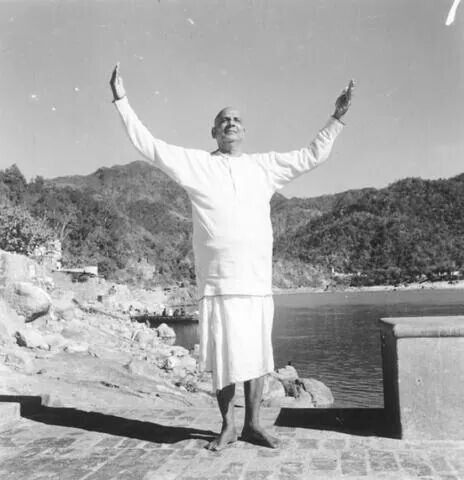
Swami Sivananda standing with raised hands by river image
Swami Sivananda, Yoga of Synthesis

Light on the Path of Renunciation

Light on the Path of Renunciation Every Religion has a band of anchorites who lead the life of seclusion and meditation. There are Bhikkus in Buddhism, Fakirs in Mohammedanism, Sufistic Fakirs in Sufism, Fathers and Reverends in Christianity. The glory of a religion will be lost if there are no monks leading a life of renunciation and service to the world. It is these people that maintain the religions of the world. They give solace to the householders when they are in trouble and distress. They are the harbingers of peace and wisdom. They heal the sick, comfort the forlorn and bring help to the hopeless, joy to the depressed, strength to the weak, and knowledge to the ignorant. One true Sannyasin can change the thought-currents of the world for better. A real Sannyasi is a mighty potentate of this earth. Sannyasins have done sublime work in the past. They are working wonders at present. One real Sannyasin can change the destiny of the whole world. I dance in joy when I see or hear from an aspirant who entertains genuine devotion, aspiration and inclination for the path of renunciation and tries to get out of this quagmire of Samsara. Through prayers and thought-currents I am in very close touch with such students and help them a lot. They are all attracted towards me and leave the world quickly with a great hope for the future. I welcome them with great joy and train them nicely in a variety of ways in the path of Yoga and take care of them until they are able to stand firm in the path. YOUTH IS THE BEST PERIOD FOR RENUNCIATION In scriptures, the order of Sannyasa is mentioned for those who have passed the Brahmacharya, Grihastha and Vanaprastha stages of life. That means people took Sannyasa in their old age, on the verge of death. It is quite good to have some peace at the time of death. By this they may get a good birth. From experience I find that tremendous energy is needed for purposes of contemplation, clear vision and extraordinary purity of body, mind and heart. I consider youth, with abundant energy and mental purity, as the foremost qualification for the path of renunciation. I have all admiration for those young Brahmacharis who do not have any worldly bondage and entanglements. They can be moulded nicely. Viveka, Vairagya, Shat-sampat and Mumukshutva are the primary qualifications to students prescribed by the scriptures. It will not be possible to have all the above qualifications when people live in worldly environments with heavy responsibilities, anxieties and worries. By the time they develop one virtue or try to remove a single defect or evil in the mind, they get entangled in various other directions. The vibrations of the materialistic world are not favourable for spiritual progress in the early stages. They have to spend their entire energy solely in resisting the temptations. Therefore I prefer young persons. Necessary qualifications will come by themselves when they tread the path of Yoga, in a favourable atmosphere, and when they live in the company of Yogis, in a place far away from the temptations and attraction of sense-objects. NO RIGID CONDITIONS ARE ATTACHED I heartily welcome all types of people. Old people can take bath in the holy Ganga and spend their time in prayers and Bhajan and enjoy the benefits of Satsanga. Young persons will evolve quickly through a dynamic Sadhana and bring spiritual good to the world. If people only show some symptom of disgust for sensual enjoyment coupled with a taste for the path of Yoga, I at once give them Sannyasa and share with them what I have and encourage them to a great extent. It is a great surprise to many to see that I give initiation through post also. Some students who are not in a position to come to the Himalayas have taken Sannyasa by receiving the sacred cloth and instructions by post. I cannot express their joy in full. They have made wonderful progress. I closely watch them. The entire voluntary donation I receive from devotees for my personal use is spent in providing comforts and conveniences to the students, for their welfare and peace and in creating hundreds of avenues in which they can quickly evolve and help the world in a variety of ways. In my method of work for the spiritual uplift of mankind, I permit even married people to take to the path of renunciation and live like Sannyasins. There are many who have taken to the order of Sannyasa when they have a family and children. After some training here, they go back and live near the family or a little away and take care of the family with complete detachment and gloriously prosper in their Sadhana. The point of my method is that I look to the motive and the inner purity of the seeker. I do not impose too many rules and restrictions on food and dress. External conformity to rules is not of much value. My students can live in any place, in any dress and yet effectively follow my instructions. They all set an example to the whole world. Glory to the true, ideal Sannyasin who leads an exemplary life. This world is in need of ideal Sannyasins who will serve the country and humanity with divine consciousness and disseminate true knowledge and carry the message of the Sages and Saints to every door. May Sannyasins, the repositories of divine knowledge, the torch-bearers of Truth, the beacon-lights of the world, the corner-stones of spiritual edifices and the central pillars of the eternal Dharma or religion, guide the nations of the world.

Light on the Path of Renunciation Read Post »

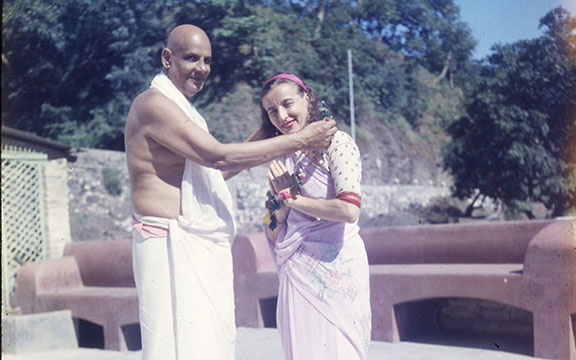
Swami Sivananda garlanding woman outdoors image
Jnana Yoga, Swami Sivananda

TURIYA or the Fourth State

TURIYA or the Fourth State by Swami Sivananda TURIYA or the fourth state is that state in which the individual soul rests in his own Sat-Chit-Ananda Svarupa or the highest Brahmic consciousness during Nirvikalpa Samadhi. There are three states, Jagrat, Svapna and Sushupti, for a Jiva who is whirling in the mire of Samsara. Turiya is that state which transcends all these three states. Hence the Turiya or the fourth. Turiya is Atman or Brahman. Brahman is Sat-Chit-Ananda Vigraha or the embodiment of knowledge and bliss. He has no beginning or end. He is the cause of all causes. He is the shelter, support and the Lord for all. Languages are many but the language of heart and the mental pictures are one. Cows have many colours but the colour of the milk is one. Prophets are many but he essentials of their teachings are one and the same. Schools of philosophy are many but the goal is one. Opinions and methods of worship are many but the Brahman or God is one. There are two paths in Yoga to realise the Self viz., the Pipeelika Marga and the Vihanga Marga. Just as the ant slowly marches, so also the aspirant slowly marches on in the spiritual path. He practises Karma Yoga to purify his heart and then takes up Upasana to steady his mind. Finally he treads the path of Jnana Yoga and eventually reaches the goal of life. This is Pipeelika Marga or the ant-path. Just as the bird flies in the sky at once, so also the aspirant of the first class type at once practises Jnana Yoga and attains knowledge of the Self. This is the Vihanga Marga or the bird-path. Man can be compared to a plant. He grows and flourishes like a plant and dies at the end but not completely. The plant also grows, flourishes and dies at the end. It leaves behind the seed which produces a new plant. Man leaves when dying his Karma behind, the good and bad actions of his life. The physical body may die and disintegrate but the impressions of his actions do not die. He has to take birth again to enjoy the fruits of these actions. No life can be the first for it is the fruit of previous actions, nor the last, for its actions must be expiated in the next following life. Therefore, Samsara or phenomenal existence is without beginning and end. But there is no Samsara for a Jivanmukta or liberated sage who is resting in his own Sat-Chit-Ananda Svarupa. Man destroys the Samskaras which bring him again and again in this earth to reap the fruits of his actions by acquiring knowledge of the Self and becomes free. Have a deep study of the Upanishads. In the whole world there is no study so inspiring and so beneficial as that of the Upanishads. Every Mantra is pregnant with deep, original, sublime and soul-stirring thoughts. They are the products of the highest wisdom of the ancient Rishis of India. They bring solace, inner strength, peace and courage to the readers. They infuse hope to the hopeless, strength to the weak, joy to the joyless and serenity to the restless. The system of Vedanta takes its origin from the Upanishads which contain the ancient wisdom of the sages of yore. A deep study of these wonderful Upanishads will clearly indicate as to what magnanimous heights those Rishis of yore had climbed in the spiritual ladder. The Western scholars and philosophers pay their homage to the Rishis and appreciate the grandeur and originality of the Upanishads. Do not argue. Give up lingual warfare, intellectual gymnastics and quibbling. You will be nowhere if you enter into disputations and discussions. Have living faith or unshakable conviction in the existence of the immoral, All-pervading Brahman or the Eternal, the words of your preceptor and the Srutis. Learn from your preceptor the fundamental tenets of Advaita Vedanta. The Advaita Vedantin admits six Pramanas but the final court-of-appeal for him is the Srutis. Srutis contain the inspired revelations and experiences of realised sages. He always opens his Vedantic discourses in the following manner. Sruti Bhagavati says, Ekameva Advitiyam Brahma, Ekam Sat Viprah Bahudha Vadanti, Sarvam Khalvidam Brahma, etc. To understand and know the Truth, much logic and argumentation is not necessary. Truth is very simple. It can be realised by simple meditation. Intellect is a finite instrument only. It is an automatic and routine faculty. It is not self-sustained and self-luminous. It will betray you. Intuition only is infallible or unerring. Those aspirants who are well qualified and well equipped will be really benefited in the path of renunciation or Nivrittimarga. Many renounce the world and take to Sannyasa in their temporary zeal. They do not make progress in the spiritual path, because they lack the preparation and qualifications without which spiritual life is not possible. The man who sits by calming the mind, who does nothing at all physically, is the most active man in the whole world; whereas that man who runs hither and thither and who is always very busy, does nothing in substance. This may be paradoxical to you. Very few can comprehend this. Husk is natural to rice and rust to copper, yet they disappear through efforts! Evan so Ajnana which clings to the Jiva or individual soul can be made to disappear through the ceaseless Atmic enquiry. Destroy the Avidya. May you rest incomparably firm in your own Self! Do not mistake Tandri for Savikalpa Samadhi and deep-sleep for Nirvikalpa. The glory of the state of Turiya or Bhuma is ineffable. Its splendour is indescribable. If the body is light, if the mind is clear if there is cheerfulness, know that you are meditating. If the body is heavy, if the mind is dull, know that you were sleeping while meditating. Through ignorance and lust comes death. Through knowledge the deathless state or the immortal Atman is reached. Both life eternal and

TURIYA or the Fourth State Read Post »

Swami Sivananda with disciples and garlanded statue image
Jnana Yoga, Swami Sivananda

Experiences of the Four Stages

Experiences of the Four Stages by Swami Sivananda JAGRAT is the waking state in which man enjoys the five gross objects of senses as sound, etc., through the five organs of knowledge, viz., ear, skin, eye, tongue and nose. He is conscious of the world. He has externalised consciousness (Bahih Prajna). Jiva is called Visva in this state. Svapana is the dreaming state in which man enjoys the five objects of sense through Vasanas or impressions created in his waking state. The body and all senses are at rest and the mind alone works. Mind itself is the subject and the object. It creates all dream-pictures. Jiva is called Taijasa in this state. There is Antah-prajna (internal consciousness). The scriptures say When he falls asleep there are no chariots in that state, no horse and roads, but he himself creates chariots, horses and roads. (Brihad. Upa. IV-3-9-10.). In deep sleep state or Sushupti all senses and the mind are at rest. The mind is involved into its cause, the Karana Sarira. The Jiva is called Prajna in this state. The Anandamaya Kosha is functioning. There is a veil between the Jiva and Brahman. A king gets into his car and moves about in the city. This corresponds to Jiva’s wandering in the world in the wakeful state. He returns back and enters his palace. This corresponds to the dreaming state. He enters his bed-room at night. This corresponds to the deep-sleep state. Mind is not a heavy thing. It is like a light diffusible gas or vapour or fume. When a scented stick is burnt the fumes pervade the whole room in a minute. Even so, the mind pervades the whole brain as soon as it emerges out from the causal body from deep sleep. If you put a grain of musk or potassium permanganate in a very large basin of water, it gets itself diffused in the whole water. Even so, the mind gets itself diffused in the brain. Karana Sarira is like a small seed which contains the whole tree within itself. It is otherwise known by the name, ‘seed-body’. The whole physical body, mind, Prana, senses, etc., have come out of this seed body. During meditation the aspirant enters into a half sleepy state. This is called Tandri. He begins to doubt whether he was meditating or sleeping. If one is really meditating his body will be light and his mind will be cheerful. If he is sleeping the body will be heavy, the mind dull and the eye lids heavy. In swoon there is half of deep-sleep as it is different from the other three states, viz., waking, dreaming and deep-sleep states. A man in a swoon does not perceive any object. The body of a swooning person falls down on the ground. Therefore a man in swoon is not awake. He is not dreaming as he is totally unconscious. Is he dead? No, he is alive as he has life and warmth. He continues to breathe. Swoon is not deep-sleep. The body of a man is swoon trembles and his face is dreadful. His eyes are starring and wide open. But a man who is sleeping looks calm and peaceful. His eyes are closed. His body does not tremble. A sleeping man may be awakened by a slight touch with the hand or by calling him by his name; whereas a man in swoon cannot be awakened even by a blow with a stick. Swoon is caused by a blow on the head with a stick or some such causes, while sleep is due to weariness or fatigue. Swoon is only half sleep. You should not mean by this that man in swoon half enjoys Brahman or that the soul becomes half-united with Brahman. The state of swoon partly resembles sleep. The senselessness belongs with one half to the side of deep-sleep and with the other half to the side of death. It is the door to death. If there is a remnant of Karma he comes back to consciousness; if no work remains he dies. The mind is swoon neither rests in Karana Sarira nor in the Hita Nadi in the throat. It is in a state of stupefaction. It is in a state of being stunned. It takes its rest in a place midway between Hita Naid and Karana Sarira. When one is under chloroform anaesthesia the activity of the cells of the brain is inhibited by the effect of chloroform. The mind which has its seat in the brain during waking consciousness now rests in a place midway between the throat and the heart and so one has no feeling of pain even when his leg is amputated. Man feels pain only when the mind is connected with the body. When one is under chloroform the mind is disconnected from the physical body. The slight interval or Sandhi between deep-sleep state and the waking state is called Tushnim Bhuta Avastha or state of quiescence of mind. Similarly there is an interval or Sandhi between the waking state and the deep-sleep state. In the former Sandhi the mind is coming out with the experience or Rasa of deep-sleep; in the later Sandhi it is going into the recesses of the heart with the experience or Rasa of the worldly objects. In these two Sandhis the mind is free from Sankalpas and attraction or repulsion. The Scriptures say: Suptaprabodhayoh Sandhavatmano gatimatmadrik, Pasyanbandhamcha moksham cha mayamatram na vastutah. The seeker after Atma Tattva should see it at the junction between the waking and sleep state. He should see that bondage and liberation is only due to delusion of Maya of the individual and not a reality. (Bhagavatam, VII. 13, 5). The Self is covered by Avarana during sleep and by Vikshepa during waking state. That which is above Avarana and Vikshepa is the Atman. The Yoga Shastra says: Nidradau jagarasyante yo bhava upajayate, Tam bhavam bhavayan Nityam muchyate netaroyathi. A Yati (anchorite) should always

Experiences of the Four Stages Read Post »

Swami Sivananda collage with Spiritual teachers picture
Jnana Yoga, Swami Sivananda

The Five Characteristics of Atman

The Five Characteristics of Atman by Swami Sivananda Mind operates in a mysterious manner in dream. It creates, fabricates many fantastic, romantic pictures, scenery, events, etc. Sometimes you dream that you are dead and that your dear relatives and parents are weeping by your side. The most wonderful thing is that, even when you are dead, you see and hear them weeping. Does this not clearly prove that life really persists even after seeming death? Does this not clearly indicate that the soul is immortal? Think well and cogitate. You will clearly understand that immortality is an inherent attribute of the soul or Atman. The dream phenomenon establishes the Sat aspect of the Atman. If you tell a man that he will die within a year, he becomes indignant at once, because he somehow feels that he will live for ever though he knows that this physical sheath will be thrown away like a cast off slough. Your very desire for continued living clearly proves that your real nature is immortality. This is the Sat aspect of Atman. People build bungalows and mansions with the hope that they can live for ever in this physical plane or phenomenal universe. Though the intellect is clouded by the influence of Avidya or Maya, yet the idea of immortality of the soul, however hazy it may be, is ingrained in the mind of everybody. During calm moments this feeling gets intensified, when the intellect becomes clear and pure. A growing child asks the mother daily: Mamma, what is this? What is that? There is a great curiosity in the child to know things. This is a clear proof that knowledge but not ignorance is the real nature or inherent attribute of the soul or Atman. If you say to any man: You are a fool he gets enraged at once. Why? Because, he feels somehow or other that essentially he is a mass of intelligence. Even a fool thinks that he is a very wise, because in essence he is an embodiment of wisdom, he is identical with the Supreme Self. So the inherent, innate feeling: I am a wise man arises in his heart. This is the Chit aspect of the Atman. Faces are different. Faculties and capacities are different, in different persons. Colours are different. Sounds are different. Gait and mode of thinking are different. Opinions and views are different. But one thing is common in all persons. That common thing is that everybody wants eternal happiness (Nitya Sukha). This is the Ananda aspect of the soul or Atman. This is a clear proof that bliss (not pain) is the real nature or inherent attribute of the soul. A remarkable incident occurred a few years ago. A French girl suffered from a dangerous disease. She was in an unconscious state for weeks. Doctors declared the case to be absolutely hopeless. Somehow or other she was pulled round miraculously through the grace of the Lord. She knew only French. A strange thing occurred now. She entirely forgot her mother-tongue, but she suddenly developed wonderful proficiency in a dozen languages which she never knew before. This was reported in the leading newspapers. This caused a good deal of sensation and curiosity in the readers. At once some leading psychologists, philosophers, doctors and scientists began to investigate into the matter thoroughly. They were fully convinced that the whole report was true, accurate and correct. They said that the only explanation of the phenomenon was that perfect knowledge of all things is stored up in a mysterious manner within our brain but locked in special doors which can be opened only by particular keys. They further remarked that we could open some of the doors by using the right key the key of discipline and training and that we are not able to open the other doors on account of ignorance or lack of training and discipline or non-using the right key. They further added that in the case of the French girl the door French got mechanically shut and the doors for dozen other strange languages got simultaneously opened. Here there is an occult proof of the doctrine of Vedanta that the Soul or Atman is a storehouse of all knowledge or an embodiment of wisdom. Everybody wants independence. He has a burning desire for freedom. The very thought of dependence is painful and irksome. He wants to have suzerainty. He wants to rule over others. He does not like to be guided by the wishes of others. On the contrary, he wishes that others should follow his wishes. This clearly proves that independence and suzerainty also are the inherent attributes of the immortal Atman.

The Five Characteristics of Atman Read Post »

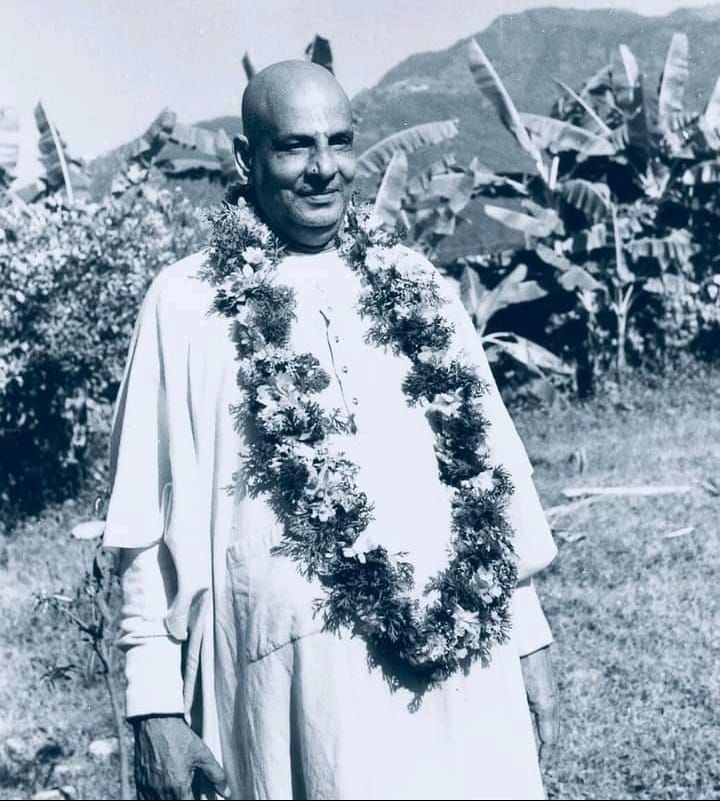
Swami Sivananda wearing flower garland outdoors image
Jnana Yoga, Swami Sivananda

Atman is Sat-Chit-Ananda

Atman is Sat-Chit-Ananda by Swami Sivananda Atman is Sat Atman is Sat. That which exists in the past, present and future, which has no beginning, middle and end, which is unchanging, which is not conditioned in time, space and causation, which exists during Jagrat, Svapna and Sushupti, which is of the nature of one homogeneous essence (Sada Ekarasa, Sada Ekarupa) is Sat. This is found in Atman. Srutis emphatically declare: Sat only was prior to the evolution of this universe. Our common experience, rather innate inherent feeling, that we never were not and that we never will cease to be, even though our physical bodies may disappear, clearly proves that Atman always exists. In reply to the question whether we are in this world or not, it is said by all men: We are here. Do we possess body or not? Yes, we have bodies. Whence came this body? There must be some cause for our getting these bodies, for otherwise it cannot be a cause. That cause is Karma. It is only our Karma that gives birth to this body. The Karma which generated this body in the previous birth ought to have been performed in a birth anterior to that and so on backwards ad infinitum. Thus, on enquiry, we find that Karma and body are beginningless, of the nature of an unceasing flood, the source of which is unknown. Karma and body form an ever-receding chain. Therefore it is certain that Atman which subsists and forms the substratum for this chain must also be beginningless by virtue of its nature. Thus it is proved now through inference that Atman is Sat during the past and present periods. Why can we not say that this body is generated by the works performed in this birth? Just as the seed which can generate a tree cannot generate that tree which is the cause for its own birth, so also the works performed by this body will produce a new body in the next birth but cannot generate this body. Therefore we cannot say that this body has been produced by works done in this birth. Then another point is, does that Karma which generates the body belong to us or to others? Certainly it is ours. We cannot enjoy in heaven through the Karma of another. If Mr. Krishna does an evil act, he will have to suffer. It cannot affect Mr. Sadasiva. Virtue brings its own reward for the person who does the virtuous action. That is the immutable law of Nature. If one were to go to heaven through the Karma of another man, a servant also should attain heaven through the performance of a sacrifice by a learned Brahmin. All should have attained liberation through the Nirvikalpa Samadhi of Sri Sankara or Dattatreya. But this is not the case. Therefore it is quite obvious that it is only one’s own Karma which generates one’s own body. The Karma that we perform now in this birth will not go in vain. Actions are indestructible. They will generate fresh bodies in the future. We will do fresh Karmas with these new bodies which will form the seed for still future bodies and so on forwards ad infinitum. The current of Karma and body will never have an end in the future, but there is an end to Karma through Knowledge of the Self. Karma is completely annihilated by the dawn of Brahma-Jnana. Then comes a cessation of body. Even if Karma is destroyed and future births come to an end, the Atman does not perish. It is ever existent. It is eternal. Karma is of the nature of Avidya. When Karma is destroyed, all causes of pain vanish. Jivahood disappears. The Jiva enjoys the supreme bliss of the Self. Atman always is. It exists in the three periods of time. The world may come and go, but Atman always remains. Pralaya or dissolution is only for this phenomenal universe but not for the changeless, self-existent Atman. The deluge and fire may destroy the illusory names and forms but they cannot touch the imperishable Atman. You can thus clearly understand that Atman is Sat. Atman Is Chit Atman is Chit for it shines by itself unaided by any other light and illumines the whole universe by its own light. It may be asked, how can we be said to illumine the whole universe when we are ignorant? The universe is of two kinds, viz., the external and the internal. The external universe embraces the five elements and their properties, sound, touch, form, taste and odour and their combinations of various sorts, various names and forms, qualities, properties, the quintuplicated elements, Brahma’s egg, the four kinds of beings, viz., the oviparous or egg-born, the sweat-born, the seed-born and the womb-born. The external universe, however varied and big it may be, is after all only inert matter. It cannot be the object of our perception unless we throw upon it the flood of our consciousness light; it can never know us. It is illuminated by us only. It can never illuminate us. The internal universe embraces the five Koshas; the three bodies, viz., gross, subtle and causal; the six changes, the six waves, viz., birth, death, hunger, thirst, grief and delusion; the five organs of knowledge; the five organs of actions; the five Pranas; the fourfold Antahkarana, Sankalpa-vikalpa, determination, self-arrogation and enquiry; the three states of consciousness, Jagrat, Svapna and Sushupti; the activities of the Avasthas, Visva, Taijasa, Prajna; Samadhi and fainting; mind, speech and body; friendliness, mercy, complacency and indifference; Yama, Niyama, Asana, Pranayama, Pratyahara, Dharana, Dhyana and Samadhi; the eight kinds of proofs; hatred, jealousy, lust, anger, pride, hypocrisy; Sattva, Rajas and Tamas; pleasure and pain; the four means of salvation; the three kinds of pain; thoughts, feelings, emotions, sentiments. This entire inside world is also inert and cannot be the object of our perception unless we turn upon it our consciousness. We only can know it; it

Atman is Sat-Chit-Ananda Read Post »

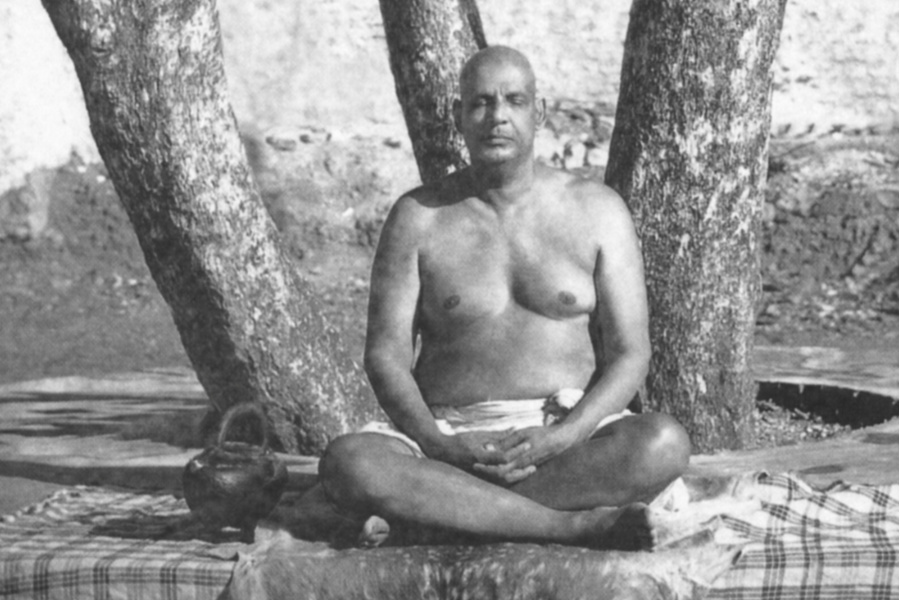
swami sivananda Monk meditating under tree outdoors image
Swami Sivananda, Uncategorized, Yoga of Synthesis

My Methodology to the Evolutionary Process

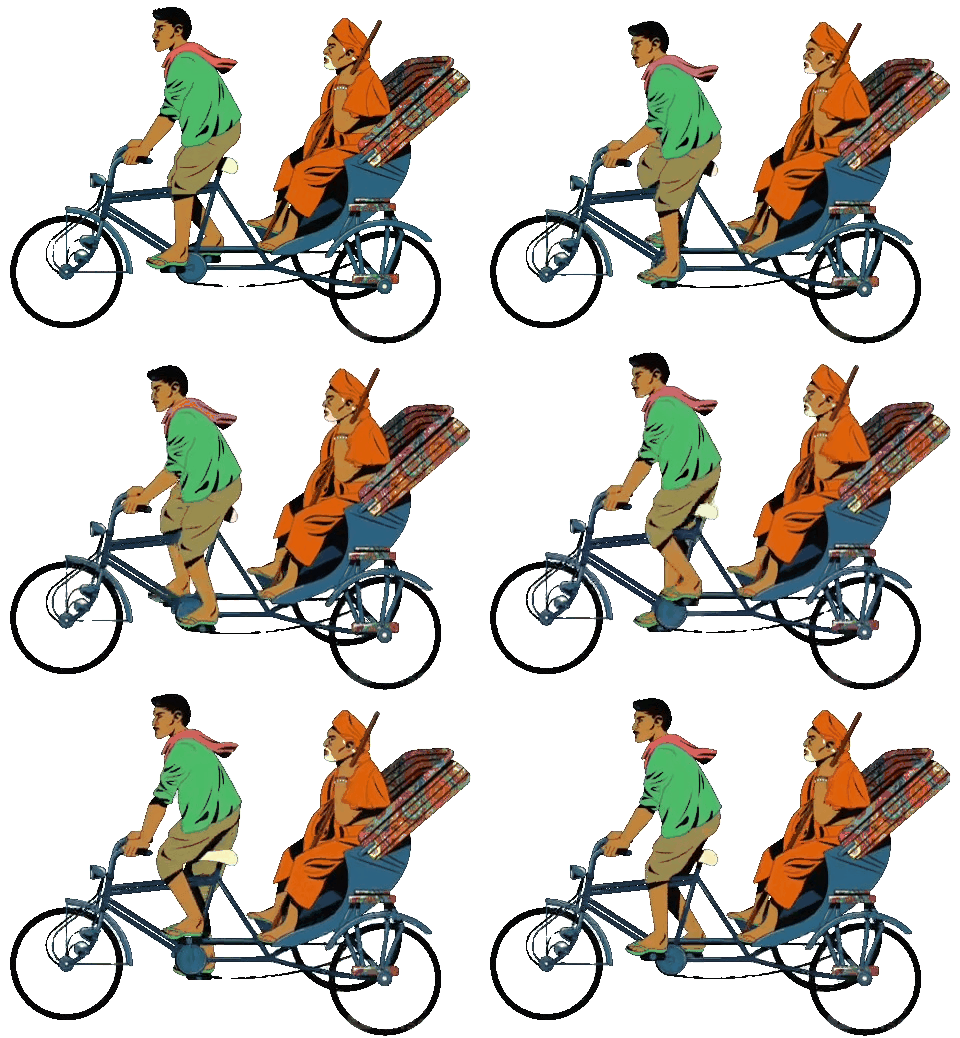
My Methodology to the Evolutionary Process 1. DETACHED, YET CAREFUL In my Kutir, there are many big trunks with hundreds of valuable books, articles and dresses. I do not know the exact contents of the trunks. I do not have any keys with me. I do not keep anything as ‘secret’. I cannot eat anything in private. I do not pretend to be a Vairagi with empty hands, expecting others to keep enough for my personal use. When I travelled on propaganda tours, I kept enough money with me in two or three pockets. I gave separate purses with plenty of money to those who accompanied me. I am very careful in keeping things like fountain pen, spectacles, study books, and various articles contributed by all great men and devotees. Previously when I locked my Kutir for a short brisk walk, I kept the key carefully tied at the end of my cloth. I may use a torn coat with patches but I must give others the superior quality of articles. I do not worry about debts. I find necessary support spontaneously coming from the Divine Source. I feel the grace of the Lord at every step. I feel the presence of the Lord at all times, behind all names and forms. 2. SADHANA TILL THE END OF LIFE The Sadhus and Yogis do Sadhana and study for some time and then give up the habit when they get a little name and fame. It is a great pity. That is the reason for their downfall. Sadhus and perfected Mahatmas should continue Sadhana till the last moment of their lives. Then only will it be possible to keep up the Divine Consciousness. That will be a fine example and a source of inspiration to others also. The saint need not talk and preach. His life itself is a scripture to illumine the world. Even today I write OM OM OM and HARI OM TAT SAT Mantras in all my letters. I fill up half a page of my letter with the Mantra or with philosophical ideas. Before commencing to write anything in a notebook or letters to students, I write the Mantra. I do about five or six items of Sadhana all the 24 hours: Japa, meditation, exercises including Asana and Pranayama, worship, study, writing work and service to the world, help to Mahatmas, the sick and the poor. Thus I charge my mind with divine consciousness at all times. I nicely combine rest and relaxation with deep breathing exercises. I have thus spent my 35 years of life at Rishikesh and derived wonderful fresh spiritual energy and strength in abundance. I maintain a high standard of health and enjoy peace and bliss at every moment. I just come out of my Kutir for one hour in the morning and manage all the affairs of the Ashram and give work to those who live in the Ashram and think of others who live at distant places. And yet I feel I can work for another ten hours every day. The secret is my systematic Sadhana and the grace of the Lord. 3. WHY SO MANY PHOTOGRAPHS In holy temples the authorities do not permit the taking of photographs of the idols. In Badri and Kedar, people do not allow cameras to be taken inside the temples. It is strange. Some of the sages and great men of India have serious objection to taking their photographs. They think that the spiritual power will be diminished by taking photographs. I do not believe at all in such things. I allow anyone to take any number of pictures while sitting, running, walking, talking, eating, playing, swimming in the Ganga, in meditation, study or worship at the temple. When devotees look at a picture, they get inspiration. Books and magazines have a special charm with the addition of a series of pleasant and instructive pictures. I do not have any restriction. I find only good in every thing. Great men from all countries come to the Ashram. Sincere devotees from all parts of the world come and stay with me for some months or years. They all desire to have a copy of my photo in their company. Why should I unnecessarily refuse and displease them? Groups of students who come to Rishikesh during vacation desire to have a group photo with myself in the centre. I have been photographed with the great men of the world, Maharajahs, sages and saints, devotees, Ashram workers, the sick persons in the Hospital and the school children. I have been photographed with my hat and suit, a loin cloth and an overcoat, with a turban like a school master, in a motor car, aeroplane and a bullock cart in Rameswaram during my All-India tour in 1950, and in a cycle-rickshaw during my stay at Roorkee in 1953. I make no distinction in having photographs with Maharajahs or devotees or coolies at the Railway Station platform, with great Mahatmas of the Himalayas or the scavengers of the Ashram. I have included the lively monkeys, cats, dogs of the Ashram, fish, cows, elephants and cheetahs also. I do not believe in the statement that my spiritual powers will be lost or influenced by the evil-eye. I look at the wonderful benefits the world would derive. I enjoy when I find people around me feel happy and cheerful. 4. SELF-RELIANCE I personally attended to my works such as, cleaning the room, bringing water from the Ganga for drinking purposes, washing clothes and vessels, going to the Kshetra for my alms. I myself used to type my articles and letters to aspirants. I carefully packed the packets and posted them. I never depended on my students. I did not like them to enter my Kutir frequently and disturb my daily routine. When I go out on tour, I myself carry my luggage. When porters carry some of my heavy packages of leaflets and books for free distribution, I pay them

My Methodology to the Evolutionary Process Read Post »

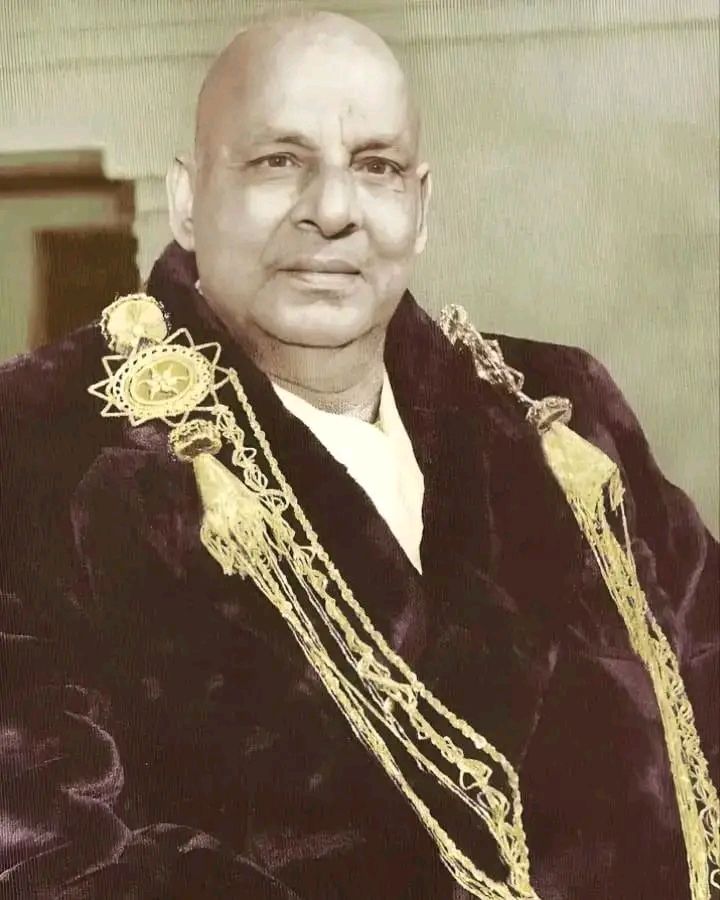
Swami Sivananda wearing ceremonial robe portrait
Swami Sivananda, Yoga of Synthesis

In The Master’s Own Words

In The Master’s Own Words Taken From The Autobiography of Swami Sivananda) SIVA’S EXPERIENCE I have seen God in my own Self.I have negated name and form, and what remains is Existence-Knowledge-Bliss Absolute and nothing else.I behold God everywhere. There is no veil.I am One. There is no duality.I rest in my own Self. My bliss is beyond description.The world of dreams has gone. I alone exist. Swami Sivananda SIVA’S MESSAGE Delight in good.Make up your mind to tread the spiritual path.Be patient.Go slowly. Go ahead. Be deliberate. Assert. Recognize.Realise: I am the immortal Soul.This is the discipline.This is Siva’s message.

In The Master’s Own Words Read Post »

Swami Sivananda wearing multiple garlands portrait image
Jnana Yoga, Swami Sivananda

Atman is Distinct from the Pancha Koshas

Atman is Distinct from the Pancha Koshas by Swami Sivananda Atman is distinct from the five Koshas or sheaths. The five sheaths are Annamaya Kosha (food-sheath), Pranamaya Kosha (vital sheath), Manomaya Kosha (mental sheath), Vijnanamaya Kosha (intellect-sheath) and Anandamaya Kosha (blissful sheath). ‘Maya’ means full. ‘Kosha’ means sheath. Just as the scabbard hides the sword, the outer shell covers the tamarind fruit, the coat covers the body, so also these five sheaths hide the Atman. Hence the significant name Kosha. Just as the Kosakar worm gets itself bound in its nest, so also the Jiva gets himself bound within the Koshas. Annamaya Kosha is this gross body. This is the densest sheath. This is generated by a combination of Shukla and Sonita (semen and female seed). It is born of food because semen is manufactured out of food only. The body is nourished by food. It dies without food. It gets itself merged in the Annamaya earth after death. It is the seat for the experience of pleasure and pain. It is subject to six changes (Shad-bhava-vikara, viz., birth, existence, growth, change, decay and death). Hence the name Annamaya Kosha. The Annamaya Kosha forms the gross body. The Pranamaya, Manomaya, Vijnanamaya Koshas go to constitute the subtle or astral body or Linga Sarira. The Anandamaya Kosha forms the causal body or Karana Sarira. The five Karma Indriyas are contained in the Pranamaya Kosha. The five Jnana Indriyas are contained in the Manomaya Kosha. Just as the clouds which are generated by the rays of the sun, and which exist only on account of the sun cover the sun, just as the smoke which has its existence through fire conceals the fire, just as the snake in the rope which owes its existence to the rope hides the rope, just as the jar which exists on account of the clay conceals the clay, just as the ear-rings which owe their existence to the gold hide the gold, the five Koshas which owe their very existence to the Atman cover the very Atman. It is the innate tendency of the human mind to identify the Self with the five Koshas. This is due to ignorance (Avidya) only. This is due to Adhyasa or superimposition. The ignorant man of dull intellect identifies the Self with the physical body. Others identify the Self or Atman with Prana, mind, intellect, or the Karana Sarira according to their various grades of intelligence. The Atman transcends the five sheaths. It is entirely distinct from the five sheaths. You will have to pierce through these five sheaths if you want to get knowledge of the Self. These five sheaths form a cave (Guha) and the Atman is hidden in the cave. The self-effulgent Atman shines in the midst of Pranas within the heart. A detailed knowledge and comprehensive understanding of the five sheaths is an indispensable requisite, if you want to attain Self-realisation and practise the ‘Neti-neti’ doctrine of Vedanta. The following arguments will prove clearly that the Atman is entirely distinct from the Annamaya sheath or physical body. The physical body is a mass of skin, flesh, blood, bones and lots of other filthy things. It can never be eternally pure, self-existent Brahman. It does not exist prior to birth or posterior to death. It lasts only for a short period. It is full of parts. It is ever changing. It has a beginning and an end. It is inert. It is the effect of Tamoguna. It is the combination of five elements. How can it be one’s own Self, the silent witness of changes in all things? There is no consciousness in a dead body. If the gross body is the Self or Atman, the corpse also would be as conscious as the living body. The physical body is dead as it were during the dreaming state. The physical body is not eternal. It disintegrates after death. As the physical body has a beginning and an end, it is an effect like the jar. The body cannot be the Self, because one continues to live even when particular limbs are gone, even when his legs and hands are amputated. That the Self is entirely different from the body, its characteristics, activities and states of which it is the silent witness is self-evident and needs no demonstration or proof. How can the inert body, being a pack of bones, covered with flesh and full of filth, and highly impure, he the self-luminous, self-existent, intelligent Self, the Knower, which is ever distinct from it? The foolish man identifies himself with a mass of flesh, fat, skin, bones and filth, while the man of discrimination knows that his Self is distinct from this perishable body. The stupid man thinks that he is the body. A Pundit who has read some religious books identifies himself with a mixture of body and soul, while the liberated sage regards the eternal, unchanging Atman as his Self. So long as the learned Pundit does not abandon his erroneous identification with this unreal, perishable body, there is no hope of salvation for him, even though he is a scholar in Vedanta. The identification with the physical body alone is the root cause which brings the misery of birth and death and its concomitant evils. Therefore destroy at once this identification. There will be no more chance for rebirths. O ignorant worldly man! Give up Moha for this physical body of filth, flesh and hones. Identify yourself with the pure Brahman, the Self of all and thus attain Immortality and everlasting Peace. There is an illusory connection between Annamaya Kosha and Atman through Anyonya Adhyasa or mutual super-imposition by which the Dharmas or attributes of the former appear on the latter and the Dharmas of the latter appear on the former. In Indian Logic there are two kinds of relationship, viz., Samavaya and Samyoga. Samavaya Sambandha is inseparable. This is the relationship that exists between a man and his limbs, a person and his

Atman is Distinct from the Pancha Koshas Read Post »

Swami Sivananda side profile blue tone portrait
Swami Sivananda, Yoga of Synthesis

Highest Teachings in Instructions

Highest Teachings in Instructions 1. Reduce your wants to the utmost minimum. 2. Adapt yourself to circumstances. 3. Never be attached to anything or anybody. 4. Share what you have with others. 5. Be ever ready to serve. Lose no opportunity. Serve with Atma Bhava. 6. Entertain Akarta and Sakshi Bhava. 7. Speak measured and sweet words. 8. Have a burning thirst for God-realisation. 9. Renounce all your belongings and surrender yourself unto God. 10. Spiritual path is a sharp-edged razor path. A Guru is absolutely necessary. 11. Have great patience and perseverance. 12. Never leave the Abhyasa even for a day. 13. The Guru will only guide you. You should yourself tread the path. 14. Life is short. Time of death is uncertain. Apply yourself seriously to Yogic Sadhana. 15. Maintain daily spiritual diary and record correctly your progress and failures. Stick to resolves. 16. Do not complain that there is no time for Sadhana. Reduce sleep and tall talks. Stick to Brahmamuhurta. 17. Let the thought of God (Reality) keep away the thought of the world. 18. Forget the feeling that you are so and so-a male or a female-by vigorous Brahma Chintana. 19. Never postpone a thing for tomorrow if it is possible for you to do it today. 20. Do not boast or make a show of your abilities. Be simple and humble. 21. Be cheerful always. Give up worries. 22. Be indifferent to things that do not concern you. 23. Fly away from company and discussion. 24. Be alone for a few hours daily. 25. Give up greediness, jealousy and hoarding. 26. Control your emotions by discrimination and Vairagya. 27. Maintain equilibrium of mind always. 28. Think twice before you speak and thrice before you act. 29. Give up back-biting, criticising and fault-finding. Beware of reaction. 30. Find out your own faults and weaknesses. See only good in others. Praise the virtues of others. 31. Forgive and forget the harm done by others. Do good to those who hate you. 32. Shun lust, anger, egoism, Moha and Lobha like a venomous cobra. 33. Be prepared to suffer any amount of pain. 34. Have a set of maxims always with you to induce Vairagya. 35. Treat sensual enjoyment as poison, vomited food, Vishta or urine. They cannot give you satisfaction. 36. Preserve your Virya carefully. Sleep always separately. 37. Revere ladies as Mother Divine. Root out the sex idea. Prostrate before all. 38. See God in every face, in everything. 39. Take to Sankirtan, Satsanga, prayer, when the mind is overpowered by lower instincts. 40. Face obstacles coolly and boldly. 41. Care not for criticism when you are in the right path. Yield not to flattery. 42. Respect rogues and scoundrels. Serve them. 43. Admit your faults plainly. 44. Take care of your health. Do not neglect daily Asanas and exercises. 45. Be active and nimble always. 46. Develop your heart by giving. Be extraordinarily charitable. Give more than one’s expectations. 47. Desires multiply misery. Develop contentment. 48. Control the senses one by one. 49. Develop Brahmakara Vritti by repeated thinking. 50. Have a check over all your thoughts. Keep them pure and sublime. 51. Do not lose temper when anybody insults, taunts or rebukes you. It is a mere play of words and a variety of sounds. 52. Rest your mind in God and live in Truth. 53. Be up and doing in the path of perfection. 54. Have a definite aim in your life and proceed cautiously. 55. Benefits of Mouna are incalculable. Never give up this practice. 56. Four important means for passion to enter the mind are sound, touch, sight and thoughts. Be vigilant! 57. Have intimate connection with none but God. Mix little with others. 58. Be moderate in everything. Extremes are always dangerous. 59. Every day have self-analysis and introspection. Know the amount of your growth. 60. Give up curiosities in spiritual path. Conserve your energy and concentrate. Think little of food, body and relatives. Think more of Atman. You must realise in this very birth itself!

Highest Teachings in Instructions Read Post »