













Hari Om

Menu

February 12, 2026

Swami Sivananda Black and white photo of saint seated with staff and traditional attire. image
Jnana Yoga, Swami Sivananda

Vedantic Culture

Vedantic Culture by Swami Sivananda THE Being who is described in the Upanishads is Brahman or Atman or the Self or Absolute. He is the fountain-head of all scriptural knowledge. He is the source or womb for everything. He is existence absolute, knowledge absolute and bliss absolute. He is indivisible, all-pervading, self-contained, eternal and immortal. He is beyond time, space and causation. He is beginningless and endless. He is the indweller in all beings. He is the witness of the activities of all minds. The Atman or the Self is all-pervading. He is beyond birth and death. He is undecaying, self-luminous, eternal, pure and self-existent. He is all-full, imperishable and infinite. He is the silent witness of the three states, viz., waking, dreaming and deep sleep. He is beyond caste, creed or colour. Sin cannot touch Him because He is ever pure. Pain, sorrow and delusion cannot affect Him, because He is all-joy. Hunger, worries and tribulations cannot torment Him, because He is all-bliss. Lust cannot reach Him, because He is sexless. Wrath cannot approach Him, because He is mindless. Restlessness cannot agitate Him, because He is all-peace. Time cannot devour Him, because He is eternity. What on earth can cause fear in you when you have realised your identity with such an Atman? What on earth can generate hatred, delusion, difference and sorrow in you when you behold the one in all and all in one? What on earth can cause agitation in you when you have transcended the mind and when you rest peacefully in your own Sat-Chit-Ananda Svarupa, that magnanimous ocean of bliss and stupendous silence? The question: Who am I? What is this Samsara? Whence have I come? Whither will I go? What is the goal of life? What is Brahman or Atman? What is the relation between the individual soul and the supreme soul? How to attain the goal? Can I become immortal? Can I enjoy eternal bliss? Will surely arise in the mind of every human being at one stage of his life or another. He who seriously thinks over these questions and attempts in right earnest to reach the goal in a wise man but he who does not care to ponder over these vital questions, who leads a sensual life and who does not endeavour to attain the final beatitude of life, is a fool or a thoughtless person. He lives in vain. He is a burden on this earth. He is a slayer of his own Self. His life is indeed very pitiable. He alone who is devoted to his parents, who has a calm mind, who has controlled all his senses, who has a one-pointed mind, who is equipped with four means, who is endowed with Sattvic qualities, who has purified his mind by constant selfless service, who has removed the tossing of the mind by Upasana or worship, Japa and Kirtan and, last but not least, who sits at the feet of a preceptor, who is enlightened and well-versed in scriptural knowledge, is able to grasp the Truth or the one Eternal Principle. Worldly enjoyments are fleeting like the flashes of lightning. Human life is ephemeral like the bubble. The vigour of youth is short-lived. All these are illusory in this world. All worldly things are generative of pain only. There is not even an iota of bliss in this world. The wealth which you covet is only ephemeral. The longing for wife and wealth does but enchain you. One thing which is sweet and pleasant to you at one moment produces the very reverse of that sensation in another moment. Who has not experienced this in this world? Hence it behoves a wise man to concentrate his mind on the Atman or the Self and attain the supreme seat of Eternal Bliss and Supreme Quiescence. Do not be afraid of difficulties and failures in the spiritual path. Failures are stepping stones to success. Difficulties will make you stronger and powerful. Difficulties will develop your will-power. Overcome the difficulties one by one. Use your intelligence, sagacity, discrimination and common-sense. Be bold. Stand adamant. Be cheerful. Dismiss fear and anxiety. March boldly in the spiritual path. Do not look backwards. Draw courage, strength and power from within. Tap the source. Go direct. Refresh yourself. Renovate yourself. Then march cautiously. Thou art invincible. Nothing is the three worlds can hurt you. Rest assured. Remain serene always. Smile and rejoice in the Atman. Do not confine yourself to names and forms. Rise above them and realise the Truth. Just as bubbles, foam and waves come from the ocean, exist in the ocean and dissolve in the ocean itself eventually so also these illusory names and forms have come out of Brahman or the Absolute or the Ocean of Bliss and Knowledge, exist in Brahman and ultimately dissolve in Brahman. This world is nothing but Brahman. Behold the one Self in all forms. See the One in all and all in one. You can dispel pain, sorrow, ignorance, fear, worry and anxiety only when you realise Brahman or the Self. This is the emphatic declaration of Vedanta. There is no other way to attain complete freedom from ignorance, fear, sorrow and pain. Verily it is true indeed! For how can you be subject to fear when you have realised the Self, when you have come to know that you are in essence identical with the non-dual Brahman and that there is no other seer but you, no other hearer but you, no other knower but you, no other thinker but you? Who is to be afraid of whom, when one feels oneness everywhere? Who is to hurt whom, when all dualities have totally vanished? The music of the soul is within you. The kingdom of God is within you. The domain of peace is within you. The Light of lights is within you. Knowledge is within you. The three worlds are within you. The source of power, joy, bliss and life is
Vedantic Culture Read Post »

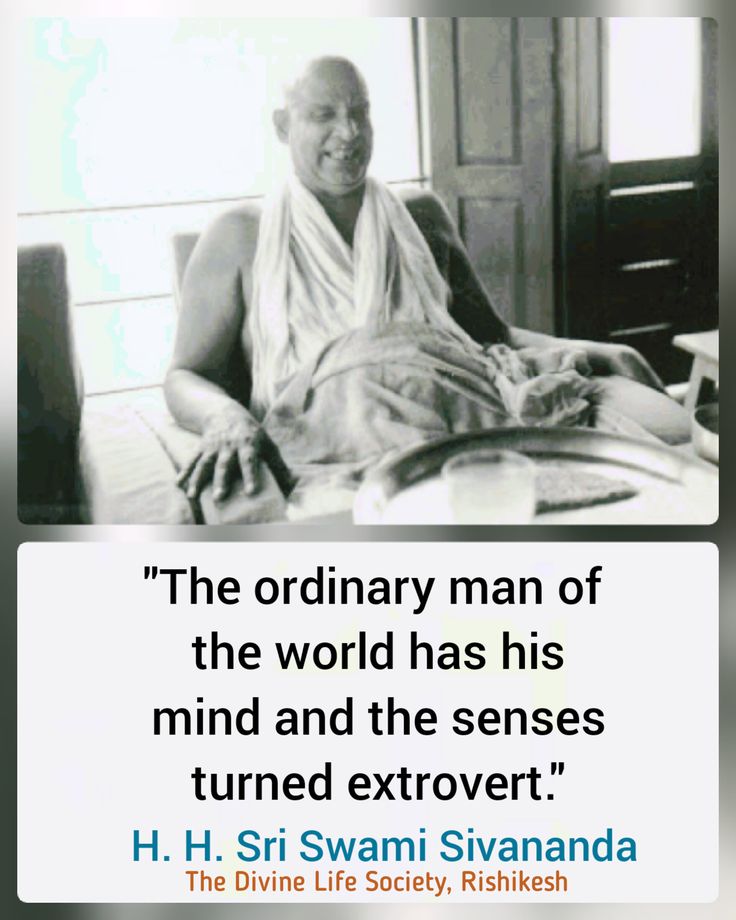
Swami Sivananda Spiritual guru seated indoors with inspirational quote text below image
Swami Sivananda, Yoga of Synthesis

Essential Jnana

Essential Jnana PHILOSOPHY OF OM The sound produced in the flowing of the river Ganges, the sound that is heard at a distance, the sound that proceeds from the bustle of the market, that is produced by the flywheel when it is set in motion, that is caused when it rains, or there is a conflagration, or thunder-it is all Om only. Split any word and you will find. Om there. Om is allpervading, like akasa (space), like Brahman, the absolute. Om is the symbol of Brahman. It is the word of power. It is the sacred monosyllable. It is the essence of the vedas. It is the boat to take you across to the other shore of fearlessness and immortality. The word Om is the most appropriate name of Brahman. By its application, by its chanting, he becomes propitiated Om is emblematic of Brahman, as images are of material objects. When you hear the sound ‘tree’. you at once understand it has a root, a stem, branches, leaves, flowers, fruits, etc. Similarly too, when you hear the sabda (sound) Om it denotes Satchidananda Srahman existence absolute, knowledge absolute, bliss absolute. Sabda (word) and artha (meaning) are inseparable. All collections of words (speech), terminate in one sound-Om. All objects are denoted by sounds, and all sounds merge in Om. The whole universe comes out of Om and is absorbed into Om. Hence Om is very important. Om should be worshipped. Om should be chanted loudly. Om should be repeated mentally, with deep meaning and feeling. Om should be meditated upon. Watch the breath. When you inhale, the sound so is produced. When you exhale, the sound ham is produced. You are naturally uttering Soham-I am he-or-he am I-with every breath. The breath reminds you that you are in essence identical with the supreme self. In Soham the s and the h are consonants. If you delete them you get oam or om. Consonants depend on vowels for their existence. S and h represent names and forms, or this universe which is phenomenal or relative or empirical or dependent existence. Om is the only solid reality. Om is the soul of your breath. As soon as you sit for meditation chant Om loudly, three, six or twelve times. This drives away worldly thoughts from the mind and removes vikshep (tossing of the mind). Later you may take to the mental repetition of Om. INSTRUCTIONS IN MEDITATION Just as the light is burning within the hurricane lamp, so also the divine flame is burning from time immemorial in the lamp of your heart. Close your eyes. Merge yourself within the divine flame. Plunge deep into the chambers of your heart. Meditate on this divine flame and become one with the flame of God. If the wick within the lamp is small, the light will also be small. If the wick is big, the light also will be powerful. Similarly if the jiva (individual soul) is pure, if he practises meditation, the manifestation of the self will be powerful. He will radiate a big light. Likewise the purer the soul, the greater the expression. If the magnet is powerful, it will influence the iron filings even when they are placed at a distance. Even so, if the yogi is an advanced person, he will have greater influence over the persons with whom he comes in contact. He can exert his influence on persons even when they live in distant places. During meditation note how long you can shut out all worldly thoughts. Watch the mind. Try to increase the period. Fill the mind with thoughts of God again and again. In meditation do not strain the eyes. Do not strain the brain. Do not struggle or wrestle with the mind. Relax. Gently allow divine thoughts to flow. Steadily think of laksya (point of meditation). Do not voluntarily and violently drive away the intruding thoughts. Have sublime (satvic) thoughts. The vicious thoughts will vanish by themselves. If there is much strain in your meditation reduce the duration of each sitting for a few days. Those who meditate for four or five hours at a stretch can have two meditative poses. Keep the spine erect. You must daily increase your vairagya (dispassion) and meditation on satvic virtues such as patience, perseverance, mercy, love and forgiveness. Vairagya and good qualities help meditation. Meditation increases the satvic qualities . THE GLIMPSE AND THE GOAL When you get a flash of illumination, do not be frightened. It will be a new experience of immense joy. Do not turn back. Do not give up meditation. Do not stop there. You will have to advance still further. This is only a glimpse of truth. This is not the whole experience. This is not the highest realisation. This is only a new platform. Try to ascend further. Reach the Bhuma (the infinite). Now alone you are proof against all temptation. You will drink deep the nectar of immortality. This is the acme or final state. You can take eternal rest now. You need not meditate any further. This is the final goal. You have within yourself tremendous powers and latent faculties of which you have really never had any conception. You must awaken these dormant powers and faculties by the practice of meditation and yoga. You must develop your will and control your senses and mind. You must purify yourself and practise regular meditation, then only can you become a superman or God man. Every human being has within himself various potentialities and capacities. He is a magazine of power and knowledge. As he evolves he unfolds new powers, new faculties, new qualities. Now he can change his environment and influence others. He can subdue others’ minds. He can conquer internal and external nature. He can enter into superconscious state. The wise cut asunder the knot of egoism by the sharp sword of constant meditation. Then dawns supreme knowledge of the self or full illumination or selfrealisation. The liberated sage

Essential Jnana Read Post »

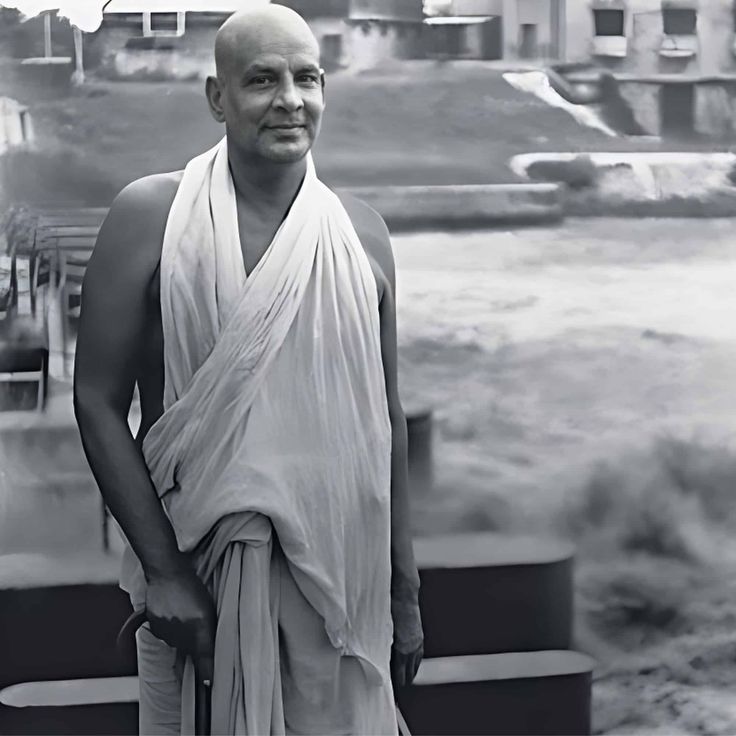
Swami Sivananda Spiritual monk standing outdoors holding walking stick in robe image
Jnana Yoga

Vedanta is Living Experience

Vedanta is Living Experience by Swami Sivananda VEDANTA is today a much abused term. All sorts of vanity, hypocrisy and self-conceit have been masquerading in its name. It has become the fashion of the day to pass for a Vedantin as it is then convenient to give up all sorts of responsibilities, rituals and restrictions of the Varnashrama Dharma and enables one to lead a happy-go-lucky life to ease, lethargy and inertia. The Punjab is full of dry, lip-Vedantins. Punjabi women have also taken to Vedanta and they take great pride in calling themselves Vedantins, whether or not they understand the philosophy, whether or not they do any practice. All retired officers who have not done any selfless service or any Sadhana or worship or charity take to Vedanta as a sort of fancy. Thus Vedanta has become a very comfortable philosophy, because one can do whatever he chooses and eat whatever he likes. Licentiousness is mistaken for a life of expansion. If a man can eat anything in any hotel in any part of the world, if he can move socially with any man or woman, that does not mean, he is a Vedantin. There is much tall talk of Vedanta now-a-days. There is idle Vedantic gossiping. But there is no practical Vedanta. Nobody wants to do any real solid Vedantic Sadhana. Man feels ashamed to call himself a Bhakta, but he takes great pride in calling himself a Yogi or a Vedantin, because he foolishly imagines he will respected by the public. Many ignorant Vedantins have mistaken the body for Brahman and hence there is corruption amongst the so-called loose Vedantins. This is not only lamentable but also highly deplorable. Wholesale preaching of Vedanta to the Masses is not advisable. It will result in chaos, bewilderment and stagnation. Grasping of Vedantic principles and a right understanding of the philosophy and Sadhana are very difficult. Vedanta is for a select few who are equipped with the four means of salvation or Sadhana Chatushtaya and who have removed the impurities of their minds and mental oscillation through constant practice of Nishkama Karma Yoga and Upasana. The path of Vedanta is not so easy as it is generally supposed to be. It is a sharp razor-edge path. Therefore, those who preach Vedanta to the masses do more harm than any good. They are misleading the people. It is very very easy to say, Soham – I am He, Sivoham – I am Siva, Aham Brahma Asmi – I am Brahman like a parrot, but to live in the very spirit of Vedanta, to feel the oneness or unity of consciousness, to become ‘That’ in reality and to radiate the Brahmic Bliss, Joy and Peace is an extremely difficult affair. While repeating ‘Soham’, if his mind is easily upset when another utters a single harsh word, and if he begins to fight with that man vehemently, there is no use at all in that repetition. It is mere hypocrisy. He will not be able to influence others. People will take him for a cheat. Vedanta is not merely a concept or a dogma. It is neither a theory nor a dry philosophy for contention and argumentation. It is the actual life of perennial joy in Brahman or Truth. A single practical Vedantin like Sankara could move the whole world. A practical Vedantin will outweigh a thousand and one Sandows when weighed in a balance. A practical Vedantin possesses tremendous inner spiritual strength. The whole world rejoices at the sight of a real practical Vedantin. Practical Vedanta is a living experience, the melting of the individual self in the ocean of consciousness or the Supreme Self. The experiencer exclaims with inexpressible joy, All indeed is Brahman. All differences, distinctions, qualities have vanished. I see Brahman and Oneness everywhere. I am Brahman.

Vedanta is Living Experience Read Post »

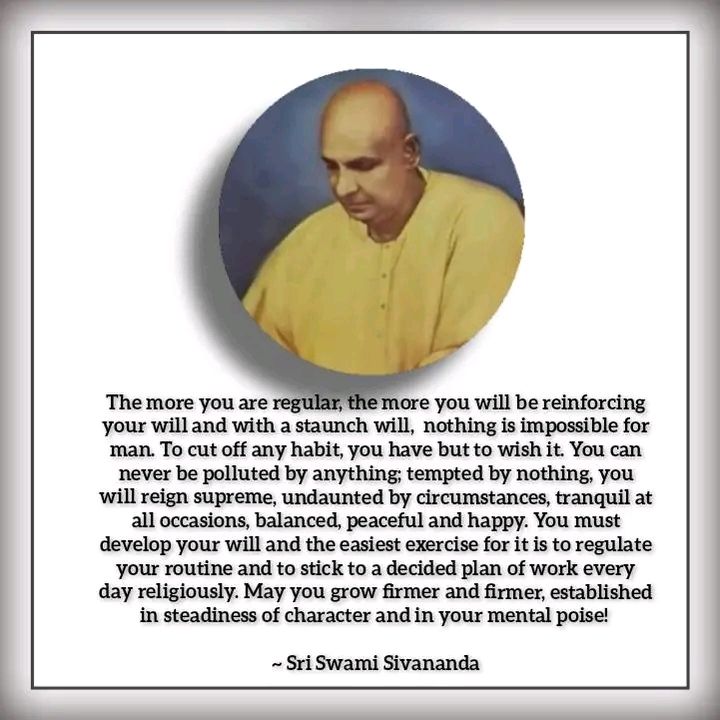
Swami Sivananda willpower discipline quote image
Swami Sivananda, Yoga of Synthesis

Sivananda Gita

Sivananda Gita (Written by Swami Sivananda in 1946) I was born of P.S. Vengu Aiyar and Parvathiammal on 8th September 1887 at Pattamadai, Tirunelvely District, S. India, in the line of Appayya Dixit. My star is Bharani. I was extremely mischievous in my boyhood. I studied in the S.P.G. College, Trichy. I was a Doctor in Malaya States for 10 years. I took Sanyasa in 1924 in Rishikesh. I did tapas and meditation for 15 years. I went on lecturing tours for 10 years. I founded the Divine Life Society in 1936 and the AllWorld Religions Federation in 1945. I am childlike in my svabhava. So I mix with all. I become one with all. I am ever happy and joyful and make others also happy and joyful. I am full of educative humour. I radiate joy through humour. I respect all. I do salutations to all first. I always speak sweetly. I walk quickly. I do japa and meditation while walking and while at work also. I am ever hardworking. I have intense application to work. I never leave a work till it is finished. I never procrastinate any work. I finish it then and there. I am very quick in doing things. I cannot suppress the spirit of service in me. I cannot live without service. I take immense delight in service. Service has elevated me. Service has purified me. I know well how to extract work from others. I extract work through kindness, service, respect and love. I am very regular in doing asanas and exercises. I even now do sirshasan, sarvangasan and other asanas. I do pranayama also regularly. These give me wonderful health and energy. I run round the bhajan hall daily. I cannot deliver fiery lectures sitting on a special seat. Special seat pricks me. I stand up or throw the seat away and then begin to speak. I never sat on a special seat when I presided over spiritual conferences. I rejoice in giving. I always give. I am 59 (1946) now. I ever feel I am quite young. I am full of vigour, vim and vitality. I am ever cheerful. I sing, dance, run, and jump in joy. I am robust and strong. I can digest any kind of food. I continuously work, read and write. I never go to hill stations or seaside for a holiday. Change of work gives rest. Meditation gives abundant rest. Work gives me delight. Service gives me happiness. Writing bestows joy. Meditation energises and invigorates me. Kirtan vivifies me. “Aham Brahmasmi, Sivoham, Soham, Satchidananda Swaroopoham”This is my favourite formula for vedantic meditation.Hare Rama Hare Rama Rama Rama Hare HareHare Krishna Hare Krishna Krishna Krishna Hare Hare. -This Mahamantra Kirtan is my favourite kirtan At the present moment I am the richest man in the whole world. My heart is full. Further, all the wealth of the Lord belongs to me now. Hence I am king of kings, emperor of emperors, shah of shahs, maharaja of maharajas. I take pity on the mundane kings. My dominion is limitless. My wealth is inexhaustible. My joy is inexpressible. My treasure is immeasurable. I attained this through sanyasa, renunciation, untiring selfless service, japa, kirtan and meditation. I am tall. My height is 6 feet. I have a sinewy frame. I have symmetrical limbs. I was a first class gymnast. I fast on Ekadasi. I do not take even a drop of water. I take milk and fruits on Sundays. I do not take salt on Sundays. I lead a simple natural life. There is a fountain of youth in me. I beam with joy. I observe fasting, resting, airing, bathing, breathing, exercising, sunbathing and enjoy freedom, power, beauty, courage, poise and health. Om. Om. Om. I love nature, music, art, poetry, philosophy, beauty, goodness, solitude, meditation, yoga and vedanta. I am humble and simple. I am frank and straightforward. I am perfectly tolerant and catholic. I am merciful and sympathetic. I have spontaneous and unrestrained generosity. I am bold and cheerful. I am patient. I can bear insult and injury. I am forgiving. I am free from vindictive nature. I return good for evil. I serve that man who has injured me, with joy. I love Ganga and the Himalayas. Ganga is my mother divine. Himalayas is my father divine. They inspire and guide me. I take bath in Ganga. I swim in Ganga. I adore Ganga. I feed the fishes of Ganga. I wave light to Mother Ganges. I pray to Ganga. I do salutations to Ganga. I sing the glory of Ganga. I write about the grandeur and glory of Ganga. Ganga has nourished me. Ganga has comforted me. Ganga has taught me the truth of the Upanishads. Glory to Ganga! My daily routine is like that of Lord Buddha. I always remain in the room. I do japa, kirtan and meditation. I study sacred books. I write. I come out of the room for a short time for work, service and interview. I talk a little. I think much. I meditate much. I try to do much and serve much. I do not waste even a single minute. I ever keep myself fully occupied. I lead a wellregulated life. I perform worship of atman at all times. I work for the good of others. Om. Om. Om. Gita, Upanishads, Bhagavat, Yoga Vasishta, Avadhootha Gita, Vivekachudamani are my constant companions. I am a strange mixture of service, devotion, yoga and wisdom. I am a follower of Sri Sankara. I am a KevalAdvaita vedantin. I am not at all a dry lipvedantin. I am a practical vedantin. I practise and advocate the Yoga of Synthesis. I practise ahimsa, satyam and brahmacarya. Glory to Sri Sankara! I respect all saints and prophets of all religions. I respect all religions, all cults, all faiths and all creeds. I serve all, love all, mix with all and see the Lord in all. I stick to my promises. I serve the poor.

Sivananda Gita Read Post »

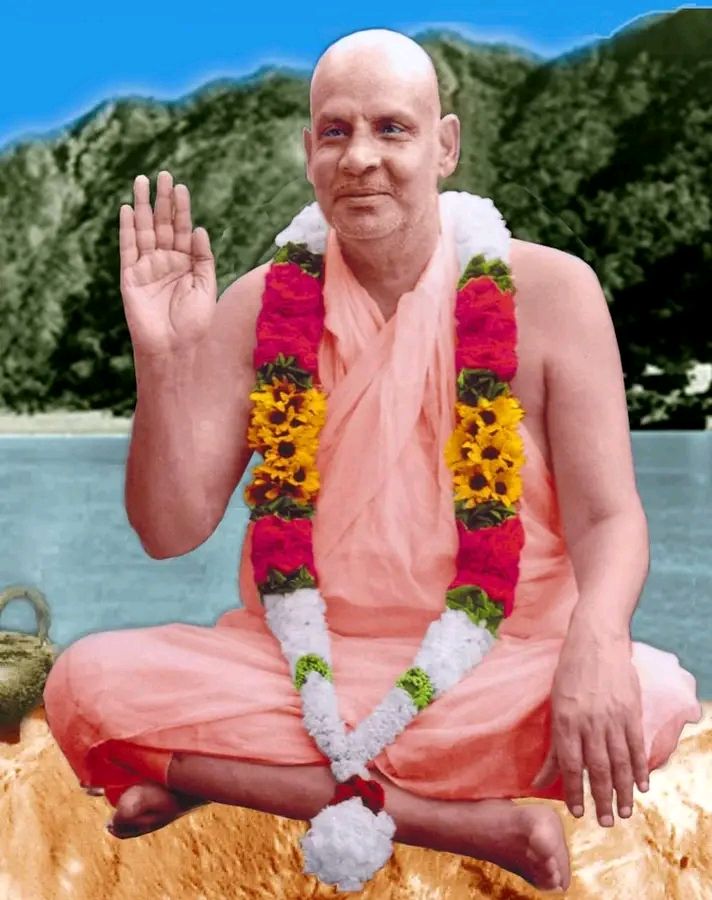
Swami Sivananda blessing pose with garland image
Jnana Yoga

Practical Vedanta

Practical Vedanta by Swami Sivananda YOU must be a practical Vedantin. Mere theorising and lecturing is only intellectual gymnastics and lingual warfare. This will not suffice. If Vedanta is not practicable, no theory is of any value. You must put Vedanta in daily practice in every action of yours. Vedanta teaches oneness or unity of Self. You must radiate love to one and all. The spirit of Vedanta must be ingrained in your cells or tissues, veins, nerves and bones. It must become part and parcel of your nature. You must think of unity, speak of unity and act in unity. If you deliver a thrilling lecture on the platform on Vedanta and say, I am the all; I am the one Self in all; there is nothing but myself and show in action the next moment a different attitude of selfishness and separateness, you will not produce any impression on the public. You will be called as a dry Vedantin only. Nobody will care for you. See how Raja Janaka lived. He lived the life of a practical Vedantin while ruling his kingdom. You cannot conceive of any man busier than Raja Janaka. He was ruling over millions of people and yet he was a sage, a deep thinker, a profound philosopher and a practical Vedantin. He had no attachment to his property or body or his family people. He shared what he had with others. He moved with all. He had equal vision and a balanced mind. He led a very busy life amidst luxuries. He was not a bit affected by external influences. He always kept up a serene mind. He held discussions with various sages on transcendental matters. That is the reason why he still lives in our hearts. Vedanta or knowledge of Self is not the sole property of Sannyasins or recluses who live in forests or caves of the Himalayas. Study the Upanishads and you will find that many Kshatriya kings, who were very busy in their daily affairs of life, were in possession of Brahma-Jnana. They even gave instructions to Brahmin priests. Svetaketu Aruneya (grandson of Aruna), repaired to the assembly of the Panchalas. Pravahana Jabali (the king of Panchala, a Kshatriya) asked him; Boy, has your father instructed you? Yes, Sir he replied. Do you know to what place men go from here? No, Sir, he replied. Do you know how they return again? No, Sir he replied. Do you know where the path of the Devas and the path of the fathers diverge? No, Sir he replied. Do you know why that world (that of fathers) never becomes full? No, Sir he replied. Then why did you say that you had been instructed? How could anybody who did not know these things say that he had been taught? Then the boy, troubled in mind, came to his father’s place and said: Sir, thought you had not taught me, you said you had instructed me. That fellow of a Rajanya (king, Kshatriya clan) asked me five questions and I could not answer even one of them. The father said, If I had known these, why should not I have told them to you? The Gautama (the father of Svetaketu) went to the king’s place and when he reached the place, the king offered him proper respect. In the morning, he went to the king in his assembly. The king said to him: O revered Gautama, ask a boon of such things as belong to the world of men. He replied, Let such things as men possess remain with you. Repeat the same ‘speech’ which you addressed to my boy. The king was perplexed. He commanded: Stay here for some time. Then he said, As to what you have asked me, Gautama, this knowledge did not go to any Brahmana before this; and therefore, this teaching belonged, among all the people, to the Kshatriya alone. Sukadeva had to go to Raja Janaka to get confirmation of his knowledge and realisation. He was tested by Janaka in the Durbar. Raja Janaka arranged for music and dancing, all around his palace, to distract the attention of Sukadeva. There were various kinds of shows and entertainments. Sukadeva was asked to carry in his hand a cup of milk, that was filled to the very brim, round the palace and to make three such rounds without allowing even a drop to overflow and fall on the ground. Sukadeva did it successfully as he had one-pointedness of mind (Ekagrata). Nothing could distract his mind. An Englishman, a district collector, saw a sick patient on the roadside in a dying condition. He was a very sympathetic man. He carried the patient to the neighbouring hospital on his own shoulders. Look at his feeling of oneness. He is a practical Vedantin, whether he knows Upanishads or not. The sun, the flowers, the Ganges, the sandal, the fruit-bearing trees, the cows – all teach practical Vedanta to the world. They live for serving humanity in a disinterested spirit. The sun radiates its light alike over a cottage of a peasant and a place of a Maharaja. The flowers waft their sweet fragrance to all, without expecting any return. The cool refreshing water of the Ganges is drunk by all. The sandal tree wafts its aroma even to the man who cuts it with an axe. All fruit-bearing trees behave in the same manner. They please the gardener who nourishes them as well as the man who cuts them. The cows live to nourish babies, children, invalids and convalescents. Imagine for a moment that the world is devoid of cows for six months or the race of the cows has become extinct. How miserable and weak you will become! The world will abound with anaemic patients. O selfish ignorant man! Learn lessons from these practical Vedantins and become wise. If a Yogi or a Sannyasi who is able to keep up serenity of mind while living in a cave in the

Practical Vedanta Read Post »

Swami Sivananda wearing flower garland image
Jnana Yoga

Thoughts of Vedanta

Thoughts of Vedanta by Swami Sivananda VEDANTA is that sublime philosophy which teaches that the individual soul is identical with the Supreme Soul and removes the illusion of the Jiva. Vedanta is the science of Atman that helps the aspirants to eradicate fear, sorrow, grief, delusion and to realise the Self. Vedanta is that magnanimous philosophy which raises the ignorant Jiva to the sublime heights of Brahmanhood. Vedanta is a panacea for all human ailments. Vedanta is a sovereign specific for the disease of birth and death. Mere theorising of Vedantic principles will not do. You should live in the spirit of Vedanta. You should become a practical Vedantin. You should realise this Atman which Vedanta treats of. Then only you will become a liberated sage. Brahman or Atman or the Supreme Self is self-luminous. Brahman cannot be manifested by anything else. Brahman manifests everything. The doctrine of self-luminosity is one of the foundational tenets on which the entire edifice of Vedanta is constructed. Atman gives light to the sun, moon, stars, lightning, fire intellect and senses. by the light of the Atman all these shine but they cannot illumine the Atman. The ultimate principle or Atman or Brahman which is formless, colourless, fearless, timeless, spaceless, limitless, attributeless, endless and beginningless shines eternally and everywhere behind the names and forms. Vedanta treats of this ultimate Truth or Supreme Principle. This world of names and forms is constantly changing. Seas dry up and vast sandy deserts come into being in their place. Elevations become depressions and depressions become elevations. Sand becomes stone and stone becomes sand. Blocks of stones become lime and lime becomes dust. Forests become model towns and cities become deserted places. Grass becomes blood; blood becomes milk; milk again becomes blood; blood becomes flesh. A young man becomes an old man and a beautiful girl becomes an ugly woman. A fat man becomes thin and a thin girl becomes a fat woman. A zamindar becomes a beggar and a beggar becomes a zamindar. At the back of these ever-changing objects there is the changeless, eternal, immortal Brahman or the Supreme Self. He who realises this Brahman attains Immortality, Freedom and Eternal Bliss. Naturally the mind runs towards objects of the world. The usual flow of the mental current is towards worldly objects. You will have to turn the mind inwards towards the Self through Vairagya and Abhyasa (dispassion and practice). In the beginning the mind will run towards the worldly objects again and again even if it is turned towards the Atman. Constant practice is necessary to make the mind rest in the Self for ever. Tear into pieces the veil of ignorance. Catch the fickle deer ‘the mind’ with the snare of enquiry and Brahma Chintan. Mount on the elephant of Self-knowledge and roam about freely in the hilly tracts on the highest peak of Supreme Wisdom of the Self. Shake off the bonds of Karma through discrimination, dispassion and non-attachment. Know the secret of true bliss through concentration and meditation. Root out the passion. Embrace Peace. Enjoy the glory of Self-Bliss. Delight in the Self within. Abandon thoughts of this little body. Rise above the worldly thoughts. Live always in the All-blissful Self. Thou art the sun, fire, sky, stars, mountains, oceans and rivers. The whole world is your body. The whole wealth of the world is yours. The whole world is your Lila. Maya is your illusory power. Exercise your power of Sat-Sankalpa. She is ever ready to fulfil your wishes. Thou art immortal, beginningless and endless. Death, sickness, sorrow, sin, old age, cannot touch thee. Feel the majesty of thy real nature. Feel, feel that thou art the all-pervading, imperishable, diseaseless, fearless Atman. Rest in that stupendous ocean of peace. Be perfectly happy. Learn to discriminate between the permanent and the impermanent. Behold the Self in all beings and in all objects. Names and forms are illusory. Therefore sublate them. Feel that there is nothing but the Self. Share what you have, physical, mental, moral, or spiritual, with all. Serve the Self in all. Feel when you serve others that you are serving your own Self. ‘Love thy neighbour as thyself’. Melt all illusory differences. Remove all barriers that separate man from man. Mix with all. Embrace all. Destroy the sex-idea and body-idea by constantly thinking on the Self or the sexless and bodiless Atman. Fix the mind on the Self when you work. This is practical Vedanta. This is the essence of the teachings of the Upanishads and sages of yore. This is real, eternal life is the Atman. Put these things in practice in the daily battle of life. You will shine as a dynamic Yogi or a Jivanmukta. There is no doubt about this. There is no doubt about this. OM is a symbol of Brahman. OM or Pranava is a sparkling ferry-boat for men who have fallen into the never-ending ocean of mundane life. Many have crossed this ocean of Samsara with the help of this ferry-boat. You can also do so if you will. Meditate constantly on OM with Bhava and Meaning and realise the Self. That illumined sage whose mind is merged in his true nature of Sat-Chit-Ananda, who has conquered the enemy ‘ignorance’, who is destitute of ‘I’-ness and ‘mine’-ness, who has rooted out pride, selfishness, love, envy and hatred, rejoices in the ocean of boundless bliss. A cat made up of sugar is a real cat for a child. Sugar does not appear for the child as it is swallowed up by the cat. The cat has concealed the sugar. For an adult it is just sugar only. The sugar has swallowed up the cat. Even so for a Jivanmukta or liberated sage, Brahman swallows all illusory names and forms. He sees only Brahman everywhere. All names and forms vanish. For a worldly man, the names and forms have swallowed up or concealed Brahman. He beholds the illusory forms only. The Jivanmukta has his upper

Thoughts of Vedanta Read Post »

Swami Sivananda seated with devotees indoors image
Jnana Yoga

Light of Vedanta

Light of Vedanta by Swami Sivananda A STUDENT of Vedanta should study again and again the Upanishads which are but mystical experiences of the soul gushing forth in an unceasing stream of beauty. You will find in the Upanishads instances of a sincere quest after Brahman, the Supreme Soul. Nachiketas learn the science of the Reality from Yama. Kabandhi, Bhargava, Kausalya, Gargya, Satyakama, Sukesa – all these devoted to Brahman and centred in Brahman, seeking the Highest Brahman approached the revered sage Pippalada with fuel in their hands to know Brahma Vidya and realised Brahman. A rich man keeps his valuable jewels in an iron safe hidden in the innermost chamber of his bungalow. One has to pass through five compartments before he reaches the compartment in which the iron safe is placed. Five walls screen the iron safe. Even so, this most valuable jewel of Atman is placed in the innermost recess of the heart. Five veils cover this Atman. In other words, you will have to pass through the five compartments formed by the five Koshas if you want to get at the jewel of Atman. To look for God without, abandoning the God within, is like going in quest of conch-shell after giving up the precious diamond in the hand. If you cannot find Him in your heart, you will not find Him anywhere else. Search Him within the innermost recess of your heart. He is subtler than the subtlest. Make the lotus of your heart as pure as possible. Withdraws the fuel of desires and extinguish the fire of Sankalpas. Realise the Truth now through your higher mind. Enjoy the perennial joy or divine Bliss. You cannot separate the particles of sugar that are mixed with sand or dust; but an ant can separate them very easily. So also, if you want to taste nectar of Immortality or enjoy the Atmic Bliss, if you want to separate the Atma from the five sheath, you must become an ant, i.e., you must kill your egoism, pride and vanity and develop humility. If you are equipped with the four-fold discipline viz., Viveka, Vairagya, Shad-sampat and Mumukshutva, you will be able to make an enquiry into Brahman. If you have proper ethical training only, you will be able to practise deep meditation. If you possess moral qualifications, you will be able to comprehend the deep truths of Vedanta. If you have moral stamina only, you will be eligible to approach Brahman or the Absolute. Ethical discipline is an indispensable pre-requisite to the study of Vedanta. You can be a wonderful scientist or a philosopher of great repute without any moral qualification but you cannot be a student of Vedanta without ethical perfection. An immoral man can never realise Brahman. If you can maintain, when you are engaged deeply in some work, serenity of mind which cannot be ruffled, balance of mind which can never be disturbed, you have made considerable progress in the spiritual path. This indicates that you possess immense inner spiritual strength. If you have a serene and composed mind only, you will be able to practise introspection and meditation. The four-fold discipline makes the mind steady, serene and one-pointed. It removes laziness, inattention, sleepiness and makes you ever vigilant. The senses are kept under perfect control by its practice. You will develop the power to discrimination between the real and the unreal. You will clearly perceive the extreme evanescence of all mundane objects. You will also develop a burning desire for liberation and a burning dispassion. If you now sit for meditation you will at once enter into Samadhi. Self-control augments energy, vitality, vigour and mental strength. A man of self-control is always cheerful. He turns out much physical and mental work. He commands respect and influences people. He always keeps a balanced mind. He is always serene, collected and composed. He never wastes his energy. He sleeps happily. He attains quickly the highest beatitude. If you are extremely virtuous, if you are very courageous, if you are ready to give up all possessions, even your very life for the sake of Truth, if you have equal vision, if you are solely engaged in the pursuit of divine knowledge, if you do sincere service to Mahatmas or your Guru, you can quickly attain Self-realisation. Kill desires. Rise above desires. Abandon your beggarly attitude of mind. Feel the majesty of your Self. There is neither desire nor Vasana in the Self. It is very pure. It is all-full and self-contained. Identify yourself with the glorious Self. Then all desires will die. Then all desires will be fulfilled. This is the secret of the fulfilment of desires. Then nature will obey you. You can command the elements. All the eight Siddhis and the nine Riddhis will roll at your feet. They will stand with folded hands to carry out your behests. This is the sublime teaching of Vedanta. Jesus commanded the waves to subside. They obeyed immediately. Shams Tabriez commanded the Sun to come down a bit. The sun obeyed. Nimbarka commanded the sun not to move beyond the line of a Neem tree that was in front of his house. The sun carried out his behest immediately. Jnana Dev commanded the wall and the Masjid to move. They obeyed him at once. Visvamitra said, Let there be a third world for Trisanku. Then and there a world was created. Akalkot Swami commanded, Let this dead man come back to life. At once the dead man rose up from the ground with new life. These sages were absolutely free from selfish desires. They simply willed at times to do good to the humanity. Everything came to pass instantaneously. Give up identification of your Self with the physical body. Identification of one’s self with the body is the greatest crime. Give up planning and scheming. Abandon speculation. Relinquish cherished hopes, expectations and worldly ambitions. Give up completely thinking about yourself. Do not expect appreciations or approbation. Burn the

Light of Vedanta Read Post »

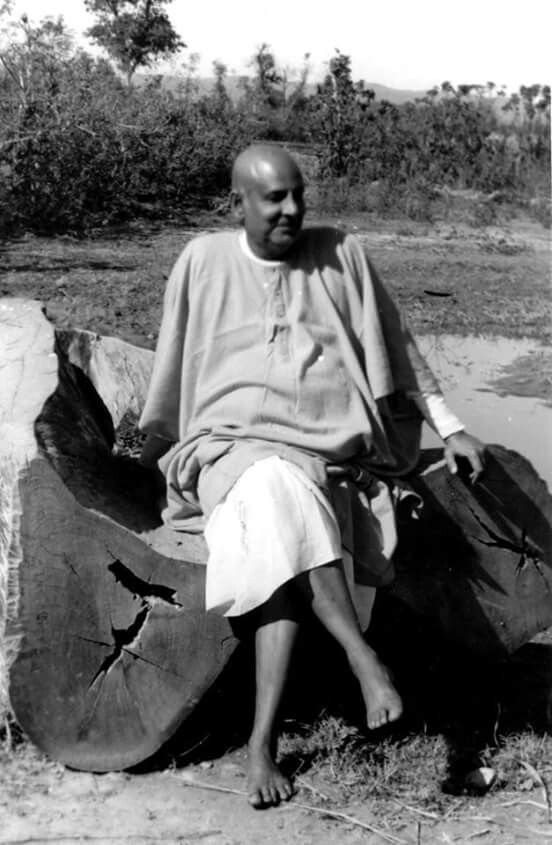
Swami Sivananda sitting on tree log outdoors image
Jnana Yoga

Vedanta – Thy Birthright

Vedanta – Thy Birthright VEDANTA is the religion of the Upanishads. It is the property of all. It has no quarrel with any religion whatsoever. It preaches universal principles. It inculcates the idea of that universal religion which is the fountain-head of all the religions of the world. It is a great leveller. It unites all. It gives room to all. Vedanta is the direct royal road to the domain of unalloyed felicity and the supreme abode of immortality and eternal bliss. It is the Sanjivini (Himalayan herb) that can bring immediate life to a dying man. It lifts a man at once to the status of an Emperor of emperors, Kind of kings, Shah of shahs, even though he has nothing to eat, even though he is clad in rags. It gives real inner strength. It inspires, renovates, vivifies, invigorates and energises. It gives hope to the hopeless, power to the powerless, vigour to the vigourless and joy to the joyless. Vedanta includes all sects, all religions, all creeds, all cults and all nations. It proclaims the revelations of the sages of yore of India. It is the common property of all. It expands the heart and opens the eyes. It brings a new life. It gives supreme joy and eternal bliss. It removes all barriers which separate man from man and unites all people. It gives solace, strength and peace and removes all fears, doubts and anxieties, delusion and illusion. You think of your body, food, wife, son, friend, etc., but you do not turn your mind inward to find out what lies within yourself. You think that your body, this bundle of flesh and bones – is real and on this basis you build the whole citadel of life’s ambition and activities. You have mistaken the shadow for the substance. You are contended with superficial things. Though you are endowed with the power of thought, yet you do not wish to utilise this power in the quest of the immortal Self. You have abandoned the precious jewel of Atman and caught hold of a broken glass piece. Is this not a foolish act? You will weep in your old age. Why do you bleat like a lamb? Assert. Recognise and realise your Brahmic nature. I will tell you a small story. Just hearken with rapt attention. There was once a lion-cub, left by its dying mother, among some sheep. The sheep took care of the lion-cub. The lion-cub soon grew into a big lion and bleated Ba-a-a when the sheep bleated Ba-a-a. One day another lion came and heard the sheep-lion bleating aloud with the other sheep. He was struck with amazement. He asked the sheep-lion: Brother! What is the matter with you? Why are you here in such an abject state The sheep-lion replied: I am a sheep. I am happy here amidst my brothers and sisters. Nonsense, roared the other lion, Come along with me. I will show you. You are under a false delusion. He took the sheep-lion to the side of a river and showed him his reflection in the water. He said to the sheep-lion: Look at your reflection now. You are a lion. I am a lion. The sheep-lion looked at the reflection and then said in joy, What a terrible mistake I have committed? I am certainly a lion indeed. I am not a sheep at all. He made a terrible roar and went along with the other lion. Brother! You are also bleating like the sheep-lion. You have forgotten your real divine nature. You are hypnotised by Maya. Dehypnotise yourself and roar OM OM OM. Become a lion of Vedanta. Thou art the immortal Self. Do not identify yourself with the perishable body. Identify yourself with the undying, eternal Brahman and be free. There is a permanent reality behind the universe. There is a living truth behind these names and forms and all phenomena. That is Brahman. That is Atman. That is Self. The goal of human life is to realise the reality behind the changing phenomena. The summum bonum of human aspiration is to attain Self-realisation. Self-realisation alone can eradicate ignorance and miseries. Self-realisation alone can break the bonds of Karma. Self-realisation alone can make you absolutely free and independent. There is only one reality, Brahman. This world and body are superimposed on Brahman, just as snake is superimposed on the rope. As long as the rope is not known and the idea of the snake persists, you are not free from fear. Similarly this world is a solid reality to you until Brahman is realised. When you see the rope with a light, the illusion vanished and the fear disappears. Even so, when you realise Brahman, this world vanishes and you are freed from the fear of births and deaths. A Jiva-Koti Jivanmukta is one who has realised the Self through gradual evolution and by his own efforts. He has raised himself form Jivahood to Brahmanhood by meditation. He has taken many births. Anyhow he has managed to free himself from the round of births and deaths. He can help a few persons only. He cannot elevate many people. He can be compared to a bullock cart which can take 4 or 5 persons or a plank in a river. Whereas the eternally free Ishvara-koti-Jivanmukta is born in the world for establishing Dharma, for the protection of virtuous persons and for doing good to humanity. He does not practise any Sadhana or meditation in this birth. He is an Amsa of the Lord. He is a born Siddha. He is illumined from his very boyhood. He can elevate many people. He manifests and disappears when the Lokasangraha work is over. He can be compared to a train which takes a large number of persons or a big steamer in an ocean. Sankara was an Ishvara-Koti. Vamadeva was a Jiva-Koti Jivanmukta. Still the waves of the mind. Hold the mind steady in Nirvikalpa Samadhi. This needs constant

Vedanta – Thy Birthright Read Post »

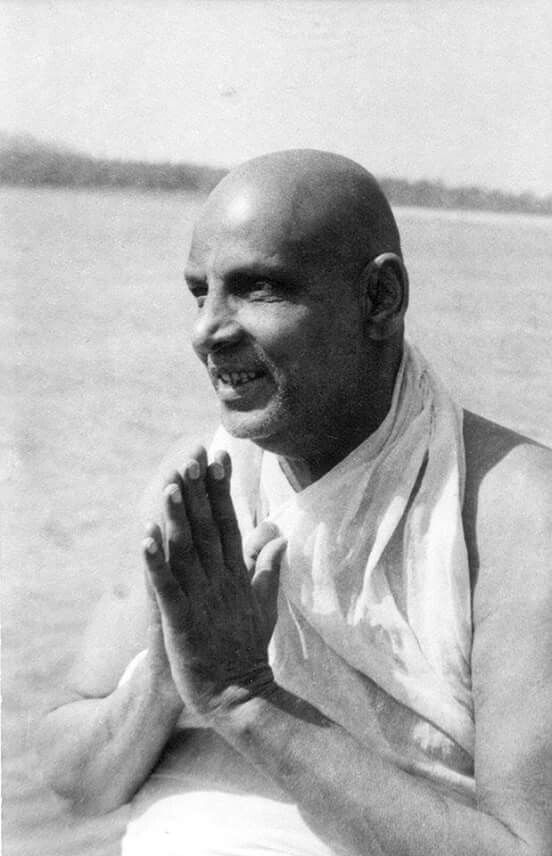
Swami Sivananda praying with folded hands image
Jnana Yoga

Easy Steps to Vedanta

Easy Steps to Vedanta by Swami Sivananda 1. Adhyasa The Jiva falsely superimposes the body and other limiting adjuncts which are not Self upon himself and identifies himself with them. This identification constitutes bondage. The freedom from this identification is Moksha. That which causes this identification is Avidya or nescience. That which removes this identification is Vidya. Attainment of knowledge of the Self eradicates this Avidya and its effects. The Svarupa of Moksha is the attainment of Supreme Bliss and removal of all kinds of sufferings. From illusion springs separation, difference, duality, manifoldness and variety. Illusion is born of ignorance. All sorrows, tribulations, miseries and troubles have their root in ignorance. Ignorance creates illusion and separateness. Therefore destroy the ignorance by the sword of knowledge of the Self and become free. Adhyasa means superimposition. Snake is superimposed on the rope. Silver is superimposed on mother of pearl. This is Adhyasa. Adhyasa, Kalpana, Bhranti, Bhrama are synonymous terms. Adhyasa is mistaken ascription or imputation to something of an essential nature or attributes not belonging to it. This world and body are superimposed upon Brahman or the Atman. Just as a stick burning at one end, when waved round, causes an illusion of a circle of fire (Alata Chakra), so also is the case with the multiplicity of this phenomenal universe. The circle of fire is an illusion. Similarly, this relative world is also an illusion. The only Reality is Brahman which is the constant witnessing subject, which is the support on substratum for this world. This illusion is due to Avidya. When Avidya is destroyed by attaining knowledge of the Self, names and forms will vanish. You will behold the Self only everywhere. 2. Nature of Brahman What is neither short nor long, neither that nor this, neither that much nor this much – that should be understood as Brahman. by knowing Brahman everything else becomes known; there remains nothing else to be known. The ultimate Reality is Brahman or the Supreme Self. Brahman is one Being without a second. Brahman is all-that-which-is. It is that from which the world originates, that in which the world exists and that in which the world is dissolved. It is infinite, eternal, changeless, self-luminous and Absolute. Time and space are within it. It is indivisible homogeneous essence. Atman is always the witnessing subject. It can never be the object. The subject is the universal Self whose nature is intelligence (Chit). The object comprises whatever that is of a non-intelligent nature (Jada), viz., bodies with their senses and the objects of the senses. 3. Sadhana When you attend a musical performance you also begin to shake your head and keep Tala with your hands or feet although you are a witness only. Even so the Jiva, though he is a witness in reality, plunges himself in worldly enjoyments when he begins to taste a bit of it. Severe knocks and blows alone can induce Vairagya in man, turn him towards God and make him give up the clinging to wife, children, property, etc. Pain is a great blessing in disguise. Pain is an eye-opener. Just as the witness of a chair is different from the chair and is not the chair, so is the witness of this body. The nature of the witness is reality, bliss and knowledge. The chair and the body are insentient. Know, O Ram! Therefore that you are not the body, you are the witnessing consciousness or intelligence. O followers of the philosophy of flesh! Give up this clinging to this body, wife and children. Try to know the inner immortal Lord of life who dwells in this body, who is the inner Ruler, by whom you live, by whom the senses and intellect are illumined. Do not mistake the transient body for the immortal, changeless, self-luminous Atman. Just as a mother, in order to pacify her child that is weeping, places before it a plantain fruit or biscuit or a sweetmeat, so also the spiritual preceptor pacifies those who are weeping in the Samsara on account of the three kinds of fever, by placing before them the most delicious and valuable spiritual food, viz., the great sentences of the Upanishads or Mahavakyas which proclaim about the identity of the individual soul with the Supreme Soul. They say: My beloved children! Weep no more. You are in essence the Sat-Chit-Ananda Brahman. Give up identification with this perishable body. Tat Tvam Asi, Thou art that. Realise the Self and rejoice. Understand the right significance of the Tat Tvam Asi Mahavakya or the great sentence of the Upanishads. The knowledge relating to the identity of the individual soul and the supreme soul that arises from great sentences of the Upanishads like ‘Tat Tvam Asi’ (Thou art That) is the means to emancipation. If you have a clear knowledge of the five sheaths, you will not be deluded. Therefore try to understand the nature of the five sheaths and their functions first. That which is distinct from the five sheaths and their functions is Sat-Chit-Ananda Atman, your own Self. This Atman is immanent in all beings. It exists everywhere and at all times. Negate, sublate or eliminate the sheaths or illusory Upadhis and identify yourself with the support of these sheaths, the one homogeneous essence, the Immortal Self. You simply waste your energy and time by entering into hot discussion regarding the questions: Why God created this world? Is this world real or unreal? It would matter nothing to you whether the world be real or not. You will not gain anything substantial by entering into such controversies. You will have to forget the world if you want to realise the Self. You will have to dive deep into the chambers of your heart by withdrawing the mind and the outgoing senses to rest in the Supreme Self. Give up, therefore, these useless discussions and proceed straightaway in the quest of the Self and in its realisation. Instead of counting the number of

Easy Steps to Vedanta Read Post »