





Hari Om

Menu

November 2025

e61810ce7ad2805cb161e2257d0b1288
Divine Insights

Sat chit anand

Atman is Sat-Chit-Ananda by Swami Sivananda Atman is Sat Atman is Sat. That which exists in the past, present and future, which has no beginning, middle and end, which is unchanging, which is not conditioned in time, space and causation, which exists during Jagrat, Svapna and Sushupti, which is of the nature of one homogeneous essence (Sada Ekarasa, Sada Ekarupa) is Sat. This is found in Atman. Srutis emphatically declare: Sat only was prior to the evolution of this universe. Our common experience, rather innate inherent feeling, that we never were not and that we never will cease to be, even though our physical bodies may disappear, clearly proves that Atman always exists. In reply to the question whether we are in this world or not, it is said by all men: We are here. Do we possess body or not? Yes, we have bodies. Whence came this body? There must be some cause for our getting these bodies, for otherwise it cannot be a cause. That cause is Karma. It is only our Karma that gives birth to this body. The Karma which generated this body in the previous birth ought to have been performed in a birth anterior to that and so on backwards ad infinitum. Thus, on enquiry, we find that Karma and body are beginningless, of the nature of an unceasing flood, the source of which is unknown. Karma and body form an ever-receding chain. Therefore it is certain that Atman which subsists and forms the substratum for this chain must also be beginningless by virtue of its nature. Thus it is proved now through inference that Atman is Sat during the past and present periods. Why can we not say that this body is generated by the works performed in this birth? Just as the seed which can generate a tree cannot generate that tree which is the cause for its own birth, so also the works performed by this body will produce a new body in the next birth but cannot generate this body. Therefore we cannot say that this body has been produced by works done in this birth. Then another point is, does that Karma which generates the body belong to us or to others? Certainly it is ours. We cannot enjoy in heaven through the Karma of another. If Mr. Krishna does an evil act, he will have to suffer. It cannot affect Mr. Sadasiva. Virtue brings its own reward for the person who does the virtuous action. That is the immutable law of Nature. If one were to go to heaven through the Karma of another man, a servant also should attain heaven through the performance of a sacrifice by a learned Brahmin. All should have attained liberation through the Nirvikalpa Samadhi of Sri Sankara or Dattatreya. But this is not the case. Therefore it is quite obvious that it is only one’s own Karma which generates one’s own body. The Karma that we perform now in this birth will not go in vain. Actions are indestructible. They will generate fresh bodies in the future. We will do fresh Karmas with these new bodies which will form the seed for still future bodies and so on forwards ad infinitum. The current of Karma and body will never have an end in the future, but there is an end to Karma through Knowledge of the Self. Karma is completely annihilated by the dawn of Brahma-Jnana. Then comes a cessation of body. Even if Karma is destroyed and future births come to an end, the Atman does not perish. It is ever existent. It is eternal. Karma is of the nature of Avidya. When Karma is destroyed, all causes of pain vanish. Jivahood disappears. The Jiva enjoys the supreme bliss of the Self. Atman always is. It exists in the three periods of time. The world may come and go, but Atman always remains. Pralaya or dissolution is only for this phenomenal universe but not for the changeless, self-existent Atman. The deluge and fire may destroy the illusory names and forms but they cannot touch the imperishable Atman. You can thus clearly understand that Atman is Sat. Atman Is Chit Atman is Chit for it shines by itself unaided by any other light and illumines the whole universe by its own light. It may be asked, how can we be said to illumine the whole universe when we are ignorant? The universe is of two kinds, viz., the external and the internal. The external universe embraces the five elements and their properties, sound, touch, form, taste and odour and their combinations of various sorts, various names and forms, qualities, properties, the quintuplicated elements, Brahma’s egg, the four kinds of beings, viz., the oviparous or egg-born, the sweat-born, the seed-born and the womb-born. The external universe, however varied and big it may be, is after all only inert matter. It cannot be the object of our perception unless we throw upon it the flood of our consciousness light; it can never know us. It is illuminated by us only. It can never illuminate us. Gold shines with splendour when molten by fire in a crucible. Whence is this lustre? The fire does not impart this glitter in the gold. It is only an instrument in removing the dross from the gold. When the impurities in the gold are removed by fire, the gold shines in its real state. Even so when the purified mind dispels Ajnana, the Atman shines in its native glory and pristine splendour. The dispelling power of the mind is borrowed from the Atman. It does not belong to the inert mind. It is generally said that a lamp dispels the darkness of a room but the mere lamp-vessel, the oil or the wick have no power in themselves to remove darkness. Nor is Agni (fire) able in itself without the help of the wick, oil and lamp-vessel to dispel darkness. It is only when the fire and the
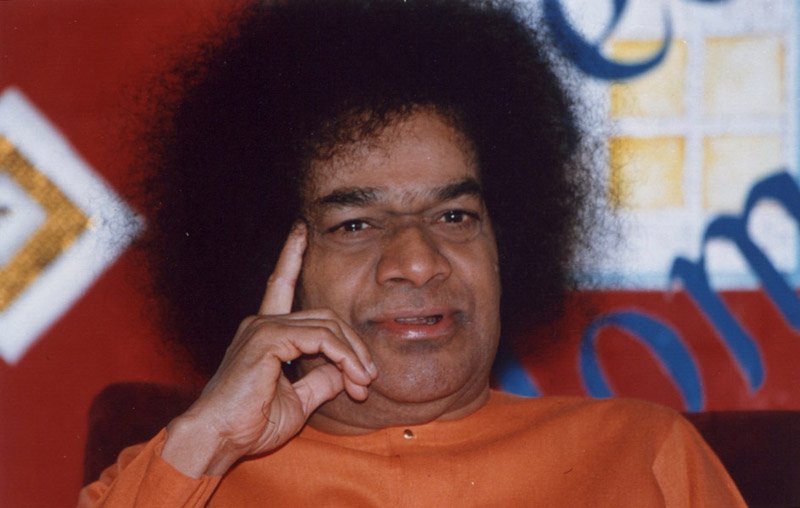
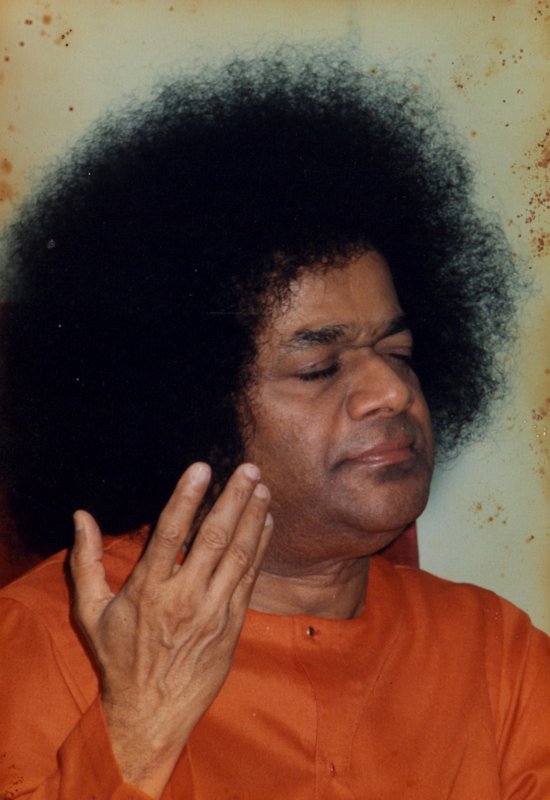
Sat chit anand Read Post »

Bhagwan Shri Sathya Sai Baba tranquil ashram portrait photo
Uncategorized

Hari Bhajan Bina

Hari Bhajan Bina A very famous bhajan sung by Bhagavan Sri Sathya Sai Baba, explains unequivocally on the Glory of Lord Hari’s Name. Without singing his Glory, there is no happiness and peace in life. There’s no Bliss, Without the Name of Lord Hari.             Hari Bhajana Bina Sukh Shanthi Nahin Hari Naam Bina Ananda Nahin Prema Bhakthi Bina Uddhar Nahin Guru Seva Bina Nirvana Nahin  Japa Dhyaana Bina Sam Yoga Nahin Prabhu Darsha Bina Pragyana Nahin Daya Dharma Bina Sath Karma Nahin Bhagawan Bina Koi Apna Nahin Hari Naam Bina Paramatma Nahin O Mind, understand that there is no peace without chanting the glory of the Lord Hari, which itself is Bliss. There is no progress without loving devotion to the Lord and no liberation without service to the feet of the Guru. There is no equanimity of mind without remembering the Lord’s name and meditation. There is no integrated awareness without Lord’s vision. Performing good deeds constitute righteousness and compassion. Understand that everything belongs to God and that Supreme Consciousness is attained by chanting the Lord’s name.

Hari Bhajan Bina Read Post »

Shri Sathya Sai Baba divine smiling sacred portrait
Divine Insights

Satyam Gyanam Anantan Bhrama

Satyam Gyanam Anantan Bhrama Satyam Jnaanam Anantam Brahma (Taittiriya Upanishad 2.1.1) The Vedas declare that reality (Brahman) is pure Existence (Sat or Satyam), Consciousness (Cit or Jnaanam) and Infinite (Aananda or Anantam). Here is a way to understand this, based on traditional centuries old Indian texts like Drg-Drsya-Viveka and Maandukya Kaarika. The argument is the same as given in those texts. I have only used a more modern language. 1. Satyam What we see as the world is based on the sense organs and the instruments that extend the sense organs. The human eye can see only a limited range of frequencies. Similarly the ears can hear only a limited range. There are other animals which have a different range of vision and sound. Also, they have much more powerful sense of smell than us. So their world is an entirely different one. For example, when a cat enters a room, it knows who was sitting in the sofa an hour back based on the smell. It also knows if you have gone to the park or not based on the smell of the flowers on you. Sharks can detect the electrical current in the bodies of animals swimming in the water a few meters away. Even with all the modern technology to extend our access to the various physical phenomenon in the world, there is no reason to assume that what we detect in the world is all that actually exists. There can be entirely new kinds of matter and energy that so far we do not have senses or instruments to detect. What we see and interpret depend on the state of our mind. If we like someone, we see them as beautiful. The chemicals and hormones in our blood affect the way we think and judge. Also, all our past experience affects our interpretation of the people, objects and situations in the world. Thus, though the world seems to appear outside us objectively, what we know of the world is only what our instruments (senses and mind) show us. We have no access to the bare naked reality that exists. This fundamental reality is referred to as Existence. What is the nature of Existence which is beyond these apparent properties like color, sound, smell, mass, temperature, charge, momentum, etc.? We know that properties like color, sound, texture, etc. are all emergent phenomenon. When we look at things at their minutest constituents known today like quarks and leptons, these properties do not exist. There are a different set of fundamental properties, which give rise to the perceivable properties at various composite grosser levels. Vedanta extends this concept and says, “As long as properties are experienced, you have not reached the most fundamental level.” So, every property is only an emergent phenomenon. At the ultimate fundamental level, Existence would necessarily be free from any properties. Vedanta gives an example to understand this: pot-ness does not exist in the clay out of which pot is made. This fundamental entity, of which the whole universe is made of, is called Sat or Satyam. It cannot have any properties (nirguna). Any two objects are distinguished only based on properties. As Sat does not have any properties, is has to be only one (ekam eva adviteeyam). Any change is only change of properties. So Sat has to be changeless (nirvikaara). Changeless with respect to space and time. So Sat is all-pervading (sarvagata) and eternal (nityam). Parts of an entity is based on properties of constituents. So Sat is partless (akhanda). So, Sat is One, Infinite, All-pervading, Eternal, Changeless, Partless, Property-less, Absolute Existence. 2. Jnaanam Let us analyze the subject-object relationship in perception. When I see a flower, I (subject) am the body, including the eye. The flower is the object. Form and color of the flower are properties. When I want to judge the properties of the eye like myopia or color-blindness, I put one step back. The eye is the object. I, including the mind, is the subject. Extending this further, the real “I” is the ultimate subject, which can never become an object of perception by the senses or conception by the mind. [Drg Drsya Viveka – 1-5] This ultimate subject is called Cit or Jnaanam. In any subject-object relationship, properties always belong to the object. To judge the property of anything, it has to be given the status of an object. I need to extend myself to the edge of the instrument that is in contact with the object (internal or external) to experience and evaluate the properties of the object. Thus, I, the Cit, being the ultimate subject, cannot have any properties. Applying the same logic that we applied to Sat, Cit also is One, Infinite, All-pervading, Eternal, Changeless, Partless, Property-less, Absolute Existence. So, Sat and Cit are not different. They are the same entity. Thus, real I, the Consciousness is the fundamental entity from which the whole universe has emerged. This is conveyed in innumerable statements in the various Upanishads belonging to various Vedas. As a sample, four statements, each one taken from one of the Vedas, are called mahaavaakyaas. 3. Anantam To understand the relationship between the infinite Sat-Cit and the finite world, less us take an example. We have the numbers 1, 2, 3, 4, … The existence of these finite numbers indicate that we can go on counting for ever. So we have the concept of “infinity” in mathematics. From the point of view of infinity, we cannot distinguish finite numbers like 1, 2, 3, etc. This can be seen from the equations below: (1) inf – 1 = inf(2) inf – 2 = infFrom (1) and (2),inf – 1 = inf – 2 Thus from the point of view of infinity, 1, 2, 3, etc do not exist as discrete numbers. As the number line is homogeneous, any point on it is only imaginary. There is really no difference between one point and another point. Thus, from the point of view of infinity, finite does not exist. But from the point of view of finite, infinite

Satyam Gyanam Anantan Bhrama Read Post »

f3a1127d61dcadff7618766ce5a37a3d
Divine Insights, Sūktam

Bhaja govindam

Bhaja govindam भज गोविन्दं भज गोविन्दंगोविन्दं भज मूढमते |सम्प्राप्ते सन्निहिते कालेनहि नहि रक्षति डुक्रिङ्करणे ‖ 1 ‖ bhaja govindaṃ bhaja govindaṃgovindaṃ bhaja mūḍhamate |samprāpte sannihite kālenahi nahi rakṣati ḍukriṅkaraṇe ‖ 1 ‖ Worship Govinda, worship Govinda, worship Govinda, O fool! The rules of grammar will not save you at the time of your death. मूढ जहीहि धनागमतृष्णांकुरु सद्बुद्धिम् मनसि वितृष्णाम् |यल्लभसे निज कर्मोपात्तंवित्तं तेन विनोदय चित्तम् ‖ 2 ‖ mūḍha jahīhi dhanāgamatṛṣṇāṃkuru sadbuddhim manasi vitṛṣṇām |yallabhase nija karmopāttaṃvittaṃ tena vinodaya cittam ‖ 2 ‖ O fool! Give up your thirst to amass wealth, devote your mind to dispassion and thoughts of the Real. Be content with what comes to you through actions performed by your own work. नारी स्तनभर नाभीदेशंदृष्ट्वा मा गा मोहावेशम् |एतन्मांस वसादि विकारंमनसि विचिन्तया वारं वारम् ‖ 3 ‖ nārī stanabhara nābhīdeśaṃdṛṣṭvā mā gā mohāveśam |etanmāṃsa vasādi vikāraṃmanasi vicintayā vāraṃ vāram ‖ 3 ‖ Do not get drowned in delusion, infatuated with passion and lusty desires, by seeing a woman’s raised breasts and navel. These are nothing but a modification of flesh and fat, and the like. Do not fail to remember this again and again in your mind. नलिनी दलगत जलमति तरलंतद्वज्जीवित मतिशय चपलम् |विद्धि व्याध्यभिमान ग्रस्तंलोकं शोकहतं च समस्तम् ‖ 4 ‖ nalinī dalagata jalamati taralaṃtadvajjīvita matiśaya capalam |viddhi vyādhyabhimāna grastaṃlokaṃ śokahataṃ ca samastam ‖ 4 ‖ As water drops on a lotus leaf are unsteady and trembling, in the same way life in this world is exceedingly unsteady and restless. Know that the whole world is full of miseries, afflicted by unhappiness and grief. यावद्-वित्तोपार्जन सक्तःतावन्-निजपरिवारो रक्तः |पश्चाज्जीवति जर्जर देहेवार्तां कोऽपि न पृच्छति गेहे ‖ 5 ‖ yāvad-vittopārjana saktaḥtāvan-nijaparivāro raktaḥ |paścājjīvati jarjara dehevārtāṃ ko’pi na pṛcchati gehe ‖ 5 ‖ So long as a man is fit and able to support his family by earning wealth, all those family members around him show affection. But no one at home cares for him, even have a word with him, when his body becomes invalid and totters due to old age. यावत्-पवनो निवसति देहेतावत्-पृच्छति कुशलं गेहे |गतवति वायौ देहापायेभार्या बिभ्यति तस्मिन् काये ‖ 6 ‖ yāvat-pavano nivasati dehetāvat-pṛcchati kuśalaṃ gehe |gatavati vāyau dehāpāyebhāryā bibhyati tasmin kāye ‖ 6 ‖ When one is alive, his family members enquire kindly about his welfare. But when the life-air stops and the soul departs from the body, even his wife runs away in fear of the corpse बाल स्तावत् क्रीडासक्तःतरुण स्तावत् तरुणीसक्तः |वृद्ध स्तावत्-चिन्तामग्नःपरमे ब्रह्मणि कोऽपि न लग्नः ‖ 7 ‖ bāla stāvat krīḍāsaktaḥtaruṇa stāvat taruṇīsaktaḥ |vṛddha stāvat-cintāmagnaḥparame brahmaṇi ko’pi na lagnaḥ ‖ 7 ‖ Childhood is lost in attachment to games. The youth is lost in attachment to woman. Old age passes with worry and anxiety, thinking over many things. But there is hardly anyone who wants to be lost (attached) in para-braman, the Supreme Spirit. का ते कान्ता कस्ते पुत्रःसंसारोऽयमतीव विचित्रः |कस्य त्वं वा कुत आयातःतत्वं चिन्तय तदिह भ्रातः ‖ 8 ‖ kā te kāntā kaste putraḥsaṃsāro’yamatīva vicitraḥ |kasya tvaṃ vā kuta āyātaḥtatvaṃ cintaya tadiha bhrātaḥ ‖ 8 ‖ Who is your wife? Who is your son? Supremely wonderful is saṁsāra, the circle of birth and death. Of whom are you? From where have you come? Brother, ponder over these concepts. सत्सङ्गत्वे निस्सङ्गत्वंनिस्सङ्गत्वे निर्मोहत्वम् |निर्मोहत्वे निश्चलतत्त्वंनिश्चलतत्त्वे जीवन्मुक्तिः ‖ 9 ‖ satsaṅgatve nissaṅgatvaṃnissaṅgatve nirmohatvam |nirmohatve niścalatattvaṃniścalatattve jīvanmuktiḥ ‖ 9 ‖ Being in the company of good people (saints) gives rise to non-attachment; from non-attachment comes freedom from delusion, which leads to awareness of reality; understanding of reality gives rise to emancipation leading to the liberation of the soul (jīvan-mukti), while still alive. वयसि गते कः कामविकारःशुष्के नीरे कः कासारः |क्षीणे वित्ते कः परिवारःज्ञाते तत्त्वे कः संसारः ‖ 10 ‖ vayasi gate kaḥ kāmavikāraḥśuṣke nīre kaḥ kāsāraḥ |kṣīṇe vitte kaḥ parivāraḥjñāte tattve kaḥ saṃsāraḥ ‖ 10 ‖ What good is lust when youth has fled? What use is a lake which has no water? Where are the relatives when wealth is gone? What is saṁsāra (transmigratory process), when Truth is known. मा कुरु धनजन यौवन गर्वंहरति निमेषात्-कालः सर्वम् |मायामयमिदम्-अखिलं हित्वाब्रह्मपदं त्वं प्रविश विदित्वा ‖ 11 ‖ mā kuru dhanajana yauvana garvaṃharati nimeṣāt-kālaḥ sarvam |māyāmayamidam-akhilaṃ hitvābrahmapadaṃ tvaṃ praviśa viditvā ‖ 11 ‖ Do not take pride in wealth, friends and youth. Each one of these is destroyed within an instant by Time. Free yourself from the illusion of the world of māyā and attain the realm of brahman, timeless truth. दिन यामिन्यौ सायं प्रातःशिशिर वसन्तौ पुनरायातः |कालः क्रीडति गच्छत्यायुःतदपि न मुञ्चत्याशावायुः ‖ 12 ‖ dina yāminyau sāyaṃ prātaḥśiśira vasantau punarāyātaḥ |kālaḥ krīḍati gacchatyāyuḥtadapi na muñcatyāśāvāyuḥ ‖ 12 ‖ Day and night, evening and morning, winter and summer come and go again and again. Eternal time plays and life ebbs away, yet one does not let go of the storm of desire. द्वादश मञ्जरिकाभिर शेषःकथितो वैया करणस्यैषः |उपदेशो भूद्-विद्या निपुणैःश्रीमच्छङ्कर भगवच्छरणैः ‖ 13 ‖ dvādaśa mañjarikābhira śeṣaḥkathito vaiyā karaṇasyaiṣaḥ |upadeśo bhūd-vidyā nipuṇaiḥśrīmacchaṅkara bhagavaccharaṇaiḥ ‖ 13 ‖ The bouquet of twelve verses was imparted to a grammarian by the all-knowing Śaṅkara, adored as Bhagavat-pāda. का ते कान्ता धन गत चिन्तावातुल किं तव नास्ति नियन्ता |त्रिजगति सज्जन सङ्गतिरेकाभवति भवार्णव तरणे नौका ‖ 14 ‖ kā te kāntā dhana gata cintāvātula kiṃ tava nāsti niyantā |trijagati sajjana saṅgatirekābhavati bhavārṇava taraṇe naukā ‖ 14 ‖ O, mad man! Why this engrossment in thoughts of wealth and beloved? Is there no one to guide you? In these thee worlds, only the association with saintly people (satsaṅga) can serve as the boat that can steer cross the ocean of repeated birth and death. (Stanza attributed to Padmapāda.) जटिलो मुण्डी लुञ्जित केशःकाषायान्बर बहुकृत वेषः |पश्यन्नपि च न पश्यति मूढःउदर निमित्तं बहुकृत वेषः ‖ 15 ‖ jaṭilo muṇḍī luñjita keśaḥkāṣāyānbara bahukṛta veṣaḥ |paśyannapi ca na paśyati mūḍhaḥudara nimittaṃ bahukṛta veṣaḥ ‖ 15 ‖ There are many (ascetics) with matted hair, many with clean shaven heads, many whose hair have been plucked out; some are clothed in orange, yet others parading in various colors -Indeed, these different disguises or apparels are only for their belly’s sake. Seeing the truth revealed before them, still the foolish ones can not see through

Bhaja govindam Read Post »

Shri Sathya Sai Baba serene spiritual temple image
Divine Insights

Ekam nityam attributes of god

Ekam nityam attributes of god The Embodiment of Supreme Bliss,The Embodiment of Transcendental Happiness,The Embodiment of Transcendental Wisdom,The One beyond duality,The One in Eternal Bliss,The Embodiment of Oneness,The Supreme One, The Eternal One,The Unsullied One, the Ever-steady One, andThe Eternal Witness. In the Anandavalli portion of the Rig Veda, there is a beautiful and poetic reference to Brahmananda or Supreme Bliss. Brahmananda refers to mliss that is limitless and beyond description by words; it is also something that cannot be comprehended by the ordinary mind. Unless one leads a calm, pure, noble, virtuous, peaceful, and unsullied life, one can neither understand nor experience this Brahmananda. Supreme bliss is beyond the physical, mundane, and transient world. 1 From ephemeral pleasures to divine bliss Our ancients have categorised the various types of joy and happiness that can be experienced. The lowest type is manavanada, that refers to the pleasure that humans experience in the course of their normal life, and which is connected with worldly objects, entities, and matters. Thousand times greater is gandharvananda or the happiness experienced by celestial beings. daivananda is the next higher level of happiness, and is a thousand times greater than gandharvananda. It refers to the joy experienced by the devas or the demi-gods. Far greater than daivananda is Brihaspathiananda, or the bliss experienced by Brihaspati, the preceptor of the devas. A thousand times greater is Prajapatiananda or the joy experienced by Prajapati (in ancient Indian scriptures, Prajapati is the one associated with the practical aspects of Creation). Brahmananda is a thousand times greater than Prajapatiananda, the highest joy that can be measured on a finite scale. You can see what an immense gulf separates manavananda that man hungers and normally settles for and Brahmananda that he really ought to seek. People use the word Brahmananda quite casually, without the faintest idea of what it actally means. Thus, every petty pleasure is glibly described as Brahmananda. For example, if a person has a nice meal, he describes the experience as Brahmanandam. Man does not understand what an infinite gulf separates manavanada and Brahmananda. The pleasures that man normally enjoys is not even a tiny spec of Brahmananda. He does not realise that while worldly pleasures can be described in words, Brahmananda is indescribable. Sandeepan Chatterjee [who spoke earlier] said that divine love and bliss transcend the bounds of space and time, and that they are beyond season and reason as well. Indeed; Ananda is Ananda at all times and under all circumstances. Since Brahman and Atma are synonymous, Brahmananda can also be referred to as Atmananda. Supreme bliss is verily the same as the bliss of the Self. In fact, Ananda is just another name for Brahman or God. Worldly happiness that man is so crazy about is insignificant compared to the vastness that is Brahmananda or Atmananda. You are aware that air is present everywhere and that it has no specific form. Yet, when this formless air that is present everywhere fills a balloon, it acquires a form – that of the [inflated] balloon. If you go on inflating the balloon, a stage would come when the balloon would burst. The air inside the balloon then merges with the air outside to become formless and vast once again. What a great difference there is between the trapped limited air and the vast free air! Similar is the comparison between the tiny spec called mananvanada and to the infinity that is Brahmananda. Our ability to experience happiness is one of the many gifts of God. However, owing to his limited vision, man makes only a minimal use of his capacity to enjoy happiness. He is ever ready to settle for just manavananda; this will not do. Like the exploding balloon and the merger of the air inside with the air outside, man must break out of human bondage, soaring to the level of Brahmananda. Brahmananda is one of the Names of God. It conveys the idea that God is ever in a state of Supreme Bliss. Bliss is thus the Form of God, and therefore it is that God who is called Brahmananda. There are many other such names, and these were mentioned in the beginning. The next in the list is Parama sukhadam, meaning real ecstasy. What is this sukham [happiness or ecstasy]? Is it connected with the body? Is it physical, sensual, or intellectual? It is beyond all these. Our ancients said, “Tasmai Namaha.” It means, “I offer my salutations to the Embodiment of Happiness”. Our ancients did not try to describe this supreme ecstasy but knew that God is its very Embodiment. So, they hailed God as Parama Sukhadam. God is the personification of Happiness that is beyond the constraints of space and time, and also human reasoning. If one is to describe this Parama Sukhadam or Transcendental Bliss, all one can say is that it is neither physical nor has it a form that can be comprehended. Nectar has an appearance, and its taste could possibly be described; but Parama Sukhadam is beyond both form and words. God is Eternal Bliss – what else can one say? He is totally unaffected by all pairs of opposites like praise and blame, [worldly] joys and sorrows, etc. He is ever supremely happy. 2 Kevalam Jnanamurtim Kevalam means that which transcend space, time, and circumstances. Jnana means wisdom. Thus, jnana moorthim means Embodiment of wisdom. What sort of wisdom is this? Can it be acquired from books? Is it connected with the physical world? Can it be acquired by yogic practices? Jnana is not of this type. It is supreme, transcendental wisdom, which is beyond this world, beyond space, time, and beyond circumstances as well. This jnana is also known as Brahmajnana (Knowledge of the Brahman) or Atmajnana (Knowledge of the Atma). It is eternal. Whereas worldly knowledge can be acquired from books and one can compare scholars saying he is better and so and so is less learned etc., Brahmajnana is total, and beyond

Ekam nityam attributes of god Read Post »

Bhagwan Shri Sathya Sai Baba sacred peaceful portrait photo
Divine Insights

Forms are many God is One

Forms are many God is One The very first experience in the history of Indian thought is the thrill of wonder. This is expressed in the hymns (riks) found in Rig-veda, the earliest revelations of the Indian mind. These hymns are all about the demigods (devas) or the Shining Ones. There are many such deities – Indra, Varuna, Mitra, and Parjanya to name a few. They appear in these hymns, one after the other. Of these, Indra, with the thunderbolt (vajra) as his weapon, is the chief. He is the mighty one who confers rain upon the earth. Indra is so called because he is the master of the senses (indriyas), that is to say, he is the mind that handles the senses. He is also known as Puruhutha – puru meaning “often”, hutha “invited”, and the entire name meaning “the God who is most called upon”. The mind (which is identified with senses, since it masters them) is also adored in the Vedas as Rudra. The mind contacts the objective world and experiences it through the instrumentality of the five senses; this aspect of the mind is the Indra aspect. It has another capability. It can master the senses and become aware of the universal inner truth of the multiplicity called the objective world. This aspect of the mind is designated “Rudra”. This is why the Vedas describe Indra and Rudra as the One with two names. It is possible to quote many such descriptions about the other Gods. Yet, ultimately, all descriptions lead to the same conclusion. First, the hymns (riks) adore deities as presiding over some function or other. Then, these latter get transformed into different names and forms of the One God who has all the worlds in Itself, who is the Witness, resident in all hearts, and the Sovereign of all creation. Gradually, all other meanings and reactions are suppressed as not relevant. For example, an element of fear is associated with the deity Varuna. Fear sprouts and spreads in some hymns, but soon the wisdom of the Aryans (noble seekers) subjugates the fear. Many hymns are prayers to Varuna from people afraid of being punished by him for their sins. But the idea of a terrorizing God cannot flourish on Indian soil. Nor can many Gods of many natures. Indian culture and spiritual outlook upheld the One God or Iswara. There is the One God (Iswara)! This axiom, that there can be only One and not many, has been current in India since very ancient times. Even in the ancient Vedic and Samhitha literature, this faith is already evident as an age-long belief. But the notion of a personal God struck the thinkers and practitioners of this land as rather elementary, a kind of unripe stage in spiritual progress. It did not satisfy their highest aspirations. This attitude, found in the revelations of sages (rishis), has not been understood or appreciated by scholars and writers of other countries who have studied and commented on the Vedas and affiliated texts. They still dwell on the earlier belief in “many gods” or the later belief in “one personal God”. Ignorance of this kind brings a smile to the lips of the Indian (Bharathiya). Really, even those who learn in their mother’s laps to put faith in a God equipped with attributes, known by a name and having a recognizable form, have later to rise to a stage higher than this and become aware of the One, which is spoken of as “having many names and many forms”. The spiritual disciplines (sadhanas) are directed to the realization of this truth. “The ONE – in Him alone is all this flux, all this changing cosmos established. He is the guide and guardian of every consciousness.” All such denotations touch only the fringe of the ONE. Westerners said that one’s intelligence can succeed in this venture. But the seekers of this land showed a heroism that could not be measured or limited – a fact that cannot but be accepted. Western philosophers, renowned for their daring insights into the realms of the spirit, have shown only a tiny spark of this heroism, so they are amazed at the intuitive and experiential heights reached by the sages of India. This feeling of wonder was charmingly expressed by Professor Max Mueller. “Into whatever unknown realms of experience their causative and positive inquiry led them, the Indian seekers ventured boldly therein. For the sake of success in this adventure, they never hesitated to discard whatever they felt as an encumbrance. They were not affected by fear of how others might judge them.” Max Mueller exhorted people to involve themselves in the nectarine stream of the search for the Supreme, flowing in India, for he felt that the Indian spiritual aspirants pursued the path of right, the path of truth. “One alone is; the wise speak of It as many (Ekam sath; viprah bahudha vadanthi).” This indeed is most sublimely meaningful. This is the basic truth behind the spiritual efforts of India (Bharath) for ages. Even the theistic principle and practice that will spread all over the world with unprecedented benedictions in the coming years have as their basis this great axiom laid down by the sages of India, long long ago. Hymns (riks) arose on various deities and divine forces because the sages (rishis) knew that each person can cognize “One alone is” only from their own viewpoint and that it is different for different persons, depending on the stage reached in clarifying and purifying the vision. The sages announced through that statement their discovery that the One is the subject that all the sages and saints, seers and poets, hymnists and composers adored and praised in various languages, during various moods, through various styles of expression. Thus, consequences of the highest value to the world emerged from the declaration quoted above, “One alone is; the wise speak of It as many.” For example, many are surprised that India is the

Forms are many God is One Read Post »

Shri Sathya Sai Baba sacred smiling spiritual photo
His Life is His Message topics

Divine Words of wisdom by Sathya Sai Baba – On Pleasure and Pain

Divine Words of wisdom by Sathya Sai Baba – On Pleasure and Pain 1. Only through pain, you can derive pleasure Your browser does not support the audio element. 1996-06-20 Document Download Audio Social Share Facebook Twitter Youtube Instagram Description Many great people, forbearing many difficulties did great penance and meditative exercises in order to obtain the Divinity. Pleasure is an interval between two pains. Happiness does not come without difficulties. Happiness can be known only when there are troubles and pains. If we call the sugarcane and ask to give us sugar, does it give us? No. Only when it is crushed well and processed, it does. Only when we give innumerable cuts to the diamond it gets good value. Only when gold is put in fire and struck well it can be made as an ornament. In this human life we have to face some difficulties and bear certain blames. We have to try and develop the divine love within us and then we can obtain Bliss. God’s Love should not be taken in a light sense. It is very sacred. In a worldly sense it may appear as insignificant but it transcends the physical level. Everyone should obtain and nurture that kind of love.   2. Accept everything in life as God’s prasadam: Beautiful Analogies Your browser does not support the audio element. 1998-12-25 Document Download Audio Social Share Facebook Twitter Youtube Instagram Description So, we will subtly assume the form of God when we think of God all the time. Never be depressed that you can’t bear suffering. God will never put you to suffering that you cannot bear. He will give you difficulties that you can bear. You may feel, “God! I’m facing difficulties that I cannot bear!” If anyone asks you, “Since when do you have these problems?” You reply, “For the last three years.” You were able to cross over the last three years by bearing the suffering, is it not? So God is putting you to tests that you can bear. Test is the taste of God. We should never fear any test. Be ready to sacrifice your life as you think of God. When you come to this state, God will help you. 4. World is full of sorrow; Seek peace within c

Divine Words of wisdom by Sathya Sai Baba – On Pleasure and Pain Read Post »

59ba6f396983f14106e977825846dd4f
Divine Insights

Divine Poetry

Divine Poetry Divine Poetry is a sanctuary of soulful expression, where every word is crafted with intention and every verse carries a gentle touch of the divine. It is a place where poetry becomes more than just art— it becomes an experience, a moment of stillness, and a doorway to inner peace. Through thoughtful lines and spiritual reflections, Divine Poetry invites readers to pause, breathe, and reconnect with the deeper parts of themselves. At its heart, Divine Poetry strives to give voice to the emotions that often remain unspoken yet shape our lives— love, longing, healing, faith, hope, and the quiet battles within the soul. Each poem becomes a soft prayer, guiding the reader through life’s light and shadows with grace. Whether it speaks of the beauty of the universe, the mystery of existence, or the resilience of the human spirit, Divine Poetry seeks to illuminate the moments that truly matter. This space is created for those who find comfort in meaningful words and seek a calm refuge from the world’s noise. Divine Poetry serves as a reminder that even in chaos, there is always a hidden rhythm— a divine harmony waiting to be discovered. Here, every verse is a small flame of light, offering warmth, clarity, and a gentle reminder that the soul is never alone on its journey.

Divine Poetry Read Post »

Shri Sathya Sai Baba orange robe sacred image
Divine Insights

Satyam Shivam Sundaram

Satyam Shivam Sundaram In Sanatan Dharma, “Satyam Shivam Sundaram” (Sanskrit: सत्यम् शिवम् सुन्दरम्) is a foundational philosophical concept meaning “Truth, Auspiciousness, and Beauty“. It represents the ultimate reality and the highest goal of human existence.  Core Meanings The three words are understood as an indivisible trinity that describes the nature of the Divine (Brahman) and the human true self:  Philosophical Significance The phrase encapsulates a profound philosophy that the pursuit of truth naturally leads to a life of goodness, which in turn reveals the inherent beauty and bliss of existence. Official Biography of the Avatar – Bhagavan Sri Sathya Sai Baba – Sathyam Shivam Sundaram

Satyam Shivam Sundaram Read Post »

ca10297e7904f224cb4c670b16e02e99
Poem

Tulsidas Poetry

Tulsidas Poetry Glimpse Of The Invisible Lightning flashed in my eye, O friend,And brightly did shine the light of the moon.I got a glimpse of the Invisible within,And thirst and longing for the Lord were aroused.My ears received the boon of Unstruck Music,And Knowledge came like the explosion of light, O Friend.Dark clouds began to scatter and the sightOf the Divine Mansion was revealed unto me.Beyond the sun, the moon and the tunnel,Tulsi beheld the abode of the Lord Almighty. Analysis : This poem expresses a profound spiritual experience, presenting a glimpse of the divine within. The imagery of lightning and moonlight illuminates an inner awakening, accompanied by a thirst for spiritual connection. The “Unstruck Music” and “explosion of light” evoke a transformative moment of enlightenment. Darkness gives way to a revelation of the “Divine Mansion,” a metaphor for the abode of God. The poem transcends the physical realm, revealing a connection to the divine beyond celestial bodies. This mystical experience parallels Tulsidas’ other works, which often explore themes of devotion and the search for spiritual truth. It reflects the broader spiritual context of the time period, emphasizing the importance of seeking divine knowledge and experiencing a direct connection with the divine.

Tulsidas Poetry Read Post »