








Hari Om

Menu

Hindu festivals

af57d87a4698bc53ebc1cbd651a87507
Hindu festivals

Shri Ganesh Chaturthi


Shri Ganesh Chaturthi Shri Ganesh Chaturthi, also known as Vinayaka Chaturthi, is a major Hindu festival celebrating the birth of Lord Ganesha, the elephant-headed God of wisdom, prosperity, and remover of obstacles. It usually falls in the Bhadrapada month (August–September) according to the Hindu lunar calendar. Shri Ganesh Chaturthi, also called Vinayaka Chaturthi, is not just a festival; it is a celebration of wisdom, spiritual awakening, and the triumph of devotion over obstacles. Observed in the Hindu month of Bhadrapada (August–September), it marks the divine birth of Lord Ganesha, Rituals & Traditions of Ganesh Chaturthi Ganesh Chaturthi is celebrated with elaborate rituals and deep devotion. The festival begins with the installation of Ganesha idols at homes or public pandals, often beautifully decorated with flowers, lights, and rangoli. Devotees perform prayers, aartis, and chanting of mantras daily to invoke the blessings of Lord Ganesha. Offerings (prasad) like modak, laddoo, coconut, and fruits are made, symbolizing purity, devotion, and sweetness in life. Throughout the festival, cultural programs, devotional singing, and community gatherings reinforce social bonds. On the final day, the Visarjan (immersion) of the idol in water signifies the return of Lord Ganesha to his celestial abode and imparts the spiritual lesson of detachment and the impermanence of worldly life. These rituals, blending devotion, celebration, and reflection, make Ganesh Chaturthi a festival of spiritual, cultural, and social significance. Daily rituals include shodashopachara puja (16-step worship), aarti, and chanting of Ganesh mantras such as “Om Gan Ganapataye Namah” to seek his blessings for wisdom, health, and success. Devotees offer prasad—specially prepared sweets like modak, laddoo, and coconut, believed to be favorites of Lord Ganesha. Alongside personal devotion, communities organize cultural programs, music, dance, and charitable events, strengthening social bonds and collective joy. Spiritual Importance & Cultural Significance Shri Ganesh Chaturthi holds profound spiritual importance, as it celebrates Lord Ganesha—the remover of obstacles, the embodiment of wisdom, and the guide for new beginnings. Devotees invoke his blessings to gain clarity of thought, inner strength, and the courage to overcome challenges in life. The festival encourages self-reflection, devotion, and mindfulness, reminding us of the transient nature of material existence and the importance of focusing on spiritual growth. Culturally, Ganesh Chaturthi serves as a vibrant platform for social cohesion and community engagement. Families and neighborhoods come together to install idols, perform rituals, and organize cultural programs, fostering unity, joy, and collective celebration. Public pandals, music, dance, and charitable activities highlight the rich artistic and social traditions associated with the festival. Through its blend of devotion, reflection, and festivity, Ganesh Chaturthi inspires both personal spiritual development and communal harmony, making it one of the most cherished festivals in India. Food & Sweets & Modern Celebrations Food plays a central role in Ganesh Chaturthi celebrations, as devotees offer prasad to Lord Ganesha, symbolizing devotion, purity, and abundance. The most iconic sweet is modak, a dumpling filled with jaggery and coconut, believed to be Ganesha’s favorite. Other popular offerings include laddoo, peda, coconut, kheer, and various fruits, prepared with love and devotion. These sweets are later distributed among family, friends, and neighbors, reinforcing the spirit of sharing and community. In contemporary times, Ganesh Chaturthi has evolved into grand community celebrations alongside traditional home rituals. Public pandals feature elaborately decorated Ganesha idols, cultural performances, music, dance, and art exhibitions. Social messages, charitable activities, and eco-friendly initiatives are increasingly part of the festival, reflecting awareness of environmental protection. Modern celebrations not only preserve spiritual devotion but also promote social unity, cultural expression, and collective joy, making Ganesh Chaturthi a festival that blends tradition with contemporary relevance. In modern times, Makar Sankranti has become both a spiritual and social celebration. Cities and villages come alive with kite festivals, especially in Gujarat, where the skies are filled with vibrant colors, symbolizing freedom and joy. Communities gather for bonfires, cultural programs, fairs, and dances, celebrating regional traditions. Social media and local events spread awareness about the festival’s heritage, while families continue age-old customs like exchanging sweets and gifts. The day also encourages acts of charity, community feasts, and environmental awareness,

,

Shri Ganesh Chaturthi Read Post »

bf0ca709ae58b612c4c8a52ed6fb02d2
Hindu festivals

Ratha Saptami

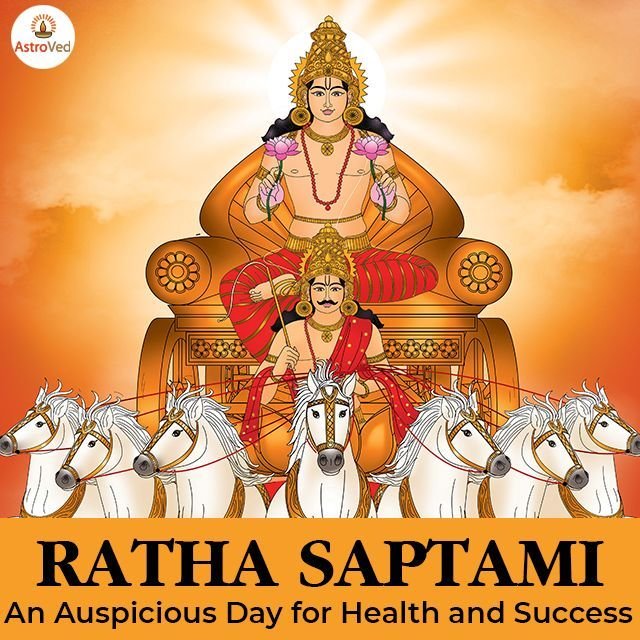
Ratha Saptami Ratha Saptami is a Hindu festival dedicated to Surya Dev (the Sun God), symbolizing his turning of the celestial chariot towards the northern hemisphere.It marks the change of seasons, spiritual awakening, and is celebrated with prayers, holy baths, and Surya Namaskar. Ratha Saptami, also known as Surya Jayanti, celebrates the Sun God’s symbolic turning of his seven-horse chariot, marking longer days and seasonal change.It signifies spiritual enlightenment, health, prosperity, and gratitude to Surya Dev for sustaining life on Earth. Rituals & Traditions of Ratha Saptami On Ratha Saptami, devotees begin the day with a holy bath before sunrise, placing seven Arka (Erukkam) leaves on their head, shoulders, and chest as a symbol of spiritual and physical purification. Facing the rising Sun, they offer water in a ritual called Surya Arghya, chant powerful hymns like the Aditya Hridayam and Gayatri Mantra, and perform Surya Namaskar to honor the life-giving energy of Surya Dev. Many observe a fast, dedicating the day to devotion, discipline, and inner cleansing. Special pujas are performed with Arka leaves, red flowers, turmeric, kumkum, and offerings of sesame, jaggery, and grains. Acts of charity and donation hold great importance, reflecting gratitude to the Sun, who sustains all life. Temples dedicated to Surya, like the Konark Sun Temple in Odisha and Suryanar Kovil in Tamil Nadu, hold grand celebrations, making Ratha Saptami a festival of light, health, and spiritual awakening. Ratha Saptami, also known as Surya Jayanti, is observed with deep devotion and symbolic rituals that represent the spiritual journey of light and knowledge. Devotees rise before dawn and take a holy bath facing the rising Sun, placing seven Arka (Erukkam/Arali) leaves on their head, shoulders, and chest to symbolize cleansing of the seven chakras and purification of sins from seven lifetimes. The ritual of offering water, known as Surya Arghya, is performed while chanting powerful mantras like Aditya Hridayam and Gayatri Mantra, inviting blessings of health, strength, and prosperity. Spiritual Importance & Cultural Significance Ratha Saptami holds profound spiritual importance, as it marks the symbolic turning of Surya Dev’s chariot towards the northern hemisphere, signifying the triumph of light over darkness and the arrival of longer, brighter days. It is believed that performing rituals on this day, like holy baths, Surya Namaskar, and chanting Surya mantras, purifies the mind and body, removes sins, and invigorates spiritual energy. The seven horses of the Sun’s chariot symbolize the seven colors of light and the seven days of the week, reflecting balance, harmony, and the cosmic order. Devotees also engage in charity and selfless acts, which are considered highly meritorious and a way to honor the life-sustaining energy of the Sun. Culturally, Ratha Saptami is celebrated across India with regional variations, highlighting unity in diversity. Temples dedicated to Surya Dev, such as Konark Sun Temple (Odisha), Suryanar Kovil (Tamil Nadu), and Modhera Sun Temple (Gujarat), host grand rituals, while households observe age-old customs of prayer, fasting, and offerings. The festival encourages people to reconnect with nature, express gratitude for health and prosperity, and strengthen family and community bonds. Through its vibrant rituals, devotional practices, and symbolic meaning, Ratha Saptami continues to inspire spiritual awareness, cultural pride, and reverence for the Sun as the eternal source of life and energy. Food & Sweets & Modern Celebrations On Ratha Saptami, traditional foods and sweets play an important role in the festivities. Devotees prepare simple, sattvic dishes like khichdi, pongal, rice, fruits, milk, and offerings made from sesame seeds and jaggery, symbolizing purity, warmth, and nourishment during winter. In some regions, Til (sesame) and Gur (jaggery) sweets are distributed among family and neighbors as a gesture of goodwill and harmony. Modern celebrations of Ratha Saptami blend spirituality with social and cultural activities. Temples dedicated to Surya Dev, such as the Konark Sun Temple in Odisha, Suryanar Kovil in Tamil Nadu, and Modhera Sun Temple in Gujarat, host grand rituals, processions, and special pujas. Many devotees engage in Surya Namaskar, community gatherings, and charity, while social media and local events spread awareness about the festival’s heritage. Kite flying, devotional music, and cultural programs have also become popular, making Ratha Saptami a vibrant celebration of light, health, and unity, connecting traditional values with contemporary lifestyles.

,

Ratha Saptami Read Post »

de528879efb685d7ecd7789dc81988b5
Hindu festivals

Makar Sankranti

Makar Sankranti (Sankramana, Pongal, Uttarayan) Makar Sankranti, also known as Sankramana, Pongal, or Uttarayan, is a Hindu harvest festival marking the Sun’s transition into Capricorn, symbolizing longer days.It celebrates prosperity, gratitude for harvests, and the start of auspicious times across India. Makar Sankranti is a joyous festival celebrating the Sun’s northward journey and the harvest season’s bounty.It is a time for thanksgiving, kite-flying, feasts, and festive traditions across India. Rituals & Traditions of Makar Sankranti Makar Sankranti is celebrated with great devotion and cultural joy across India, and its rituals carry deep spiritual meaning. People wake up early and take a holy dip in sacred rivers like the Ganga, Yamuna, and Godavari, as it is believed to cleanse sins and bring blessings. Devotees worship Surya Dev (the Sun God), offering water, prayers, and gratitude for life and prosperity. Charity and giving (daan) are highly emphasized, with people donating sesame seeds, jaggery, grains, clothes, and other essentials to the needy, symbolizing the virtue of sharing warmth and kindness in winter. A popular tradition is preparing sesame and jaggery sweets (tilgul, chikki, laddoos), which signify harmony and sweetness in relationships. In different regions, special customs are observed—Pongal is celebrated in Tamil Nadu by boiling the first rice of the harvest in milk, Lohri in Punjab with bonfires, music, and dance, and Uttarayan in Gujarat with vibrant kite flying, symbolizing freedom and joy. Many households cook khichdi as a simple, pure offering. Rituals also include decorating homes with rangoli, worshipping cows, and wearing traditional attire, making the festival a vibrant mix of devotion, gratitude, and celebration of nature’s bounty. Spiritual Importance & Cultural Significance Makar Sankranti is considered a highly auspicious day in Hindu tradition as it marks the Uttarayan, the Sun’s northward journey, which is believed to be a spiritually uplifting period. Scriptures like the Mahabharata state that Bhishma Pitamah chose this time to attain moksha, showing its spiritual significance for liberation and blessings. The day is ideal for charity (daan), meditation, and selfless acts, symbolizing purification of the soul and renewal of positive energy. Offering prayers to Surya Dev and taking holy dips in sacred rivers are believed to wash away sins, while sesame seeds and jaggery offered to deities represent warmth and the power to overcome negativity during winter. Food & Sweets & Modern Celebrations Makar Sankranti is known for its traditional delicacies made with sesame (til) and jaggery (gur), symbolizing warmth and togetherness during winter. Popular treats like tilgul laddoos, chikkis, pongal, khichdi, and gajak are prepared and shared among family and friends with the saying, “Tilgul ghya, god god bola” (accept this sweet and speak sweetly). In South India, the dish Pongal is prepared by boiling freshly harvested rice in milk, while in North India, khichdi is a ritual offering and a simple, sattvic meal. These foods are rich in nutrients, providing warmth and energy during the cold season, In modern times, Makar Sankranti has become both a spiritual and social celebration. Cities and villages come alive with kite festivals, especially in Gujarat, where the skies are filled with vibrant colors, symbolizing freedom and joy. Communities gather for bonfires, cultural programs, fairs, and dances, celebrating regional traditions. Social media and local events spread awareness about the festival’s heritage, while families continue age-old customs like exchanging sweets and gifts. The day also encourages acts of charity, community feasts, and environmental awareness,

,

Makar Sankranti Read Post »