Hari Om

Menu

vedas

77b62b386655cf65753fc3a79e86e35c
Patanjali Yoga

Samadhi Pada

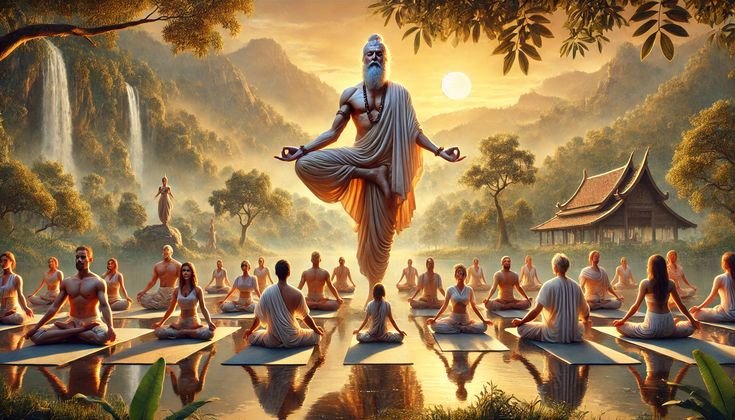
Samadhi Pada The Samadhi Pada is the first section of the Yoga Sutras of Patanjali. It contains 51 sutras (aphorisms) and sets the foundation for the entire philosophy of yoga. Patanjali begins by defining yoga as the stilling of the fluctuations of the mind — “Yogaś citta-vṛtti-nirodhaḥ.” When the mind becomes calm and still, the true Self, called Purusha, is revealed in its pure form. When the mind is disturbed by thoughts, desires, and distractions, this true nature remains hidden. Patanjali explains that steady practice (Abhyasa) and detachment (Vairagya) are the two key methods to control the mind. Practice means consistent effort to focus and calm the mind, while detachment means learning not to be affected by worldly pleasures or pains. Together, they help the practitioner progress toward a peaceful state of awareness. The chapter also describes different levels of Samadhi, or meditative absorption. In the beginning stages, meditation involves concentration on an object (like a sound, symbol, or idea). As one goes deeper, the distinction between the meditator and the object disappears. The highest form, Asamprajnata Samadhi, is beyond thought and form — it is a state of complete stillness and union with pure consciousness. Patanjali further warns that distractions like doubt, laziness, sensuality, and restlessness disturb the mind and cause suffering. He suggests remedies such as cultivating faith, enthusiasm, mindfulness, and devotion to God (Ishvara). Ishvara, in this context, represents a perfect, eternal consciousness — a model of spiritual purity that one can meditate upon. In essence, the Samadhi Pada teaches that through continuous practice, self-control, and devotion, the practitioner can transcend the noise of the mind and experience Samadhi — the union of the individual soul with the universal spirit. It sets the stage for the next chapters, which explain how to achieve this state through ethical conduct, discipline, and meditation. The Samadhi Pada is the first chapter of Patanjali’s Yoga Sutras and serves as the foundation of the entire philosophy of yoga. It begins with the famous statement “Yogaś citta-vṛtti-nirodhaḥ”, meaning “Yoga is the cessation of the fluctuations of the mind.” Patanjali explains that our ordinary consciousness is constantly disturbed by thoughts, emotions, and desires — these waves of the mind (vrittis) prevent us from seeing our true nature. When the mind becomes still, pure, and free from disturbance, we experience the Self (Purusha) in its original state of peace, clarity, and bliss. Yoga, therefore, is not merely physical posture or exercise; it is the science of mental control and spiritual realization. To reach this state of inner stillness, Patanjali prescribes two essential methods — Abhyasa and Vairagya. Abhyasa means steady, consistent practice done with patience and sincerity. It is the disciplined effort to remain calm, aware, and concentrated. Vairagya, on the other hand, means detachment — freedom from cravings, emotional entanglements, and the desire for results. Patanjali emphasizes that both must go together. Practice without detachment can lead to frustration, and detachment without practice leads to stagnation. Through both, the yogi slowly purifies the mind and gains mastery over its restlessness. Patanjali then explains the nature of Samadhi, the deepest state of meditation. In the initial stages, known as Samprajnata Samadhi, the mind is focused on a specific object — like a mantra, a symbol, or a divine idea. The practitioner experiences deep concentration but remains aware of the object of meditation. As the practice deepens, the mind transcends all objects and thoughts, entering Asamprajnata Samadhi, a state of complete silence and pure awareness where the separation between subject and object disappears. In this supreme state, the yogi realizes unity with the Infinite Consciousness — the experience of Kaivalya, or liberation. However, the path is not free from challenges. Patanjali lists nine obstacles that disturb the aspirant: illness, laziness, doubt, carelessness, apathy, sensuality, wrong understanding, instability, and lack of persistence. These give rise to sorrow, despair, and restlessness. To overcome them, Patanjali recommends cultivating faith, energy, mindfulness, and concentration, supported by devotion to Ishvara, the Supreme Being. Ishvara represents the perfect consciousness untouched by karma, suffering, or ignorance — the eternal witness and inner guide. Patanjali suggests meditating upon Om, the sacred sound symbolizing Ishvara, to purify and steady the mind. Through such devotion and surrender, the practitioner receives divine grace and insight. In conclusion, the Samadhi Pada reveals that the highest purpose of yoga is not physical perfection but spiritual liberation. When the mind becomes still and pure, it reflects the true Self like a clear, tranquil lake reflecting the sky. In that moment, the yogi experiences Samadhi — a state of perfect peace, joy, and unity with the Divine. Patanjali’s message is timeless: liberation is not something outside us; it lies within, waiting to be realized when the storm of thought subsides.

Samadhi Pada Read Post »

c247b8acadb1f7d9c59c8b0899fc83ee
Ashtavakra Gita

Ashtavakra Gita

Ashtavakra Gita The Ashtavakra Gita is a profound scripture that presents the essence of non-dualism (Advaita Vedanta). It is a dialogue between Sage Ashtavakra and King Janaka, focusing on the realization of the Self as pure consciousness, untouched by the body, mind, or worldly experiences. The text teaches that liberation is already inherent in every being and can be realized instantly through awareness. Sage Ashtavakra explains that the mind is the source of bondage. People create suffering by identifying with thoughts, emotions, desires, and the physical body. The seeker must observe the mind without attachment and recognize its impermanent and illusory nature. By doing so, one transcends the cycles of pain, fear, and delusion. Detachment, or non-attachment, is a recurring theme. The Gita emphasizes that pleasure, pain, success, failure, life, and death are all transient. By remaining equanimous and detached from external circumstances, the seeker attains inner peace. Liberation is not a reward of effort, but a recognition of one’s true nature. The text teaches that the world, including the body and external phenomena, is temporary and arises within consciousness. By realizing that the Self is beyond all dualities, the seeker no longer identifies with the ego, social roles, or material possessions. This understanding removes fear, sorrow, and the sense of limitation. Stories, analogies, and direct instructions throughout the dialogue illustrate how attachment and ignorance obscure the Self. Ashtavakra stresses that true knowledge is immediate; one does not attain it gradually through rituals or practices, but by direct insight into the nature of consciousness. Non-duality is the core teaching: there is no real separation between the individual and the ultimate reality. All experiences, joys, and sorrows arise and dissolve within consciousness. By perceiving the Self as ever-present, the seeker transcends the illusion of separation and attains freedom. The Gita emphasizes living in awareness rather than renouncing the world externally. Even while performing duties, one can remain unattached internally. This inner freedom allows the seeker to experience life fully without being bound by it. Finally, the Ashtavakra Gita affirms that liberation is natural and inherent. By abandoning identification with the body, mind, and ego, and abiding in pure awareness, the seeker experiences eternal bliss, unshakable peace, and the realization of the Self as infinite, complete, and ever-free. The Ashtavakra Gita is one of the most profound spiritual texts in the tradition of Advaita Vedanta. The Ashtavakra Gita presents a powerful dialogue between the wise sage Ashtavakra and the enlightened king Janaka. This sacred scripture focuses on the highest knowledge of the Self and the realization of ultimate truth. In the Ashtavakra Gita, King Janaka approaches Sage Ashtavakra with deep questions about liberation, knowledge, and detachment. The sage explains that true freedom is attained not through rituals or external practices but through the realization of one’s true nature. According to the teachings of the Ashtavakra Gita, the Self is pure consciousness—eternal, unchanging, and beyond the limitations of the body and mind. The central message of the Ashtavakra Gita is the philosophy of non-duality (Advaita). It teaches that the individual self and the universal reality are not separate. When a seeker realizes that the Self is pure awareness and not the body or mind, all suffering and illusion disappear. The Ashtavakra Gita therefore emphasizes direct knowledge and inner awakening rather than complex spiritual practices. Another important teaching of the Ashtavakra Gita is detachment from worldly attachments and mental disturbances. The text explains that the world is like a passing appearance within consciousness. By remaining established in the awareness of the Self, a person can experience peace, freedom, and bliss. Even today, the Ashtavakra Gita continues to inspire spiritual seekers around the world. Its simple yet powerful teachings guide individuals toward self-realization, inner peace, and the ultimate understanding of reality. The wisdom of the Ashtavakra Gita reminds us that liberation is not something to be achieved in the future but the recognition of the truth that already exists within us.

Ashtavakra Gita Read Post »

Rishi kashyapa devotional
The Yogavashistha

Mumukshu Prakarana

Mumukshu Prakarana The Mumukshu Prakarana focuses on the aspirant who yearns for liberation. It explores the mindset of the seeker and highlights the qualities necessary for spiritual practice, emphasizing that desire for freedom alone is insufficient; one must cultivate discipline, discernment, and perseverance. The text explains that the seeker must turn inward and observe the mind, understanding its restlessness, tendencies toward attachment, and illusions. By recognizing the workings of the mind, the aspirant learns to control desires, overcome distractions, and focus on self-realization. Sage Vashistha narrates stories and parables to illustrate the challenges faced by seekers. These tales show that obstacles and temptations are part of the spiritual journey, and patience, humility, and persistence are essential qualities for overcoming them. The Mumukshu Prakarana emphasizes that knowledge alone is not sufficient; it must be accompanied by ethical conduct, meditation, and self-discipline. A balanced approach of action and renunciation, combined with inner reflection, strengthens the seeker’s path to liberation. By cultivating these qualities, the aspirant gradually transcends the illusions of the mind and the world. Awareness, detachment, and steady practice lead to clarity of perception, enabling the seeker to distinguish the transient from the eternal. Ultimately, this volume teaches that liberation is attained through persistent inner effort, self-inquiry, and guidance from a wise teacher. The seeker who embodies these qualities moves steadily toward freedom from suffering and realizes the eternal bliss of the Self.

Mumukshu Prakarana Read Post »

rishi gautama
The Yogavashistha

Nirvana Prakarana

Nirvana Prakarana The Nirvana Prakarana focuses on the ultimate goal of the spiritual journey: liberation or moksha. It explains that true freedom comes from realizing the Self, which is eternal, unchanging, and beyond all dualities. While the previous volumes prepared the seeker through dispassion, self-inquiry, and understanding of the mind, this volume presents the culmination of these teachings. Sage Vashistha emphasizes that liberation is not attained through external actions, rituals, or worldly achievements, but through direct experience of the Self. The mind must be quieted, free from desires and attachments, to perceive reality as it truly is. Through meditation, discernment, and detachment, the seeker transcends the illusions of the world. The text includes stories, dialogues, and parables that illustrate the principles of non-duality and the nature of ultimate reality. These narratives show how realized sages remain unaffected by pleasure, pain, life, and death, demonstrating that liberation is a state of inner freedom and unshakable peace. The Nirvana Prakarana teaches that the universe, though appearing real, is a transient manifestation of consciousness. By understanding this, the seeker realizes that all experiences, including suffering and joy, are temporary, and the true Self remains untouched. Dispassion, self-awareness, and meditation converge in this final volume, guiding the aspirant to recognize that the Self is beyond the mind, the body, and the world. Liberation is thus the realization of one’s own true nature as eternal and infinite consciousness. Ultimately, the Nirvana Prakarana conveys that the seeker who internalizes these teachings attains freedom from all suffering, experiences unending bliss, and abides in the natural state of non-dual awareness, which is the essence of moksha.

Nirvana Prakarana Read Post »

Rishi Vashistha ji devotional 1
The Yogavashistha

Utpatti Sthiti Laya Prakarana

Utpatti Sthiti Laya Prakarana The Utpatti-Sthiti-Laya Prakarana explores the nature of the universe and the mind, focusing on creation, maintenance, and dissolution. It examines how the world and all beings arise from the mind and consciousness, emphasizing that the universe is ultimately a projection of thought. The text teaches that understanding this process is essential for the seeker of truth. This volume explains how the mind creates illusions and attachments, giving rise to desires, fears, and suffering. By observing the patterns of the mind and recognizing its tendencies, the seeker can begin to transcend its limitations. The stories and parables illustrate how mistaken perceptions lead to unnecessary suffering and how awareness can dissolve these illusions. The creation phase (Utpatti) is described as the arising of the world from consciousness, the maintenance phase (Sthiti) as the continuation and support of life, and the dissolution phase (Laya) as the eventual dissolution of forms back into the fundamental reality. Through these stages, the text emphasizes the impermanent and transient nature of all phenomena. Sage Vashistha narrates numerous examples and allegories to show how the mind misinterprets reality, clings to temporary pleasures, and becomes entangled in cycles of birth, suffering, and death. These stories guide the seeker to understand the workings of the mind and the importance of detachment and discernment. By observing the rise, sustenance, and dissolution of thoughts and experiences, the seeker learns to remain detached from worldly phenomena. Meditation, self-inquiry, and reflection on the transient nature of creation allow the aspirant to cultivate inner stability and clarity of perception. Ultimately, the Utpatti-Sthiti-Laya Prakarana teaches that liberation comes from understanding the mind’s role in creating the universe, seeing through its illusions, and realizing the Self as the unchanging witness. By transcending attachment and illusion, the seeker attains freedom from suffering and experiences eternal peace.

Utpatti Sthiti Laya Prakarana Read Post »

Jamadagni Rishis Spiritual Significance Understanding the Bhrigu Lineage Legacy
The Yogavashistha

Vairagya Prakarana

Vairagya Prakarana The Vairagya Prakarana begins by explaining the impermanent nature of the world. It emphasizes that everything we see—wealth, power, relationships, and pleasures—is temporary and constantly changing. True understanding comes when the seeker realizes that these external attachments cannot provide lasting happiness. Suffering is identified as arising from the mind, desires, and ignorance. People cling to worldly things and chase pleasures, unaware that attachment itself generates fear, anxiety, and sorrow. Recognizing this truth is the first step toward detachment. Dispassion, or Vairagya, is introduced as the essential practice for any spiritual aspirant. It is the conscious renunciation of attachment to transient things, allowing the mind to stabilize and focus on self-inquiry and meditation. Without dispassion, true knowledge of the Self cannot be attained. The text contains numerous stories and parables narrated by Sage Vashistha. These illustrate the futility of worldly success, sensual pleasures, and material achievements. Kings, merchants, and common people alike are shown to experience suffering despite external accomplishments, highlighting the importance of inner renunciation. By cultivating dispassion, the seeker gradually prepares for the path of knowledge and liberation. The mind becomes free from constant desires and attachments, enabling one to understand the reality beyond the illusions of the world. Meditation, reflection, and detachment work together to reveal the nature of the Self. The ultimate teaching of this volume is that true liberation and lasting bliss can only be attained by turning inward and realizing the Self. Material possessions and external pleasures are fleeting, but knowledge of one’s true nature brings freedom from suffering and eternal peace.

Vairagya Prakarana Read Post »

c07f349b8a7c58df3b49287ef5a85560
Bhrama Sutras

Phala

Phala The Phala Adhyaya, the fourth and final chapter of the Brahma Sutras, explains the results and fruits that a seeker attains upon the realization of Brahman, the Supreme Reality. The word Phala means “fruit” or “outcome.” After the previous chapters have established the unity of the Vedic teachings (Samanvaya), resolved contradictions (Avirodha), and outlined the means for spiritual practice (Sādhana), the Phala Adhyaya reveals the ultimate benefits and transformative effects of attaining knowledge of Brahman. This chapter emphasizes that the highest fruit is liberation (moksha), the complete freedom from the cycle of birth and death (samsara). Realization of Brahman leads to the destruction of ignorance (avidyā), which is the root cause of suffering, attachment, and delusion. When one recognizes the true Self (Atman) as identical with Brahman, all distinctions between the individual and the Supreme dissolve. The seeker experiences eternal bliss (ananda), infinite knowledge, and unchanging peace — qualities that transcend the fleeting joys and sorrows of the material world. The Phala Adhyaya also explains the transformative effects on the aspirant’s life. One who attains Brahma Jnana becomes free from fear, attachment, and ego, seeing all beings as manifestations of the same ultimate reality. There is no longer a sense of duality between “self” and “other,” or “subject” and “object.” The aspirant develops equanimity, compassion, and unwavering wisdom, understanding that the universe itself is a reflection of Brahman. Ordinary actions continue, but they no longer bind the soul, because the enlightened one acts without selfish desires, motivated by divine knowledge and selfless duty. Sage Bādarāyaṇa also emphasizes that the highest experience of Brahman is beyond words and concepts. While scriptures can guide and inspire, the true fruit is realized only through direct experience, where the mind merges with the infinite, and distinctions of time, space, and individuality vanish. The chapter makes it clear that all spiritual practices, rituals, and intellectual study ultimately aim at this direct realization, which grants eternal freedom and supreme bliss. In essence, the Phala Adhyaya completes the philosophical and practical journey of the Brahma Sutras. It shows that the pursuit of Vedantic knowledge is not merely theoretical, but leads to a radical transformation of consciousness. The fruit of realizing Brahman is liberation from ignorance, eternal bliss, unity with the Supreme, and freedom from all suffering. This final chapter inspires the seeker to persevere in study, reflection, and meditation, assuring that the highest purpose of life — self-realization and union with Brahman — is both attainable and supremely rewarding.

Phala Read Post »

25a3b92f12d4ad05075da7cf214e6939
Bhrama Sutras

Sadhana

Sādhana The Sādhana Adhyaya, the third chapter of the Brahma Sutras, focuses on the practical means by which a seeker can attain realization of Brahman, the Supreme Reality. The word Sādhana means “spiritual practice” or “discipline.” While the first chapter (Samanvaya) established the unity of the Upanishadic teachings and the second (Avirodha) resolved apparent contradictions, this chapter provides guidance on the methods and practices through which one can overcome ignorance (avidyā) and experience the truth of Brahman directly. This chapter emphasizes that knowledge alone (jnana) is the ultimate means to liberation (moksha), but it also recognizes that the human mind must be prepared through disciplined practices to receive and realize this knowledge. These preparatory practices include ethical conduct (dharma), self-control (yama and niyama), meditation (dhyana), concentration (samadhi), and discrimination between the real and the unreal (viveka). Together, they purify the mind, reduce attachment to the transient world, and awaken the intellect to discern the eternal Self. Sage Bādarāyaṇa explains that the highest knowledge is self-knowledge — realizing the non-dual nature of Atman (the individual Self) and Brahman (the Supreme Self). While ritualistic actions (karma) can yield temporary benefits, they are considered lower means because they do not directly lead to liberation. Instead, a combination of hearing the scriptures (sravana), reflecting deeply on their meaning (manana), and meditating to internalize the truth (nididhyasana) forms the essential Sādhana for attaining Brahma Jnana. The chapter also addresses the role of grace and guidance in spiritual practice. It suggests that a qualified teacher (guru) and association with wise and realized beings can greatly assist the seeker in understanding subtle Vedantic truths and avoiding errors in reasoning or practice. By following the prescribed Sādhana, the aspirant gradually transcends ego, desires, and attachments, attaining a state of inner stillness, clarity, and direct experience of the Self as Brahman. In essence, the Sādhana Adhyaya bridges the gap between philosophical knowledge and spiritual realization. It teaches that liberation is not merely intellectual understanding but a living experience achieved through disciplined practice, ethical living, meditation, and surrender. The chapter underscores that consistent Sādhana transforms the mind, purifies the heart, and leads the seeker to the ultimate goal — union with the infinite, eternal, and blissful Brahman..

Sadhana Read Post »

12b26298372f9be343993b5212a0c202
Bhrama Sutras

Avirodha

Avirodha The Avirodha Adhyaya, the second chapter of the Brahma Sutras, deals with resolving all apparent contradictions or conflicts that may arise in understanding the nature of Brahman and its relationship to the universe, as described in the Upanishads. The word Avirodha means “non-contradiction” or “absence of opposition.” After the first chapter (Samanvaya) establishes that all the Vedic texts consistently teach the knowledge of Brahman as the ultimate truth, this second chapter aims to defend that conclusion by answering objections from other philosophical systems and clarifying doubts that arise within Vedantic thought itself. In ancient India, there were many schools of philosophy such as Sāṃkhya, Yoga, Nyāya, Vaiśeṣika, Mīmāṃsā, and the Buddhist and Jain traditions, each presenting their own theories about creation, matter, the soul, and the ultimate cause of existence. The Avirodha Adhyaya systematically examines these diverse viewpoints and demonstrates that they either contradict themselves or fail to explain the nature of reality fully. Sage Bādarāyaṇa establishes that only Brahman, as described in the Upanishads, can be logically accepted as the true and sufficient cause of the universe — both its material cause (from which the world arises) and its efficient cause (the conscious intelligence that creates and governs it). This chapter emphasizes that Brahman is free from all defects and limitations, unlike the insentient material principles proposed by other systems such as Prakriti (in Sāṃkhya) or atoms (in Vaiśeṣika). Brahman, being pure consciousness, cannot be inert or dependent; rather, it is self-luminous and eternal, and all creation is merely its expression or manifestation. The apparent multiplicity in the world does not contradict the non-dual nature of Brahman — it arises due to Māyā, the power of illusion that projects names and forms upon the one reality. The Avirodha Adhyaya is thus deeply philosophical and analytical. It shows that the Vedantic worldview does not oppose logic, reason, or experience; instead, it harmonizes them. By refuting false doctrines, this chapter clears away intellectual confusion and strengthens the seeker’s conviction that the knowledge of Brahman alone explains the origin, sustenance, and dissolution of the universe. It also teaches that the scriptural declarations of the Upanishads do not contradict each other or reason — instead, they complement reason and transcend its limitations, guiding the human intellect toward ultimate truth. In essence, the Avirodha Adhyaya stands as the philosophical defense of Vedanta. It protects the doctrine of Samanvaya (harmony of the Vedas) from opposing interpretations, ensuring that the seeker’s understanding of Brahman remains pure, doubt-free, and logically sound. The chapter concludes that all contradictions vanish when viewed from the highest standpoint — the realization that Brahman alone is real, infinite, and self-consistent, and everything else is but its reflection through the veil of ignorance (avidyā)., transcends ignorance (avidya), and realizes their true identity as the eternal, infinite, blissful Self — the Brahman that is without beginning, without end, and beyond all duality.

Avirodha Read Post »

82d7d1b9a4964335efc509f84d829dba
Bhrama Sutras

Samanvaya

Samanvaya The Samanvaya Adhyaya, the first chapter of the Brahma Sutras, is devoted to establishing the unity and consistency of the teachings of the Upanishads. The word Samanvaya means “harmony” or “reconciliation.” In this chapter, Sage Bādarāyaṇa (Vyāsa) shows that although the Upanishads speak of the Supreme Reality using different names, symbols, and descriptions — such as Atman (Self), Brahman (Absolute), Purusha (Cosmic Being), or Paramatman (Supreme Self) — all of them ultimately refer to one and the same reality, Brahman, the infinite, eternal source of all creation. This chapter answers a fundamental question: What is the central theme of the Upanishads? Bādarāyaṇa explains that the central purpose of all Vedantic texts is to reveal the knowledge of Brahman, the supreme cause and substratum of the universe. Just as rivers, though taking different courses, all merge into the same ocean, the various teachings of the Upanishads converge in the single doctrine that Brahman is the origin, sustenance, and end of everything. The Samanvaya Adhyaya also refutes the idea that the Vedas teach multiple or conflicting truths. Some parts of the scriptures deal with rituals (karma-kanda), while others deal with knowledge (jnana-kanda). Vyāsa clarifies that rituals are preparatory disciplines meant to purify the mind, but the highest knowledge — the realization of Brahman — is the ultimate goal of the Vedas. By bringing together apparently diverse statements, he demonstrates that there is no contradiction among the Vedic texts; instead, they are harmoniously united in purpose and meaning. This chapter thus forms the foundation of Vedanta philosophy. It establishes that Brahman alone is the ultimate reality, the cause of the world, and the true Self within all beings. Knowing Brahman destroys ignorance (avidyā), which is the root of bondage, and leads to liberation (moksha), the realization of one’s oneness with the Infinite. Through logical reasoning and scriptural analysis, the Samanvaya Adhyaya confirms that the Upanishads consistently teach the non-dual truth of Brahman, and all other teachings are meant to lead the seeker toward this supreme realization. Across the vast body of Vedic literature, we find many expressions describing the Ultimate — such as Atman (Self), Brahman (Absolute Reality), Purusha (Cosmic Being), Paramatman (Supreme Self), or Ishwara (Lord). These different terms and descriptions can easily create confusion, leading one to think that the scriptures speak of multiple realities or gods. However, in the Samanvaya Adhyaya, Vyāsa proves through systematic reasoning that all these expressions point to the same single truth, viewed from different angles. Just as the same sun appears different when seen through clouds, water, or crystal, the one Brahman is revealed in many forms and names depending on the spiritual context and the level of understanding of the seeker. This chapter also deals with the interpretation of the Vedas. It clarifies that while some parts of the Vedas (known as Karma Kanda) deal with rituals, sacrifices, and duties that help in purifying the mind, the latter portion — the Jnana Kanda or Upanishads — aim at imparting the knowledge of Brahman, which alone leads to liberation (moksha). Vyāsa shows that the ultimate goal of all Vedic teaching is Brahma Jnana (knowledge of the Absolute), not mere ritual or material attainment. Rituals may purify and prepare the seeker, but realization of Brahman alone grants freedom from the cycle of birth and death (samsara). Throughout this chapter, Bādarāyaṇa quotes various Upanishadic passages to demonstrate their unity of purpose. Whether it is “Tat Tvam Asi” (Thou art That) from the Chandogya Upanishad, “Aham Brahmasmi” (I am Brahman) from the Brihadaranyaka Upanishad, or “Sarvam Khalvidam Brahma” (All this is indeed Brahman) from the Chandogya Upanishad, all these declarations convey one and the same truth — the oneness of the individual Self (Atman) and the Supreme Self (Brahman). The Samanvaya Adhyaya also responds to and refutes opposing philosophical views of that time — particularly those of Sankhya, Nyaya, and Vaisheshika schools — which proposed that the world originates from material causes like Prakriti or atoms. Vyāsa firmly establishes that Brahman alone is both the material and efficient cause of the universe — meaning that the entire cosmos arises from Brahman, is sustained by Brahman, and ultimately dissolves back into Brahman. In essence, the Samanvaya Adhyaya is the chapter of spiritual synthesis. It reveals that the diversity of teachings in the Vedas and Upanishads is not contradiction but complementary expression of one truth. It invites the seeker to rise beyond superficial differences in form, name, and doctrine to grasp the underlying unity of existence — the truth that all is Brahman. Through this realization, the seeker attains the highest knowledge, transcends ignorance (avidya), and realizes their true identity as the eternal, infinite, blissful Self — the Brahman that is without beginning, without end, and beyond all duality.

Samanvaya Read Post »