













Hari Om

Menu

Uncategorized

The Divine Life Society Rishikesh
Jnana Yoga, Swami Sivananda, Uncategorized

The Yoga of Wisdom

The Yoga of Wisdom by Swami Sivananda The body is composed of the five elements and is unintelligent. It is made up of skin, flesh, blood and bones. It is produced by time, action and the attributes of Sattva, Rajas and Tamas. The Atman is neither born, nor does it die, nor does it stop or go anywhere. It is neither male nor female nor neuter. It is all-pervading and everlasting. It is one without a second, unblemished like ether, eternal, pure and perfect Knowledge itself. Sorrow has the body as its cause. The body has Karma for its cause. Action of Karma proceeds from man having the notion of ‘I’ in the body. The notion of ‘I’ which is unintelligent is beginningless, having Avidya for its root cause. Egoism is always associating with the reflection of Chit like a piece of iron heated in fire. Thus the body becomes independent with the Ahamkara and becomes possessed of intelligence. I am the body this notion arises by force of the connection between the Self and Ahamkara. Worldly life which is the giver of pleasure and pain has for its root this notion of ‘I’ in the body. On account of this identification of the Atman, which is without modification, with the Ahamkara, with the notion of I am the body, I am the doer of action, the individual soul always acts and is forcibly bound by the results. Possessed of virtue and vice he wanders up and down. I have surely done much good work through sacrifices, gifts and the rest, and shall therefore go to heaven and enjoy happiness there, thus he thinks. This is a false notion. He enjoys in heaven the celestial happiness for some time, and falls down as soon as the results of his meritorious deeds are exhausted. So long as there is connection of the Ahamkara or the principle of egoism and the rest with the body and the sense-organs, there are pleasure and pain and transmigratory existence for the self or the knower. Ahamkara is the notion of ‘I’ and ‘mine’ in the gross and subtle bodies. The ignorant are attached to the body. They cannot rise above the sense of ‘I’ and ‘mine’ in the gross body. The discriminating few rise above it through Knowledge. The Samsara or cause of worldly life exists so long as there is any thought of object of sense. When one awakens from the sleep of ignorance taking the unreal for the real, then it ceases to assert itself. The Samsara which has been erroneously imposed on the Self does not go of itself for one, who like a person in a dream cherishes objects of sense. Non-existence appears to exist through the force of beginningless Avidya or ignorance. Man is agitated through attachment and aversion. The sense of ‘I’ is the effect of ignorance. The mind is verily the world. The mind is bondage. The superimposition or identification of the mind with the Atman is the cause of bondage. Just as a piece of crystal which is in fact colourless takes the red or other colour from the object with which it is brought into contact, so also is the world-process or Samsara due to the contact of the Self with the intellect or the organs of sense. The mind cannot of itself cognise without a cognising Self behind it. The Self on the other hand, making the objects created by the mind as its own, takes the form of the latter like the piece of crystal when it is brought into contact with coloured objects, and thus becomes bound by the attributes of those objects and wanders about in Samsara as if helpless and powerless. Having first created the attributes of attachment and aversion to actions of diverse kinds, the mind takes in various forms, such as white, red and black (the good, the active and the passive). In this way, the Jiva or the individual soul wanders through the influence of Karma till the period of universal dissolution. At the time of universal dissolution, the Self survives with Vasanas taking impressions of past Karmas attracted under the influence of beginningless Avidya. When there is universal dissolution, there is no destruction of the individual soul. He remains in a latent form in the Mula Prakriti or Avyakta, which is the condition of the equilibrium of all the three Gunas. At the time of creation, he is born again together with the Vasanas born of the mind. In this way he is forced to go round and round like the wheel for drawing water. When, through special merit acquired by good Karmas in the past, he gets the company of pious devotees, his mind becomes directed towards the Lord. Then is produced in him faith, which is so difficult of attainment, in hearing stories relating to the Lord. Then comes to him without any trouble Knowledge of the Self. Then through the grace of the preceptor, as well as Knowledge of the meaning of the great sentences, Tat Tvam Asi Thou art That, and the like, and his own experience, he forthwith realises the distinction between the body, the organs of sense, egoism and the pure Atman and knows himself to be the intelligent and the blissful Self who is one without a second and becomes thenceforth released. Know yourself, therefore, to be separate from the three bodies and beyond Prakriti. Relinquish all sense of ‘I’ in the body and become a Sage of Wisdom. Realise your own Self to be free from the conditions of waking, dream and deep sleep, as Truth, Knowledge and Bliss Absolute.

The Yoga of Wisdom Read Post »

krishnna44
Uncategorized

Mukam Karoti Vachalam

Mukam Karoti Vachalam मूकं करोति वाचालं पंगुं लंघयते गिरि ।यत् कृपा तमहं वंदे परमानंद माधवम् ॥ mūkaṃ karoti vācālaṃ paṃguṃ laṃghayate giri .yat kṛpā tamahaṃ vaṃde paramānaṃda mādhavam .. I salute that supreme bliss, Madhava, by whose mercy the dumb become most eloquent and the lame are able to jump over the mountains. Description Prayer to Krishna

Mukam Karoti Vachalam Read Post »

krishna10
Uncategorized

Kararavindena Padaravindam

Kararavindena Padaravindam करारविंदेन पदारविन्दं मुखारविंदे विनिवेशयंतम् ।वटस्य पत्रस्य पुटेशयानं बालं मुकुंदं मनसा स्मरामि ॥ karāraviṃdena padāravindaṃ mukhāraviṃde viniveśayaṃtam .vaṭasya patrasya puṭeśayānaṃ bālaṃ mukuṃdaṃ manasā smarāmi .. With the lotus-like hand, placing the lotus-like toes, in the lotus-like mouth, reclining on the banyan leaf – that young Mukunda, I meditate upon Description Prayer to Krishna

Kararavindena Padaravindam Read Post »

c99e9baf71df93b5e7335f5944bc42cb
Uncategorized

Shakradaya Stuti

Shakradaya Stuti शक्रादयः सुरगणा निहतेऽतिवीर्येतस्मिन्दुरात्मनि सुरारिबले च देव्या ।तां तुष्टुवुः प्रणतिनम्रशिरोधरंसावाग्भिः प्रहर्षपुलकोद्गमचारुदेहाः ॥१॥ ṣakra-[ā]adayah Sura-ġannā ṇihate-[ā]ti-Vīryeṭasmin-ḍurātmani Sura-āri-Bale Ca ḍevyā |ṭām ṭussttuvuh Prannati-ṇamra-ṣirodharamsāVāgbhih Praharssa-Pulako[a-ū]dgama-Cāru-ḍehāh ||1|| Devas eulogize the devi with ecstatic devotion: Shakra (Indra) and other suras (rejoiced), when Mahishasura of great strength and his army who were the enemies of the devas was killed by devi, the devas eulogized her, bowing their heads and shoulders in reverence, they eulogized her by their speech, as the hairs on their beautiful bodies stood on their ends due to joy mixed with awe and reverence. देव्या यया ततमिदं जगदात्मशक्त्यानिःशेषदेवगणशक्तिसमूहमूर्त्या ।तामम्बिकामखिलदेवमहर्षिपूज्यांभक्त्या नताः स्म विदधातु शुभानि सा नः ॥२॥ ḍevyā ẏayā ṭatam-īdam Jagad-āatma-ṣaktyāṇihśessa-ḍeva-ġanna-ṣakti-Samūha-ṃūrtyā |ṭām-āmbikām-ākhila-ḍeva-ṃaharssi-PūjyāmBhaktyā ṇatāh Sma Vidadhātu ṣubhāni Sā ṇah ||2|| The universe is pervaded by the power of the devi: by that devi, by whose power is pervaded this universe, by whose power is manifested the powers of all the devas, that Ambika who is worthy of worship by all the devas and maharshis, we ever bow down to her with devotion; may she bestow us with all auspiciousness. यस्याः प्रभावमतुलं भगवाननन्तोब्रह्मा हरस्च न हि वक्तुमलं बलं च ।सा चण्डिकाखिलजगत्परिपालनायनाशाय चाशुभभयस्य मतिं करोतु ॥३॥ ẏasyāh Prabhāvam-ātulam Bhagavān-ānantoBrahmā ḥaras-Ca ṇa ḥi Vaktum-ālam Balam Ca |Sā Cannddikā-[ā]khila-Jagat-Paripālanāyaṇāśāya Ca-āśubha-Bhayasya ṃatim k͟harotu ||3|| The incomparable greatness and strength of devi cannot be described: whose incomparable greatness, even bhagavan Ananta (Vishnu), Brahma and Hara (Shiva) are not able to describe; and similarly whose incomparable strength cannot be limited by description, may that Chandika for protecting and sustaining the entire world, be inclined towards destroying the fear of evil from our minds i.e. destroying the evil forces which are present. या श्रीः स्वयं सुकृतिनां भवनेष्वलक्ष्मीःपापात्मनां कृतधियां हृदयेषु बुद्धिः ।श्रद्धा सतां कुलजनप्रभवस्य ल्ज्जातां त्वां नताः स्म परिपालय देवि विश्वम् ॥४॥ ẏā ṣrīh Svayam Sukrtinām Bhavanessv[u]-ālakssmīhPāpātmanām k͟hrtadhiyām ḥrdayessu Buddhih |ṣraddhā Satām k͟hulajana-Prabhavasya l̤ajjāṭām ṭvām ṇatāh Sma Paripālaya ḍevi Viśvam ||4|| Devi is good-fortune of the virtuous, ill-fortune of the evil-minded, as well as intelligence, shraddha and modesty: She who herself is great-fortune in the dwellings of the virtuous, and similarly ill-fortune in the dwellings of the evil-minded; she who herself is the intelligence arising within the hearts of those of steady mind, and shraddha arising within the hearts of the good (i.e. saintly); and she who herself is the modesty (shrinking away from stooping low) of the distinguished noble-hearted ones, to her we ever bow down in reverence; O devi, please protect and sustain this world by your power. किं वर्णयाम तव रूपमचिन्त्यमेतत्किञ्चातिवीर्यमसुरक्षयकारि भूरि ।किं चाहवेषु चरितानि तवाति यानिसर्वेषु देव्यसुरदेवगणादिकेषु ॥५॥ k͟him Varnnayāma ṭava ṟūpam-ācintyam-ĕtatk͟hin.-Ca-āti-Vīryam-āsura-k͟hssaya-k͟hāri Bhūri |k͟him Ca-āhavessu Caritāni ṭava-āti ẏāniSarvessu ḍevy-āsura-ḍeva-ġanna-[ā]adik-ĕssu ||5|| The inconceivable form, power and deeds of the devi cannot be described: O devi how can we describe your inconceivable beauty (this which we witnessed)? and similarly, how can we describe your great power which diminishes (the power of) the numerous asuras (in the battle)? and again, how can we describe your great deeds in the battle, which O devi, (shine) among all the hosts of devas, asuras and others? हेतुः समस्तजगतां त्रिगुणापि दोषैर्_न ज्ञायसे हरिहरादिभिरप्यपारा ।सर्वाश्रयाखिलमिदं जगदंशभूतम्_अव्याकृता हि परमा प्रकृतिस्त्वमाद्या ॥६॥ ḥetuh Samasta-Jagatām ṭri-ġunna-āpi ḍossair_ṇa Jnyāyase ḥari-ḥara-[ā]adibhir-āpy[i]-āpārā |Sarva-[ā]aśraya-ākhilam-īdam Jagad-āmśa-Bhūtam_āvyākrtā ḥi Paramā Prakrtis-ṭvam-āadyā ||6|| Devi is the changeless cause of all the worlds but is not contaminated by the defects of the gunas: O devi you are the cause of all the worlds, but even then not contaminated by the defects (doshas) of the three gunas (by which the worlds are created), your boundless nature is not known even to Hari, Hara and others, you are the support of all, and this whole universe is produced from your part, but you remain changeless as the substratum consciousness; you who are the supreme primordial prakriti. यस्याः समस्तसुरता समुदीरणेनतृप्तिं प्रयाति सकलेषु मखेषु देवि ।स्वाहासि वै पितृगणस्य च तृप्तिहेतुर्_उच्चार्यसे त्वमत एव जनैः स्वधा च ॥७॥ ẏasyāh Samasta-Suratā Samudīrannenaṭrptim Prayāti Sakalessu ṃakhessu ḍevi |Svāhā-[ā]si Vai Pitr-ġannasya Ca ṭrptihetur_ūccāryase ṭvam-āta ĕva Janaih Svadhā Ca ||7|| Devi is the swaha and devi is the swadha of the sacrifice: O devi by uttering which, all the suras (devas) Obtain satisfaction in all the yagnas (sacrifices); O devi, you indeed are that swaha; and for the satisfaction of the pitriganas (manes) (that which) is uttered by the people (in the yagnas), you indeed are also that swadha. या मुक्तिहेतुरविचिन्त्यमहाव्रता त्वंअभ्यस्यसे सुनियतेन्द्रियतत्त्वसारैः ।मोक्षार्थिभिर्मुनिभिरस्तसमस्तदोषैर्_विद्यासि सा भगवती परमा हि देवि ॥८॥ ẏā ṃukti-ḥetur-āvicintya-ṃahā-Vratā ṭvamābhyasyase Suniyate[a-ī]ndriya-ṭattva-Sāraih |ṃokssa-ārthibhir-ṃunibhir-āsta-Samasta-ḍossair_Vidyā-[ā]si Sā Bhagavatī Paramā ḥi ḍevi ||8|| Devi is the great penance for the cause of liberation: O devi you are that inconceivable great penance for the cause of liberation (moksha), which is practiced with well-controlled sense organs and meditation on the essence of reality (i.e. consciousness) by the great munis with longing for liberation (moksha); whose all blemishes have vanished, you are that supreme vidya, (you are) that Bhagavati, O devi (who takes one towards liberation). शब्दात्मिका सुविमलर्ग्यजुषां निधानम्उद्गीथरम्यपदपाठवतां च साम्नाम् ।देवी त्रयी भगवती भवभावनायवार्ता च सर्वजगतां परमार्तिहन्त्री ॥९॥ ṣabda-[ā]atmikā Suvimala-ṟg-ẏajussām ṇidhānamūdgītha-ṟamya-Pada-Pātthavatām Ca Sāmnām |ḍevī ṭrayī Bhagavatī Bhava-BhāvanāyaVārtā Ca Sarva-Jagatām Parama-[ā]arti-ḥantrī ||9|| Devi is the sabda Brahman behind the rig, yajur and sama recitals of the vedas: O devi you are the shabda brahman manifesting through the treasure of the very pure rig and yajur mantras, and through the delightful udgitha of the sama recitals, O devi, you are the embodiment of the three vedas; and O Bhagavati, your thought of the world is the supreme message (Of sabda brahman), (continuously being recited) underlying all the worlds, which is the supreme destroyer of all inner distress (when comprehended). मेधासि देवि विदिताखिलशास्त्रसारादुर्गासि दुर्गभवसागरनौरसङ्गा ।श्रीः कैटभारिहृदयैककृताधिवासागौरि त्वमेव शशिमौलिकृतप्रतिष्ठा ॥१०॥ ṃedhā-[ā]si ḍevi Vidita-ākhila-ṣāstra-Sārāḍurgāsi ḍurgabhavasāgaranaurasanggā |ṣrīh k͟haittabha-āri-ḥrdayai[a-ĕ]ka-k͟hrta-ādhivāsāġauri ṭvam-ĕva ṣaśi-ṃauli-k͟hrta-Pratisstthā ||10|| Devi is the intelligence by which the essence of all the scriptures are comprehended: O devi you are the intelligence (medha) by which the essence of all the scriptures (sastras) are comprehended, you are Durga which is the boat which carries one beyond the difficult ocean of worldly attachments to the ever detached state (Of bliss-consciousness), you are Sri, who alone made her abode in the heart

Shakradaya Stuti Read Post »

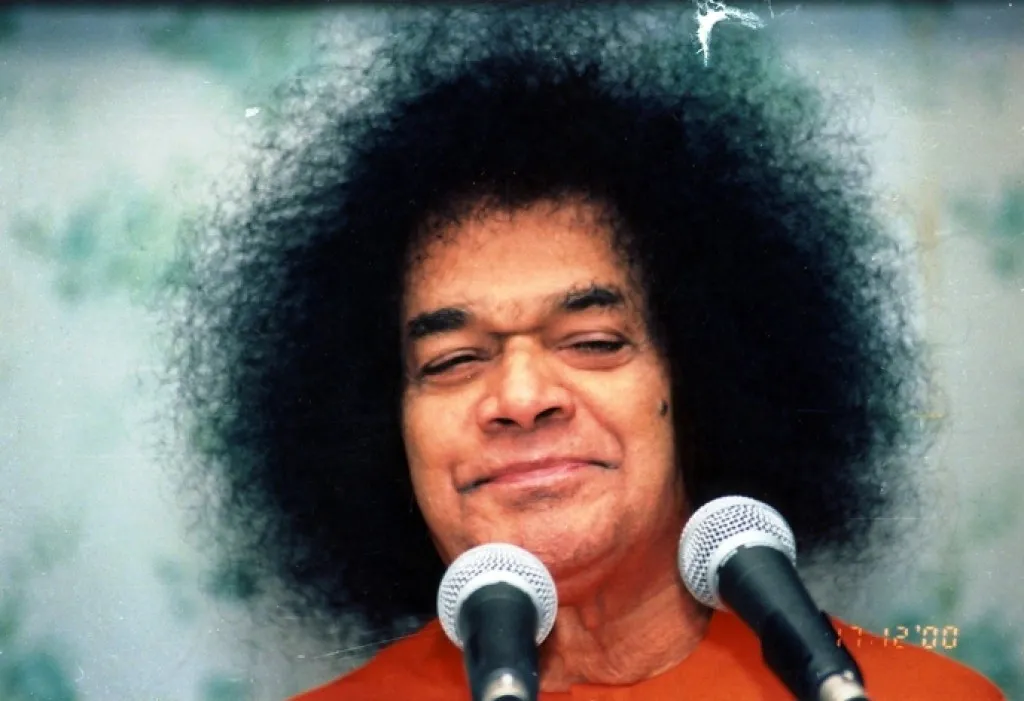
Sathya Sai Baba divine grace photo.
Uncategorized

Shivaraathri

Shivaraathri Shivaraathri is a very auspicious day. It falls on the fourteenth day of the lunar fortnight, when the moon is waning and the sun lies in the sign of Aquarius. The festival relates to the moon, rather than the sun—hence the name Shivaraathri (the night of Shiva). Unlike other nights, this one is a time of consecration, dedication, and illumination. The mind is intimately associated with the moon. Chandhra (the deity of the moon) is also the presiding deity of the mind. He loses one sixteenth of his brilliance each day following the full moon, continuing to wane until, on this night, he is left with only one-sixteenth of his power. The waned moon may be taken to stand for the mind, after its vagaries and waywardness have been conquered by sadhana (spiritual discipline). On the night of Shivaraathri, only a tiny portion of the mind remains to be conquered. That can be accomplished by keeping vigil and dwelling on the glory of God. The vigil prescribed is symbolic of the eternal vigil one has to observe. The rite of fasting is symbolic of divesting the senses of the pleasures they crave. The all-night bhajan (devotional singing) is significant of the life-long consciousness of the divine presence that every one should cultivate. Since the rites and vows laid down for Shivaraathri are absent on other nights of the year, their observance on this particular day serves as a reminder of their usefulness. The Importance of Thought There are three types of people: the multi-centered, the uni-centered and the non-centered. The first group—those who allow their senses, mind and intelligence to wander where they will – is quite populous. So, too, is the third group, which consists of people who flit from one object to another, hopping from one thing to another in listless flippancy. For those who strive to attain the concentration and single-centeredness characteristic of the second group, the festival of Shivaraathri is very propitious. The bhajan and the ceaseless flow of naamasmaran (repetition of God’s name) help one to reach single-centeredness. You need to understand that bhajan, naamasmaran, and puja (ritualistic worship) are not for the purpose of pleasing or propitiating God. They are for our own spiritual progress. Frequently, people flatter the rich and the powerful – especially if they are in their employment or are beholden to them for something they need. They hope their behavior will induce the rich to shower them with gifts. But God does not shower grace on people because they sing His praises. (Nor does He come down upon them because they do not deify Him.) Rather, recitation of the divine attributes enables us to dwell on elevating ideas and to come closer and closer to the divinity that is our nature. We become what we contemplate. Through constant thought, an idea becomes imprinted on our hearts. When we constantly focus our thoughts on the evil that others do, our mind becomes polluted by evil. On the other hand, if we fix our minds on the virtue and well being of others, our minds are cleansed of wrong and entertain only good thoughts. Immerse your mind in good thoughts and world will be good; soak it in bad thoughts and the world will be bad for you. Therefore, remember only good; think, plan, and do only good; speak and act only good. Then you will approximate God, the source of all good. That is the message of Shivaraathri. Source: “God The Source Of Good”Sathya Sai Speaks, Vol. XIV Mental Afflictions The human body falls prey to many ills. People regard all of them as bodily ailments, but not all of them are related solely to the body. Pure bodily ailments can be treated with medicines. But in today’s world, most ailments have their origins in the mind. The aberrations of the mind set up reactions in the body and cause various diseases. Many human ailments are rooted in the mind. The mind and body are interrelated. The influence of the mind on the body is of a negative character. This negativity is antagonistic to the experience of bliss. Bad thoughts and feelings arise in the mind and exist alongside good thoughts and feelings. Only when bad thoughts and feelings are weeded out can people attain good health. Many diseases have their origins in the thoughts that fill the mind. Bad thoughts cause indigestion, affect the heart, bring about variations in the blood pressure; worries are the cause of many mental diseases. Diabetes and pulmonary diseases are also traceable to mental causes. Source: “The Power of the Lord’s Name”Sanathana Sarathi, March 1998, pp. 58-59 Holiness of Festivals Today we are celebrating Sivaraathri. Sivaraathri means auspicious darkness. On this day, one should chant Shiva’s name throughout the night. At least on one day of the year, chant the name of the Lord. Devotees are expected to stay awake this night by chanting the sacred name of Shiva. Staying awake in any other way is purposeless. Spending the night reciting the Lord’s name sanctifies one’s life. In the Gita, the Sthithaprajna is described as one who stays awake when others sleep, as one for whom the daytime serves as night. The inner meaning of this is that the Sthithaprajna (the realized person who is in a state of constant integrated awareness) contemplates on God when others are oblivious to Him. Source: “The Power Of The Lord’s Name”Sanathana Sarathi, March 1998, pp. 58-59 The Proper way to observe Shivarathri Festivals like Shivaraathri are intended to make people cultivate auspicious and God-like qualities. To listen to a Divine discourse on Sivaraathri day and then to forget all about its message after leaving the hall is not the way to observe Shivaraathri. That could well be called “Shavaraathri” (night of death). The difference between shiva (what is auspicious) and shava (a lifeless corpse) can be understood from the process of breathing and cessation of breathing. Inhaling and exhaling convey the message of union with God—So-Ham (He is I). Consciousness of this oneness is auspicious. When such consciousness is absent, inauspiciousness

Shivaraathri Read Post »

: Shri Sathya Sai Baba divine teachings image
Uncategorized

The All-Pervading Self

The All-Pervading Self All living things in the world share one, and only one, common feature: the eternal spirit. In all manifold forms of creation, in unity and in diversity, we find only the spirit of the self and nothing else. The realization of this aspect constitutes the essence of all learning. Truth is something everyone has to respect under all conditions. Truth cannot be changed by arguments or discussion. Similarly, the eternal truths contained in the Vedanta (Hindu scriptures) manifest themselves as if they have no relation to a particular religion, a particular sect, or a particular community. Vedanta stands for ultimate wisdom. Here, the words wisdom and knowledge do not refer to knowledge about material things, about music, or about any particular branch of learning. They represents the knowledge of divinity. The knowledge and wisdom about self is what will be of use in one’s life. It is most useful for man to know himself. Nothing is more useful than knowledge of one’s own self. By this is meant: knowledge of the self. To know the self and to know one’s own self is the most useful aspect of one’s learning. What is the self? Is it identical with the body? Is it the same thing as the mind? Is it the same as intelligence? What, in fact, is self? We have eyes. The eye looks at the body and sees the various organs that compose it. In this case, it is quite clear that the organs being seen and the eye that is beholding them are quite distinct from each other. The eye looks not only at the body and its organs, but also at everything around us—the table, the house, our surroundings. It is obvious that the things being seen are different and distinct from the eye that views them. Fire burns matter. It also gives brightness. That which shines and burns is the fire. It is different and apart from the matter it shines on or that it burns. Who is the individual who looks at the matter being burned and the fire that is burning? We understand clearly that what is burned is different from what is responsible for the burning. Here is a table, a tumbler, a kerchief. What is it that makes these things manifest and enables us to recognize them? Here is a kind of light. Here is an instrument. The instrument of light is shining on the various items, making them visible to us. To follow that analogy, we will need to regard the eye as an instrument. When the eye, an organ, is regarded as an instrument, how can we identify the instrument with the self? What has been said applies not only to the eye; it applies to the ear that hears, the tongue that tastes, the hand that accomplishes work, the nose that smells. All these organs must be regarded as instruments. When all the organs are treated as instruments, how can the human body, which is composed of these organs, be anything other than an instrument? It becomes clear that neither the organs nor the human body is identical with self. Now we shall move on to the mind and inquire if there is any chance of identifying the mind with the self. We can see that the mind is only a device by which one can distinguish and think. Mind is only a bundle of desires. Mind, which has this form of a bundle of desires, cannot be identified with the self. We now come to intelligence. We will notice easily that intelligence is also an instrument, an instrument which can be used at the command of the self. We know the nature of intelligence. We assume that we have a knife in our hand. With the knife, we attempt to cut a piece of fruit. We can cut the fruit only when the knife is sharp. As in this analogy, we can regard the mind as a knife. Only when the mind—which is the knife—is sharp, can it be referred to as intelligence. Only then can we use the mind in the proper manner. If we have already accepted that the mind itself in an instrument and that intelligence is only a quality of sharpness of the knife, can intelligence be anything other than a quality? If we inquire in this way and proceed step by step, it will become clear that intelligence is also an instrument. The next stage is life. The life, or the vital air in us, is such that when we go to sleep, we lose the ability to find out whether the vital air exists or not. The vital air,or the body, breathes in or breathes out. In the state of sleep, all the sensory organs become passive and are not working. In those conditions, along with the organs, even the life quality is not working. When the master himself is not doing any work, will the servants remain active? In a similar manner, when all the organs have become passive and are not working, can this vital air remain active? Here also it becomes clear to us that the vital air is like one of the organs—and not the self. We ask the question, what is the nature of self? The self, which is present in everyone, experiences the world with the assistance of the organs. Even in the dream state, in a very subtle manner, the self experiences the intelligence and the mind. The experience, which the self has in the waking state and in the dreaming state, is also possible in the deep sleep state. We, thus, conclude that the quality of self is such that in all three states—waking, dreaming, and deep sleep—it does not change. In our description, these three states have three different names and three aspects. But during these changing states, the self does not change in reality. It is the same in all three states. We can take the example

The All-Pervading Self Read Post »

Shri Sathya Sai Baba peaceful smile
Uncategorized

Small Teachings

Small Teachings The Lord’s grace is like the wind that blows. Roll up your sails, the boat lies limp and lame; unfurl and it moves faster and faster. It is like light, one person uses the illumination to do good, another executes an evil plan with its help. Sathya Sai Speaks, Vol. IV, p. 5 In this world, there is no austerity greater than fortitude, no happiness greater than contentment, no virtue holier than mercy, no weapon more effective than patience. Spiritual Diary, January 6

Small Teachings Read Post »

Bhagwan Shri Sathya Sai Baba teachings photo.
Uncategorized

Sri Sathya Sai: My Constant Companion

Sri Sathya Sai: My Constant Companion Amar Vivek was a student from 1986-1988 in the Department of Management Studies at the Sri Sathya Sai Institute of Higher Learning, Prasanthi Nilayam Campus. Currently, he is an Advocate in the High Court of Punjab and Haryana. The Vedas declared centuries ago that God is beyond the reach of words, beyond the reach of the mind, and that he who says he has known Him does not know even his own self! Bhagavan says, “Even if humanity endeavors for thousands of years to unravel His mystery, they will still not succeed.” Still, I can’t restrain my little self from sharing a few of my very personal experiences with our most beloved Divine mother Sai, as His grace encourages me. After completing my degree in law at Chandigarh, I developed a yearning to join the Sri Sathya Sai Institute, and Bhagavan ‘created’ a way for me by starting the MBA program. Needless to say, a lot of sadhana [spiritual effort] was required to get admission into Sai ‘s University. However, with His grace I joined the Institute in 1986. The ‘legal’ background initially proved to be a hurdle in the way of my completely grasping the mission and teachings of Bhagavan. I did not easily understand that ‘faith’, based in experience, and ‘logic’, resulting in doubt, are poles apart, like Customary Law [based upon practices and beliefs] and Coded Law [as enacted by the Legislature]. The few appealing things during my initial days at the Sai Institute were so superficial that my narrow mind accepted the ‘finer and deeper aspects’ of Sri Sathya Sai Education only at face value, for example, the free education facility, perfect discipline, harmony, and co-operation among students and staff, and the integrated personality development approach at the Sai University. In addition, there was a unique communal amity and national integration at the campus. But very soon, I slowly began to notice the ‘hidden thread’ behind all the deeper things that existed at the campus was that Sai had started this unique educational program not merely to bestow a decent living upon the pupils, but to bestow upon them a wonderful gift of ‘life’ itself. One of my seniors at the hostel once told me that I would be merely wasting my time if I did not make genuine efforts to build an internal kingdom of love with Sai. It was from then onward that Bhagavan in all His mercy and love started drawing me internally toward Him. He wanted us to be careful and caring in life because according to Him, ‘Action is Perfection’. Once a very senior Air Force Officer was sitting by His side. Bhagavan asked the students if they would do anything at His command. All, including the Officer, raised their hands enthusiastically. Bhagavan looked quizzically into the eyes of the Officer and asked Him, “Resign from Air Force, now!” The Officer immediately borrowed a paper from one of the students and addressed a resignation letter to the President of India. Bhagavan accepted the letter and said, “Your resignation has been accepted. Now onward you will work in Air Force as an instrument of the Lord!” Bhagavan then asked the officer, “Have you ever thought the work in Air Force to be God’s work?” The Officer’s answer was in the negative as he treated only service to humanity as God’s work till that day. “Spirituality is not a uniform to be worn on certain days and occasions. Rather, every task should be done on behalf of the Lord and offered unto Him,” was Bhagavan’s command. In another instance He demonstrated that He is with us at all times, provided we allow the echo of His words to ring in our ears. After graduating from the Institute, I applied for a job in the corporate sector in Chandigarh. As a fresh recruit, I was pitted against about 40 well-experienced candidates for the post. The interview went on quite well for a good 35 minutes, and all the time the Managing Director (MD) asked me details about the teaching pattern of the Sathya Sai University. Thereafter, arrived a bombshell. The MD passed a curt remark at me when he said that my learning at the Sai University might be ideally suited for a life to be spent in temples, forests, or monasteries, but not for the corporate sector, because there was no place for ‘values’ in business dealings. I was totally shaken by his observation, and prayed to Sai to help me. Bhagavan took over at that very instant. I began my counter offensive with a question posed to the MD, “Sir, if you were a manufacturer of tires, where would you test the roadworthiness of the product? On smooth roads or on bumpy roads which are full of potholes?” The MD replied, “On bumpy roads, of course.” I immediately told him, that he had himself answered his query put to me and that we were also Bhagavan’s tires, and were to be tested in the tough situations of the corporate sector and not in the calmness of monasteries and temples. After I had completed my MBA program, Bhagavan blessed me with work in rural areas, setting up a hospital, a vocational training center, and a school among other projects. As per His divine guidance, I began working, but the progress was quite slow. Once I came to Bhagavan and informed Him that until we could acquire some land, we would not be in a position to commence the project, and that acquiring land was very expensive in North India. Bhagavan, however, told me that it was not the land that would help us, but ‘His hand.’ As I was returning to Chandigarh, a few devotees told me that a piece of land could be arranged in a village in Yamuna Nagar, and within the next few days the villagers donated a 27-acre piece of land for this project. That day happened to be Guru Pournima. The name of the village where

Sri Sathya Sai: My Constant Companion Read Post »

Shri Sathya Sai Baba divine form
Uncategorized

Journey Into Light

Journey Into Light Journey Into Light Posted November 1, 2022 Sai Adithya is an alumnus of Sri Sathya Sai Higher Secondary School in Prasanthi Nilayam. In the following article he shares the miraculous experiences that he and his family had with Bhagavan Baba. Swami always says, “I am in you, with you, above you, around you, below you.” Swami has been with us from time immemorial, for many lives, even though we don’t know. However, when He chooses to show His presence, He does it in the most inexplicable ways. We call them miracles, but our Lord calls them His visiting cards. Every one of us has many such experiences, which stand as a testimony to how much Swami loves us and cares for us. The following are a few experiences that took place in my family, and I am grateful to Swami for all that He has done. It was the year 1992. My mother was 28 weeks pregnant and went into premature labor. The doctors tried to avert the delivery for fear that the fetus would die. Vibhuti [sacred ash] was applied and the contractions stopped. Again at 32 weeks she was hospitalized, and they decided to deliver the baby. The doctors administered medicine to my mother, but the fetus reacted badly to the medicine and the heart stopped beating. The baby had to be delivered immediately. My grandfather had to administer the anesthetic and my father, a doctor, had to assist the delivery as no one else was around. After two minutes, I was delivered lifeless. My grandfather had to attend to my mother first. By that time, 40 minutes had passed since my heart had stopped beating. I was small, bluish grey in color, not breathing, and without any heart beats. My grandfather rubbed my heart and pushed oxygen into my lungs to try and get my heart beating. He was praying to Swami for help. After five minutes, he heard an inner voice saying, “Let go! What are you trying to do, create a monster in the house?” He realized what it meant, you may get the heart beating, but you cannot give life to a dead brain. My grandfather managed to get the heart beating to half the normal rate. But my body color did not change. Everyone was chanting “Sai Ram” continuously. I was kept in an intensive care crib. My father went home, prayed to Swami, and lit an incense stick in the prayer room. Swami showed His presence there. The ash from the burnt incense stick remained stiff, without falling, in the shape of letter ‘S’. At the hospital, they could smell whiffs of Jasmine around the crib. Overnight, some ‘mysterious hand’ had pulled out the feeding tube. When my grandfather came at 5 a.m., I had no limb movement. My grandfather did not re-insert the feeding tube but took me to my mother. Miraculously I began drinking milk and my limbs began to move. I slowly improved and went home on the fifth day. For the next few months, the CD with Swami chanting the Gayatri Mantra was played round the clock. The following week my grandfather came to Prashanti Nilayam and thanked Swami. He asked Swami to name the child as He had given the life. Swami took my photo, which was taken when I was a few days old, and wrote ‘Sai Adithya’ on its back. From the time I was very young, I used to feel sad while leaving Prashanti Nilayam. I used to tell Swami about this and ask Him whether I could study in His school. He would say, “Not now.” The time was not ripe. Then in October 2003, I came to Puttaparthi with my parents for about three weeks. The day came for us to leave. We were leaving at about 5 p.m., which meant we would have to get up just before the bhajan [devotional singing]. When Swami came in His golf cart in the verandah, He signaled to my father with His hand that He should come to the back to see Him. My father was still seated when the bhajan started. I was wondering what was going on, because sitting on the side I did not know the happenings on the verandah. After the Aarti [waving the flame] Swami got into the golf cart and then saw my father and asked us to go for the interview. I got up and went inside. Swami asked me if I wanted to join the school in the sixth class. I replied in the affirmative. He told me to come in the last week of May and He would make me join the school. In April 2004, I left my school in Australia and came to Prashanti Nilayam at the end of May. Two weeks went by, but Swami did not say anything. I became very sad. One day I broke down and cried for a long time. Within a few days, on 22nd June we received a phone call saying that Swami had asked me to join the school on Monday, 24th June, it being an auspicious day. Thus, on 24th June 2004 I entered the portals of His school. When I was in seventh class, Swami asked my father what I wanted to do when I grew up. My father thought for a while and then said that I wanted to do medicine. Swami became extremely happy and smiled. So, it was decided that I would be a doctor. It was possible for me to do math or biology after tenth class and then do medicine. I wanted to ask Swami for guidance. During the Sahasra Poorna Chandra Darshana Mahotsavam, I dozed off during the study hours. In my dreams, I was sitting on the stage in the stadium during the proceedings. Swami got up from His chair and walked toward me. I got up and asked Swami whether to do math or biology. Swami was about to answer when my dream abruptly ended as the teacher had woken me up. I felt

Journey Into Light Read Post »