Hari Om

Menu

Uncategorized

514283713 3104094713082574 1289118917438343911 n
Uncategorized

What Life Has Taught Me

What Life Has Taught Me I hold that real religion is the religion of the heart. The heart must be purified first. Truth, love and purity are the basis of real religion. Control over the baser nature, conquest of mind, cultivation of virtues, service of humanity, goodwill, fellowship and amity constitute the fundamentals of true religion. And I try to teach them mostly by example, which I consider to be weightier, than all precepts. I consider goodness of being and doing constitutes the rock bottom of one’s life. By goodness I mean the capacity to feel with others, and live and feel as others do, and to act so that no one is hurt by the act. Goodness is the face of godliness. I have learnt that it is foremost duty of the man to learn to give – give in charity, give in plenty, give with love, give without any expectation. Charity is incomplete without charity of disposition, charity of feeling, charity of understanding. To behold the Atman in every being or form, to feel Brahman everywhere at all times and all conditions of life… is my creed. To live in Brahman, to melt in Brahman and to dissolve in Brahman is my creed. By dwelling in such union with Brahman, to utilise the hands, mind, senses and the body for the service of humanity, for singing the Names of the Lord, for elevating the devotees, for giving instructions to sincere aspirants and disseminating knowledge throughout the world is my creed, if you call it one. To be cosmic friend and cosmic benefactor, a friend of the poor, the forlorn, the helpless and the fallen is my creed. It is my sacred creed to serve sick persons, to nurse them with care, sympathy and love, to cheer the depressed, to infuse power and joy in all, to feel oneness with each and everyone, and to treat all with equal vision is my highest creed.I take immense delight in service. Service has elevated me. Service has purified me. This body is meant for service. I live to serve everyone and make the whole world happy.

What Life Has Taught Me Read Post »

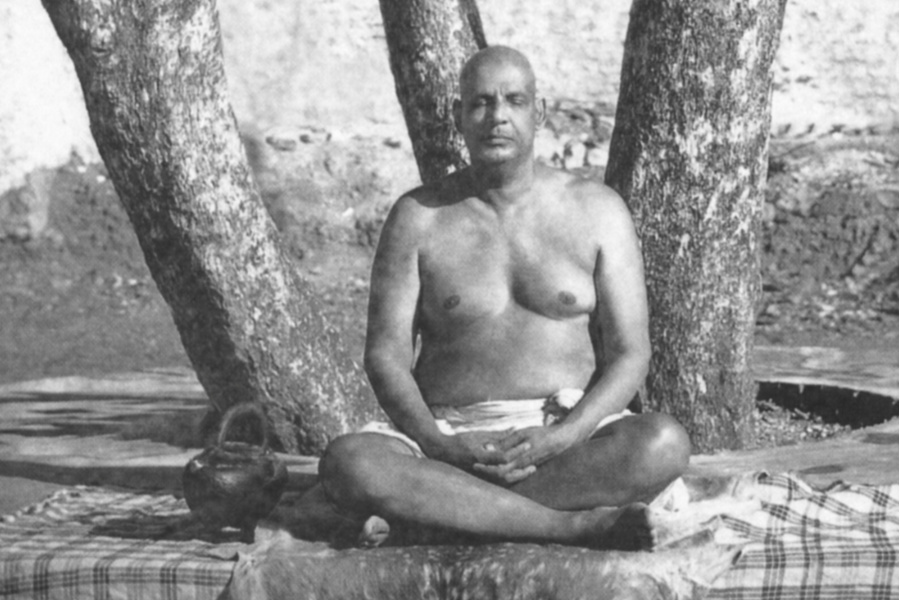
Swami Sivananda Gazing 1
Uncategorized

PHILOSOPHY AND TEACHINGS OF SWAMI SIVANANDA

PHILOSOPHY AND TEACHINGS OF SWAMI SIVANANDA PHILOSOPHY Swami Sivananda respected all religions, saints and sages. Every person – irrespective of his religion or country – was received by Swamiji with the same warmth and love. He advocated: “Mankind is one family. All beings are children of the one Divine. He believed that the fundamental principles of all religions are the same, and all saints teach us and lead us to the same Truth”. ‘Adapt, adjust and accommodate’ was the motto which he practised to perfection in his thought, speech and action. He accepted all that was good from all sources and propounded the basic Truth of all religions in his philosophy, but jettisoned the redundant ceremonies and paraphernalia. He gives the quintessence of all religions in a very simple, apt and appealing manner. He says: “There is only one religion – the religion of love, the religion of unity and oneness”. He used to sing: UNIVERSAL RELIGIOUS TEACHINGS The essentials of all religions are the same: Serve, love, give, purify, meditate, realise; Be good, do good, be kind, be compassionate; Enquire ‘who am I’ know the Self and be free. Love all, serve all, serve the Lord in all. Speak the truth, be pure, be humble, Concentrate, meditate, attain Self-realisation. These are the essentials of all religions. Customs, conventions, ceremonies are non-essentials. Do not fight over petty non-essentials. Be tolerant, be catholic, have a broad outlook. Respect all Prophets, all Saints, all Messengers. All Saints speak the same language. Even as Swamiji tried to integrate the basic tenets of all religions, so also he integrated various Paths of Yoga and called this ‘Yoga of Synthesis’. Like Buddha, he chose the path of moderation. His main admonition is: “Serve, Love, Give, Purify, Meditate, Realise; Be good, Do good, Be kind, Be compassionate.” The terms ‘Serve, Love, Meditate, Realise’ denote the four main Paths of Yoga, namely Karma Yoga (Yoga of Action), Bhakti Yoga (Yoga of Devotion), Raja Yoga (Yoga of Meditation) and Jnana Yoga (Yoga of Knowledge). That is, he advocated synthesis of all the Paths of Yoga on the rock-foundation of purity which is to be develop through broad-mindedness and generosity reflected through charity which is symbolised here by the word give. As a practical philosopher, Swamiji instructed everyone – irrespective of his spiritual level – to be good and to do good to others. “Real happiness”, he says, “is in making others happy.” His vision of Jnana Yoga was in seeing the Lord in every being and serving all the living creatures as if it is worship of the Lord. He was open-minded and did not impose on any aspirant a rigid sadhana programme. Swamiji believed that each sadhaka requires a different amalgam of spiritual practices, and that the sadhaka himself should find out a suitable mode by properly blending different Paths of Yoga, in accordance with his aptitude and temperament while keeping one Path as the main Path. Swamiji has given a very significant view of Yoga. He says: “Yoga is not a religion, but an aid to the practice of the basic truths in all religions. God dwells in all. Yoga is union with God, union with all. Yoga is for all and is universal. It is not a sectarian affair but a way to God. To live in God, to commune with God is Yoga. Yoga is life in God, life in perfection, peace, lasting happiness and eternal Bliss. Yoga shows you the way, unites you with God. You can turn out efficient work within a short span of time and have success in every walk of life.” His explanation of the main paths of Yoga is very explicit and apt. He says: “To behold the one Self in all is Jnana Yoga. To love the Self in all is Bhakti Yoga. To serve the Self in all is Karma Yoga. Karma Yoga is suitable for a man of active temperament, Bhakti Yoga for a man of devotional temperament, Raja Yoga for a man of mystical temperament, and Jnana Yoga for a man of rational and philosophical temperament.” He used to suggest Karma Yoga and Bhakti Yoga sadhana to beginners, and only after proper purification, and control of mind and senses, he was initiating the sadhakas into meditation and Jnana Yoga sadhana. We present here an article ‘Serve, Love, Meditate, Realise’ by Swamiji for better understanding of his philosophy. SERVE, LOVE, MEDITATE, REALISE I have only one message and only one common subject: and that is: “Serve, Love, Give, Purify, Meditate and Realise. Be Good Do Good”. Reflect deeply on these wonderful words, which reveal the secret of harmony, peace, joy, success and Bliss. Remember that the salt of life is selfless service, the bread of life is universal love; the water of life is purity. Hence serve, love and be pure. The fragrance of life is generosity; the sweetness of life is devotion; the pivot of life is meditation. The goal of human life is Self-realisation. Therefore be devoted and generous. Meditate and realize the Self. Man is a triune being: Action, emotion and intelligence are the three horses that are linked to this body-chariot. They should work in perfect harmony or unison. Then only the chariot will run smoothly. There must be integral development. You must have the head of Sankara, the heart of Buddha, and the hand of Janaka. The Yoga of Synthesis alone will develop the head, heart and hand, and lead one to perfection. To become harmoniously balanced in all directions is the ideal of religion and of Yoga. This can be achieved by the practice of the Yoga of Synthesis. Man is a strange complex mixture of will, feeling and thought. He is a triune being. He is like a tricycle or a three-wheeled chariot. He wills to possess the objects of his desires. He has emotion and so he feels. He has reason and so he thinks and ratiocinates. In some the emotional element may preponderate, while in
PHILOSOPHY AND TEACHINGS OF SWAMI SIVANANDA Read Post »

Uncategorized

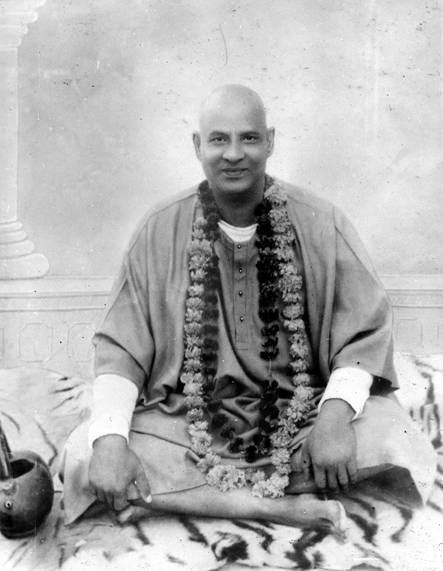
H. H. SRI SWAMI SIVANANDA SARASWATI

H. H. SRI SWAMI SIVANANDA SARASWATI BIRTH AND BOYHOOD On Thursday, the 8th. of September, 1887, in the early hours of the morning, when the star Bharani was in the ascendant was born a boy-child in the village of Pattamadai on the bank of the river Tamraparani in South India. Sri P.S. Vengu Iyer, a revenue officer and a great Siva Bhakta (devotee of Lord Siva), and Srimati Parvati Ammal, an equally great god-fearing lady, were the fortunate parents of this child. The happy couple christened this last and third son of theirs Kuppuswamy. Boy Kuppuswamy was intelligent and mischievous. In his boyhood itself he showed signs of Tyaga (renunciation) and love for fellow-beings. He used to pity the poor, feed the hungry at the door, and make his father throw a pie into the hands of pauper passing by. He often got cakes and sweetmeats from his mother and distributed them liberally to his younger companions, dogs, cats, crows, and sparrows, himself not eating a bit. He used to bring flowers and bael leaves for his father’s Siva Puja. At the Rajah’s High School, Ettayapuram, where he studied, Kuppuswamy always topped the class and won prizes every year. He had a sweet voice and wonderful memory. When His Excellency Lord Ampthil, the Governor of Madras, visited the Kuru Malai Hills in 1901 for hunting, Kuppuswamy sang a song of welcome on the Kumarapuram railway platform. After the completion of the Matriculation examination, he studied at the S.P.G. College, Tiruchirapalli. In the college he used to take part in debates and dramas. He played the part of Helena beautifully when Shakespeare’s “Midsummer Night’s Dream” was staged in 1905. After the completion of the First Arts Examination, Kuppuswamy went to the Medical School in Tanjore to study medicine. He used to be tremendously industrious and never went home during the holidays. He would spend the entire period in the hospital. He had free admission into the operation theater. Kuppuswamy was first in all subjects. He possessed more knowledge than doctors with covetable degrees, and in the first year itself he could answer the papers which the final year students could not. Kuppuswamy completed the course and earned the title of M.B.,C.M. He practiced at Tiruchi. While practicing, he started a medical journal called “The Ambrosia”. He got one hundred rupees from his mother for the initial expenses of running the journal. Later, when his mother wanted a hundred and fifty rupees for celebrating some festival, Dr. Kuppuswamy had the money ready for her. Even then he used to distribute the journal freely; he was very shy to ask people for contribution. DOCTOR IN MALAYA (MALAYSIA) A call came to Dr. Kuppuswamy from Malaya, soon after the death of his father. He used to have an adventurous spirit in him. In 1913 he left India in the “S.S. Tara”. Kuppuswamy belonged to an orthodox Brahmin family and was afraid to take non-vegetarian food in the ship. So he carried with him a good quantity of sweets which his mother had prepared for him. When he arrived in Singapore, he was almost half dead! Dr. Kuppuswamy describes his experiences in Malaya: “Immediately after disembarking, I went to the residence of Dr. Iyengar. He gave me a letter of introduction to his friend, Dr. Harold Parsons, a medical practitioner in Seremban. When I arrived there, Dr. Parsons introduced me to Mr. A.G. Robins, the manager of a nearby rubber estate which had its own hospital. Fortunately for me, Mr. Robins was just in need of an assistant to work in the Estate Hospital. He was a terrible man with a violent temper, a giant figure, tall and stout. He asked me, ‘Can you manage a hospital all by yourself?’ I replied ‘Yes, I can manage even three hospitals’. I was appointed at once. I had been told by a local Indian resident that I ought not to accept, in accordance with their policy, anything less than a hundred dollars a month. Mr. Robins agreed to give me one hundred and fifty to start with”. The young doctor worked very hard. Unusual handicaps began to tell upon him and he felt like resigning the job after some time, but Mr. Robins would not allow him to go. Dr. Kuppuswamy was very kind, sympathetic, humorous, witty, and sweet-speaking. Hopeless cases came to him, but success was sure. Everywhere people declared that he had a special gift from God for the miraculous cures effected in the patients and acclaimed him as a very kind and sympathetic doctor with a charming and majestic personality. In serious cases, he kept vigil all night. In his private practice, Dr. Kuppuswamy used to attend to the poor and often not charge them even visiting or consulting fees. Instead he would give them money for special diet or to cover their own expenses after discharge from hospital. He gave money like water. Once a poor man, drenched to the skin, came to the doctor at night. His wife was in birth pangs. The doctor went there at once to her aid, and after attending to her, stayed outside the hut in spite of the heavy rain. Only after the save delivery of the child did the doctor return home the next morning. In spite of his busy life, Dr. Kuppuswamy served the Sadhus, Sannyasins, and beggars. He attended marriage functions, parties, and other social gatherings. Once a Sadhu gave him a book “Jiva Brahma Aikyam” by Sri Swami Satchidananda. It ignited the dormant spirituality in him. He began to study the books of Swami Rama Tirtha, Swami Vivekananda, Sankara, Imitation of Christ, the Bible, and literature of the Theosophical Society. He was very regular in his daily worship, prayer and Yoga Asanas. Study of sacred scriptures like the Gita, the Mahabharata, the Bhagavata, and the Ramayana was done with great devotion. Sometimes he conducted Nandan Charitam and sang Bhajans and Kirtans. He practiced Anahat Laya Yoga and Swara Sadhana. High-class dress,

H. H. SRI SWAMI SIVANANDA SARASWATI Read Post »

202
Raja Yoga, Swami Sivananda, Uncategorized

Dharana or Concentration

Dharana or Concentration by Swami Sivananda 1. WHAT IS DHARANA Dharana or concentration is the fixing the mind on one place (object or idea) NOTES Dharana is the fixing of the mind on something external or internal. The mind can be fixed externally on the picture of Lord Hari, Lord Krishna or Lord Rama or on any other object or point. Internally it can be fixed on any Chakra or any part of the body or on any abstract idea. Having controlled the Prana through Pranayama and the Indriyas through Pratyahara, you should try to fix the mind on something. In Dharana you will have only one Vritti or wave in the mind-lake. The mind assumes the form of only one object. All other operations of the mind are suspended or stopped. Different objects of Dharana and their effects are given in the subsequent lessons. According to the Hatha Yogic school, a Yogi who can suspend his breath by Kumbhaka for 20 minutes can have a very good Dharana. He will have tranquillity of mind. Pranayama steadies the mind, removes the Vikshepa and increases the power of concentration. Fixing the mind on something is Dharana or concentration of mind. Dharana can be done only if you are free from the distractions of mind. 2. THE MIND OF DISTRACTIONS At other times (when there is no concentration), the seer has identification of the modifications of the mind. NOTES When the seer does not abide in his own native state, he connects himself with the various Vrittis. He becomes assimilated with transformations. If your son is seriously ailing, you identify yourself with the Vritti and get grief. You have forgotten your essential divine nature. The Vrittis that arise from the mind obscure your native state. They are like clouds that screen the sun. During the time of concentration, the seer identifies himself with his own native state. At other times of concentration, the seer identifies with his Vrittis. This is a great distraction of the mind. The remedy for the evil effects of distractions is suggested in Sutra 30 and 31 of Chapter I. Have a comprehensive understanding of these modifications of mind. The painful Vrittis have to be controlled by the not-painful Vrittis, and these in turn have to be mastered by Para Vairagya. The painful Vrittis are those which bring the afflictions and become the field for the growth of the afflictions and become the field for the growth of the vehicle of actions (Karmasaya). Vrittis that emanate from Rajas and Tamas are painful ones. Vrittis that arise from Sattva Guna are not painful ones. Through Vairagya and Abhyasa the painful Vrittis are to be controlled. Then concentration will become habitual. For practising Dharana different kinds of exercises are given in the subsequent pages. 3. DHARANA ON SENSE PERCEPTION Or, the practice of concentration on higher sense perceptions brought about by the enjoyment of senses, causes steadiness of mind. NOTES In the previous Sutra, Pranayama practice is prescribed for steadying the wandering mind. In this Sutra it is stated: Or by the practice of concentration. By the term: brought about by the enjoyment of senses refers to the experiences or sense perceptions, such as smell, taste, sound, feeling, etc. By concentrating on the tip of the nose, the Yogi experiences Divya Gandha; by concentrating on the tip of the tongue, he tastes Divya essences; by concentrating on the palate, the Yogi experiences Divya colour; by concentrating on the middle of the tongue, he experiences Divya touch; by concentrating at the root of the tongue, he experiences Divya sounds. By concentrating on these super-sensual perceptions, he gets steadiness of mind. These experiences give him definite encouragement. He gets faith in Yoga. Then he applies himself with great intensity and diligence to Sadhana for getting higher experiences in Yoga by entering into Samadhi. By concentrating on the moon, sun, planets, jewels, lamp and precious stones, one can get higher super-sensual experiences and can reach Samadhi. 4. DHARANA ON SATTVIC MIND Or, by meditation on the sorrowless condition of mind or the luminous mind. NOTES The word ‘or’ means, here is another method for steadying the mind. For concentrating on the Sattvic mind, it is necessary to concentrate on the seat of the mind, viz., the heart. The description is given below. There is a lotus with the face downwards below the heart with 8 petals. Inhale and throw the breath. This exhalation will turn the lotus with the petals upwards. Imagine also when you exhale that the lotus is turned upwards. Then meditate on the effulgent light that is inside the lotus. The Sushumna Nadi or Brahma-Nadi passes through this lotus. This is another method of concentration for steadying the mind and attaining Samadhi. There is a special concentration on this lotus. You will have to locate the four parts of the Pranava A, U, M and Ardhamatra, the point in the lotus. In the centre of the lotus, there is the sphere of the sun, the seat of waking state with the letter A; above this, the sphere of the moon, the seat of dreaming state with the letter U; above this, sphere of fire, the seat of sleep with the letter M; above this, Chidakasa, the seat of Turiya, the state known as Brahma Nada, the fourth state, which the knowers of Brahman call half-measure or Ardha-matra. In the stalk thereof is the artery of Brahma (the Brahma-Nadi – Sushumna) with its face upwards. This passes through the spheres of the sun, etc. That is the seat of the mind. The Yogi concentrates at this centre. 5. DHARANA ON THE DESIRELESS MIND Or, on the mind that is free from desire for objects. NOTES Meditate on the pure mind or heart of Mahatmas or great persons like Sri Vyasa, Sukha Deva, Sri Sankaracharya, Dattatreya, Janaka, Lord Jesus or Buddha. The absorption of the mind in another mind ever pure, steady and blissful will certainly cause corresponding effect and lead

Dharana or Concentration Read Post »

Swami sivananda
Raja Yoga, Swami Sivananda, Uncategorized

Mind Conquest by Sama and Dama

Mind Conquest by Sama and Dama By Swami Sivananda Calmness of mind comes through the practice of Sama and Dama. Sama is calmness of mind induced by the eradication of Vasanas. Vasana-tyaga (renunciation of desires) through discrimination constitutes the practice of Sama, one of the sixfold virtues (Shadsampatti). If a desire arises in your mind, do not give way to it. This will become the practice of Sama. Sama is keeping the mind in the heart by Sadhana. Sama is restraint of the mind by not allowing it to externalise or objectify. The restraint of the external activities and the Indriyas is the practice of Dama (Bahyavritti-nirodha). If you renounce the desire for eating mangoes, it is Sama. If you do not allow the feet to carry you to the bazaar to purchase the mangoes, if you do not allow the eyes to see the mangoes and if you do not allow the tongue to taste them, it is Dama. A desire arises to eat sweets. You do not allow the feet to move to the bazaar to purchase the sweets. You do not allow the tongue to eat the sweets. You do not allow the eyes to see the sweets also. This kind of restraint of the Indriyas is termed Dama. It is termed Sama when you do not allow any thought to arise in the mind concerning sweets by eradication of Vasanas (Vasana-tyaga). This eradication of the Vasanas can be accomplished through Vichara, Brahma-chintana, Japa, Dhyana, Pranayama, etc. Sama is an internal restraint. Dama is a restraint of the Indriyas. Though the practice of Sama includes the practice of Dama, as the Indriyas will not move and work without the help of the mind, yet the practice of Dama is necessary. The practice of Dama should go hand in hand with Sama. Sama alone will not suffice. You must attack the enemy, desire, from within and without. Then alone you can control the mind quite easily. Then alone the mind will be in perfect control.

Mind Conquest by Sama and Dama Read Post »

08 ms sv w prasad
Raja Yoga, Swami Sivananda, Uncategorized

Body The Mould for Mind’s Enjoyment

Body The Mould for Mind’s Enjoyment by Swami Sivananda The body with its organs is no other than the mind. The physical body is the outward manifestation of the mind. Mind is the subtle form of this physical body. The mind contemplating upon the body becomes the body itself and then, enmeshed in it, is afflicted by it. All the bodies have their seat in the mind only. Should the mind be paralysed, then the body will not evince our intelligence. Without water, can a garden exist? It is the mind which transacts all business and is the highest of the bodies. Mental actions are the real actions. The mind performs all actions very speedily in the Linga Sarira and fluctuates thereby. But, the gross body knows not anything and is inert. Even should this gross body be dissolved, the mind will assume fresh bodies to its liking very quickly. This physical body is the mould, as it were, made by the mind for its own enjoyment, for its outpouring of its energy and thereby gaining different experiences of this world through the five avenues or channels of knowledge, the five Jnana-Indriyas (organs of knowledge or perception). Thoughts Make The Body The actions of the mind alone are indeed actions; not so much those of the body. The body is really our thoughts, moods, convictions and emotions objectivised, made visible to the naked eyes. It is a point worthy to note with care that every cell in the body suffers or grows, receives a life-impulse or a death-impulse, from every thought that enters the mind, for you tend to grow into the image of that which you think about most. When the mind is turned to a particular thought and dwells on it, a definite vibration of matter is set up and often more of this vibration is caused, the more does it tend to repeat itself to become a habit, to become automatic. The body follows the mind and imitates its changes. If you concentrate your thought, the eyes become fixed. Every change in thought makes a vibration in your mental body and this, when transmitted to the physical body, causes activity in the nervous matter of your brain. This activity in the nervous cells causes many electrical and chemical changes in them. It is thought-activity which causes these changes. Face: An Index Of Mind Mind is the subtle form of this physical body. The physical body is the outward manifestation of the mind. So when the mind is rough, the body is rough too. As a man of rough appearance generally cannot invoke love and mercy of others, so a rough-minded man cannot invoke love and mercy of anybody. Mind very conspicuously reflects on the face its various states which a man of intelligence can very easily read. Face is an index of the mind, just as the tongue is an index of the stomach. The body follows the mind. If the mind thinks of falling from a height, the body prepares itself immediately and shows external signs. Fear, anxiety, grief, cheerfulness, hilarity, anger-all produce their various impressions on the face. The eyes which represent the windows of the soul bespeak of the condition and state of the mind. There is a telegraphic instrument in the eyes to transmit the messages or thoughts of treachery, cunningness, fraud, pure love, compassion, devotion, depression, gloom, hatred, cheerfulness, peace, harmony, health, power, strength and beauty.If you have the faculty to read the eyes of others, you can read the mind at once. You can read the uppermost thought or dominant thought of a man if you are careful to mark the signs in his face, conversation and behaviour. It needs a little pluck, acumen, training, intelligence and experience. Your thoughts, sentiments, modes and emotions produce their strong impressions on the face. The face is like an advertisement board wherein is advertised what is going on inside the mind. In face, you can hardly hide your thoughts. You may foolishly think that you have kept up your thoughts in secret. Thoughts of lust, greed, jealousy, anger, revenge, hatred, etc., at once produce their deep impressions on your face. The face is a faithful recorder and a sensitive registering apparatus to register and record all the thoughts that are running in your mind. The face is a polished mirror to indicate the nature of the mind and its contents at a particular time. He who thinks that he can hide his thoughts is a dunce of the first water. His position is like that of the ostrich which, when chased by the hunters, hides its head underneath the sand and imagines that it cannot be seen by anyone. Your face is like a gramophone record or plate. Whatever you think is at once written on your face. Every vicious thought serves as a chisel or needle to write down the thoughts on your countenance. Your faces are covered with the scars and wounds which are made by the vicious thoughts of hatred, anger, lust, jealousy, revenge, etc. From the nature of the scar in your face, I can at once read your state of mind. I can at once diagnose your disease of the mind. Mutual Influence Between Mind And Body The mind is intimately connected with the body. The mind acts upon the body and the body reacts upon the mind. Mind has influence over the body. A pure, healthy mind means a healthy body. Grief in the mind weakens the body. Body influences the mind also in its turn. If the body is strong and healthy, the mind also becomes healthy and strong. If the body is sick, the mind also becomes sick. A pain in the stomach causes depression in the mind. Bad Thoughts, The Primary Cause Of Disease The primary cause of diseases which afflict the body is bad thoughts. Whatever you hold in your mind will be produced in the physical body. Any ill-feeling or bitterness towards

Body The Mould for Mind’s Enjoyment Read Post »

11 ms sv etc study
Karma Yoga, Swami Sivananda, Uncategorized

What is Karma?

What is Karma? Karma means work or action. According to Rishi Jaimini, rituals like Agnihotra, Yajnas, etc., are termed Karmas. There is a hidden power in Karma termed ‘Adrishta’, which brings in fruits of Karmas for the individual. Karma is all in all for Jaimini. Karma is everything for a student of the Mimamsic school of thought. Jaimini is the founder of Poorva Mimamsa. He was a student of Maharishi Vyasa, the founder of Uttara Mimamsa or Vedanta. The Mimamsa school denies the existence of Ishvara, who awards the fruits of works. According to the Gita, any action is a Karma. Charity, sacrifice and Tapas are all Karmas. In a philosophical sense, even breathing, seeing, hearing, tasting, feeling, smelling, walking, talking, etc., are all Karmas. Thinking is the real Karma. Raga-dvesha (likes and dislikes) constitute real Karma.

What is Karma? Read Post »

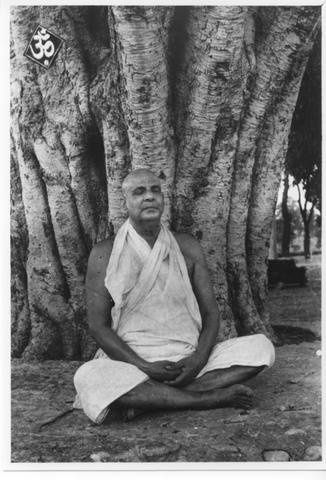
swami sivananda meditating
Swami Sivananda, Uncategorized, Yoga of Synthesis

My Methodology to the Evolutionary Process

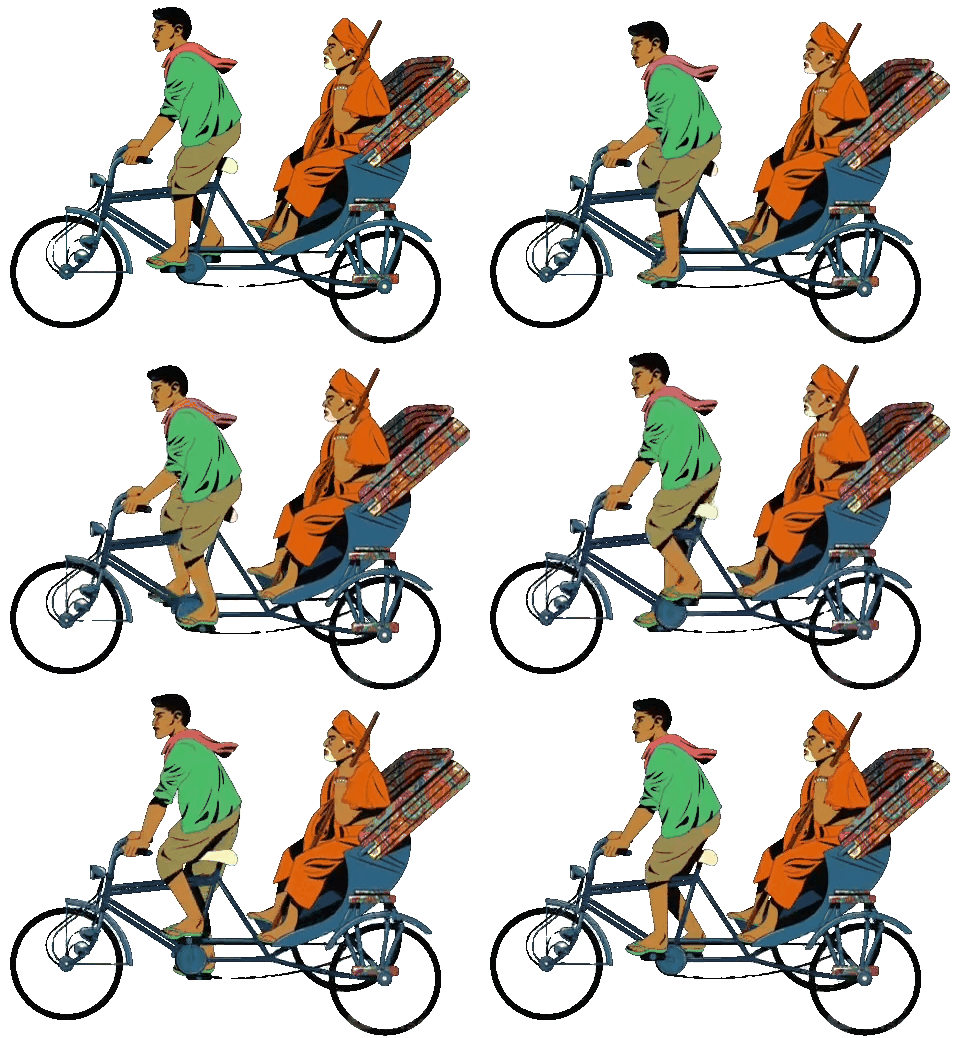
My Methodology to the Evolutionary Process 1. DETACHED, YET CAREFUL In my Kutir, there are many big trunks with hundreds of valuable books, articles and dresses. I do not know the exact contents of the trunks. I do not have any keys with me. I do not keep anything as ‘secret’. I cannot eat anything in private. I do not pretend to be a Vairagi with empty hands, expecting others to keep enough for my personal use. When I travelled on propaganda tours, I kept enough money with me in two or three pockets. I gave separate purses with plenty of money to those who accompanied me. I am very careful in keeping things like fountain pen, spectacles, study books, and various articles contributed by all great men and devotees. Previously when I locked my Kutir for a short brisk walk, I kept the key carefully tied at the end of my cloth. I may use a torn coat with patches but I must give others the superior quality of articles. I do not worry about debts. I find necessary support spontaneously coming from the Divine Source. I feel the grace of the Lord at every step. I feel the presence of the Lord at all times, behind all names and forms. 2. SADHANA TILL THE END OF LIFE The Sadhus and Yogis do Sadhana and study for some time and then give up the habit when they get a little name and fame. It is a great pity. That is the reason for their downfall. Sadhus and perfected Mahatmas should continue Sadhana till the last moment of their lives. Then only will it be possible to keep up the Divine Consciousness. That will be a fine example and a source of inspiration to others also. The saint need not talk and preach. His life itself is a scripture to illumine the world. Even today I write OM OM OM and HARI OM TAT SAT Mantras in all my letters. I fill up half a page of my letter with the Mantra or with philosophical ideas. Before commencing to write anything in a notebook or letters to students, I write the Mantra. I do about five or six items of Sadhana all the 24 hours: Japa, meditation, exercises including Asana and Pranayama, worship, study, writing work and service to the world, help to Mahatmas, the sick and the poor. Thus I charge my mind with divine consciousness at all times. I nicely combine rest and relaxation with deep breathing exercises. I have thus spent my 35 years of life at Rishikesh and derived wonderful fresh spiritual energy and strength in abundance. I maintain a high standard of health and enjoy peace and bliss at every moment. I just come out of my Kutir for one hour in the morning and manage all the affairs of the Ashram and give work to those who live in the Ashram and think of others who live at distant places. And yet I feel I can work for another ten hours every day. The secret is my systematic Sadhana and the grace of the Lord. 3. WHY SO MANY PHOTOGRAPHS In holy temples the authorities do not permit the taking of photographs of the idols. In Badri and Kedar, people do not allow cameras to be taken inside the temples. It is strange. Some of the sages and great men of India have serious objection to taking their photographs. They think that the spiritual power will be diminished by taking photographs. I do not believe at all in such things. I allow anyone to take any number of pictures while sitting, running, walking, talking, eating, playing, swimming in the Ganga, in meditation, study or worship at the temple. When devotees look at a picture, they get inspiration. Books and magazines have a special charm with the addition of a series of pleasant and instructive pictures. I do not have any restriction. I find only good in every thing. Great men from all countries come to the Ashram. Sincere devotees from all parts of the world come and stay with me for some months or years. They all desire to have a copy of my photo in their company. Why should I unnecessarily refuse and displease them? Groups of students who come to Rishikesh during vacation desire to have a group photo with myself in the centre. I have been photographed with the great men of the world, Maharajahs, sages and saints, devotees, Ashram workers, the sick persons in the Hospital and the school children. I have been photographed with my hat and suit, a loin cloth and an overcoat, with a turban like a school master, in a motor car, aeroplane and a bullock cart in Rameswaram during my All-India tour in 1950, and in a cycle-rickshaw during my stay at Roorkee in 1953. I make no distinction in having photographs with Maharajahs or devotees or coolies at the Railway Station platform, with great Mahatmas of the Himalayas or the scavengers of the Ashram. I have included the lively monkeys, cats, dogs of the Ashram, fish, cows, elephants and cheetahs also. I do not believe in the statement that my spiritual powers will be lost or influenced by the evil-eye. I look at the wonderful benefits the world would derive. I enjoy when I find people around me feel happy and cheerful. 4. SELF-RELIANCE I personally attended to my works such as, cleaning the room, bringing water from the Ganga for drinking purposes, washing clothes and vessels, going to the Kshetra for my alms. I myself used to type my articles and letters to aspirants. I carefully packed the packets and posted them. I never depended on my students. I did not like them to enter my Kutir frequently and disturb my daily routine. When I go out on tour, I myself carry my luggage. When porters carry some of my heavy packages of leaflets and books for free distribution, I pay them

My Methodology to the Evolutionary Process Read Post »

9dd83e7744d0412010df3f7b64bb504b
Uncategorized

Who are Fit to be My Disciples

Who are Fit to be My Disciples Though I give much freedom and liberty in dress and external forms, I am very strict with my students with regard to the essentials. The rules prescribed by the Order of Sannyasa must be followed. Then only can they shine as ideal Sannyasins. Comfortable Sannyasa is very dangerous. They should not give lenience to the mind. Fashionable, independent Sannyasins are a menace to society. The people in the world curse such Sannyasins and treat them with disrespect and contempt. They, however exalted in the spiritual line, should not live in the company of women or householders and freely mix with others. Burning Vairagya with simple living and high thinking must be the ideal at every moment of their lives. No doubt renunciation is mental. That does not mean that you can do anything and live in any way you like. That will bring your downfall. Strive for perfection by following the traditional rules for discipline and control of mind and senses. Discipline in food and dress will naturally manifest itself if you have genuine Vairagya and dispassion. External observance of the rules will help you to stick to the path. Maya works havoc. Maya deludes. Beware. Be cautious at every step and watch the Vrittis of the mind. My disciples should have no superiority complex. They are not dry philosophers who spend all their time and energy in preaching alone. They have self-sacrifice and serve the world with their silent and intense Sadhana. In the midst of intense service, they learn the way to rivet the mind on the Lakshya. They are rooted in the idea: “The world is a long dream (Deergha Svapna), perishable. Truth alone is Real.” For my students, there is no world. They perceive the Divinity behind all names and forms. PURIFY THE INNER NATURE Purify your mind. Develop Sattvic qualities such as nobility, courage, magnanimity, generosity, love, straightforwardness, truthfulness. Eradicate all evil qualities such as lust, greed, anger, avarice, Raga-dvesha and other negative traits which stand in your way of ethical perfection and Self-realisation. Ethical perfection is a pre-requisite to Self-realisation. No amount of practice can be of any value to the aspirant if he ignores this side of Sadhana. Love all. Prostrate yourself before everybody. Become humble. Talk loving, sweet, endearing words. Give up selfishness, pride, egoism, hypocrisy. Regenerate your lower nature. Find out through self-introspection if you want real freedom and liberation or you are just inquisitive about higher things or have a lurking desire for obtaining money, name and fame by exhibiting spiritual powers. Become sincere. All qualifications will come by themselves when you are in the company of evolved persons and live in an atmosphere charged with spiritual vibrations. ATTITUDE TOWARDS WOMEN My silent adorations and prostrations to all women, who are manifestations of the Divine Mother, Sakti or Kaali. They are the backbone of society and upholders of religion. If they are inspired, the whole world will be inspired. There is a peculiar religious instinct in them. They have natural, inborn divine qualities. In olden days, Hindu ladies also led the life of celibacy, served the Rishis, meditated on the Atman and obtained Brahma Jnana. In ancient days there were many Siddhas, Brahma Jnanis, Vairagis, Bhaktas and advanced Yogis among women. By their purity and perfection they could do miraculous things when there were occasions for utilising their spiritual power. There are instances of their giving life to the dead, stopping the rising of the sun in the morning and of controlling the elements also. Even today you can find many women in Rishikesh, Haridwar, Brindavan. Banaras and other holy places in India, who have renounced the world and taken to the path of Yoga. I do not detest anybody. I revere a woman as my own self. I regard women as Mother Durga or Divine Mother. Women are dynamic forces on earth. Religion is sustained through their piety. To passionate youths, I have written a lot about the perishable nature of the physical body of women. It is just to develop in them a strong Vairagya and help control of their senses and mind. Though for the sake of inducing Vairagya in men I have given a negative description of women, I have great reverence for them. I serve them. I have done Kirtans with them in various Sankirtan Sammelans in the Punjab and the U.P. Many ladies come to the Ashram from Delhi and other places even if they get two or three days’ holidays. They come in groups and join the daily Satsanga and enjoy the peace and bliss, and stay within the Ashram for days and weeks. SHOULD WOMEN RENOUNCE THE WORLD No doubt it is difficult for young women to get on in the Sannyasa line. They do not have the same liberty and freedom as men. Men can live and move about in any way and sleep anywhere. They can go from door to door for alms and maintain themselves. But women are greatly at a disadvantage and suffer thereby. It is a pity that there are not many ideal institutions in India exclusively for women where they can live peacefully, serve the world and evolve. Ideal institutions with all comforts and conveniences for women, who are spiritually-inclined, are a great need of the hour. For ages, this important work has been neglected. I get letters from some sincere cultured ladies expressing a desire to tread the path of renunciation. In 1936, I gave a reply to a devotee giving my helpful suggestions: “I cannot safely suggest any Ashram where you can live peacefully and evolve. You should get a decent amount from your parents. Invest it in a Bank. You can lead a simple life with the interest you get from the deposit. This is the best way. Even then, live in an Ashram where you have advanced souls, Mahatmas, or live with some elderly ladies of a religious temperament. Devote all your time to



Who are Fit to be My Disciples Read Post »