Hari Om

Menu

Swami Sivananda

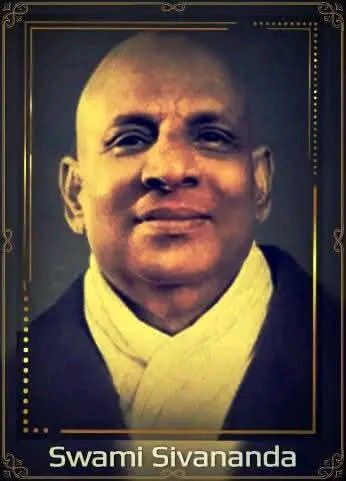
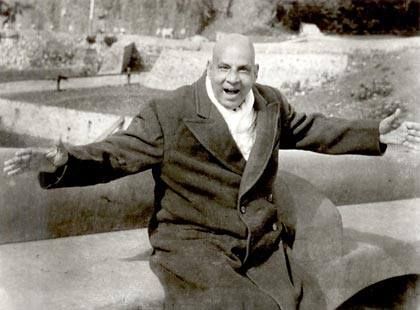
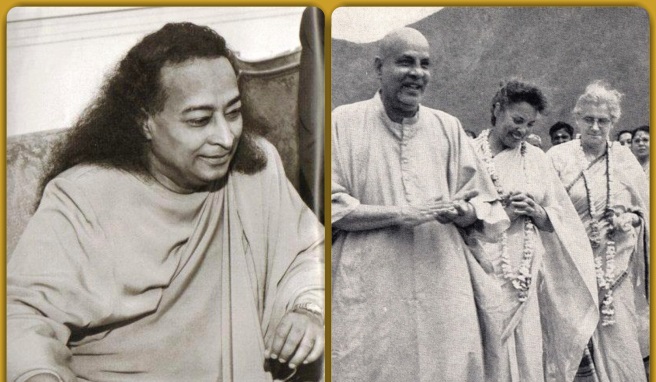
Swami Sivananda collage with Spiritual teachers picture
Jnana Yoga, Swami Sivananda

The Five Characteristics of Atman

The Five Characteristics of Atman by Swami Sivananda Mind operates in a mysterious manner in dream. It creates, fabricates many fantastic, romantic pictures, scenery, events, etc. Sometimes you dream that you are dead and that your dear relatives and parents are weeping by your side. The most wonderful thing is that, even when you are dead, you see and hear them weeping. Does this not clearly prove that life really persists even after seeming death? Does this not clearly indicate that the soul is immortal? Think well and cogitate. You will clearly understand that immortality is an inherent attribute of the soul or Atman. The dream phenomenon establishes the Sat aspect of the Atman. If you tell a man that he will die within a year, he becomes indignant at once, because he somehow feels that he will live for ever though he knows that this physical sheath will be thrown away like a cast off slough. Your very desire for continued living clearly proves that your real nature is immortality. This is the Sat aspect of Atman. People build bungalows and mansions with the hope that they can live for ever in this physical plane or phenomenal universe. Though the intellect is clouded by the influence of Avidya or Maya, yet the idea of immortality of the soul, however hazy it may be, is ingrained in the mind of everybody. During calm moments this feeling gets intensified, when the intellect becomes clear and pure. A growing child asks the mother daily: Mamma, what is this? What is that? There is a great curiosity in the child to know things. This is a clear proof that knowledge but not ignorance is the real nature or inherent attribute of the soul or Atman. If you say to any man: You are a fool he gets enraged at once. Why? Because, he feels somehow or other that essentially he is a mass of intelligence. Even a fool thinks that he is a very wise, because in essence he is an embodiment of wisdom, he is identical with the Supreme Self. So the inherent, innate feeling: I am a wise man arises in his heart. This is the Chit aspect of the Atman. Faces are different. Faculties and capacities are different, in different persons. Colours are different. Sounds are different. Gait and mode of thinking are different. Opinions and views are different. But one thing is common in all persons. That common thing is that everybody wants eternal happiness (Nitya Sukha). This is the Ananda aspect of the soul or Atman. This is a clear proof that bliss (not pain) is the real nature or inherent attribute of the soul. A remarkable incident occurred a few years ago. A French girl suffered from a dangerous disease. She was in an unconscious state for weeks. Doctors declared the case to be absolutely hopeless. Somehow or other she was pulled round miraculously through the grace of the Lord. She knew only French. A strange thing occurred now. She entirely forgot her mother-tongue, but she suddenly developed wonderful proficiency in a dozen languages which she never knew before. This was reported in the leading newspapers. This caused a good deal of sensation and curiosity in the readers. At once some leading psychologists, philosophers, doctors and scientists began to investigate into the matter thoroughly. They were fully convinced that the whole report was true, accurate and correct. They said that the only explanation of the phenomenon was that perfect knowledge of all things is stored up in a mysterious manner within our brain but locked in special doors which can be opened only by particular keys. They further remarked that we could open some of the doors by using the right key the key of discipline and training and that we are not able to open the other doors on account of ignorance or lack of training and discipline or non-using the right key. They further added that in the case of the French girl the door French got mechanically shut and the doors for dozen other strange languages got simultaneously opened. Here there is an occult proof of the doctrine of Vedanta that the Soul or Atman is a storehouse of all knowledge or an embodiment of wisdom. Everybody wants independence. He has a burning desire for freedom. The very thought of dependence is painful and irksome. He wants to have suzerainty. He wants to rule over others. He does not like to be guided by the wishes of others. On the contrary, he wishes that others should follow his wishes. This clearly proves that independence and suzerainty also are the inherent attributes of the immortal Atman.

The Five Characteristics of Atman Read Post »
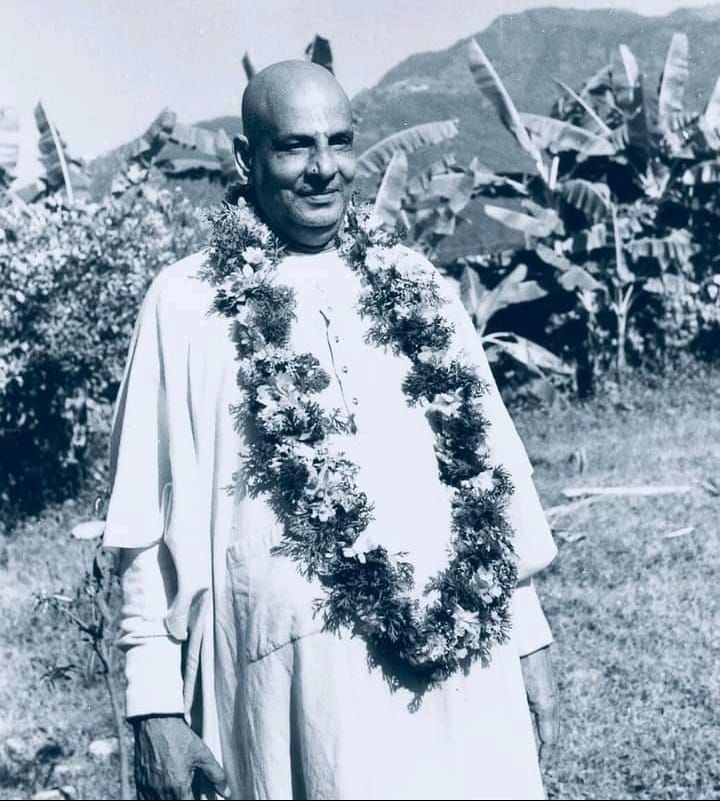
Swami Sivananda wearing flower garland outdoors image
Jnana Yoga, Swami Sivananda

Atman is Sat-Chit-Ananda

Atman is Sat-Chit-Ananda by Swami Sivananda Atman is Sat Atman is Sat. That which exists in the past, present and future, which has no beginning, middle and end, which is unchanging, which is not conditioned in time, space and causation, which exists during Jagrat, Svapna and Sushupti, which is of the nature of one homogeneous essence (Sada Ekarasa, Sada Ekarupa) is Sat. This is found in Atman. Srutis emphatically declare: Sat only was prior to the evolution of this universe. Our common experience, rather innate inherent feeling, that we never were not and that we never will cease to be, even though our physical bodies may disappear, clearly proves that Atman always exists. In reply to the question whether we are in this world or not, it is said by all men: We are here. Do we possess body or not? Yes, we have bodies. Whence came this body? There must be some cause for our getting these bodies, for otherwise it cannot be a cause. That cause is Karma. It is only our Karma that gives birth to this body. The Karma which generated this body in the previous birth ought to have been performed in a birth anterior to that and so on backwards ad infinitum. Thus, on enquiry, we find that Karma and body are beginningless, of the nature of an unceasing flood, the source of which is unknown. Karma and body form an ever-receding chain. Therefore it is certain that Atman which subsists and forms the substratum for this chain must also be beginningless by virtue of its nature. Thus it is proved now through inference that Atman is Sat during the past and present periods. Why can we not say that this body is generated by the works performed in this birth? Just as the seed which can generate a tree cannot generate that tree which is the cause for its own birth, so also the works performed by this body will produce a new body in the next birth but cannot generate this body. Therefore we cannot say that this body has been produced by works done in this birth. Then another point is, does that Karma which generates the body belong to us or to others? Certainly it is ours. We cannot enjoy in heaven through the Karma of another. If Mr. Krishna does an evil act, he will have to suffer. It cannot affect Mr. Sadasiva. Virtue brings its own reward for the person who does the virtuous action. That is the immutable law of Nature. If one were to go to heaven through the Karma of another man, a servant also should attain heaven through the performance of a sacrifice by a learned Brahmin. All should have attained liberation through the Nirvikalpa Samadhi of Sri Sankara or Dattatreya. But this is not the case. Therefore it is quite obvious that it is only one’s own Karma which generates one’s own body. The Karma that we perform now in this birth will not go in vain. Actions are indestructible. They will generate fresh bodies in the future. We will do fresh Karmas with these new bodies which will form the seed for still future bodies and so on forwards ad infinitum. The current of Karma and body will never have an end in the future, but there is an end to Karma through Knowledge of the Self. Karma is completely annihilated by the dawn of Brahma-Jnana. Then comes a cessation of body. Even if Karma is destroyed and future births come to an end, the Atman does not perish. It is ever existent. It is eternal. Karma is of the nature of Avidya. When Karma is destroyed, all causes of pain vanish. Jivahood disappears. The Jiva enjoys the supreme bliss of the Self. Atman always is. It exists in the three periods of time. The world may come and go, but Atman always remains. Pralaya or dissolution is only for this phenomenal universe but not for the changeless, self-existent Atman. The deluge and fire may destroy the illusory names and forms but they cannot touch the imperishable Atman. You can thus clearly understand that Atman is Sat. Atman Is Chit Atman is Chit for it shines by itself unaided by any other light and illumines the whole universe by its own light. It may be asked, how can we be said to illumine the whole universe when we are ignorant? The universe is of two kinds, viz., the external and the internal. The external universe embraces the five elements and their properties, sound, touch, form, taste and odour and their combinations of various sorts, various names and forms, qualities, properties, the quintuplicated elements, Brahma’s egg, the four kinds of beings, viz., the oviparous or egg-born, the sweat-born, the seed-born and the womb-born. The external universe, however varied and big it may be, is after all only inert matter. It cannot be the object of our perception unless we throw upon it the flood of our consciousness light; it can never know us. It is illuminated by us only. It can never illuminate us. The internal universe embraces the five Koshas; the three bodies, viz., gross, subtle and causal; the six changes, the six waves, viz., birth, death, hunger, thirst, grief and delusion; the five organs of knowledge; the five organs of actions; the five Pranas; the fourfold Antahkarana, Sankalpa-vikalpa, determination, self-arrogation and enquiry; the three states of consciousness, Jagrat, Svapna and Sushupti; the activities of the Avasthas, Visva, Taijasa, Prajna; Samadhi and fainting; mind, speech and body; friendliness, mercy, complacency and indifference; Yama, Niyama, Asana, Pranayama, Pratyahara, Dharana, Dhyana and Samadhi; the eight kinds of proofs; hatred, jealousy, lust, anger, pride, hypocrisy; Sattva, Rajas and Tamas; pleasure and pain; the four means of salvation; the three kinds of pain; thoughts, feelings, emotions, sentiments. This entire inside world is also inert and cannot be the object of our perception unless we turn upon it our consciousness. We only can know it; it

Atman is Sat-Chit-Ananda Read Post »

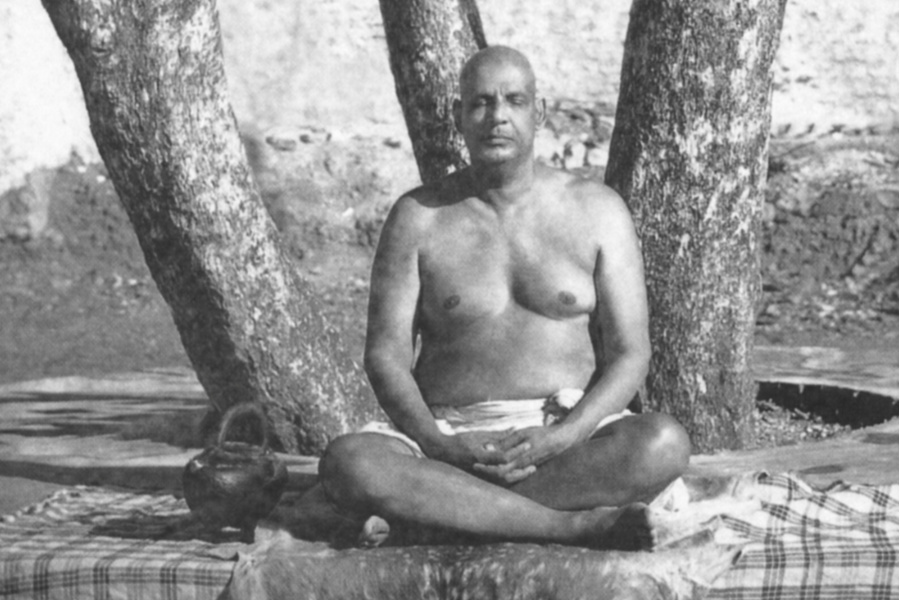
swami sivananda Monk meditating under tree outdoors image
Swami Sivananda, Uncategorized, Yoga of Synthesis

My Methodology to the Evolutionary Process

My Methodology to the Evolutionary Process 1. DETACHED, YET CAREFUL In my Kutir, there are many big trunks with hundreds of valuable books, articles and dresses. I do not know the exact contents of the trunks. I do not have any keys with me. I do not keep anything as ‘secret’. I cannot eat anything in private. I do not pretend to be a Vairagi with empty hands, expecting others to keep enough for my personal use. When I travelled on propaganda tours, I kept enough money with me in two or three pockets. I gave separate purses with plenty of money to those who accompanied me. I am very careful in keeping things like fountain pen, spectacles, study books, and various articles contributed by all great men and devotees. Previously when I locked my Kutir for a short brisk walk, I kept the key carefully tied at the end of my cloth. I may use a torn coat with patches but I must give others the superior quality of articles. I do not worry about debts. I find necessary support spontaneously coming from the Divine Source. I feel the grace of the Lord at every step. I feel the presence of the Lord at all times, behind all names and forms. 2. SADHANA TILL THE END OF LIFE The Sadhus and Yogis do Sadhana and study for some time and then give up the habit when they get a little name and fame. It is a great pity. That is the reason for their downfall. Sadhus and perfected Mahatmas should continue Sadhana till the last moment of their lives. Then only will it be possible to keep up the Divine Consciousness. That will be a fine example and a source of inspiration to others also. The saint need not talk and preach. His life itself is a scripture to illumine the world. Even today I write OM OM OM and HARI OM TAT SAT Mantras in all my letters. I fill up half a page of my letter with the Mantra or with philosophical ideas. Before commencing to write anything in a notebook or letters to students, I write the Mantra. I do about five or six items of Sadhana all the 24 hours: Japa, meditation, exercises including Asana and Pranayama, worship, study, writing work and service to the world, help to Mahatmas, the sick and the poor. Thus I charge my mind with divine consciousness at all times. I nicely combine rest and relaxation with deep breathing exercises. I have thus spent my 35 years of life at Rishikesh and derived wonderful fresh spiritual energy and strength in abundance. I maintain a high standard of health and enjoy peace and bliss at every moment. I just come out of my Kutir for one hour in the morning and manage all the affairs of the Ashram and give work to those who live in the Ashram and think of others who live at distant places. And yet I feel I can work for another ten hours every day. The secret is my systematic Sadhana and the grace of the Lord. 3. WHY SO MANY PHOTOGRAPHS In holy temples the authorities do not permit the taking of photographs of the idols. In Badri and Kedar, people do not allow cameras to be taken inside the temples. It is strange. Some of the sages and great men of India have serious objection to taking their photographs. They think that the spiritual power will be diminished by taking photographs. I do not believe at all in such things. I allow anyone to take any number of pictures while sitting, running, walking, talking, eating, playing, swimming in the Ganga, in meditation, study or worship at the temple. When devotees look at a picture, they get inspiration. Books and magazines have a special charm with the addition of a series of pleasant and instructive pictures. I do not have any restriction. I find only good in every thing. Great men from all countries come to the Ashram. Sincere devotees from all parts of the world come and stay with me for some months or years. They all desire to have a copy of my photo in their company. Why should I unnecessarily refuse and displease them? Groups of students who come to Rishikesh during vacation desire to have a group photo with myself in the centre. I have been photographed with the great men of the world, Maharajahs, sages and saints, devotees, Ashram workers, the sick persons in the Hospital and the school children. I have been photographed with my hat and suit, a loin cloth and an overcoat, with a turban like a school master, in a motor car, aeroplane and a bullock cart in Rameswaram during my All-India tour in 1950, and in a cycle-rickshaw during my stay at Roorkee in 1953. I make no distinction in having photographs with Maharajahs or devotees or coolies at the Railway Station platform, with great Mahatmas of the Himalayas or the scavengers of the Ashram. I have included the lively monkeys, cats, dogs of the Ashram, fish, cows, elephants and cheetahs also. I do not believe in the statement that my spiritual powers will be lost or influenced by the evil-eye. I look at the wonderful benefits the world would derive. I enjoy when I find people around me feel happy and cheerful. 4. SELF-RELIANCE I personally attended to my works such as, cleaning the room, bringing water from the Ganga for drinking purposes, washing clothes and vessels, going to the Kshetra for my alms. I myself used to type my articles and letters to aspirants. I carefully packed the packets and posted them. I never depended on my students. I did not like them to enter my Kutir frequently and disturb my daily routine. When I go out on tour, I myself carry my luggage. When porters carry some of my heavy packages of leaflets and books for free distribution, I pay them

My Methodology to the Evolutionary Process Read Post »

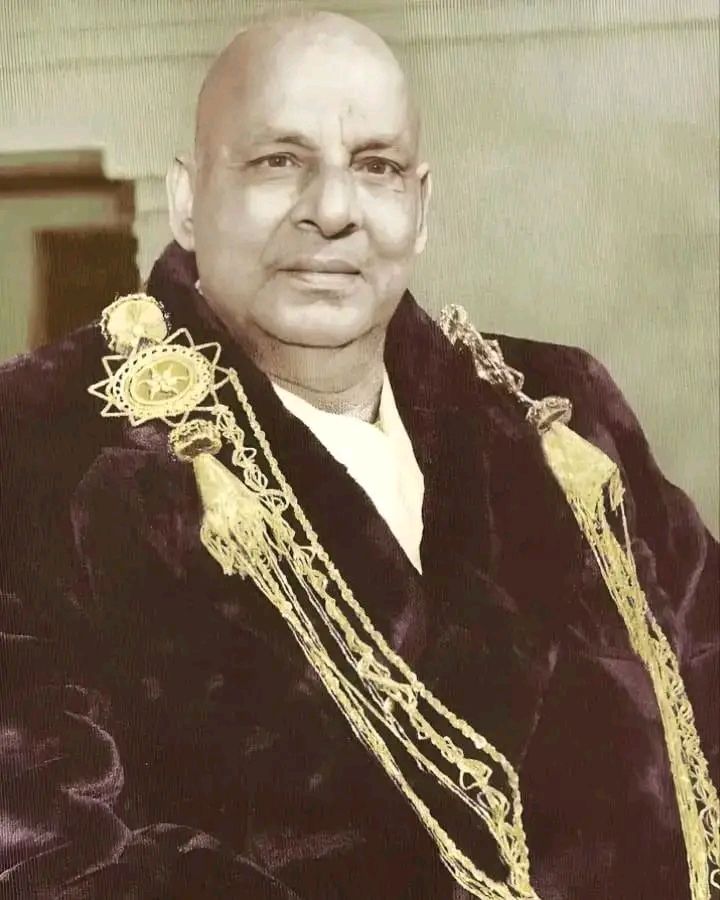
Swami Sivananda wearing ceremonial robe portrait
Swami Sivananda, Yoga of Synthesis

In The Master’s Own Words

In The Master’s Own Words Taken From The Autobiography of Swami Sivananda) SIVA’S EXPERIENCE I have seen God in my own Self.I have negated name and form, and what remains is Existence-Knowledge-Bliss Absolute and nothing else.I behold God everywhere. There is no veil.I am One. There is no duality.I rest in my own Self. My bliss is beyond description.The world of dreams has gone. I alone exist. Swami Sivananda SIVA’S MESSAGE Delight in good.Make up your mind to tread the spiritual path.Be patient.Go slowly. Go ahead. Be deliberate. Assert. Recognize.Realise: I am the immortal Soul.This is the discipline.This is Siva’s message.

In The Master’s Own Words Read Post »

Swami Sivananda wearing multiple garlands portrait image
Jnana Yoga, Swami Sivananda

Atman is Distinct from the Pancha Koshas

Atman is Distinct from the Pancha Koshas by Swami Sivananda Atman is distinct from the five Koshas or sheaths. The five sheaths are Annamaya Kosha (food-sheath), Pranamaya Kosha (vital sheath), Manomaya Kosha (mental sheath), Vijnanamaya Kosha (intellect-sheath) and Anandamaya Kosha (blissful sheath). ‘Maya’ means full. ‘Kosha’ means sheath. Just as the scabbard hides the sword, the outer shell covers the tamarind fruit, the coat covers the body, so also these five sheaths hide the Atman. Hence the significant name Kosha. Just as the Kosakar worm gets itself bound in its nest, so also the Jiva gets himself bound within the Koshas. Annamaya Kosha is this gross body. This is the densest sheath. This is generated by a combination of Shukla and Sonita (semen and female seed). It is born of food because semen is manufactured out of food only. The body is nourished by food. It dies without food. It gets itself merged in the Annamaya earth after death. It is the seat for the experience of pleasure and pain. It is subject to six changes (Shad-bhava-vikara, viz., birth, existence, growth, change, decay and death). Hence the name Annamaya Kosha. The Annamaya Kosha forms the gross body. The Pranamaya, Manomaya, Vijnanamaya Koshas go to constitute the subtle or astral body or Linga Sarira. The Anandamaya Kosha forms the causal body or Karana Sarira. The five Karma Indriyas are contained in the Pranamaya Kosha. The five Jnana Indriyas are contained in the Manomaya Kosha. Just as the clouds which are generated by the rays of the sun, and which exist only on account of the sun cover the sun, just as the smoke which has its existence through fire conceals the fire, just as the snake in the rope which owes its existence to the rope hides the rope, just as the jar which exists on account of the clay conceals the clay, just as the ear-rings which owe their existence to the gold hide the gold, the five Koshas which owe their very existence to the Atman cover the very Atman. It is the innate tendency of the human mind to identify the Self with the five Koshas. This is due to ignorance (Avidya) only. This is due to Adhyasa or superimposition. The ignorant man of dull intellect identifies the Self with the physical body. Others identify the Self or Atman with Prana, mind, intellect, or the Karana Sarira according to their various grades of intelligence. The Atman transcends the five sheaths. It is entirely distinct from the five sheaths. You will have to pierce through these five sheaths if you want to get knowledge of the Self. These five sheaths form a cave (Guha) and the Atman is hidden in the cave. The self-effulgent Atman shines in the midst of Pranas within the heart. A detailed knowledge and comprehensive understanding of the five sheaths is an indispensable requisite, if you want to attain Self-realisation and practise the ‘Neti-neti’ doctrine of Vedanta. The following arguments will prove clearly that the Atman is entirely distinct from the Annamaya sheath or physical body. The physical body is a mass of skin, flesh, blood, bones and lots of other filthy things. It can never be eternally pure, self-existent Brahman. It does not exist prior to birth or posterior to death. It lasts only for a short period. It is full of parts. It is ever changing. It has a beginning and an end. It is inert. It is the effect of Tamoguna. It is the combination of five elements. How can it be one’s own Self, the silent witness of changes in all things? There is no consciousness in a dead body. If the gross body is the Self or Atman, the corpse also would be as conscious as the living body. The physical body is dead as it were during the dreaming state. The physical body is not eternal. It disintegrates after death. As the physical body has a beginning and an end, it is an effect like the jar. The body cannot be the Self, because one continues to live even when particular limbs are gone, even when his legs and hands are amputated. That the Self is entirely different from the body, its characteristics, activities and states of which it is the silent witness is self-evident and needs no demonstration or proof. How can the inert body, being a pack of bones, covered with flesh and full of filth, and highly impure, he the self-luminous, self-existent, intelligent Self, the Knower, which is ever distinct from it? The foolish man identifies himself with a mass of flesh, fat, skin, bones and filth, while the man of discrimination knows that his Self is distinct from this perishable body. The stupid man thinks that he is the body. A Pundit who has read some religious books identifies himself with a mixture of body and soul, while the liberated sage regards the eternal, unchanging Atman as his Self. So long as the learned Pundit does not abandon his erroneous identification with this unreal, perishable body, there is no hope of salvation for him, even though he is a scholar in Vedanta. The identification with the physical body alone is the root cause which brings the misery of birth and death and its concomitant evils. Therefore destroy at once this identification. There will be no more chance for rebirths. O ignorant worldly man! Give up Moha for this physical body of filth, flesh and hones. Identify yourself with the pure Brahman, the Self of all and thus attain Immortality and everlasting Peace. There is an illusory connection between Annamaya Kosha and Atman through Anyonya Adhyasa or mutual super-imposition by which the Dharmas or attributes of the former appear on the latter and the Dharmas of the latter appear on the former. In Indian Logic there are two kinds of relationship, viz., Samavaya and Samyoga. Samavaya Sambandha is inseparable. This is the relationship that exists between a man and his limbs, a person and his

Atman is Distinct from the Pancha Koshas Read Post »

Swami Sivananda side profile blue tone portrait
Swami Sivananda, Yoga of Synthesis

Highest Teachings in Instructions

Highest Teachings in Instructions 1. Reduce your wants to the utmost minimum. 2. Adapt yourself to circumstances. 3. Never be attached to anything or anybody. 4. Share what you have with others. 5. Be ever ready to serve. Lose no opportunity. Serve with Atma Bhava. 6. Entertain Akarta and Sakshi Bhava. 7. Speak measured and sweet words. 8. Have a burning thirst for God-realisation. 9. Renounce all your belongings and surrender yourself unto God. 10. Spiritual path is a sharp-edged razor path. A Guru is absolutely necessary. 11. Have great patience and perseverance. 12. Never leave the Abhyasa even for a day. 13. The Guru will only guide you. You should yourself tread the path. 14. Life is short. Time of death is uncertain. Apply yourself seriously to Yogic Sadhana. 15. Maintain daily spiritual diary and record correctly your progress and failures. Stick to resolves. 16. Do not complain that there is no time for Sadhana. Reduce sleep and tall talks. Stick to Brahmamuhurta. 17. Let the thought of God (Reality) keep away the thought of the world. 18. Forget the feeling that you are so and so-a male or a female-by vigorous Brahma Chintana. 19. Never postpone a thing for tomorrow if it is possible for you to do it today. 20. Do not boast or make a show of your abilities. Be simple and humble. 21. Be cheerful always. Give up worries. 22. Be indifferent to things that do not concern you. 23. Fly away from company and discussion. 24. Be alone for a few hours daily. 25. Give up greediness, jealousy and hoarding. 26. Control your emotions by discrimination and Vairagya. 27. Maintain equilibrium of mind always. 28. Think twice before you speak and thrice before you act. 29. Give up back-biting, criticising and fault-finding. Beware of reaction. 30. Find out your own faults and weaknesses. See only good in others. Praise the virtues of others. 31. Forgive and forget the harm done by others. Do good to those who hate you. 32. Shun lust, anger, egoism, Moha and Lobha like a venomous cobra. 33. Be prepared to suffer any amount of pain. 34. Have a set of maxims always with you to induce Vairagya. 35. Treat sensual enjoyment as poison, vomited food, Vishta or urine. They cannot give you satisfaction. 36. Preserve your Virya carefully. Sleep always separately. 37. Revere ladies as Mother Divine. Root out the sex idea. Prostrate before all. 38. See God in every face, in everything. 39. Take to Sankirtan, Satsanga, prayer, when the mind is overpowered by lower instincts. 40. Face obstacles coolly and boldly. 41. Care not for criticism when you are in the right path. Yield not to flattery. 42. Respect rogues and scoundrels. Serve them. 43. Admit your faults plainly. 44. Take care of your health. Do not neglect daily Asanas and exercises. 45. Be active and nimble always. 46. Develop your heart by giving. Be extraordinarily charitable. Give more than one’s expectations. 47. Desires multiply misery. Develop contentment. 48. Control the senses one by one. 49. Develop Brahmakara Vritti by repeated thinking. 50. Have a check over all your thoughts. Keep them pure and sublime. 51. Do not lose temper when anybody insults, taunts or rebukes you. It is a mere play of words and a variety of sounds. 52. Rest your mind in God and live in Truth. 53. Be up and doing in the path of perfection. 54. Have a definite aim in your life and proceed cautiously. 55. Benefits of Mouna are incalculable. Never give up this practice. 56. Four important means for passion to enter the mind are sound, touch, sight and thoughts. Be vigilant! 57. Have intimate connection with none but God. Mix little with others. 58. Be moderate in everything. Extremes are always dangerous. 59. Every day have self-analysis and introspection. Know the amount of your growth. 60. Give up curiosities in spiritual path. Conserve your energy and concentrate. Think little of food, body and relatives. Think more of Atman. You must realise in this very birth itself!

Highest Teachings in Instructions Read Post »

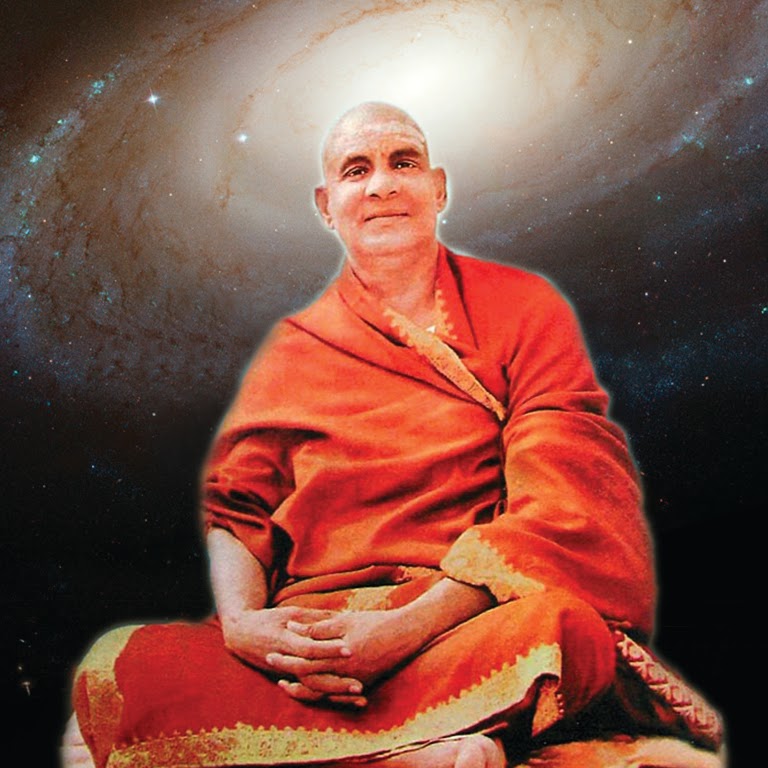
Swami Sivananda cosmic background portrait image
Jnana Yoga, Swami Sivananda

Atman is the Witness of the Three States

Atman is the Witness of the Three States by Swami Sivananda There are three states viz., Jagrat (waking), Svapna (dreaming) and Sushupti (deep sleep or dreamless sleep). Avastha means a state. The Vedantic school of thought attaches very great importance to the examination and study of the three Avasthas or conditions of life called waking, dream and dreamless sleep. It insists that these three states should be investigated thoroughly before one starts the meditation on the Atman which is hidden in all these names and forms, which is the witnessing consciousness of all the three states. You will find in Mandukyopanishad: The first quarter (foot) is Vaisvanara whose sphere is the state of waking, who is cognisant of the objective, who has seven members and seventeen mouths and whose fruition consists of the gross. The following are the seven members (Sapthanga): The effulgent region (heaven) is his head, the sun is his eye, the wind blowing in all directions is his breath, fire is his mouth, the all-embracing Akasa is his trunk or middle, ocean is his bladder or urinary reservoir, and the earth is his feet. The nineteen mouths (Ekonavimsathimukha) are the five organs of knowledge, the five organs of actions, five Pranas, mind, intellect, Chitta and Ahamkara. The second quarter is the Taijasa whose region is dream, who is cognisant only of the subjective, who has seven members and nineteen mouths and whose fruition consists of the subtle. The experiencer of the state of dream is called Taijasa, because, it being entirely of the essence of light, becomes the cogniser of the mind (consisting entirely of Vasanas and projecting itself into various shapes) irrespective of the objective. That is the state of deep sleep wherein the sleeper does not imagine anything and does not see any dream. The third quarter therefore is the Prajna, whose sphere is deep sleep, in whom all melts into one, who is a mass of all sentience, who is all bliss, whose function is of bliss and who is the way of sentience to the object. Jagrat is that state during which the Jivatma enjoys the gross objects of senses such as sound, etc., through the fourteen organs such as the mind etc., having the sun and the rest as their presiding deities. Svapna is that state during which the Jivatma experiences through the fourteen organs associated with the Vasanas of the waking condition, sound and other objects, which are of the form of the Vasanas created for the time being, even in the absence of gross sound and others. The Jivatma experiences Sushupti when it does not experience sound and other objects of senses from the cessation of the functions of the fourteen organs, there being no special enjoying consciousness on account of the absence of these organs. Virat under the orders of Isvara having entered this microcosmic body, and having Buddhi as his vehicle, reaches the state of Visva. Then he goes by the general names of Vijnanatma, Chidabhasa, Visva, Vyavaharika, the one presiding over the waking gross body and the one generated by Karma. Sutratma (Hiranyagarbha) under the orders of Isvara having entered the microcosmic subtle body, and having Manas (mind) as his vehicle reaches the Taijasa state. Then He goes by the name of Taijasa, Pratibhasika and Svapna Kalpita (the one bred out of dream). Then under the orders of Isvara, he who is coupled with Avyakta, the vehicle of Maya, having entered the microcosmic Karana body, reaches the state of Prajna. He goes then by the names of Prajna, Avicchinna, Aparamatrika and Sushupti-Abhimani (the presider over Sushupti). In Jagrat state the seat of Jiva is the eye. The Vak is Vaikari. The enjoyment is of a gross character. The Jiva enjoys the gross sensual objects. The Sakti that operates is the Kriya Sakti. The prevailing Guna is Rajoguna. The Abhimani or he who identifies with the state is known as Visva. In Svapna state the seat of the Jiva is neck (Hita Nadi). The Vak is Madhyama. The Jiva experiences subtle enjoyment through Vasanas. The Sakti that operates is the Jnana Sakti. The prevailing Guna is Sattvaguna. The Abhimani or he who identifies with the state is called Taijasa. The seat of the Jiva during deep sleep sate is the heart. Vak is Pasyanti. The Jiva enjoys the bliss of the Self. The Sakti is Dravya Sakti. The prevailing Guna is Tamoguna. The Abhimani or he who identifies with this state is Prajna. The tabular form that is given below will help you to remember the different points quite easily. Jagrat Avastha, Svapna Avastha, Sushupti Avastha Seat of Jiva is the eye, Seat is neck, Seat is heart Vaikhari (Vak), Madhyama, Pasyanti Gross enjoyment, Subtle (Vasana-maya) enjoyment, Ananda (Bhoga) Kriya Sakti, Jnana Sakti, Dravya Sakti Rajo Guna, Sattva Guna, Tamo Guna Abhimani is Visva, Abhimani is Taijasa, Abhimani is Prajna Fill a pot with the water of the sea, tie a rope to the neck of the pot and immerse the pot in the sea. Although the water of the pot is one with the water of the sea, it appears to be separate on account of the limiting adjunct, pot. When you draw out the pot again by the rope, the water of the pot gets differentiated. But the ether which supports the pot which contains water and the sea is always of one homogeneous essence during the three periods of time. Even so, the pot of subtle body or Linga Sarira of the Jiva that is filled with the sea-water of Ajnana and that is tied by the rope of Adrishta (the Samskara of good and evil deeds) gets involved during deep sleep in Samashti Ajnana which is the Upadhi of Isvara, viz., Maya. Although Vyashti Ajnana or the individual ignorance, the Upadhi of Jiva has become now one with the Samashti Ajnana, the sum total of all individual ignorances, it appears to be separate on account of the Upadhi of Linga Sarira. When the

Atman is the Witness of the Three States Read Post »

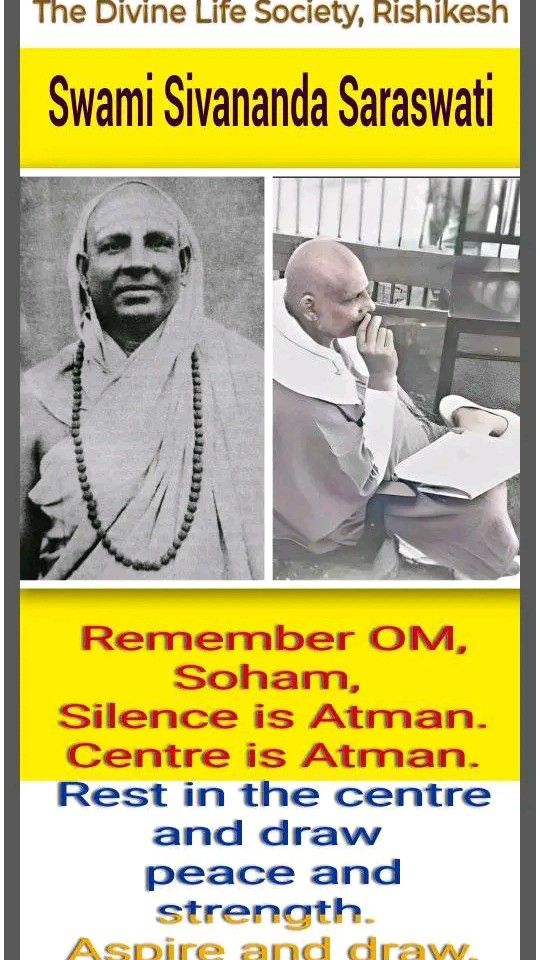
Swami Sivananda collage with OM meditation quote image
Swami Sivananda, Yoga of Synthesis

Yoga of Synthesis

Yoga of Synthesis Yoga of Synthesis is suitable for the vast majority of persons. It is a unique Yoga. Man is a strange complex mixture of will, feeling and thought. He is a triune being. He is like a tricycle or a three-wheeled chariot. He wills to possess the objects of his desires. He has emotion; and so he feels. He has reason and so he thinks and ratiocinates. In some the emotional element may preponderate, while in some others the rational element may dominate. Just as will, feelings and thought are not distinct and separate, so also, work, devotion and knowledge are not exclusive of one another. He must, therefore develop his heart, intellect and hand. Then alone can he attain perfection. Many aspirants have lop-sided development. They do not possess an integral development, as they neglect one or the other of these aspects of their personality. One-sided development is not commendable. Religion and Yoga must educate and develop the whole man – his heart, intellect and hand. Then only he will have integral development. In the mind there are three defects, viz., Mala or impurity, Vikshepa or tossing, and Avarana or veil. The impurities of the mind should be removed by the practice of Karma Yoga, by selfless service. The tossing should be removed by worship or Upasana, by Japa and devotion. The veil should be torn down by the practice of Jnana Yoga, i.e., by study of Vedantic literature, enquiry, self-analysis, service to the Guru, and deep meditation. Only then Self-realization is possible. If you want to see your face clearly in a mirror, you must remove the dirt in the mirror, keep it steady, and remove the covering also. You can see your face clearly in the bottom of a lake only if the turbidity is removed, if the water that is agitated by the wind is rendered still, and if the moss that is lying on the surface is removed. Even so is the case with Self-realization. Action, emotion and intelligence are the three horses that are linked to this body-chariot. They should work in perfect harmony or unison. Then only the chariot will run smoothly. There must be integral development. You must have the head of Sankara, the heart of Buddha, and the hand of Janaka. The Yoga of Synthesis alone will develop the head, heart and hand, and lead one to perfection. To become harmoniously balanced in all directions is the ideal of religion and of Yoga. This can be achieved by the practice of the Yoga of Synthesis. To behold the one Self in all beings is Jnana, wisdom; to love the Self is Bhakti, devotion; to serve the Self is Karma, action. When the Jnana Yogi attains wisdom, he is endowed with devotion and self less activity. Karma Yoga is for him a spontaneous expression of his spiritual nature, as he sees the one Self in all. When the devotee attains perfection in devotion, he is possessed of wisdom and activity. For him also, Karma Yoga is a spontaneous expression of his divine nature, as he beholds the one Lord everywhere. The Karma Yogi attains wisdom and devotion when his actions are wholly selfless. The three paths are, in fact, one in which the three different temperaments emphasize one or the other of its inseparable constituents. Yoga supplies the method by which the Self can be seen, loved and served. Hence everyone should have one Yoga as the basic Yoga and combine other Yogas. You can combine Nishkama Karma Yoga, Hatha Yoga, Raja Yoga, Bhakti Yoga, Sankirtan Yoga, etc., with Jnana Yoga as the basis. This is my Yoga of Synthesis, which will ensure rapid spiritual progress. A little practice of Hatha Yoga (Asanas and Pranayamas) will give you good health. Raja Yoga will steady your mind. Upasana and Karma Yoga will purify your heart and prepare you for the practice of Vedanta. Sankirtan will relax your mind and inspire you. Meditation will take you to liberation. Such a Yogi has all-round development. The Yoga of Synthesis will help you to attain God-realization quickly. Upanishads, Gita and all other scriptures speak of this Yoga. Therefore, O Mokshapriya, practice this unique Yoga of Synthesis and attain Self-realization quickly. Here is my little song of the Yoga of Synthesis, for your daily practice: Eat a little, drink a littleTalk a little, sleep a littleMix a little, move a littleServe a little, rest a littleWork a little, relax a littleStudy a little, worship a littleDo Asana a little, Pranayama a littleReflect a little, meditate a littleDo Japa a little, do Kirtan a littleWrite Mantra a little, have Satsang a littleServe, Love, Give, Purify, Meditate, RealizeBe good, Do good; Be kind, Be compassionateEnquire ‘Who am I ?’, Know the Self and be Free

Yoga of Synthesis Read Post »

Swami Sivananda Framed Swami Sivananda portrait golden tone image
Jnana Yoga, Swami Sivananda

Atman is Distinct from the Three Bodies

Atman is Distinct from the Three Bodies by Swami Sivananda There are three bodies, viz., gross body, subtle body and causal body. The bodies and Koshas can have no existence independent of Atman. That which is seen by the physical eyes, that which is composed of flesh, bones, fat, skin, nerves, hair, blood, etc., is the physical body. It has six changes, viz., birth, existence, growth, modification, decay and death. This body grows in youth and decays in old age. It develops when good nourishing food is given, and decays if food is withdrawn, or if there is some disease. Because it disintegrates and decays, it is called Sarira. As the body is burnt after death, it is called Deha. The subtle body is composed of seventeen Tattvas, viz., five Jnana Indriyas, five Karma Indriyas, five Pranas, mind and intellect. The subtle body develops through intense Abhimana or egoism and strong Raga-Dvesha, and decays when egoism and Raga-Dvesha are destroyed, or decreased. The subtle body is burnt by the three kinds of Tapas, viz., Adhyatmic, Adhibhautic and Adhidaivic. Ajnana or Avidya alone constitutes the Karana Sarira. The causal body develops through the idea, I am Jiva and decays when this idea is annihilated or decreased, when ‘I’ is identified with Brahman. The subtle and causal bodies are thickened in worldly-minded persons and are thinned out in earnest aspirants. The fire of wisdom (Jnanagni) completely destroys the subtle and causal bodies. Subtle body is also called Linga Sarira as it enables one to have the experience of hearing, feeling, seeing, tasting and smelling and to realise the Atman through meditation. That which is the cause for the gross and subtle bodies is called Karana Sarira or causal body. We can clearly see the physical body. As we cannot see the subtle body, it is sometimes asked how can we say that the subtle body exists? The existence of the subtle body can be known or inferred from the effects caused by the seventeen organs. Why can we not say that these seventeen kinds of actions are done by the physical body? In deep sleep, swoon and death, these seventeen kinds of actions are not done by the physical body. Therefore we cannot say that these belong to the physical body. Therefore, we should admit that a subtle body endowed with seventeen faculties does exist irrespective of the physical body. An objector says: The gross and subtle bodies do not work separately. They both conjointly do the functions of hearing, seeing, etc. If you reflect well, you will find that the subtle body does all the functions, and not both together. An illustration will clear this point well. The fire cooks food and does other actions with the help of the fuel, and yet the act of cooking is due to the fire only and not due to the fuel. Even so the actions of seeing, hearing, etc., that are done by the subtle body which depends upon the gross body for its operations are due to the subtle body and not due to the gross body. Is it clear now? Therefore, it must be clearly admitted beyond a shadow of doubt that the subtle body with seventeen faculties does exist. The physical body is inert. It has a beginning and an end. It is full of impurities. It is perishable. It is a product of five elements. It is full of parts. It can be seen by the naked eye. It is finite (Parischinna). It is changing. So, it cannot be self-existent, self-luminous, and Satchidananda. The subtle body is also inert. It has a beginning and an end. It is a product of five Tanmatras or subtle elements. It is changing. It is perishable. It is also finite. This cannot be the ever pure, intelligent Atman. The causal body is nothing but Ajnana or primitive ignorance. It is also inert. Man says: I am a person of Ajnana. Though it is beginningless, it has an end. It is death for the causal body when one gets Knowledge of the Self. This cannot be the eternal, pure, indivisible, infinite Atman. The Atman is entirely distinct from the three bodies. He who has realised his Atman and who knows that he is entirely distinct from the three bodies is an emancipated person. He has crossed this ocean of Samsara. He is Brahman Himself. He is adored in the three worlds. His glory is indescribable.

Atman is Distinct from the Three Bodies Read Post »

Swami Sivananda smiling with open arms image
Swami Sivananda, Yoga of Synthesis

Moksha Gita

Moksha Gita Fear not, my child. In reality there is no death for thee. There is a means for crossing this ocean of relative existence and attaining immortality or the supreme bliss. I shall teach thee now Brahma-vidya (knowledge of the absolute). Salutation to Satchidananda Para (Supreme) Brahman, that glorious first preceptor, who is self-luminous, eternal, indivisible, pure, spotless, desireless, attributeless, timeless, spaceless, changeless, beginningless and endless. That ultimate reality which is the support for this world, body, prana (life), mind and senses, which is the womb for the vedas, which is all-pervading and all-permeating, which is colourless, odourless, tasteless, nameless and formless-that something shines eternally. Some indescribable supreme principle which is imperishable, unborn, undecaying, fearless, motionless, one without a second, ancient and infinite – that alone exists. What is neither short nor long, neither that much nor this much, neither black nor white, neither stout nor thin, neither good nor bad-that should be understood as Brahman. That which is neither subtle nor dense, which has neither caste nor name, which is immutable, immortal and bodiless, which is beyond the reach of mind and speech-that should be understood as Brahman. Brahman is distinct from the gross, subtle and causal bodies. He is the soul of all. He is the inner ruler of all. He is eternally free. He is without action, and without motion. Brahman cannot be defined. To define Brahman is to deny Brahman. The only adequate description of Brahman is a series of negatives. That is the reason why the Upanishads declare, “Neti-neti”, “not this, not this”. Maya (illusion) is the upadhi (limiting adjunct) of Isvara (God). She is the illusory power of Brahman. She keeps the lila (creative play) of Isvara (God), through her three gunas (qualities), viz., satva (purity), rajas (passion) and tamas (darkness). Maya is not non-existent because it appears, neither is it existent because it is destroyed by the dawn of knowledge. Maya-is ‘not That’. It is an indescribable appearance. Maya is neither sat (real) nor asat (unreal). Maya is anadi santam (beginningless) but has an end only for the sage who has realised the self). Maya-is suddha satva or pure satva. He who gets knowledge of the self having overcome maya or the illusory power, will alone know what maya is, how it arises and is destroyed. The five elements, the five tanmatras (subtle or root elements), and the various objects of the world are all products or modifications of maya. Just as you can infer the existence of fire through smoke, so also you can infer the existence of maya through its various manifestations. Maya is of the nature of mind. Maya generates different degrees of illusion. Maya pervades everywhere. If your mind is destroyed by discrimination and vicara (enquiry into the self), then maya will not afflict you. This mind which ever hankers after sensual objects is the seed of maya. If the mind is annihilated maya will vanish. You will attain the state of quiescence. Brahma jnana (knowledge of the absolute) will dawn in you. Avidya (ignorance) is malina satva (weakened purity). It is the upadhi (limiting adjunct) of jiva (individual soul). It is the karana sarira (causal body) of the individual soul. Avidya is anandamaya kosa. Avidya is a false perception by which the ignorant jiva takes the body and intellect as pure, permanent and a source of pleasure. Just as a king acts the part of a beggar, out of his own free will on the stage in a drama, so also the Satchidananda Brahman acts the part of a jiva in the drama of the world out of his own free will for sport. Just as men with a defective vision behold a white thing as yellow, so does one perceive the self as the body on account of avidya or ignorance. When one gets knowledge of the self, this avidya vanishes. It is the destruction of avidya that is the Brahmic seat. Just as the mirror is dimmed by dirt, so Brahman is veiled by avidya. Therefore human beings are deluded by this avidya. Mind, senses, egoism, intellect and body are the efforts of avidya. If the cause is destroyed, the effects are destroyed by themselves. This universe of names and forms has its origin in ignorance. It is dissolved by knowledge of the self. The universe, being other than the self, is unreal and like a dream. It is like a mirage. Just as a snake is superimposed on the rope, silver on the mother-of-pearl, a thief in the post, city in the clouds, mirage in the desert, blueness in the sky, so also this world is superimposed on Brahman. Just as it is water alone that appears as waves, ripples, etc., gold alone as ear rings, bangles, etc., clay alone as pots, jars, etc., threads alone as cloth, towel, etc., so also does Brahman alone appear as many universes. Children regard a wooden elephant as an elephant, but the grown-up persons treat it as wood. Even so the wise behold only Brahman everywhere but the ignorant perceive the non-self only. The whole universe is within Brahman. It appears as external to you, just as your body appears external to you in the mirror on account of maya (illusion). Just as a man does not behold the object which he has seen in his dream when awake, so also the jivanmukta (liberated sage) does not perceive the universe after he attains knowledge of Brahman. The mind has the power of creating or undoing the whole universe in the twinkling of an eye. Slay this mind through vicara (enquiry), destruction of vasanas (psychological impressions or conditioning) and control of its fluctuation. Mind is a bundle of vasanas (subtle desires). Through vasanas bondage is caused. Destruction of vasanas will bring freedom. The mind will attain quiescence like a gheeless lamp if the vasanas are destroyed. Just as a silk-worm is caught in its own cocoon, so also man is caught in this vast net of samsara

Moksha Gita Read Post »