



Hari Om

Menu

Swami Sivananda

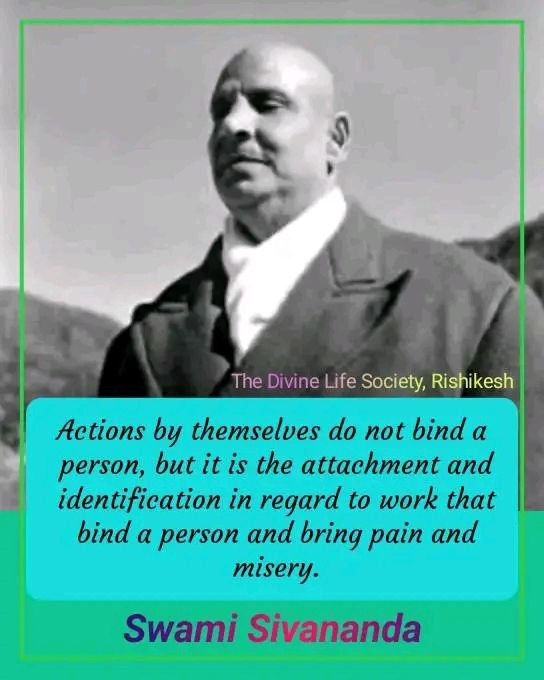
Swami Sivananda portrait with detachment and action quote image
Jnana Yoga, Swami Sivananda

Vedanta Questions and Answers

Vedanta Questions and Answers 1. WHAT IS ANUBANDHA-CHATUSHTAYA? This is the fourfold theme of Vedanta Philosophy. The first is the discussion about the Adhikari or the fit student of Vedanta. The student should have the necessary qualifications of the Sadhana-chatushtaya. The second is the discussion regarding the Vishaya or the main subject of the Vedanta. The Subject treated of is Brahman or the Absolute. The third theme is Sambandha or the relation that exists between the subject-matter and the text, i.e., the coherent exposition of the subject. The fourth is Phala or the fruit of the study of Vedanta. The fruit hereof is Moksha or Liberation. 2. IN WHAT WAY KARMA AND UPASANA PREPARE THE ASPIRANT FOR VEDANTA? Karma is performance of one’s own prescribed duty without the desire for any fruit therefrom. This removes the Mala or the impurity that is in the mind. Upasana is worship and contemplation of Saguna Brahman. This removes the Vikshepa or the tossing or the distraction present in the mind. Only after removing these two defects can one take up the study of the Vedanta in order to remove the last defect, viz., Avarana or veil of ignorance. 3. GIVE THE BEST DEFINITION OF BRAHMAN AND EXPLAIN ITS MEANING. The best definition of the nature of Brahman is ‘Satchidananda’. Sat is eternal existence. Chit is eternal and infinite consciousness. Ananda is eternal bliss. This existence, consciousness and bliss are really one and indicate the transcendental character of the Absolute. 4. WHAT IS THE DIFFERENCE BETWEEN MAYA AND AVIDYA? Maya is the cause, whereas Avidya is the effect. Maya qualifies Isvara but does not limit him. Maya is the Viseshana and not the constituent of Isvara’s existence. But Avidya is an Upadhi, a limitation, which enters into the very constitution of the Jiva. Maya is Suddha Sattva, Avidya is Malina Sattva or Sattva mixed with Rajas and Tamas. Maya is cosmic, Avidya is individual. Maya allows cosmic consciousness in Isvara. But Avidya limits the Jiva to body-consciousness. 5. WHAT IS THE VAIRAGYA? True Vairagya is born of discrimination and not of mere failure in life. Real dispassion is the effect of the perception of the impermanence of things, the falsity of the existence of happiness in objects, the knowledge of the distinction between reality and appearance. This Vairagya goes even up to Brahma-Loka, the highest phenomenal manifestation, and discards it as a dry straw. In other words. Vairagya is distaste for everything that is objective. 6. WHAT IS JAHAD-AJAHAD-LAKSHANA? HOW IS IT APPLIED IN VEDANTA? This literally means ‘leaving and taking’. For example, in a statement like ‘This is that Devadatta’, the words ‘this’ and ‘that’, though in fact signify immediate and remote objects respectively, are known to indicate one common person Devadatta. The differences denoted by the two adjectives are rejected in order to identify the single person called Devadatta. This illustration is applied in Vedanta to identify the essential meanings of the words ‘Tvam’ and ‘Tat’ in the declaration of the Upanishad ‘Tat Tvam Asi’. The limitations characteristic of the Jiva and Isvara are discarded and the underlying substratum, namely, the one consciousness which is unlimited is taken up as the sole reality. 7. WHAT IS SRAVANA-CHATUSHTYA? This is the fourfold process of Self-realisation, beginning with Sravana or hearing of the Vedantic Truth from the Guru, Manana or deep thinking and reflection over what is heard, Nididhyasana or profound meditation on the Self, and ending with Sakshatkara or realisation. 8. EXPLAIN THE THEORY OF THE EVOLUTION OF THE UNIVERSE. There is an indescribable power in Brahman called Mula-Prakriti. This consists of three Gunas or modes called Sattva, Rajas and Tamas. Originally it is in Samya-Avastha or the state of equilibrium. It divides itself into Maya, Avidya and Tamasi through the three modes respectively. Maya gives rise to Isvara, Hiranyagarbha and Virat. Avidya gives rise to the individual Jivas. Tamasi divides itself into Avarana and Vikshepa. Avarana is twofold; viz., Asattva Avarana and Abhana Avarana. The Vikshepa Sakti gives rise to the five Tanmatras, viz., Sabda, Sparsa, Rupa, Rasa and Gandha. The Antahkarana is formed of the collective totality of the Sattva portion of these Tanmatras. The Prana is made up of the collective totality of the Rajasic portion of these Tanmatras. The Jnana Indriyas and the Karma Indriyas are respectively formed of the Sattvic and the Rajasic portions of these Tanmatras differently. The five gross elements, viz., sky, air, fire, water and earth are the effects of the quintuplication of the Tamasic portion of these Tanmatras. Thus is the creation of the universe. 9. WHAT IS DUHKHA PARAMPARA? This is the genealogy of pain. The original cause of all trouble is Ajnana or ignorance. From Ajnana comes Aviveka or non-discrimination. From Aviveka comes Ahamkara or egoism. From Ahamkara arises Raga-Dvesha or love and hatred towards objects. Raga and Dvesha beget Karma or action guided by its parents. Karma causes Janma or birth and from birth as an embodied being arises pain. Hence the cause must be destroyed in order to destroy the effect. 10. WHY IS NOT PAIN THE ESSENTIAL NATURE OF THE ATMAN? The essential nature of a thing is called Svabhava. Its existence is called Svarupa. We cannot separate Svabhava from Svarupa. If pain is the Svabhava of the Self, destruction of pain would mean the destruction of Svabhava itself, i.e., the destruction of the Atman or the Self. To destroy the sweetness of sugar, the sugar itself has to be destroyed. Because destruction of the Atman is an absurd idea, and because destruction of pain is the only purpose of all endeavours, pain cannot be the essential nature of the Atman. 11. PROVE THAT SAT, CHIT AND ANANDA ARE ONE AND THAT THEY INDICATE INFINITY. Sat is existence. Existence has a value only when it is conscious, for consciousness can never be separated from existence as we see from our own experience. Since pain is the effect of a want, and since want is absent in Brahman because

Vedanta Questions and Answers Read Post »
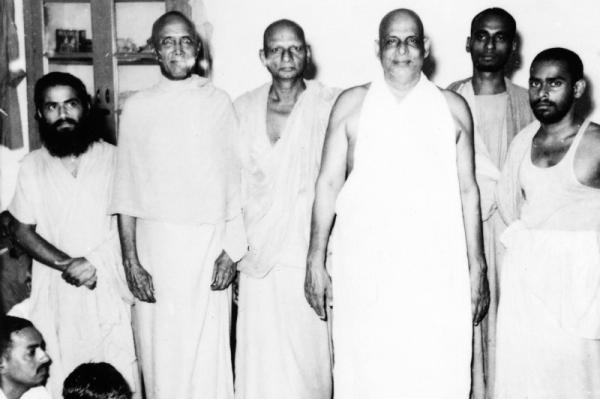
Swami Sivananda Group of men in traditional robes standing together. photo
Jnana Yoga, Swami Sivananda

Philosophy of Proverbs

Philosophy of Proverbs Very often we run after the shadow, discarding the substance in the background. In the spiritual sense, this theory is the very root of bondage. Instead of seeking God and realising his oneness with Him, man runs after His shadow, the world. This is the cause of all misery on earth. Even in the case of the meaning of the word ‘God’ itself we more often than not understand the ‘shadow’ rather than the real ‘substance’ that is God. We concentrate so much on this unreal thing that in course of time we lose consciousness of the existence of the real. In our admiration of the tree, we miss the grand spectacle of the wood! This is true of our understanding of the scriptures, too. How often have not reformers had to thunder forth to antagonistic millions the true significance of the teachings of the Prophets and Saints and dispel the darkness of wrong notions that had covered up the essence! The origin of most of the religions of the world could be traced out to this sort of renaissance. The source was only one religion. In course of time, people of deluded understanding began to interpret its tenets variously and started forming parties. They split themselves into opposing camps, each owning to be the sole votaries of the real purport of the ancients’ utterances. Then will arise a star who will dive deeper into the ocean of wisdom and bring out the pearl of Truth. Some will follow him; others will still strike the discordant note. The new Seer will get together a band of followers to propagate his teachings; and these will establish a new religion. And, so the game has gone on for ages! Besides the scriptural teachings, all religions have had the ‘sayings’ of their prophets. These are also classed under proverbs, though these include other ideas. Those of the proverbs which have such a spiritual background have as much of deep, secret and mystical meaning as the scriptural utterances themselves. This makes the real idea which they wish to convey to be misconstrued by posterity; and often some nonsensical notes are sounded in a futile attempt to give a true rendering of this sublime music! Let us take a few examples from the Tamil literature. There is a beautiful (and amusing as it has become nowadays) proverb which means: When you see (the) dog, there is no stone; when you see (the) stone, there is no dog. This has come to be regarded as a remark made by someone in a light vein, or at least not in a very serious mood. The proverb is taken to convey what it literally does. A man is passing along the road in a village. Several dogs stroll about him. What a pity! he is made to think, There are so many dogs all about me. How I wish there was a stone near at hand so that I could enjoy a throw at them! During a pilgrimage the same man looks at beautiful, well-polished stones lining the banks of the Ganga; then he thinks, What a pity, again! Here there are any number of the most lovely stones. But, not a dog to hit them with! This is the interpretation of the vulgar proverb. Even the serious amongst humanity nowadays will at best interpret it to man that this proverb merely restates an old idea regarding earthly fortunes. Where money is most needed, it is usually absent; where it is already superfluous, it is found in more and more abundance. Few care to stop to think what the proverb really has to convey. Before we proceed to examine the underlying sense of this proverb let us divert our attention to ‘God’ vis-a-vis the world. What is this world and what is God? Brahma satyam jaganmithya jivo brahmaiva na aparah, roared the ancient seers. God alone is truth; the world does not exist at all, they said. But, we see it? Posed the uninitiated. Yes, we see it as we see snake in the rope; as we see water in the mirage; as we see silver in the mother-of-pearl. A man comes home from his office, tired and exhausted and as he steps into his house, he feels that he has trodden a snake. He is not able to examine the thing in the darkness. In that weakened state, his reasoning fails him. His head reels; he is in the grip of fear. He imagines that he has been badly bitten by this snake. He staggers into the house and collapses into the nearest bed. At once a hue and crythe man has been bitten by the snake! He almost loses consciousness. Crowds of people surrounded his cot. Weeping and wailing; praying and prattling; pandemonium prevails in the house. A seasoned man with flowing grey hairs of wisdom enters and shouts: Leave the way, let me examine the patient. He gets nearer the bed, and calmly examines the man. Unable to detect any signs of snake-bite, he thinks, his hands combing the long beard, No, this can’t be. He is determined! Let me see, he says, Where did the snake bite you? The dying man feebly answers: Four yards away from the entrance. With a lantern in hand, the old man sets out on his errand. Of course, the snake if it had bitten him would not be stationary, still. Exactly on the spot mentioned by the patient, there was the snake. But the flash of light has turned it into an old garland of flowers! Triumphantly, with that garland-snake in hand, the old man returns to the deathbed and with a sagacious twitch playing on his lips, he exhibits the snake to the astounded audience. This is, my dear man, the snake that bit you. It has no poison-fangs. So, wake up. Change your shirt which is wet with perspiration. The dying man is at once electrified and the pain and fear leave

Philosophy of Proverbs Read Post »

Swami Sivananda meditating with faith and devotion quote image
Jnana Yoga, Swami Sivananda

Mahavakyas

Mahavakyas by Swami Sivananda THAT TVAM ASI – (That Thou Art) Introduction ‘THAT THOU ART! – ‘Thus the Sruti emphatically and boldly voices forth the highest and most sublime truth that is the essence of all scriptures, nay, that is the goal of all scriptural teachings and assertions. It is the greatest declaration ever made on the face of the earth. It is the profoundest teaching ever given since the dawn of creation. It is the only way of expressing and indicating the Truth that is beyond the reach of the mind and the senses. It is the one unique teaching that comforts the distressed humanity and infuses inner spiritual strength and courage into them to pooh-pooh the miseries and pains of mundane existence and soar high into the realm of non-dual, all-blissful eternal Existence. If it be simple in the words that it employs, it requires the well-polished sharp intellect of the advanced aspirant to understand the subtlest Truth that it wishes to convey. If it be unostentatious in its expression, it is at once majestic and imperative in its utterance. If it be brief and blunt, aphoristic in its exposition of the highest Truth, it readily gets instilled deep in our hearts and minds, and from within us, it mysteriously raises our consciousness to that non-dual eternal plane of existence. Such is the greatness of this Mahavakya, Tat-Tvam-Asi, which the Upanishadic Rishi, Uddalaka, employed to impart Brahma-Vidya to his son and disciple, Svetaketu. The Means to Realisation Man is essentially Divine. He is not different from that eternal, non-dual substratum, Existence-Knowledge-Bliss Absolute. He is neither born into this Samsara, nor is he ever in a state of bondage. He is ever free, Nityamukta. His present miseries and sufferings, his pains and limited pleasures, births and deaths, are all due to his erroneous identification with the five sheaths and the three bodies. And, in turn, this erroneous identification is the result of not-knowing of the truth, or the forgetfulness pertaining to it. This ignorance, Causal Ignorance, is at the root of all actions and reactions. Only the annihilation of this ignorance can lead us to our original state of non-dual blissful immortal existence. This ignorance is not born of anything so that it can be destroyed through some action or other. It is simply a negative aspect. Just as absence of lights brings in darkness, absence of the sun brings in the night, so too, absence of Real Knowledge has brought in this Causal Ignorance. No amount of fighting with darkness or night will destroy them. But, when the lamp or the sun is there, they disappear into nothingness, without leaving a trace. Similarly, where there is True Knowledge, there exists not even a trace of this Causal Ignorance. That True Knowledge is the Knowledge pertaining to our real, eternal, immortal Self which is not touched either by the causal ignorance or the effects of causal ignorance, just like the sun is not touched by the darkness of the night. So, knowledge alone is the means for the Realisation of the Self; Self-Knowledge alone can liberate man from the meshes of Samsara. The Mahavakyas The scriptures, the Vedas and the Upanishads, exist to impart this Knowledge to all humanity so as to free them from this evanescent and ephemeral existence. Scriptural declarations can be grouped under three heads, viz.,Vidhi-Vakya or injunctions; Nishedha-Vakya or prohibitions; and Siddharthabodha-Vakya or the Mahavakya that proclaim the highest Truth, the identity of the Jivatman with the Paramatman, of the individual soul with the Supreme Soul. The first two exist to purify the deluded Jiva and make him fit to understand and assimilate the third; for, only in a purified mind intuition will dawn, and with that alone can one attain the Highest Knowledge. There are four Mahavakyas, each of the four Vedas containing one of them. The four Mahavakyas are: Prajnanam Brahma: ‘Consciousness is Brahman.’ This is called the Svarupabodha-Vakya or the sentence that explains the nature of Brahman or the Self. This is contained in the Aitareya-Upanishad of the Rigveda. Aham Brahma Asmi: ‘I Am Brahman.’ This is the Anusandhana-Vakya, the idea on which the aspirant tries to fix his mind. This is contained in the Brihadaranyaka Upanishad of the Yajurveda. Tat Tvam Asi: ‘That Thou Art.’ This is the Upanishadic Vakya contained in the Chhandogya Upanishad of the Sama Veda. The teacher instructs through this sentence. Ayam Atma Brahma: ‘This Self is Brahman.’ This is the Anubhavabodha Vakya or the sentence that gives expression to the inner intuitive experience of the aspirant. This is contained in the Mandukya Upanishad of the Atharva Veda.Of these four Mahavakyas, Tat Tvam Asi is of great importance. It is the Upadesa-Vakya or Upanishad-Vakya. The Guru initiates the disciple into Brahma-Jnana only through this Vakya. This is also called Sravana-Vakya. This Mahavakya gives rise to the other three Vakyas. The Guru instructs the disciple through ‘Tat Tvam Asi, ‘Thou art That. The disciple hears it (Sravana), considers it deeply and reflects over the idea contained in it (Manana), meditates on that idea (Nididhyasana) and enters into Samadhi which leads to the Aparoksha Anubhuti, signified in the assertion Aham Brahma Asmi. To this experience, he gives expression through the Mahavakya Ayam Atma Brahma, and also asserts the nature or Svarupa of Brahman or the Self that he intuitively experiences through the Mahavakya Prajnanam Brahma. The three words contained in this Vakya have got to be carefully analysed and understood. Through Sravana and Manana of the meaning of this Sentence, indirect knowledge or Paroksha-Jnana is had, and that is enough to destroy all sins. This Knowledge helps the aspirant to disown all actions and reactions, to renounce all attributes that he has taken upon himself in ignorance. He can lead a care-free, unperturbed and detached life in this world. Nididhyasana and Samadhi give him the direct Knowledge or Aparoksha Jnana that frees him from causal ignorance which is the cause of the successive recurrence of births and deaths.

Mahavakyas Read Post »

Swami Sivananda portrait with logic and God quote image
Jnana Yoga, Swami Sivananda

Sivanadna-Vidya

Sivanadna-Vidya by Swami Sivananda Khanda I Nature of Brahman Om! Brahman or Siva or the Impersonal Abso�lute is the Source and Substratum for the world of phenomena. He is the Source of the Vedas. From Him the world proceeds. In Him it lives. In Him it gets dissolved. He is Eternal, Self-existent, Self-luminous and Self-contained. He is all Full. He is beyond Time, Space and Causation. He is birthless, deathless and decayless. Khanda II Contradictions Reconciled He moves and moves not. He moves in His mani�fested or Saguna Aspect. He moves not in His Transcendental Aspect. He is smaller than the smallest and greater than the greatest. He is smaller than the smallest because He is the Soul of even the ant, the mustard and the atom, and He is extremely subtle. He is greater than the greatest because He is the Soul of this entire universe and extends beyond this uni�verse also, and He is Infinite. He is nearer than the nearest and farther than the farthest. He is nearer to the thirsty aspirants, but He is farther to those who are worldly-minded. He is nearer than the nea�rest because He is the Inner Soul of everything. He is farther than the farthest because He is Infinite. He is beyond the reach of mind and the senses (Avaangmanogochara). He cannot be reached by people of gross mind and outgoing senses. But He can be attained by that aspirant who is endowed with subtle, sharp, one-pointed intellect (Manasaivaanudrashta�vyam), and who is equipped with the four means, and the grace and the instructions of a Brahma-Srotri, Brahma-Nishtha Guru, on Tat-Tvam-Asi Mahavakya. Khanda III Vision of a Sage and a Worldly Man Brahman is the only Reality. He is the only Living Truth. The liberated Sage or Jivanmukta be�holds Brahman only everywhere. There is no world for him in the three periods of time. But the ignorant man sees only the five elements and the forms. The world of names and forms only is real for him. He denies Brahman altogether. Khanda IV Superimposition (Adhyasa) The man who moves in a desert in the noon sees mirage at some distance and mistakes it for water. He runs there to drink water but is disappointed. The rays of the Sun fall on the bed of sand and generate the mirage. The mirage appears as a sheet of water, and deludes man. Even so the worldly man beholds the five elements and the combinations, i.e., names and forms, on account of ignorance or Avidya. Avidya hides the real and makes the unreal appear as real.In the twilight a man mistakes a rope for a snake. gets frightened and cries. When a friend brings a light his fear vanishes. He sees a rope only. Even so a worldly man mistakes the impure, perishable body for the Pure Imperishable Atman and suffers in diverse ways on account of this erroneous notion or superimposition (Adhyasa) caused by Avidya. When the Avidya is destroyed through Brahma-Jnana or Knowledge of the eternal through initiation into the Significance of Tat-Tvam-Asi Mahavakya by the Preceptor or Brahma-Vidya Guru, he becomes identi�cal with the Supreme Soul. The world of names and forms vanishes in toto. He sees Brahman only. All his fears terminate. Khanda V Happiness is in Atman Only The feeling of pleasure is an internal feeling. There is no pleasure in physical objects, though they excite pleasure in man. Sensual pleasure is only a reflection of the Bliss of the Atman. When a desire is gratified, the mind moves towards the Atman and rests in Atman for a very short time, and the man ex�periences pleasure. Atman or Brahman only is the embodiment of Bliss (Ananda-Svarupa). Atman is full of Bliss (Anandamaya). Atman is a mass of Bliss (Ananda-Ghana). Khanda VI One Brahman is Both Material and Efficient Cause Brahman is both the material and the efficient cause of this universe (Abhinna Nimitta Upadana Karana). He is the fictitious material cause (Vivarta Upadana Karana). He somehow appears as this universe through Maya, without Himself being affected in the least, by names and forms. This is a Mystery. This is indescribable. Khanda VII Brahman is Unattached Just as the crystal is not affected by the coloured objects, though it reflects them, just as the Sun is not affected by the defects of the eye and other objects, just as ether is not affected by reason of its subtlety, so seated everywhere in the body, this Atman is not affected. Khanda VIII Qualifications of an Aspirant He who is equipped with the four means, who has purified his heart through selfless service (Nishkama-Karma-Yoga), service of Guru, Japa, Kirtana and Upasana, who is calm, dispassionate, reflective, dis�criminative, fearless, straightforward, humble, large-hearted, compassionate, generous, truthful, pure and who is free from pride, egoism, arrogance, will realise this Mysterious, Indescribable, Unthinkable, Brahman or the Imperishable. Khanda IX Kaivalyam Kaivalya-Mukti or Final Emancipation can be attained through Knowledge of Brahman. Krama-Mukti is attained through Bhakti. Mukti is not a thing to be achieved or attained. It is already there. You will have to know that you are free, by removing the veil of Ignorance. Khanda X Method of Meditation I am all-Blissful Siva OM!I am Immortal Brah�man OM!I am Existence-Knowledge-Bliss-Absolute(Satchidananda-Svarupoham) OM!I am Infinite (Ananta) OM!I am Eternal (Nitya) OM!I am ever Pure (Suddha) OM!I am Perfect (Siddha) OM!I am ever Free (Mukta) OM!I am Unattached (Asanga) OM!I am Witness (Sakshi) OM!I am Non-doer (Akarta) OM!I am Non-enjoyer (Abhokta) OM!I am not this Prana OM!Satchidananda-Svarupoham OM!This is the Quintessence of Kevala Advaita Vedanta or Absolute Monism.Thus ends the glorious Sivanand-Vidya! OM! Sivananda-Vidya (Commentary) Introduction The Science of Knowledge of the Reality is the King of all sciences �Rajavidya� as the Gita terms it. It is the Kingly Secret (Rajaguhya), the best and the end of all sciences. It is the only real science in the strictest sense of the term; all others are mere semblance of science. It is the rational way of entering into the

Sivanadna-Vidya Read Post »

Swami Sivananda
Jnana Yoga, Swami Sivananda

Sri Rama Gita

Sri Rama Gita Once when Lord Rama was alone and at ease, Lakshmana approached Him in all humility and reverence and asked this question: O Bhagavan (Lord), I desire to know from You the sure path to final liberation ‘Moksha’. O Lotus-eyed, please instruct me about it briefly. Notes: Lakshmana is Rama’s brother. He wants the way of getting Moksha. Lakshmana is very free with Rama. Even then, he did not ask this question hurriedly and irreverentially. He treated Sri Rama as Lord (Bhagavan) and asked the question when Rama was not otherwise engaged. Lakshmana is no other than Adisesha. There is nothing for him to know about. Rama and himself are one. But still to guide the people of the world, Lakshmana addressed Rama as Bhagavan and asked the way to Moksha. Guru is God. A disciple should approach the Guru at a proper time, suitable to Guru, with devotion and faith, just as Lakshmana did, if he wants to be freed from the round of births and deaths. The Sloka also indicates that it is not possible to know the science about the Self by mere reading of books. One has to approach a Guru and hear the teachings of the Guru with faith and devotion. Arjuna surrendered to Lord Krishna and requested Him to take him as His disciple: Tell me for certain which is better. I am Thy pupil. Teach me; I am seeking refuge in Thee. Also in the Chhandogya Upanishad, we find Uddalaka asking his son Svetaketu to approach a Guru and learn the Sastras. Svetaketu went to a Guru and learnt all the Sastras and returned home puffed up with pride. Uddalaka, finding his son puffed up with pride asked him: Tell me, my son, that one by knowing which there is nothing else to be known. Svetaketu did not know the answer and said arrogantly If there is anything like that my teacher should have told me. Very soon Svetaketu knowing his fault, fell at the feet of his father, and prayed for mercy and finally learnt the truth. O Rama! Tell me about Jnana and Vijnana which are to be attained through intense devotion and dispassion. There is no other teacher in the world than Your Holiness who can teach me this. Jnana: Knowledge obtained through study of scriptures and hearing of Srutis. Vijnana: Knowledge obtained through intense Nididhyasana, practical knowledge. Notes: One seeking for liberation should approach a Guru just as Lakshmana did. One should completely surrender oneself to the Guru and pray for his mercy and grace for bestowing on him Jnana and Vijnana. One should glorify the Guru. Guru is no other than God; God puts on the garb of a Guru and appears before a disciple seeking liberation. Lord Rama replied: My dear, I will disclose to you the greatest secret, namely, Paramatman, by knowing which the illusion of the world immediately disappears. Notes: Brahma-vidya, according to Sastras, should not be given to each and every one. When a disciple approaches a Guru for instruction, the Guru tests the disciple in a variety of ways, before imparting knowledge of Self. Indra had to do penance for 101 years to know that thing by knowing which there is nothing else to be known. It is only after a series of tests that Lord Yama taught ‘Atma Vidya’ to Nachiketas. It is only when the Guru is satisfied with the disciple, that the ‘Brahma Jnana’ will be imparted to the disciple. But here strangely enough we find, on mere asking, Lord Rama imparting knowledge of Self to Lakshmana. Rama is no other than God, the Creator of Universe. He can do anything. He can give ‘Moksha’ to sinners, if He so desires. We find in the Bible how Lord Jesus made many sinners pure. Jesus is none other than God. Even a sinner gets Moksha or final emancipation by getting Darshan of the Lord. So the necessity for testing Lakshmana before imparting knowledge of Self did not arise for Rama. Whereas other realised souls from Brahma onwards who carry out the behests of the Lord, have to be careful, before imparting Atma Jnana and it is they that test the aspirants before imparting knowledge of Self to them. First, I will give you the description of Maya; after that I will explain to you the detailed process of acquiring Jnana, then I will tell you about Vijnana and afterwards about Paramatman, by knowing which one does not fear for anything. The mistaking of the body (which is not Self) for the Self is called Maya. This Maya is responsible for the creation of Samsara. Notes: The body is different from the Self; the five organs of knowledge, the five organs of action should not be mistaken for the Self. Even if these Indriyas are destroyed the person exists. This body is a mass of flesh, blood, bones, etc. The Self is different from this body. It is the director of the senses. The eyes see, the ears hear, the mind thinks, the Prana moves and the intellect decides through the Self. The Self is pure and eternal. But the ignorant man identifies himself with the body and gives more consideration to his body by enjoying the objects of senses. This is called Maya. Maya is responsible for the creation of Samsara. O giver of joy to the race! Maya has got two forms, Vikshepa and Avarana. by the former, Vikshepa, Maya is creating the whole world from Mahat-tattva down to Brahma and gross and subtle bodies. by the other form, Avarana, Maya is screening the knowledge of the Atman. Notes: The gross body consists of earth, water, fire, air and ether. The subtle body consists of five Tanmatras (sound, touch, form, taste and smell), Ahankara, intelligence and the ten Indriyas. Maya is creating the gross and subtle universe. Really they are nonexistent. Brahman is the only Reality. Maya is screening the knowledge of Self so that we mistake

Sri Rama Gita Read Post »

Swami Sivananda seated with God is peace quote image
Jnana Yoga, Swami Sivananda

Siva-Vidya

Siva-Vidya by Swami Sivananda Khanda I Nature of Brahman Om! Brahman or Siva or the Impersonal Absolute is the Source and Substratum for the world of phenomena. He is the Source of the Vedas. From Him this world proceeds. In Him it lives. In Him it gets dissolved. He is Eternal, Self-existent, Self-luminous and Self-contained. He is all-Full. He is beyond Time, Space and Causation. He is birthless, deathless and decayless. Khanda II Contradictions Reconciled He moves and moves not. He moves in His manifested or Saguna aspect. He moves not in His transcendental aspect. He is smaller than the smallest and greater than the greatest. He is smaller than the smallest because He is the Soul of even the ant, the mustard and the atom, and He is extremely subtle. He is greater than the greatest because He is the Soul of this entire universe and extends beyond this universe, also and He is Infinite. He is nearer than the nearest and farther than the farthest. He is nearer to the thirsty aspirants, but He is farther to those who are worldly-minded. He is nearer than the nearest because He is the Inner Soul of everything. He is farther than the farthest because He is Infinite. He is beyond the reach of the mind and the senses (Avangmanogochara). He cannot be reached by people of gross mind and outgoing senses. But He can be attained by that aspirant who is endowed with a subtle, sharp, one-pointed intellect (Manasai�vaanudrashtavyam), and who is equipped with four means, and the grace and the instructions of a Brah�ma-Srotri, Brahma-Nishtha Guru, in Tat-Tvam-Asi Mahavakya. Khanda III Vision of a Sage and of a Worldly Man Brahman is the only Reality. He is the only living Truth. The Liberated Sage or Jivanmukta be�holds Brahman only everywhere. There is no world for him in the three periods of time. But the igno�rant man sees only the five elements and the forms. The world of names and forms only is real for him. He denies Brahman altogether. Khanda IV Superimposition (Adhyasa) The man who moves in a desert in the noon sees the mirage at some distance and mistakes it for wa�ter. He runs there to drink water but is disappointed. The rays of the sun fall on the bed of sand and gene�rate the mirage. The mirage appears as a sheet of water and deludes man. Even so the worldly man beholds the five elements and their combination, i.e., names and forms, on account of Avidya. Avidya hides the real and makes the unreal appear as real.In the twilight a man mistakes a rope for a snake, gets frightened and cries. When a friend brings a light his fear vanishes. He sees a rope only. Even so a worldly man mistakes the impure, perishable body for the Pure, Imperishable Atman and suffers in diverse ways on account of this erroneous notion or superimposition (Adhyasa) caused by Avidya. When the Avidya is destroyed through Brahma-Jnana or Knowledge of the Eternal through initiation into the significance of Tat-Tvam-Asi Mahavakya by the Preceptor or Brahma-Vidya Guru, he becomes iden�tical with the Supreme Soul. The world of names and forms vanishes in toto. He sees Brahman only. All his fears terminate. Khanda V Happiness in the Atman Only The feeling of pleasure is an internal feeling. There is no pleasure in physical objects, though they excite pleasure in man. Sensual pleasure is only a reflection of the Bliss of the Atman. When a desire is gratified the mind moves towards the Atman and rests in the Atman for a very short time, and the man ex�periences pleasure. Atman or Brahman only is the embodiment of Bliss (Ananda Svarupa). Atman is full of Bliss (Anandamaya). Atman is a Mass of Bliss (Ananda-Ghana). Khanda VI Brahmna is Both Material and Efficient Cause Brahman is both the material and the efficient cause of this universe (Abhinna-Nimitta-Upadana�-Karana). He is the fictitious material cause (Vivar�ta-Upadana). He somehow appears as this universe through Maya, without Himself being affected in the least, by names and forms. This is a mystery. This is indescribable. Khanda VII Brahmna is Unattached Just as the crystal is not affected by the colour�ed objects, though it reflects them, just as the sun is not affected by the defects of the eye and other objects, just as ether is not affected, by reason of its subtlety, so, seated everywhere in the body, this Atman is not affected. Khanda VIII Qualifications of an Aspirant He who is equipped with the four means, who has purified his heart through selfless service (Nish�kama Karma Yoga); service of Guru, Japa, Kirtan and Upasana, who is calm, dispassionate, reflective, discriminative, fearless, straightforward, humble, large-hearted, compassionate, generous, truthful, pure and who is free from pride, egoism, arrogance, will realise this Mysterious, Indescribable, Unthinkable Brahman or the Imperishable. Khanda IX Kaivalya Kaivalya-Mukti or final emancipation can be attained through knowledge of Brahman. Krama-Mukti is attained through Bhakti. Mukti is not a thing to be achieved or attained. It is already there. You will have to know that you are free, by removing the veil of ignorance. Khanda X Methos of Meditation I am All-blissful Siva OM!I am Immortal Brahman OM!I am Existence-Knowledge-Bliss �Absolute(Satchidananda Svarupoham) OM!I am Infinite (Ananta) OM!I am Eternal (Nitya) OM!I am ever pure (Suddha) OM!I am perfect (Siddha) OM!I am ever free (Mukta) OM!I am unattached (Asanga) OM!I am witness (Sakshi) OM!I am non-doer (Akarta) OM!I am non-enjoyer (Abhokta) OM!I am not this body OM!I am not this Prana OM!Satchidananda-Svarupoham OM!This is the Quintessence of Kevala-Advaita� Vedanta or Absolute Monism.Thus ends the glorious Siva Vidya! OM!

Siva-Vidya Read Post »

swami sivananda Guru seated with two women devotees image
Jnana Yoga, Swami Sivananda

Ribhu Gita

Ribhu Gita Brahma had a son by name Ribhu. Ribhu, by his very nature, possessed a sound knowledge of Brahman. Nidagha, the son of Maharshi Pulastya, was a disciple of Ribhu. Pleased with the good qualities of Nidagha, Ribhu instructed his disciple fully in the knowledge of the Brahman. Ribhu found out that his disciple, though proficient in all the scriptures, was not steady in the knowledge of the Brahman, because he was not able to cognise the one Reality underlying the various objects of the Universe. Nidagha went and settled himself in Viranagar on the banks of the river Devika and began to lead an ideal life bearing in mind at all times the duties of a true householder. After the lapse of a long time Ribhu went to Viranagar with the object of seeing his disciple Nidagha. Nidagha was waiting at the gate in expectation of a guest after duly performing his daily sacrificial rites. Nidagha welcomed Ribhu warmly and took him inside the house. Nidagha duly worshipped the noble guest and humbly requested him to take his dinner. Ribhu said, O Brahmin! Please tell me what kind of food you will serve me today. I do not relish unholy foods. Nidagha said, I have got in my house wheat-flour, maize, fruits, roots and loaves of bread. Of these whichever you like I shall be pleased to serve you with. Ribhu said, I do not want all these useless food-stuffs. Give me good sweets, rice boiled in milk, curds, molasses and other delicious articles. Then Nidagha said to his wife, O mistress! Soon make ready a very palatable and savoury meal for our guest today with the best of articles available in the house. According to the wishes of her husband, Nidagha’s wife prepared the dinner and he fed Ribhu sumptuously. When Ribhu had just finished his dinner Nidagha humbly requested him thus: O my venerable guest! Was the food tasty? Are you fully satisfied? Where do you live? Where are you proceeding now and wherefrom are you coming? Ribhu replied, He who is hungry becomes satisfied when he takes a hearty meal. I was never hungry at all and why do you put me this question? When by the constant working of the Jatharagni (digestive fire) the digestive organs get tired, man feels hungry and when the water in the system gets exhausted he feels thirsty. Hunger and thirst are the Dharmas of the body and not mine. Since there is no hunger at all for me, I am always satisfied. Pleasure and satisfaction are the functions of the mind. I am not the mind too. Enquire then about these things whose Dharma is satisfaction, pleasure etc. Now hearken to me about the other questions ‘Where do you live? Where do you go? And wherefrom are you coming?’ Atman or the Self is all-pervading like the ether and therefore these questions do not at all apply to It. The questions themselves are without basis. I do not go anywhere. I do not come from any place and I do not remain in any one place. These differences of ‘I’, ‘he’ and ‘you’ are in respect of the different bodies and not in reality. The truth is that you are not you. I am not myself nor is he another different from the other two. A sweet thing is not always sweet. When I requested of you sweet rice etc., my intention was simply to know what you would say. For the really hungry man everything is palatable. The same food which is palatable once begins to give the reverse impression the next moment. When man has taken food to his heart’s content even the most delicious food causes retching. Thus the tasty food becomes non-tasty and vice versa. Further, is there any such food which is uniformly tasty in the beginning, middle and end? This physical body made of earth is kept up by food which is also earth particles in reality. Just as the wall built out of clay is kept strong by coating it with clay now and then, this body also remains healthy and strong by the atoms of food that we take. Barley, wheat, green dhall, oil, milk, curds, sugar, fruits, etc., are all mere atoms of earth only. Then which of these are we to call tasty and which non-tasty? Knowing thus you should educate your differentiating mind and try to see the one underlying thing in all and you should become serene. Serenity is the most important qualification for the attainment of Moksha. Hearing these words of wisdom Nidagha prostrated before Ribhu and humbly said, O Revered sir! Be gracious unto me. Please reveal thy identity. I think you have come here to bless me with the true knowledge. by hearing your soul-elevating speech I am free from all delusions. Ribhu replied, O Brahmin! I am your preceptor Ribhu. I came here to give you the knowledge of the Self by which you will be able to distinguish the real from the unreal. I take leave of you now. That which is true and which is fit to be known, I have already told you. Ever meditating on these truths may you find the whole world indwelt by the one Vasudeva! There is not even a grain of difference or duality in it. Nidagha paid his due respects, worshipped his Guru and lived happily in the true spirit of the teachings of his Guru. II After a long number of years had rolled on, Maharshi Ribhu, in order to instruct Nidagha in the knowledge of Self, again went to Viranagar City. When he reached the city he saw that the king of the country had entered the city with a big crowd of followers. He found big crowds of men in every nook and corner of the town busily engaged in the reception of the king. Ribhu noticed Nidagha standing in a secluded place far away from the crowds with

Ribhu Gita Read Post »

Swami Sivananda seated with self-discipline quote image
Jnana Yoga, Swami Sivananda

Illustrations in Vedanta

Illustrations in Vedanta (Nyayas) The Vedanta Philosophy is best taught through practical illustrations of daily life, because its abstract truths cannot be understood by the finite intellect very easily. The main purport of Vedanta is that Brahman alone is real and the whole world of appearance is unreal, and that the Jiva is nothing but Brahman Itself. This abstruse theory cannot be comprehended by ordinary men of small understanding, who are immersed in the life of relativity and ignorance. They are taught this sublime Truth by means of illustrations suitable to them, so that they may fix their minds on the Reality through various angles of vision. Section I 1. Rajjusarpa-Nyaya In the twilight a man treads upon a rope, and mistaking it for a poisonous snake, jumps in hurry, and cries out in fear. His heart throbs quickly. But when a light is brought by a friend of his, he finds that it is not a snake but only a rope, and then all his fears vanish. This is to illustrate the unreality of the world and its superimposition on the supreme Brahman. Brahman is the Reality and the world is only a superimposition on Brahman just as the snake is a superimposition on the rope. 2. Mrigatrishna-Nyaya In the desert a traveller sees at noon a mirage where water, meadows, trees and mansions are seen. He believes the sight to be a true one and pursues the spot. The nearer he thinks he is to the spot the further it retreats from him. He leaves his way out far and wanders in the desert. Then he realises that he has done a mistake in straying away from his path in search of this false appearance of water. He once again does not get deceived by this kind of mirage. This is given, in Vedanta, to illustrate the falsity of the universe which appears to give pleasure, with objects for indulgence, to the wanderer, the Jiva. When the Jiva realises through Jnana or Knowledge of the Self, that this world is unreal and that he had done a mistake in turning away from the true path leading to his original State of Perfection or Svarupa, he stops from running after the false mirage of this life of sensual pleasure on earth. The world is only an appearance, just like a mirage which is only an appearance of sun’s rays. 3. Shuktirajata-Nyaya This is similar to �Akashanilima-Nyaya’ or ‘Stambha-Nara-Nyaya’ (Man in the post). These are also similar to Rajjusarpa-Nyaya. These illustrate the superimposition of the unreal on the real. The mother-of-pearl is mistaken for pure silver, the attributeless sky appears blue, the post is mistaken for a man at night. The knowledge of the Supreme Brahman, the Reality, comes after proper understanding, through discrimination, patience, endurance, renunciation and meditation. The world is an appearance of Brahman, just as the man in the post is only an appearance of the post, and the silver in nacre an appearance of nacre. 4. Kanakakundala-Nyaya This is similar to Mrittika-Ghata-Nyaya and the analogy of iron and implements. All the ornaments are made of one type of gold, but they are of diverse forms. They are all gold only in reality. There are various kinds of jars, pots and vessels, big and small, round and narrow, and of all forms, but all of them are but mud in reality. Various kinds of implements and tools are manufactured, with various forms and uses, but all of them are iron only in reality. The names of those various formations and their forms are false, since they are, in reality, only the original source, the gold, mud or iron. This is to illustrate that the various names and forms of this world and its contents are simply false, for all are in essence Brahman only. Brahman alone is appearing in many names and forms. 5. Samudrataranga-Nyaya There are countless waves rolling in the vast ocean. Each wave is distinguished from the other and each wave can be perceived separately, one by one. But all are water only, and are not separate from the great ocean. All are one only in reality. The difference is only apparent. This illustrates that all the innumerable Jivas that appear in this universe, though apparently they are perceived to be separate from one another, are in reality that one Ocean of Satchidananda and are all identical with it. There is no difference or diversity. 6. Sphatikavarna-Nyaya This is the analogy of colour in crystals. The Sphatika or the brilliant crystal is pure in itself and has no particular colour of its own. But when a coloured object is brought near it, it reflects the same colour and itself appears to be of that colour, blue, red or whatever it be. In the same manner, Brahman or the Atman is colourless, taintless and attributeless, but only the Upadhis or the limiting adjuncts make it appear as different and of various qualities, names and forms. 7. Padmapatra-Nyaya This is the analogy of the lotus-leaf and water. Rain water often falls on a lotus-leaf but the water drips down and the leaf does not get stained by or attached to the water on it. In the same manner, this Atman or Brahman is untainted, though there are countless worlds rolling in it, and countless bodies are seen to be put on by it. 8. Vatagandha-Nyaya The wind carries whatever scent is exposed to it and spreads it everywhere. But the air is pure and is not defiled by bad scent or ornamented by a good scent therein. This is similar to the illustration of the lotus-leaf and water to show the unattached state of the Atman or the Brahman, though it puts on various names, forms and actions in the appearance of phenomena. 9. Oornanabhi-Nyaya The spider brings forth the thread from its mouth to weave its web and withdraws it again into its mouth. But the thread is nothing but the body of itself

Illustrations in Vedanta Read Post »

Swami Sivananda portrait with action and effort quote image
Jnana Yoga, Swami Sivananda

Formulae for Nirguna Meditation

Formulae for Nirguna Meditation by Swami Sivananda Asangoham – I am unattached Om Om OmAchintyoham – I am unthinkable Om Om OmAjoham – I am unborn Om Om OmAjaroham – I am without decay Om Om OmAkartaham – I am non-doer Om Om OmAbhoktaham – I am non-enjoyer Om Om OmAksharoham – I am imperishable Om Om OmAgrahyoham – I am ungraspable Om Om OmAchyutoham – I am changeless Om Om OmAnantoham – I am infinite Om Om OmAdvaitoham – I am one without a second Om Om OmAnamayoham – I am diseaseless Om Om OmAtindriyoham – I am beyond the senses Om Om OmAmaroham – I am immortal Om Om OmAvyayoham – I am inexhaustible Om Om OmAvyapadesyoham – I am indescribable Om Om OmAprameyoham – I am immeasurable Om Om OmAvangmanogochroham – I am unattain�able byspeech and mind Om Om OmAkhandaikarasa-chinmatroham – I am the oneundivided essence of consciousness alone Om Om OmAntaratmaham – I am the inner Self Om Om OmParamatmaham – I am the supreme Self Om Om OmParipurnoham – I am all-full Om Om OmNityoham – I am eternal Om Om OmSuddhoham I am pure Om Om OmSiddhoham – I am perfect Om Om OmBuddhoham – I am awakened Om Om OmMuktoham – I am liberated Om Om OmNityabodhasvarupoham – I am of the nature ofeternal knowledge Om Om OmNityatriptisvarupoham – I am of the nature ofeternal satisfaction Om Om OmNityavijnanasvarupoham – I am of the nature ofeternal wisdom Om Om OmNityamuktasvarupoham – I am of the nature ofeternal freedom Om Om OmBhumanandasvarupoham – I am of the nature ofinfinite bliss Om Om OmNiralamboham – I am without any other support Om Om OmNirvikaroham – I am without modification Om Om OmNirviseshoham – I am without particularities Om Om OmNirbhayoham – I am without fear Om Om OmNishkriyoham – I am without action Om Om OmNirgunoham – I am without attributes Om Om OmNirakaroham – I am without shape Om Om OmNirmaloham – I am without impurity Om Om OmNiranjanoham – I am spotless Om Om OmNirvisesha-chinmatroham – I am the unlimitedconsciousness alone Om Om OmNishkaloham – I am without parts Om Om OmNirvikalpoham – I am without mental modifications Om Om OmNiramsoham – I am without divisions or limbs Om Om OmDesatitoham – I am transcending space Om Om OmKalatitoham – I am transcending time Om Om OmDesakalavastuparichhedarahitoham – I am withoutthe differentiations of space, time andindividuality Om Om OmTrigunatitoham – I am above the three qualitiesof Prakriti Om Om OmDvandvatitoham – I am above the pairs of opposites Om Om OmMayatitoham – I am above Maya Om Om OmMatrimanameyatitoham – I am above knower,knowledge and known Om Om OmNadabindukalatitoham – I am above Nada, Binduand Kala Om Om OmTuriyatitoham – I am above Turiya Om Om OmSarvatitoham – I am above all things Om Om OmDvaita-advaita-vihinoham – I am without dualityand non-duality Om Om OmBandhamuktivihinoham – I am without bondageand liberation Om Om OmAdimadhyantahinoham – I am without beginning,middle and end Om Om OmKaryakaranavarjitoham – I am different fromcause and effect Om Om OmNamarupavivarjitoham – I am free fromname and form Om Om OmSadasadbhedarahitoham – I am without thedifference of being and non-being Om Om OmSajatiya-vijatiya-svagata-bhedarahitoham I amwithout the difference of genus, and withoutexternal or internal variety Om Om OmAparichhinnoham – I am without limitation Om Om OmAkasavatsarvagatoham – I am all-pervadinglike the sky Om Om OmKevaloham – I am alone absolute Om Om OmKevala-asti-rupoham – I am the embodiment ofmere existence Om Om OmPrajnanaghanoham – I am the mass of knowledge Om Om OmVijnanaghanoham – I am the mass of wisdom Om Om OmChaitanyaghanoham – I am the mass ofconsciousness Om Om OmChidghanoham – I am the mass of sentience Om Om OmAnandaghanoham – I am the mass of bliss Om Om OmSattamatroham – I am existence alone Om Om OmSattasamanyoham – I am existence-in-general Om Om OmSoham – I am He Om Om OmSivoham – I am Siva (auspicious, blissful) Om Om OmSivah Kevaloham – I am Siva, the Alone,the Absolute Om Om OmSvayamjyotih svarupoham – I am the embodimentof Self-effulgence Om Om OmSvayamprakasoham – I am Self-luminous Om Om OmTejomayoham – I am All-brilliance Om Om OmJyotirmayoham – I am All-light Om Om OmJyotih svarupoham – I am the embodiment ofeffulgence Om Om OmChinmayoham – I am the embodiment ofconsciousness Om Om OmChinmatroham – I am consciousness alone Om Om OmChaitanyoham – I am consciousness Om Om OmKutasthoham – I am immutable (rock-seated) Om Om OmSasvatoham – I am everlasting Om Om OmSvaradaham – I am Self-King Om Om OmVeda-Vedanta-vedyoham – I am what is to be knownthrough the Veda and Vedanta Om Om OmAkhandananda-vigrahoham – I am the form ofundivided bliss Om Om OmOmkarasvarupoham – I am theembodiment ofOmkara Om Om OmPratyagatmaham – I am the internal Self Om Om OmPratyaktattvoham – I am the internal Reality Om Om OmParabrahmaham – I am the Supreme Brahman Om Om OmParamanandoham – I am the Supreme Bliss Om Om OmChidakasalakshanoham – I am of the character ofthe ether of consciousness Om Om OmRasanam Rasatamoham – I am the bestessence of all essences Om Om OmSarvadhishthanarupoham – I am of the form of thesubstratum of everything Om Om OmSarvasunyoham – I am devoid of everything Om Om OmSarvapurnoham – I am filled with everything Om Om OmNirvanasukharupoham – I am the embodi�ment ofthe bliss of Nirvana Om Om OmSarvatah Panipadoham – I am with hands andfeet everywhere Om Om OmSarvatokshisiromukhoham – I am with eyes,heads and mouths everywhere Om Om OmSarvatahsrutimanaham – I am with earseverywhere Om Om OmPrapanchopasamoham – I am the cessation of theappearance of the universe Om Om OmSariratraya-vilakshanoham – I am other than thethree bodies Om Om OmPanchakosa-vyatiriktoham – I am different fromthe five sheaths Om Om OmAvasthatraya-sakshyaham – I am the Witness ofthe three states Om Om OmSatchidananda-svarupoham – I am the embodimentof Existence-Knowledge-Bliss Om Om Om

Formulae for Nirguna Meditation Read Post »

Swami Sivananda spiritual saint and yoga master
Karma Yoga, Swami Sivananda, Uncategorized

What is Karma?

What is Karma? Karma means work or action. According to Rishi Jaimini, rituals like Agnihotra, Yajnas, etc., are termed Karmas. There is a hidden power in Karma termed ‘Adrishta’, which brings in fruits of Karmas for the individual. Karma is all in all for Jaimini. Karma is everything for a student of the Mimamsic school of thought. Jaimini is the founder of Poorva Mimamsa. He was a student of Maharishi Vyasa, the founder of Uttara Mimamsa or Vedanta. The Mimamsa school denies the existence of Ishvara, who awards the fruits of works. According to the Gita, any action is a Karma. Charity, sacrifice and Tapas are all Karmas. In a philosophical sense, even breathing, seeing, hearing, tasting, feeling, smelling, walking, talking, etc., are all Karmas. Thinking is the real Karma. Raga-dvesha (likes and dislikes) constitute real Karma.

What is Karma? Read Post »