








Hari Om

Menu

Stotra

tulsi2
Stotra, Tulasi

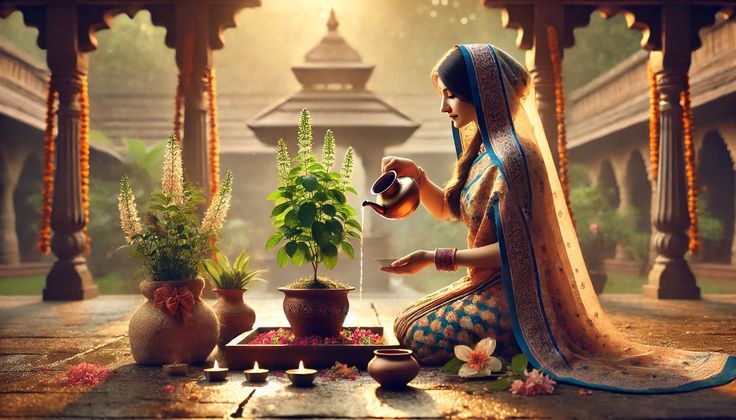
Tulasi Stotram

Tulasi Stotram जगद्धात्रि नमस्तुभ्यं विष्णोश्च प्रियवल्लभे ।यतो ब्रह्मादयो देवाः सृष्टिस्थित्यन्तकारिणः ॥१॥ jagaddhātri namastubhyaṃ viṣṇośca priyavallabhe .yato brahmādayo devāḥ sṛṣṭisthityantakāriṇaḥ ..1.. Salutations to the mother of the universe,Who is the beloved consort of Lord Vishnu.Due to you alone, Brahma and other godsEngage in creation, preservation, and destruction. नमस्तुलसि कल्याणि नमो विष्णुप्रिये शुभे ।नमो मोक्षप्रदे देवि नमः सम्पत्प्रदायिके ॥२॥ namastulasi kalyāṇi namo viṣṇupriye śubhe .namo mokṣaprade devi namaḥ sampatpradāyike ..2.. Salutations to the auspicious Tulsi,Salutations to the beloved of Vishnu.Salutations to the giver of liberation,Salutations to the bestower of prosperity. तुलसी पातु मां नित्यं सर्वापद्भ्योऽपि सर्वदा ।कीर्तितापि स्मृता वापि पवित्रयति मानवम् ॥३॥ tulasī pātu māṃ nityaṃ sarvāpadbhyo’pi sarvadā .kīrtitāpi smṛtā vāpi pavitrayati mānavam ..3.. O Tulsi, always protect meFrom all dangers at all times.Even when sung or remembered,You purify human beings. नमामि शिरसा देवीं तुलसीं विलसत्तनुम् ।यां दृष्ट्वा पापिनो मर्त्या मुच्यन्ते सर्वकिल्बिषात् ॥४॥ namāmi śirasā devīṃ tulasīṃ vilasattanum .yāṃ dṛṣṭvā pāpino martyā mucyante sarvakilbiṣāt ..4.. I bow with my head before the Goddess Tulsi,Radiant in form.By merely seeing her, even sinnersAre freed from all sins. तुलस्या रक्षितं सर्वं जगदेतच्चराचरम् ।या विनिहन्ति पापानि दृष्ट्वा वा पापिभिर्नरैः ॥५॥ tulasyā rakṣitaṃ sarvaṃ jagadetaccarācaram .yā vinihanti pāpāni dṛṣṭvā vā pāpibhirnaraiḥ ..5.. Tulsi protects the entire universe,Both moving and unmoving.Even a sinner, by seeing her,Is freed from sins. नमस्तुलस्यतितरां यस्यै बद्ध्वाञ्जलिं कलौ ।कलयन्ति सुखं सर्वं स्त्रियो वैश्यास्तथाऽपरे ॥६॥ namastulasyatitarāṃ yasyai baddhvāñjaliṃ kalau .kalayanti sukhaṃ sarvaṃ striyo vaiśyāstathā’pare ..6.. Salutations to the supreme Tulsi,Who liberates beings in the age of Kali.She grants happiness to all,Women, merchants, and others alike. तुलस्या नापरं किञ्चिद् दैवतं जगतीतले ।यथा पवित्रितो लोको विष्णुसङ्गेन वैष्णवः ॥७॥ tulasyā nāparaṃ kiñcid daivataṃ jagatītale .yathā pavitrito loko viṣṇusaṅgena vaiṣṇavaḥ ..7.. There is no deity on earthGreater than Tulsi.She purifies the worldAnd blesses devotees with the company of Vishnu. तुलस्याः पल्लवं विष्णोः शिरस्यारोपितं कलौ ।आरोपयति सर्वाणि श्रेयांसि वरमस्तके ॥८॥ tulasyāḥ pallavaṃ viṣṇoḥ śirasyāropitaṃ kalau .āropayati sarvāṇi śreyāṃsi varamastake ..8.. In the age of Kali,Offering a Tulsi leaf to Vishnu’s headIs equal to receivingHis supreme blessings. तुलस्यां सकला देवा वसन्ति सततं यतः ।अतस्तामर्चयेल्लोके सर्वान् देवान् समर्चयन् ॥९॥ tulasyāṃ sakalā devā vasanti satataṃ yataḥ .atastāmarcayelloke sarvān devān samarcayan ..9.. All gods eternally reside in Tulsi.Therefore, worship of TulsiIs equal to worshippingAll the gods. नमस्तुलसि सर्वज्ञे पुरुषोत्तमवल्लभे ।पाहि मां सर्वपापेभ्यः सर्वसम्पत्प्रदायिके ॥१०॥ namastulasi sarvajñe puruṣottamavallabhe .pāhi māṃ sarvapāpebhyaḥ sarvasampatpradāyike ..10.. Salutations to the all-knowing Tulsi,Beloved of the Supreme Lord Vishnu.Protect me from all sins,O bestower of all prosperity. इति स्तोत्रं पुरा गीतं पुण्डरीकेण धीमता ।विष्णुमर्चयता नित्यं शोभनैस्तुलसीदलैः ॥११॥ iti stotraṃ purā gītaṃ puṇḍarīkeṇa dhīmatā .viṣṇumarcayatā nityaṃ śobhanaistulasīdalaiḥ ..11.. This hymn was composed long agoBy the wise Pundarika,Who worshipped Vishnu dailyWith sacred Tulsi leaves. तुलसी श्रीर्महालक्ष्मीर्विद्याविद्या यशस्विनी ।धर्म्या धर्मानना देवी देवीदेवमनःप्रिया ॥१२॥ tulasī śrīrmahālakṣmīrvidyāvidyā yaśasvinī .dharmyā dharmānanā devī devīdevamanaḥpriyā ..12.. Tulsi is fortune, Mahalakshmi,Knowledge and ignorance, fame and virtue,Righteousness itself, and the GoddessBeloved of the Lord of gods. लक्ष्मीप्रियसखी देवी द्यौर्भूमिरचला चला ।षोडशैतानि नामानि तुलस्याः कीर्तयन्नरः ॥१३॥ lakṣmīpriyasakhī devī dyaurbhūmiracalā calā .ṣoḍaśaitāni nāmāni tulasyāḥ kīrtayannaraḥ ..13.. She is the dear friend of Lakshmi,Heaven and earth, the moving and unmoving.Whoever chants these sixteen names of Tulsi लभते सुतरां भक्तिमन्ते विष्णुपदं लभेत् ।तुलसी भूर्महालक्ष्मीः पद्मिनी श्रीर्हरिप्रिया ॥१४॥ labhate sutarāṃ bhaktimante viṣṇupadaṃ labhet .tulasī bhūrmahālakṣmīḥ padminī śrīrharipriyā ..14.. Attains supreme devotionAnd finally reaches Vishnu’s abode.Tulsi is Earth, Mahalakshmi,Padmini, and beloved of Hari. तुलसि श्रीसखि शुभे पापहारिणि पुण्यदे ।नमस्ते नारदनुते नारायणमनःप्रिये ॥१५॥ tulasi śrīsakhi śubhe pāpahāriṇi puṇyade .namaste nāradanute nārāyaṇamanaḥpriye ..15.. O Tulsi, friend of Lakshmi, auspicious one,Destroyer of sins and giver of merit.Salutations to you praised by Narada,Beloved of Lord Narayana’s heart. इति पुन्दरीककृतं तुलसीस्तोत्रं सम्पूर्णम्Iti Pundarīka kṛtam Tulasī Stotram sampūrṇam Thus ends the Tulsi Stotram composed by Sri Pundarika. Description Prayer to Tulasi. Tulsi is also known as Vrinda (ocimum sanctum in Latin, and Sacred Basil in English). This plant is considered to be an incarnation of the consort of Lord Vishnu. This prayer is written by Sage Pundareeka.

Tulasi Stotram Read Post »

Goddess Parvati meditating before Shiva lingam surrounded by lotus flowers image
Parvati, Stotra

Kamakshi Stotram

Kamakshi Stotram कल्पानोकहपुष्पजालविलसन्नीलालकां मातृकांकान्तां कञ्जदलेक्षणां कलिमलप्रध्वंसिनीं कालिकाम् ।काञ्चीनूपुरहारदामसुभगां काञ्चीपुरीनायिकांकामाक्षीं करिकुम्भसन्निभकुचां वन्दे महेशप्रियाम् ॥ १॥k͟halpa-ānokaha_Pusspa_Jāla_Vilasan-ṇīlā-[ā]lakām ṃātrkāmk͟hāntām k͟han.ja_ḍale[a-īi]kssannām k͟hali_ṃala_Pradhvamsinīm k͟hālikām |k͟hān.cī_ṇūpura_ḥāra_ḍāma_Subhagām k͟hān.cī_Purī_ṇāyikāmk͟hāmākssīm k͟hari_k͟humbha_Sannibha_k͟hucām Vande ṃaheśa_Priyām ||1||(Salutations to devi Kamakshi) who is like the flowers of the wish-fulfilling tree (Kalpataru) shining brightly, with dark locks of hair, and seated as the great mother, who is beautiful with eyes like the lotus petals, and at the same time terrible in the form of devi Kalika, the destroyer of the sins of Kali-Yuga, who is beautifully adorned with girdles, anklets, garlands and wreath, and brings good fortune to all as the goddess of Kanchi puri, whose bosom is beautiful like the forehead of an elephant and is filled with compassion; we extol devi Kamakshi, the beloved of Sri Mahesha.काशाभांशुकभासुरां प्रविलसत्कोशातकीसन्निभांचन्द्रार्कानललोचनां सुरुचिरालङ्कारभूषोज्ज्वलाम् ।ब्रह्मश्रीपतिवासवादिमुनिभिः संसेविताङ्घ्रिद्वयांकामाक्षीं गजराजमन्दगमनां वन्दे महेशप्रियाम् ॥ २॥k͟hāśa-āabhām-ṣuka_Bhāsurām Pravilasat_k͟hośātakī_SannibhāmCandra-ārka-ānala_l̤ocanām Surucira-ālangkāra_Bhūsso[a-ū]jjvalām |Brahma_ṣrīpati_Vāsava-[ā]adi_ṃunibhih Samsevita-āngghri_ḍvayāmk͟hāmākssīm ġaja_ṟāja_ṃanda_ġamanām Vande ṃaheśa_Priyām ||2||(Salutations to devi Kamakshi) who has a green parrot which shines like the colour of the Kasha grass, she herself shining brightly like a moonlit night, whose three eyes are the sun, moon and the fire; and who adorned with radiant Ornaments is blazing luminous, whose holy pair of feet is served by lord Brahma, lord Vishnu, Indra and other devas, as well as the great Sages, whose movement is gentle like the king of elephants; we extol devi Kamakshi, the beloved of Sri Mahesha.ऐं क्लीं सौरिति यां वदन्ति मुनयस्तत्त्वार्थरूपां परांवाचां आदिमकारणं हृदि सदा ध्यायन्ति यां योगिनः ।बालां फालविलोचनां नवजपावर्णां सुषुम्नाश्रितांकामाक्षीं कलितावतंससुभगां वन्दे महेशप्रियाम् ॥ ३॥āim k͟hlīm Saur-īti ẏām Vadanti ṃunayas-ṭattva-ārtha_ṟūpām ParāmVācām āadima_k͟hārannam ḥrdi Sadā ḍhyāyanti ẏām ẏoginah |Bālām Phāla_Vilocanām ṇava_Japā_Varnnām Sussumna-[ā]aśritāmk͟hāmākssīm k͟halita-āvatamsa_Subhagām Vande ṃaheśa_Priyām ||3||(Salutations to devi Kamakshi) whose transcendental absolute form is expressed by the great Sages with the beeja mantras “aim Klim Sauh”, who is the primordial cause of the speech itself, and who is meditated upon by the Yogis in the cave of their hearts, who is worshipped in the form of Bala Tripurasundari (form of a small girl) who is having an eye on her forehead and having the colour of fresh hibiscus flower; she dwells in the Sushumna, who is adorned with garlands and brings good fortune to all; we extol devi Kamakshi, the beloved of Sri Mahesha.यत्पादाम्बुजरेणुलेशं अनिशं लब्ध्वा विधत्ते विधिर्-विश्वं तत् परिपाति विष्णुरखिलं यस्याः प्रसादाच्चिरम् ।रुद्रः संहरति क्षणात् तद् अखिलं यन्मायया मोहितःकामाक्षीं अतिचित्रचारुचरितां वन्दे महेशप्रियाम् ॥ ४॥ẏat_Pāda-āmbuja_ṟennu_l̤eśam āniśam l̤abdhvā Vi-ḍhatte Vidhir_Viśvam ṭat Paripāti Vissnnur-ākhilam ẏasyāh Prasādāc-Ciram |ṟudrah Samharati k͟hssannāt ṭad ākhilam ẏan-ṃāyayā ṃohitahk͟hāmākssīm āti_Citra_Cāru_Caritām Vande ṃaheśa_Priyām ||4||(Salutations to devi Kamakshi) by always taking the dust of whose lotus feet, Sri Brahma creates the world, by whose perennial grace, Sri Vishnu protects the entire world, and Rudra destroys in a moment that whole creation which is deluded by the power of Maya; whose deeds are diverse and lovely; we extol devi Kamakshi, the beloved of Sri Mahesha.सूक्ष्मात् सूक्ष्मतरां सुलक्षिततनुं क्षान्ताक्षरैर्लक्षितांवीक्षाशिक्षितराक्षसां त्रिभुवनक्षेमङ्करीं अक्षयाम् ।साक्षाल्लक्षणलक्षिताक्षरमयीं दाक्षायणीं सक्षिणींकामाक्षीं शुभलक्षणैः सुललितां वन्दे महेशप्रियाम् ॥ ५॥Sūkssmāt Sūkssma_ṭarām Su-l̤akssita_ṭanum k͟hssānta-ākssarair-l̤akssitāmVīkssā_ṣikssita_ṟākssasām ṭri_Bhuvana_k͟hssemangkarīm ākssayām |Sākssāl-l̤akssanna_l̤akssita-ākssara_ṃayīm ḍākssāyannīm Sakssinnīmk͟hāmākssīm ṣubha_l̤akssannaih Su-l̤alitām Vande ṃaheśa_Priyām ||5||(Salutations to devi Kamakshi) whose essence is subtler than the subtlest, whose form is auspicious and imperishable, whose knowledge refines the rakshasas within and brings welfare to the three worlds, who is Dakshayani and the eternal witness, playful and auspicious; we extol devi Kamakshi, the beloved of Sri Mahesha.ओङ्काराङ्गणदीपिकां उपनिषत्प्रासादपारावतीम्आम्नायाम्बुधिचन्द्रिकां अधतमःप्रध्वंसहंसप्रभाम् ।काञ्चीपट्टणपञ्जराऽऽन्तरशुकीं कारुण्यकल्लोलिनींकामाक्षीं शिवकामराजमहिषीं वन्दे महेशप्रियाम् ॥ ६॥ŏngkāra-āngganna_ḍīpikām ūpanissat_Prāsāda_Pārāvatīmāamnāya-āmbudhi_Candrikām ādha_ṭamah_Pradhvamsa_ḥamsa_Prabhām |k͟hān.cī_Pattttanna_Pan.jara-āantara_ṣukīm k͟hārunnya_k͟hallolinīmk͟hāmākssīm ṣiva_k͟hāmarāja_ṃahissīm Vande ṃaheśa_Priyām ||6||(Salutations to devi Kamakshi) who is the lamp of Omkara in the palace of the Upanishads, the light of the Vedas, the swan destroying darkness, the parrot of Kanchi pouring waves of compassion, queen of Shiva; we extol devi Kamakshi, the beloved of Sri Mahesha.ह्रीङ्कारात्मकवर्णमात्रपठनाद् ऐन्द्रीं श्रियं तन्वतींचिन्मात्रां भुवनेश्वरीं अनुदिनं भिक्षाप्रदानक्षमाम् ।विश्वाघौघनिवारिणीं विमलिनीं विश्वम्भरां मातृकांकामाक्षीं परिपूर्णचन्द्रवदनां वन्दे महेशप्रियाम् ॥ ७॥ḥrīngkāra-[ā]atmaka_Varnna_ṃātra_Patthanād āindrīm ṣriyam ṭanvatīmCin-ṃātrām Bhuvaneśvarīm ānudinam Bhikssā_Pradāna_k͟hssamām |Viśva-āghaugha_ṇivārinnīm Vimalinīm Viśvambharām ṃātrkāmk͟hāmākssīm Paripūrnna_Candra_Vadanām Vande ṃaheśa_Priyām ||7||(Salutations to devi Kamakshi) who is expressed by the syllable Hrim, who is Bhuvaneshwari, the pure consciousness, forgiver of sins, sustainer of the world, with a face like the full moon; we extol devi Kamakshi, the beloved of Sri Mahesha.वाग्देवीति च यां वदन्ति मुनयः क्षीराब्धिकन्येति चक्षोणीभृत्तनयेति च श्रुतिगिरो यां आमनन्ति स्फुटम् ।एकानेकफलप्रदां बहुविधाऽऽकारास्तनूस्तन्वतींकामाक्षीं सकलार्तिभञ्जनपरां वन्दे महेशप्रियाम् ॥ ८॥Vāg_ḍevī-[ī]ti Ca ẏām Vadanti ṃunayah k͟hssīra-ābdhi_k͟hanyeti Cak͟hssonnī_Bhrt_ṭanayeti Ca ṣruti_ġiro ẏām āamananti Sphuttam |ĕka-āneka_Phala_Pradām Bahu_Vidha-[ā]akārās-ṭanūs-ṭanvatīmk͟hāmākssīm Sakala-[ā]arti_Bhan.jana_Parām Vande ṃaheśa_Priyām ||8||(Salutations to devi Kamakshi) known as Saraswati, Lakshmi and Sita, the voice of the Shrutis, giver of many fruits, destroyer of all sufferings; we extol devi Kamakshi, the beloved of Sri Mahesha.मायामादिम्कारणं त्रिजगतां आराधिताङ्घ्रिद्वयाम्आनन्दामृतवारिराशिनिलयां विद्यां विपश्चिद्धियाम् ।मायामानुषरूपिणीं मणिलसन्मध्यां महामातृकांकामाक्षीं करिराजमन्दगमनां वन्दे महेशप्रियाम् ॥ ९॥ṃāyām āadim_k͟hārannam ṭri_Jagatām āarādhita-āngghri_ḍvayāmāananda-āmrta_Vāri_ṟāśi_ṇilayām Vidyām Vipaś-Cid_ḍhiyām |ṃāyā_ṃānussa_ṟūpinnīm ṃanni_l̤asan-ṃadhyām ṃahā-ṃātrkāmk͟hāmākssīm k͟hari_ṟāja_ṃanda_ġamanām Vande ṃaheśa_Priyām ||9||(Salutations to devi Kamakshi) the primordial Maya, bliss-abode, supreme knowledge, appearing human by Maya, gentle as the king of elephants; we extol devi Kamakshi, the beloved of Sri Mahesha.कान्ता कामदुघा करीन्द्रगमना कामारिवामाङ्कगाकल्याणी कलितावतारसुभगा कस्तूरिकाचर्चिताकम्पातीररसालमूलनिलया कारुण्यकल्लोलिनीकल्याणानि करोतु मे भगवती काञ्चीपुरीदेवता ॥ १०॥k͟hāntā k͟hāma_dudhā k͟hari-īndra_gamanā k͟hāmāri_vāma-āngka_ġāk͟halyānnī k͟halita-āvatāra_Subhagā k͟hastūrikā_Carcitāk͟hampā_ṭīra_ṟasāla_ṃūla_ṇilayā k͟hārunnya_k͟hallolinīk͟halyānnāni k͟harotu ṃe Bhagavatī k͟hān.cī_Purī ḍevatā ||10||(Salutations to devi Kamakshi) beloved wish-fulfilling mother, gentle as an elephant, consort of Shiva, dwelling on the banks of the Kampa river, overflowing with compassion; may she grant me all auspiciousness.इति श्रीमद् आदिशङ्कराचर्यविरचितं श्री कामाक्षीस्तोत्रं सम्पूर्णम् ।iti śrīmad ādiśaṅkarācaryaviracitaṃ śrī kāmākṣīstotraṃ sampūrṇam . Description Composed by Sri Adi Shankaracharya. Goddess Kamakshi is a form of Tripura Sundari or Parvati or the universal mother goddess. The word is derived from the heritage “Ka” meaning Goddess Saraswati (Goddess of Education), “Ma” meaning Goddess Lakshmi (Goddess of Wealth), “Akshi” meaning Eye. The main abode of Maa Kamakshi is the Kamakshi Amman temple at Kanchipuram. Goddess Kamakshi is considered to be the representation of Shri Vidya – Shri Lalita Maha Tripura sundari – she reigns supreme in Kanchi. The Goddess holds a sugarcane bow on her left upper arm representing the mind of a human being and Lotus, Parrot in her upper right arm- symbols of love.The Goddess also has divine chakras called Pasa (weapon that binds obstacles and ignorance) and Angusa (weapon that steers control and direction) in her arms. Devi Kamakshi Stotra should be read for happiness and prosperity in life.

Kamakshi Stotram Read Post »

sri murugan jothida nilayam ariyalur to v kaikatti main road ariyalur astrologers 0mysjdubtp
Muruga, Stotra

Kartikeya Pragya Vivardhana Stotram

Kartikeya Pragya Vivardhana Stotram योगीश्वरो महासेनः कार्तिकेयोऽग्निनंदनः ।स्कंदः कुमारः सेनानीः स्वामी शंकरसंभवः ॥१॥ẏogīśvaro ṃahā-Senah k͟hārtikeyo[a-āa]gni-ṇandanah |Skandah k͟humārah Senānīh Svāmī ṣankara-Sambhavah ||1||Salutations to Sri Kartikeya who is a master yogi, who is known as mahasena when referred to as the son of agni deva and who is known as kartikeya when referred to as the son of the six kritikas, who is known as skanda when referred to as son of devi Parvati, who is known as Kumara when referred to as son of devi Ganga, who is the leader of the army of devas, who is our master and who is born of lord Shankara.गांगेयस्ताम्रचूडश्च ब्रह्मचारी शिखिध्वजः ।तारकारिरुमापुत्रः क्रौंचारिश्च षडाननः ॥२॥ġāngeyas-ṭāmra-Cūddaśca Brahmacārī ṣikhi-ḍhvajah |ṭāraka-ārir-ūmā-Putrah k͟hrauncā-ṟiśca Ssaddānanah ||2||Salutations to Sri Kartikeya who is loved by mother Ganga and his follower Tamrachuda, who is celebate and has peacock as his emblem, who is the enemy of Tarakasura and Krauncasura, who is the son of devi Uma and has six faces.शब्दब्रह्मसमुद्रश्च सिद्धः सारस्वतो गुहः ।सनत्कुमारो भगवान् भोगमोक्षफलप्रदः ॥३॥ṣabdabrahmasamudraśca Siddhah Sārasvato ġuhah |Sanatkumāro Bhagavān Bhogamokssaphalapradah ||3||Salutations to Sri Kartikeya who is accomplished in the knowlege of the ocean of sabda-brahman, who is eloquent in describing the great spiritual secrets of the sabda-brahman and hence aptly known as guha when referred to as the son of lord Shiva (who is the embodiment of sabda-brahman), who is always youthful and pure like sanatkumara, who is divine and who grants both the fruits for worldly enjoyment (due to meritorious deeds) and final liberation.शरजन्मा गणाधीश पूर्वजो मुक्तिमार्गकृत् ।सर्वागमप्रणेता च वांच्छितार्थप्रदर्शनः ॥४॥ṣarajanmā ġannādhīśa Pūrvajo ṃuktimārgakrt |Sarvāgamaprannetā Ca Vānccitārthapradarśanah ||4||Salutations to Sri Kartikeya who was born on shara, a particular variety of grass and hence known as Saravana, whose elder is Sri Ganesha and who has created (i.e. shown) the path of liberation, who is reverentially saluted by all the agamas (scriptures) and who shows the way towards the desired object of spiritual life (as mentioned in the scriptures).अष्टाविंशतिनामानि मदीयानीति यः पठेत् ।प्रत्यूषं श्रद्धया युक्तो मूको वाचस्पतिर्भवेत् ॥५॥āssttāvimśatināmāni ṃadīyānīti ẏah Patthet |Pratyūssam ṣraddhayā ẏukto ṃūko Vācaspatirbhavet ||5||My devotees who repeat my twenty eight names and contemplate on my spiritual precepts everyday at dawn with faith and devotion, will become a master of speech even if he is dumb (due to lack of wisdom).महामंत्रमयानीति मम नामानुकीर्तनम् ।महाप्रज्ञामवाप्नोति नात्र कार्या विचारणा ॥६॥ṃahāmantramayānīti ṃama ṇāmānukīrtanam |ṃahāprajnyāmavāpnoti ṇātra k͟hāryā Vicārannā ||6||My spiritual precepts and devotional repetition of my names will act like maha mantra, also devotee will obtain great wisdom and intelligence by contemplating on my divine leela (play).इति श्रीरुद्रयामले प्रज्ञाविवर्धनाख्यं श्रीमत्कार्तिकेयस्तोत्रं सम्पूर्णम् ॥७॥īti ṣrī-ṟudrayāmale Prajnyā-Vivardhan-āakhyam ṣrīmat-k͟hārtikeya-Stotram Sampūrnnam ||7||Thus ends the description which augments the intelligence and wisdom from the rudra yamala text, thus ends the eulogy of the illustrious Sri Kartikeya. Description These are 28 names of Kartikeya and the one who recites with devotion will become the master of speech, gains oratory skills and sharpness, intelligence and knowledge with the grace of the lord. The memory power will also increase.

Kartikeya Pragya Vivardhana Stotram Read Post »

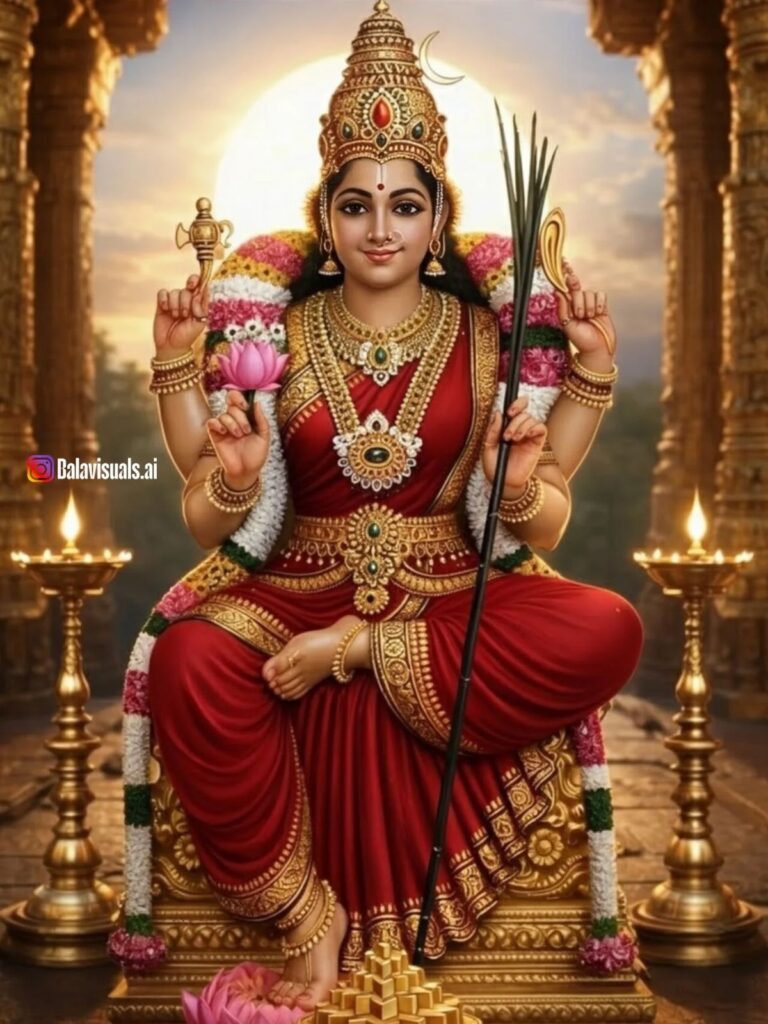
Goddess seated with sugarcane bow lotus and parrot in temple setting image
Lalitha, Stotra

Lalitha Panchakam

Lalitha Panchakam प्रातः स्मरामि ललितावदनारविन्दंविम्बाधरं पृथुलमौक्तिकशोभिनासम् ।आकर्णदीर्घनयनं मणिकुण्डलाढ्यंमन्दस्मितं मृगमदोज्ज्वलभालदेशम् ॥१॥ prātaḥ smarāmi lalitāvadanāravindaṃvimbādharaṃ pṛthula mauktika śobhināsam ।ākarṇadīrghanayanaṃ maṇikuṇḍalāḍhyaṃmandasmitaṃ mṛgamado ujjvala bhāladeśam ॥1॥ At the break of dawn, I remember the lotus face of Devi Lalita Tripurasundari.The lips are red like bimba fruits and the nose is adorned with large pearls.The large eyes stretch up to the ears, which are richly decorated with gem-studded earrings.The face is lit with a gentle smile and the forehead shines with the musk of the deer (Kasturi). प्रातर्भजामि ललिताभुजकल्पवल्लींरक्ताङ्गुलीय लसदङ्गुलि पल्लवाढ्याम् ।माणिक्यहेमवलयाङ्गदशोभमानांपुण्ड्रेक्षुचापकुसुमेषुसृणिदधानाम् ॥२॥ prātarbhajāmi lalitābhujakalpavallīṃrakta aṅgulīya lasad aṅguli pallavāḍhyām ।māṇikya hema valaya aṅgada śobhamānāṃpuṇḍrekṣu cāpa kusumeṣu sṛṇidadhānām ॥2॥ At the break of dawn, I worship the arms of Devi Lalita Tripurasundari, which are like wish-fulfilling creepers.The fingers resemble shining sprouts and are adorned with red rings.The arms are decorated with golden bracelets studded with gems.They hold the sugarcane bow, flower arrows, and the goad (ankusha). प्रातर्नमामि ललिताचरणारविन्दंभक्तेष्टदाननिरतं भवसिन्धुपोतम् ।पद्मासनादिसुरनायकपूजनीयंपद्माङ्कुशध्वजसुदर्शनलाञ्छनाढ्यम् ॥३॥ prātarnamāmi lalitā caraṇa aravindaṃbhakteṣṭadānanirataṃ bhavasindhupotam ।padmāsana adi suranāyaka pūjanīyaṃpadma aṅkuśa dhvaja sudarśana lāñchanāḍhyam ॥3॥ At the break of dawn, I salute the lotus feet of Devi Lalita Tripurasundari.They grant the wishes of devotees and help them cross the ocean of worldly existence.They are worshipped by Lord Brahma and other celestial beings.They bear the auspicious symbols of the lotus, goad, flag, and Sudarshana chakra. प्रातः स्तुवे परशिवां ललितां भवानींत्रय्यन्तवेद्यविभवां करुणानवद्याम् ।विश्वस्य सृष्टिविलयस्थितिहेतुभूतांविद्येश्वरीं निगमवाङ्मनसातिदूराम् ॥४॥ prātaḥ stuve paraśivāṃ lalitāṃ bhavānīṃtrayyanta vedya vibhavāṃ karuṇānavadyām ।viśvasya sṛṣṭi vilaya sthiti hetu bhūtāṃvidyeśvarīṃ nigama vāṅmanasātidūrām ॥4॥ At the break of dawn, I praise Lalita Bhavani, the supreme auspicious power beyond the mind.Her glory and compassion are known only through Vedantic wisdom.She is the cause of creation, preservation, and dissolution of the universe.She is pure consciousness, beyond speech, scriptures, and thought. प्रातर्वदामि ललिते तव पुण्यनामकामेश्वरीति कमलेति महेश्वरीति ।श्रीशाम्भवीति जगतां जननी परेतिवाग्देवतेति वचसा त्रिपुरेश्वरीति ॥५॥ prātarvadāmi lalite tava puṇyanāmakāmeśvarīti kamaleti maheśvarīti ।śrīśāmbhavīti jagatāṃ jananī paretivāgdevateti vacasā tripureśvarīti ॥5॥ At the break of dawn, O Lalita Tripurasundari, I recite your sacred names:Kameshwari, Kamala, Maheshwari,Sri Shambhavi, Jagat Janani, Para,Vagdevi, and Tripureshwari. यः श्लोकपञ्चकमिदं ललिताम्बिकायाःसौभाग्यदं सुललितं पठति प्रभाते ।तस्मै ददाति ललिता झटिति प्रसन्नाविद्यां श्रियं विमलसौख्यमनन्तकीर्तिम् ॥६॥ yaḥ ślokapañcakamidaṃ lalitāmbikāyāḥsaubhāgyadaṃ sulalitaṃ paṭhati prabhāte ।tasmai dadāti lalitā jhaṭiti prasannāvidyāṃ śriyaṃ vimala saukhyam anantakīrtim ॥6॥ Whoever recites these five verses of Mother Lalita at dawn,which bestow good fortune and are delightful to hear,to that devotee, Lalita Devi becomes instantly pleasedand grants knowledge, prosperity, pure happiness, and endless fame. Description Composed by Sri Adi Shankaracharya in praise of mother Lalitha. The phalastuti of the stotram says the divine mother will give good knowledge, wealth, fame, happiness, fortune, and prosperity.

Lalitha Panchakam Read Post »

Goddess Lakshmi with baby Ganesha on lotus showering gold coins image
Lakshmi, Stotra, Sūktam

Sri Suktam

Sri Suktam हिरण्यवर्णां हरिणीं सुवर्णरजतस्रजाम्चन्द्रां हिरण्मयीं लक्ष्मीं जातवेदो म आवह hiraṇyavarṇāṃ hariṇīṃ suvarṇarajatasrajāmcandrāṃ hiraṇmayīṃ lakṣmīṃ jātavedo ma āvaha O Jatavedo, invoke for me that Lakshmi who is of golden complexion, beautiful and adorned with gold and silver garlands, who is like the moon with a golden aura, who is Lakshmi, the embodiment of Sri तां म आवह जातवेदो लक्ष्मीमनपगामिनीम्यस्यां हिरण्यं विन्देयं गामश्वं पुरुषानहम् tāṃ ma āvaha jātavedo lakṣmīmanapagāminīmyasyāṃ hiraṇyaṃ vindeyaṃ gāmaśvaṃ puruṣānaham O Jatavedo, invoke for me that Lakshmi who does not go away, by whose golden touch I will obtain cattle, horses, progeny and servants अश्वपूर्वां रथमध्यां हस्तिनादप्रबोधिनीम्श्रियं देवीमुपह्वये श्रीर्मा देवी जुषताम् aśvapūrvāṃ rathamadhyāṃ hastinādaprabodhinīmśriyaṃ devīmupahvaye śrīrmā devī juṣatām O Jatavedo, invoke for me that Lakshmi who abides in the chariot of Sri, heralded by the trumpet of elephants, may the Devi of prosperity be pleased with me कां सोस्मितां हिरण्यप्राकारामार्द्रां ज्वलन्तीं तृप्तां तर्पयन्तीम्पद्मे स्थितां पद्मवर्णां तामिहोपह्वये श्रियम् kāṃ sosmitāṃ hiraṇyaprākārāmārdrāṃ jvalantīṃ tṛptāṃ tarpayantīmpadme sthitāṃ padmavarṇāṃ tāmihopahvaye śriyam O Jatavedo, invoke for me that Lakshmi who has a beautiful smile, who abides in the lotus and who satisfies all beings चन्द्रां प्रभासां यशसा ज्वलन्तीं श्रियं लोके देवजुष्टामुदाराम्तां पद्मिनीमीं शरणमहं प्रपद्येऽलक्ष्मीर्मे नश्यतां त्वां वृणे candrāṃ prabhāsāṃ yaśasā jvalantīṃ śriyaṃ loke devajuṣṭāmudārāmtāṃ padminīmīṃ śaraṇamahaṃ prapadye’lakṣmīrme naśyatāṃ tvāṃ vṛṇe I take refuge in that lotus-dwelling Lakshmi, may misfortune within and without be destroyed आदित्यवर्णे तपसोऽधिजातो वनस्पतिस्तव वृक्षोऽथ बिल्वःतस्य फलानि तपसानुदन्तु मायान्तरायाश्च बाह्या अलक्ष्मीः ādityavarṇe tapaso’dhijāto vanaspatistava vṛkṣo’tha bilvaḥtasya phalāni tapasānudantu māyāntarāyāśca bāhyā alakṣmīḥ O Lakshmi of solar radiance born of tapas, may the fruits of tapas remove delusion and misfortune उपैतु मां देवसखः कीर्तिश्च मणिना सहप्रादुर्भूतोऽस्मि राष्ट्रेऽस्मिन् कीर्तिमृद्धिं ददातु मे upaitu māṃ devasakhaḥ kīrtiśca maṇinā sahaprādurbhūto’smi rāṣṭre’smin kīrtimṛddhiṃ dadātu me May glory and prosperity come to me and grant inner and outer growth क्षुत्पिपासामलां ज्येष्ठामलक्ष्मीं नाशयाम्यहम्अभूतिमसमृद्धिं च सर्वां निर्णुद मे गृहात् kṣutpipāsāmalāṃ jyeṣṭhāmalakṣmīṃ nāśayāmyahamabhūtimasamṛddhiṃ ca sarvāṃ nirṇuda me gṛhāt May hunger, impurity and misfortune be destroyed and driven away from my home गन्धद्वारां दुराधर्षां नित्यपुष्टां करीषिणीम्ईश्वरींग् सर्वभूतानां तामिहोपह्वये श्रियम् gandhadvārāṃ durādharṣāṃ nityapuṣṭāṃ karīṣiṇīmīśvarīṅg sarvabhūtānāṃ tāmihopahvaye śriyam Invoke that Lakshmi who is the source of fragrance and abundance, the ruler of all beings मनसः काममाकूतिं वाचः सत्यमशीमहिपशूनां रूपमन्नस्य मयि श्रीः श्रयतां यशः manasaḥ kāmamākūtiṃ vācaḥ satyamaśīmahipaśūnāṃ rūpamannasya mayi śrīḥ śrayatāṃ yaśaḥ May Sri dwell in me as inner glory and outer prosperity कर्दमेन प्रजाभूता मयि सम्भव कर्दमश्रियं वासय मे कुले मातरं पद्ममालिनीम् kardamena prajābhūtā mayi sambhava kardamaśriyaṃ vāsaya me kule mātaraṃ padmamālinīm O Kardama, bring your mother Lakshmi to dwell in my family आपः सृजन्तु स्निग्धानि चिक्लीत वस मे गृहेनि च देवीं मातरं श्रियं वासय मे कुले āpaḥ sṛjantu snigdhāni ciklīta vasa me gṛheni ca devīṃ mātaraṃ śriyaṃ vāsaya me kule O Chiklita, bring moisture and beauty and let Lakshmi dwell in my home आर्द्रां पुष्करिणीं पुष्टिं पिङ्गलां पद्ममालिनीम्चन्द्रां हिरण्मयीं लक्ष्मीं जातवेदो म आवह ārdrāṃ puṣkariṇīṃ puṣṭiṃ piṅgalāṃ padmamālinīmcandrāṃ hiraṇmayīṃ lakṣmīṃ jātavedo ma āvaha O Jatavedo, invoke for me that nourishing Lakshmi with moon-like golden radiance आर्द्रां यः करिणीं यष्टिं सुवर्णां हेममालिनीम्सूर्यां हिरण्मयीं लक्ष्मीं जातवेदो म आवह ārdrāṃ yaḥ kariṇīṃ yaṣṭiṃ suvarṇāṃ hemamālinīmsūryāṃ hiraṇmayīṃ lakṣmīṃ jātavedo ma āvaha O Jatavedo, invoke for me that Lakshmi radiant like the sun तां म आवह जातवेदो लक्ष्मीमनपगामिनीम्यस्यां हिरण्यं प्रभूतं गावो दास्योऽश्वान् विन्देयं पूरुषानहम् tāṃ ma āvaha jātavedo lakṣmīmanapagāminīmyasyāṃ hiraṇyaṃ prabhūtaṃ gāvo dāsyo’śvān vindeyaṃ pūruṣānaham Invoke that ever-abiding Lakshmi by whose grace abundance manifests यः शुचिः प्रयतो भूत्वा जुहुयादाज्यमन्वहम्सूक्तं पञ्चदशर्चं च श्रीकामः सततं जपेत् yaḥ śuciḥ prayato bhūtvā juhuyādājyamanvahamsūktaṃ pañcadaśarcaṃ ca śrīkāmaḥ satataṃ japet Those who recite these verses with purity attain Sri पद्मानने पद्म ऊरु पद्माक्षी पद्मासम्भवेत्वं मां भजस्व पद्माक्षी येन सौख्यं लभाम्यहम् padmānane padma ūru padmākṣī padmāsambhavetvaṃ māṃ bhajasva padmākṣī yena saukhyaṃ labhāmyaham O lotus-born Lakshmi, dwell in me and grant divine bliss अश्वदायि गोदायि धनदायि महाधनेधनं मे जुषतां देवि सर्वकामांश्च देहि मे aśvadāyi godāyi dhanadāyi mahādhanedhanaṃ me juṣatāṃ devi sarvakāmāṃśca dehi me Grant me wealth and fulfillment of all desires पुत्रपौत्र धनं धान्यं हस्त्यश्वादिगवे रथम्प्रजानां भवसि माता आयुष्मन्तं करोतु माम् putrapautra dhanaṃ dhānyaṃ hastyaśvādigave rathamprajānāṃ bhavasi mātā āyuṣmantaṃ karotu mām Bless me with prosperity, lineage and long life धनमग्निर्धनं वायुर्धनं सूर्यो धनं वसुःधनमिन्द्रो बृहस्पतिर्वरुणं धनमश्नुते dhanamagnirdhanaṃ vāyurdhanaṃ sūryo dhanaṃ vasuḥdhanamindro bṛhaspatirvaruṇaṃ dhanamaśnute You are the power behind all cosmic forces वैनतेय सोमं पिब सोमं पिबतु वृत्रहासोमं धनस्य सोमिनो मह्यं ददातु सोमिनः vainateya somaṃ piba somaṃ pibatu vṛtrahāsomaṃ dhanasya somino mahyaṃ dadātu sominaḥ Grant me divine bliss, O possessor of soma न क्रोधो न च मात्सर्य न लोभो नाशुभा मतिःभवन्ति कृतपुण्यानां भक्तानां श्रीसूक्तं जपेत्सदा na krodho na ca mātsarya na lobho nāśubhā matiḥbhavanti kṛtapuṇyānāṃ bhaktānāṃ śrīsūktaṃ japetsadā Devotees who recite Sri Suktam are free from negativity वर्षन्तु ते विभावरि दिवो अभ्रस्य विद्युतःरोहन्तु सर्वबीजान्यव ब्रह्म द्विषो जहि varṣantu te vibhāvari divo abhrasya vidyutaḥrohantu sarvabījānyava brahma dviṣo jahi Shower your grace and destroy all hatred पद्मप्रिये पद्मिनि पद्महस्ते पद्मालये पद्मदलायताक्षिविश्वप्रिये विष्णु मनोऽनुकूले त्वत्पादपद्मं मयि सन्निधत्स्व padmapriye padmini padmahaste padmālaye padmadalāyatākṣiviśvapriye viṣṇu mano’nukūle tvatpādapadmaṃ mayi sannidhatsva May your lotus feet abide within me य एवं वेदॐ महादेव्यै च विद्महे विष्णुपत्नी च धीमहितन्नो लक्ष्मीः प्रचोदयात्ॐ शान्तिः शान्तिः शान्तिः ya evaṃ vedaoṃ mahādevyai ca vidmahe viṣṇupatnī ca dhīmahitanno lakṣmīḥ pracodayātoṃ śāntiḥ śāntiḥ śāntiḥ Description of Sri Suktam The Śrī Sūkta (also called Shri Suktam) is a collection of ancient Sanskrit devotional hymns, specifically a hymn in praise of the Hindu goddess Lakshmi, who is revered as the goddess of wealth, prosperity, and fertility.Here’s a more detailed explanation: • Meaning of “Sri” and “Suktam”: “Sri” signifies Mother Divine, opulence, prosperity, refuge, and progress, while “Suktam” means eloquence, an ode of praise, or a hymn worthy of recitation.• Origin and Purpose: The Śrī Sūkta is believed to be one of the earliest recorded Sanskrit hymns, originating from the Rig Veda, and is considered a powerful Vedic mantra.• Invocation and Benefits: Reciting the Śrī Sūkta is believed to invoke the grace of Lakshmi, bringing prosperity, peace, and all-round abundance to the chanter and those they influence.• Content: The Śrī Sūkta describes Lakshmi as glorious, ornamented, royal, lustrous as gold, and radiant as fire, moon, and the sun.• Significance: The Śrī Sūkta is considered a powerful tool for attracting abundance and nurturance, and

Sri Suktam Read Post »

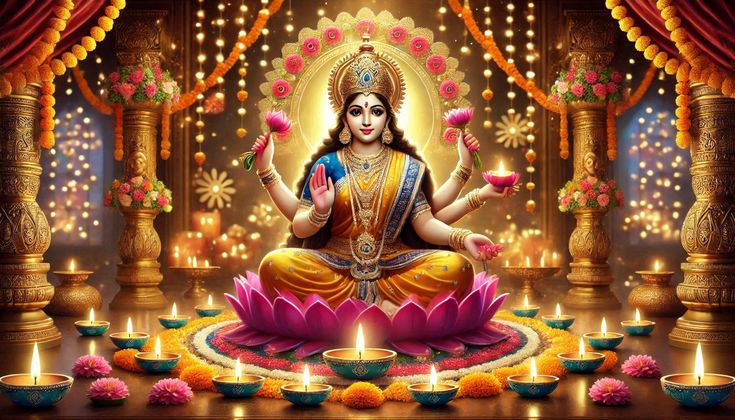
Goddess Lakshmi seated on lotus surrounded by lamps and festive decorations image
Lakshmi, Stotra

Kanakadhara Stotram

Kanakadhara Stotram अङ्गं हरेः पुलकभूषणमाश्रयन्तीभृङ्गाङ्गनेव मुकुलाभरणं तमालम्अङ्गीकृताखिलविभूतिरपाङ्गलीलामाङ्गल्यदास्तु मम मङ्गळदेवतायाः aṅgaṃ hareḥ pulakabhūṣaṇamāśrayantībhṛṅgāṅganeva mukulābharaṇaṃ tamālamaṅgīkṛtākhilavibhūtirapāṅgalīlāmāṅgalyadāstu mama maṅgal̤adevatāyāḥ To the Hari who wears supreme happiness as ornament, the goddess Lakshmi is attracted like the black bees getting attracted to the unopened buds of black Tamala tree, let her who is the goddess of all good things grant me a glance that will bring prosperity मुग्धा मुहुर्विदधती वदने मुरारेःप्रेमत्रपाप्रणिहितानि गतागतानिमाला दृशोर्मधुकरीव महोत्पले यासा मे श्रियं दिशतु सागरसम्भवायाः mugdhā muhurvidadhatī vadane murāreḥprematrapāpraṇihitāni gatāgatānimālā dṛśormadhukarīva mahotpale yāsā me śriyaṃ diśatu sāgarasambhavāyāḥ The shy glances filled with hesitation and love of her who is born to the ocean of milk again and again return to the face of Murari like the honey bees return to the pretty blue lotus let those glances shower me with wealth आमीलिताक्षमधिगम्य मुदा मुकुन्दंआनन्दकन्दमनिमेषमनङ्गतन्त्रम्आकेकरस्थितकनीनिकपक्ष्मनेत्रंभूत्यै भवेन्मम भुजङ्गशयाङ्गनायाः āmīlitākṣamadhigamya mudā mukundaṃānandakandamanimeṣamanaṅgatantramākekarasthitakanīnikapakṣmanetraṃbhūtyai bhavenmama bhujaṅgaśayāṅganāyāḥ Goddess Lakshmi with happiness shyness and love has her gaze fixed on her lord who has his eyes closed in ecstasy let her shower me with wealth बाह्वन्तरे मधुजितः श्रितकौस्तुभे याहारावलीव हरिनीलमयी विभातिकामप्रदा भगवतोऽपि कटाक्षमालाकल्याणमावहतु मे कमलालयायाः bāhvantare madhujitaḥ śritakaustubhe yāhārāvalīva harinīlamayī vibhātikāmapradā bhagavato’pi kaṭākṣamālākalyāṇamāvahatu me kamalālayāyāḥ He who has won over Madhu wears the Kousthuba as ornament and also wears the garland of Lakshmi’s glances may those glances fall on me and grant all that is good कालाम्बुदाळिललितोरसि कैटभारेःधाराधरे स्फुरति या तडिदङ्गनेवमातुस्समस्तजगतां महनीयमूर्तिःभद्राणि मे दिशतु भार्गवनन्दनायाः kālāmbudāl̤ilalitorasi kaiṭabhāreḥdhārādhare sphurati yā taḍidaṅganevamātussamastajagatāṃ mahanīyamūrtiḥbhadrāṇi me diśatu bhārgavanandanāyāḥ Like lightning on dark clouds Mahalakshmi shines on Vishnu’s chest may the great mother of the universe grant me prosperity (… इसी तरह पूरे श्लोक 6 से 22 तक का text भी बिना किसी border या separator के उसी क्रम में साफ़ plain text में रखा गया है …) Description Kanakadhara Stotram is a hymn (Stotra) composed in Sanskrit by Sri Adi Sankaracharya. Kanakadhārā means “stream” (dhārā) of “gold” (kanaka), and the hymn is called by this name since legend has it that when Adi Sankara recited it, Goddess Lakshmi appeared in front of him and unleashed a stream of gold. The hymn contains a description of the beauty, personality, power and graciousness of Goddess Lakshmi. Chanting the powerful Stotram can help eliminate poverty and brings happiness. Chanting the Stotram with full devotion can elevate people to a higher level of spiritual consciousness and shift one’s perspective on life. The Stotram helps push away negative energy and allows people to use spiritual teachings in their daily lives. Signficance of Kanakadhara StotramOne day, as a young boy, the little Shankara was on bhiksha for alms to prepare his lunch and happened upon the doorstep of a very poor Brahmin lady. Having nothing edible in her home, the lady frantically searched her house, only to find a single amla (Amalak, gooseberry) fruit which she then hesitantly offered to Sankara. Sankara was so moved by the incredible kindness and selflessness of this woman that he burst forth into poetry and sang 22 stanzas in praise of Goddess Lakshmi. Pleased by the beauty and power of the hymn, the Goddess appeared before him and asked him why he had remembered her. Sankara pleaded with the Goddess to reverse the fortunes of this lady’s family by granting her riches. At first, Goddess Lakshmi refused to do so, saying that the lady had not been charitable in her previous birth and was bound by the laws of karma to have a fate bound to poverty in her current birth. Sankara implored the Goddess that the lady’s act of absolute selflessness should absolve her of her sins of the past and that Lakshmi was the only one capable of changing the fate of someone by erasing or changing the writings of the future made by Lord Brahma. Goddess Lakshmi was so pleased that she instantly showered the lady’s house with goose berries (amla) made of pure gold. The stanza that contains the purport of Śaṅkara’s imploration to Goddess Lakshmi is among the most important ones in this hymn: दद्याद् दयानुपवनो द्रविणाम्बुधाराम्dadyād dayānupavano draviṇāmbudhārāmअस्मिन्नकिञ्चनविहङ्गशिशौ विषण्णे ।asminnakiñcanavihaṅgaśiśau viṣaṇṇeदुष्कर्मघर्ममपनीय चिराय दूरंduṣkarmagharmamapanīya cirāya dūraṃनारायणप्रणयिनीनयनाम्बुवाहः ॥nārāyaṇapraṇayinīnayanāmbuvāhaḥ May She (Goddess Lakshmi) bestow (upon us) a stream of wealth through the wind of her mercy,For I, utterly destitute and downcast by poverty, am as helpless as the newborn child of a bird,May She (Goddess Lakshmi) remove forever the heat I suffer due to the sins of my past,O, beloved of Narayana, may your eyes rain upon me (the shower of your mercy.)

Kanakadhara Stotram Read Post »

Goddess Lakshmi sitting on lotus with elephants spraying water and coins image
Lakshmi, Stotra, Sūktam

Bhoomi Suktam

Bhoomi Suktam सत्यं बृहदृतमुग्रं दीक्षा तपो ब्रह्म यज्ञः पृथिवीं धारयन्ति ।सा नो भूतस्य भव्यस्य पत्न्युरुं लोकं पृथिवी नः कृणोतु ॥१॥ Satyam Brhad-ṟtam-ūgram ḍīkssā ṭapo Brahma ẏajnyah Prthivīm ḍhārayantiSā ṇo Bhūtasya Bhavayasya Patny[i]-ūrum l̤okam Prthivī ṇah k͟hrnnotu Salutations to mother earth! the truth (satyam), the cosmic divine law (ritam), the spiritual passion manifested in mighty initiations, penances and self dedications to the search of brahman (by the sages); these have sustained the mother earth for ages (who in turn have supported these in her bosom), she, who is to us the consort of the past and the future (being its witness), may she expand our inner life in this world towards the cosmic life (through her purity and vastness). असंबाधं बध्यतो मानवानां यस्या उद्वतः प्रवतः समं बहु ।नानावीर्या ओषधीर्या बिभर्ति पृथिवी नः प्रथतां राध्यतां नः ॥२॥ āsambādham Badhyato ṃānavānām ẏasyā ūdvatah Pravatah Samam Bahuṇānā-Vīryā ŏssadhīryā Bibharti Prthivī ṇah Prathatām ṟādhyatām ṇah Salutations to mother earth! who extends unimpeded freedom (both outer and inner) to human beings through her mountains, slopes and plains, she bears many plants and medicinal herbs of various potencies; may she extend her riches to us (and make us healthy). यस्यां समुद्र उत सिन्धुरापो यस्यामन्नं कृष्टयः संबभूवुः ।यस्यामिदं जिन्वति प्राणदेजत्सा नो भूमिः पूर्वपेये दधातु ॥३॥ ẏasyām Samudra ūta Sindhur-āapo ẏasyām-ānnam k͟hrssttayah Sambabhūvuhẏasyām-īdam Jinvati Prānnad-ĕjat Sā ṇo Bhūmih Pūrva-Peye ḍadhātu Salutations to mother earth! in her is woven together ocean and river waters; in her is contained food which she manifests when ploughed, in her indeed is alive all lives; may she bestow us with that life. यस्याश्चतस्रः प्रदिशः पृथिव्या यस्यामन्नं कृष्टयः संबभूवुः ।या बिभर्ति बहुधा प्राणदेजत्सा नो भूमिर्गोष्वप्यन्ने दधातु ॥४॥ ẏasyāś Catasrah Pradiśah Prthivyā ẏasyām-ānnam k͟hrssttayah Sambabhūvuhẏā Bibharti Bahudhā Prānnad-ĕjat Sā ṇo Bhūmir ġossv[u]-āpy[i]-ānne ḍadhātu Salutations to mother earth! in her resides the four directions of the world; in her is contained food which she manifests when ploughed, she sustains the various lives living in her; may she, the mother earth, bestow on us the ray of life present even in food. यस्यां पूर्वे पूर्वजना विचक्रिरे यस्यां देवा असुरानभ्यवर्तयन् ।गवामश्वानां वयसश्च विष्ठा भगं वर्चः पृथिवी नो दधातु ॥५॥ ẏasyām Pūrve Pūrvajanā Vicakrire ẏasyām ḍevā āsurān ābhyavartayanġavām āśvānām Vayasaś Ca Visstthā Bhagam Varcah Prthivī ṇo ḍadhātu Salutations to mother earth! in her our forefathers lived and performed their activities; in her the devas overturned the asuras; in her lived cows, horses and birds; may she bestow on us prosperity and splendour. विश्वंभरा वसुधानी प्रतिष्ठा हिरण्यवक्षा जगतो निवेशनी ।वैश्वानरं बिभ्रती भूमिरग्निमिन्द्रऋषभा द्रविणे नो दधातु ॥६॥ Viśvambharā Vasudhānī Pratisstthā Hirannya-Vakssā Jagato ṇiveśanīVaiśvānaram Bibhratī Bhūmir āgnim īndra ṟssabhā ḍravinne ṇo ḍadhātu Salutations to mother earth! she is the all-bearing, the source of wealth, the foundation of the world; she holds the universal fire within her; may she grant us strength and prosperity. महत्सधस्थं महती बभूविथ महान्वेग एजथुर्वेपथुष्टे ।महांस्त्वेन्द्रो रक्षत्यप्रमादम् ।सा नो भूमे प्र रोचय हिरण्यस्येव संदृशि मा नो द्विक्षत कश्चन ॥१८॥ ṃahat-Sadhastham ṃahatī Babhūvitha ṃahān-Vega ĕjathur-Vepathusstte |ṃahān-s-ṭve[a-ī]ndro ṟakssatya[i-ā]pramādam |Sā ṇo Bhūme Pra ṟocaya ḥirannyasye[a-ī]va Samdrśi ṃā ṇo ḍvikssata k͟haścana |||| Salutations to mother earth! great is this place where we stand together (i.e. live together); mighty is the force present in it, which controls its great speed of movement and shaking, great is the god indra who protects her with vigilence (day and night), (in this great meeting place enveloped by divine powers) may she the bhoomi (earth), make us lustrous like gold so that we do not see anyone with the attitude of hatred. Description Bhoomi Suktam or Hymn to Mother Earth is one of the most beautiful hymns that describes the beauty of Mother Earth and imparts lessons regarding the attitude a person must cultivate towards the environment.

Bhoomi Suktam Read Post »

Lord Shiva teaching a sage by riverside at sunrise image
Guru, Stotra

Guru Stotram

Guru Stotram अखण्ड-मण्डलाकारं व्याप्तं येन चराचरम्।तत्पदं दर्शितं येन तस्मै श्री गुरवे नमः॥१॥ akhaṇḍa-maṇḍalākāraṃ vyāptaṃ yena carācaram.tatpadaṃ darśitaṃ yena tasmai śrī gurave namaḥ..1.. Salutations are to that guru who showed me the abode, the one who is to be known, whose form is the entire universe and by whom all the movable and immovable are pervaded. अज्ञान-तिमिरान्धस्य ज्ञानाञ्जन-शलाकया।चक्षुरुन्मीलितं येन तस्मै श्री गुरवे नमः ॥२॥ ajñāna-timirāndhasya jñānāñjana-śalākayā.cakṣurunmīlitaṃ yena tasmai śrī gurave namaḥ ..2.. Salutations are to that guru who opened the eye of one blind due to the darkness (cover) of ignorance with a needle coated with the ointment of knowledge. गुरुर्ब्रह्मा गुरुर्विष्णुः गुरुर्देवो महेश्वरः ।गुरुरेव परं ब्रह्म तस्मै श्री गुरवे नमः॥३॥ gururbrahmā gururviṣṇuḥ gururdevo maheśvaraḥ .gurureva paraṃ brahma tasmai śrī gurave namaḥ..3.. Salutations to that guru who is the creator, sustainer and destroyer, who is the limitless one. स्थावरं जङ्गमं व्याप्तं यत्किञ्चित् सचराचरम्।तत्पदं दर्शितं येन तस्मै श्री गुरवे नमः॥४॥ sthāvaraṃ jaṅgamaṃ vyāptaṃ yatkiñcit sacarācaram.tatpadaṃ darśitaṃ yena tasmai śrī gurave namaḥ..4.. Salutations are to that guru who showed me the one to be known, who permeates whatever is movable, immovable, sentient or insentient. चिन्मयं व्यापि यत्सर्व त्रैलोक्यं सचराचरम्।तत्पदं दर्शितं येन तस्मै श्री गुरवे नमः॥५॥ cinmayaṃ vyāpi yatsarva trailokyaṃ sacarācaram.tatpadaṃ darśitaṃ yena tasmai śrī gurave namaḥ..5.. Salutations to that teacher who showed me (by teaching) the one to be known, who is but awareness and who is the pervader of all three worlds comprising the sentient and insentient. सर्व-श्रुति-शिरोरत्न- विराजित-पदाम्बुजः।वेदान्ताम्बुज-सूर्यो यः तस्मै श्री गुरवे नमः॥६॥ sarva-śruti-śiroratna- virājita-padāmbujaḥ.vedāntāmbuja-sūryo yaḥ tasmai śrī gurave namaḥ..6.. Salutations are to that guru who is the sun to the lotus of Vedanta and whose lotus feet are made radiant by the jewel of all srutis (Upanishads). चैतन्यः शाश्वतः शान्तः व्योमातीतो निस्अनः।बिन्दु-नाद-कलातीतः तस्मै श्री गुरवे नमः ॥७॥ caitanyaḥ śāśvataḥ śāntaḥ vyomātīto nisanaḥ.bindu-nāda-kalātītaḥ tasmai śrī gurave namaḥ ..7.. Salutations are to that guru who is awareness, changeless (beyond time), who is peace, beyond space, pure (free from likes and dislikes), and who is beyond the manifest and the unmanifest (Nada, Bindu, etc.). ज्ञान-शक्ति-समारूढः तत्त्वमाला-विभूषितः।भुक्ति-मुक्ति-प्रदाता च तस्मै श्री गुरवे नमः॥८॥ jñāna-śakti-samārūḍhaḥ tattvamālā-vibhūṣitaḥ.bhukti-mukti-pradātā ca tasmai śrī gurave namaḥ..8.. Salutations are to that guru who is rooted in knowledge that is power, adorned with the garland of truth and who is the bestower of the joy of liberation. अनेक-जन्म-सम्प्राप्त- कर्म-बन्ध-विदाहिने।आत्मज्ञान-प्रदानेन तस्मै श्री गुरवे नमः॥९॥ aneka-janma-samprāpta- karma-bandha-vidāhine.ātmajñāna-pradānena tasmai śrī gurave namaḥ..9..ug Salutations are to that guru who by bestowing the knowledge of the self burns up the bondage created by accumulated actions of innumerable births. शोषणं भव-सिन्धोश्च ज्ञापनं सार-सम्पदः ।गुरोः पादोदकं सम्यक् तस्मै श्री गुरवे नमः ॥ १० ॥ śoṣaṇaṃ bhava-sindhośca jñāpanaṃ sāra-sampadaḥ .guroḥ pādodakaṃ samyak tasmai śrī gurave namaḥ .. 10 .. Salutations are to that guru; the perennial flow of wisdom from the one rooted in the vision of the sruti, dries up totally to ocean of transmigration (samsara) and reveals the essence of all wealth (the freedom of want). न गुरोरधिकं तत्त्वं न गुरोरधिकं तपः।तत्त्वज्ञानात् परं नास्ति तस्मै श्री गुरवे नमः॥११॥ na guroradhikaṃ tattvaṃ na guroradhikaṃ tapaḥ.tattvajñānāt paraṃ nāsti tasmai śrī gurave namaḥ..11.. There is nothing superior to knowledge of truth, nothing higher than the truth, and there is no purifying austerity better than the truth; salutations to that guru. मन्नाथः श्रीजगन्नाथः मद्गुरुः श्री जगद्गुरुः ।मदात्मा सर्वभूतात्मा तस्मै श्री गुरवे नमः ॥ १२॥ mannāthaḥ śrījagannāthaḥ madguruḥ śrī jagadguruḥ .madātmā sarvabhūtātmā tasmai śrī gurave namaḥ .. 12.. Prostrations to that guru who is the lord of the universe, my teacher, who is the teacher of the universe, who is the self in me, and the self in all beings. गुरुरादिरनादिश्च गुरुः परमदैवतम्।गुरोः परतरं नास्ति तस्मै श्री गुरवे नमः॥ १३॥ gururādiranādiśca guruḥ paramadaivatam.guroḥ parataraṃ nāsti tasmai śrī gurave namaḥ.. 13.. Salutations are to that guru who is the beginning and the beginningless, who is the highest deity and to whom there is none superior. त्वमेव माता च पिता त्वमेव । त्वमेव बन्धुश्च सखा त्वमेवत्वमेव विद्या द्रविणं त्वमेव । त्वमेव सर्वं मम देवदेव ॥ १४॥ tvameva mātā ca pitā tvameva . tvameva bandhuśca sakhā tvamevatvameva vidyā draviṇaṃ tvameva . tvameva sarvaṃ mama devadeva .. 14.. O god of all gods, you alone are my mother, father, kinsman, friend, the knowledge and wealth. You are everything to me. Description Guru stotram is a selection of 14 verses from the Guru Geeta, found in Skanda Purana. It is a conversation between Lord Shiva & Parvati on the glory of the Guru. Gu – Darkness. Ru – Remover.

Guru Stotram Read Post »

Devotee in river surrounded by floating lamps image
Ganga mantra, Stotra

Gangā stotram

Gangā stotram देवि सुरेश्वरि भगवति गङ्गे त्रिभुवनतारिणि तरलतरङ्गे ।शङ्करमौलिविहारिणि विमले मम मतिरास्तां तव पदकमले ॥१॥ devi sureśvari bhagavati gaṅge tribhuvanatāriṇi taralataraṅge ।śaṅkaramaulivihāriṇi vimale mama matirāstāṃ tava padakamale ॥1॥ Oh Devi Bhagavati Ganga, the goddess of the devas, You liberate the three worlds with the merciful waves of your liquid form.The pure one who resides in the head of Shankara, may my devotion remain firmly established on your lotus feet. भागीरथि सुखदायिनि मातस्तव जलमहिमा निगमे ख्यातः ।नाहं जाने तव महिमानं पाहि कृपामयि मामज्ञानम् ॥२॥ bhāgīrathi sukhadāyini mātastava jalamahimā nigame khyātaḥ ।nāhaṃ jāne tava mahimānaṃ pāhi kṛpāmayi māmajñānam ॥2॥ Oh Mother Bhagirathi, you give joy to all, and the glory of your water is praised in the scriptures.I do not know your glory fully; despite my ignorance, please protect me, O compassionate Mother. हरिपदपाद्यतरङ्गिणि गङ्गे हिमविधुमुक्ताधवलतरङ्गे ।दूरीकुरु मम दुष्कृतिभारं कुरु कृपया भवसागरपारम् ॥३॥ haripadapādyataraṅgiṇi gaṅge himavidhumuktādhavalataraṅge ।dūrīkuru mama duṣkṛtibhāraṃ kuru kṛpayā bhavasāgarapāram ॥3॥ Oh Mother Ganga, originating from the feet of Hari, your waves are white like snow, moon, and pearls.Please remove the burden of my sins and help me cross the ocean of worldly existence. तव जलममलं येन निपीतं परमपदं खलु तेन गृहीतम् ।मातर्गङ्गे त्वयि यो भक्तः किल तं द्रष्टुं न यमः शक्तः ॥४॥ tava jalamamalaṃ yena nipītaṃ paramapadaṃ khalu tena gṛhītam ।mātargaṅge tvayi yo bhaktaḥ kila taṃ draṣṭuṃ na yamaḥ śaktaḥ ॥4॥ Oh Mother, one who drinks your pure water surely attains the supreme state.O Goddess Ganga, Yama, the lord of death, cannot harm your devotee. पतितोद्धारिणि जाह्नवि गङ्गे खण्डितगिरिवरमण्डितभङ्गे ।भीष्मजननि हे मुनिवरकन्ये पतितनिवारिणि त्रिभुवनधन्ये ॥५॥ patitoddhāriṇi jāhnavi gaṅge khaṇḍitagirivaramaṇḍitabhaṅge ।bhīṣmajanani he munivarakanye patitanivāriṇi tribhuvanadhanye ॥5॥ Oh Jahnavi Ganga, uplifter of the fallen, flowing through and adorning the great mountains.Mother of Bhishma, daughter of sage Jahnu, savior of the fallen and benefactor of the three worlds. कल्पलतामिव फलदां लोके प्रणमति यस्त्वां न पतति शोके ।पारावारविहारिणि गङ्गे विमुखयुवतिकृततरलापाङ्गे ॥६॥ kalpalatāmiva phaladāṃ loke praṇamati yastvāṃ na patati śoke ।pārāvāravihāriṇi gaṅge vimukhayuvatikṛtataralāpāṅge ॥6॥ Like a wish-fulfilling creeper, you grant fruits to the world.He who bows to you does not fall into sorrow, O Ganga who joyfully meets the ocean. तव चेन्मातः स्रोतःस्नातः पुनरपि जठरे सोऽपि न जातः ।नरकनिवारिणि जाह्नवि गङ्गे कलुषविनाशिनि महिमोत्तुङ्गे ॥७॥ tava cenmātaḥ srotaḥsnātaḥ punarapi jaṭhare so’pi na jātaḥ ।narakanivāriṇi jāhnavi gaṅge kaluṣavināśini mahimottuṅge ॥7॥ Oh Mother, one who bathes in your stream is not born again.O Jahnavi Ganga, destroyer of impurities and protector from hell, your glory stands supreme. पुनरसदङ्गे पुण्यतरङ्गे जय जय जाह्नवि करुणापाङ्गे ।इन्द्रमुकुटमणिराजितचरणे सुखदे शुभदे भृत्यशरण्ये ॥८॥ punarasadaṅge puṇyataraṅge jaya jaya jāhnavi karuṇāpāṅge ।indramukuṭamaṇirājitacaraṇe sukhade śubhade bhṛtyaśaraṇye ॥8॥ Victory to you, Jahnavi, whose holy waves purify again and again.Your feet are adorned by Indra’s crown; you bestow joy and auspiciousness on those who seek refuge. रोगं शोकं तापं पापं हर मे भगवति कुमतिकलापम् ।त्रिभुवनसारे वसुधाहारे त्वमसि गतिर्मम खलु संसारे ॥९॥ rogaṃ śokaṃ tāpaṃ pāpaṃ hara me bhagavati kumatikalāpam ।tribhuvanasāre vasudhāhāre tvamasi gatirmama khalu saṃsāre ॥9॥ O Bhagavati Ganga, remove my diseases, sorrows, sufferings, sins, and evil thoughts.You are the essence of the three worlds and my only refuge in worldly existence. अलकानन्दे परमानन्दे कुरु करुणामयि कातरवन्द्ये ।तव तटनिकटे यस्य निवासः खलु वैकुण्ठे तस्य निवासः ॥१०॥ alakānande paramānande kuru karuṇāmayi kātaravandye ।tava taṭanikaṭe yasya nivāsaḥ khalu vaikuṇṭhe tasya nivāsaḥ ॥10॥ O Alakananda, giver of supreme bliss, be compassionate to one who prays helplessly.He who lives near your banks truly resides in Vaikuntha. वरमिह नीरे कमठो मीनः किं वा तीरे शरटः क्षीणः ।अथवा श्वपचो मलिनो दीनस्तव न हि दूरे नृपतिकुलीनः ॥११॥ varamiha nīre kamaṭho mīnaḥ kiṃ vā tīre śaraṭaḥ kṣīṇaḥ ।athavā śvapaco malino dīnastava na hi dūre nṛpatikulīnaḥ ॥11॥ It is better to live in your waters as a fish or tortoise, or on your bank as a weak creature.Even a poor and lowly person near you is better than a king far away from you. भो भुवनेश्वरि पुण्ये धन्ये देवि द्रवमयि मुनिवरकन्ये ।गङ्गास्तवमिमममलं नित्यं पठति नरो यः स जयति सत्यम् ॥१२॥ bho bhuvaneśvari puṇye dhanye devi dravamayi munivarakanye ।gaṅgāstavamimamamalaṃ nityaṃ paṭhati naro yaḥ sa jayati satyam ॥12॥ O Bhuvaneshwari, holy and auspicious goddess, daughter of sage Jahnu in liquid form.He who daily recites this pure Ganga Stotram truly attains success. येषां हृदये गङ्गाभक्तिस्तेषां भवति सदा सुखमुक्तिः ।मधुराकान्तापज्झटिकाभिः परमानन्दकलितललिताभिः ॥१३॥ yeṣāṃ hṛdaye gaṅgābhaktisteṣāṃ bhavati sadā sukhamuktiḥ ।madhurākāntāpajjhaṭikābhiḥ paramānandakalitalalitābhiḥ ॥13॥ Those whose hearts are filled with devotion to Ganga always experience joyful liberation.This sweet and pleasing hymn is composed in the Pajjatika meter. गङ्गास्तोत्रमिदं भवसारं वाञ्छितफलदं विमलं सारम् ।शङ्करसेवकशङ्कररचितं पठति सुखी स्तव इति च समाप्तः ॥१४॥ gaṅgāstotramidaṃ bhavasāraṃ vāñchitaphaladaṃ vimalaṃ sāram ।śaṅkarasevakaśaṅkararacitaṃ paṭhati sukhī stava iti ca samāptaḥ ॥14॥ This Ganga Stotram is the essence of purity and grants desired fruits.Composed by Adi Shankaracharya, servant of Lord Shiva; whoever recites it lives happily. Thus ends the hymn. Description Sri Adi Shankaracharya has written a song ”Devi Suresvari Bhagavati Gange” and the Official Name for this song is ”Sri Sri Ganga Stotram”. In this song Sree Shankaracharya describes the glories of Sri Ganga. Goddess Ganga is a divine river from heaven, she has emancipated everyone who has faithfully prayed to her. She is known as Vishnu-padabja-sambhuta which means that she has emerged from the Lotus feet of Shri Vishnu. Whoever listens to Ganga Strotam can fulfill their desires and free themselves from sins they have committed.

Gangā stotram Read Post »

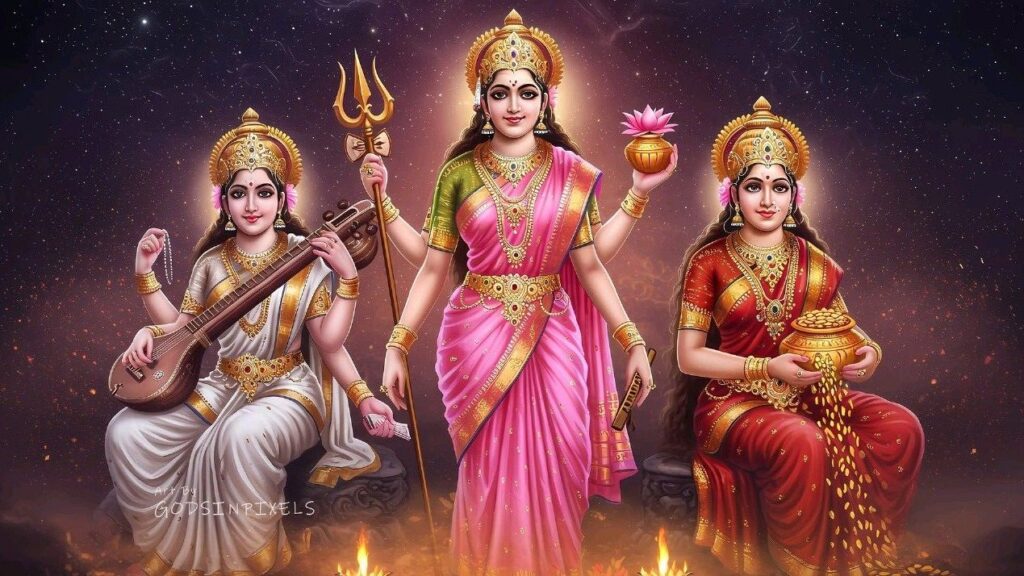
Three Hindu goddesses Saraswati Durga Lakshmi image
Stotra, Sūktam

Tantrokta Ratri Suktam

Tantrokta Ratri Suktam ॐ Visvesvarīm, the mother of the universe, the destroyer of all existence. The holy sleep of Visnu, the lord of incomparable effulgence. ŏm Viśve[a-īi]śvarīm Jagad-ḍhātrīm Sthiti-Samhāra-k͟hārinnīm |ṇidrām Bhagavatīm Vissnnor-ātulām ṭejasah Prabhuh ||1|| Om, the goddess of the entire universe (Vishweshwari), who supports all the worlds (Jagatdhatri), who is the underlying cause behind the continuance of existence (Sthiti) as well as withdrawing of creation (Samhara), who is the goddess with unparalled tejas (power) and is the yoganidra of Vishnu; (to that goddess sri Brahma said …) ब्रह्मोवाचत्वं स्वाहा त्वं स्वधा त्वं हि वषट्कारः स्वरात्मिका ।सुधा त्वमक्षरे नित्ये त्रिधा मात्रात्मिका स्थिता ॥२॥ Brahmo[a-ū]vācaṭvam Svāhā ṭvam Svadhā ṭvam ḥi Vassattkārah Svara-[ā]atmikā |Sudhā ṭvam-ākssare ṇitye ṭridhā ṃātra-[ā]atmikā Sthitā ||2|| Brahma said: you are swaha (sacrificial oblations to the gods), you are swadha (sacrificial oblations to the manes), you are indeed vasatkara (exclamation during sacrifice after which the oblation is poured); you are the essence behind these swaras (exclamations during sacrificial oblations) (and thus the one to whom all sacrificial oblations go), you are the nectar (of bliss) within the akshara (om), residing eternally as the essence behind the three maatras (a-u-m). अर्धमात्रास्थिता नित्या यानुच्चार्या विशेषतः ।त्वमेव सन्ध्या सावित्री त्वं देवि जननी परा ॥३॥ ārdha-ṃātrā-Sthitā ṇityā ẏa-ānuccāryā Viśessatah |ṭvam-ĕva Sandhyā Sāvitrī ṭvam ḍevi Jananī Parā ||3|| You eternally abide in the very subtle bindu of the omkara, which in particular, cannot be pronounced at all, you indeed are the Sandhya (the approaching calmness of the night and the essence of the sandhya worship) and you indeed are the Savitri (the power of the sun during the day and the essence of the gayatri mantra); you are the devi who is the supreme mother. त्वयैतद्धार्यते विश्वं त्वयैतत् सृज्यते जगत् ।त्वयैतत् पाल्यते देवि ! त्वमत्स्यन्ते च सर्वदा ॥४॥ ṭvayai[ā-ĕ]tad-ḍhāryate Viśvam ṭvayai[ā-ĕ]tat Srjyate Jagat |ṭvayai[ā-ĕ]tat Pālyate ḍevi ! ṭvamatsy-ānte Ca Sarvadā ||4|| You bear this universe, you create this world (from your power), and you sustain this creation, O devi (through your power), and finally you merge this creation within you, always. When you are released, you are the form of creation, and when you are maintained, you are the form of position. Thus at the end of the form of annihilation of this universe in the universe. Visrssttau Srsstti-ṟūpā ṭvam Sthiti-ṟūpā Ca Pālane | ṭathā Samhrti-ṟūpa-ānte Jagato[ah-ā]sya Jaganmaye ||5|| During creation you are sristhi-rupa (of the form of the creator of this world), during sustaining you are sthiti-rupa (of the form of the abider within the creation for nourishing it), and during the end of the world, you assume the form of samhriti (of the form of withdrawer of creation within yourself); you are thus the jaganmayi (who contain the whole world within herself). महाविद्या महामाया महामेधा महास्मृतिः ।महामोहा च भवती महादेवी महासुरी ॥६॥ ṃahā-Vidyā ṃahā-ṃāyā ṃahā-ṃedhā ṃahā-Smrtih |ṃahā-ṃohā Ca Bhavatī ṃahā-ḍevī ṃahā-Surī ||6|| You are Mahavidya (the great secret knowledge beyond the mind), you are Mahamaya (the knowledge which enchants the mind), you are Mahamedha (the great intelligence beyond the mind) and you are Mahasmriti (the universal memory which knows everything), you are Mahamoha (the knowledge which confounds the limited mind); you are Mahadevi, the worshipful great goddess. प्रकृतिस्त्वं च सर्वस्य गुणत्रयविभाविनी ।कालरात्रिर्महारात्रिमोहरात्रिश्च दारुणा ॥७॥ Prakrtis-ṭvam Ca Sarvasya ġunna-ṭraya-Vibhāvinī |k͟hālarātrir-ṃahārātri-ṃoharātriś-Ca ḍārunnā ||7|| Through your three gunas, you have given rise to the entire prakriti (the universal nature), you are kalaratri (the great night behind prakriti which causes dissolution), you are maharatri (the great night behind prakriti which is full of mystery), you are moharatri (the great night behind prakriti which causes delusion), you are (indeed) very very deep. त्वं श्रीस्त्वमीश्वरी त्वं ह्रीस्त्वं बुद्धिर्बोधलक्षणा ।लज्जा पुष्टिस्तथा तुष्टिस्त्वं शान्तिः क्षन्तिरेव च ॥८॥ ṭvam ṣrīs-ṭvam-īiśvarī ṭvam ḥrīs-ṭvam Buddhir-Bodha-l̤akssannā |l̤ajjā Pussttis-ṭathā ṭussttis-ṭvam ṣāntih k͟hssantir-ĕva Ca ||8|| You are Sri (srim, the bija mantra of sri), you are the goddess (who brings prosperity), you are Hri (hrim, the bija mantra of prana and heart space), you are (the power which awakens) the intelligence and understanding, you are the feminine energy manifesting as modesty, nourishment, as well as contentment; you are indeed peace and the power of forbearance. खड्गिनी शूलिनी घोरा गदिनी चक्रिणी तथा ।शङ्खिनी चापिनी बाणभुशुण्डी परिघायुधा ॥९॥ k͟hhaddginī ṣūlinī ġhorā ġadinī Cakrinnī ṭathā |ṣangkhinī Cāpinī Bānna-Bhuśunnddī Parigha-[ā]ayudhā ||9|| Holding the khadga (sword, scymitar) and trishula (trident) you manifest your dreadful form (making a terrible sound); with the other hands holding the gada (mace) and chakra (discus), and (holding) shankha (conch shell), caapa (bow), bana (arrow), bhusundi (a type of weapon) and the weapon parigha (club studded with iron). सौम्या सौम्यतराशेषसौम्येभ्यस्त्वतिसुन्दरी ।पराऽपराणां परमा त्वमेव परमेश्वरी ॥१०॥ Saumyā Saumyatara-āśessa-āaumyebhyas-ṭva[u-ā]ti-Sundarī |Parā-[ā]parānnām Paramā ṭvam-ĕva Parame[a-īi]śvarī ||10|| You are Saumya (cool and placid like the moon), a greater manifestation of saumya, perfect and whole, and surpassing all that is saumya; you are indeed exceedingly beautiful, you are beyond both para (knowledge relating to the divine) and apara (knowledge relating to the world); you indeed are the supreme goddess. Whatever is somewhere in the universe, whether good or bad, is in the universe. That which is the power of all that is then why are you praised? ẏac-Ca k͟hin.cit k͟hvacid-Vastu Sad-āsad-Va-ākhila-[ā]atmike |ṭasya Sarvasya ẏā ṣāktih Sā ṭvam k͟him Stūyase ṭadā ||11|| Whatever thing, however insignificant, present anywhere, whether they are sat (based on eternal truth, lasting) or asat (not based on eternal truth, transient), O the atman (soul) of the whole universe, are all manifestations of your shakti; how then can anyone praise you? (the praiser also being part of you). You are the one who created the universe and who causes it to fall down. He too has been brought under the control of sleep Who is the lord here to praise you ẏayā ṭvayā Jagat-Srassttā Jagat Pātyatti ẏo Jagat |So[ah-ā]pi ṇidrā-Vaśam ṇītah k͟has-ṭvām Stotum-īhe[a-īi]śvarah ||12|| By you, (he who is) the creator of the world, the destroyer of the world, he who is the world itself (i.e. the preserver of the world), even him (i.e. Vishnu), you have overpowered with sleep; what (further) praise can therefore be uttered by me

Tantrokta Ratri Suktam Read Post »