
















Hari Om

Menu

Sivananda Ashram

download 39
Sivananda Ashram, Swami Sivananda

Yoga-Vedanta Forest Academy

Yoga-Vedanta Forest Academy Introduction: The Yoga-Vedanta Forest Academy which is aunique institution, was formally consecrated by its holy founder, most Worshipful Gurudev Sri Swami Sivanandaji Maharaj in 1948-His Sannyasa Silver Jubilee Year. Regular classes were commenced from the 3rd July, 1948. It is a Department of The Divine Life Society which came into existence in a humble way in 1936 and has now grown into a huge International Organisation. Location: The Academy is situated at Shivanandanagar(Rishikesh) in Tehri-Garhwal District of Uttarakhand, India, within the Sivananda Ashram premises which is beautifully laid out on the sylvan Himalayan foothills on the right bank of the holy Ganga. The Ashram serves as a haven of peace to spiritual seekers from all over the world. Here live and work a band of dedicated monks and seekers trained by the great Master Swami Sivananda for the service of humanity. The Academy is at a distance of about 3 kilometers from Rishikesh town and is served by auto rickshaws and taxis. Rishikesh itself is 24 kilometers away from the renowned pilgrim centre, Haridwar, and is linked by rail and road. Regular buses, autos and taxis are available throughout the day. Haridwar is also on the banks of the river Ganga at a distance of 263 kilometres to the north of Delhi on the Delhi-Haridwar-Dehradun rail route. Aims and Objects: Widest possible dissemination of spiritual and cultural Knowledge is the primary object of The Divine Life Society, under which the Yoga-Vedanta Forest Academy functions. All its activities are tuned to this one aim. The Branches and Members of the Divine Life Society work for furthering this lofty object. Its illustrious Founder, Sri Swami Sivananda tirelessly worked for three decades from his hermitage on the bank of the Ganga, in pursuance of this worthy goal. The aim of the Yoga-Vedanta Forest Academy is not merely an academic equipment of students, but a providing of the requisite training to enable them in their endeavour to blossom into truly humane, serviceful, integrated personalities, so that they succeed, at least in an appreciable measure, in living a life of goodness and wholeness personally, and of dedication, unselfish cooperation and constructive work socially. It needs no special mention that this achievement in one’s own person and in society is obviously rooted to the extent to which one’s practical life is attuned to the Ultimate Reality of the Universe. Philosophical discipline, thus, is the precondition for leading a perfectly sociable, ethical and progressive life of an onward expansion towards the realisation of the Supreme Goal of existence. The teachers of the Academy will strive to hold aloft this objective set before the students, and are not just instructors in the well-known intellectual sciences. The basic spiritual foundation of all life is the principal motif governing the curriculum of the Academy, and students with this elevated spirit of quest will seek admission. As it would be clear from what is stated above, the objective of the Academy is to prepare the person for a successful life in the world and to facilitate the living of a wholesome life with an integrated personality. As such, applicants will kindly note that the intention of the Academy is not merely to provide them with scriptural learning or textual information, though the lessons will also include profound studies in the essential scriptures such as the Upanishads, the Bhagavadgita, the Yoga-Sutras of Patanjali, etc. Founded with a view to bringing about an effective revival of the grandest inner aspect of Bharatvarsha’s great Adhyatmic and Dharmic Culture, the Yoga-Vedanta Forest Academy (formerly Yoga-Vedanta Forest University) chiefly aims at teaching one and all the way of attaining Perfection of life through the well-established and time-honoured methods of Yoga-Sadhana. It seeks to give to all students a comprehensive knowledge of developing their inner nature, their mental faculties and physical health as well. The students are also trained in the practical methods of Yoga and Vedanta. Therefore, the Course conducted in the Academy is of the nature of a discipline and not merely an occasion for Darshan or Satsanga with Saints and Mahatmas, though the latter too will be an advantage of which the students can avail themselves simultaneously with the training imparted during the course. Anyone who fulfills the required qualifications can join the Academy, if he is really eager to practise Sadhana and attain Perfection. He must be able to adapt, adjust and accommodate, to the circumstances that prevail here. He must be willing, ready and eager to do service as Sadhana. He must be active, peaceful, kind and mindful of his own development. He must be humble, simple and eager to learn. He must be obedient and imbued with a spirit of self-sacrifice. Such a one will surely profit by his stay here. Number of courses conducted: The Yoga-Vedanta Forest Academy will be conducting regular course in Yoga-Vedanta on a systematic basis. At present the Academy conducts 3 Courses in a year, each of two months duration. The details are as follows:- First Course: March to April Second Course: May to June Third Course: September to October (These details are tentative and can be changed as and when necessary) The Lectures and Classes will be for six days in a week, from Monday to Saturday, including special lectures, group discussions, homework and reflection by students. Number of Seats: 40 Age Group: Normally between 20 years and 65 years. Qualifications: Preferably a Graduate. Good knowledge of English, keen spiritual aspiration and sound health are necessary. Medium of Instruction: The medium of instruction is English. Conditions: Smoking, use of intoxicants and drugs and such other dissipating habits are strictly forbidden. Students are expected to live an austere life in the Ashram and should be mentally prepared and physically sound to stand the rigour of the Course. The selected candidate alone is expected to come. He is not permitted to bring along any other family member or relative with him. Class Room: Students will have to sit in the Lecture Hall on the floor, on a cushion seat cross-legged. A desk will be provided

Yoga-Vedanta Forest Academy Read Post »

5e2e7ce52f5202368b55ebd57780b4c7
Sivananda Ashram, Swami Sivananda

Leprosy Relief Centres

Leprosy Relief Centres The Divine Life Society has four centres for the treatment of leprosy, two of which have their expenses borne entirely by the Society, and two others that are funded independently. The total number of beneficiaries in the various colonies in and around Rishikesh is 194. In addition, the Society provides funding for a Leprosy Centre in the state of Orissa, as well as medical treatment and food for ten outpatient leprosy victims through the Laxman Jhula Leprosy clinic.

Leprosy Relief Centres Read Post »

Swami Sivananda 8
Sivananda Ashram, Swami Sivananda

Sivananda Charitable Hospital

Sivananda Charitable Hospital A Hallmark of Selfless Service “Sivananda charitable Hospital is not merely an institution, but a glorious upward movement, a soul purifying Karma Yoga Yajna, a saga of selfless service.” The most outstanding feature of Gurudev’s multifarious personality was his unstoppable zeal to help all beings, to be good and to do good to all, sincerely and wholeheartedly. He was full of love, compassion and kindness for one and all. Swami. Suddhananda Bharati, who knew him well from his childhood, used to say, “Swami Sivananda is all heart from head to feet.” He rejoiced in helping others and in relieving their sorrows and sufferings. His happiness was in making others happy. This trait of his personality was distinctly visible even from his boyhood. As a young boy Kuppuswami, he derived more pleasure in feeding the poor than eating himself. Whenever the young boy got some sweets from his mother, he distributed them liberally to his companions, poor, and even to dogs, cats, cows and birds, himself not eating a bit though he loved sweets very much. After graduating in medical science, the young Dr. Kuppuswami wanted to put his knowledge of medical science for the use of maximum number of people, for the maximum well-being of mankind. As a young man his ambition was to invent some cure of malaria, so that sufferings of millions of poor people can be relieved. In 1909, he started a medical journal, “Ambrosia – A Journal Dedicated to Health”. The emphasis of Ambrosia was more on prevention of diseases, proper diet, exercise and lifestyle, and on cheap household remedies easily available to the masses. And he used to distribute the journal free! The young doctor joined a hospital in Malaysia in 1913. The hard-working doctor was very successful in his profession and had a very lucrative practice in no time. Hopeless cases came to him and got cured. People believed that God has endowed him with some special powers, and so he could miraculously cure even the hopeless cases. He acquired reputation as a very kind and sympathetic doctor, always eager to help even the poorest patients. He used to attend the poor in their huts without charging even visiting and consulting fees; instead he would give money to the poor patient to buy medicines, and for proper diet and other expenses. Once a poor man came to the doctor at night. His wife was in birth pangs. In spite of heavy rains, the doctor at once rushed to her aid. After attending her, he stayed outside the hut in heavy rains and returned home next morning, only after the safe delivery of the child. The young doctor suddenly left the lucrative medical practice, renounced everything and came to India in 1923 and ultimately reached Swargasharam after some time. He sought seclusion and very carefully avoided interactions with the world and plunged himself into very intense sadhana. He observed mouna and was absorbed in meditation for more that twelve hours every day. But even at that time of intense tapas, his selfless service continued. He served the sick going around their huts with medicines and dietetic food, and provided them milk or curd. When he received some money from insurance, he deposited the amount in a Post office and utilised the interest amount for purchasing medicines, milk, curd, butter, sago, etc., for the sick. He was massaging feet of ailing sadhus and pilgrims. He used to attend serious patients and even patients with infectious diseases. In April 1927, he received some insurance money and he used the entire amount to start “Satya Sevashram”, a charitable dispensary at Laxman Jhula, with a view to helping the pilgrims and sadhus. On 17-1-34, he came to this side of Ganga with six disciples. They found a dilapidated and abandoned cowshed. It was cleaned thoroughly and after fixing doors and window-shutters, they occupied it on 28-3-34. And from the very first day of occupying it, he opened a dispensary there. In 1947, Sivananda Homeopathic Dispensary was started under Swami Achityanandaji ably assisted by Swami Venkatesanandaji and in 1956 another one under Dr. Brij Nandan Prasad came into being. Meanwhile, Gurudev’s bhav and spirit appealed to many doctors and they started visiting the Ashram. In 1950, the first ‘Drishti Dana Yajna’, a medical relief camp for eye diseases was arranged under a young enthusiastic eye surgeon. Gurudev was moved by the plight of the poor villagers who flocked the camp. And medical relief camps became a regular feature of The Divine Life society. Also, Gurudev realized the need for increasing the medical facilities, and upgraded the dispensary as Sivananda Charitable Hospital from 28-12-50. Dr. K.C. Roy, M.B.B.S. was appointed as the Medical officer and Capt. G.S.K. Iyer extended his seva as an honorary surgeon. Gurudev wanted to give medical aid to :- (a) Sadhus, Mahatmas, and sadhaka(b) poor villagers(c) lepers(d) the pilgrims The Hospital was also giving preventive drugs of malaria etc. to local people. He also considered it as an effective field for preparing the aspirants through selfless service. Selfless service removes tamo-guna and impurities of the mind. It is necessary for most of the aspirants to do selfless service for a few years before launching into meditation and higher sadhana. Highly qualified doctors started visiting the Ashram and offered their selfless services. So medical camps became a regular feature. In 1951, Dr. Lakshmi Mirchandani, M.B.B.S, M.R.C.S, L.R.C.P. (London) conducted two 9-day camps in July and September. Dr. Ram Jas of Rewari held a ‘Drishti Dana Yajna’ in October and Dr. Hosang, a Parsee disciple, visited 12 villages. Even in the very first year, one thousand patients were treated every month and thousands of medical packets were given to the Badri-Kedar pilgrims. In 1952, Dr. Savitri Patel of Surat conducted two camps and performed operations as well. Mr. S. S. Shamsh used to send from U.S.A. drugs for leprosy patients. The Hospital used to arrange sumptuous meals for all the residents of leprosy colony and

Sivananda Charitable Hospital Read Post »

yogi sivananda html d290e898
Sivananda Ashram, Swami Sivananda

Gurudev’s Tapasya Kutir

Gurudev’s Tapasya Kutir When Gurudev Swami Sivananda came to Rishikesh in search of the Almighty, he had occupied a small kutir in Ramnagar. But in the devastating flood of 1923, it was washed away. He came to Swargashram and occupied this Sadhana Kutir towards the end of 1923 or in the early 1924. And this secluded kutir witnessed for ten years such intense sadhana that its parallel cannot be found in the modern age. Rishikesh was a small village, which was not connected with paved road or railway. And the Muni-ki-reti area where the present Sivananda Ashram is situated was a small hamlet with a very few houses and some godowns. Gurudev had to go for bhiksha (free food) to Nepali Kshetra, opposite the present Andhra Ashram using Laxman Jhula. The unpaved road was along the Ganga till past Sheshadhara. But to avoid people, he used to climb the hill and go through the forest. This kutir was handed over to the Divine Life Society on the eve of the Sivananda Birth Centenary celebrations in 1987. Though this kutir was occupied by other sadhakas from 1934 till its possession was given to the Society, it contains that spiritual air and vibrations. When you visit this important place associated with Gurudev’s intense sadhana, either sit for meditation or remember all the episodes of his life while living in this kutir to be maximum benefited.

Gurudev’s Tapasya Kutir Read Post »

The Divine Life Society Rishikesh Swami Sivananda 5 e1770969037995
Sivananda Ashram, Swami Sivananda

Gurudev Kutir

Gurudev Kutir In 1934, Gurudev Swami Sivananda left Swargashram and came to this side of the Ganga along with four disciples, and occupied the eastern side room of Ramashram Dharmashala. They found a dilapidated, disused, old abandoned cowshed. It was cleaned thoroughly, improved a bit by fixing doors and windows, and occupied on 28th March. The Maharaja of Tehri gave to Gurudev this vast land for establishing an Ashram. Some rooms were made at the present Hospital site. But Gurudev gave it the name Ananda Kutir. He had a strong spirit of renunciation and detachment. As the land was given to him, he preferred to live outside that premise. He occupied a dilapidated kutir on the banks of the Ganga on rent of rupee one per year. At that time, it was the dark room with inadequate ventilation, where his bed is kept these days and the adjacent front where his Puja with Lord Krishna’s picture is kept. The roof was of dry grass only. After some years, the adjacent portion, where his wiring table and chair are kept were built and proper masonry root was also made. There were no steps lading to the Ganga. There was sand all around. By staying in this kutir, Gurudev could maintain in his seclusion and purse intense sadhana and his prolific writings. He stayed here for more than twenty-five years – and these were the years after his highest spiritual Experience – till his Maha-samadhi. The Divine Life Society, the disciples and the visiting devotees were given guidance and inspiration from here. In short, this is the most important landmark in the history of the Divine Life Society. The important articles that Gurudev used are put here, as if he is still present here and is using them. Other articles that he used but are not of daily use are carefully preserved in trunks. To preserve its spiritual vibrations and sanctity, daily Puja, bhajan-kirtan and Ganga-Arati are done here. Devotees come here and sit for meditation. The ambience of the place and the articles used by Gurudev make his subtle so alive that it is experienced by devotees. This is the place where you must spend some time in prayer and meditation in the lively presence of this ever-present saint.

Gurudev Kutir Read Post »

Swami Sivananda 10 1 e1770970745933
Sivananda Ashram, Swami Sivananda

Bhajan Hall

Bhajan Hall The Bhajan Hall occupies a unique place in the history of Sivananda Ashram. Swami Kaivalyananda of Calcutta envisaged the construction of a temple and a hall for satsanga and prayer meetings in the Ashram. He formed The Mandir Building Committee in 1941. As the need for a hall was very urgent, construction was completed in a very short tome and the Bhajan Hall was formally opened on April 2nd, 1942. It became the place for holding not only the daily prayer and satsanga, but also all the spiritual retreats, special functions and Puja, etc. As the World War II prolonged with no end in sight for restoration of peace, Gurudev decided to start non-stop kirtan of the Mahamantra from 3rd Dec 1943. And as peace is a precondition of happiness and welfare of the mankind, the nonstop kirtan of the Mahamantra has continued day and night without a minute’s break even today after more than 62 years. The Bhajan Hall is also the abode of Lord Kartikeya and daily Puja, occasional special Puja and special Skanda-Puja every year for six days immediately after the Dipavali are performed here. All these spiritual activities, Puja, and non-stop chanting have left behind special spiritual vibrations in the Bhajan Hall. Here also we can notice the broad outlook of Gurudev Swami Sivanandaji. The Hall is decorated with pictures of various saints and sages. A German devotee of Gurudev prepared statues of Durga Devi and Sarasvati Devi. Both have been prominently placed in the Hall. The easy chair he was using is also kept there, as if to signifying he is ever present in his favourite place of satsanga. When you visit Sivananda Ashram, do not fail to spend few minutes in silence here.

Bhajan Hall Read Post »

download 37
Sivananda Ashram, Swami Sivananda

The Lord Vishwanath Temple

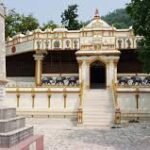
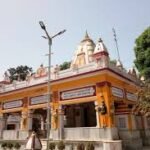
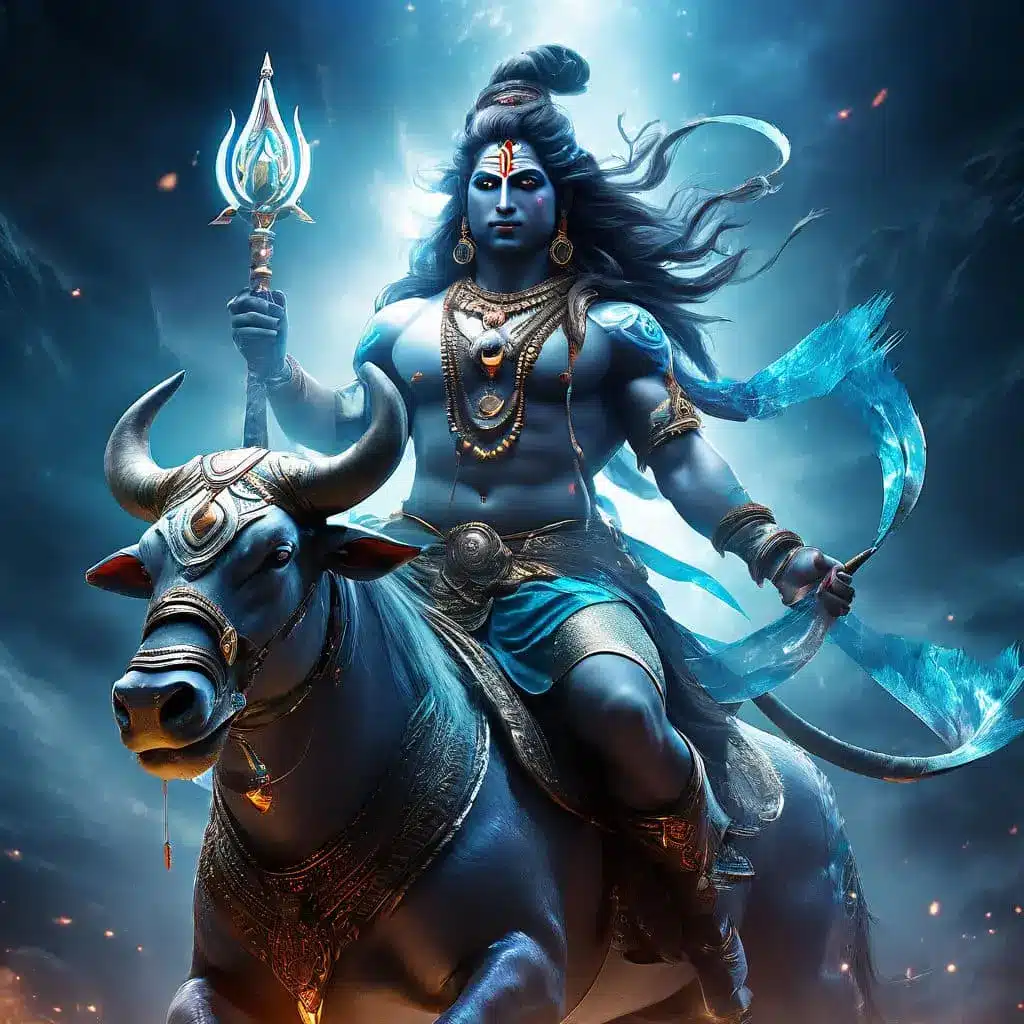
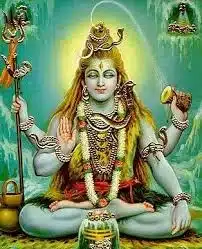
The Lord Vishwanath Temple The Religious Hub In India, there is a tradition and common practice to have a family deity or Kula-Devata. So, we find a temple in most of the Ashrams and the main Deity of the temple is like the presiding Deity of the Ashram. In this sense, Lord Visvanatha (literal meaning is ‘The Lord of the entire Universe’, Lord Siva) is the presiding and protecting Deity of Sivananda Ashram and the entire Sivananda family of devotees spread all over the world. The temple has Lord Siva in the centre, and behind Him, there is Lord Krishna in the form of a very beautiful Murti (idol) of Murali Manohara (the charming One with a flute). As per the tradition, every Siva temple will also have Lord Ganesh and the Devi, and we have followed this tradition. We also have in our Temple, Lord Rama with Cosmic Mother Sita, brother Laxmana and His chief lieutenant Hanuman. The Temple complex houses a very beautiful Murti of Sri Sankarachaya and a Yajna-sala also. There is a very spacious porch also. Swami Sivananda the founder of the Sivananda Ashram was known for his very broad view and generosity. As such, special days of many deities are celebrated in the Ashram with the traditional fervour, zeal and gaiety in the Visvanatha Mandir. In other words, it is the hub of Puja, celebrations and all the traditional religious activities of the Ashram. Background When Swami Sivananda came to Rishikesh and settled in Swargashram in the year 1924, the present sight of the Ashram was a dense forest and the only road was along the river bank. During his days of very intense sadhana, he used to remain in seclusion to the extent possible. But, his majestic, imposing yet magnetic personality attracted many aspirants. So he used to come to this steep hill and go deep in the forest and sit under a bilva tree for almost the whole day. The supreme Experience is possible only if the seeker transcends the three gunas. (attributes). The bilva tree gives leaves in a set of three. So, many seekers are offering the bilva leaves to the Lord in a symbolic way. Puja of Lord Siva is done with the oblations of bilva leaves. So, he used to start his sadhana with offering the bilva leaves at a particular spot, which he intuitively liked very much. It is believed that during his long hours of deep meditation and samadhi, he had the supreme Experience at this very spot. After a few years the King donated this land to the Divine Life Society. So, he thought that it is God’s Will that a temple should be established here. There was another unusual point. Gurudev was extremely sensitive, kind and compassionate person. He sincerely wished an early end of the World War II. So, in order to spread peace currents throughout the world, he started round-the-clock non-stop kirtan of the Mahamantra in the Bhajan Hall from 3rd December 1943. And after a few weeks only consecrated the Visvanatha Temple on 31st December. This modern saint arranged for traditional Puja three times a day for World Peace. He was also doing peace prayers in the daily Satsanga. And he also made peace Yajnas as a regular feature of the Ashram activities. Puja This extraordinary background of the Temple created wonderful spiritual vibrations. Though, this unorthodox saint had resorted to the traditional Puja for World Peace, the Temple and its Puja inspired the devotees so much that it was continued in a systematic way. The number of devotees requesting for Puja is more than one hundred every day. The Temple opens at 4 in the morning, the first Puja commences at 5-45. While the Veda Mantras are recited in side the inner chamber of the temple, in the main hall, devotees are doing kirtan of the “Om Namah Sivaya” mantra in a sweet melodious manner to add to the spiritual vibrations and sanctity. Celebrations: Special days of various Deities are celebrated in the Temple. The whole night Puja on the Mahasivaratri Day attracts a very large number of devotees. Sri Krishna Jayanti, special 9-day programme on Sri Rama Jayanti are other important functions. Occasionally, discourses on Srimad Bhagavatam, recitation of Ramayana, Akhanda (non-stop) kirtan and other programmes are also held here. But, the 9-day Devi Puja and Vijaya Dasami programmes, and Christmas and New Year programmes are arranged in the Library Hall. And the 6-day annual Skanda Puja is continued in the Bhajan Hall. Daily Programmes at Sri Viswanath Temple opening time  :- 4:00 – 11:00 (Morning) 2:30 – 7:30 (Evening) First worship  :- 5:45a.m. – 7:00a.m.(Feb-Nov) 6:00a.m. – 7:00a.m.(Dec-Jan)Abhisheak, Puja, Archana and Arati Second worship  :- 9:30a.m. – 10:15a.m. Puja and Arati Third Worship  :- 5:30p.m.- 6:30p.m.(Summer) 5:00p.m.- 6:00p.m.(Winter)Lalita Sahasranamam ArchanaPuja and Arati Abhisheak for General Public, Visitors & Visitors –4:00a.m. – 5:30a.m. , 7:30a.m. – 9:30a.m. , 3:00p.m. – 5:00p.m.On Monday & Pradosha day – Havan

The Lord Vishwanath Temple Read Post »

images 14 1
Sivananda Ashram, Swami Sivananda

Samadhi Shrine

Samadhi Shrine The Spiritual Hub Samadhi Mandir is the central place of spiritual activities of Sivananda Ashram. The two main activities – early morning meditation, and the evening Satsanga – are held here. This place is the source of spiritual vibrations and inspirations for all the seekers. Even when no programme is going on, devotees prefer to sit under this holy atmosphere and do japa, prayer and meditation. Let us also peep into it. The Samadhi Shrine is at the end of a long big hall. Above the Samadhi is Swami Sivanandaji Maharaj’s Murti is in the lotus posture seated in a beautiful lotus. The imposing sight leaves you captivated and spellbound. You forget to enter into the Hall and are stuck up on the steps only. Thank God that you are stuck up. Now you are able to notice the beautiful carvings on the main door. The eight outer squares on the doors depict symbols of various religions and faiths. The inner eight squares depict eight significant words, as if they were the quintessence of all religious teachings or the fundamental universal principles of all religions and faiths. The eight words are Serve Love Give Purify Meditate Realise Be Good Do Good. The meaning and significance of these words have been explained in “Swami Sivananda – Philosophy and Teachings”. It is sufficient to note here that this Shrine is of a saint who respected all religions and accepted all that is good from all the sources. The first thing you notice after entering the Hall is oil paintings with appropriate short write-ups on both the sidewalls. This place is source of inspiration for innumerable devotees. One Mr. Allen from Britain, on his for his personal satisfaction, went on creating oil paintings show the various episodes from the life of Swami Sivananda. And when he showed these painting to the President Swamiji Maharaj, the latter immediately arranged to put them in the Samadhi Mandir. As a first time visitor, you are engrossed in them. And you also notice below the paintings some very appealing thoughts from the writings of Swami Sivananda. When the visitor is little tired he looks up for some change, and finds a big volume of Vedas very carefully preserved in a glass case, and a charming Murti of Lord Vishnu. This volume is treated as the living presence of Veda Bhagavan and is a special worship is offered fortnightly. Chanting of the mantra “Om Namo Narayanaya” and recitation of Sri Vishnu-sahasrsa-nama Stotram is done here regularly. On the right side there is a huge picture of Swami Sivananda, presented by devotees from Argentina. The innermost part is the sanctum sanctorum, the Samadhi of this great saint. You observe devotees coming with deep faith, overwhelmed with emotions approaching the Shrine, before entering it, they touch the feet of Ganesh seated over the entrance door. They bow down very reverentially, and then do circumambulation of the Shrine, bow down again and after coming out apply holy ashes. In the evening, you come again to the Samadhi Mandir to attend Satsanga, the main programme of the Ashram. Satsanga starts with prayers of all deities, and is followed by recitations of various Stotras (hymns). Then there is a spiritual discourse. It is followed by bhajans (devotional song), prayers for all those who are suffering, prayers for peace, and for the welfare of the entire mankind. After the concluding prayers, there is Arati and prasad distribution. A senior Swamiji takes up his seat one again and many devotees are also seated. Swamiji calls the devotees who had given their names in advance. The devotees come one after other, ask spiritual or even personal questions. Then, Swamiji takes a look around, inquires about the stay and comforts of the newly arrived visitors. The intimacy shown by the senior Swamiji is unique. You feel it is a sort of family gathering. Swamiji calls you also, and shows such intimacy that you feel that you are meeting your own father and you feel you are a part of the Sivananda family. Now you decide never to miss the Satsanga. It is a pleasant surprise for you that on most of the days the discourses are in English, and even when a discourse is in Hindi, its gist is given in English. The morning meditation session is from 5 to 6. But you come a little early and see many devotees already sitting in meditation. After brief prayer, the group meditation begins, at the end of it there is a little kirtan. Following early morning meditation, Revered Swami Atmaswarupananda gives a sparkling short talk. Sometimes some senior Swamiji is also gives a brief talk. The atmosphere is so much charged that everyone is inward drawn, no one speaks with anyone else, and no one looks here and there. Next, devotees hustle over to the Lord Visvanatha Temple and join the “Om Namah Shivaya” kirtan there while the puja of Siva is in progress. It may be noted that most worshipful Swami Chidanandaji Maharaj gives the highest priority to this morning programme and he is invariably attending it when he is in the Ashram. His morning talks are so inspiring that they are complied and published in many books.

Samadhi Shrine Read Post »

f221abb17c661b07375376c1de93270b
Sivananda Ashram, Swami Sivananda

Daily Activities

Daily Activities The ashram offers a myriad of activities for serious seekers of all levels and backgrounds on the path of the truth to strengthen their sadhana and further their spiritual progress. Visitors are encouraged to attend as many of the programmes as possible and make fullest use of the uniqueness of location as well as activities. DAILY MORNING PROGRAMMES 5:00 – 6:00Jai Ganesh, Guru Stotra, Shanti Path,Pratah Smarana Stotram, Silent Meditation(30 minutes), short talk (English)6:00 – 7:00 First Worship 6:00 – 7:00First Worship of Lord Viswanath,Chanting of OM NAMAH SIVAYA & Aarati 6:00 – 7:00Yoga Asana & Pranayama Class,Only for Men(Except Sundays) 7:30 – 9:00Vishnu Sahasranama &Chanting : Om Namo Narayanaya 9:30 – 10:30Second Worship Gruedev’s Samadhi ShrinePaduka Puja(Every Thursday & 8th of Every Month) 9:30 – 10:15Second Worship Lord ViswanathArati & Puja Worship8:00 – 9:00 (Morning)6:30 – 7:30 (Evening) Worship8:00 – 9:00 (Morning)6:30 – 7:30 (Evening) 8:00 – 11:00 (Morning)2:00 – 4:00 (Afternoon)(Except Sundays) DAILY EVENING PROGRAMMES 1:00 – 3:00Sivananda Music Hall(Except Sundays) 4:30 – 5:30 (Winter)5:00 – 6:00 (Summer)Chanting: Om Namo NarayanayaArati & Puja 5:15 – 6:00(Winter)5:45 – 6:30(Summer)Bhajans, Kiratans at Gurudev’s KutirGanga Arati & Puja 5:30 – 6:00(Winter)6:00 – 6:30(Summer)Third Worship Gurudev’s SamadhiArati & Puja 5:00 – 6:00(Winter)5:30 – 6:30(Summer)Third Worship Lord ViswanathArati & Puja 7:30 – 9:30Evening Satsang: Lectures, Kirtans & Bhajans(English and Hindi)

Daily Activities Read Post »

download 45
Sivananda Ashram, Swami Sivananda

Sivananda Ashram – Spiritual Field

Sivananda Ashram – Spiritual Field Sivananda Ashram is a place for sadhana (spiritual practice) preferred by aspirants from all over the world. Everyone – whether a beginner or a very advanced level sadhaka (spiritual aspirant) – has found this Ashram as an ideal place for sadhana, a place highly charged with the spiritual vibrations. Any person who wants to pursue sadhana as per his pre-planned sadhana programme with advance intimation is given permission to stay for a some days, if accommodation is available, without any discrimination with regards to caste, religion, country, social/economic status, etc. What has contributed to such a wonderful spiritual atmosphere? Several factors, such as: 1. Sivananda Ashram is situated in the foothills of Himalaya on the right bank (which is considered to be very sacred) of holy Ganga. This brings in some divine splendour as the background. 2. According to mythology, the pot containing the Divine Nectar was put on the bank of Ganga at Haridwar. The Divine Nectar sprinkled around covering this Ashram area as well, leaving Divine vibrations permanently. 3. The name Rishikesh was given to this place because Hrishikesh (Lord Krishna) gave here His admonitions to Uddhava. This Uddhava Gita (book XI, Ch. 6-29) is a top jewel not only of Srimad Bhagavatam, but also of the entire gamut of Indian philosophy. 4. Lord Rama’s brother Laxman had practised the most intense austerities for twelve years here (at a place only 150 meters from the Ashram). 5. This area on the outskirts of Rishikesh is known as Muni-ki-reti, – Muni (sage), ki (of) and reti (sand) – indicating that here on the sands of Ganga bank sages practise austerities and sadhana. 6. During the intense sadhana period (1024-34) of Swami Sivananda, the Ashram area was a hilly jungle and here (at the site of Vishwanath Temple); he used to practise meditation and had attained transcendental Experience. Also, after the Ashram was established, many sages have done sadhana here and are still doing. There are many buildings on the slope of a hill making it possible to have a view of Himalaya and Ganga from most of the buildings and even from good many rooms as well. The construction is done economically to provide moderate accommodation providing basic requirements to sincere sadhakas. A visitor must inform well in advance his programme to the General Secretary, The Divine Life Society,Shivanandanagar,PIN: 249 192 Uttaranchal, India.Fax:0135-442046E-mail:generalsecretary@sivanandaonline.org,Website: www.sivanandaonline.org. The decision about whether the application should be approved or rejected and for what duration the visitor would be permitted to stay is solely the discretion of the General Secretary. The visitor should confirm his visit to the Reception-in-charge (ph: 0135-430040) and contact him on his visit.A Typical Day at Sivananda Ashram The first thing that one would have to say about a “typical day at the Sivananda Ashram” is that there is definitely no typical day at Sivananda Ashram! This is true for various reasons. One is due to the absolute large-heartedness and tolerance of Swami Sivananda himself. He did not demand that people hold to a definite daily schedule, although he did lay out very specific suggestions in his writings. Finally though, every individual seeker was free to formulate his own daily programme, in whatever way he thought best. Another reason why it is hard to chart out a typical day is that there are so many festivals, special worships and activities, and one might be hard-pressed to rigidly hold to one routine. Having said that, here is what a typical day might look like. Gurudev believed very firmly that one should rise early, preferably at 4 am if possible. Each morning beginning at 5 am there is morning meditation in the Samadhi Shrine with chanting, 30 minutes of meditation and a 10-minute talk in English. Following this, many people go next door to the Viswanath Mandir (Temple of Lord Siva) for the morning puja and prayer. The puja begins promptly at 5:40 am, and while the puja is going on the devotees will be chanting the sacred mantra of Lord Siva, “Om Namah Sivaya.” The puja and chanting conclude at 7 am with the distribution of prasad. Breakfast follows from 7 to 7:30 am. If one is feeling especially energetic, one could leave the worship early and attend a Hatha Yoga class from 6:30-8:00 am. (Missing breakfast may not be a problem as lunch is served at the relatively early hour of 11 am.) Having invigorated oneself physically, one could turn one’s attention to the highest Vedanta philosophy, and that opportunity is provided in a small class that is offered from 8:20 till 9:00 am. Morning is also a good time to offer some service. Swami Sivananda himself worked tirelessly for the benefit of all and advocated extensive Karma Yoga (selfless service). One could inquire in the various departments if any regular assistance were needed. For seekers inclined to the devotional path, each morning at 7:30-8:30 am, the mantra “Om Namo Narayanaya” is chanted in the Samadhi Shrine. One could also attend a mid-morning worship service in either the Samadhi Shrine or the Viswanath Mandir. On Thursday, Guru’s day, pada puja worship is performed beginning around 9:30 am in the Samadhi Shrine. For the more philosophically minded, there is a discussion and meditation from 9:30 to 11 am in the Academy. After such a busy morning, one would surely be ready for lunch in the Dining Hall. There are two sittings: 11 and also 11:30 am to accommodate people’s different schedules. The sannyasi, brahmacharis, sadhaks, guests and workers are seated in rows on the floor with a thali (steel plate), a cup for water and a small bowl for dhal. The Mahamantra is chanted along with the 15th Chapter of the Bhagavad Gita as the food is being served. The Dining Hall attendants come around with vegetables, dhal (lentils), rice and chapattis (unleavened bread) and one can have as much as one likes, as long as the food is not wasted. The food should be eaten

Sivananda Ashram – Spiritual Field Read Post »