













Hari Om

Menu

Raja Yoga

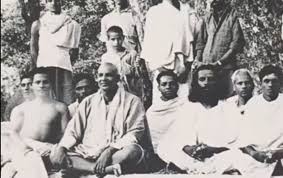
Swami Sivananda seated with group of devotees picture
Raja Yoga, Swami Sivananda

New Approaches to the Mind, its Mysteries and Conquest

New Approaches to the Mind, its Mysteries and Conquest by Swami Sivananda I. THE MYSTERIOUS MIND The human mind, at birth, resembles a writing table that has never been used. With the dawn of reason comes the first moral principle. Mind is subtle matter. It is the instrument for manifesting Prana. The condition of the body depends on how the Prana works. The condition of Prana depends upon how the mind works and what desires it has. Your inner nature is revealed by your manners, behaviour, conduct and character. Your mind is known by your speech and action. When the mind is serene, the body also becomes healthy. The mind cannot grasp more than one thing at a time. The mind is a bundle of thoughts, desires, cravings and impressions. The whole history of creation is inscribed in the mind. Mind is power that moulds and makes a man. Mind alone is Maya. The man dances in the theatre of this world to the music of the organs. The mind is not self-luminous. It fluctuates. It is sometimes dull and sometimes brilliant. It cannot be the self-luminous Atman. The mind is the battlefield or Kurukshetra where the forces of good and evil are pitted against each other. II. THE LOWER MIND Your greatest enemy is your own lower mind. Slay this mind with the sword of dispassion and discrimination. It is the inner enemy that is more dangerous than any other enemy outside. That inner enemy is your lower nature. The task of fighting with the lower mind requires single-minded and courageous effort. The deluding mind is the thief who has stolen the Atmic pearl. Slay the mind and get back the Atmic pearl. Be quick. Tarry not even a minute. Iron is cut by iron. Even so, the lower mind is destroyed by the higher mind. III. MASTERY OVER MIND What is the highest achievement? It is mastery over one’s own mind. It is Self-realisation. He who has controlled his own mind, knows the secret of every mind. Develop an attitude of non-attachment and of witnessing the activities of the mind. Goodness dawns when the mind ceases to function in the lower plane. IV. MAYA IS WITHIN YOU Maya is mind. Maya is egoism. All troubles come to an end when mind perishes, when ego dies. The mind as the locus of nescience (Avidya) is a finitising principle which veils the Truth and distorts it, presenting another false picture in its stead. The lower mind is the great slayer of Atman or the soul. The mind is no other than the Vasanas generating many rebirths. All the delusions of pains and pleasures are the attributes of the mind and not of Atman. With the growth of the mind, the pains increase; with the extinction of it, there will be bliss. The most important thing in the world of experience, is the mastery of the mind. The victory of man over nature, will be fruitless unless he attains victory over his mind. Mind is no other than Ahankara, the idea of ‘I’. The ego is the veil between God and the soul. Ego is the veil between man and God. This ego is like a cloud. When the cloud disappears you can see the sun. Even so, if the ego vanishes you can see God. If this idea of ‘I’ be destroyed through the desireless Atma-Jnana – this idea which is the source of all accidents, non-eternal, dependent, discriminationless, seed of all sins, Ajnana and the seed of birth and death – then this very destruction is the seat of the stainless Jivanmukti state. The experience – I am is prior to the experiences, – I know, I feel, I see, I think. Egoism is an error, an illusion, a dream. Wake up from the slumber of ignorance. Open your eyes. He who has realised the nature of the rope that seemed to be a serpent, no longer trembles with fear. The identification of ‘I’ with this body, produces bondage. Mind is a bundle of thoughts. The source of all thoughts is the ‘I’ thought. Find out the real ‘I’. The mind will vanish. After destroying the idea of ‘I’ contemplate upon all objects through the idea of Abhava (non-existence), as formless as Chit, and quiescent. V. MASTER THE MIND; VANQUISH MAYA There is no enemy outside you. Turn your gaze within. This mysterious mind, the most potent instrument in the hands of Maya, the power that deludes all, is your enemy. A real hero is not he who is a conqueror in a battle, but he who subdues his senses and conquers his mind. The first thing that an aspirant has to acquire, is mastery over his mind. By constant practice of meditation, by right discernment, by renouncing his own personality, the aspirant can manipulate his mind and focus it on the Atman. Through the discriminative mind, the lower mind is powerfully mastered by the wise. A well-directed mind becomes your Guru. It is conducive to happiness. It elevates you. Control the mind and the senses. Cultivate non-attachment. Mastery of the mind leads to the renunciation of all. Be watchful or alert about every thought, feeling or desire that comes to your mind. Your mind will become quiet. Purity of mind results in happiness. Pray. Purify. The lower desire will be transmuted into aspiration and higher, divine will. Detach the mind from the objects. Do not allow the mind to go out. You will attain serenity and wisdom. If you have dispassion and serenity, the mind is not affected by the external objects. The objects cannot produce any effect on the mind. Self-withdrawal and poise come if you practise self-restraint, discrimination and dispassion. When the mind, through the powerful Pratyahara, hankers not after desires, then it will remain still. This effort is called Asamvedana. That which is described as the imperishable state of quiescent Jnana is Asamvedana. That Jnana which tends to the destruction of the mind, is

New Approaches to the Mind, its Mysteries and Conquest Read Post »

Swami Sivananda with devotees serving him image
Raja Yoga, Swami Sivananda

Mind – Its Unchanging Substratum and the Suppression of its Changing Nature

Mind – Its Unchanging Substratum and the Suppression of its Changing Nature by Swami Sivananda Mind is ever changing. You feel happy now. In the next second you feel miserable. The mind is active now. The next moment, it becomes dull and inactive. It is pure now. The next second it is filled with anger and lust. The mind undergoes various transformations. There must be a basis or substratum which does not undergo any change. Just as there is substratum rope for all the changing, illusory appearances as snake, garland, stick, etc., so there is the changeless Atman or Brahman, for this everchanging mental phenomena. This changeless, continuous Atman connects all the states of the mind, all the changes in the body, the three Avasthas or states. Then alone memory is possible. Atman is a great synthetic Unifier. I. ATMAN IS THE WITNESS Annihilate such ideas, – This is mine, – That is mine, which spring from the identification of the Self with the body, mind, etc., and which cause bondage and attachment. Identify yourself with the non-dual Brahman, which will relieve you of the fear of death and which will bestow Immortal Bliss. Know the Self as the witness of the mind and the three states: waking, dreaming and deep sleep. II. MIND ALONE SEES AND HEARS Mind alone sees, hears and tastes. I had my mind engaged elsewhere; so I did not see. I had my mind engaged elsewhere; so I did not hear. This is the experience of all. Wherever there is the mind, there is the sense. Wherever there is no mind, there is no functioning of the mind. If the mind is not linked to the ear, you cannot hear the recitation of the Gita. If the mind is not linked to the eye, you cannot see an object. Hence mind exists. If anybody touches your back, you feel particularly the touch of the hand and fingers. The eye does not see the spot. The skin can only feel the hardness or softness of the touch. The mind alone is the cause of this knowledge. Mind alone really feels the touch. III. MIND, THE SYNTHETIC ORGAN Eye can only see colours. Ear can only hear sounds. Eye cannot do the function of ear, but the mind hears, sees, etc. It can do the functions of all the senses. It is a synthetic organ. It unifies, collects and synthesises. It is a great unifier. It is like the administrator or office-superintendent. It supervises the functions of the ten organs. Body is made of several parts viz., hands, fingers, legs, toes, chest, hip, etc. It is the mind that connects itself with all the parts of the body. If there is a pinprick in the inert body, at once it feels.

Mind – Its Unchanging Substratum and the Suppression of its Changing Nature Read Post »

Swami Sivananda seated with companion outdoors image
Raja Yoga, Swami Sivananda

Mind – Its Functions, Its Force, Its Facts

Mind – Its Functions, Its Force, Its Facts by Swami Sivananda I. MIND CREATES THE WORLD The fluctuating power of the mind is dubbed with several names such as Maya, the impure Vasanas, and so on. This fluctuating mind alone is this universe; devoid of this fluctuation, the mind ceases to exist. Differentiation is the inevitable aspect of the mind. The poisonous tree of Maya’s illusion flourishes more and more out of the seeds of the mind’s modifications in the soil of the variegated enjoyments of the world. Undisciplined mind is the cause of all sufferings. Control of mind is Yoga. Disciplined mind leads one to Self-knowledge. Every mind has two aspects – the lower and the higher. The lower mind is predominant in most of the people. It is rooted in impulse. Higher mind is guided by reason and discrimination. Lower mind is the destroyer, the higher mind the redeemer. The higher mind should be used to discipline the lower mind. Mind does the function of attention, selection and synthesising of sense-impressions. It is the seat of pleasure and pain. Mind is called Ahankara or egoism when conceptions ‘I’ and ‘mine’ assert themselves with the signs of anger, jealousy, likes and dislikes, etc. Mind is called Buddhi or intellect because of its faculty of reasoning and discernment. Though intellect emotion, and will are separate functions, they are interconnected and interblended. The intellect is dependent on the Atman, or soul and cannot work without its help. The intellect is very near to Atman and reflects the intelligent quality of the Atman, just as a heated iron ball has got the burning and lustrous qualities of fire. Just as heat is inseparable from fire, fluctuation or oscillation is inseparable from mind. Chitta-vritti can be subdued either by continuously thinking of one thing alone, or by trying not to think at all. In the former method, one should be careful that the mind does not fit to any second object, and the later, that it does not slump back torpor or inertia or unconsciousness. Balance of mind is attained by cultivating an objective attitude, thinking of the imperishable Reality and of the impermanence of objects, discrimination, dispassion and other forms of spiritual disciplines. II. THE THOUGHT-FORCE Thoughts are dormant seeds of action. The mind’s acts, and not the bodily acts, are alone true acts. It is the actions of the mind that are truly termed Karmas. Thought and act are interdependent. There is no such thing as mind apart from thought. Thoughts constitute the mind. Words are nothing but the outward expressions of thoughts which are imperceptible. Actions are caused by feelings of desire and aversion likes and dislikes). These feelings are caused by feelings of desire and aversion by the fact that you attribute a pleasurable or painful nature to objects. Thought is finite. It is inadequate to express even temporal processes, not to speak of the absolute which is inexplicable. The body with its organs is no other than the mind. The thought that you hold, will manifest in your life. If you are courageous, cheerful, compassionate, tolerant and kind, then these qualities will manifest in your physical life. The only impurity of the mind is base thought and desire. Guard your good thoughts as an alert watchman guards the treasury. When there is not the ‘I’ thought then there will be no other thought. Life is an interplay of thoughts. Duality ceases when the mind stops its function. Thinking is bound by the time factor. Thinking must cease. Then alone you will attain the Timeless. Be still. Let all the waves of thought subside. In that stillness, when the mind melts, there shines the self-effulgent Atman, the pure consciousness. Watch the mind. Watch the thoughts. Pursue serenity. Make your heart a fitting abode for the Lord. Your mind must be empty of worldly thoughts. It must be filled up with thoughts of God and with nothing else. Keep your mind filled with good, Divine, sublime, lofty thoughts so that there will be no room for evil thoughts. Never speak the unnecessary word. Never allow any unnecessary or vain thought to occupy your mind. III. SOME FACTS OF THE MIND The expansion of the mind’s thoughts towards the objects is bondage, while the abandoning of the Sankalpa (desire) is emancipation. Perception is the result of the conjunction of the organ of the sense and the object. The individual soul desires to see, makes an effort to see and immediately the vision is formed. The mind is made alert. The corresponding objects of all the senses are alerted. It is the mind alone which brings on pleasure and pain to itself and reaps them through its excessive inclination or aversion towards the objects. The Psychological tendencies are caused by your action in this and previous lives. Mind is a feeling. That which makes you aware of pleasure and pain is mind. Just as a minister obeys a king, the five organs of the body act in accordance with the dictates of the mind. All that man pursues in this life has no existence except in his mind, not in reality. Separateness is an illusion caused by mind. Mind is like a mirror. It collects dust while it reflects. It must be cleansed by reciting the names of the Lord. Find out the source of the mind and keep the mind there. The mind will perish (Manonasa). The mind becomes of the nature of Jnana or wisdom through effort in spiritual direction and also becomes of the nature of the world through Ajnana or ignorance. If the mind is divested of the thought of ‘I’ then through meditation on Atman, you can attain immortality and eternal bliss. If the lower mind is annihilated through the higher mind, then you will attain perennial bliss. All become subject to bondage through their own Sankalpas and Vasanas like a silk-worm in its cocoon. IV. MIND-CONQUEST BY SELF-KNOWLEDGE Like a caged lion, mind is always

Mind – Its Functions, Its Force, Its Facts Read Post »

Swami Sivananda feet Devotee bowing image
Raja Yoga, Swami Sivananda

Pratyahara

Pratyahara by Swami Sivananda 1. What Is Pratyahara Pratyahara or abstraction is that by which the senses do not associate with their own objects and imitate, as it were, the nature of the mind-stuff (Chitta). NOTES Pratyahara is abstraction. It is the withdrawal of the Indriyas from the objects. The senses are assimilated in the mind which is rendered pure through the practice of Yama, Niyama and Pranayama. The mind becomes more calm now. The nature of the Indriyas is to have always connection with the objects. Where the vision is turned outward (Bahirmukha Vritti), the rush of fleeting events engages the mind. The outgoing energies of the mind begin to play. When they are obstructed by the practice of Pratyahara, the other course for them is to mix with the mind and to be absorbed in the mind. The mind will not assume any form of any object. Hitherto, the Indriyas were following the mind like the other bees which follow the queen bee. Just as the bees fly as the queen bee flies, and sit as it sits down, so also, the Indriyas become restrained as the mind is restrained. Pratyahara itself is termed as Yoga, as it is the most important Anga in Yoga Sadhana. This is the fifth rung in the Yogic ladder. The first four rungs deal with ethical training and purification of body, mind and Nadis. Now with Pratyahara, proper Yoga begins which eventually culminates in Dharana, Dhyana and Samadhi. Hence in Kathopanishad also in Part VI, Sloka 11, you will find: That firm control of the senses, they regard as Yoga. Again in the same Upanishad it is stated in Part IV, Sloka 1: The Self-existent created the senses outgoing, therefore, one sees outside and not the Atman within. Some intelligent man, with his senses turned away from their object, desirous of immortality, sees the Atman within. 2. Benefits of Pratyahara Thence (from the practice of Pratyahara), comes the supreme mastery over the senses. NOTES Yogins enjoy sound, etc., without Raga and Dvesha. Worldly persons enjoy with Raga and Dvesha. This is the difference. The Yogi, not becoming a slave of the Vishayas, enjoys as a master out of his own free will. The Yogi enjoys by remaining as Tatastha (quite indifferent) with Raga and Dvesha experiencing the effects viz., pleasure and pain. The Indriyas cannot grasp the objects even though they are placed before them. This is Indriya Jaya. There is a difference between control and supreme control. By controlling one Indriya alone, the other four will not come under your control. When the mind is rendered pure and one-pointed and when it is turned inwards towards the Purusha, then and then alone supreme control of all organs follows. He who has practised Pratyahara can have good concentration and meditation. His mind is always peaceful. This demands patience and constant practice. It takes some years before one is well-established in Pratyahara. He who has mastery over Pratyahara will never complain of Vikshepa or distraction of mind. He can sit in a place in a busy city where four roads meet and meditate whenever he likes. He does not want a cave for meditation. Just as the tortoise draws in on all sides its limbs, so also, the Yogi withdraws all his senses from the objects of sense through the practice of Pratyahara. Pratyahara gives power to the practitioner. When the Indriyas are withdrawn from the objects, then you can fix the mind on a particular point. It is Dharana or concentration which is dealt with in the next chapter. Pratyahara and Dharana are interdependent. You cannot practise one without the other.

Pratyahara Read Post »

Swami Sivananda seated with group of disciples image
Raja Yoga, Swami Sivananda

Fruits of Self-Control

Fruits of Self-Control By Swami Sivananda By Swami Sivananda I. MIND-CONTROL BY SELF-CONTROL Self-control is indispensable for the living of a truly ethical life. Without self-restraint, the practice of ethics is quite impossible. You may possess sublime sentiments and noble intentions. But when you have no self-control, you will be a slave to base passions. You will succumb to every temptation and commit endless wrong actions. You want to lead an ethical life, but due to weak will and lack of self-control you fail. It is self-control which enables you to stick to the laws of ethics. Self-control leads to the highest merit. Self-control is the eternal duty of man. Self-control surpasses in merit, charity, sacrifice and study of the Vedas. Self-control increases your energy. Self-control is highly sacred. Through self-control you will be purified of all your sins, and gifted with energy and thereafter you will acquire the highest blessedness. There is no other duty equal to self-control. Self-control is the highest virtue in this world. Through self-control you can enjoy the highest happiness both in this world and in the next. Gifted with self-control you will win great virtue. The self-controlled man sleeps happily and awakes happily and moves through the world happily. He is always cheerful. The man who is without self-control always suffers misery. He brings upon himself many calamities, all begotten by his own faults. Forgiveness, patience, abstention from injury, impartiality, truth, sincerity, control of the senses, mildness, modesty, firmness, liberality, freedom from anger, contentment, sweetness of words, benevolence, freedom from malice – all these combined make up self-control. It also consists of respect for the preceptor and mercy for all. The man of self-control avoids both adulation and slander. Depravity, infamy, falsehood, lust, covetousness, pride, arrogance, self-justification, fear, envy and disrespect are all shunned by the man of self-control. He never incurs obloquy. He is free from envy. That eternal region of Brahman which originates from Vedic penances and which is concealed in a cave can only be acquired through self-control. The self-controlled man is never fettered by the attachments originating from earthly connections and sentiments. There is only one fault in self-control. No second fault is seen in it. A man who has self-control is considered by men as weak. By forgiveness the man of self-control may easily acquire happy worlds. That is a forest where the man of self-control lives. That is ever a very sacred place. Of what use is a forest to a man of self-control? Of what use is the forest to him who has no self-control? The man of self-control acquires great reward in the next world. He acquires esteem in this world and attains to high stage hereafter. He acquires the state of Brahman. He attains liberation. In all the modes of life the practice of self-control is distinguished above all virtues. The fruits of self-control are much greater than those obtained in all the modes of life. The self-controlled man becomes desirous of liberation. He quietly bears present joys and griefs and he is never overjoyed or depressed by prospective ones. He is shorn of vindictiveness and all sorts of guile. He is unaffected by praise and censure. He is well-balanced. He has good manners. He has purity, fortitude. He is a perfect master of his passions. He gains honours in the world. He goes to heaven after he departs from this world. He makes all creatures gain what they cannot acquire without his help. He rejoices under all circumstances. He is ever happy. II. MIND-CONTROL BY ASANGA AND MUMUKSHUTVA Thinking of sensual objects is Sanga or attachment. Non-thinking of sensual objects is Vairagya. Stop thinking of objects by thinking of Brahman or the Eternal, or of your Ishta Devata (tutelary Deity). Keeping the Vasanas in the mind is keeping a black cobra within and feeding it with milk. Your life is ever in danger. Kill these Vasanas through Vichara, Vairagya and meditation on the Atman. Tamoguna (inertia) is brutal, Rajoguna (passion) is human. Sattva Guna (light, harmony) is divine. If the clothes on your body catch fire, you want to run towards water for cooling yourself. You must feel like this from the burning of the fire of Samsara. You should feel that you are roasted in the fire of Samsara. Vairagya (dispassion) and Mumukshutva (strong yearning for liberation) will dawn in you.The Aspirant in olden days used to approach the Guru with a bundle of sticks (Samit) in his hand for spiritual initiation. What does this indicate? He prays to his preceptor: – O, Adorable Guru! Let my bundle of sins and worldly Vasanas be burnt in the fire of Wisdom through Thy Grace. Let the Divine flame grow in me. Let me attain Self-effulgent Atman. Let my senses, Vasanas, mind, Prana and egoism be given as oblation.

Fruits of Self-Control Read Post »

Swami Sivananda walking with group outdoors image
Raja Yoga, Swami Sivananda

Questions & Answers on Mind-Control

Questions & Answers on Mind-Control Question: How to control the Mind? Answer: Enquire into the origin of thought. Find out from where the thoughts emanate. Switch off that source. Q. This is an extremely difficult and subtle process. Kindly suggest some method of controlling the mind which an ordinary person like me can adopt. A. Japa of the Lord’s Name is the best for you, and for the vast majority of mankind. Steadily increase the time devoted to Japa and meditation. At the same time, cultivate Vairagya (dispassion). Pranayama also will help to a great extent. The combined method – synthesis of Japa, Dhyana, Pranayama, cultivation of virtues and eradication of vices – is the best. Q. I am a devotee of Lord Siva. Should I go to temples dedicated to Lord Vishnu or Devi also; and if I go there, how shall I worship the Deity there? A. Yes, you should never miss an opportunity of visiting and worshipping at any shrine you come across. When you go to a temple of Lord Vishnu or Devi, worship Lord Siva Himself there. Look upon the Deity in the temple as another – form of Lord Siva. If your father came to you in the attire of a High Court Judge, or (if he is an actor in a drama) if he came to you in the dress of a female, will you turn away from him? You will greet him as your own father in any case. Similar should be your attitude in worshipping the Lord. God is one. He is worshipped and adored variously by various people. Q. I recite Vishnusahasranama every day. Have I to meditate upon the meaning of each word as I go on reciting it? A. This is not possible, unless you are a Satavadhani. When you recite the Vishnusahasranama, have Saguna Upasana. Meditate on the form of Lord Narayana. When you have leisure or during the practice of meditation, you can select a few Slokas or Names and meditate over the meaning. Q. In Taittiriya Upanishad it has been said: – First there was Asat. From Asat, Sat came. How is this? A. This is said from the point of view of the common man. To him, what he does not see or experience is – Asat. To him, the Supreme Existence is – Asat inasmuch as it is beyond the comprehension of the senses, mind and intellect. – Sat, in this Mantra refers to the manifested world. To the man of gross understanding, the world of names and forms is the – Sat, because he is able to experience its reality through his senses. Therefore it is said that in the beginning there was – Asat (i.e., That was which you, with your senses and intellect, regard as non-existent); and from that – Sat (i.e., that which you regard as existent) came.

Questions & Answers on Mind-Control Read Post »

Swami Sivananda surrounded by disciples image
Raja Yoga, Swami Sivananda

Method of Self-Analysis

Method of Self-Analysis By Swami Sivananda Daily self-analysis or self-examination is indispensable. Then alone can you remove your defects and can grow rapidly in spirituality. A gardener watches the young plants very carefully. He removes the weeds daily. He puts a strong fence around them. He waters them at the proper time. Then alone they grow beautifully and yield fruits quickly. Even so, you should find out your defects through daily introspection and self-analysis, and then eradicate them through suitable methods. If one method fails, you must adopt a combined method. If prayer fails, you should take recourse to Satsanga or association with the wise, Pranayama, meditation, dietetic regulations, enquiry, etc. You should destroy not only big waves of pride, hypocrisy, lust, anger, etc., that manifest on the surface of the conscious mind, but also their subtle impressions which lurk in the corners of the subconscious mind. Then only you are perfectly safe. These subtle impressions are very dangerous. They lurk like thieves and attack you when you are napping, when you are not vigilant, when your dispassion wanes, when you slacken a bit your daily spiritual practice, and when you are provoked. If these defects do not manifest even under extreme provocation on several occasions, even when you are not practising daily introspection and self-analysis, you can assure yourself that the subtle impressions also are obliterated. Now you are safe. The practice of introspection and self-analysis demands patience, perseverance, leech-like tenacity, application, iron will, iron determination, subtle intellect, courage, etc. But you will gain a fruit of incalculable value. That precious fruit is Immortality, supreme peace and infinite bliss. You will have to pay a heavy price for this. Therefore you should not murmur when you do daily practice. You should apply your full mind, heart, intellect and soul to spiritual practice. Then only, rapid success is possible. Keep daily spiritual diary and practise self-analysis (self-examination) at night. Note down how many good actions you have done, what mistakes you have committed during the course of the day. In the morning resolve: – I will not yield to anger today. I will practise celibacy today. I will speak truth today.

Method of Self-Analysis Read Post »

Swami Sivananda with Western devotee indoors image
Raja Yoga, Swami Sivananda

Guiding Lights for Self-Conquest

Guiding Lights for Self-Conquest by Swami Sivananda GUIDING LIGHTS FOR SELF-CONQUEST by Swami Sivananda Mind cannot by itself illumine the objects. Without the Atman, which is of the nature of intelligence, no cognition is possible. The function of the mind is to go out to the object through the senses and manifest it. Just as the water flowing from the tank to the fields through channels assumes the forms of the respective fields, so also the mind which pervades an object assumes the form of that object. Every object is an idea. It proceeds from the mind, exists in the mind and merges in the mind. Just as the light of the sun takes the shape of the object it illumines, the mind which enlightens everything assumes the form of the object it reveals. When the eye sees in orange, the mind projects itself through the eye and takes the form of an orange. When the mind, conceives of an orange, perceives an object, it transforms itself into the object. The perceiver in spite of the presence of the sense-organs and the objects, can perceive the object only when the mind is attached to it. Therefore, the mind is the instrument. Just as a lion that is shut up in a cage is restless, so also, the mind-bird that is shut up in the cage of our brain is restless. The mind runs after objects passionately. Fix it on the all-peaceful Atman. It will attain Supreme Peace. If the mind is pure, even enemies become friends. Tigers and serpents cannot harm you. Poison will become nectar. The flames of fire become cool. All these things will happen, when you know that there is the same Immanent Being in the hearts of all. The lives of Mira and Prahlada confirm this. Knowledge dawns only in a man who is endowed with a contented mind. A contented mind is ever calm and serene. He who does not wish for things which he has not got, who is not affected by what he possesses, and who is never elated or dejected, is a contented man. The heart of a man of contentment is ever full. He is ever happy. A disciplined and one-pointed mind is the essential requisite to God-realisation. Conquest of the mind is possible only by lessening the desires. Therefore, abandon all desires through dispassion, discrimination and meditation on Brahman. The mind of the cat is ever on the milkpot. The mind of the snake is ever on the frog. Even so, the mind of a passionate man is ever on the small, vulgar, sensual pleasures. O ignorant man! aspire for the big eternal bliss. The methods, the weapons, used to combat the enemy mind and watchwords of those who have attained Self-realisation are different in each case. A potter moulds the clay; goldsmith moulds the gold; and a blacksmith moulds the iron; but an aspirant moulds his mind. Detect the dodgings of the mind and overcome them. The mind will cheat you in a variety of ways when you want to sit for meditation. Prepare the ground first. Purify the mind first. Only then the Governor of the mind will enthrone Himself in your heart. Tune the instrument first. Keep everything in order before the Master of music arrives to play on the instrument, viz., mind. Spiritual experience does not remain constant when the mind is not perfectly purified. The Jiva descends again into the egoistic life. The higher consciousness is withdrawn from him. The more the mind is withdrawn from the outer world, the more it is making headway in the realm of spirit or Atman. A pure well-directed mind will do you tremendous service. It will become your obedient servant, true guide or Guru and an affectionate mother. To have control over the mind and the senses is real heroism. To refrain from harming other creatures is the highest charity. To abandon desires is the true Tapas. Whatever brings about unity and harmony is Dharma. Only when you have purified the vehicles of Adhara, only when the mind is serene, you can behold the majesty and glory of the Self. Lead a well-regulated, disciplined life. Control the senses first. Subject them absolutely to the mastery of the mind. Then bring the lower mind under the control of the higher mind. Balance of mind or mental equipoise is an indispensable element in spiritual life. Develop this again and again. A very big needle is of no use in stitching a fine cloth. Even so, a gross mind is of no use in realising the Supreme Self. A vacant mind cannot be called a serene mind. There is no thinking, no conception, no mental action, in a vacant mind. The most essential prerequisite in the spiritual path is an undivided, one-pointed mind. When the mind is longing for a particular food or drink, when the thing is right in front of you when you are just putting out your hand to grasp it, do not touch it. Stop and say, – I am not a slave of any particular food or drink or any object. I can leave it any moment. My will is powerful now. As a diamond can be cut only by a diamond, so also, the mind can be conquered only by the mind. The lower instinctive mind should be conquered by the higher, pure, Sattvic mind. When the mind is rendered pure and one-pointed, it gets established in the one Supreme Self which is of the nature of pure-consciousness, that is all-pervading like the ether, homogeneous like a lump of salt. Adversities become sweet when your mind is turned towards God. Mind is like a monkey. It is never satisfied with the objects which are already under its possession. It jumps to other unattained ones. It always wants variety and gets disgusted with monotony. Tame this mind by making it taste the nectar of the Atman within, by regular meditation. Your mind swings like a

Guiding Lights for Self-Conquest Read Post »

Swami Sivananda with Western devotee indoors image
Raja Yoga, Swami Sivananda

Absoloute Subdual of the Mind

Absoloute Subdual of the Mind By Swami Sivananda Mind, through ignorance and indiscrimination, considers its false personality to be true and thinks it is the doer of all Karmas and thus becomes egoistic. It imagines that it is in bondage. It identifies itself with the Jivatma; it becomes Jivatma itself and takes the responsibility upon itself for doing good or bad Karmas and enjoying or suffering from their fruits. Hence is mind the doer of Karmas (action), and responsibility for the Karmas, therefore, rests with it. Mind is the stealer of Atman. It is a thief. Mind drags the Jivatma into Vishaya (sensual enjoyments). Jivatma is the Abhasa of Chaitanya or reflected intelligence in mind. Mind and Jivatma always live together. They cannot be separated. Slay the mind, the stealer of Atman, through Vichara, Manana and Nididhyasana (constant and profound meditation) on Brahman. Mind has the potency of creating or undoing the whole world in the twinkling of an eye. Therefore, slay this mind the slayer of Atman, whether through the destruction of Vasana (latent, subtle desires) or Vakya Chintana. The best means of disposing of the great danger of Maya, involving all in pains, is the destruction of mind. With the destruction of the mind, all the three periods of time vanish into nothingness. With the destruction of mind, Atmajnana begins to dawn. The extinction of Vasanas (Vasana-kshaya), Manonasa (annihilation of the mind), and Tattva-Jnana (understanding of the Reality), when practised together for a long time, are regarded as fruitful. They should be practised at a time. So long as these three are not equally practised, again and again, the Supreme Seat (Parama Pada) cannot be attained even after a lapse of hundreds of years. Through the practice of these three for a long time, the firm knots of the heart are cut without doubt, like the breaking of the threads in a lotus-stalk rent in two. Destruction of the mind does not mean annihilation of the self. The Vedantin divides the mind into the higher and the lower, of which the lower one leading to desires is asked to be destroyed. Destruction of desires, annihilation of Ahankara, destruction of Sankalpa – all mean control of mind or annihilation of mind (Manonasa or Amanaskata). Destruction of egoism, raga-Dvesha (attraction and repulsion for objects) and all Vasanas along is Manonasa. Manonasa comes through the destruction of the Vasanas. Manonasa does not mean that you should take a sword and cut the mind to pieces. Manonasa means the death of the present form of the mind (i.e., the instinctive mind of emotions and passions), the form which perceives differences where none exists, which identifies the Self with the body. Its death really means its transformation into and, therefore, the birth of cosmic consciousness. Vast majority of persons live in Annamaya Kosa only. Their thoughts are directed towards eating, cleansing the body and putting on neat dress. That is all. Even the so-called educated persons live in Annamaya Kosa only. Sometimes, they live in Manomaya Kosa (mental sheath). A spiritual aspirant and Viveki live in Vijnanamaya Kosa (Buddhi Sheath). The Vijnanamaya Kosa is developed by abstract thinking and reasoning by systematic meditation, Brahma- chintana, study of the Upanishads, Yoga-Vasishtha and Brahma Sutras. You must all develop the Vijnanamaya Kosa by the study of Vedantic literature and pure thinking. Then you are safe. Mind will stop to deceive and torment you. Mind is absorbed in Mahat or Buddhi. Individual Buddhi is absorbed in the Cosmic Buddhi; Cosmic Buddhi in Avyakta; Avyakta in Brahman. This is the Laya-Chintana of Antahkarana or Mind. Sambhavi Mudra, Bhrukuti-Drishti (looking at the spot midway between the two eyebrows) Nasikagra-Drishti (looking steadily at the tip of the nose), Nadanusandhana (hearing the sounds of the ear) – all belong to Laya Yoga. By these practices the mind gets Laya soon. The Unmani state supervenes rapidly. The Unmani Avastha of Laya-Yogis corresponds to the Bhava-Samadhi of Bhaktas. In Sambhavi Mudra, the eyes are open but the mind is fixed on the Lakshya. The eyes do not see the external objects. When the mind and senses are thinned out and eventually controlled, Smaranendriya-vyapara (the various activities of Antahkarana and senses) ceases. Jivatva (personality-nation and sensation) vanishes. Brahmatva (existence) remains. That is Kevala Asti. Manonasa is of two kinds, viz., (1) Svarupa Manonasa, destruction of the Svarupa of mind, as in the case of the Jivanmuktas and (2) Arupa Manonasa, destruction of the very form of the mind, as in the case of Videhamuktas, when they leave off their physical bodies. The first is termed – destruction of the mind with form. The second is termed – destruction of the mind without form.

Absoloute Subdual of the Mind Read Post »

Swami Sivananda with devotees and children image
Raja Yoga, Swami Sivananda

Conquest of the Mind’s Strongholds

Conquest of the Mind’s Strongholds By Swami Sivananda You have the whole menagerie within you – the lion, the tiger, the serpent, the elephant, the ape and the peacock. Bring them under your control. The beauty of the flesh is really due to the life-giving principle, Prana. The beauty is attributable to the light that emanates from Atman. The nasty body with oozing discharges from nine gutters composed of the five elements is a Jada Vastu and Apavitra. Always entertain this idea. Have a clear-cut, well-defined, image or picture like this. You will conquer lust by such a mental drill. If you understand the doctrine of unity in diversity, if you know there is only one matter, one energy, one mind-substance, one life, one existence, one Sat, one Reality, and if you entertain always such a thought, you can control Krodha. If you remember that you are only an instrument in the hands of God, that God is everything, that God does everything, that God is just, then you can get rid of Ahamkara. You can annihilate Dvesha by Pratipaksha Bhavana. Look to the brighter side of persons. Ignore the dark aspect. Emotion is a motive power like the steam of an engine. It helps you in your evolution. Had it not been for the presence of emotion, you would have passed into a state of passivity or inertia. It gives a push for action or motion. It is a blessing. But you must not become a prey to emotions. You must not allow them to bubble out. You must purify and calm the surging emotions. You must allow it to rise slowly and subside quietly from the mind-ocean. You must keep the emotion under perfect control. Do not mistake physical sensations for higher sublime emotions. Do not be carried away by emotions. There are certain people who like to hear of new sensational events just to arouse their emotions. They live on emotions; otherwise they feel quite dull. This is a great weakness. This must be eradicated if they like to lead a calm and quiet life. All evil qualities proceed from anger. If you control anger, all evil qualities will vanish by themselves. Ahamkara, Samkalpa, Vasana, Prana have intimate connection with the mind. There cannot be any mind without these four. Prana is the life of the mind. Ahamkara is the root of the mind. Sankalpas are the branches of the mind-tree. Vasana is the seed of the mind. This deep-rooted tree of Samsara which ramifies in various directions with branches full of flowers, tendrils, fruits, etc., has the mind as its root. If this root-mind is destroyed, the tree of Samsara – this tree of birth and death – will also be destroyed. Cut this root – mind – with the axe of Brahma Jnana. Chop off the branches (Sankalpas) with the knife of Viveka-Vichara.

Conquest of the Mind’s Strongholds Read Post »