













Hari Om

Menu

Bhakti Yoga

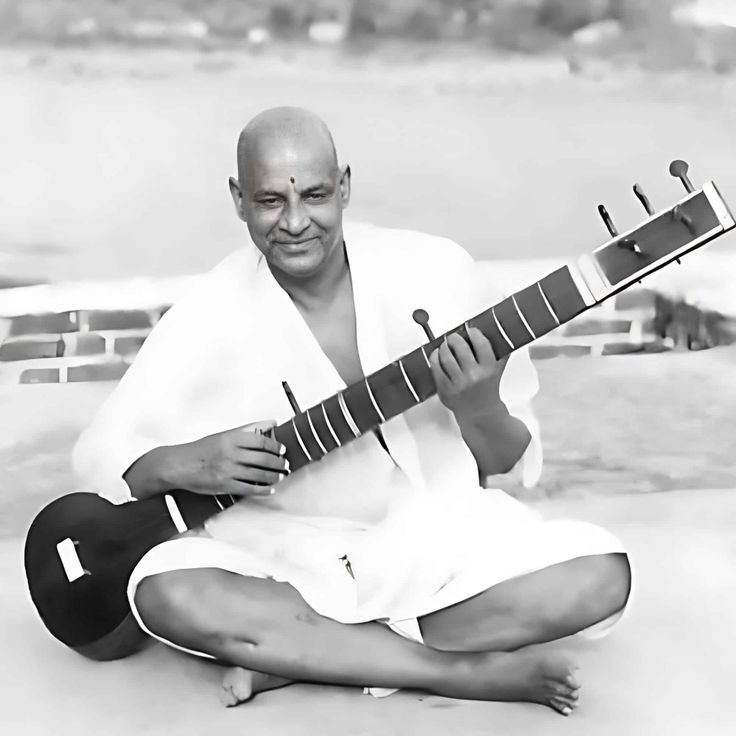
Swami Sivananda sitting with veena musical instrument spiritual portrait photo
Bhakti Yoga, Swami Sivananda

Smarana

Smarana by Swami Sivananda Smarana is remembrance of the Lord at all times. This is unbroken memory of the Name and Form of the Lord. The mind does not think of any object of the world, but is ever engrossed in thinking of the glories of the Lord alone. The mind meditates on what is heard about the glories of God and His virtues, Names etc., and forgets even the body and contents itself in the remembrance of God, just as Dhruva and Prahlada did. Even Japa is only remembrance of God and comes under the category of this Bhakti. Remembrance also includes hearing of stories pertaining to God at all times, talking of God, teaching to others what pertains to God, meditation on the attributes of God, etc. Remembrance has no particular time. God is to be remembered at all times without break, so long as one has got his consciousness intact. Right up from his getting up from sleep in the morning, until he is completely overpowered by sleep in the night, a person is to remember God. He has no other duty in this world except remembrance of God. Remembrance of God alone can destroy all worldly Samskaras. Remembrance of God alone can turn away the mind from sense-objects. Generally the mind runs extrovert. But remembrance of God makes it introvert and does not allow it to run to particular objects of the world. Remembrance of God is a very difficult method of Sadhana. It is not possible to remember God at all times. The mind will cheat the person. He will think that he is meditating on God, but actually he will be dreaming of some object of the world or something connected with the name and fame. Remembrance is equal to concentration or meditation. All the qualities which a Raja-Yogin prescribes for the practice of meditation should be acquired by a Bhakta who wants to practise Smarana-Bhakti. Smarana is swimming against the forceful current of the river of Maya. Smarana leads to exclusive meditation on God, as is done in Raja-Yoga. Company of real devotees is another auxiliary in the remembrance of God. Service of Mahatmas is still another necessity. The mind cannot but remember divine things when it is in the company of divine people. Therefore one should have Satsanga and he should always live with a saint or a great Bhakta. He should not be perturbed by censure or ridicule from the world. He should rely on God and rest assured that God will help him in all troubles and He will give him Final Emancipation. Lord Krishna says in the Gita: O Arjuna! He who fixing his mind on Me, constantly remembers Me, I am easily attained by that Yogi, ever united with Me. The Gita is an authority on the nine modes of Bhakti. Lord Krishna illustrates with authority that the various modes of devotion shall lead one to the Supreme. Remembrance of the Lord has given Liberation even to those who remembered Him through hatred, even as a worm, through meditation on the wasp through hatred and fear, attains the state of the wasp. Haters of the Lord like Kamsa and Sisupala had attained the state of Moksha through Vaira-Bhakti. Constant remembrance is the fruit of almost all other methods of practice in spiritual Sadhana. This is the most potent method and the most difficult also. The miser does not forget his wealth even if he is engaged in other duties. The lustful man does not forget his beloved, and the cow does not forget its calf even while grazing. Even so a worldly man, even though he may be engaged in other duties of life, should practise the remembrance of God. Prahlada practised the remembrance of God. He never forgot God at any time. He was punished by his cruel father in all possible ways. But the devoted Prahlada crossed over all troubles and obtained the Supreme Grace of the Lord. Prahlada was lost in the consciousness of God. Such should be the ardent aspiration of all devotees. The seventh Skandha of the Bhagavata gives a beautiful description of how Prahlada practised Bhakti even amidst trying conditions.
Smarana Read Post »

sddefault 1
Bhakti Yoga, Swami Sivananda

Kirtana

Kirtana by Swami Sivananda Kirtana is singing of Lord’s glories. The devotee is thrilled with Divine Emotion. He loses himself in the love of God. He gets horripilation in the body due to extreme love for God. He weeps in the middle when thinking of the glory of God. His voice becomes choked and he flies into a state of divine Bhavana. The devotee is ever engaged in Japa of the Lord’s Name and in describing His glories to one and all. Wherever he goes he begins to sing and praise God. He requests all to join his Kirtana. He sings and dances in ecstasy. He makes others also dance. Such practices should be the outcome of a pure heart, and they should not be merely a show. God knows the inner secret of all and none can cheat Him. There should be perfect straightforwardness and all his actions should be the natural outpouring from the heart. This is the easiest of all modes of approach to God. In Kali Yuga, iron age, Kirtana alone is the best Yoga. ‘Kalau Kesava Kirtanam.’ This is the prescribed method of devotion for this age. The mind is ever intent upon singing Lord’s Names and glories and it has no occasion to take interest in things of the world. Day and night the devotee feels the presence of God and thins out his ego. He becomes Sattvic and pure at heart. Great divine persons like Narada, Valmiki, Sukadeva, in ancient times, Gouranga, Nanak, Tulsidas, Surdas, etc., in comparatively recent times, have all attained perfection through Kirtana Bhakti alone. Even the great sinner Ajamila crossed the ocean of Samsara by repetition of Lord’s Name. Japa and Kirtana are the most potent methods of realising God in this Kali Yuga. If even sinners can cross this Maya through devotion to God, what to speak of good persons who have a pure heart, who have served their Guru, and the country, and who are nearer to God than sinners? Kirtana is a very effective method of devotion for another reason. Man is an erotic being. He loves and loves. He cannot but love things of the world. But his love is only passion and is not pure divine love. He wants to hear sweet music, wants to see beautiful objects, and wants to witness a dance. Music melts the heart of even the stone-hearted man. If at all there is anything in this world which can change the heart of a man in a very quick time, that is music and dance. This very method is made use of in Kirtana-Bhakti, but it is directed towards God instead of towards sensual enjoyments. Man’s emotion of erotism is directed towards Divinity and his love for music and singing is not destroyed; because sudden destruction of such a sentiment which he holds as very dear will not prove successful in making him perfect. Kirtana is sweet and pleasant and easily changes the heart. Suka-Maharshi is an example of a Kirtana-Bhakta. He told the Srimad-Bhagavata to Parikshit. He was fully in the state of Bhava-Samadhi at the time of reciting the Bhagavata. It is told in the Bhagavata Mahatmya that, when Sri Suka was singing the glories of the Lord, the Devas themselves came down from heaven and took part in the Kirtana with various musical instruments. Narada played his Vina and Indra played the Mridanga. Prahlada danced with his cymbals and Lord Siva Himself began His Nritya. Lord Vishnu was present. All those assembled there were thrilled by the occasional dance of Sri Suka himself. Kirtana is the most suitable method even for householders. This gives pleasure to the mind and at the same time purifies the heart. This has double effect. Kirtana is, perhaps, the best method suited for all people without distinction.

Kirtana Read Post »

Swami Sivananda painted portrait image
Bhakti Yoga, Swami Sivananda

Sravana

Sravana by Swami Sivananda Sravana is hearing of Lord’s Lilas. Sravana includes hearing of God’s virtues, glories, sports and stories connected with His divine Name and Form. The devotee gets absorbed in the hearing of Divine stories and his mind merges in the thought of divinity; it cannot think of undivine things, The mind loses, as it were, its charm for the world. The devotee remembers God only even in dream. The devotee should sit before a learned Teacher who is a great saint and hear Divine stories. He should hear them with a sincere heart devoid of the sense of criticism or fault-finding. The devotee should try his best to live in the ideals preached in the scriptures. Lord Krishna says in the Gita: Tadviddhi pranipatena pariprasnena sevaya;Upadekshyanti te jnanam jnaninah-tattvadarsinah. Know That by long prostration, by service and enquiry. The wise who know the Truth shall instruct thee in that wisdom. One cannot attain Sravana-Bhakti without the company of the saints or wise men. Mere reading for oneself is not of much use. Doubts will crop up. They cannot be solved by one’s own self very easily. An experienced man is necessary to instruct the devotee in the right path. Sankaracharya says: Kshanamapi sajjana sangatireka bhavati bhavarnava tarane nauka. The company of the wise, even for a moment, becomes the boat to cross across the ocean of Samsara. Without Satsanga Sadhana does not become perfect and strong. The fort of Sadhana should be built on the foundation of Satsanga. Mere austerities are not the end of Sadhana. Satsanga illumines the devotee and removes his impurities. It is only then that subtle truths are grasped well by the devotee. Lord Krishna says to Uddhava that nothing but Satsanga alone can put an end to all worldly attachments. In the Bhagavata-Mahatmya it is told that the best Dharma in this world is to hear Lord’s glories. For, thereby, one attains to the Divine Abode. King Parikshit attained Liberation through Sravana. He heard the glories of God from Suka-Maharshi. His heart was purified. He attained the abode of Lord Vishnu in Vaikuntha. He became liberated and enjoyed supreme Bliss.

Sravana Read Post »

Swami Sivananda sitting and playing tanpura outdoors. image
Bhakti Yoga, Swami Sivananda

Nine Modes of Bhakti

Nine Modes of Bhakti by Swami Sivananda The nine modes of Bhakti are the ways in which a devotee attains the Supreme Ideal of Life. Any devotee can take up any of these paths and reach the highest state. The path of Bhakti is the easiest of all and is not very much against the nature of the human inclinations. It slowly and gradually takes the individual to the Supreme without frustrating his human instincts. It follows the Arundhatee Nyaya or the Shakhachandra Nyaya of logic instead of the Bhramara-Keetaka Nyaya of the Vedantins. It is not direct assertion of God, but a progressive realisation of Him. 1. Sravana – Hearing the Lord’s virtues, glories and stories2. Kirtana – Singing of the Lord’s Glories3. Smarana – Remembrance of the Lord at all times4. Padasevana – Serving the Lord’s Feet5. Archana – Worship of the Lord6. Vandana – Prayer and prostration unto the Lord7. Dasya Bhakti – Servant sentiment with God8. Sakhya Bhakti – Friendship sentiment with God9. Atma-Nivedana – Self-surrender to God

Nine Modes of Bhakti Read Post »

Swami Sivananda seated in meditation with graphic frame image
Bhakti Yoga, Swami Sivananda

Four Kinds of Bhaktas

Four Kinds of Bhaktas by Swami Sivananda Bhaktas or devotees of God are of four types. Arta, Jijnasu, Artharthi and Jnani. Arta is the distressed devotee who is suffering very much and who craves for the grace of God, in order to get himself relieved from pain and sorrow, Jijnasu is the seeker after knowledge, who feels that he is ignorant, and who wants the grace of God in order to have Wisdom. Artharthi is the seeker of wealth, who longs for earthly possessions, money, land, etc., in order to enjoy a happy life, and who propitiates God to get His grace to amass wealth. Jnani is the wise, the sage who is satisfied with the Self, who is contented in the Self, who has no desires, who is freed from desires, who has fulfilled all desires, whose only desire is the Self; who considers his own Self as the All-inclusive God. The distressed is he who is suffering from a chronic incurable disease, whose life is in jeopardy on account of earthquake, volcanic eruption, thunder, attack by a dacoit or enemy, tiger etc. Draupadi and Gajendra are examples of Arta-Bhaktas. When Dussasana dragged her before the court of the Kauravas and pulled her sari, Draupadi cried for Krishna in order to guard her respect. Gajendra called on Narayana when a crocodile was dragging him in water. Jijnasu is the enquirer. He is dissatisfied with the world. There is a void in his life. He always feels that sensual pleasure is not the highest form of happiness and there is yet pure eternal bliss unmixed with grief and pain, which is to be found within. Uddhava was a Jijnasu. He was dissatisfied with the world and got wisdom from Sri Krishna. This is recorded in the Bhagavata. The seeker after wealth craves for money, wife, children, position, name and fame. Sugriva and Dhruva were Artharthi-Bhaktas. Sugriva wanted to drive away Vali and get his kingdom. Vibhishana wanted to put an end to Ravana and get Lanka. Dhruva wanted a kingdom where his step mother would not trouble and ill-treat him. The Jnani is a man of knowledge who has attained Self-illumination. Suka-Maharshi was a Jnani-Bhakta. He was a Brahma-Jnani of the highest type. He realised that everything was his own Self. He taught the Srimad-Bhagavata to Parikshit. There is another type of Bhaktas, called Vaira Bhaktas. These Bhaktas are negative Bhaktas. They do not have positive devotion for God. They hate God and thus remember Him always. Hatred also requires a constant remembrance of the enemy. So these also are a kind of Bhaktas only. They attain salvation through Vaira-Bhakti. Kamsa, Sisupala and others thought of the Lord constantly on account of their deep hatred for Him. Thus they attained Salvation.

Four Kinds of Bhaktas Read Post »

images 39 1
Bhakti Yoga, Swami Sivananda

A Conversation Between a Theist and an Atheist

A Conversation Between a Theist and an Atheist by Swami Sivananda Golmal (Atheist): O Ram! Please show me your God or Brahman of whom you speak very highly everyday. If God really exists I should see Him with my own eyes now. Ram (Theist): I will beat you now with this stick. Please show me your pain. Golmal: How can I show you my pain Ram? Your question is quite absurd. One will have to feel the pain himself. Ram: Similar is the case with God also, O Golmal. You will have to realise Him through constant and intense meditation. He cannot be seen by these fleshy eyes, as He is beyond the reach of the senses and mind. Golmal: If God is beyond the reach of the senses then He should be a non-entity, a mere void, a negative concept, a metaphysical abstraction. I do not wish to attain such a negative state of nothingness. I will not gain anything by attaining Him. I am very happy here when I enjoy the different kinds of sensual objects. There is nothing beyond these sensual pleasures. Why do you talk some nonsense? Something beyond the senses? How could this be? I think you are dreaming. I think you are in the cloud O Ram! I cannot believe such things. I am a scientist. I want accurate laboratory proofs. Ram: Ha! Ha! Ha! Ha! Well said Golmal. I really pity you. Had you developed two horns on your forehead, I would have rightly called you a cow or a buffalo. You want laboratory proofs? Very fine indeed. You wish to limit the illimitable all-pervading God in your test-tube, blow-pipe and chemicals. God is the source of your chemicals. He is the substratum for your atoms, electrons and molecules. Without Him no atom or electrons will move. He is the inner ruler (Antaryamin). He is Niyanta. Without Him the fire cannot burn, the sun cannot shine, the air cannot move. Without Him you cannot see, cannot talk, cannot hear, cannot think. He is the maker of all scientific laws, the law of gravitation, the law of cohesion, the law of attraction and repulsion, etc. He is the law-giver. Bow to Him with faith and devotion. You will have a thorough knowledge of the Science of sciences, Brahma Vidya, through His grace and attain Moksha. Golmal: Nonsense. Is there anything like Science of sciences? I had my education in Oxford and Harvard Universities. I never heard there of a science like this. You are not only a dreamer but a liar also. Ram: Do not use indecent words, Golmal. Be polite. Be courteous. Behave like a gentleman. Just note the conversation that took place between Saunaka and Angiras. Saunaka, the great Grahastha, questioned Angiras, Kasmin Bhagavo Vijnate Sarvamidam Vijnatam Bhavati, O Bhagavan! What is that which being known all these become known? Angiras replied It is Brahma Vidya, the Science of sciences, by knowing which the Immortal Brahman is realised. By knowledge of Brahma Vidya or the Science of sciences you hear what cannot be heard, you perceive what cannot be perceived, you know what cannot be known, you think what cannot be thought of. Just as by the knowledge of a single nugget of gold all that is made of gold is known, the difference being only a name arising from speech, but the truth being that all is gold; just as by the knowledge of a single pair of nail-scissor all that is made of iron is known, all modifications being only a name based upon words, but the truth being that all is iron, thus, O Golmal, is that Brahma Vidya or the Science of sciences. The basis for all the secular sciences is Brahma Vidya or Adhyatmic Science. If you know this Supreme Science through direct intuition, you will have knowledge of all other worldly sciences, just as you will have knowledge of articles made of clay if you have a knowledge of clay itself. You cannot learn this Science of sciences in any University. You will have to learn this under a Brahma Srotri, Brahma Nishtha Guru after controlling your senses and the mind. This is a Science taught by a Seer or Rishi or a liberated Sage in the forests under a tree (Forest University). You will have to undergo a rare discipline therea discipline which checks the wandering mind and outgoing senses, a discipline which cannot be had in any of the Universities of the world. Golmal: What will the students eat there? Are there hotels and decent rooms? Ram: Some aspirants practise Vayubhakshana. They live on air for some days through this Yogic practice. Some live on Kandamula or roots. Some take Sattu-atta or dried flour. They live in thatched cottages or grass huts, on the banks of the Ganga. Golmal: Is that all? Can you not get a little butter, some sweets or jam and toast occasionally? How can they live without fruits and vitamins? Ram: Jam and butter! Sweets! You cannot dream of such things. These things are not necessary to keep up health. Yogis practise Khechari Mudra, Pranayama, enter into Samadhi, drink the nectar that dribbles from the Sahsrara (Amritasrava) and maintain a high standard of vigour and vitality. They suspend the breath and live for any number of years they like. Sweetmeats, jam, etc., are not suitable for the practice of Yoga. Golmal: How can I believe that God exists when I cannot see Him actually with my eyes? Ram: Though you do not see the stars in the day time, yet they do exist. Though you cannot see the sun on a cloudy day, yet it does exist. Even so though you cannot see God with these physical eyes, Yet He does exist. If you get the divine eye or the eye of intuition (Jnana Chaksus) by the practice of meditation you will behold Him. Golmal: I think, O Ram, that there is no such thing as God or ‘Immortal

A Conversation Between a Theist and an Atheist Read Post »

Swami Sivananda walking with umbrella and devotees image
Bhakti Yoga, Swami Sivananda

God is Immanent

God is Immanent by Swami Sivananda As I have said already, God is an absentee landlord of this world. He is hiding Himself within these objects. He is remaining within these objects. He is the Indweller and inter-penetrating Presence or Essence or Substance, the intelligent and creative principle of the universe itself. This is a fundamental conception of pantheism. You will find in the Svetasvatara Upanishad: “One shining Being sits hidden in every creature, pervading all, the Inner Self of all beings, the watcher of all acts, abiding in all created things, the witness, the heart, the absolute, free of all attributes. “ Just as oil is hidden in seed, butter in milk, mind in brain, foetus in the womb, sun behind the clouds, fire in wood, sugar or salt in water, scent in buds, sound in the gramophonic records, gold in quarts, microbes in blood, so also God is hidden in all these beings and forms. Just as you see the bacilli of cholera, typhoid fever, consumption or any other disease as for that matter through the powerful lens of microscope, so also you can see God through the eye of intuition (Jnana Chakshus). The first Sloka of the Isavasya Upanishad begins with: “Isa-vasyam-idam sarvam-All these movable and immovable objects are indwelt by the Lord.” In the Katha Upanishad (I-iii-12) you will find: “Esha sarveshu bhuteshu gudho-atma. . . -This Atman is hidden in all beings. ” He who has a sharp, subtle, pure intellect can see Him. God is full of mercy, love and compassion. He has been described as “Ocean of Mercy. ” His mercy flows like the streams of the Ganga and the Yamuna. He is depicted as having sold Himself to His devotees, so to say. He willingly suffers endless pain in the eyes of the world in order to alleviate the sufferings of His devotees. He bears the scar left on His chest by the kick of Bhrigu as an ornament. He wears the skulls of His devotees as a garland round His neck. He ran with lightning speed to save the modesty of Draupadi from being outraged. He apologised and begged pardon of Prahlada in the following words: “O dear, you were too tender of age and too delicate of body to stand the terrible tortures inflicted on your person by your hot-headed father. A parallel of his atrocious deed I have never seen. Pray, therefore excuse me if I was late in coming to your rescue. “ You are all aware of the dying Jatayu in the lap of Sri Rama, who caressed the bird which was mortally wounded in its heroic efforts to rescue Sita from the clutches of the demon king, Ravana. He wiped off the dust on its body with the trusses of His hair. Mark here the unique, tender affection of Sri Rama towards His devotees! God becomes a slave of His devotees. Lord Krishna says: “I am not in My control. I am under the complete control of My Bhaktas. They have taken entire possession of My heart. How can I leave them when they have renounced everything for My sake only?” Lord Rama carried the palanquin of His devotee, Sri Tyagaraja of Tiruvayur, the late reputed songster-Bhakta. He carried water in a vessel for His ablution. He is ever waiting for a chance to serve you in the same way. May His blessings be upon us all!

God is Immanent Read Post »

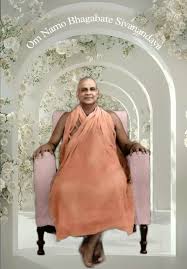
Swami Sivananda seated on chair in arch design image
Bhakti Yoga, Swami Sivananda

God Exists

God Exists There is a display of intelligence in every inch of creation. Who pumps blood in the arteries? Who converts food into chyle and red-coloured blood? Who does the peristalsis in the bowels and stomach and sends the faecal matter to the rectum and anus? Who closes and shuts the eye-lids to prevent dust from falling into the delicate eyes? Who gave intelligence to the cells and glands to secrete semen, milk, bile, saliva, gastric juice etc., from the blood? Who gave intelligence and power to spermatozoa to move, unite with the ovum in the womb and then develop into a foetus? Wherefrom does this minutest, subtlest substance Jiva as nice as the ten-thousandth part of the point of a hair derive the capacity to assume gradually the features, complexion and shape of its parents? What is the power which sustains it and helps its growth in the mother’s womb? Who arranges for milk in the mother’s breast before the child is born? Who provides food for the little frog living hidden in between the strata of rocks? Who clothed the fruits with skin to prevent contamination from outside? Who divided seasons and Ritus? Who made the water hot beneath the ice to enable fish to live comfortably in the icy regions of the Himalayas in Gauri Kund and other places? Who has combined four parts of inert nitrogen with the combustible oxygen gas? At whose command does the sun rise punctually in the morning and set in the evening? The sun is miles and miles away from the earth. What a great wonder it is that from such a long distance the sun is able to send light, heat, energy and vitality to all living beings inhabiting this fair earth? There are countless millions of suns much larger than the one that we see but which appear to us as tiny stars on account of their being remoter than the sun with which we are acquainted. It takes millions of years for the light to reach this earth from these stars. Velocity of light is 1, 86, 000 miles per second. Light from distant stars has not yet reached us even now. What a marvel it is! All these stars, planets and satellites are revolving in the sky in fixed orbits from day to day, month to month and year to year under immutable definite laws. Now the question arises whether all this organisation is the work of some intelligent Creator behind or is the product of a fortuitous combination of particles of matter, Anus, Parama Anus, Dvi Anus, atoms and molecules? It is the former hypothesis that appeals to our intellect. The Vedas also quite endorse the verdict of our reason. They emphatically declare that the sun and the moon, heaven and earth were created by God. Who supplies water to the trees, flowers, various shrubs etc., that are found in the forests? Who is this unseen, untiring gardener who works without wages or any sort of remuneration? Who gives nourishment in time to tigers, lions, birds, fishes, plants, insects and worms? How is it that only human beings are born of human beings, birds of birds, beasts of beasts, tigers of tigers, dogs of dogs, horses of horses, elephants of elephants, ants of ants, bears of bears, mules of mules, an exact copy of their parents in every respect? From a tiny seed there springs a huge banyan tree that can give shelter to thousands of persons! From a tiny seed there comes out a big mango tree that gives abundance of luscious fruits! What is that power that supports and nourishes these trees? What is that hidden and miraculous power that brings out a huge form with hair, fingers, toes, nose, teeth, ears, legs, thighs etc., out of one drop of semen? What is that power that brings a mighty tree with foliage, flowers, twigs and fruits out of a tiny seed? Again how wonderful is the human machine! How harmoniously all the organs work in unison in the economy of nature! In the Gita this body is known as “the nine-gated city” (Navadvarapura). In summer the skin works energetically to throw off all impurities of the body. In winter the kidneys work hard to eliminate the impurities of the blood and to relieve the over-worked skin. The endocrine glands, pituitary, pineal, adrenals work in perfect harmony in manufacturing the internal secretions to help the metabolic process of the body and its growth and structure. It is a great marvel to see the working of the nervous system under the control of the brain and the movement of the afferent and efferent impulses through the spinal cord. There is magnificent electric battery within, with switch-board and wires. The operator is the Inner Ruler (Antaryamin), who controls and supervises everything. He is the supervisor (Upadrashta), permitter (Anumanta) and the great Lord (Mahesvara). Look again at the heart and lungs which work under the direct control of the brain! How wonderful are these vital organs of life? Can any scientist manufacture any of these organs, tissues, fibres, tendons or cells in his boasted laboratory with his boasted intellect? How harmoniously the different systems of the body work without any rest, murmur or grumble! How very beautifully the different centres in the brain such as the vision-centre, the auditory-centre, the centre for smell and so on do their functions! One is struck with awe and amazement as he begins to think seriously on the working of this delicate human machinery. To think that this most wonderful mechanism is the result and product of a fortuitous combination of particles of matter or atoms is simply absurd and illogical indeed! It has been doubtless, moulded and fashioned by some architect who is infinitely more skilful, more intelligent and more powerful than these ordinary architects who build mansions, palaces and bungalows. Remember this point well. That architect is God or Isvara or Creator. Call Him by whatever name you may

God Exists Read Post »

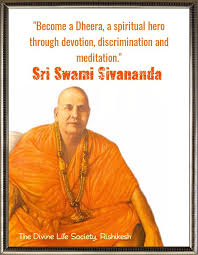
swami sivananda portrait with quote about devotion and meditation image
Bhakti Yoga, Swami Sivananda

Six Classifications of Bhakti

Six Classifications of Bhakti by Swami sivanandaThere are the following six classifications in Bhakti: Apara (lower) and Para (higher) Bhakti. Ragatmika and Vidhi Bhakti. Sakamya and Nishkamya Bhakti. Vyabhicharini and Avyabhicharini Bhakti. Mukhya (primary) and Gauna (secondary) Bhakti. Sattvic, Rajasic and Tamasic Bhakti. Ragatmika Bhakti is otherwise known as Mukhya or primary Bhakti. Para Bhakti is also primary devotion. Sakamya Bhakti is Gauna or secondary devotion. Nishkamya Bhakti, Avyabhicharini Bhakti or Para Bhakti is otherwise known as Ananya Bhakti. In Apara Bhakti the devotee is a neophyte. He observes rituals and ceremonies. He rings bells, applies sandal-paste to the Murti and offers flowers, Arghya, Naivedya, etc. He has no expanded heart. He is sectarian. He dislikes other kinds of Bhaktas who worship other Devatas. Para Bhakti is Nirguna Bhakti which is free from the three Gunas. It is the spontaneous, unbroken flow of pure love towards God. It is Ahaituki (free from any sort of motive) altogether. It is Avyavahita or unmeditated devotion towards God. This type of devotee does not care for divine Vibhutis even if they are offered. He wants the lotus feet of the Lord. He does not want even Kaivalya Mukti or absolute independence. He wants to serve God. He wants to see His face always. He wants pure divine love. God is the be-all and end-all of the devotee of Para Bhakti. A devotee of Para Bhakti type is all-embracing and all-inclusive. He has cosmic love or Visva Prem. The whole world is Vrindavana for him. He does not visit temples for worship. He sees his Ishtam everywhere. He has equal vision. He has no hatred for any object. He welcomes snakes, pain, disease and suffering as messengers of God. His mind is ever fixed at the lotus feet of the Lord. His Prem flows like oil in one continuous current. Para Bhakti is Jnana only. This is the highest culminating point in devotion. Nama Dev, Tukaram, Rama Das, Tulsidas and Hafiz had Para Bhakti. In Ragatmika Bhakti there are no fetters, shackles or barriers of customs or rules of society. There is no binding of any sort. There is an absolutely free flow of divine Prem. The devotee cares not a jot for public opinion. He is above public criticisms. He is as simple as a child. He pours forth exuberantly his love towards his Beloved. The devotee is intoxicated with divine Prem. Whereas in Vaidhi Bhakti the devotee observes rules and ceremonies and has certain restrictions. The simple-hearted cow-maids of Vrindavana and Mira had Ragatmika Bhakti. Though Mira was a Rani, she never cared for the opinion of the public and her relations and husband. When she was under intoxication of Krishna Prem she danced in the streets and open places amidst men and ordinary people. Ordinary people were not able to gauge the depths of her heart. Even Bhaktas were not able to fathom out the recesses of her innermost chambers of heart, the depth of her unbounded love for Lord Krishna. Her thrilling devotional songs which bring tears from the eyes of the hearers bespeak clearly the exalted state of her heart that was deeply saturated with the nectar of devotion towards Lord Krishna. She says: “I have none else for me besides my Giridhar Gopal. ” Can anyone fully understand the God-intoxicated Mira? Showing devotion to God for getting riches or son or removal of sufferings from diseases is Sakamya Bhakti. Sakamya Bhakti will eventually terminate in Nishkamya Bhakti. Prahlada only had Nishkamya Bhakti from the very beginning. Even the boy Dhruva had only Sakamya Bhakti. It was for getting dominion that he retired into the forest on the advice of his mother in the beginning. It was only later on that he developed Nishkamya Bhakti after he had Darshan of Hari. All his desires melted away. To love God for sometime and then wife, children and property for sometime is Vyabhicharini Bhakti. To love God and God alone for ever and ever is Avyabhicharini Bhakti. Mark this carefully! In Sattvic Bhakti the quality of Sattva predominates in the Bhakta. He worships God to please Him, to destroy Vasanas etc. All these three types of Bhakti are secondary devotion only. In Rajasic Bhakti the quality of Rajas predominates in the devotee. He worships God to get estates, wealth, name and fame. In Tamasic Bhakti the quality of Tamas predominates in the devotee. He is actuated by wrath, arrogance, jealousy and malice in showing devotion to God. To worship God for destroying one’s enemy and for getting success in an enterprise through unlawful means is Tamasic Bhakti. The thief prays to God: “O God Ganesha! Let me get something tonight. I will offer Thee 100 cocoanuts. ” This is Tamasic Bhakti. Sandilya also mentions of primary Bhakti and secondary Bhakti. The primary devotion is the attachment to the Lord. It is single-minded devotion. It is one-pointed, whole- hearted devotion to God (Ekanta Bhava). Primary devotion is the principal, because others are subservient to it. According to the Gita (VII-16), there are four kinds of Bhaktas. “Fourfold in division are the righteous ones who worship Me, O Arjuna! The distressed, the seeker for knowledge, the selfish and the wise. ” The devotion of the distressed, the seeker for knowledge and the selfish man is after all secondary as they have ulterior, selfish motives in view. But the devotion of the wise is pure and absolutely unselfish. It is Para Bhakti or primary devotion. He has undivided love and whole-hearted devotion to the Lord. He is eternally united with Him. God is the dearest to him and he is the dearest to God. Lord Krishna says: “Noble are all these but I hold the wise as verily Myself; he self-united is fixed on Me, the highest path” (Gita: VII-18). Prahlada later on meditated on his own Self as Lord Hari. This is Abheda Bhakti. This is the advanced stage of devotion. When a devotee has devotion for Lord Hari, Lord Siva, Devi,

Six Classifications of Bhakti Read Post »

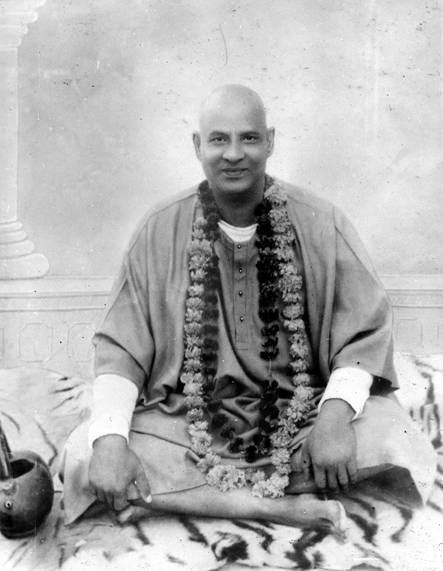
Swami Sivananda seated cross-legged wearing a robe and flower garland. image
Bhakti Yoga, Swami Sivananda

Where is the Harm in Not Believing in God’s Existence?

Where is the Harm in Not Believing in God’s Existence? by Swami Sivananda Belief in God is an indispensable requisite for every human being. It is a sine qua non. Owing to force of Avidya or ignorance pain appears as pleasure. The world is full of miseries, troubles, difficulties and tribulations. The world is a ball of fire. The Antahkarana charged with Raga, Dvesha, anger and jealousy is a blazing furnace. We have to free ourselves from birth, death, old age, disease and grief. This can only be done by faith in God. There is no other way. Money and power cannot give us real happiness. Even if we exercise suzerainty over the whole world, we cannot be free from care, worry, anxiety, fear, disappointment etc. It is only the faith in God and the consequent Godrealisation through meditation that can give us real, eternal happiness and free us from all kinds of fear and worries which torment us at every moment. Faith in God will force us to think of Him constantly and to meditate on Him and will eventually lead us on to Godrealisation. Belief in God and Godrealisation will give us Parama Santi (supreme peace). In that peace comes the extinction of all pains. We will be no longer bewildered. We will be released from the bondage of actions. We will become immortal. We will obtain eternal Divine Wisdom. We will reach a place whence there is no return to this world of miseries, our sins being dispelled by Divine Wisdom. Our minds will ever remain balanced. We will never rejoice on obtaining what is pleasant nor feel sorry on obtaining what is unpleasant. We will have an icy cool Antahkarana. We will be ever established in the Divine Consciousness. We will get “Akshaya Sukha, ” happiness exempt from decay. We will become one with God (Samadhi) and get eternal (Nitya), infinite (Ananta), unbroken (Akhanda) Bliss. When we are established in the Divine Consciousness we will not be shaken even by heavy sorrow. We will get “Ateendriya Sukha”, happiness beyond the reach of senses (Supreme Bliss). God will give us full security if we worship Him with unswerving devotion and undivided attention. He gives us the Yoga of discrimination to enable us to reach Him easily. Out of pure compassion for us He destroys the ignoranceborn darkness by the shining lamp of wisdom. He speedily lifts us from the ocean of Samsara if we fix our minds on Him steadily with devotion and faith. We will cross over the three qualities and, liberated from birth, death, old age, and sorrow, drink the nectar of immortality. By devotion and faith we will know Him in essence and will enter into His very Being. Through His Grace we will overcome all obstacles (Parama Pada-Parama Dhama).

Where is the Harm in Not Believing in God’s Existence? Read Post »