




Hari Om

Menu

Bhakti Yoga

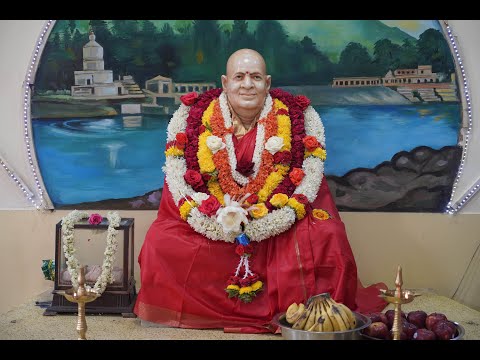
Swami Sivananda seated calmly outdoors photo
Bhakti Yoga, Swami Sivananda

Background of Thought

Background of Thought by Swami Sivananda The background of thought of a Marwadi is about his money. His mind is always on the safe. He plans, speculates and schemes as how to increase his money in the bank from one lakh to two lakhs. The background of thought of a young man is about his wife. The background of thought of a doctor is about his patients, dispensary and drugs. The background of thought of a lawyer is about his clients, courts and rulings of the High court. The background of thought of an old grand-mother is about her grand-children. The vast majority of people indulge in thoughts of jealousy and hatred and these thoughts form their background. But the background of thought of a Bhakta is about his Ishta-Devata. A devotee of Lord Krishna always thinks of Krishna with flute in hand. He has a concrete background. A Vedantin or a student of Jnana Yoga has an abstract background. He meditates on abstract ideas. A Sattvic background keeps the mind always pure and takes the devotee to the goal. The mental image of Lord Krishna destroys all other worldly thoughts. A sacred background of thought either concrete or abstract is a valuable spiritual asset for a man. A habit to think of the image is formed by constant thinking of one’s Ishta Devata. Even in the office when you leave the pen on the table, the mind through the force of habit will at once move to the background of thought and think of the picture of Lord Krishna. Even in dream you will have vision of Lord Krishna only. The greater the Sadhana, the stronger the background of thought of the mental image. Even when you work in the office, just close your eyes for a couple of minutes every hour and think of the picture of Lord Krishna and repeat His Mantra: Om Namo Bhagavate Vasudevaya. This is an excellent practice. This is solid Sadhana. You will have an unruffled state of mind always. You can turn out more work with great concentration. In the beginning you may not be able to bring the full image before the mind’s eye. When you think of the face of Lord Krishna, the feet and hands will disappear. When you think of His feet, His face will slip away. Through constant Sadhana, you can visualise a well-defined, clear-cut, full image. A ray of the mind goes forth to the object, which in turn shapes and moulds the mental substance into the form of the object. When a man thinks of an image of Lord Krishna or Lord Rama constantly with a single-minded or one-pointed concentration like unbroken flow of oil (Avicchinna Tailadharavat), his mental substance takes the form of the image. The image leaves a definite impression on the mind. This is called Samskara. If this impression is repeated very often, a tendency or habit is formed in the mind. That is the reason why the aspirant is asked to repeat the Mantra several lakhs of times. A man can shape his mind for good or bad. It depends upon the nature of food he gives to the mind. Every thought produces a definite change in the substance of the brain also. One has to create a Sattvic background of thought through continued struggle. The mind will run back to its old ruts and manufacture images of worldly objects. The Sadhaka will have to bring back again and again the mind to the Sattvic background of thought that he has developed. The struggle will be keen in the beginning. Later on the mind will quietly rest in the spiritual background of thought

Background of Thought Read Post »
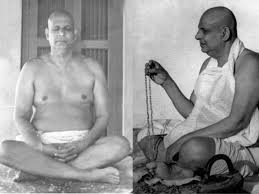
Swami Sivananda Two images of monk meditating and praying picture
Bhakti Yoga, Swami Sivananda

Secret of Surrender

Secret of Surrender by Swami Sivananda Sakrudeva prapannaya tavasmeeti cha yachate;Abhayam sarvabhutebhyo dadamyetad vratam mama. “I remove all fears of all beings even if they come to Me only once and seek My refuge; calling themselves as Mine-This is My vow. ” -Sri Ramachandra’s vow. Throughout the Gita there is a ringing note that surrender and devotion are absolutely necessary for the attainment of God-consciousness. In reality, the nine modes of devotion (Navavidha Bhakti) are reducible to one, viz. , Atmanivedan. The following Gita Slokas will impress on your mind the importance of devotion and self-surrender: Tameva saranam gachha sarvabhavena bharata;Tatprasadat param santim sthanam prapsyasi sasvatam. “Flee unto Him for shelter with all thy being, O Bharata; by His Grace thou shalt obtain supreme peace, the everlasting dwelling-place. ” (XVIII-62. ) Manmana bhava madbhakto madyajee mam namaskuru;Mamevaisyasi satyam te pratijane priyosi me. “Merge thy mind in Me, be My devotee, sacrifice to Me, prostrate thyself before Me, thou shalt come even to Me. ” (XVIII-65. ) Sarvadharman parityajya mamekam saranam vraja;Aham tva sarvapapebhyo mokshayishyami ma suchah. “Abandoning all duties come unto Me alone for shelter; sorrow not, I liberate thee from all sins. ” (XVIII-66. ) Slokas 65 and 66 of Chapter XVIII are the most important Slokas of the Gita. The gist of the teaching of Lord Krishna is here. If anyone can live in the true spirit of these Slokas, he will realise the goal of life soon. There is no doubt of this. The self-surrender must be total, ungrudging and unreserved. You must not keep certain desires for gratification. Mira says: “I have given my whole heart, mind, intellect, soul, my all to my Griridhar Gopal. ” This is perfect self-surrender. A real devotee will not ask the Lord even for Mukti. So long as the subtle desire for liberation lingers in one’s heart he cannot claim himself to be a true devotee of the Lord. Though the desire for emancipation is of Sattvic nature, yet the devotee has become a slave of Mukti. He is still selfish and so is unfit to call himself a sincere lover of God. He has not yet made total, unreserved self-surrender. To ask for Mukti is a variety of hypocrisy. Can a true devotee dare ask anything from God, when he fully knows that He is an ocean of love and compassion? A real devotee never complains anything against God. A raw Bhakta speaks ill of God when he is in distress. He says, “I have done 25 lakhs of Japa. I am studying Bhagavata daily. Yet God is not pleased with me. He has not removed my sufferings. God is blind. He has not heard my prayers. What sort of God is Lord Krishna? I have no faith in Him.” A real Bhakta rejoices in suffering, pain and destitution. He welcomes grief and sorrow always, so that he may not forget God even for a second. He has the firm belief that God does everything for his good only. Kunti Devi prayed to Krishna: “O Lord! Give me pain always. Then only I will remember Thee always. “ In Puri a saint who completely dedicated himself to Lord Hari was seriously ailing from chronic dysentery. He became quite helpless. Lord Jagannath was serving him for months in the form of a servant. The law of Prarabdha is inexorable. Nobody can escape from the operation of this infallible law. The Lord did not want the Bhakta to take another birth for the exhaustion of his Prarabdha. So His devotee had to suffer from protracted ailment. This was his Karmic purgation. But He Himself served him, as the devotee surrendered himself completely. Look at the unbounded mercy of the Lord! He becomes a slave of His devotees when they entirely depend upon Him. Self-surrender does not mean retirement into the forests. It does not mean giving up of all activities. Tamas or inertia is mistaken for self-surrender. This is a sad mistake. What is wanted is internal surrender. The ego and desire must be annihilated. This will constitute real surrender. The Rajasic mind stands obstinate to effect complete self-surrender. Obstinacy is a great obstacle in surrender. The lower nature again and again raises up to assert itself. There is resurrection of desires. Desires get suppressed for some time. Again they manifest with redoubled force. Man is dragged hither and thither by these desires. Believe in the divine possibilities. Completely dedicate yourself to the Lord. Have full trust in Him. Rest in peace. All cares, worries, anxieties, tribulations and egoistic efforts will terminate now. Look at Prahlada’s surrender and faith in God! He completely resigned himself to Lord Hari. No other thought save thoughts of God occupied his mind. He had His full Grace and benediction even though he was ill-treated by his father in a variety of ways. He was hurled down from the top of a cliff. He was trampled by the elephant. He was poisoned. He was thrown into the sea with the legs tied by iron chains. Cobras were thrown over him. His nose was filled with poisonous gases. He was thrown over fire. Boiled oil was poured over his head. Yet his faith in Narayana was not shaken a bit. The Name of Narayana was always on his lips. Such must be the faith of every devotee. The lower nature must be thoroughly overhauled. All old, wrong habits must be completely destroyed. Then the surrender becomes complete. Do not make plans and speculations. “Sufficient for the day is the evil thereof. ” Keep the mind and the intellect passive. Allow the Divine Will and Grace to work through your mind and Indriyas. Become silent. Feel His Grace and Love and enjoy the Divine Ecstasy. Be at ease. Pray to God fervently, “O Lord! Make my will strong to resist all temptations, to control my Indriyas and lower nature, to change my old evil habits and to make my surrender complete and real. Enthrone Thyself in my

Secret of Surrender Read Post »

paduka gitamandir2
Bhakti Yoga, Swami Sivananda

Importance of Bhakti Yoga

Importance of Bhakti Yoga by Swami Sivananda Purushah sa parah Partha bhaktyaa labhyastvananyayaa;Yasyantahsthani bhutani yena sarvamidam tatam. “He, the Highest Spirit, O Partha, may be reached by unswerving devotion to Him alone, in Whom all beings abide, by Whom all this is pervaded. ” (Gita: VIII-22. ) Bhaktya tvananyaya sakya ahamevamvidhorjuna;Jnatum drashtum cha tattvena praveshtum cha Parantapa. “But by devotion to Me alone I may thus be perceived, Arjuna, and known and seen in essence, and entered, O Parantapa. ” (Gita: XI-54. ) Mayyavesya mano ye mam nityayukta upasate;Sraddhaya parayopetaste me yuktatama matah. “Those who, fixing their mind on Me, worship Me, ever steadfast and endowed with supreme faith, are the best in Yoga in My opinion. ” (Gita: XII-2. ) Yoginamapi sarvesham madgatenantaratmana;Sraddhavan bhajate yo mam sa me yuktatamo matah. “And among all the Yogins, he who, full of faith, with the inner self abiding in Me, worships Me, he is considered by Me to be the most completely harmonised. ” (Gita: VI-47. ) Let me say a word on practical Sadhana. The Sastras are endless; there is much to be known; time is short, obstacles are many; That which is the Essence should be grasped, just as the swan does in the case of milk mixed with water. O Nectar’s sons! Wake up. Open your eyes. Grasp the Essence (God). Remember the pains of Samsara. Remember death. Remember the saints. Remember God. Sing His names: “Hare Rama Hare Rama, Rama Rama Hare Hare; Hare Krishna Hare Krishna, Krishna Krishna Hare Hare. ” Cultivate Bhakti. Develop the nine modes of devotion (Nava Vidha Bhakti). Serve Bhagavatas. Feel His Indwelling Presence everywhere. Have Darshan of Sri Krishna in this very birth, nay this very second. Become a glorious Bhagavata, a Jivanmukta and radiate joy, bliss and peace all around and everywhere. Friends! Let me remind you once more. Forget not even for a second that Flute-Player of Vrindavana, thy Immortal Friend, thy joy, thy solace in life. Repeat always His Mantra ‘Om Namo Bhagavate Vasudevaya. ‘ May the blessings of Sri Krishna be upon us all!

Importance of Bhakti Yoga Read Post »

silver jubilee4
Bhakti Yoga, Swami Sivananda

How to Develop Bhakti?

How to Develop Bhakti? by Swami Sivananda Service of Bhagavatas, Sadhus and Sannyasins; repetition of God’s Name; Satsanga; Hari Kirtan; study of Ramayana or Gita; stay in Vrindavana, Pandharpur, Chitrakuta, Ayodhya, or any other place of pilgrimage-these are the six means of cultivating Bhakti. The following nine modes of worship (Navavidha Bhakti) also will develop Bhakti: Sravana (hearing the Lilas of God); Kirtana (singing His praise); Smarana (remembering His Name); Padasevana (worshipping His Lotus Feet); Archana (offerings); Vandana (prostration); Dasya (service); Sakhya (friendship); and Atma-nivedana (complete self-surrender).

How to Develop Bhakti? Read Post »

Swami Sivananda seated wearing garland candid photo
Bhakti Yoga, Swami Sivananda

Bhakti Yoga Sadhana

Bhakti Yoga Sadhana by Swami Sivananda God is the Inner Ruler of your heart and mind. He is the silent witness of your thoughts. You cannot hide anything from Him. Become guileless and straightforward. A devotee of Hari is always meek and humble. Name of God “Hari” is always on his lips. He sheds profuse tears when he is alone. He is very pious. He is friendly towards all. He has equal vision. He does good always. He never hurts the feelings of others. He has a spotless character. He never covets the property of others. He sees Hari in all beings. Bhakti can move mountains. Nothing is impossible for it. It was the devotion of Mira that converted a snake into a flower‑garland, poison into nectar and an iron bed of needles into a bed of roses. It was the devotion of Prahlada that turned fire into ice. A devotee should become an embodiment of goodness. He must be ever ready to do good to living beings. That devotee who is intent upon the welfare of all beings obtains the peace of the Eternal. He who rejoices in the welfare of all, gets the Darshan of the Lord. He develops Advaitic consciousness eventually. Service of Bhagavatas, repetition of God’s Name, Satsanga, singing His Name, study of Bhagavata or Ramayana, stay in Vrindavan, Pandharpur, Chitrakuta or Ayodhya-these are the six means of developing Bhakti. Anger and lust are the two inner enemies that stand in the way of developing Bhakti. From lust follow ten vices that are mentioned in Manusamhita: “Love of hunting, gambling, sleeping by day, slandering, company with bad women, drinking, singing love‑songs, dancing, vulgar music, aimlessly wandering about. “ Anger begets eight kinds of vices. All evil qualities proceed from anger. If you can eradicate anger all bad qualities will die of themselves. The eight vices are: “Injustice, rashness, persecution, jealousy, taking possession of others’ property, killing, harsh words and cruelty. “ How are Bhaktas to be known? Lord Krishna has given a description of them. You will find it in Bhagavata. “They do not care for anything. Their hearts are fixed on Me. They are very humble. They have equal vision. They have no attachment towards anybody or anything. They are without ‘mine‑ness. ‘ They have no egoism. They make no distinction between sorrow and happiness. They do not take anything from others. They can bear heat, cold and pain. They have love for all living beings. They have no enemy. They are serene. They possess exemplary character. Here is Sadhana for advanced students. This is highly useful for getting quick, solid progress in the spiritual path. Get up at 4 a. m. Start your Japa on any Asana you have mastered. Do not take any food or drink for 14 hours. Do not get up from the Asana. Control passing urine till sunset if you can. Do not change the Asana if you can manage. Finish the Japa at sunset. Take milk and fruits after sunset. Householders can practise this during holidays. Practise this once in a fortnight or once in a month or once weekly. Here is another Sadhana for ten days. You can do this during Christmas holidays or Pooja holidays or summer vacation. Shut yourself up in an airy room. Do not talk to anybody. Do not see anybody. Do not hear anything. Get up at 4 a. m. Start Japa of the Mantra of your Ishta Devata or your Guru Mantra and finish it at sunset. Then take some milk and fruits or Kheer (milk and rice boiled with sugar). Take rest for one or two hours; but continue the Japa. Then again start Japa seriously. Retire to bed at 11 in the night. You can combine meditation along with Japa. Make all arrangements for bath, food etc. , inside the room. Have two rooms if you can manage, one for bath and one for meditation. Repeat this four times in a year. This practice can be kept up even for 40 days. You will have wonderful results and various experiences. You will enter into Samadhi. You will have Darshan of your Ishtam. I assure you. Here is the Anushthana for 40 days. You will have to do Japa of Rama Mantra one lakh and twenty‑five thousand times for 40 days in the following manner. Do Japa at the rate of 3000 daily for 35 days and 4000 daily during the last five days. Get up at 4 a. m. Write down in a thin paper Rama, Rama 3000 times. Then cut it into small pieces. Each piece will contain one Rama Nama. Then roll it with a small ball of Atta (wheat flour paste). Writing will take two or three hours according to your strength and capacity. Then you will have to cut it one by one. You will have to do the whole process by sitting on one Asana. If you will find it difficult to sit on one Asana you can have change of Asana. But you should not leave your seat. Some use a special ink made up of saffron, mush‑kapoor etc. , and a special writing pen made up of sharp pointed thin Tulasi stick. You can use ordinary ink and pen if you cannot get the above special ink and special pen. You will have to do Anushthana on the bank of the Ganga, Yamuna, Godavari, Kaveri or Narmada, at Rishikesh, Benares, Haridwar or Prayag. You can do it at home, if you find it difficult to move to these places. Take milk and fruits or Phalahar during these days. Throw the balls in the Ganga or any river for fishes. You will develop wonderful patience. You will get divine grace. Study the whole Ramayana 108 times with purity and concentration. This can be done in three years if you can devote three hours daily. You can go through the book three times in a month. You will acquire Siddhis. You will have Darshan

Bhakti Yoga Sadhana Read Post »

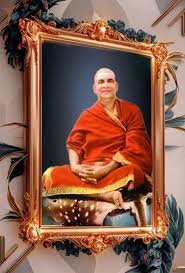
Swami Sivananda portrait with floral frame image
Bhakti Yoga, Swami Sivananda

Worship

Worship by Swami Sivananda FIVE CLASSES OF WORSHIP Rishis of yore have prescribed five classes of worship to the predominating Tattva in a man or woman. They are worship of Sri Ganesha, Lord Siva, Lord Hari, Sakti and Surya. If Prithivi (earth) Tattva is predominant, one should worship Sri Ganesha. If Apas (water) is predominant, he should worship Hari. If Agni (fire) is predominant, he should worship Surya; if Vayu (air) is predominant he should worship Sakti and if Akasa (ether) is predominant he should worship Lord Siva. FIVE KINDS OF WORSHIP There is another classification according to the capacity of the individual. Some worship elementals and lower spirits. These worshippers are Tamasic people. Some worship Pitris or forefathers and Rishis and Devas. Some worship Avataras as Lord Krishna and Rama. Some Worship Saguna Brahman. Advanced students worship Nirakara, Nirguna, Avyakta, Satchidananda Brahman of the Upanishads. These are the five kinds of worship

Worship Read Post »

sddefault 1 1
Bhakti Yoga, Swami Sivananda

Puja or Worship

Puja or Worship by Swami Sivananda INTRODUCTORY Puja is worship of the Lord. This is one of the nine modes of Bhakti. This is also called Archana. The Lord is worshipped either in His Nirguana or Saguna aspect. Even this worship is done either with external materials or �merely mentally in the case of advanced devotees. The Bhakta does Puja to his Ishta-Devata. The Puja is Vedic, Tantric or mixed as is suitable to the devotee. One may choose any method according to his liking. Take bath in the morning. Perform your daily Sandhya or prayer. If there is an idol of the Devata it is good. Otherwise, worship can be done on the floor itself, after cleaning the place and drawing a Mandala there. Collect flowers, Dhoop, scented sticks, sandal paste, Arati (Dipa), camphor, fresh water, food-offerings (Bhog) to the Lord, a clean seat to sit on, a small bell, conch and cymbals if available. Offer a prayer to the Lord with Bhava and devotion. Offer flowers or rice soaked in water with Kumkum �(Akshata) to the Lord with His hundred and eight names or His Mula-Mantra repeated hundred and eight times. Offer Abhisheka with fresh water or milk or ghee or honey or Panchamrita as is convenient. Read elevating Stotras or portions of Bhagavata, Ramayana, etc., concerning the glories and Lilas of Bhagavan. If possible do Sahasranama Archana. Offer Arghya, Padya, Neerajana, etc. Mentally always think of the form of the Lord. You should not get up in the middle of the Puja for collecting anything. Keep ready everything beforehand. As many Mantras, Stotras and prayers as possible should be repeated to kindle divine emotion. You should decorate the Lord with fresh clothes and garlands made of flower. Adore Him with ornaments, flowers, scent, sandal paste etc. Do it with intense love and devotion. Offer to the Lord as Bhog sweet, cooked rice or some food that can conveniently be offered. Food specially prepared with ghee, milk etc., and those prepared with curd, vegetables, butter are very much recommended. The image should be rubbed with oil, cleaned, adorned and given all such loving treatment which one would give to his most beloved and dearest being in the world. Prepare various kinds of dishes for Bhog if possible and arrange for music, singing and dancing with divine Bhava on special days. Do Mahapuja. Offer Arati, burn camphor, wicks dipped in ghee etc. Let there be singing of the Lord’s glories and chanting of His Names. Offer prayers and surrender yourself to the Lord. Hear stories of the Lilas of the Lord as recorded in the scriptures. Say, O Lord! Have mercy on me. Be gracious unto me. Place your head on the Lord’s feet and pray, O Lord! Protect me from the ocean of Samsara with the shark of death in it. I am terribly afraid of it. I have taken shelter in Thee. Offer Prasad to others. If possible feed some poor people every day. Give Dakshina. Give clothing. Worship the poor as the Lord. Do everything with Nimitta Bhava. Have no selfish desires behind the worship you do. MANASIKA PUJA Manasika Puja is doing worship of the Lord without any external materials. All materials necessary for Puja are imagined in the mind and you feel that you are offering all of them to the Lord as in formal worship. This is more powerful than external worship. For, concentration is more in Manasika Puja than in Bahya Puja. Mentally feel all that you do in external worship. Enthrone the Lord in your heart. Do Puja, offer Arati, �Arghya etc. mentally. Do Shodasopachara-Puja mentally. This is only a feeling of what is otherwise done actually with hands. Feeling is more effective than action. PARA PUJA Para Puja is the highest kind of worship. This is the worship of the Jnanis. This is the effect of Realisation of the Self. The devotee feels that he can do nothing but only experience God. He says: O Lord! How can I worship Thee who is without parts, who is Existence itself? How can I pray to Thee when Thou art my very being itself? How can I offer �Arghya, Padya etc. to Thee when Thou art ever pure? How can I offer anything to Thee when Thou art ever an Apta-Kama? Can I wave a candle to the Sun and can I bathe the ocean with a glass of water? How can I offer Bhog to Thee when Thou art self-contented? And in this way the devotee feels the Infinite Nature of God. Para Puja is thus an illustration of impossibility of formal worship to God in consideration of His infinite and Eternal Nature full of Knowledge and Bliss. Para Bhakti and Para Puja belong to the same stage. At this stage the devotee becomes one with God and loses his individuality.

Puja or Worship Read Post »

Swami Sivananda with garlands and offerings image
Bhakti Yoga, Swami Sivananda

Rambles in Bhakti

Rambles in Bhakti by Swami Sivananda TO TONGUEO Tongue!Recite, recite at all times,Om Namo Narayanaya;You will be blessed.Names of Lord VishnuPut an endTo the miseries of Samsara.Sing the Names of Hari,Sing His praise;You were leading all alongA despicable life.You lived in vain.Do not abuse anybody,Do not utter falsehood.Do not speak foul words,Do not utter harsh words.Speak sweetlyDo not backbite.Recite Ramayana,Recite Gita, Upanishads.Glorify others.Remember the LordWho gave you power to speak.Do not misuse your power.Merge in the Lord,Be ever blissful.TO CUPIDO Cupid! You are finished now,Get away from me,You cannot tempt me,You cannot excite me,Your power has gone now,You are impotent,Do you not know the powerOf Lord Hari’s discus?Sage Durvasa had to fly,He had no strength,To face Vishnu’s discus.I am under his protection;His discus will burn you:You are already limblessSiva’s third eye burnt you once.Take to your heels quickly,Become wise.Thou art Avidya’s child;Go back to your mother.Viveka and Vairagya,Devotion and Name,Will reduce you to ashes.Show not thy face,Put down thy flowery arrows,Seek refuge under Hari’s feet.Salutations unto Thee.O Lord Ranganatha of Srirangam,O Padmanabha of Triva

Rambles in Bhakti Read Post »

Swami Sivananda standing by riverside landscape image
Bhakti Yoga, Swami Sivananda

Prayer to Lord Krishna

Prayer to Lord Krishna 1. Hey Mukunda! Thou art hypocrisy personified.How can I have reliance on Thy word?Thou preachest renunciation of wealth and women;But yet Thou Thyself wearest the Kaustubha jewel and Lakshmi.Is this Thine precept by example?Can anybody have faith in Thine teachings?Oh! tell me, I am much worried over thetrue meaningOf what You talk and how You act. 2. Hey Mukunda! Thou Thyself livest incoils of death;Why have You chosen the bed offire vomiting snake?How can You confer freedom to Thine Bhaktas?Can’t You with Your wealth purchase soft andsnow-white beddings?Thine Bhaktas feel terrible fear at sight of the snake.Thou art a bankrupt devoid of servants,palace and kingship,With ocean saltish water as Thine residence;Who will serve Thee and on whom You hold sway?Will fishes and water-animals serve Theeor obey Thee? 3. Hey Mukunda! Thou art the worst thiefand law-breakerStealing the butter from the pots of shepherdsabsent from home;And dallying with wives of men, unknown to them;Singing on the flute and dancing with themin lone forests.These, Thine acrobats never enhance Theein men’s estimate.But yet You preach that all praises aredue to Thee alone.And men should remember Thee at all times during work and sacrifice their all to Thee alone.COME QUICK, O LORD!O Lord! Thou art silent;I cried in my distress,I sought Thy shelter,I knocked at Thy door,There is no response.Why art Thou so cruel?I cannot bear anymoreThe sufferings and afflictions;My heart will break.Pundits only sayThou art Karunasasgar,Karunanidhan, Karunasindhu;Thou art cruel,Where is Thy mercy now?Is that ocean dried up now?Or have you become a miser?Can you not spare a drop for me?Why have you not shownMercy on me?Has Thy heart become stony now?Have you become deaf now?I will accuse Thee now,Keep up Thy prestige,Give me Darshan at once,Shower Thy grace on me.I will call Thee a serpentBecause you also live on air,You absorb the Prana of devotees;Come quick, O Lord!I am waiting and waiting.

Prayer to Lord Krishna Read Post »

Swami Sivananda Framed portrait of Swami Sivananda meditating
Bhakti Yoga, Swami Sivananda

Prayer to the Lord of Venkata Hill

Prayer to the Lord of Venkata Hill O Lord of Venkata HillTirupati or Balaji!O Seven Hill Ranga!Thou art seated at the topOf this sacred Hill;Thou art beyondThe seven planes and Sapta-dhatus.And the seven Chakras.When the Hundi is not full,The temple priest ties Thy feet,With the golden chain;Lo! Thy Hundi becomes full at once.I will also tie Thy feet now,Not with the golden chain,But with the chain of Love.How can you escape now?Please show Thy omnipotence now.Thou art bound by love;Thou art Bhaktavatsala,Thou art Bhaktapriya,Thou art Patitapavana;Enthrone Thyself in my heartAnd live with me for everThis is my fervent prayer.

Prayer to the Lord of Venkata Hill Read Post »