




Hari Om

Menu

Bhakti Yoga

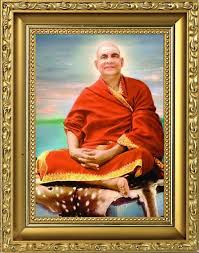
Swami Sivananda Framed portrait of meditating spiritual guru photo
Bhakti Yoga, Swami Sivananda

Sankirtan

Sankirtan by Swami Sivananda If you ask a man Are you doing worship daily? Are you regular in doing Japa, Kirtan and meditation? he gives the answer My dear sir, what shall I do? I cannot get now good rice or wheat flour, vegetables, ghee and milk. The price of food stuff is considerably high. The food-stuffs are adulterated. I am starving. I am weak. I cannot do any worship or meditation. He puts the whole blame on food. Food says Do not blame me sir. My condition entirely depends upon rain. There is no good rain in these days. Hence the production of food is very little and meagre. You will have to blame the rain. If there is abundant rain there will be plenty of food. Rain says Do not blame me. My life depends upon Agni or fire. Refer the matter to Agni who is my Lord. Agni says Do not blame me. People do not perform sacrifices or Homa or Havan. A few Agnihotris perform Havan in a half-hearted manner without sufficient ghee and materials. Millions of people perform their own Agnihotra in their own way. They smoke cigars and cigarettes ceaselessly and pollute the atmosphere. Even there are cigarette-girls and cigarette-boys. As soon as they get up from their bed they start Agnihotra as the first thing in the morning and taint the air with their puffs of smoke. Horrible! Shameful! It is their first worship of the Lord. How can you expect good rain and good food? People are degenerated. No Sandhya, no recitation of Gayatri, no Kirtan, no Japa. They eat, drink, smoke, sleep. That is all. The day closes. Life ends. Refer the matter to Vayu or air, my Lord. I am born of Vayu only. If the atmosphere is rendered pure by Havan there will be good rain and abundant food. Vayu says You will have to refer the matter to Akasa, my lord. I am born of Akasa. His property is sound. If Akasa is pure, I will also be pure and will direct Agni to bring forth abundant rain. Akasa says Doubtless I am the source or womb for the four Tattvas Vayu, Agni, water and earth. I generate sound. People have polluted me by using horrible vulgar words. Even children utter foul words when they are playing. Parents teach them to use vulgar words. They are their Gurus. Children imitate them. People do not do Kirtan regularly. If all do Kirtan daily the whole atmosphere will be purified. There will be abundant rain and abundant crops. In olden days there was Kirtan in every house, and so there were good rains and good food. Even this little food on earth is due to the Kirtan done by some devotees. Had it not been for this the whole world would have perished by this time on account of severe famine. If you really want peace and plenty do Kirtan, purify the atmosphere and propitiate Lord Hari. Sankirtan is the bestower of eternal bliss, immortality and abundant food which helps a man to do his worship, meditation and attain the goal of life. O man! Give up at once this vulgar smoking. Do not pollute the atmosphere by uttering vulgar words and smoking. Utter always Sri Ram, Hari Om. Train your children also in this direction. Do Kirtan regularly in your house with your children and all members of the family and in the temple, Mutts, and town halls and enjoy the bliss of the Eternal.
Sankirtan Read Post »

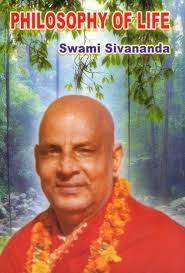
Swami Sivananda portrait with nature background picture
Bhakti Yoga, Swami Sivananda

Nama Aparadha

Nama Aparadha by Swami Sivananda It is true that utterance of Divine Name can absolve us from all sins and enable us to attain salvation or love of God (both of which are so difficult to get) but that is possible only when the Name is uttered with faith and reverence and the practice is free from all taints of sin against the Name viz., the following ten offences: Vilification of saints and devotees. Differentiation among (Divine) Names. Irreverence towards preceptor (Guru). Speaking lightly of the scriptures. Treating the glory of Name as nothing but exaggerated praise. Commission of sins under the cover of the Name. Ranking the Name with other virtues and practising fasting, charity, sacrifice etc. Recommending practice of Name to irreverent and ungodly persons who are not prepared to hear such advice. Want of love for the Name even after hearing its glory. Emphasis of ‘I’ and ‘mine’ and attachment to objects of enjoyment. If through inadvertence one lapses into any of the above ten sins, the only way to absolve from it is to repeat the Name again and repent for the mistake. Namaparadhayuktanam namanyeva harantyagham; Avishranyaprayuktani tanyevarthakarani cha. (Padma Purana)The Name itself is the best atonement for sins committed against the Name. Through constant Kirtan of the Name all our desires can be fulfilled. You enjoy all divine Aisvarya of the Lord

Nama Aparadha Read Post »

Swami Sivananda portrait with floral border picture
Bhakti Yoga, Swami Sivananda

The Pseudo Para-Bhaktas

The Pseudo Para-Bhaktas by Swami Sivananda An ignorant neophyte in the path of devotion says I practise Para Bhakti. There is no need for me to go to the temples and worship idols. What is there in worshipping idols, offering flowers and waving light? He is labouring under a serious delusion. This is the state of those who proceed in the spiritual path without the advice or aid of the spiritual preceptor. They do whatever they like. They follow the promptings of the lower mind. They do not make any spiritual progress. They are also like the pseudo Vedantic students. It is very difficult to develop Bhakti. Bhakti Yoga is as much difficult as Vedanta or Jnana Yoga. The internal enemies, viz., lust, greed, anger, hatred, egoism and jealousy are very very powerful. They stand in the way of cultivating devotion. The aspirant should pass through the various initial stages or Bhumikas of Bhakti Yoga, just as a student should go through Matriculation, F.A. and B.A. before he sits in the M.A. class. He should practise Chariyai and Kriyai to begin with. He should visit temples and do Puja. He should make garlands of flowers for the Lord. He should sweep the floor of the temple. He should bring water for Abhisheka. He should clean the light. He should put lights. He should ring the bells. All these should be done with faith, devotion and intense Bhava. He should prostrate again and again before the Deity. He should do Parikrama (perambulation) round the temple. Some aspirants think that it is beneath their dignity to ring bells, clean lights, bring water and make garlands of flowers. They think that it is the work of a menial servant. Such aspirants cannot even dream of developing Bhakti even in crores of births. They have not understood the alpha and beta of Bhakti Yoga. Study the lives of sixty-three Nayanars, the Tamil Saints of Southern India. They were illiterate but they had intense and unswerving devotion to the Lord. They practised day-in and day-out Chariyai and Kriyai or the preliminary purificatory services in the temple. They attained Siva-Sayujya through these practices alone. It is very difficult to reach the stage of Para Bhakti. Para Bhakti and Jnana are one. Para Bhakti is the highest Bhakti. It comes through total, unreserved, ungrudging self-surrender. Mira, Namadeva, Gouranga, Ekanatha had this Bhakti. If the aspirant falsely and foolishly imagines that he has attained the highest state of Para Bhakti and neglects the practice of Chariyai and Kriyai, his little devotion also will evaporate quickly. He will soon fall into the deep abyss of worldliness or Maya. Be humble and simple. Think that you are only a very small student in the Bhakti Yoga class. Strengthen your aspiration. Be vigilant. Be in the company of devotees and protect yourself from temptations or worldly influences. Be ever vigilant. Only then can you grow in Bhakti. Only then will the divine Grace descend. False Tushti and contentment is a serious obstacle in the spiritual path. Maya works in a variety of ways. It assumes various forms and deludes the aspirant in a variety of ways. When the aspirant has not reached even the second Bhumika of Bhakti, he falsely thinks that he is in the highest state of Para Bhakti. This is Maya. He gives up Sadhana. Further progress is stopped by such false imagination. If he lives under a Guru his defects will be pointed out, but he does not want to do so. He has a false idea of independence. His arrogance, imperative, self-assertive nature, self-sufficiency, vanity, act as intoxicating veils and stumbling blocks. He himself does not know what he is really doing, what his real position is. He who has reached the stage of Para Bhakti will be absolutely fearless, desireless, angerless, I-less, mine-less. He will be extremely humble. He will have no attachment for anything. He will be enjoying all Divine Aisvarya. He will be in possession of all virtues enumerated in the 12th chapter of the Gita. He will be above body-consciousness. If he does not possess all these marks or signs of a Bhakta, but he simply says I am a Para Bhakta, do not believe him. He is a Mithyachari or hypocrite. Have no value of his words. People shed false tears through habitual lachrymal irritation. These are not the sincere, tear-drops of Prema of a devotee. Do not mistake emotion for devotion. Be on the alert. May Lord give them proper understanding. May this earth be free from such pseudo Para Bhakti aspirants. May the world abound with real, thirsty, sincere, humble devotees, who can charge everything with faith, devotion, joy and bliss.

The Pseudo Para-Bhaktas Read Post »

Swami Sivananda portrait on Samadhi Yoga poster image
Bhakti Yoga, Swami Sivananda

Obstacles in God-Realisation

Obstacles in God-Realisation by Swami Sivananda INTRODUCTION Just as volunteers come in front and obstruct the path of those who want to enter a conference pandal without tickets, so also the old Samskaras of enmity, hatred, lust, jealousy, fear, honour, respect etc. , assume definite forms and obstruct the path of aspirants. An intelligent and comprehensive understanding of the various obstacles that act as stumbling blocks in the path of God-realisation is indispensably requisite for an aspirant. Then alone he will find it easy to conquer them one by one. Just as the sailor sails in and out of a harbour along a dangerous coast, so also a detailed knowledge of these obstacles and the methods to conquer them will act as a guide in steering clear the ocean of spirituality. Hence I have given a very lucid exposition of the various obstacles and the effective methods to conquer them. Aspirants are requested to go through them very carefully often when they encounter difficulties on the path. Reference RAJA-YOGA AND YOGA-KUNDALINI UPANISHAD According to Patanjali Maharshi the following are the obstacles in God-realisation: Vyadhi-styana-samsaya-pramada-alasya-avirati-bhranti darsana-alabdha bhumikatva-anavasthitatvani chitta-vikshepaste-antarayah. Diseases, remission of Sadhana, doubt, carelessness, laziness, worldly-mindedness, illusion, false perception, tossing of mind and inability to remain in the state of Samadhi on account of Vikshepa are the obstacles in the path of God-Realisation. (I-30. ) YOU WILL FIND IN THE YOGA-KUNDALINI-UPANISHAD: “Diseases are generated in one’s body through the following causes, viz. , sleeping in the day time, late vigils overnight, excess of sexual intercourse, moving in crowd, the checking of the urine and faeces, the evil of unwholesome food and laborious mental operations with Prana. If a Yogin is afraid of such diseases (when attacked by them), he says: ‘My diseases have arisen from the practice of Yoga’. Then he will discontinue his practice. This is said to be the first obstacle to Yoga. The second (obstacle) is doubt; the third, carelessness; the fourth, laziness; the fifth, sleep; the sixth, not leaving of objects (of sense); the seventh, erroneous perception; the eighth, sensual objects; the ninth, want of faith; and the tenth, the failure to attain the truth of Yoga. A wise man should abandon these ten obstacles after great deliberation. “

Obstacles in God-Realisation Read Post »

swami sivananda Thought Power book cover with monk image
Bhakti Yoga, Swami Sivananda

Unutterable Gratitude

Unutterable Gratitude by Swami Sivananda In the midst of his work, he would suddenly be freshly overwhelmed by the goodness of God who had given him this incredible, unspeakable happiness. His breath would stop completely at such times; the awe which he felt would be accompanied by an absolute stillness within and without. Time and space were swallowed up, gone without trace like all unreality. Underlying all his consciousness was a sense of immeasurable and unutterable gratitude; a longing for others to know the joy which lay within them; but most of all, a divine knowledge, past all human comprehension, that all was well with the world, that everything was leading to the goal of Cosmic Consciousness, immortal bliss. “He can well imagine, with Doctor Bucke that a race of men possessing as a normal and permanent faculty this sense of Cosmic Consciousness would soon turn the earth into a Paradise, a planet fit for Christs and Buddhas, and a polestar for the wheeling universe. “ In the Upanishads he who has experience in Cosmic Consciousness is called ‘Sarva-Vit’ i. e. , one who knows everything in detail. May we all attain the state of Cosmic Consciousness, our birthright, centre, ideal and goal.

Unutterable Gratitude Read Post »

Swami Sivananda portrait with radiant background image
Bhakti Yoga, Swami Sivananda

The Atom Dance of Nature

The Atom Dance of Nature by Swami Sivananda The air that he breathed was friendly, intimate, conscious of life. He felt that all the world was ‘home’ to him, that he could never feel strange of alien to any place again; that the mountains, the sea, the distant lands which he had never seen, would be as much his own as the home of his boyhood. Everywhere he looked, he saw the ‘atom‑dance’ of nature; the air was filled with myriad moving pinpricks of light. During these months, he went about his daily duties as usual, but with a hitherto unknown efficiency and speed. He was a student at college during this period, and passed all his examinations without looking at a textbook. His mind was bathed in a sea of Knowledge. Typed papers flew off his machine, complete without error in a fourth of his customary time. Fatigue was unknown to him; his work seemed like child’s play, happy and careless. Conversing in person or over the telephone on any business, his inward joy covered every action and circumstance with a cosmic significance, for to him this telephone, this table, this voice was God, God manifesting Himself in another of His fascinating disguise.

The Atom Dance of Nature Read Post »

Swami Sivananda garlanded portrait with message image
Bhakti Yoga, Swami Sivananda

The Everlasting Arms

The Everlasting Arms by Swami Sivananda During the months of his illumination, he felt no need of food or sleep. But he conformed his outward life to the pattern of his household, and ate and slept when his family did. All food seemed pure spirit to him, and in sleep he was pillowed on the ‘Everlasting arms’, awakening to a joy past all words, past all powers of description. He had previously suffered from heavy colds and had been a constant smoker; now his body was purged of sickness, and desire for cigarettes was wiped completely from his consciousness. His family and friends were aware of a great change in his appearance and manner; his face shone with a radiant light; his eyes were pools of joy. Strangers spoke to him irresistibly drawn by a strange sympathy; on the streetcar, children would come over to sit on his lap, asking him to visit them. The whole universe was to him bathed in a sea of love; he said to himself many times: ‘Now at last I know what love is! This is God’s love, shaming the noblest human affection. Eternal love, unconquerable love, all‑satisfying love! ‘ He knew beyond all possibility or thought of doubt that love creates and sustains the universe, and that all created things human or subhuman, were destined to discover this Love, this immortal bliss that is the very essence of life. He felt his mind expand, his understanding reach out, endlessly widening, growing, touching everything in the Universe, binding all things, all thoughts to himself. He was ‘centre everywhere, circumference nowhere.’

The Everlasting Arms Read Post »

Swami Sivananda portrait with yellow floral backdrop picture
Bhakti Yoga, Swami Sivananda

Psychological Changes

Psychological Changes by Swami Sivananda He was aware, during this first period of illumination and during the months which followed, of a number of physiological changes within himself. The most striking was what seemed a rearrangement of molecule structure in his brain or the opening up of new cell-territory there. Ceaselessly, day and night, he was conscious of this work going on. It seemed as though a kind of electrical drill was boring out new cellular thought-channels. This phenomenon is strong proof of Bucke’s theory that cosmic consciousness is a natural faculty of man, for it gives evidence that the brain-cells which are connected with this faculty are already present in man, although inactive or non-functioning in the majority of human beings at the present time. Another important change was felt in his spinal column. The whole spine seemed turned into iron for several months, so that, when he sat to meditate on God, he felt anchored forever, able to sit in one place eternally without motion or consciousness of any bodily function. At times an influx of superhuman strength invaded him and he felt that he was carrying the whole universe on his shoulders. The elixir of life, the nectar of immortality, he felt flowing in his veins as an actual, tangible force. It seemed like a quicksilver or a sort of electrical, fluid light throughout his body.

Psychological Changes Read Post »

images 78 1
Bhakti Yoga, Swami Sivananda

A Definate Way to Contact God

A Definate Way to Contact God by Swami Sivananda The fact that there is a technique such as Yoga practices, whereby Cosmic Consciousness can be attained is in itself proof that higher sense is indeed an inherent faculty of all men, needing but the necessary training to call it forth. Most people believe that divine Knowledge comes to only a few chosen people, and that the average man can approach no nearer to God than his ‘faith’ will take him. Realisation that there is a definite way to contact God, a technique usable by all men in all circumstances, has come with such a liberating shock to students of Hindu spiritual science that they feel they have undergone a new birth. I have one such case in mind. An American man who, as soon as he had heard the Yogoda Message brought to America by Swami Yogananda of India was swept up into Cosmic Consciousness. This student was possessed of intense religious faith and aspiration. Though well read in the sacred scriptures of the world, especially those of the Hindus, he knew that this intellectual knowledge was barren and stony; it did not feed the soul‑hunger within him. He did not wish merely to read about spiritual food, but to taste it. Under the even tenor of his days there yawned a black abyss of despair-despair that he was worthy of any direct contact with God, since no such experience was given him. He finally came to doubt not God, but the possibility that he would ever be able to have more than an intellectual comprehension of Him. This conviction struck at the roots of his life and made it seem a worthless and meaningless thing. Into this dark night of his soul came a dazzling light brought by the teacher from India. The student felt the heavy weight of despair lifting from his heart. Returning to his home one night from the last of the public lectures, he was conscious of a great peace within himself. He felt that in some deep fundamental way he had become a different person. An impulse urged him to look into a mirror in his room, that he might see the new man. There he saw not his own face, but the face of the Hindu teacher whose lecture he had attended that evening. The flood‑gate of joy broke in his soul; he was inundated with waves of indescribable ecstasy. Words that had been merely words to him before-bliss, immortality, eternity, truth, divine love-became, in the twinkling of an eye, the core of his being, the essence of his life, the only possible reality. Realisation that these deep, everlasting founts of joy existed in every heart, that this immortal life underlay all the mortality of humanity, that this eternal, all‑inclusive love enveloped and supported and guided every particle, every atom of creation burst upon him with a surety and divine certainty that caused his whole being to pour forth in a flood of praise and gratitude. He knew, not with his mind alone, but with his heart and soul, with every cell and molecule of his body. The sublime splendour and joy of this discovery were so vast that he felt that centuries, millenniums, countless aeons of suffering were as nothing, as less than nothing, if by such means that bliss could be obtained. Sin, sorrow, death-these were but words now, words without meaning, words swallowed up by joy as minnows by the seven seas.

A Definate Way to Contact God Read Post »

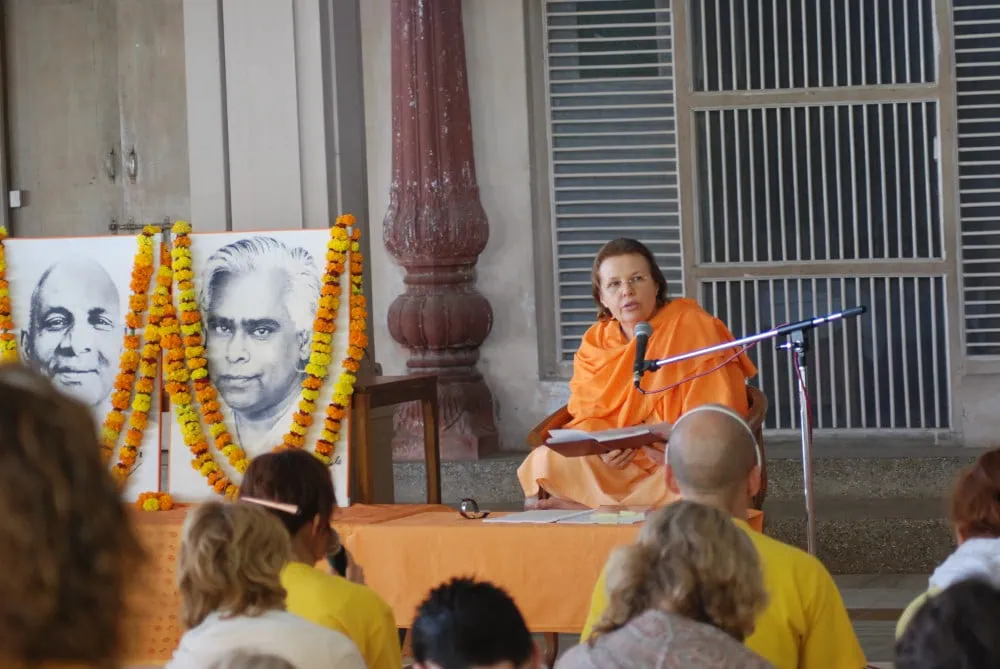
swami durgananda vrindavan lecture
Bhakti Yoga, Swami Sivananda

Samadhi

Samadhi by Swami Sivananda The four kinds of Mukti and the Bhava Samadhi of Bhaktas, the lower Samadhis of a Raja Yogi (viz. , Savitaraka, Nirvitarka, Savichara, Nirvichara, Saananda, Sasmita, Ritambhara Prajna etc. , ) and the lower Savikalpa Samadhis (viz. , Sabdanuvid, Dhrisyanuvid) of a Vedantin all lead to the experience of cosmic consciousness. The ways of approach may be different but the fruit is the same. The experiences are common. Intuition, revelation, inspiration, ecstasy are synonymous terms. Wordsworth in his poem “Tintern Abbey” describes Samadhi as follows:- “………… That blessed mood, In which the burthen of the mystery, In which the heavy and the weary weight of all this unintelligible world, Is lightened:-that serene and blessed mood – In which the affections gently lead us on, Until, the breath of this corporeal frame – And even the motion of our human blood – Almost suspended, we are laid asleep – In body, and become a living soul: – While with an eye made quiet by the power – Of harmony, and the deep power of joy, We see into the life of things” The state of the cosmic consciousness is grand and sublime. It induces awe, supreme joy and highest, unalloyed felicity, free from pain, sorrow and fear. This state of cosmic consciousness is below the absolute consciousness or Nirguna-Brahmic Consciousness wherein the seer, sight and the things seen, or the knower, knowable and knowledge, or the subject and object become one. In cosmic consciousness there is yet the seer and the seen. It is doubtlessly a very subtle experience. It is divine experience. It is revelation of the Karana Jagat wherein the types are realised. Brahmic Consciousness is the experience of Maha-Karana wherein there is neither time, space nor causation. It is unconditioned, ineffable state. Srutis describe it negatively. Neti, Neti-not this, not this. “Yato vacho nivartante aprapya manasa saha anandam brahmano vidvan nabibheti kadachana-The mind and speech return back from it baffled as they are not able to grasp and describe it; the wise who knows the Brahman which is bliss, is not afraid of anything at any time. “ Sri Sankara, Dattatreya, Vama Dev, Jada Bharata, Mansoor, Shams Tabriez, Madalasa, Yajnavalkya had the experience of supercosmic consciousness whereas Rama Das, Tulasi Das, Kabir, Hafiz, Tukaram, Mira, Gauranga, Madhva, Ramanuja, Lord Jesus, Lord Buddha had experience of cosmic consciousness. The pure Brahmic Consciousness is to be felt by the Sadhaka. It cannot be described in words. The language is imperfect. The cosmic consciousness is the experience of Brahma-Loka. It is the consciousness of Brahma or Hiranyagarbha. The Yogi acquires all Divine Aisvaryas. He who experiences cosmic consciousness attains many kinds of Siddhis, which are described in Bhagavata and Raja Yoga of Patanjali Maharshi. Arjuna, Sanjaya, Yasoda had this experience of cosmic consciousness. Yasoda saw the whole Virat in the mouth of Bala-Krishna. Gita (XI) describes this state of consciousness through the mouth of Arjuna in these words: “Thy mighty form, with many mouths and eyes, long-armed, with thighs and feet innumerable, vast-bosomed, set with many fearful teeth, radiant, Thou touchest heaven, rainbow hued, with opened mouths and shining mouths and shining vast-orbed eyes on every side, all-swallowing, fiery-tongued, Thou lickest up mankind devouring all. Into Thy gaping mouths, they hurrying rush, tremendous-toothed and terrible to see. Some caught within the gaps between Thy teeth, are seen, their heads to powder crushed and ground. “ In the West also people have to recognise the truth about cosmic consciousness when one rises above body- consciousness. Some have also tasted and experienced this state. In France, Professor Bergson is preaching about intuition, which transcends reason but does not contradict it. Bucke describes cosmic consciousness as follows: “Cosmic consciousness is a third form, which is as far above self-consciousness as is that above simple consciousness. It is Supraconceptual. The cosmic consciousness as its name implies, is the life and order of the universe. Along with the consciousness of the cosmos there occurs an intellectual enlightenment, which alone would place the individual on a new plane of existence. To this is added a state of moral exaltation, an indescribable feeling of elation and joyousness and a quickening of the moral sense, which is fully as striking and more important, both to the race and the individual, than is the enhanced intellectual power. With these comes what may be called a sense of immortality, a consciousness of eternal life, not a conviction that he shall have it, but the consciousness that he has it already. ” The eye celestial usually comes to a Yogi (Mystic) who has advanced much in Mysticism. But it is not possible for everyone to get this celestial eye, as each and everyone cannot be a Mystic. Sri Krishna therefore said to Arjuna, “In the Form in which you have seen Me, I cannot be seen even by means of Vedas, by austerities, by gifts or by sacrifices. ” (Gita: II-53. ) He who gets the experience of supracosmic consciousness has the feeling of Apta-Kama (one who has obtained all that he desires). He feels: “There is nothing more to be known by me. “ The Jivahood has gone now. The little ‘I’ has melted. The differentiating mind that splits up has vanished. All barriers, all sense of duality, differences, separateness have disappeared. There is no idea of time and space. There is only eternity. The Jiva has realised his identity with Brahman. The ideas of caste, creed and colour have gone now. When he becomes a Brahma-Varishtha, when he enters the seventh-stage of Jnana or Turiyatita, even the slight body-consciousness which was in a state of Samskara or mental retentum disappears. He has to be fed by spectators. The world completely disappears for him. He experiences the state described by Ajati-Vadin or the utterance of Srutis “Na cha nana asti kinchana-there is no such thing as diversity. “ The world is a mental creation. It is mere impression only. There is no world during sleep. You

Samadhi Read Post »